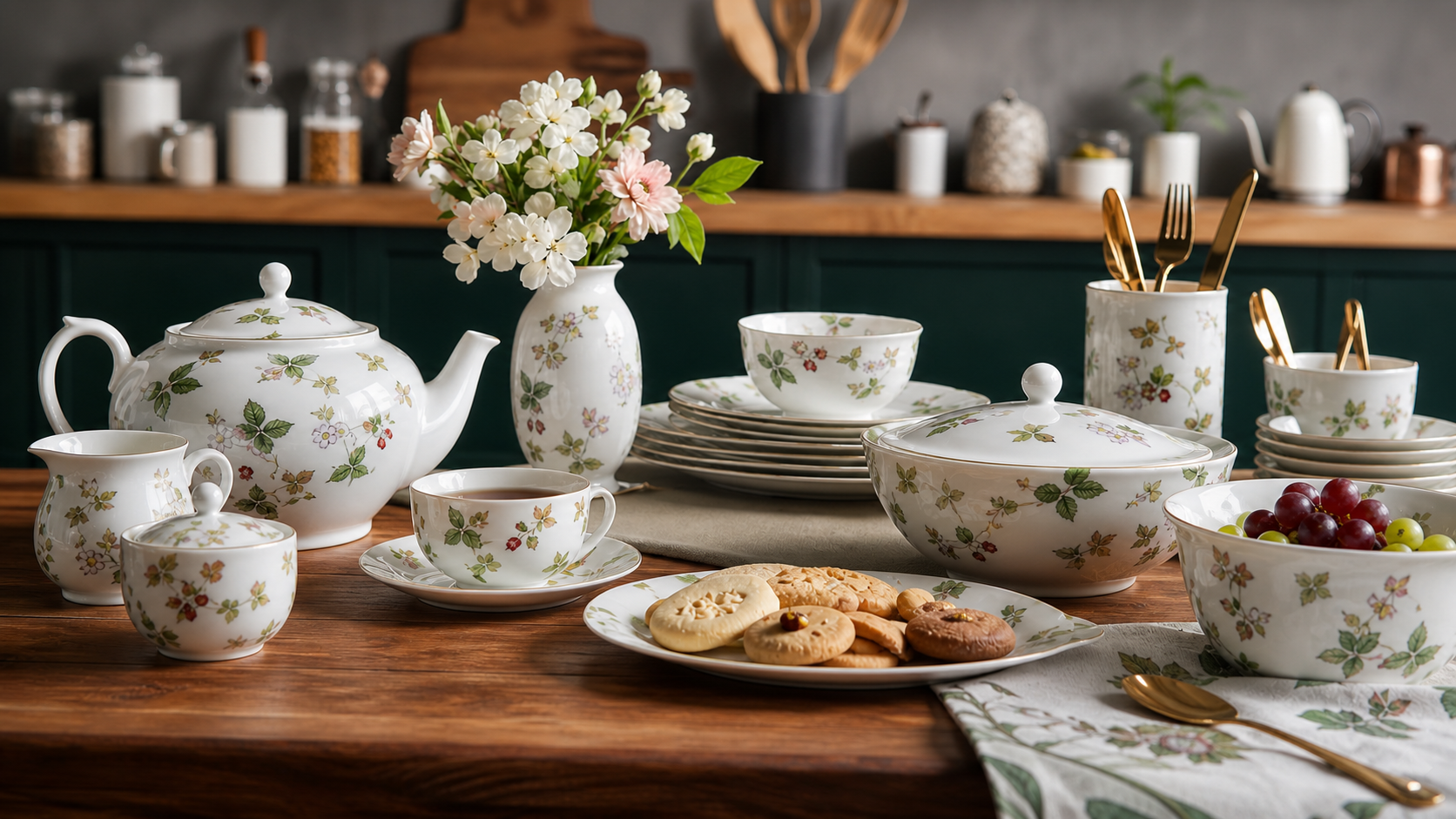
Kitchenware Manufacturers in China: A Complete Guide to Finding Reliable Suppliers
Finding dependable kitchenware manufacturers in China requires more than comparing unit prices on sourcing platforms. China has a large and diverse manufacturing base covering stainless steel cookware, silicone utensils, food storage products, knives, ceramic tableware, drinkware and other kitchen accessories, but capabilities and quality systems vary significantly between suppliers. Importers should verify whether a potential partner is actually a manufacturer, define product specifications, evaluate samples, conduct appropriate quality control and confirm applicable food contact and import requirements before committing to a large production order.
For wholesalers, retailers, ecommerce brands and private label businesses, sourcing directly can create opportunities for product customization and production at scale. It also transfers important responsibilities to the buyer.
Material specifications, tooling, packaging, inspection, intellectual property, logistics and regulatory compliance all need attention.
A low quotation can quickly become expensive if products fail inspection, arrive late or cannot legally be sold in the destination market.
This guide explains how to identify Chinese kitchenware suppliers, evaluate factories, manage OEM production, control quality and reduce common sourcing risks.
Why Choose Kitchenware Manufacturers in China?
China remains an important global manufacturing location for consumer products, including a broad range of kitchen and household goods.
Its supplier ecosystem includes raw material processors, component manufacturers, factories, packaging companies, testing laboratories and logistics providers.
This concentration can make it possible to source multiple related products within established manufacturing regions.
Extensive Product Selection
Chinese suppliers manufacture products across numerous kitchenware categories.
Common examples include:
• Stainless steel cookware
• Kitchen utensils
• Silicone cooking tools
• Cutting boards
• Food storage containers
• Bakeware
• Kitchen knives
• Drinkware
• Ceramic products
• Barware
• Kitchen organizers
Some factories specialize narrowly, while trading companies may offer a much wider catalogue by purchasing from several factories.
OEM and ODM Manufacturing
OEM commonly refers to manufacturing products according to a buyer’s requirements or design.
ODM generally refers to products based more heavily on a manufacturer’s existing design capabilities, which buyers may customize depending on the agreement.
The terminology is used inconsistently in international sourcing, so define exactly what design, tooling, manufacturing and intellectual property responsibilities each party has.
Scalable Production Capacity
Some Chinese kitchenware factories can support substantial commercial orders, while smaller manufacturers may focus on lower volumes or specialized products.
Production capacity should be verified rather than assumed from a supplier profile.
Kitchenware Manufacturers in China for Private Label Brands
Private label buyers can often customize packaging, colors, logos and selected product characteristics.
More extensive customization may require new molds, tooling or engineering work.
Before paying tooling charges, establish who owns the mold, where it will be stored and whether the supplier can use it for other customers.
7 Powerful Tips for Finding Reliable Chinese Kitchenware Manufacturers
Supplier selection determines much of the risk associated with overseas manufacturing.
Use a structured sourcing process instead of selecting the lowest quotation.
1. Define Your Product Before Requesting Quotes
Suppliers cannot quote accurately when specifications are vague.
Create a product specification containing the information relevant to your product. This might include dimensions, materials, weight, finish, colors, tolerances, packaging and testing requirements.
Photos can support a specification but should not replace precise technical information.
The clearer the requirements, the easier it becomes to compare competing quotations fairly.
2. Verify Whether the Supplier Is a Factory
Online marketplaces contain manufacturers, trading companies and businesses using mixed models.
A trading company is not necessarily a poor supplier. It may provide convenient product consolidation and sourcing expertise.
The problem occurs when a supplier presents itself as a factory and the buyer makes decisions based on that inaccurate assumption.
Ask for business registration information and manufacturing details. Depending on order value and risk, consider an independent factory audit.
3. Request Samples Before Bulk Production
Never treat photographs as sufficient evidence of product quality.
Samples allow you to assess dimensions, appearance, weight, materials, usability and packaging.
For food contact products, visual inspection alone is insufficient to establish regulatory compliance. Appropriate documentation or testing may also be required.
4. Audit High Value Suppliers
An audit can provide information that does not appear in online profiles.
Independent auditors may assess production capabilities, equipment, quality systems, capacity and other relevant factory conditions.
The audit scope should match the product and level of risk.
5. Establish Quality Standards in Writing
Terms such as premium quality are too subjective for manufacturing contracts.
Define measurable standards.
Dimensions, materials, tolerances, visual defects, function, packaging and inspection criteria should be documented before production begins.
6. Confirm Regulatory Requirements
Kitchenware can come into contact with food, heat and consumers, making compliance especially important.
Requirements depend on the destination market, product materials and intended use.
Do not assume that a supplier’s previous exports automatically mean your particular product complies with every regulation in your market.
7. Use Pre Shipment Quality Control
Finding serious defects after products arrive is considerably more difficult than identifying them before shipment.
A pre shipment inspection can evaluate randomly selected finished goods against agreed specifications and inspection criteria.
Inspection reduces risk but cannot guarantee that every individual unit is defect free.
Types of Kitchenware Manufacturers in China
Different kitchenware materials require different manufacturing processes and expertise.
A supplier that performs well with stainless steel cookware may have little relevant experience producing silicone products.
Stainless Steel Kitchenware Manufacturers
Stainless steel is widely used for cookware, utensils, mixing bowls and food preparation products.
When sourcing stainless steel products, material grade is important.
Buyers should define the required alloy rather than accepting ambiguous descriptions such as food grade steel.
Material certificates and independent testing can be used when appropriate to verify requirements.
Silicone Kitchenware Factories
Silicone is used for spatulas, baking molds, brushes, mats and other heat resistant accessories.
Buyers should establish the material formulation and applicable requirements for the destination market and intended food contact use.
Color, odor, dimensions and heat related performance may also require specification.
Cookware Manufacturers
Cookware production can involve stainless steel, aluminium, cast iron or combinations of materials.
The production process may include forming, polishing, coating, bonding, handle assembly and quality inspection.
Evaluating Cookware Kitchenware Manufacturers in China
Specify important construction details before requesting final quotations.
For a pan, relevant details might include body material, thickness, base construction, handle attachment, coating system and packaging.
If a nonstick coating is used, obtain clear information about the coating supplier, system and applicable compliance documentation.
Ceramic Kitchenware Manufacturers
Ceramic products include mugs, bowls, plates, bakeware and serving pieces.
Quality considerations can include glaze consistency, dimensions, thermal performance and resistance to cracking or chipping.
Food contact safety also matters, particularly with respect to substances that can migrate from glazes or decorations.
Applicable testing depends on the destination market.
Bamboo and Wooden Kitchenware Suppliers
Wood and bamboo are commonly used in cutting boards, utensils and storage products.
Buyers should examine material species, moisture condition, adhesives, finishes and product construction.
Import regulations may also apply to wood based products depending on the market and material.
Where Are Kitchenware Manufacturers in China Located?
Manufacturing is distributed across China, but particular regions can develop concentrations of specialized supply chains.
Industry clusters evolve over time, so buyers should confirm current capabilities rather than relying solely on historic regional reputations.
Guangdong
Guangdong has a large manufacturing base and extensive export infrastructure.
Buyers can find suppliers covering cookware, household products, plastics, electrical appliances and other consumer goods throughout the province.
Its access to major logistics infrastructure can also support international sourcing.
Zhejiang
Zhejiang contains numerous manufacturing businesses serving home, kitchen and consumer product markets.
Cities and industrial areas within the province can specialize in different materials and product categories.
Guangdong Cookware Clusters
Jiangmen and nearby areas are often associated with stainless steel manufacturing, including cookware and household products.
However, a factory’s location does not establish its quality.
Individual supplier evaluation remains necessary.
Does Factory Location Determine Kitchenware Quality?
No.
A recognized manufacturing cluster can provide supply chain advantages, but product quality depends on materials, processes, management, inspection and buyer specifications.
Evaluate the individual factory rather than treating the city or province as a quality certification.
How to Find Kitchenware Manufacturers in China
Buyers can use several sourcing channels.
Each has advantages and limitations.
B2B Marketplaces
Major sourcing platforms provide access to large numbers of suppliers.
They are useful for initial research and quotation gathering.
Supplier badges or verification programs can provide additional information but should not replace the buyer’s own due diligence.
Trade Shows
Trade exhibitions allow buyers to examine products and meet suppliers directly.
They can also make it easier to compare materials, finishing and manufacturing capability across many companies in a short period.
Prepare specifications and questions before attending to make meetings more productive.
Sourcing Agents
A sourcing agent can identify suppliers, communicate requirements and coordinate inspections or logistics.
Agents vary greatly in capability and commercial arrangements.
Ask how the agent is paid and whether they receive commissions from factories. Transparent incentives reduce potential conflicts of interest.
Direct Factory Research
Experienced buyers can identify manufacturers through business directories, industry associations, company websites and referrals.
Direct research takes more time but may reveal specialized manufacturers that are less visible on major marketplaces.
How to Verify a Chinese Kitchenware Supplier
Verification should match financial and product risk.
A small trial purchase does not require the same diligence as a long term private label program involving expensive tooling.
Check Business Information
Request the company’s official registration information and confirm its legal identity where practical.
Ensure bank account details correspond appropriately with the contracted business.
Unexpected payment account changes should receive additional verification because payment fraud is a known risk in international trade.
Review Factory Capabilities
Determine which production steps are performed internally and which are subcontracted.
Subcontracting is not automatically a problem.
However, buyers should know where critical manufacturing processes occur so appropriate quality controls can be applied.
Ask for Relevant Quality Documentation
Some factories maintain certified quality management systems.
ISO 9001, for example, relates to quality management systems. It does not certify that an individual kitchenware product complies with food contact laws or your specifications.
Verify certificates through credible channels where they materially influence supplier selection.
Factory Audit for Kitchenware Manufacturers in China
An independent factory audit can examine production lines, quality processes, equipment and organizational capabilities.
For high risk products, consider adding social, environmental or specific technical audit criteria where relevant to your business requirements.
Audits provide a snapshot and should form part of broader supplier management.
Food Contact Safety and Product Compliance
Compliance deserves particular attention because many kitchen products directly contact food.
Requirements are determined primarily by the markets where products will be sold.
United States Requirements
Products sold in the United States may be subject to applicable Food and Drug Administration requirements and other federal or state regulations depending on the material and product.
Different materials can be governed by different rules.
Importers should identify exact requirements for their products rather than asking a supplier for a generic FDA certificate.
European Union Requirements
Food contact materials sold in the European Union are subject to the applicable EU regulatory framework.
Requirements can differ by material, with additional rules applying to particular materials and substances.
Products should be evaluated against the regulations relevant to their specific composition and intended use.
UK Requirements
Great Britain has its own applicable food contact regulatory framework following the UK’s departure from the European Union, while arrangements can differ for Northern Ireland.
Regulations can change.
Businesses importing into the UK should verify current requirements through official UK sources and obtain specialist compliance advice when necessary.
Testing Kitchenware Manufacturers in China Products
Use appropriately accredited laboratories when independent testing is required.
The test plan should identify the exact product, materials and destination market.
A test report for a different model, material or color may not establish compliance for the product you are purchasing.
OEM and Private Label Kitchenware Manufacturing
Creating a unique product involves more work than printing a logo on existing stock.
Product Development
Start with drawings, specifications or prototypes.
Discuss manufacturing feasibility with potential factories before finalizing the design.
Manufacturing engineers may identify details that are unnecessarily expensive or difficult to produce consistently.
Tooling and Molds
Custom plastic, silicone and metal products may require tooling.
Your agreement should specify:
• Tooling price
• Ownership
• Expected maintenance
• Storage
• Access rights
• Replacement responsibilities
• Restrictions on third party use
Record tooling arrangements in the manufacturing contract.
Packaging Customization
Packaging affects both branding and product protection.
Conduct appropriate transit testing or packaging evaluation when breakage, scratching or deformation represents a significant risk.
Shipping attractive packaging that cannot survive distribution defeats its purpose.
Protecting Intellectual Property With Kitchenware Manufacturers in China
Use suitable written agreements before sharing commercially sensitive designs.
Trademark, patent and design rights are jurisdiction specific, so specialist legal advice can be valuable for important proprietary products.
Do not assume an agreement used in another country will automatically provide optimal protection in China.
Minimum Order Quantity and Pricing
MOQ refers to the minimum order quantity a supplier is willing to manufacture under particular commercial conditions.
Why Factories Set MOQs
Manufacturing requires setup time, material purchasing, packaging and production planning.
Very small orders can create disproportionate costs.
Custom colors, finishes or materials may carry higher minimums because suppliers need to purchase minimum quantities from upstream vendors.
Can MOQ Be Negotiated?
Sometimes.
Factories may agree to lower initial quantities if the buyer accepts a higher unit price, uses standard materials or chooses existing packaging.
Negotiation possibilities depend on the production process and supplier.
Understanding Unit Prices
When comparing quotations, confirm exactly what is included.
Important details include material specifications, packaging, customization and the applicable Incoterm.
A lower quoted unit price may simply represent a different commercial scope.
Incoterms and Shipping From China
Incoterms define responsibilities between sellers and buyers for particular stages of transportation.
They do not, by themselves, cover every aspect of a commercial transaction.
EXW
Under EXW, the buyer generally assumes significant responsibility beginning at the seller’s premises, subject to the precise Incoterms rules and contract arrangement.
This can suit experienced importers with established logistics support.
FOB
FOB is widely used for qualifying sea or inland waterway shipments.
Responsibilities transfer according to the applicable Incoterms definition.
Buyers should understand which local origin charges are included in the quoted price.
DDP
DDP places extensive obligations on the seller, including specified import related responsibilities under Incoterms.
Its practical suitability depends on the destination country and whether the seller can lawfully and correctly fulfil those obligations.
Consult a qualified freight or customs professional for important shipments.
Shipping Kitchenware Manufacturers in China Orders
Freight costs depend on volume, weight, origin, destination, mode and market conditions.
Kitchenware can be heavy or bulky, which makes packaging efficiency important.
Calculate landed cost rather than judging supplier economics purely by factory price.
Quality Control for Kitchenware Orders
Quality should be managed throughout production, not inspected into a product after every manufacturing decision has already been made.
Preproduction Sample
An approved sample can act as a reference for bulk manufacturing.
Document the sample’s specifications rather than relying only on physical appearance.
Changes after approval should require written authorization.
During Production Inspection
For complex or high volume orders, inspection during manufacturing can identify problems before the complete batch is finished.
This can be particularly useful with a new supplier.
Pre Shipment Inspection
Final random inspection typically takes place after most or all goods have been produced and a substantial portion has been packed.
Inspection scope can include quantities, workmanship, dimensions, function and packaging.
AQL and Kitchenware Manufacturers in China
Acceptance Quality Limit methods are commonly used in sampling inspections.
The appropriate sampling plan and defect classification should be defined before inspection.
AQL sampling does not mean every item is individually tested, nor does it guarantee defect free production.
Common Sourcing Mistakes to Avoid
Avoiding predictable errors can save more money than negotiating a small price reduction.
Choosing the Cheapest Supplier
Extremely low pricing can result from different materials, specifications, quality assumptions or commercial terms.
Investigate why one quotation differs significantly from the others.
Paying Without Verification
Payment terms vary by supplier and relationship.
Confirm legal identity and banking information before transferring significant funds.
Treat unexplained account changes cautiously.
Skipping Product Testing
For applicable food contact products, testing and documentation are not optional simply because the product appears uncomplicated.
Understand compliance requirements before placing the production order.
Sending Vague Specifications
A supplier cannot reliably manufacture against unstated expectations.
If a characteristic matters to your business, define it objectively.
Avoiding Communication Problems With Kitchenware Manufacturers in China
Use concise written specifications, drawings and approved samples.
After important calls, document decisions in writing.
Do not rely on assumptions when discussing material grades, dimensions, colors or acceptable defects.
Building a Long Term Supplier Relationship
Strong supplier management extends beyond negotiating every order.
Forecast Demand
Sharing reasonable forecasts can help factories plan materials and capacity.
Forecasts should be identified as estimates unless they create contractual purchase obligations.
Track Supplier Performance
Monitor factors such as:
• Inspection results
• Delivery performance
• Corrective action response
• Communication
• Product consistency
• Documentation accuracy
Performance data creates a more objective basis for future sourcing decisions.
Maintain Backup Options
Depending entirely on one factory can create continuity risks.
For strategically important products, businesses may assess alternative suppliers before an emergency occurs.
Dual sourcing is not always economical, but contingency planning remains valuable.
Frequently Asked Questions
How do I find reliable kitchenware manufacturers in China?
Use reputable sourcing platforms, trade shows, referrals or sourcing specialists, then verify business records, capabilities, samples, compliance and quality systems.
What products do Chinese kitchenware manufacturers produce?
Common products include cookware, utensils, silicone tools, knives, food storage containers, ceramics, bakeware, drinkware and kitchen accessories.
Can kitchenware manufacturers in China create private label products?
Many suppliers offer private label or OEM manufacturing, including branding, packaging and product customization, subject to tooling and minimum order requirements.
How can I verify kitchenware product quality before shipping?
Use detailed specifications, approved samples, relevant laboratory testing and independent production or pre shipment inspections appropriate to the product risk.
Are Chinese kitchenware products compliant with food safety regulations?
Compliance depends on the specific product, material and destination market. Buyers should verify applicable requirements and supporting test documentation rather than assume compliance.
What should I ask a Chinese kitchenware factory before ordering?
Ask about manufacturing capabilities, materials, MOQ, lead times, quality controls, compliance documentation, customization, tooling, payment terms and Incoterms.
Conclusion
Kitchenware manufacturers in China can provide extensive product selection, customization and scalable production, but reliable sourcing requires disciplined supplier management. Verify factory capabilities, define measurable specifications, confirm applicable food contact requirements and inspect goods before shipment instead of relying on price or marketplace profiles alone. Clear contracts, approved samples and transparent communication reduce avoidable manufacturing risks. With thorough due diligence and ongoing quality control, importers can build more dependable and commercially sustainable relationships with Chinese kitchenware suppliers.