Egyptian Cotton Sateen Sheets: 7 Essential Tips for Choosing Luxurious and Comfortable Bedding
A comfortable bedroom begins with more than a supportive mattress and beautiful furniture. The sheets you sleep on can influence how your bed feels, how easily you stay comfortable, and how inviting your bedroom looks. Choosing Egyptian cotton sateen sheets can be an excellent option for homeowners who appreciate smooth fabrics, elegant bedding, and the natural feel of cotton. Their soft surface, graceful drape, and subtle sheen make them popular among people seeking a refined bedroom experience.
Across the United States, shoppers can find a wide range of cotton bedding products advertised as premium, hotel inspired, or luxurious. However, impressive product descriptions do not always explain the differences between fiber quality, fabric construction, thread count, and durability.
Understanding these details helps you make an informed purchase rather than selecting sheets based solely on marketing claims.
This guide explores seven important considerations for choosing Egyptian cotton bedding, explains how sateen compares with other weaves, and provides practical advice for maintaining soft, attractive bed sheets.
What Are Egyptian Cotton Sateen Sheets?
Egyptian cotton sateen sheets are bed linens made using Egyptian cotton fibers and a sateen weave construction.
These two terms describe different characteristics of the fabric.
Egyptian cotton refers to the cotton’s claimed origin and fiber type, while sateen describes the way the yarns are woven together.
Egypt is known for producing high quality cotton, including varieties with long or extra long fibers that can be spun into fine yarns.
Longer cotton fibers can support smooth, strong yarn construction when properly processed.
However, not every cotton product associated with Egypt automatically contains extra long staple fibers.
Buyers should check manufacturer specifications rather than assuming every Egyptian cotton label represents identical quality.
What Makes Sateen Fabric Different?
Sateen is a weave structure that allows more yarn surface to appear on one side of the fabric.
A common cotton sateen construction uses a pattern in which one yarn passes over several perpendicular yarns before passing underneath another.
This creates a smooth surface with a gentle sheen.
The finished fabric often feels softer and more fluid than the crisp surface associated with cotton percale.
Because sateen is a weaving method, it should not be confused with satin made from silk or synthetic fibers.
Cotton sateen can provide a silky feeling while retaining the characteristics of cotton.
7 Essential Tips for Choosing Egyptian Cotton Sateen Sheets
Selecting the right bedding requires evaluating the materials, construction, fit, comfort, and maintenance requirements.
The following seven considerations can help American shoppers compare different sheet sets with greater confidence.
1. Verify the Authenticity of Egyptian Cotton
One of the most important buying considerations is confirming what the sheets are actually made from.
The Egyptian cotton name is widely associated with premium bedding, making it attractive for product marketing.
However, consumers should not assume that every product carrying the description contains only genuine Egyptian cotton.
Some bedding products include blends of different cotton types or additional fibers.
These materials may still provide comfortable bedding, but their descriptions should accurately reflect their composition.
Understand Cotton Fiber Labels
The Federal Trade Commission requires covered textile products sold in the United States to accurately identify their fiber composition.
A product described as 100% Egyptian cotton should genuinely contain only that specified cotton type, apart from permitted exceptions for certain noncotton trim.
If a product contains Egyptian cotton mixed with another cotton type, its labeling should not misleadingly suggest that all the cotton is Egyptian.
Read the permanent care and fiber content label rather than relying only on the product title.
Look for Traceability Information
Some manufacturers provide information about cotton sourcing, production methods, and independent verification.
The Egyptian Cotton Association operates an accreditation program intended to help verify authentic Egyptian cotton through supply chain controls and testing.
Its licensed trademark can provide an additional indication of authenticated Egyptian cotton products.
However, not every genuine product necessarily participates in that particular licensing program.
The most practical approach is to evaluate the complete product documentation and the manufacturer’s transparency.
2. Evaluate Cotton Fiber Quality and Yarn Construction
The type and quality of cotton fibers influence how bedding feels and performs.
Cotton fibers vary in length, fineness, strength, and processing characteristics.
Longer fibers can often be spun into finer yarns with fewer protruding fiber ends.
This may contribute to a smoother fabric surface and help reduce some forms of pilling.
However, the finished quality also depends on spinning, weaving, dyeing, finishing, and construction.
Why Staple Length Matters
Staple length refers to the length of individual cotton fibers.
Long staple and extra long staple cotton varieties are commonly associated with premium textile production.
Their fibers can support yarns that combine fineness with useful strength.
For Egyptian cotton sateen sheets, fiber quality can be particularly important because the smooth sateen surface makes texture a prominent part of the sleeping experience.
A carefully manufactured fabric may feel comfortable without requiring an unusually high thread count.
Single Ply vs. Multiple Ply Yarn
Single ply yarn consists of one spun yarn strand.
Multiple ply yarn is produced by combining two or more strands.
Neither construction should automatically be treated as proof of superior quality.
The yarn’s fiber properties, processing, and intended fabric construction all matter.
Some bedding manufacturers advertise unusually high thread counts by counting individual plies in ways that make comparisons confusing.
Instead of relying exclusively on a large number, examine the complete fabric description.
3. Understand the Comfort of Sateen Weave
Comfort is one of the main reasons homeowners choose cotton sateen bedding.
Sateen’s structure creates a smooth surface that can feel gentle and substantial against the skin.
The fabric typically drapes easily over a mattress and has a more lustrous appearance than crisp cotton percale.
However, comfort preferences differ between sleepers.
Why Sateen Feels Smooth
The arrangement of the yarns creates longer exposed sections on the fabric surface.
This reduces some of the textured feeling associated with more frequently interlaced weave patterns.
The result is often a soft, fluid fabric with a subtle shine.
The quality of the cotton yarn and finishing treatments can further influence the feel.
High quality sateen sheets may develop a comfortable, familiar texture through normal use and appropriate laundering.
Are Egyptian Cotton Sateen Sheets Breathable?
Cotton can absorb moisture and allow air movement through the fabric.
However, the weave density and fabric weight influence how breathable a particular sheet feels.
Sateen generally has a smoother and more substantial feel than percale.
Some sleepers find this especially comfortable in air conditioned bedrooms or cooler conditions.
Others may prefer the lighter, crisper sensation of percale.
For people who frequently sleep hot, a lightweight cotton percale set may be worth comparing before buying sateen.
4. Choose a Suitable Thread Count
Thread count is one of the most frequently advertised characteristics of luxury bedding.
It generally refers to the number of yarns running horizontally and vertically within one square inch of woven fabric.
While thread count can influence fabric density and texture, a larger number does not automatically indicate better quality.
What Thread Count Is Best for Egyptian Cotton Sateen Sheets?
For many cotton sateen products, a thread count around 300 to 500 can provide an appealing balance of softness, fabric weight, and comfort.
However, this is a shopping guideline rather than a universal requirement.
Some well constructed sheets outside this range may perform very well.
Independent textile testing has demonstrated that extremely high thread counts do not consistently produce better softness, durability, or resistance to pilling.
A carefully manufactured 400 thread count sheet may feel more comfortable than another product advertising 1,000 threads.
Why Extremely High Thread Counts Can Be Misleading
Some manufacturers use multiple ply yarn calculations that make advertised thread counts difficult to compare.
Others produce dense fabrics that feel heavier than expected.
A very high thread count may reduce air movement in certain constructions.
Before purchasing, compare fiber composition, yarn quality, fabric weight, finishing methods, and independent product evaluations.
Thread count should support the decision rather than control it.
5. Select the Right Bed Sheet Size and Pocket Depth
Beautiful bedding cannot provide a comfortable experience when it does not fit the mattress correctly.
American mattress sizes vary, and different manufacturers may use slightly different fitted sheet dimensions.
A standard mattress can also become taller when a pillow top or mattress topper is added.
Measure carefully before ordering.
Common American Bed Sizes
Typical mattress dimensions include:
- Twin: approximately 38 × 75 inches
- Twin XL: approximately 38 × 80 inches
- Full: approximately 54 × 75 inches
- Queen: approximately 60 × 80 inches
- King: approximately 76 × 80 inches
- California King: approximately 72 × 84 inches
These measurements describe typical mattress dimensions, not the required dimensions of every sheet.
The fitted sheet must also accommodate mattress thickness.
What Are Deep Pocket Sheets?
Deep pocket fitted sheets are designed for mattresses that require additional corner depth.
However, the term deep pocket does not have one universally consistent measurement across all bedding manufacturers.
Some products are designed for mattresses around 15 inches thick, while others accommodate greater depths.
Check the listed maximum mattress height and the manufacturer’s fitting instructions.
Elastic construction and fitted sheet design also influence how securely the sheet stays in place.
Measure Before Buying
Measure the mattress from its top surface to its bottom edge.
Include any topper that will remain on the bed beneath the fitted sheet.
Compare this measurement with the product’s supported depth.
For flat sheets and pillowcases, review the actual dimensions to ensure appropriate coverage.
An accurate fit helps prevent loose corners and unnecessary fabric tension.
6. Compare Finishing Methods and Textile Certifications
Bedding quality depends on more than cotton and weave.
Manufacturers use different finishing methods to influence softness, appearance, shrinkage, and fabric performance.
Some finishes are intended to create a smoother surface, while others help manage dimensional changes during laundering.
Understand Fabric Finishing
Processes such as mercerization may influence the appearance and characteristics of cotton yarn or fabric.
Other finishing methods can improve the initial hand feel or create a more uniform appearance.
However, a soft showroom feel is not always a reliable indication of how the sheets will perform after repeated washing.
Look for information about washing performance, shrinkage, and durability.
Reviews that describe actual long term use can be more helpful than promotional descriptions alone.
What Does OEKO-TEX STANDARD 100 Mean?
OEKO-TEX STANDARD 100 is a textile certification focused on testing for harmful substances.
Certified products must meet requirements appropriate to their intended use.
Bed linens fall within a product category involving direct skin contact.
This certification can provide useful information about product testing.
However, it does not automatically establish that the cotton is Egyptian, organically grown, exceptionally durable, or environmentally sustainable.
Those characteristics require separate supporting evidence.
Check Certification Claims
If a bedding manufacturer advertises independent certification, look for a valid certificate number or verification information.
Be cautious of generic claims such as chemical free, completely natural, or environmentally perfect without meaningful supporting details.
Responsible manufacturers should communicate what their certifications actually cover.
7. Evaluate Construction Quality and Long Term Value
The final consideration involves how well the sheet set is manufactured.
Even premium cotton fibers can produce disappointing bedding when the fabric has inconsistent weaving, weak seams, or poor finishing.
Before buying, examine the available product photographs, construction information, and customer feedback.
Look for Strong Seams and Consistent Fabric
A quality sheet set should have neatly finished edges and secure stitching.
The fitted sheet should include elastic and corner construction suitable for regular use.
Pillowcases should feel comfortable and provide appropriate coverage for the pillows.
Look for signs of consistent weaving and finishing.
Visible manufacturing defects, irregular stitching, or unexplained fabric distortion may indicate poor quality control.
Consider Durability Alongside Softness
Sateen fabrics often feel pleasantly smooth, but their exposed yarn structure can make them more susceptible to snagging in some situations.
Proper handling and laundering are important.
Keep sharp objects away from the fabric and avoid washing delicate bedding with garments containing exposed hooks or rough hardware.
A well maintained sheet set may remain useful for years, but its actual lifespan depends on construction, washing practices, and frequency of use.
Understand Return Policies
Because bedding comfort is personal, return conditions matter.
Some retailers accept returns only when the packaging remains unopened.
Others offer limited home trials.
Review the policy before purchasing, especially when ordering expensive bedding online.
Egyptian Cotton Sateen Sheets vs. Percale Sheets
Both sateen and percale are woven fabric constructions.
They can be made from cotton of similar quality, but their structures create different sleeping experiences.
Texture and Appearance
Sateen usually feels smooth, fluid, and slightly lustrous.
Percale typically feels crisp, lightweight, and matte.
The difference is caused largely by how the yarns are arranged.
Neither texture is universally better.
Temperature and Breathability
Percale often feels cooler and airier because of its fabric structure.
Sateen may feel more substantial and provide a smoother surface.
For sleepers in warmer parts of the United States, including Florida, Texas, and Arizona, the preferred option may depend on indoor air conditioning and individual temperature preferences.
Wrinkle Resistance
Cotton sateen commonly appears less wrinkled than cotton percale after ordinary use and laundering.
However, both are cotton fabrics and can develop creases.
Fabric finishing and drying methods influence the result.
Which Weave Should You Choose?
Choose sateen if you prefer a smooth, softly lustrous fabric with a graceful drape.
Consider percale if you prefer a crisp, lightweight texture and greater airflow.
The choice should reflect personal comfort rather than the assumption that one weave is always more luxurious.
How to Wash and Maintain Egyptian Cotton Sateen Sheets
Proper care is important for preserving softness, color, and fabric appearance.
Although cotton is generally washable, different manufacturers may recommend different temperatures and laundering methods.
Always follow the permanent care label.
Wash Before First Use
Washing new sheets before use can remove some residual manufacturing or packaging materials.
It also provides an opportunity to understand how the fabric feels after its first laundering.
Use a suitable detergent and follow the recommended wash temperature.
Use a Gentle Washing Routine
Consider washing sheets separately from heavy towels or garments with zippers.
This can help reduce unnecessary friction and snagging.
Avoid overloading the washing machine because crowded laundry may not rinse or move effectively.
Use a normal or gentle cycle according to the manufacturer’s instructions.
Avoid Excessive Detergent
More detergent does not necessarily produce cleaner bedding.
Excess detergent may leave residue when the washing machine does not rinse thoroughly.
Use the amount recommended for the load size, water conditions, and detergent concentration.
Dry With Appropriate Heat
Excessive drying temperatures can contribute to shrinkage and fabric wear.
When tumble drying is permitted, use the manufacturer’s recommended setting.
Remove sheets promptly once dry to reduce deep wrinkles.
Air drying may also be appropriate when environmental conditions allow.
Store Sheets Properly
Make sure bedding is completely dry before folding it.
Store clean sheets in a dry, ventilated location away from prolonged moisture exposure.
Avoid storing bedding in spaces where humidity repeatedly causes dampness or musty odors.
Are Egyptian Cotton Sateen Sheets Good for All Seasons?
Cotton sateen bedding can be used throughout the year, although comfort depends on climate, room temperature, and personal preference.
Summer Comfort
In warmer months, some sleepers appreciate the smooth surface of cotton sateen.
However, sateen often feels more substantial than lightweight percale.
If you regularly experience uncomfortable warmth at night, compare fabric weight and construction before purchasing.
A breathable mattress protector and appropriate bedroom ventilation may also affect overall comfort.
Winter Comfort
During cooler weather, sateen’s fuller drape can create a cozy sleeping experience.
It can work well with a suitable comforter or duvet.
However, cotton sateen is not inherently equivalent to flannel or other bedding specifically designed to provide greater insulation.
Adjust the overall bedding layers according to your needs.
Year Round Bedding
For many households, a medium weight sateen sheet set is a versatile choice.
Its appearance and comfort can suit bedrooms with reasonably stable indoor temperatures.
The important consideration is choosing a fabric that feels comfortable under your actual sleeping conditions.
How Much Do Egyptian Cotton Sateen Sheets Cost in the USA?
Prices vary considerably depending on fiber sourcing, fabric construction, manufacturer reputation, size, finishing, and retailer.
A product using verified premium cotton may cost more than a standard cotton or blended sheet set.
However, a higher price does not automatically indicate better quality.
What Influences the Price?
Several factors can affect cost:
- Authenticity and traceability of the Egyptian cotton
- Fiber length and yarn processing
- Thread count and weave construction
- Fabric finishing and dyeing
- Size and number of pieces included
- Independent certification
- Manufacturing and quality control
- Return policies and warranty coverage
A queen sheet set may also cost less than the equivalent king or California king configuration.
Are Expensive Sheets Worth It?
Higher priced bedding can offer value when it provides desirable comfort, consistent construction, and suitable durability.
However, consumers should compare actual specifications rather than relying on luxury branding alone.
A reasonably priced sheet set with transparent fiber information may be a better purchase than an expensive product supported primarily by impressive marketing claims.
How to Style Egyptian Cotton Bedding in a Luxury Bedroom
Smooth cotton sateen can contribute to an elegant bedroom appearance without requiring elaborate decorations.
Its subtle sheen works particularly well with simple color palettes and layered textures.
Classic White Bedding
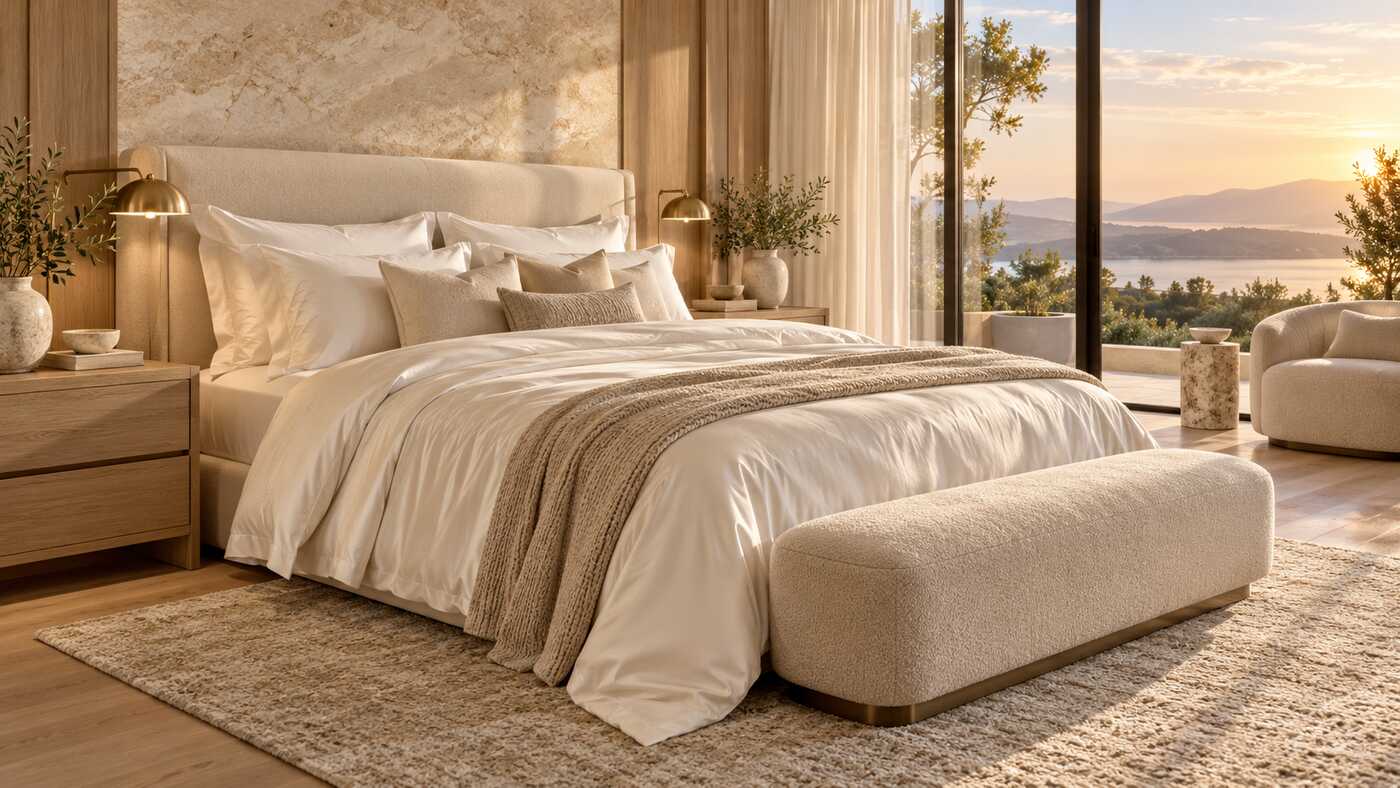
White or ivory sateen sheets can create a fresh, hotel inspired atmosphere.
Pair them with a neutral duvet, soft upholstered headboard, and natural wood furniture.
Layered pillows can provide visual depth while keeping the room understated.
Warm Neutral Bedrooms
Cream, champagne, beige, and light gray bedding can complement oak furniture and natural stone finishes.
This approach works well in contemporary and transitional American interiors.
Choose colors that coordinate with the room’s lighting and flooring.
Contemporary Dark Color Schemes
Deep charcoal, navy, or muted earth tone sheets can create a more dramatic appearance.
Sateen’s gentle sheen may help reflect available light and emphasize the texture of the fabric.
However, darker bedding can show lint and certain marks more easily.
Consider the maintenance requirements before selecting a very dark color.
Common Mistakes to Avoid When Buying Egyptian Cotton Sateen Sheets
One common mistake is choosing bedding based exclusively on thread count.
A high advertised number does not automatically guarantee greater softness or durability.
Another mistake is assuming that every product described as Egyptian cotton contains the same type or percentage of cotton.
Check fiber disclosures and manufacturer documentation.
Some shoppers also purchase deep pocket sheets without measuring mattress height.
An incorrect fit can reduce comfort and cause the fitted sheet to shift.
Ignoring care instructions is another frequent problem.
Washing at unsuitable temperatures or drying with excessive heat may affect fabric appearance and dimensions.
Finally, avoid assuming sateen is the ideal texture for everyone.
Personal preferences for smoothness, crispness, weight, and temperature should influence the final decision.
How to Choose the Best Egyptian Cotton Sateen Sheets for Your Home
A thoughtful buying process begins by identifying what you want from your bedding.
If softness is the main priority, consider the fabric’s feel, yarn quality, and weave.
If you sleep warm, compare the fabric’s weight and breathability with other options.
If long term value matters most, investigate manufacturing quality, care requirements, and relevant consumer reviews.
Look for accurate fiber labeling and transparent product information.
Measure your mattress carefully, including any topper.
Review whether the set includes a fitted sheet, flat sheet, and the appropriate number of pillowcases.
Consider independent textile testing and certifications where relevant.
Most importantly, select bedding based on comfort and suitability rather than advertising promises.
Frequently Asked Questions
1. Are Egyptian cotton sateen sheets good quality?
They can be high quality when made using authentic cotton fibers, appropriate yarn construction, and careful manufacturing. Quality varies between products and brands.
2. What thread count is best for Egyptian cotton sateen sheets?
A range around 300 to 500 is a useful starting point for many shoppers. Fiber quality, weave, and manufacturing are often more important than thread count alone.
3. Are Egyptian cotton sateen sheets good for hot sleepers?
They may suit some hot sleepers, but sateen generally feels more substantial than percale. Lightweight percale may be preferable for people seeking greater airflow.
4. What is the difference between Egyptian cotton and sateen?
Egyptian cotton describes a type or origin of cotton fiber, while sateen describes the fabric’s weaving structure. A sheet can combine both characteristics.
5. Do Egyptian cotton sateen sheets get softer after washing?
Some cotton sateen products may feel softer with appropriate laundering. Results depend on yarn quality, finishing treatments, and the manufacturer’s care instructions.
6. How do I know if Egyptian cotton sateen sheets are authentic?
Review the fiber label, manufacturer sourcing information, and available certifications or traceability records. Authenticity should not be assumed from marketing claims alone.
Conclusion
Egyptian cotton sateen sheets can provide an appealing combination of smooth texture, elegant appearance, and everyday comfort for American bedrooms. Choosing the right set involves evaluating authentic fiber content, yarn quality, thread count, mattress fit, and suitable fabric finishing. Proper washing and maintenance can help preserve the sheets’ appearance and performance over time. By comparing genuine product specifications and prioritizing personal comfort, homeowners can select bedding that creates a more inviting and enjoyable sleeping environment.