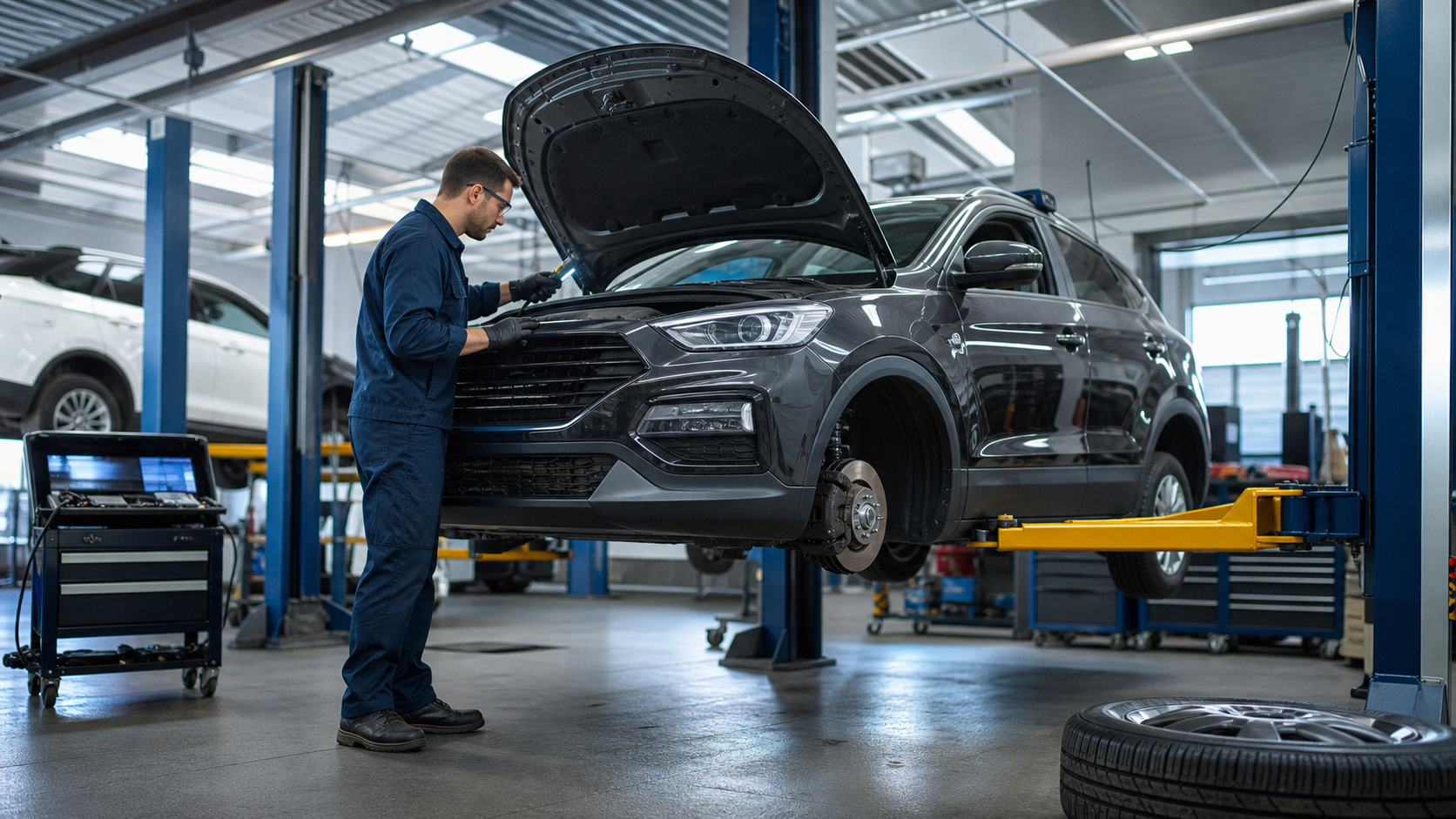
Car Servicing: What Every Driver Should Know About Vehicle Maintenance
Regular car servicing helps keep a vehicle reliable, identifies developing mechanical or safety related problems, and ensures routine maintenance is completed at the intervals specified by its manufacturer. A professional service can include engine oil and filter replacement, fluid checks, brake and tyre inspections, diagnostic checks, and examination of key mechanical components, although the exact work depends on the vehicle and service schedule. Following the correct maintenance plan can reduce the risk of avoidable breakdowns and premature component wear while helping owners understand the overall condition of their vehicle.
Modern cars combine mechanical components with sophisticated electronics, sensors and control systems. Electric and hybrid vehicles add high voltage systems and different maintenance requirements.
For that reason, servicing should not be treated as a generic oil change.
The correct procedure depends on the manufacturer’s schedule, vehicle age, mileage, powertrain and operating conditions. This guide explains service types, costs, warning signs, maintenance schedules and how to select a suitable garage.
What Is Car Servicing?
Car servicing is planned inspection and maintenance performed to help a vehicle continue operating as intended.
Manufacturers specify maintenance intervals based on time, mileage or onboard condition monitoring systems. Individual schedules identify which components need to be inspected, adjusted or replaced at particular intervals.
A service can therefore involve considerably more than changing the engine oil.
What Does a Car Service Include?
The work depends on the manufacturer’s requirements and the service package being purchased.
Typical tasks may include:
• Engine oil replacement
• Oil filter replacement
• Brake inspection
• Tyre inspection
• Fluid level checks
• Battery condition checks
• Lights and electrical checks
• Steering inspection
• Suspension inspection
• Drive belt inspection where applicable
• Diagnostic checks
• Fluid replacement when scheduled
Items should be replaced because they are due under the maintenance schedule or because inspection shows that replacement is needed.
Why Manufacturer Specifications Matter
Different engines and transmissions require specific fluids, parts and maintenance intervals.
Using oil with an unsuitable specification, for example, can affect engine performance or compatibility with emissions systems.
The owner’s manual and official manufacturer maintenance information should therefore be primary references.
Car Servicing Versus a Safety Inspection
Routine servicing should not be confused with a legally required vehicle inspection.
For example, in the UK an MOT evaluates specified roadworthiness, safety and emissions requirements at the time of testing. It is not a replacement for routine vehicle maintenance.
A car can pass a statutory inspection and still need scheduled servicing.
7 Powerful Benefits of Regular Car Servicing
Maintenance cannot prevent every breakdown, but it provides an opportunity to identify wear and maintain components before some problems become serious.
1. Helps Maintain Vehicle Safety
Brakes, tyres, steering and suspension directly affect vehicle control.
A service inspection can identify visible wear, fluid leaks, damaged components or other issues that may require further attention.
Safety still depends on the driver monitoring the vehicle between services.
Unusual braking behavior, warning lights or tyre damage should not be ignored simply because the next scheduled service is months away.
2. Reduces the Risk of Avoidable Breakdowns
Some breakdowns occur without significant warning, while others develop gradually.
A weak battery, worn belt or fluid leak can sometimes be identified during routine maintenance before failure occurs.
Servicing does not guarantee that a car will never break down, but it can address predictable maintenance needs.
3. Supports Engine Reliability
Internal combustion engines rely on lubrication to reduce friction and manage heat.
Oil degrades and becomes contaminated during use.
Changing oil and the filter according to the correct schedule helps maintain lubrication and remove contaminants captured by the filter.
Use the oil specification and viscosity approved for the vehicle.
4. Helps Maintain Performance
Poorly maintained components can affect how a vehicle operates.
Depending on the vehicle, worn spark plugs, inappropriate tyre pressure, dirty filters or other maintenance issues may influence performance.
Modern engine management systems compensate for some changes, but they cannot eliminate the need for maintenance.
5. Can Support Fuel Efficiency
Correct tyre pressures, suitable engine oil and properly operating systems can help a vehicle perform efficiently.
However, servicing should not be marketed as guaranteeing a particular percentage improvement in fuel economy.
Driving style, speed, traffic, weather, vehicle load and journey type also have substantial effects on consumption.
6. Creates a Maintenance Record
Service records document how a vehicle has been maintained.
This information can be useful for future technicians and prospective buyers.
Depending on the manufacturer, records may be kept in a physical service book, digitally or through both methods.
7. Can Support Warranty Compliance
Vehicle warranties often require maintenance to be completed according to specified schedules and standards.
Exact terms depend on the warranty and jurisdiction.
Owners should keep service invoices and records showing relevant dates, mileage, parts and fluids.
How Often Should You Get Car Servicing?
There is no single servicing interval suitable for every vehicle.
The correct schedule is the one specified by the manufacturer for the particular model, engine and operating conditions.
Time Based Service Intervals
Some maintenance items become due after a particular period, even when mileage is low.
This matters for vehicles used primarily for short journeys or only occasionally.
Time affects fluids and some vehicle components independently of mileage.
Mileage Based Intervals
Other schedules use accumulated distance.
The manufacturer may specify different maintenance operations at progressive mileage milestones.
Do not assume the same interval applies throughout the vehicle’s entire life.
Condition Based Servicing
Some modern cars use electronic monitoring to calculate or estimate when maintenance is due.
The system can consider mileage, time and other operating information.
Drivers should understand what the dashboard service indicator actually represents for their particular model.
Car Servicing Under Severe Driving Conditions
Manufacturers may specify alternative maintenance requirements for severe operating conditions.
These can include frequent short trips, heavy towing, dusty environments, unusually high or low temperatures, or intensive commercial use.
Check the owner’s manual to determine whether a more demanding schedule applies.
Types of Car Servicing Explained
Garages often advertise packages using terms such as interim, full and major service.
These labels are useful commercially but are not perfectly standardized across the automotive industry.
Always check the actual list of work included.
Interim Service
An interim package is typically designed as a maintenance check between more comprehensive services.
It may include oil and filter replacement alongside inspections of tyres, brakes and essential fluids.
The exact content varies by garage.
Full Service
A full service usually contains a broader range of checks.
It may cover additional mechanical and electrical systems compared with an interim package.
Again, the term does not guarantee that all manufacturer scheduled maintenance is included.
Major Service
A major package may include items that require less frequent replacement.
Depending on the vehicle, these could involve filters, spark plugs or selected fluids where due.
Choosing the Correct Car Servicing Package
Rather than choosing a package based solely on its name, compare it with the manufacturer’s maintenance schedule.
Ask the garage to identify which required items are included and which carry an additional charge.
This helps prevent missed maintenance.
Engine Oil and Filter Maintenance
Oil maintenance is fundamental for most internal combustion engines.
Why Engine Oil Matters
Engine oil lubricates moving components while contributing to cooling, cleaning and protection.
The oil is engineered to meet specific performance requirements.
Modern engines can be particularly sensitive to using the correct specification.
What Does the Oil Filter Do?
The oil filter captures contaminants circulating with engine oil.
Replacing it at the appropriate interval helps prevent excessive contaminant accumulation.
Filter specification also matters, so appropriate quality parts should be used.
Can You Change Oil Less Frequently?
Do not extend intervals simply because the oil still looks acceptable.
Appearance does not reliably show whether the lubricant continues to meet its required performance characteristics.
Follow the schedule and any relevant onboard service monitoring.
Brake Inspection During Car Servicing
Brakes are safety critical.
Brake Pads and Discs
Friction wears brake pads and, over time, brake discs or rotors.
Wear rate depends heavily on driving conditions, vehicle weight, braking patterns and component design.
There is no universal replacement mileage.
Brake Fluid
Brake fluid can absorb moisture over time in many systems.
Manufacturers may specify replacement intervals based on time or other criteria.
Use only the correct specification for the vehicle.
Warning Signs of Brake Problems
Potential warning signs include unusual noises, increased stopping distance, abnormal pedal feel or warning indicators.
These symptoms deserve prompt professional assessment.
Why Car Servicing Should Include Brake Checks
Routine inspection provides an opportunity to measure or visually evaluate brake components before severe wear occurs.
However, servicing should never be used as a reason to postpone investigation when braking behavior changes unexpectedly.
Safety concerns require immediate attention.
Tyre Checks and Vehicle Safety
Tyres create the vehicle’s contact with the road.
Their condition affects braking, steering and grip.
Tread Depth
Minimum legal tread requirements vary by jurisdiction.
Drivers should know the rules where their vehicle is used.
Tyres may need replacement before reaching a legal limit when they are damaged, deteriorated or otherwise unsuitable.
Tyre Pressure
Incorrect pressure can affect handling, tyre wear and energy consumption.
Use the vehicle manufacturer’s recommended pressures rather than the maximum pressure printed on the tyre sidewall.
Recommended values may differ according to load.
Uneven Tyre Wear
Uneven wear can indicate alignment, suspension, pressure or other issues.
A technician can inspect the pattern and determine whether further diagnosis is needed.
Car Servicing and Fluid Checks
Vehicles use several specialized fluids.
Coolant
Engine coolant supports temperature control and corrosion protection.
Coolant types are not universally interchangeable.
Use the specification approved by the vehicle manufacturer.
Transmission Fluid
Automatic, manual and continuously variable transmissions can have very different lubrication requirements.
Some transmissions have scheduled fluid services while others use different maintenance strategies.
Follow manufacturer documentation.
Power Steering Fluid
Many modern vehicles use electric power steering and therefore have no conventional hydraulic power steering fluid.
Vehicles with hydraulic systems need the correct fluid and leak inspection where appropriate.
Fluid Leaks Found During Car Servicing
A leak should be identified by source before repair.
Color alone is not always sufficient to determine which fluid is leaking.
Significant fluid loss, overheating or brake fluid leakage can require immediate attention rather than continued driving.
Car Battery Testing and Electrical Systems
Battery problems are a common source of starting difficulties in vehicles using 12 volt electrical systems.
Battery Condition
A battery’s condition depends on age, temperature, charging patterns and vehicle usage.
Testing can provide information about its ability to perform under load.
Simply measuring voltage does not always provide a complete assessment.
Charging System
Alternator and charging faults can resemble battery problems.
Technicians may test charging voltage and system performance where appropriate.
Warning Lights
Modern cars contain numerous electronic modules.
A diagnostic trouble code can help technicians identify where to investigate, but it does not automatically identify the exact failed part.
Diagnostics in Modern Car Servicing
Professional scan tools can access vehicle data and stored fault codes.
Good diagnosis combines electronic information with physical inspection, measurements and technical procedures.
Replacing a component solely because its name appears in a fault description can lead to unnecessary expense.
Car Servicing for Hybrid Vehicles
Hybrid cars combine internal combustion and electrical propulsion technologies.
Many routine items remain similar to conventional cars, but high voltage systems require specialized knowledge.
Hybrid Maintenance
Depending on design, hybrids may still require engine oil, filters, coolant and conventional mechanical checks.
Regenerative braking can influence brake wear patterns but does not eliminate conventional brake maintenance.
High Voltage Safety
Hybrid batteries and related systems operate at potentially dangerous voltages.
High voltage components should only be handled by technicians with appropriate training and equipment.
Car Servicing for Electric Vehicles
Electric vehicles remove several traditional engine maintenance requirements.
There is no engine oil to change in a battery electric vehicle, but that does not make the vehicle maintenance free.
EV Maintenance Items
Electric vehicles can still require:
• Tyre inspection
• Brake checks
• Suspension inspection
• Cabin filter replacement
• Cooling system maintenance where specified
• 12 volt battery checks
• Wiper and washer maintenance
• Software and diagnostic checks where appropriate
Manufacturer schedules remain the best source for model specific requirements.
EV Brakes
Regenerative braking can reduce use of conventional friction brakes.
However, brake components can still wear or deteriorate and therefore require inspection.
Choosing Car Servicing for Electric Vehicles
Look for a workshop with technicians trained to work safely on the specific type of high voltage vehicle.
Appropriate tooling, isolation procedures and technical information are important.
Car Servicing Costs Explained
Service costs differ between vehicles and workshops.
A universal price would be misleading.
What Affects Service Cost?
Factors include:
• Vehicle make and model
• Engine or powertrain
• Required service items
• Fluid quantities
• Parts quality
• Labor rates
• Workshop location
• Additional repairs
• Specialist diagnostic needs
Premium or unusual vehicles may require specialized fluids, parts or expertise.
Main Dealer Versus Independent Garage
Main dealers specialize in their manufacturer’s vehicles and often have direct access to brand specific tools and technical systems.
Independent garages may offer competitive pricing and expertise across several manufacturers.
The better choice depends on the vehicle, required work, warranty considerations and technician competence.
Request a Written Estimate
Ask what the quoted service includes.
Find out which additional repairs require approval before work begins.
A reputable workshop should obtain authorization before performing substantial unexpected work.
Warning Signs Your Car Needs Attention
Scheduled maintenance does not replace responding to symptoms between appointments.
Seek professional assessment for:
• Persistent warning lights
• Braking changes
• Unusual steering behavior
• Overheating
• Fluid leaks
• New mechanical noises
• Starting problems
• Loss of power
• Significant vibration
• Smoke or unusual burning smells
Some symptoms are more urgent than others.
An overheating engine, serious brake problem or oil pressure warning can require stopping the vehicle to avoid danger or major damage.
DIY Car Maintenance Between Services
Drivers can perform several routine checks if they follow the owner’s manual and basic safety precautions.
Check Tyre Pressures
Use a suitable pressure gauge and the manufacturer’s specifications.
Check tyres when appropriate for the measurement method described by the manufacturer.
Monitor Fluid Levels
Some fluids have accessible reservoirs or dipsticks, while modern vehicles may use electronic measurement.
Never open a pressurized cooling system when hot.
Check Lights and Wipers
Regularly confirm that exterior lights work correctly.
Replace worn wiper blades when they no longer clear the windshield effectively.
When Not to Attempt DIY Car Servicing
Leave tasks involving high voltage systems, complex braking work, safety restraints or repairs beyond your competence to trained professionals.
Working under an inadequately supported vehicle is particularly dangerous.
Use appropriate equipment and procedures for any maintenance performed at home.
How to Choose a Reliable Car Servicing Garage
A workshop’s quality matters more than attractive service package names.
Check Qualifications and Reputation
Look for relevant technician qualifications and professional affiliations appropriate to your country.
Customer reviews can provide insight into communication and service, but they should not replace technical credentials.
Ask About Parts
Find out whether the garage uses original equipment, equivalent quality or other aftermarket parts.
The appropriate choice depends on the vehicle, budget and warranty requirements.
Ask for Service Documentation
A proper invoice should identify work performed and relevant replacement parts or fluids.
Ensure the service record is updated where applicable.
Questions to Ask Before Car Servicing
Ask the workshop:
• What does the service include?
• Does it match the manufacturer schedule?
• Which fluids will be used?
• What parts are included?
• Will additional work require approval?
• How will the service record be updated?
• What warranty covers the work?
Clear answers make it easier to compare providers.
Maintaining Service History and Vehicle Value
Documentation helps demonstrate how the vehicle has been maintained.
Keep invoices, inspection reports and repair records.
Digital records should also be retained where owners can access them.
Service history does not guarantee that a used car is mechanically perfect, but it provides useful evidence about prior maintenance.
Prospective buyers should still inspect the vehicle independently.
Frequently Asked Questions
How often should car servicing be completed?
Follow your vehicle manufacturer’s schedule, which may use time, mileage or condition based intervals. Requirements differ between models and powertrains.
What does a full car service include?
Contents vary by garage but may include oil and filter replacement plus inspections of brakes, tyres, fluids, steering, suspension and electrical systems.
Is car servicing the same as an MOT?
No. An MOT is a statutory roadworthiness test in the UK, while servicing is routine maintenance. Passing an MOT does not replace scheduled servicing.
How much does car servicing cost?
Costs depend on the vehicle, service requirements, parts, fluids, labor rates and any additional repairs identified during inspection.
Do electric cars need servicing?
Yes. Battery electric vehicles require maintenance of tyres, brakes, suspension, filters, cooling systems and other components according to manufacturer requirements.
Can regular car servicing prevent breakdowns?
Servicing can identify and address some developing problems, reducing the risk of avoidable failures, but no maintenance program can guarantee a vehicle will never break down.
Conclusion
Car servicing is an important part of maintaining vehicle safety, reliability and mechanical condition throughout ownership. Follow the manufacturer’s maintenance schedule rather than relying on a universal interval, and respond promptly when warning lights, unusual noises or performance changes appear. A qualified workshop should use appropriate parts and fluids, document completed work and explain additional repairs before proceeding. Consistent maintenance and accurate service records can help drivers reduce preventable problems while preserving confidence in their vehicle’s condition.