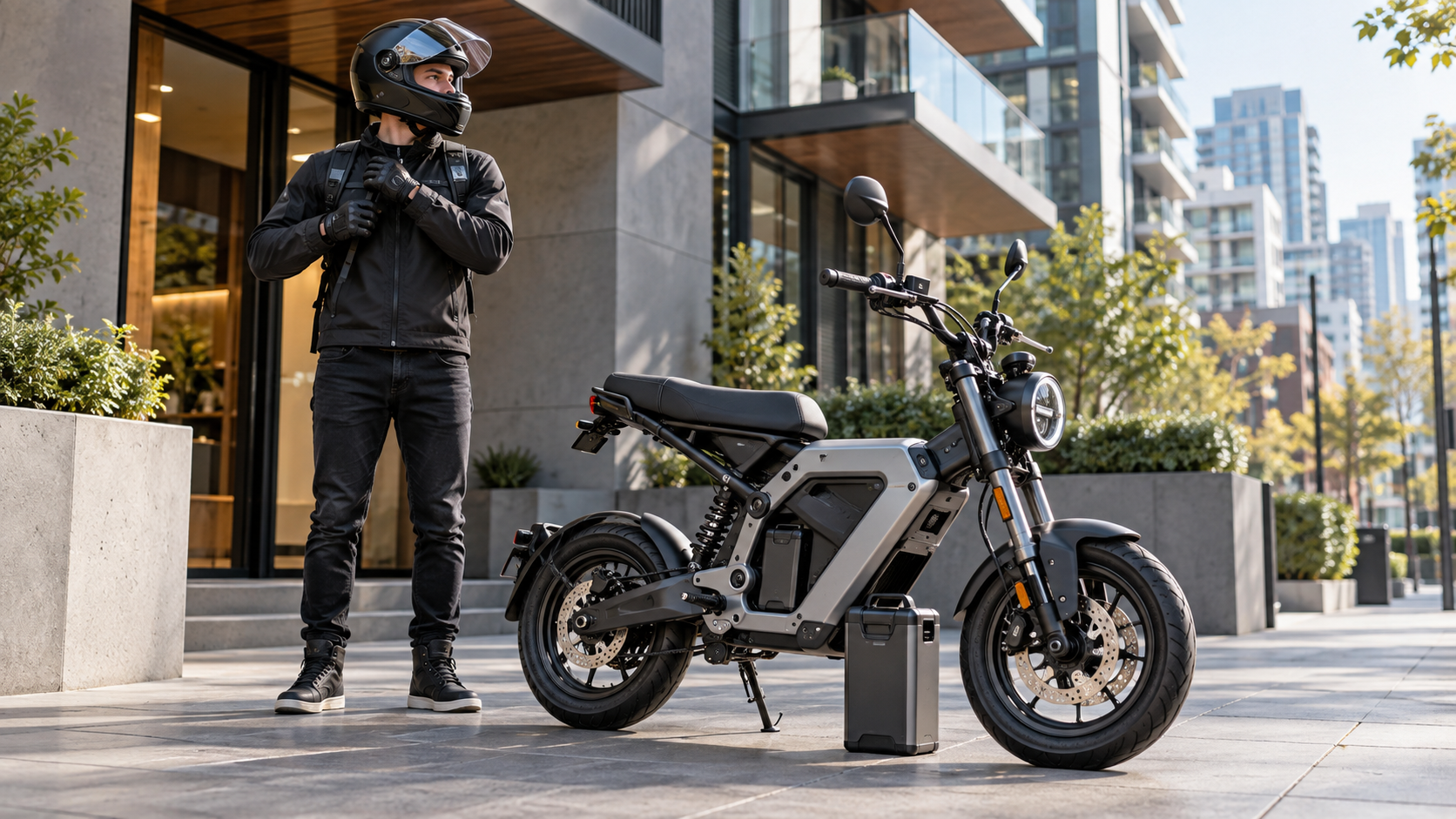
Portable Motorcycle Guide for Compact and Convenient Urban Riding
A portable motorcycle can provide an interesting transportation option for riders who value compact dimensions, easier storage, lightweight construction, and convenient short distance mobility. Unlike a traditional full size motorcycle designed primarily around highway performance and long distance riding, portable designs generally focus on reducing weight and physical size while maintaining practical powered transportation. Depending on the vehicle, this may involve an electric motor, removable battery, folding components, compact wheels, adjustable handlebars, or a frame designed to fit into smaller storage spaces.
The category is broad rather than a single universal vehicle type. Some models resemble miniature motorcycles, while others are closer to compact electric scooters or lightweight urban mobility vehicles.
For buyers, this means specifications matter much more than the name printed in an advertisement.
Motor power, battery capacity, maximum load, braking performance, wheel size, legal classification, storage dimensions, range, and intended riding environment should all be evaluated before purchasing.
What Is a Portable Motorcycle?
A portable motorcycle is generally understood as a compact powered two wheeled vehicle designed to be easier to store, transport, or move than a conventional motorcycle.
The exact design varies considerably between manufacturers.
Some portable designs can fold partially so that handlebars, footrests, or other components occupy less space.
Others do not fold but achieve portability through a lightweight frame and smaller overall dimensions.
Electric power has made compact designs increasingly practical because electric drivetrains can reduce some of the mechanical complexity associated with conventional combustion engines.
A portable design may include:
• Compact frame dimensions
• Lightweight construction
• Electric motor
• Rechargeable battery
• Removable battery
• Folding handlebars
• Folding footrests
• Adjustable seat
• Small wheels
• Integrated carrying points
• Compact storage profile
Not every model includes all of these features.
Portable Does Not Automatically Mean Carryable
The word portable can create unrealistic expectations.
A powered vehicle can be substantially smaller than a traditional motorcycle while still being too heavy for one person to carry comfortably for a long distance.
Before purchasing, always check actual vehicle weight.
Consider whether you need something that can simply fit into a small garage or whether you genuinely need to carry it upstairs, load it into a vehicle, or move it by hand regularly.
Why Portable Motorcycle Designs Are Becoming Attractive
Urban transportation creates different requirements from long distance touring.
Many riders need a vehicle for relatively short journeys, such as travelling between home and work, reaching public transport, moving around a campus, or completing local errands.
Large motorcycles may offer excellent performance but can require more storage space and may be unnecessary for these journeys.
Limited Storage Space
People living in apartments or smaller properties may not have access to a private garage.
A compact motorcycle can potentially fit into:
• Small storage rooms
• Secure bike areas
• Garages shared with other vehicles
• Workshops
• Larger utility spaces
• Approved indoor storage areas where safe and permitted
Electric models require additional attention to battery storage and charging safety.
Easier Transport
Some compact motorcycles may fit into suitable vans, larger vehicles, trailers, or recreational vehicles more easily than conventional motorcycles.
This can make them interesting for travellers and people who want local transportation after reaching a destination.
The vehicle must still be secured correctly during transportation.
Convenient Short Distance Mobility
Compact motorcycles are generally most attractive when their intended use matches their capabilities.
A lightweight urban vehicle does not need extreme top speed to be useful for local transportation.
For many riders, easy parking, manageable weight, and low speed manoeuvrability may be more valuable.
7 Powerful Advantages of a Portable Motorcycle
Understanding the practical benefits can help determine whether a compact motorcycle suits your lifestyle.
1. Easier Storage
Reduced dimensions are one of the biggest advantages.
Traditional motorcycles can occupy considerable floor space.
A compact vehicle may require significantly less room, particularly when components such as handlebars or footrests can fold.
Before buying, measure the intended storage area.
Consider:
• Overall length
• Width
• Handlebar width
• Height
• Folded dimensions
• Clearance needed for movement
• Charging access
Do not rely solely on photographs because wide angle product images can make vehicles appear smaller than they actually are.
2. More Manageable Weight
A smaller vehicle can be easier to move manually.
This can be useful when manoeuvring inside a garage, repositioning the motorcycle in a parking area, or loading an appropriate vehicle.
However, electric motorcycles can still be heavy because batteries add considerable mass.
Check the published weight with the battery installed.
Also check battery weight separately if the battery is removable.
3. Practical Electric Power
Many modern compact vehicles use electric motors.
Electric propulsion can suit short distance urban travel because power delivery is straightforward and there is no need to manage fuel during normal charging based use.
An electric motorcycle typically uses:
• Traction motor
• Battery pack
• Motor controller
• Throttle
• Charging system
• Battery management electronics
Performance depends on how these components are designed and matched.
Motor wattage alone does not tell the complete story.
Vehicle weight, controller programming, gearing, wheel size, battery voltage, terrain, rider weight, and weather can all influence real world performance.
4. Lower Space Requirements for Parking
Parking can be difficult in crowded environments.
A physically smaller vehicle can be easier to position where motorcycle parking is legally permitted.
Compact size does not mean the rider can park anywhere.
Local parking rules still apply.
The vehicle should also be secured against theft.
5. Simple Urban Manoeuvrability
Smaller motorcycles can feel manageable at lower speeds because of their reduced dimensions.
This may help when navigating parking areas and other low speed environments.
Wheelbase, steering geometry, wheel size, rider position, and vehicle weight all affect handling.
A very small motorcycle may also feel different from a conventional machine, so riders should become familiar with its handling characteristics gradually.
6. Potentially Lower Energy Requirements
A lightweight vehicle generally needs less energy to move than a much heavier vehicle under similar conditions.
However, actual energy efficiency depends on design and use.
Riding speed, acceleration, hills, rider weight, tyre pressure, temperature, and battery condition can all affect energy consumption.
7. Useful Secondary Transportation
A portable motorcycle may work particularly well as a secondary vehicle.
For example, someone might use a car for long journeys and a compact motorcycle for short local trips.
Others may transport a compact motorcycle in an appropriate recreational vehicle and use it after reaching a campsite or destination.
Its value depends on choosing the vehicle for journeys that match its capabilities.
Portable Motorcycle Electric Models Explained
Electric power is particularly compatible with compact transportation.
An electric motor can deliver useful low speed torque without a conventional gearbox on many designs.
Battery Capacity
Battery capacity helps determine how much energy is available.
Manufacturers may describe batteries using:
• Volts
• Amp hours
• Watt hours
For buyers comparing vehicles, watt hours can provide useful information about stored energy.
However, battery size alone cannot accurately predict range.
What Affects Electric Range?
Real world range can change because of:
• Rider weight
• Passenger or cargo weight
• Speed
• Hills
• Frequent acceleration
• Wind
• Tyre pressure
• Temperature
• Battery age
• Riding mode
• Road surface
• Stop and start traffic
Manufacturer range figures should therefore be viewed as estimates under specified test conditions rather than guaranteed results for every ride.
Portable Motorcycle Range Should Match Your Routine
Think about your actual journey before comparing maximum advertised numbers.
If your normal round trip is 15 miles, buying a vehicle with an advertised range only slightly above 15 miles leaves little flexibility for changing conditions.
A practical reserve provides more confidence when unexpected detours or environmental factors reduce range.
Removable Batteries and Portable Motorcycle Convenience
A removable battery can improve practicality significantly.
Instead of moving the entire vehicle near an electrical outlet, the rider may be able to remove the battery and charge it in an appropriate location.
This can be particularly valuable for apartment residents.
However, batteries should be handled carefully.
Use the charger specified or approved for the battery system and follow manufacturer instructions regarding charging environment, temperature, storage, and inspection.
Damaged lithium batteries should not continue to be used simply because they still provide power.
Warning signs can include:
• Physical swelling
• Significant impact damage
• Damaged casing
• Unusual heat
• Unusual odour
• Damaged connectors
• Charging abnormalities
Seek qualified technical advice if battery damage is suspected.
Portable Motorcycle Safety Features to Look For
Compact size does not reduce the importance of safety.
A powered two wheeled vehicle should have braking and structural components suitable for its performance.
Braking System
Check whether the vehicle uses:
• Disc brakes
• Drum brakes
• Hydraulic braking
• Mechanical braking
• Regenerative braking
Regenerative braking should generally be viewed as an additional system rather than assumed to replace suitable mechanical brakes.
Tyres
Tyres influence braking, handling, and comfort.
Small wheels can respond more noticeably to potholes and uneven surfaces than larger motorcycle wheels.
Inspect:
• Tyre size
• Tread
• Pressure requirements
• Load rating
• Replacement availability
Maintaining correct tyre pressure is important for handling and efficiency.
Lighting
Road capable motorcycles may require appropriate lighting depending on local rules.
Useful equipment can include:
• Headlight
• Tail light
• Brake light
• Direction indicators
• Reflectors
Visibility becomes especially important in poor weather and low light.
Mirrors
Proper rear visibility helps riders understand surrounding traffic.
If mirrors are fitted, adjust them before riding.
Portable Motorcycle Legal Classification Matters
One of the most important questions is whether the vehicle can legally be used where you intend to ride.
Do not assume that a small vehicle avoids motorcycle rules simply because it is marketed as portable, mini, compact, or electric.
Vehicle classification can depend on factors such as:
• Motor power
• Maximum speed
• Number of wheels
• Vehicle construction
• Registration status
• Intended road use
• Local vehicle definitions
• Equipment requirements
For example, the United States National Highway Traffic Safety Administration explains that marketing terms for small powered vehicles do not necessarily determine federal vehicle classification, while individual states can apply their own rules to vehicle use.
Rules differ significantly between countries and even between regional jurisdictions.
Always check the requirements where the motorcycle will actually be ridden.
These may involve:
• Driving or motorcycle licence
• Registration
• Insurance
• Number plate
• Helmet
• Minimum rider age
• Vehicle approval
• Road equipment
• Restrictions on certain roads
A vehicle sold online is not automatically legal for public road use.
How Fast Should a Portable Motorcycle Be?
Maximum speed is often used as a major marketing feature, but faster is not automatically better.
The ideal speed depends on the intended environment.
A compact motorcycle designed for local streets has different requirements from a highway motorcycle.
Higher speed also increases demands on:
• Braking
• Tyres
• Frame strength
• Suspension
• Rider protection
• Stability
• Battery consumption
Do not choose a vehicle purely because it advertises the highest top speed.
The complete chassis and braking system need to support the claimed performance.
Portable Motorcycle Wheel Size and Ride Quality
Wheel size can strongly influence how a compact motorcycle feels.
Very small wheels help reduce overall dimensions but may react more strongly to road imperfections.
Larger wheels can offer a different balance of stability and packaging.
When considering wheel size, think about where you will ride.
Smooth urban surfaces may suit smaller wheels better than roads containing frequent potholes, gravel, or rough sections.
Suspension can also improve comfort, although suspension quality matters more than simply having visible springs.
How to Choose the Right Portable Motorcycle
A structured buying process can prevent expensive mistakes.
Define Your Main Purpose
Ask yourself what you actually need the motorcycle to do.
Possible purposes include:
• Daily commuting
• Campus transportation
• Local errands
• Travel support
• Recreational riding
• Short urban journeys
• Secondary transportation
The intended use should guide every later decision.
Check Vehicle Weight
If portability matters, weight should be one of the first specifications you check.
A compact vehicle that weighs too much for your needs may solve the storage problem without solving the transportation problem.
Measure Folded and Unfolded Size
If the motorcycle folds, check both measurements.
Confirm that it fits through:
• Doors
• Storage spaces
• Vehicle openings
• Lifts
• Garage areas
Allow additional clearance for safe handling.
Compare Realistic Range
Do not buy based only on the largest advertised number.
Look at the conditions under which the range was measured and consider how your own riding differs.
Check Maximum Load
The total supported load may include the rider, clothing, backpack, accessories, and cargo.
Stay within manufacturer limits.
Investigate Parts Availability
An inexpensive motorcycle can become difficult to own if replacement tyres, brake components, batteries, chargers, or controllers are unavailable.
Ask about parts before buying.
Portable Motorcycle Maintenance Basics
Electric motorcycles generally have fewer routine engine related maintenance items than combustion motorcycles, but they still require regular inspection.
Check Tyres
Inspect pressure, tread, damage, and general condition.
Inspect Brakes
Brakes should operate predictably.
Unusual noise, weak braking, or excessive lever travel should be investigated.
Check Fasteners
Vibration can affect components over time.
Follow manufacturer inspection instructions for important fasteners.
Maintain the Battery
Follow recommended charging and storage procedures.
Avoid using incompatible charging equipment.
Keep Moving Parts Clean
Hinges and folding mechanisms can collect dirt.
Clean them according to manufacturer instructions and inspect for wear.
Monitor Electrical Connections
Damaged cables, exposed wiring, or loose connectors should be repaired before riding.
Portable Motorcycle Storage Tips
Proper storage helps protect the vehicle.
Choose a dry and secure location whenever possible.
Avoid prolonged exposure to:
• Heavy rain
• Standing water
• Extreme heat
• Extreme cold
• Direct sunlight
• Corrosive chemicals
Battery storage requirements vary by chemistry and manufacturer.
If storing the motorcycle for an extended period, follow the battery maker’s recommended charge level and inspection schedule.
Security for Compact Motorcycles
Portability can create a security disadvantage because a smaller vehicle may also be easier for thieves to move.
Use appropriate security even when parking for a short period.
Depending on the vehicle, security options may include:
• Disc lock
• Heavy duty chain
• Ground anchor
• Alarm
• Electronic tracking
• Secure garage storage
• Steering lock
Using more than one security method can make removal more difficult.
Who Should Consider a Portable Motorcycle?
A compact motorcycle may suit people who value convenience more than long distance touring ability.
Potential users include:
• Urban commuters
• Apartment residents
• Students
• Recreational vehicle owners
• Travellers
• People with limited garage space
• Riders needing secondary transportation
• Owners making frequent short journeys
It may be less suitable for riders who regularly travel long distances at motorway speeds or need substantial cargo and passenger capacity.
Matching the vehicle to its purpose is more important than following a transportation trend.
Common Portable Motorcycle Buying Mistakes
Avoiding common mistakes can improve long term ownership.
Choosing Only by Price
A low purchase price can become expensive if the motorcycle has poor parts availability or requires frequent repairs.
Ignoring Vehicle Weight
Always check the actual figure rather than assuming that compact means lightweight.
Believing Maximum Range Claims Without Context
Range depends heavily on riding conditions.
Plan conservatively.
Ignoring Legal Requirements
A vehicle available for purchase may not be approved for public roads in your location.
Verify this before ordering.
Buying Unknown Replacement Batteries
Battery compatibility is important.
Use batteries and chargers designed for the vehicle.
Overlooking Rider Comfort
Compact dimensions can produce limited legroom.
Check seat height, handlebar position, footrest placement, and rider fit before buying whenever possible.
Frequently Asked Questions
What is a portable motorcycle?
A portable motorcycle is a compact powered two wheeled vehicle designed around easier storage or transportation. Features may include lightweight construction, electric power, folding components, and removable batteries.
Are portable motorcycles electric?
Many compact models use electric motors because electric drivetrains suit small urban vehicles, but the phrase portable motorcycle does not automatically mean electric.
Can a portable motorcycle be used on public roads?
That depends on the vehicle specification and local laws. Registration, licensing, insurance, equipment, and vehicle approval requirements can vary by location.
How far can a portable motorcycle travel?
Range depends on battery capacity, speed, rider weight, terrain, weather, tyre pressure, and riding style. Manufacturer estimates should be compared with your real journey requirements.
Can I carry a portable motorcycle by hand?
Some lightweight models may be manageable for short distances, while others are only portable in the sense that they are easier to store or transport. Always check the actual weight before purchasing.
What should I check before buying a portable motorcycle?
Review weight, dimensions, battery capacity, range, braking, tyres, maximum load, charging method, spare parts availability, warranty, safety equipment, and local legal requirements.
Conclusion
A portable motorcycle can provide convenient transportation for riders who want compact dimensions, manageable storage, electric mobility, and practical short distance travel. The best model is not necessarily the smallest or fastest, but the one that matches the rider’s journey, storage situation, safety needs, and local regulations. By checking real dimensions, weight, range, battery quality, braking, replacement parts, and road legality before purchasing, riders can choose a portable motorcycle that delivers genuine everyday convenience.


One Comment