From Your First Climb to Everest Build the Skills That Matter Before Going Higher
Learning basic climbing skills is the beginning of a long progression for anyone who dreams of climbing Mount Everest. Everest is not an appropriate first mountaineering objective. A prospective climber needs experience with movement on snow and ice, crampons, ropes, fixed lines, glacier travel, equipment, high-altitude environments, expedition routines and personal decision-making long before attempting the world’s highest mountain.
That progression cannot be reduced to a checklist or replaced by fitness alone. Practical instruction from qualified climbing and mountain professionals, repeated experience on increasingly demanding objectives and responsible acclimatization are essential. Basic climbing skills create the foundation, while intermediate and advanced mountaineering experience develops the judgment required when weather, terrain, fatigue and altitude make straightforward tasks considerably harder.
Why Basic Climbing Skills Matter Before Everest
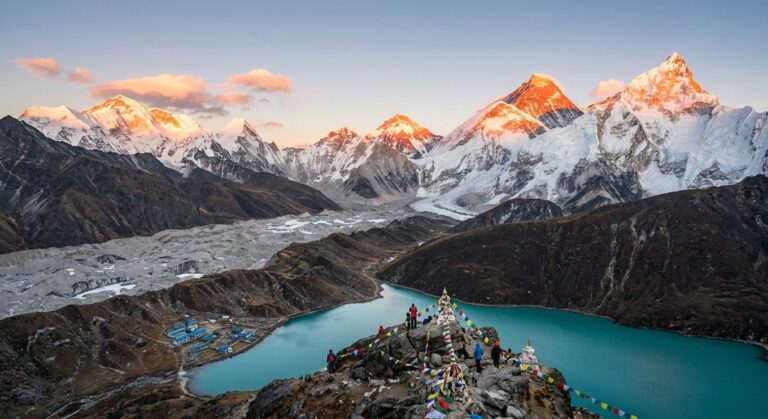
Mount Everest rises to approximately 8,849 metres above sea level, depending on the accepted measurement reference and rounding used. At that elevation, climbers operate in an environment where severe cold, low atmospheric pressure, high winds and limited oxygen place extraordinary demands on the body.
The mountain also presents glacier travel, steep snow and ice, fixed ropes, crevasse hazards, changing weather, objective hazards and complicated expedition logistics.
Basic climbing skills do not make Everest safe. Mountaineering always involves risk, and Everest has hazards that cannot be eliminated through technique alone.
However, strong foundational skills can help climbers operate more competently within a professionally planned expedition.
The objective of early training is not to imitate an Everest summit day. It is to build reliable habits in lower-risk environments where techniques can be practiced repeatedly.
Everest Is Not a Beginner Climb
The phrase Everest for beginners can be misleading.
A person may begin a long-term journey toward Everest as a complete beginner, but an Everest summit expedition itself should not be treated as beginner-level mountaineering.
Someone starting with no experience should first learn basic climbing skills under appropriate supervision and gradually build mountain experience.
This may require years rather than months.
Commercial expedition support, Sherpa expertise, fixed ropes and supplemental oxygen do not remove the need for individual competence.
A climber still needs to manage personal equipment, move efficiently, follow safety systems, recognize problems and respond appropriately when conditions deteriorate.
Start With General Mountain Fitness
Climbing technique matters, but climbers also need sufficient physical capacity to use those skills for extended periods.
Mountaineering can involve long uphill days while carrying equipment, repeated elevation gain, irregular terrain and consecutive days of activity.
Basic climbing skills are easier to perform correctly when exhaustion has not overwhelmed technique.
Training should be progressive and appropriate to the individual’s health and starting fitness.
Build Aerobic Endurance Gradually
Walking, hiking, running, cycling, stair climbing and other aerobic activities can contribute to endurance development.
For mountaineering, hiking uphill on varied terrain is particularly specific because it combines cardiovascular work with movement and load carriage.
Do not increase training volume abruptly.
A qualified coach or medical professional may be appropriate for individuals with health conditions, previous injuries or ambitious expedition goals.
Develop Useful Strength
Mountaineers benefit from strength in the legs, hips, core and upper body.
Lower-body strength supports ascent and descent, while upper-body and grip strength can help with rope systems and equipment.
Basic climbing skills still depend more on efficient technique than brute strength.
A climber who relies exclusively on muscular effort can tire unnecessarily quickly.
Learn Efficient Footwork First
Good climbing begins with the feet.
New climbers frequently look for handholds while giving little attention to foot placement. In mountaineering, efficient footwork becomes even more important because heavy boots, crampons and fatigue can magnify poor movement habits.
Basic climbing skills should therefore develop precise and deliberate stepping.
Balance Over Your Feet
On suitable terrain, position the body so weight is supported efficiently through the legs instead of constantly pulling with the arms.
Climbers should learn how body position changes traction and balance.
The exact movement depends on terrain and conditions, which is why supervised practical training matters.
Practice on Varied Terrain
Rock, scree, snow, ice and mixed terrain require different movement patterns.
Learning basic climbing skills on a climbing wall alone is insufficient preparation for Himalayan mountaineering.
Indoor climbing is valuable for movement, rope familiarity and general technique, but aspiring mountaineers also need outdoor instruction in real mountain environments.
Learn How to Use Mountaineering Boots
High-altitude mountaineering boots differ substantially from ordinary hiking footwear.
They can be heavier, stiffer and designed to work with specific crampon systems.
Basic climbing skills training should include time spent moving in appropriate boots before major expeditions.
A climber who first discovers fit problems on a remote expedition may face blisters, pressure injuries or cold-related problems.
Fit Matters More Than Brand
There is no single best boot for every climber.
Foot shape, expedition conditions, insulation needs and crampon compatibility all affect selection.
Seek professional fitting where possible and follow manufacturer guidance.
Everest-specific footwear must be suitable for extreme high-altitude conditions rather than simply resembling a technical mountaineering boot.
Crampon Skills Are Essential
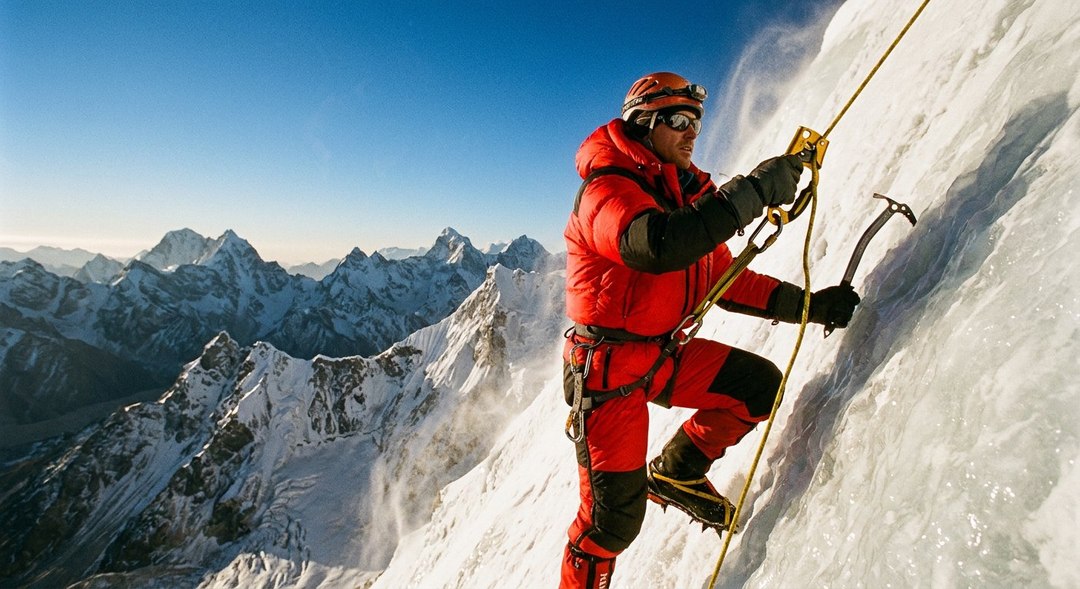
Crampons provide traction on snow and ice by placing metal points beneath the boot.
They are essential equipment on many mountaineering routes, including high-altitude expeditions.
Basic climbing skills should include putting crampons on securely, checking them, walking without catching points on clothing and moving efficiently on appropriate slopes.
These techniques should be taught and practiced with qualified supervision.
Crampon Compatibility Must Be Checked
Not every crampon fits every boot.
Compatibility depends on the attachment system, boot construction and intended activity.
A poorly fitted crampon can detach at a dangerous moment.
Before training or climbing, verify compatibility according to manufacturer instructions and professional guidance.
Learn Ice Axe Fundamentals
An ice axe is a core mountaineering tool used for balance, movement and other technical purposes on snow and ice.
Correct use depends on terrain and context.
Basic climbing skills training commonly introduces how to carry and position an axe and how it supports movement on suitable slopes.
Self-arrest techniques are also traditionally taught, but they must be learned practically from qualified instructors.
Reading a description is not a safe substitute for supervised practice.
Self-Arrest Is a Backup Skill
A common mistake is treating self-arrest as permission to move carelessly on snow.
Avoiding a fall is preferable to attempting to stop one.
Basic climbing skills should emphasize secure movement, terrain assessment and appropriate rope systems alongside arrest techniques.
On some terrain, a fall may become impossible to arrest effectively.
Rope Skills Build an Essential Foundation
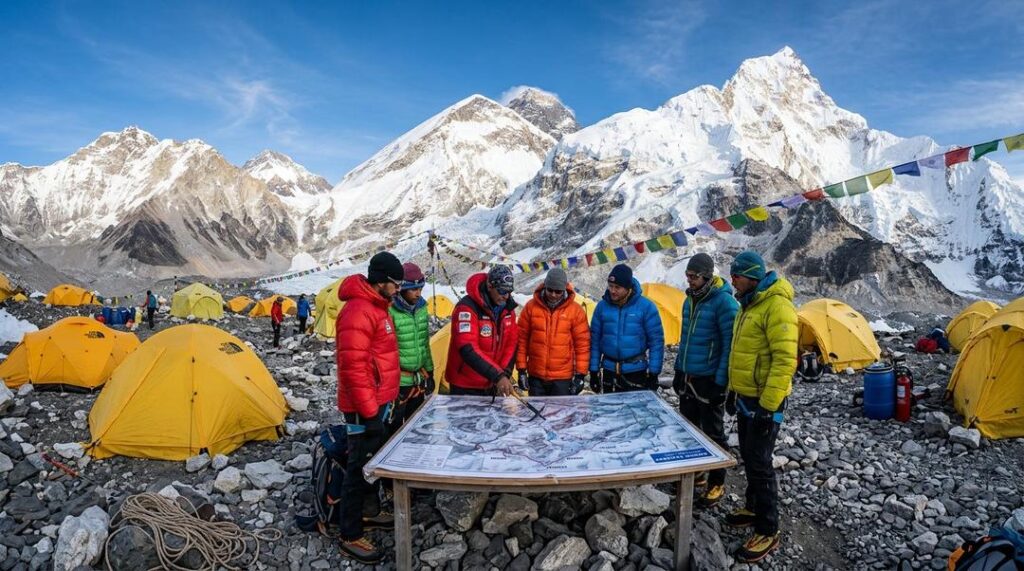
Ropes are central to technical mountaineering.
They can be used in climbing systems, glacier travel, fixed-line movement, rescues and other contexts.
Basic climbing skills begin with understanding the rope as part of a wider safety system rather than simply learning several knots.
A qualified instructor can explain where each technique is appropriate.
Learn Core Knots Properly
Climbers commonly encounter knots such as the figure-eight family, clove hitch and other knots suited to specific mountaineering applications.
The exact set of knots depends on the discipline.
Basic climbing skills training should focus on correct tying, dressing, checking and understanding the function and limitations of each knot.
A knot reproduced from memory without understanding its application can introduce risk rather than reduce it.
Partner Checks Matter
Climbers should develop systematic checking habits.
Harnesses, knots, connectors and other critical equipment should be checked according to the climbing system and guidance being used.
Basic climbing skills become dependable when checking is routine rather than something remembered only during difficult climbs.
Understand Harness Use
A climbing harness connects a climber to rope and safety systems.
Its correct fit and use are fundamental.
Aspiring mountaineers should receive practical instruction in putting on, adjusting and inspecting their harness and connecting it to systems appropriately.
Basic climbing skills also include recognizing that equipment differs by design.
Manufacturer instructions matter.
Do not assume that every harness, carabiner or belay device operates identically.
Belaying Requires Hands-On Instruction
Belaying manages the rope for a climber and is a safety-critical skill.
Different belay devices and climbing situations involve different techniques.
This is not an area where written instructions alone are adequate.
Basic climbing skills should be learned through qualified practical instruction, with supervised repetition until correct behavior becomes consistent.
The manufacturer instructions for the specific device should always be followed.
Fixed Rope Skills Matter on Everest
Everest routes commonly use fixed ropes on significant sections.
Expedition climbers need to understand how to move on fixed lines using compatible personal equipment and the systems established for the route.
Basic climbing skills provide the groundwork, but fixed-rope competency should be developed well before an Everest expedition.
Trying a system for the first time at extreme altitude is inappropriate.
Practice Transitions Repeatedly
Technical transitions can become slower when wearing gloves, heavy clothing and high-altitude equipment.
Practice in suitable controlled environments helps build familiarity.
The objective is not speed at all costs.
Correct equipment use and deliberate checking remain more important than racing through a transition.
Learn Ascending Devices
Mechanical rope ascenders are commonly known by several generic and brand-derived terms.
They allow movement along an appropriately configured fixed rope when used correctly.
An aspiring Everest climber should be comfortable with the specific system used by the expedition operator.
Basic climbing skills training can introduce these devices at lower elevations.
Incorrect use can have severe consequences, so climbers should obtain direct instruction and follow equipment manufacturer guidance.
Learn Descending and Rappelling Skills
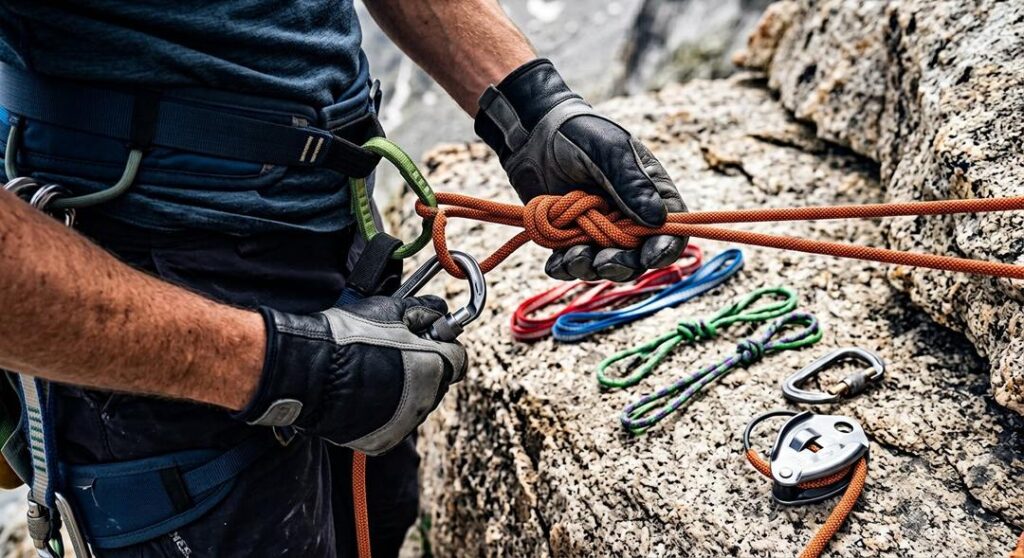
Descending technical terrain can require as much concentration as ascending.
Fatigue often increases later in the day, making descent errors particularly concerning.
Basic climbing skills should include supervised instruction in appropriate descending techniques, including rappelling or abseiling where relevant.
Equipment setup, backups and procedures depend on the system being used.
No written guide can safely replace practical training.
Glacier Travel Requires Specialized Knowledge
Glaciers can contain crevasses that may be obvious, partially covered or concealed by snow.
Travel therefore requires specific skills and route judgment.
Basic climbing skills for aspiring high-altitude mountaineers should eventually expand into glacier travel training.
This includes understanding rope-team systems, crevasse hazards and rescue concepts.
Crevasse Rescue Needs Repeated Practice
Crevasse rescue involves technical systems that must function under pressure.
Climbers need hands-on instruction in appropriate hauling and rescue methods.
The exact system depends on team size, equipment, terrain and training.
Basic climbing skills are only the starting point. Regular practice is important because rescue procedures can be difficult to recall accurately when rarely used.
Understand Anchors Without Oversimplifying Them
Mountaineering anchors can involve snow, ice, rock or artificial protection.
Their strength depends on many variables, including material, placement, direction of load and environmental conditions.
Basic climbing skills courses can introduce anchor principles under professional supervision.
A generic written formula cannot establish that a real-world anchor is safe.
Develop judgment by practicing with qualified instructors in appropriate environments.
Learn Snow Movement Techniques
Not all snowy slopes require the same technique.
Snow firmness, slope angle, consequences of a fall, temperature and other conditions influence how a climber should move.
Basic climbing skills courses typically expose students to different movement techniques on suitable terrain.
Climbers should learn how conditions change throughout a day.
A slope that feels firm in the morning may behave differently after warming.
Ice Climbing Adds Technical Ability
Everest is not simply an ice-climbing route in the recreational sense, but competence on ice can develop useful movement skills.
Training on appropriate ice terrain can help climbers become comfortable with crampons, tools and body positioning.
Basic climbing skills should precede more advanced ice techniques.
Professional instruction is especially important because ice climbing introduces falling ice, tool placement and protection considerations.
Rock Climbing Can Improve Movement Efficiency
Rock climbing develops balance, footwork, body positioning and confidence on steeper terrain.
Indoor walls provide an accessible training environment, while outdoor climbing introduces natural surfaces and environmental considerations.
Basic climbing skills from rock climbing can transfer into broader mountaineering competence.
However, strong rock climbers should not assume technical rock ability automatically prepares them for high altitude, glaciers, extreme cold or expedition logistics.
Navigation Remains Important
Modern climbers often use GPS devices, phones and digital mapping.
Electronic tools are valuable but can fail because of battery depletion, cold, damage or software problems.
Basic climbing skills should include appropriate navigation knowledge for the environments in which a climber operates.
Map and compass skills remain useful, particularly when supported by real practice rather than theoretical knowledge alone.
Guided expedition members should still maintain situational awareness rather than outsourcing every aspect of navigation.
Weather Literacy Improves Decision Making
Mountain weather can change rapidly.
Climbers need to understand forecasts, observe conditions and respect the decisions of guides and expedition leaders.
Basic climbing skills should therefore include environmental awareness alongside physical technique.
Wind, snowfall, temperature and visibility can change route conditions and risk.
On Everest, expedition teams use specialized forecasts and professional judgment when evaluating summit opportunities.
No consumer weather application should be treated as an absolute guarantee.
Acclimatization Is Not a Technical Skill but Is Essential
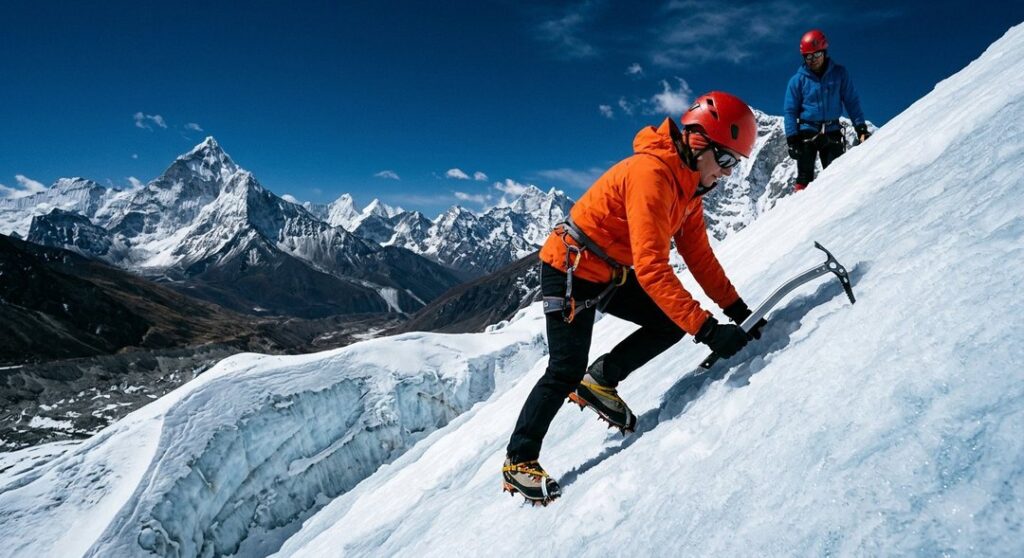
As elevation increases, atmospheric pressure falls and less oxygen is available with each breath.
The body requires time to adapt partially to altitude.
Physical fitness does not prevent acute mountain sickness.
A climber can possess excellent basic climbing skills and still develop altitude illness.
Recognize Altitude Illness
Acute mountain sickness can involve headache with symptoms such as nausea, fatigue, dizziness or sleep disturbance following ascent.
High-altitude cerebral edema and high-altitude pulmonary edema are life-threatening emergencies.
Anyone planning high-altitude mountaineering should receive appropriate medical education and seek professional medical advice before an expedition.
Symptoms should never be concealed to protect summit ambitions.
The Death Zone Requires Expert Expedition Planning
Elevations above approximately 8,000 metres are often referred to as the death zone because human acclimatization is severely limited and physiological deterioration becomes a major concern.
Everest’s summit lies well above this level.
Basic climbing skills alone are obviously insufficient for such an environment.
Before attempting Everest, climbers should have substantial high-altitude experience and understand how their bodies respond on major expeditions.
Even experienced mountaineers remain vulnerable.
Supplemental Oxygen Requires Training
Most Everest climbers use supplemental oxygen at very high elevations, though some exceptionally experienced mountaineers climb without it.
Oxygen systems include cylinders, regulators, masks and related components.
Anyone relying on supplemental oxygen should understand the equipment used by their expedition.
Basic climbing skills should eventually be complemented with practical oxygen-system familiarization before critical high-altitude sections.
Equipment malfunction at extreme altitude is not the time to learn how a system operates.
Cold Injury Prevention Is Critical
Everest exposes climbers to conditions capable of causing frostbite and hypothermia.
Wind, temperature, moisture, circulation, equipment fit and duration of exposure all influence cold risk.
Basic climbing skills include learning how to manage clothing before becoming excessively cold or sweaty.
At extreme altitude, even simple adjustments can become difficult.
Protect Hands and Feet
Boot and glove systems must suit expected conditions.
Climbers also need backup strategies for wet or damaged equipment where expedition planning calls for them.
Do not select Everest clothing simply because an elite athlete used the same product.
Individual fit, circulation and expedition conditions differ.
Layering Is a Practical Mountain Skill
A layering system allows insulation and weather protection to be adjusted as activity and conditions change.
Climbers typically work with base, insulating and protective layers, though exact systems vary.
Basic climbing skills include managing those layers proactively.
Waiting until clothing is soaked with sweat or the body is extremely cold makes temperature regulation more difficult.
High-altitude expeditions require specialized clothing beyond ordinary trekking equipment.
Nutrition Matters at Altitude
Mountaineering demands energy, yet appetite can decline at higher elevations.
Food choices also become constrained by logistics and what the climber can tolerate.
Aspiring Everest climbers should learn during earlier expeditions which foods work well for them during long mountain days.
Basic climbing skills are much harder to execute reliably when a climber is depleted.
Expedition nutrition strategies should be developed with appropriate professional guidance when necessary.
Hydration Requires Attention
Cold environments can make thirst less noticeable, while exertion and dry air can increase fluid needs.
Hydration requirements vary by person and conditions.
There is no responsible universal volume that every climber should force themselves to drink.
Basic climbing skills training should encourage awareness of hydration without promoting extreme intake.
Individual medical guidance matters when health conditions affect fluid management.
Expedition Hygiene Can Protect Performance
Minor gastrointestinal or respiratory illness can end an expedition.
Good hand hygiene, appropriate water practices and responsible food handling therefore matter.
Basic climbing skills often receive more attention than expedition routines, but both influence success.
At high elevation, recovery from ordinary illness may become more difficult.
Follow expedition medical protocols and communicate significant symptoms promptly.
Equipment Familiarity Is More Important Than Owning Premium Gear
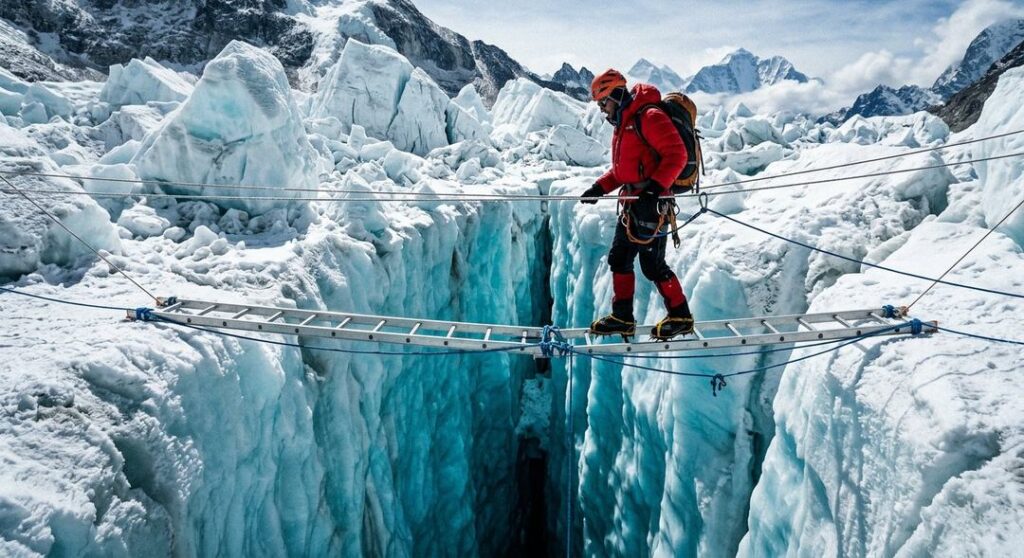
Expensive equipment does not compensate for unfamiliarity.
Climbers should know how their gloves work with carabiners, how their pack fits with a harness, how crampons attach to boots and how goggles interact with face protection.
Basic climbing skills should be practiced with equipment similar to what will be used on major climbs.
This can expose compatibility problems early.
Test Equipment Before the Expedition
New boots, gloves or harnesses should not make their first meaningful appearance on Everest.
Use training climbs to test fit and performance.
Some safety equipment has manufacturer-defined inspection and retirement criteria.
Follow those guidelines and replace damaged or expired equipment appropriately.
Communication Skills Matter in a Team
Everest is rarely an individual undertaking even when one person’s name appears on the summit record.
Climbers depend on guides, Sherpa climbers, expedition leaders, cooks, logistics personnel and teammates.
Basic climbing skills should therefore include effective communication and teamwork.
A climber who notices a problem should communicate it early.
Hiding fatigue, illness or equipment concerns can transfer risk to the entire team.
Decision Making Is an Advanced Climbing Skill
Technical competence is easier to demonstrate than judgment.
A climber can prove that they know how to use crampons. It is much harder to demonstrate that they will turn around when summit ambitions conflict with deteriorating conditions.
Basic climbing skills create technical capability, while experience builds context for decisions.
On guided expeditions, climbers must respect expedition leadership and predetermined safety decisions.
The summit is optional. Returning safely remains the overriding objective.
Beginners Should Progress Through Easier Objectives
A beginner dreaming of Everest should build experience through a progression of courses and mountains appropriate to their developing ability.
There is no universal list that suits every climber.
Local mountains, guided alpine courses and progressively higher expeditions can build complementary experience.
The progression should expose climbers to basic climbing skills, snow, ice, ropes, glaciers, cold, altitude and multi-day expedition life before Everest.
Do Not Rush for Social Media
The availability of commercial expeditions can make high mountains appear more accessible than they are.
Accessibility is not the same as low risk.
Basic climbing skills need repetition until they remain reliable when a climber is cold, tired and wearing gloves.
Skipping experience to reach Everest quickly creates no meaningful advantage.
Intermediate Climbers Need Broader Experience
Once foundational competence is established, intermediate climbers should expand beyond practicing isolated techniques.
Real mountains combine navigation, movement, weather, route conditions, fatigue and decision-making.
Intermediate development should therefore include increasingly complex environments with appropriate instruction.
Basic climbing skills remain relevant because advanced performance depends on executing fundamentals consistently.
An expert does not stop using basic techniques. They use them with greater efficiency and judgment.
Advanced Climbers Still Train Fundamentals
Expertise is not immunity from mistakes.
Experienced mountaineers continue checking equipment, practicing rescue skills, maintaining fitness and refreshing technical systems.
Basic climbing skills remain part of professional-level preparation because high-consequence environments punish complacency.
Advanced climbers additionally develop leadership, hazard assessment, rescue judgment, expedition planning and nuanced understanding of conditions.
Everest should be approached with that mindset rather than as a graduation ceremony after completing a checklist.
Choose a Qualified Mountaineering Course
Formal instruction is one of the strongest ways to begin.
Look for instructors and guide organizations with recognized qualifications relevant to the country and discipline.
Basic climbing skills courses should provide substantial hands-on practice rather than only classroom theory.
Ask what terrain the course covers, what instructor-to-student arrangements apply, which equipment is provided and what experience is expected beforehand.
A Course Is the Beginning, Not the End
Completing a mountaineering course does not instantly create mastery.
Skills fade without practice.
After learning basic climbing skills, use them regularly on appropriate objectives and continue developing under experienced supervision.
Progression matters more than collecting certificates.
Choosing an Everest Expedition Operator
When a climber eventually has sufficient experience to consider Everest, operator selection becomes critical.
Price should not be the only deciding factor.
Evaluate guide credentials, Sherpa support, oxygen planning, medical arrangements, communication systems, weather information, emergency procedures, acclimatization strategy and stated experience requirements.
A responsible operator should be willing to explain why specific basic climbing skills and previous high-altitude experience are expected.
Ask About Experience Requirements
Be cautious if an operator appears willing to accept anyone who can pay.
Everest expeditions place demands on guides and teammates as well as individual clients.
Ask which previous climbs are expected and how technical competency is assessed.
Strong screening can indicate that an operator takes team capability seriously.
Respect Sherpa Expertise
Sherpa climbers have played an essential role in Himalayan mountaineering and Everest expeditions.
Their work can include guiding, route support, load carrying, camp logistics and other highly skilled activities depending on the expedition.
Climbers should treat Sherpa team members as skilled professionals rather than as a substitute for personal basic climbing skills.
Support does not remove the client’s responsibility to arrive appropriately prepared.
Respect also means following instructions and understanding the human effort behind expedition logistics.
Turnaround Discipline Matters More Than Summit Ambition
Everest success should never be defined only by reaching the top.
Weather, health, crowding, equipment problems or slow progress can make continuing inappropriate.
Predetermined turnaround decisions and guide instructions deserve respect.
Basic climbing skills include learning that retreat is a normal part of mountaineering.
A mountain remains after an unsuccessful attempt.
The consequences of refusing to turn around may not be reversible.
Common Beginner Climbing Mistakes
Early mistakes are part of learning, which is why foundational practice should occur in suitable environments.
Common problems include relying excessively on upper-body strength, poor foot placement, unfamiliarity with equipment and moving faster than technique allows.
Other mistakes include:
- Skipping partner checks
- Wearing untested footwear
- Overpacking
- Failing to eat or drink appropriately
- Ignoring weather changes
- Concealing symptoms
- Neglecting navigation
- Rushing acclimatization
- Treating equipment as a substitute for training
- Attempting terrain beyond current competence
Basic climbing skills help address these habits before the consequences become more serious.
A Realistic Journey From Beginner to Everest
The progression begins with instruction, general mountain experience and basic climbing skills.
A climber can then develop competence on rock, snow and ice while learning ropes, crampons, glacier travel, navigation and rescue techniques.
The next stages should add multi-day alpine objectives and gradually increasing altitude.
High-altitude expeditions below Everest can reveal how the individual responds physically and psychologically to sustained elevation.
Only after substantial relevant experience should Everest become a serious objective.
There is no responsible guarantee that following this progression will lead to a summit. Mountains, health and individual capability remain unpredictable.
Basic Climbing Skills Are About Independence Within a Team
Being on a guided expedition does not mean being passive.
A competent climber should understand their equipment and be capable of carrying out expected routine tasks without constant correction.
Basic climbing skills increase that self-sufficiency.
At the same time, independence does not mean ignoring guidance.
The strongest expedition members combine personal competence with teamwork, communication and willingness to follow decisions made by those responsible for safety.
FAQ’s
What basic climbing skills do I need before Everest?
Important basic climbing skills include efficient mountain movement, crampon use, ice axe familiarity, rope systems, fixed-line experience, glacier awareness, equipment management and strong teamwork.
Can a beginner climb Mount Everest?
Everest should not be a person’s first mountaineering objective. Beginners can start training toward Everest, but substantial technical, expedition and high-altitude experience should come first.
How long does it take to learn basic climbing skills?
Initial techniques can be introduced on a mountaineering course, but dependable basic climbing skills require repeated practical experience. Progression toward Everest commonly takes substantial time.
Do I need rock climbing skills for Everest?
Rock climbing can improve balance, movement and rope familiarity. Everest preparation additionally requires snow, ice, glacier, fixed-line, altitude and expedition skills.
Are basic climbing skills enough to climb Everest?
No. Basic climbing skills form only the foundation. Everest also demands advanced mountaineering experience, high-altitude adaptation, expedition competence, physical preparation and professional logistical support.
Should I learn basic climbing skills from videos?
Videos can reinforce concepts but cannot replace qualified hands-on instruction. Safety-critical techniques involving ropes, crampons, ice axes and rescue systems should be learned through practical professional training.
Conclusion
Strong basic climbing skills are the foundation of an Everest journey, not a shortcut to the summit. Footwork, crampon technique, rope familiarity, ice axe use, glacier awareness, navigation and equipment management need repeated practice in appropriate environments. Fitness is equally important, but neither fitness nor technical ability removes the hazards associated with extreme altitude.
The responsible route from beginner to expert is gradual. Learn basic climbing skills from qualified professionals, gain experience on progressively more demanding mountains, discover how your body responds to altitude and develop the judgment to turn back when conditions require it. Everest should come only after the foundations have become dependable through real experience, because on the world’s highest mountain, knowing when and how to use a skill matters as much as knowing the technique itself.