Beyond Everest Base Camp Discover Nepal’s Most Spectacular High Passes Adventure
The Everest Three High Passes Trek is one of Nepal’s most demanding and rewarding high-altitude trekking adventures. Located in the Khumbu region, this challenging circuit connects three major mountain passes, Kongma La, Cho La, and Renjo La, while offering remarkable views of Himalayan peaks, glaciers, alpine valleys, and traditional Sherpa settlements.
Unlike a conventional Everest Base Camp itinerary, this route explores several interconnected valleys and requires greater preparation, endurance, and experience with difficult mountain terrain. For trekkers seeking a deeper Himalayan experience, the Everest Three High Passes Trek combines outstanding scenery with a demanding physical journey.
However, crossing passes above 5,300 metres requires careful acclimatization, realistic scheduling, suitable equipment, and attention to changing mountain conditions. Understanding the route, altitude risks, seasonal differences, and logistical requirements helps travelers prepare responsibly for this exceptional Nepal trekking experience.
What Is the Everest Three High Passes Trek?
The Everest Three High Passes Trek is a high-altitude trekking circuit in Nepal’s Sagarmatha region that connects three challenging mountain passes within the Everest trekking network.
The three passes are Kongma La, Cho La, and Renjo La. Each provides access between different valleys and offers distinctive views of the surrounding Himalayan landscape.
The route commonly incorporates destinations such as Namche Bazaar, Dingboche, Chukhung, Lobuche, Gokyo, and Thame, although exact itineraries and crossing directions vary between operators.
Many Everest Three High Passes Trek itineraries also include optional visits to Everest Base Camp, Kala Patthar, and Gokyo Ri.
These side trips add elevation, walking time, and physical demands, making careful itinerary planning essential.
Why This Trek Is Different From Everest Base Camp
The traditional Everest Base Camp Trek generally follows a more direct route through the Khumbu Valley toward Base Camp before returning.
The Everest Three High Passes Trek explores a broader area by connecting multiple valleys through demanding mountain crossings.
This creates opportunities to experience quieter sections of the Everest region, although trail traffic varies by season and location.
Key differences include:
- Three high mountain pass crossings
- Greater route complexity
- More demanding daily elevation changes
- Additional exposure to snow and rocky terrain
- Opportunities to explore the Gokyo Valley
- More extensive mountain scenery
- Greater need for itinerary flexibility
- Increased importance of navigation and weather awareness
The Everest Three High Passes Trek is generally better suited to experienced trekkers than people attempting their first high-altitude journey.
Where Is the Everest Three High Passes Trek Located?
The Everest Three High Passes Trek takes place in northeastern Nepal, primarily within the Sagarmatha National Park region and surrounding Khumbu communities.
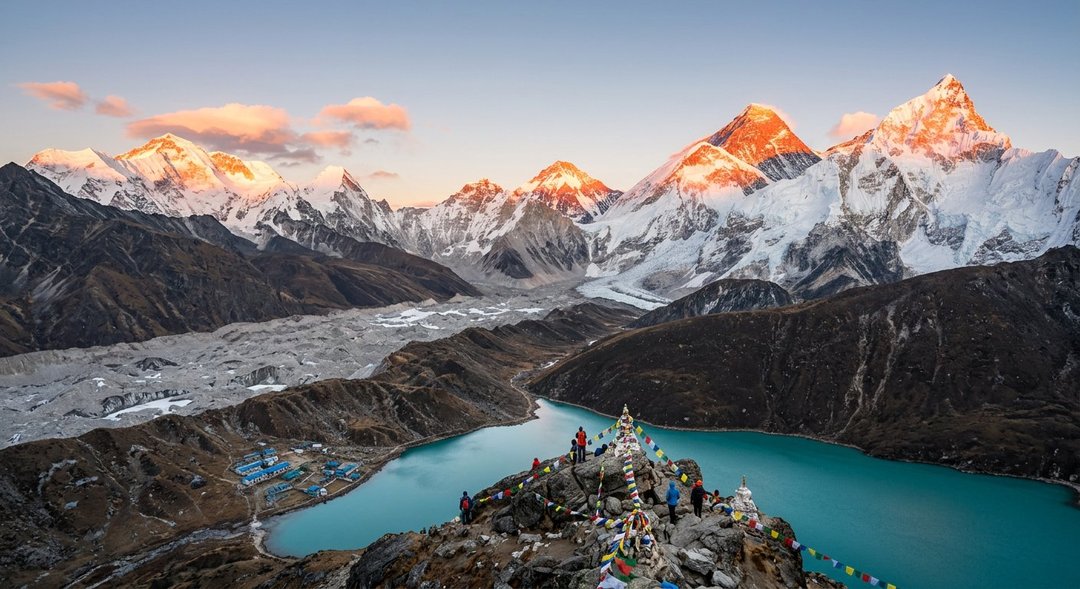
The area is famous for Mount Everest, Lhotse, Nuptse, Ama Dablam, Cho Oyu, and numerous other Himalayan mountains.
Lukla is a common gateway for trekkers arriving by air, although alternative approaches exist.
From Lukla, many routes continue through Phakding toward Namche Bazaar before branching into different valleys.
Understanding the Khumbu Region
The Khumbu region combines dramatic natural landscapes with a rich cultural heritage.
Sherpa communities have lived in the area for generations, maintaining distinctive traditions, religious practices, and relationships with the surrounding mountains.
Trekkers may encounter Buddhist monasteries, mani walls, prayer wheels, prayer flags, and traditional settlements.
The Everest Three High Passes Trek offers an opportunity to appreciate these communities beyond the most frequently traveled sections of the Everest Base Camp route.
Visitors should respect local customs, religious sites, and community regulations throughout the journey.
The Three Mountain Passes Explained
The defining feature of the Everest Three High Passes Trek is crossing three major Himalayan passes.
Although each pass reaches a broadly similar altitude, the terrain, approach, weather exposure, and technical demands differ.
Pass elevations can vary slightly between maps and sources, so figures should be treated as approximate.
Kongma La Pass
Kongma La reaches approximately 5,535 metres and connects the Chukhung area with the Lobuche side of the Khumbu.
It is often considered one of the more physically demanding crossings because of its elevation, terrain, and potentially long walking day.
Depending on route conditions, trekkers may encounter steep sections, loose rock, snow, and complicated glacier-related terrain.
The Everest Three High Passes Trek requires careful planning around Kongma La because conditions can change significantly.
Important Kongma La Considerations
Crossing Kongma La should only be attempted when weather, visibility, route conditions, and the group’s physical condition are appropriate.
A qualified local guide can provide valuable route knowledge, but each trekker still needs suitable fitness and equipment.
Snow or ice may require additional traction equipment, depending on current conditions and professional assessment.
Trekkers should not assume that a pass is safe simply because another group crossed it recently.
Cho La Pass
Cho La reaches approximately 5,420 metres and connects the Lobuche-Dzongla side of the region with the Gokyo Valley approach.
The crossing can involve steep rocky sections and snow or ice.
Conditions vary considerably with weather and season.
For many Everest Three High Passes Trek participants, Cho La is among the most memorable parts of the journey because of the dramatic surrounding mountain landscape.
Cho La Safety Considerations
Snow, ice, unstable footing, and poor visibility can increase difficulty.
An early departure may be appropriate under certain conditions, but timing should follow current local guidance rather than a fixed rule.
Trekkers should understand that ordinary trekking footwear may not provide sufficient traction in all conditions.
A guide or qualified mountain professional should assess whether additional equipment is necessary.
Renjo La Pass
Renjo La reaches approximately 5,360 metres and connects the Gokyo Valley with the Thame side of the region.
The pass is particularly well known for panoramic views of the Everest massif and surrounding Himalayan peaks when visibility is clear.
Renjo La can be a spectacular section of the Everest Three High Passes Trek, but it remains a serious high-altitude crossing.
Renjo La Route Conditions
The approach can include steep sections, stone steps, rocky trails, and snow depending on the season.
Weather can change quickly, and the altitude can make ordinary walking feel significantly more demanding.
Trekkers should avoid treating Renjo La as an easy final obstacle simply because they have already crossed other passes.
Fatigue accumulated during earlier trekking days can affect judgment and physical performance.
How Difficult Is the Everest Three High Passes Trek?
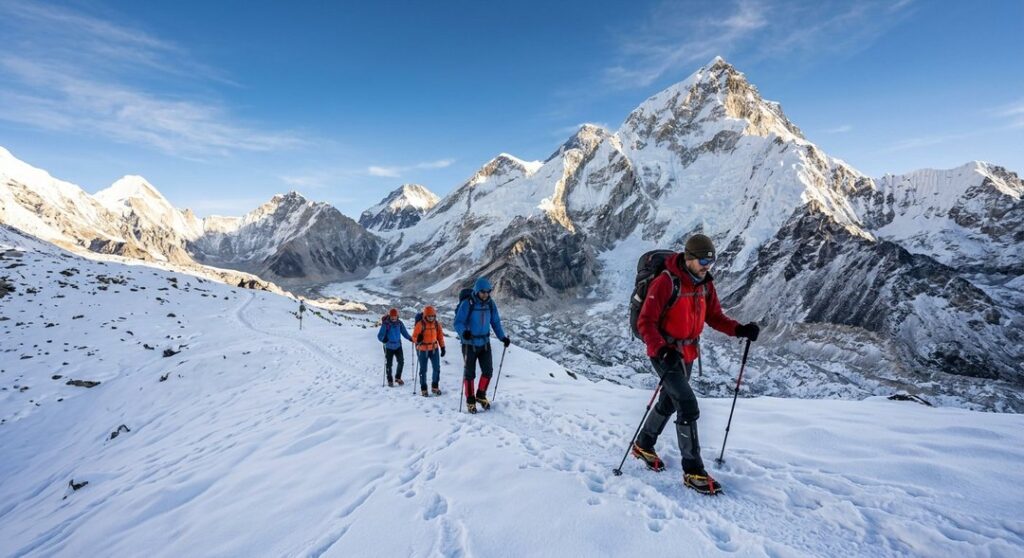
The Everest Three High Passes Trek is generally classified as a strenuous or challenging high-altitude trek.
Difficulty comes from the combination of elevation, terrain, repeated long walking days, variable weather, and limited infrastructure in certain sections.
Unlike a technical mountaineering expedition, the standard trekking route does not ordinarily require advanced climbing techniques under favorable conditions.
However, snow and ice can introduce hazards beyond ordinary hiking, and certain conditions may make a crossing inappropriate without specialized equipment and expertise.
Physical Demands
Trekkers should be prepared for sustained uphill and downhill walking over uneven mountain terrain.
Some days may involve substantial elevation gain or descent.
High altitude increases the physiological demands of physical activity because less oxygen is available with each breath.
The Everest Three High Passes Trek can therefore feel considerably harder than a similar-distance hike at lower elevation.
Mental Demands
Mental resilience is also important.
Weather delays, cold mornings, fatigue, basic accommodation, and changes to the planned itinerary can create frustration.
A flexible attitude helps trekkers respond appropriately when conditions do not support the original schedule.
The objective should be completing the journey responsibly rather than crossing every pass regardless of circumstances.
Who Should Attempt the Everest Three High Passes Trek?
The Everest Three High Passes Trek is generally best suited to trekkers with previous experience on demanding mountain routes.
Experience at altitude is particularly valuable because it provides familiarity with how the body may respond to reduced oxygen availability.
However, previous successful high-altitude travel does not guarantee protection against altitude illness.
Suitable preparation may include:
- Experience with multi-day trekking
- Confidence on steep rocky trails
- Strong cardiovascular endurance
- Familiarity with cold-weather conditions
- Ability to carry essential equipment
- Awareness of altitude illness symptoms
- Experience following mountain safety procedures
- Willingness to change plans when necessary
Beginners interested in the Everest Three High Passes Trek should consider building experience on less demanding routes before committing to the full circuit.
Best Time for the Everest Three High Passes Trek
Seasonal timing strongly influences the experience.
Spring and autumn are commonly considered favorable trekking periods in the Everest region, but neither guarantees suitable conditions on every day.
High mountain passes can remain snow-covered or become temporarily unsafe even during popular trekking seasons.
Spring Trekking Season
Spring generally runs from March through May.
Conditions often become warmer as the season progresses, although snow remains possible at high elevations.
Spring can offer clear mountain views on suitable days and increasingly active trekking routes.
However, the Everest Three High Passes Trek still requires preparation for freezing temperatures, strong winds, and unpredictable mountain weather.
Autumn Trekking Season
Autumn generally covers September through November.
After the summer monsoon, many trekkers visit Nepal hoping for favorable visibility and comparatively stable weather.
October and November are popular trekking months.
The Everest Three High Passes Trek can offer excellent mountain scenery during this period, although cold conditions become more significant as winter approaches.
Winter Trekking Conditions
Winter generally brings colder temperatures, shorter daylight hours, and potentially significant snow or ice.
High pass crossings may become impractical or unsafe.
Some accommodation and services may also operate differently during quieter periods.
Winter Everest Three High Passes Trek attempts require particularly careful planning and should not be approached as ordinary seasonal trekking.
Monsoon Considerations
Nepal’s summer monsoon generally affects travel between June and September, although timing varies.
Rain, cloud, transportation disruption, and difficult trail conditions can complicate journeys.
Higher mountain areas can still experience hazardous snow or ice conditions.
Travelers should obtain current local advice before considering an Everest Three High Passes Trek during this period.
How Long Does the Everest Three High Passes Trek Take?
The Everest Three High Passes Trek commonly requires approximately 17 to 21 days or longer, depending on the itinerary, acclimatization schedule, optional side trips, and travel arrangements.
Some packages advertise shorter durations, but the number of days alone does not establish whether an itinerary is appropriate.
A responsible schedule must consider sleeping elevation, individual acclimatization, daily effort, and weather contingencies.
Why Rushing Is a Mistake
High-altitude travel cannot be made safe simply by walking faster.
Rapid ascent can increase the risk of altitude illness.
The Everest Three High Passes Trek should include suitable acclimatization opportunities and flexibility when a traveler becomes unwell.
Removing rest or acclimatization days solely to reduce package cost can create unnecessary risk.
A Typical Everest Three High Passes Trek Route
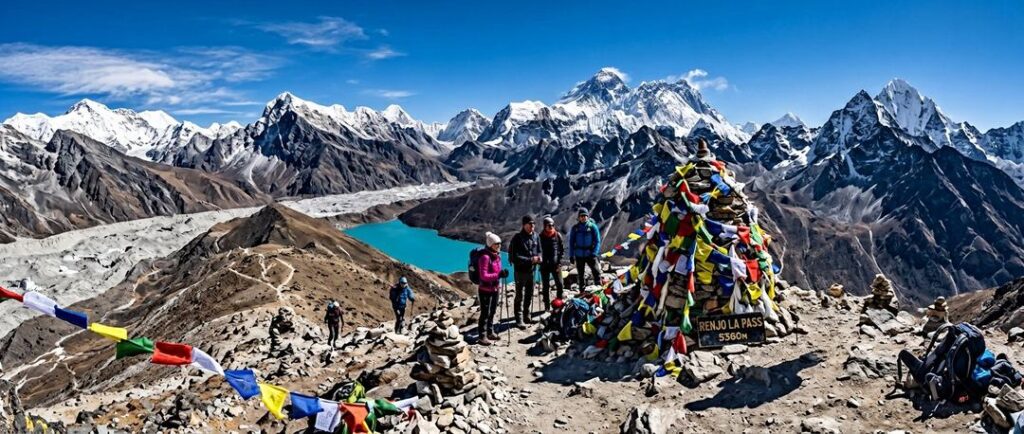
There is no single mandatory itinerary for the Everest Three High Passes Trek.
Many operators organize the route in an anticlockwise direction, beginning with Kongma La and continuing through Cho La and Renjo La.
Others follow different sequences based on logistics, seasonal conditions, and group needs.
A common route may include the following destinations.
Lukla to Namche Bazaar
The journey commonly begins at Lukla, followed by trekking toward Phakding and Namche Bazaar.
Namche is an important commercial and cultural center in the Khumbu region.
It provides accommodation, shops, communication services, and access to nearby acclimatization walks.
Namche Bazaar to Dingboche
The route continues through the Everest region toward higher settlements.
Depending on the itinerary, trekkers may pass areas such as Tengboche, Pangboche, and Dingboche.
The landscape gradually changes as vegetation becomes more limited.
Dingboche is a common location for acclimatization planning.
Dingboche to Chukhung
Chukhung lies in a high valley surrounded by major Himalayan peaks.
It is often used as a staging location before crossing Kongma La.
This part of the Everest Three High Passes Trek offers spectacular views, but the elevation requires careful attention to symptoms and physical condition.
Kongma La to Lobuche
Crossing Kongma La connects the Chukhung side with the Lobuche area.
This can be a demanding day involving significant elevation changes and challenging footing.
The route should be assessed according to current conditions.
Lobuche and Optional Everest Base Camp
Many Everest Three High Passes Trek itineraries include an excursion toward Everest Base Camp.
Some also include Kala Patthar, a viewpoint known for views of Everest when conditions are clear.
These excursions add physical demands and should be incorporated without compromising acclimatization or recovery.
Dzongla and Cho La
From the Lobuche region, trekkers may continue toward Dzongla before crossing Cho La.
The pass connects toward the Gokyo side of the mountains.
Snow and ice conditions require particular attention.
Gokyo Valley
The Gokyo Valley is famous for its high-altitude lakes, surrounding peaks, and glacier landscapes.
Gokyo is often a highlight of the Everest Three High Passes Trek.
Trekkers may also consider Gokyo Ri as an optional viewpoint, depending on weather, health, and available time.
Renjo La to Thame
The route crosses Renjo La before descending toward the Thame Valley.
This section provides a different perspective of the Everest region.
The descent can be substantial, and accumulated fatigue should not be underestimated.
Return Toward Namche and Lukla
Many routes eventually reconnect with Namche Bazaar before continuing toward Lukla.
The final walking days remain important because tired trekkers can still experience accidents on relatively familiar trails.
Altitude Sickness and Acclimatization
Altitude illness is one of the most important safety considerations on the Everest Three High Passes Trek.
Acute mountain sickness can affect physically fit people and experienced trekkers.
Higher fitness does not guarantee better acclimatization.
Common Altitude Illness Symptoms
Possible symptoms include headache accompanied by nausea, dizziness, fatigue, or disturbed sleep following altitude gain.
More severe altitude conditions can involve serious breathing difficulties or neurological symptoms.
High-altitude pulmonary edema and high-altitude cerebral edema are medical emergencies.
Anyone planning the Everest Three High Passes Trek should obtain appropriate altitude-health education before departure.
Follow Responsible Acclimatization Practices
As sleeping altitude increases, the body needs time to adapt.
The exact itinerary should follow current medical guidance and consider individual circumstances.
Trekkers should never continue ascending with worsening symptoms of altitude illness.
Medical assessment and descent may be necessary depending on severity.
Medication should only be used with appropriate healthcare guidance and must not be treated as permission to ignore dangerous symptoms.
Fitness Training Before the Trek
Physical preparation should begin well before departure.
The Everest Three High Passes Trek involves repeated mountain walking days and substantial elevation changes.
Training should progressively develop endurance, strength, balance, and confidence on uneven terrain.
Cardiovascular Training
Suitable activities may include:
- Hiking
- Stair climbing
- Cycling
- Running
- Incline walking
- Other sustained aerobic exercise
Regular uphill walking is especially relevant because it resembles the physical demands of trekking.
Strength Training
Leg and core strength support movement across steep and uneven surfaces.
Exercises can include squats, step-ups, lunges, and other movements appropriate to individual fitness.
Training should increase gradually to reduce injury risk.
Practice With a Backpack
A loaded pack changes posture and balance.
Trekkers should practice carrying a realistic load during training hikes.
However, carrying unnecessary weight is not beneficial.
The Everest Three High Passes Trek requires efficient packing rather than the heaviest possible backpack.
Essential Packing List
The Everest Three High Passes Trek requires equipment suitable for high altitude, changing weather, and potentially cold conditions.
The exact packing list depends on the season and current route conditions.
Clothing Essentials
Recommended categories commonly include:
- Moisture-managing base layers
- Warm insulating layers
- Waterproof and wind-resistant outerwear
- Trekking trousers
- Thermal clothing
- Warm gloves
- Insulated headwear
- Sun protection
- Suitable trekking socks
- Appropriate mountain footwear
Avoid relying on cotton clothing as the primary insulation system in cold and wet conditions.
Trekking Equipment
Useful equipment can include:
- Comfortable backpack
- Trekking poles
- Headlamp
- Sunglasses
- Water containers
- Water treatment equipment
- Personal first-aid supplies
- Navigation backup
- Power bank
- Sleeping bag suitable for anticipated conditions
- Personal medications
- Emergency contact information
Depending on snow and ice conditions, additional traction equipment may be required.
The Everest Three High Passes Trek should not be attempted with unfamiliar technical equipment that the traveler cannot use correctly.
Choosing the Right Trekking Boots
Footwear can significantly influence comfort and safety.
Long days over rocky and uneven trails place considerable demands on the feet.
Choose footwear appropriate for the route and expected conditions.
Break in Footwear Before Nepal
Do not wait until arrival to discover that new boots cause blisters.
Practice on longer walks using the socks intended for the trek.
The Everest Three High Passes Trek can become extremely uncomfortable when footwear creates repeated friction or pressure.
Trekking With a Guide
A knowledgeable local guide can provide important support during the Everest Three High Passes Trek.
Guides may assist with route planning, local conditions, communication, accommodations, and decisions about whether a pass crossing is appropriate.
However, hiring a guide does not remove all risks.
Check Current Guide Requirements
Nepal’s trekking regulations and requirements vary by route and can change.
Travelers should confirm current rules with official Nepalese tourism and park authorities before departure.
Do not assume information from an older trekking blog remains accurate.
What to Look for in a Guide
Consider relevant experience, communication skills, knowledge of altitude risks, emergency procedures, and familiarity with the high passes.
A guide should be willing to change plans when conditions require it.
The Everest Three High Passes Trek is not an itinerary where summit-style ambition should override safety.
Permits Required for the Everest Three High Passes Trek
Trekkers generally need applicable park and local area entry permissions for the Khumbu region.
Requirements, prices, payment procedures, and documentation can change.
Travelers should verify current information through official authorities or reputable local operators.
Sagarmatha National Park Entry
Much of the route passes through Sagarmatha National Park.
Visitors should check current entry permit requirements before traveling.
Khumbu Local Entry Requirements
The Khumbu region also has local entry arrangements relevant to many trekking itineraries.
Confirm which permits apply to the specific route and whether they are included in the trekking package.
The Everest Three High Passes Trek may also involve different administrative considerations if the itinerary is modified.
Accommodation Along the Route
Teahouses are a common accommodation option throughout established Everest trekking routes.
They generally provide basic lodging and meals, although standards vary by location and season.
Higher settlements may offer fewer conveniences.
What to Expect From Teahouses
Accommodation may include simple rooms, shared facilities, and communal dining areas.
Heating is often concentrated in common spaces rather than every bedroom.
Hot showers, device charging, and internet access may involve additional charges.
During the Everest Three High Passes Trek, comfort expectations should remain realistic.
Bookings and Availability
Popular trekking periods can create accommodation demand.
However, the most remote high-pass sections may also require flexible planning because weather and route conditions can affect arrival times.
Discuss accommodation arrangements with your trekking operator before departure.
Food and Nutrition During the Trek
Trekking requires sustained energy.
Teahouse menus commonly include a range of local and international-style meals, although availability varies.
Rice dishes, noodles, soups, potatoes, and dal bhat are frequently encountered.
Eat Enough for Long Walking Days
Reduced appetite can occur at altitude.
However, trekkers still need adequate nutrition.
The Everest Three High Passes Trek involves repeated physical effort, making regular meals and suitable snacks important.
Follow Food Hygiene Practices
Choose food and drinking water carefully.
Follow current travel health advice and use appropriate water treatment when necessary.
Gastrointestinal illness can significantly disrupt a high-altitude itinerary.
Hydration and Drinking Water
Fluid requirements vary with exertion, altitude, temperature, and individual health.
Trekkers should drink appropriately and avoid both dehydration and excessive forced water consumption.
The Everest Three High Passes Trek may involve long sections where water availability needs advance planning.
Carry suitable containers and understand where safe drinking water can be obtained.
Weather and Mountain Safety
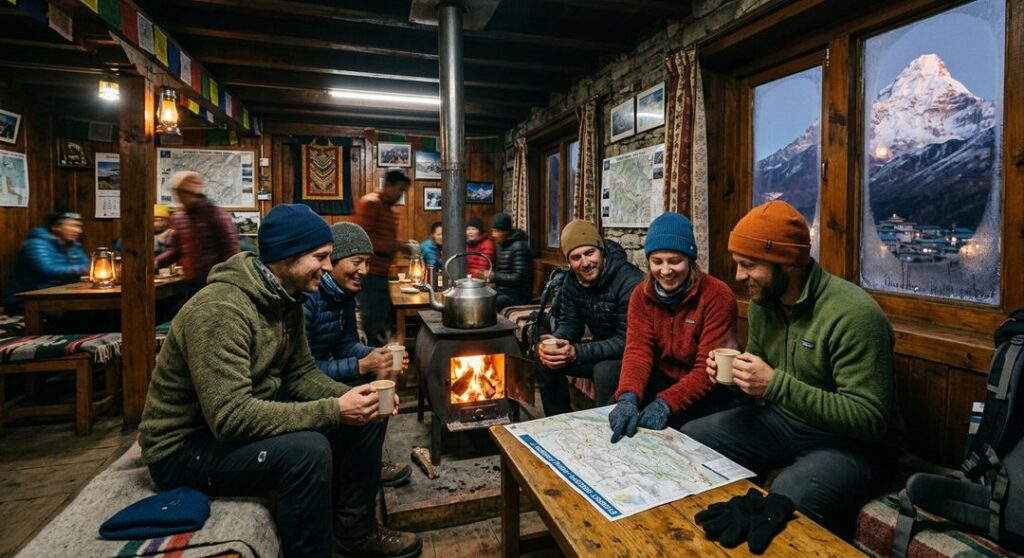
Weather is one of the biggest sources of uncertainty during high-pass trekking.
Clear morning conditions can change.
Snowfall, wind, poor visibility, and freezing temperatures can complicate pass crossings.
Check Conditions Before Crossing
Do not cross a high pass simply because the itinerary specifies it for that day.
Current conditions should determine whether proceeding is appropriate.
The Everest Three High Passes Trek requires flexibility, especially around the three major crossings.
Avoid Traveling Alone in Difficult Conditions
Remote terrain can make an accident more serious.
Traveling with appropriate support and communication arrangements can improve emergency coordination.
However, group travel does not guarantee safety.
Every participant should understand the risks involved.
Travel Insurance and Emergency Evacuation
Suitable insurance is an important consideration for Himalayan trekking.
Not all policies cover high-altitude trekking or emergency helicopter evacuation.
Check Altitude Limits
The Everest Three High Passes Trek crosses elevations above 5,300 metres.
Travelers should confirm that their policy covers the maximum altitude and intended activities.
Review exclusions, medical coverage, evacuation arrangements, and claims procedures.
Helicopter Rescue Is Not Guaranteed
Helicopters may be unable to operate because of weather, visibility, aircraft availability, or landing conditions.
Do not assume immediate evacuation will always be possible.
The Everest Three High Passes Trek should be planned with appropriate emergency procedures and realistic expectations.
How Much Does the Everest Three High Passes Trek Cost?
The overall cost depends on itinerary length, season, guide and porter arrangements, accommodation, food, transport, permits, insurance, equipment, and personal spending.
There is no universal price that accurately represents every trekking package.
Main Budget Categories
Important expenses may include:
- International travel
- Domestic flights or alternative transport
- Accommodation
- Meals
- Guide services
- Porter services
- Permits
- Insurance
- Equipment
- Charging and communication
- Personal expenses
- Tips
- Contingency funds
The Everest Three High Passes Trek should be budgeted using current written quotations rather than old advertised prices.
Avoid Choosing Solely by Price
An unusually inexpensive package may exclude important services.
Ask what is included and how the operator manages emergencies, staffing, permits, accommodation, and itinerary changes.
Value should be assessed alongside safety and transparency.
Responsible Trekking in the Everest Region
The Khumbu is a living cultural landscape and environmentally sensitive mountain region.
Trekkers should respect communities and minimize unnecessary environmental impact.
Reduce Waste
Carry reusable items where practical.
Dispose of waste according to local systems.
Avoid leaving packaging, batteries, or other rubbish along the trails.
Respect Sherpa Culture
Follow local etiquette when visiting monasteries and settlements.
Ask permission before photographing people in sensitive situations.
Use designated routes and respect religious structures.
The Everest Three High Passes Trek offers an opportunity to learn about local communities rather than viewing them only as a backdrop.
Common Mistakes to Avoid
Several mistakes can make the Everest Three High Passes Trek unnecessarily difficult or risky.
Rushing Acclimatization
Do not remove acclimatization opportunities merely to complete the route faster.
Ignoring Weather
A planned crossing is not a reason to enter dangerous conditions.
Packing Incorrectly
Too much equipment creates weight, while inadequate clothing can expose trekkers to cold.
Using Untested Footwear
Blisters can affect every subsequent walking day.
Concealing Illness
Symptoms should be communicated promptly.
Depending on Guaranteed Rescue
Emergency transportation may be unavailable when weather conditions deteriorate.
Following an Unrealistic Schedule
The Everest Three High Passes Trek needs sufficient flexibility for altitude, weather, and physical recovery.
Photography Opportunities
The Everest Three High Passes Trek provides remarkable Himalayan scenery.
Potential highlights include panoramic pass viewpoints, glacier landscapes, mountain lakes, Sherpa settlements, and views of major Himalayan peaks.
Gokyo Lakes
The Gokyo Lakes are among the region’s best-known alpine landscapes.
Their appearance varies with weather, light, and seasonal conditions.
Mountain Panoramas
Clear conditions can reveal major Himalayan peaks from different sections of the circuit.
Visibility cannot be guaranteed.
Cultural Landscapes
Monasteries, stone villages, prayer flags, and traditional mountain settlements provide photographic opportunities.
Always respect local restrictions and personal privacy.
Is the Everest Three High Passes Trek Worth It?
For experienced trekkers who enjoy demanding routes, varied mountain scenery, and extended journeys through the Khumbu, the Everest Three High Passes Trek can be exceptionally rewarding.
It offers a broader exploration of the Everest region than many shorter itineraries.
However, the experience comes with significant physical and environmental demands.
The trek is worth considering when the traveler has appropriate experience, preparation, health, time, and budget.
It should not be chosen solely because it sounds more impressive than Everest Base Camp.
How to Prepare for a Successful Trek
Preparation should begin with honest self-assessment.
Consider previous trekking experience, cardiovascular fitness, comfort on difficult terrain, altitude history, and the ability to spend multiple days in remote mountain environments.
Choose an itinerary that includes responsible acclimatization and contingency time.
Book through appropriate providers, confirm current permits, arrange suitable insurance, and test essential equipment.
The Everest Three High Passes Trek is best approached as a mountain journey where sound decisions matter more than rigid completion targets.
FAQ’s
How difficult is the Everest Three High Passes Trek?
The Everest Three High Passes Trek is a strenuous high-altitude circuit involving three passes above approximately 5,300 metres, demanding terrain, and multiple long trekking days.
How many days are needed for the Everest Three High Passes Trek?
Many itineraries require approximately 17 to 21 days or longer, depending on acclimatization, route direction, side trips, and weather contingencies.
What is the best season for the Everest Three High Passes Trek?
Spring and autumn are commonly preferred for trekking, but snow, wind, and poor visibility can affect high-pass crossings during any season.
Is the Everest Three High Passes Trek suitable for beginners?
It is generally better suited to experienced trekkers. Beginners should build fitness, mountain experience, and altitude awareness on less demanding routes first.
Do I need a guide for the Everest Three High Passes Trek?
A knowledgeable guide is strongly worth considering because of challenging terrain and changing conditions. Verify current legal requirements with the relevant Nepalese authorities.
What permits are required for the Everest Three High Passes Trek?
Applicable Sagarmatha National Park and Khumbu local entry requirements generally need consideration. Confirm current permit rules and fees through official sources.
Conclusion
The Everest Three High Passes Trek is one of Nepal’s most comprehensive high-altitude trekking experiences, connecting Kongma La, Cho La, and Renjo La through the spectacular Khumbu region. Its appeal comes from dramatic Himalayan scenery, glacier landscapes, traditional Sherpa communities, and the opportunity to explore several valleys within one extended adventure. However, the route requires serious preparation, appropriate fitness, responsible acclimatization, and respect for unpredictable mountain conditions.
A successful Everest Three High Passes Trek is not simply about crossing all three passes. It is about making informed decisions throughout the journey, choosing a realistic itinerary, using suitable equipment, understanding altitude risks, and remaining flexible when weather or health requires a change. With careful planning and experienced local support, trekkers can approach this extraordinary Himalayan circuit with greater confidence and a stronger appreciation of the mountains and communities that make it special.