Car Window Tinting: Benefits, Types, Costs and Legal Considerations
Professional car window tinting applies a specialized film to automotive glass to alter visible light transmission and, depending on the film, reduce solar heat, glare and ultraviolet exposure. Modern automotive films range from basic dyed products to ceramic and other advanced constructions, but darker film does not automatically deliver better heat rejection. Before tinting a vehicle, drivers should consider local legal limits, the existing properties of factory glass, film performance data, installation quality, visibility and warranty terms to choose a tint that is both practical and compliant.
Window tint can change a vehicle’s appearance immediately, but appearance is only one reason drivers consider it. Appropriate films can make bright conditions more comfortable and help manage solar energy entering the cabin.
The process is not as simple as choosing a percentage from a shade chart.
Different film technologies can have similar visible darkness while performing very differently against solar energy. Legal requirements also vary widely between countries, states and other jurisdictions.
This guide explains how window tint works, seven potential benefits, film technologies, VLT ratings, costs, installation, maintenance and how to choose a qualified installer.
What Is Car Window Tinting?
Automotive window tinting typically involves applying a thin, engineered film to the interior surface of vehicle glazing.
The film can alter the amount of visible light, ultraviolet radiation and solar energy transmitted through the glass, depending on its construction.
Automotive glazing can already have factory coloration or solar control properties. Adding aftermarket film changes the performance of the complete glass and film combination.
That combined result can matter legally.
How Does Automotive Window Film Work?
Sunlight contains energy across several wavelength ranges, including visible light, ultraviolet radiation and infrared.
Different tint films interact with portions of this energy through absorption, reflection or other material properties.
Premium films can therefore reject substantial solar energy without necessarily being extremely dark.
Factory Tinted Glass Versus Window Film
Factory privacy glass and aftermarket window film are not the same thing.
Factory glass may contain colorants or other technology within the glazing itself. Aftermarket film is an additional layer installed onto the existing glass.
Privacy glass can make rear windows appear dark, but its thermal or UV performance should not be assumed from appearance alone.
Why Car Window Tinting Percentages Matter
Tint percentages commonly refer to visible light transmission, often abbreviated as VLT.
VLT represents how much visible light passes through the glazing system.
A lower VLT generally means a darker appearance, while a higher VLT means more visible light passes through.
Legal rules typically concern the final glazing performance, not simply the advertised percentage printed on a roll of film.
7 Powerful Benefits of Car Window Tinting
Benefits depend on the specific film, glass and installation. Consumers should compare independently measured specifications rather than relying on appearance or broad marketing language.
1. Reduced Solar Heat
One of the most practical reasons for installing quality film is solar heat management.
Solar control films can reduce some of the solar energy entering through vehicle glass.
This may make the cabin more comfortable in sunny conditions, although temperature reduction varies with climate, vehicle design, film performance and how long the vehicle has been parked.
Darkness alone is not a reliable measure of heat rejection.
2. Reduced Glare
Bright sunlight can make driving uncomfortable and affect visual comfort.
Tinted glazing can reduce the amount of visible light entering through treated windows and therefore reduce some glare.
Extremely dark glazing can create a different problem by reducing visibility in low light.
Legal limits and safe nighttime visibility should remain priorities.
3. UV Reduction
Many automotive films are engineered to reduce ultraviolet transmission.
UV performance differs by film and should be checked through manufacturer specifications.
Remember that UV protection claims and heat rejection are different measurements.
4. Greater Cabin Privacy
Darker rear glazing can make it more difficult to see into a vehicle from outside under many lighting conditions.
Privacy should not be treated as security.
Valuable items should still be removed or stored appropriately because glass can be broken regardless of tint.
5. Reduced Exposure of Interior Materials to Sunlight
Vehicle interiors are affected by a combination of ultraviolet radiation, visible light and heat.
Quality solar control film can reduce portions of this exposure.
It cannot completely prevent dashboards, upholstery or trim from aging.
6. Customized Vehicle Appearance
Tint can give a vehicle a more uniform visual style.
Shade choice can be coordinated with body color and factory rear glazing.
Any aesthetic choice still needs to remain within local regulations.
7. Wide Range of Film Technologies
Consumers are no longer limited to basic dark films.
Ceramic and other modern films can provide strong solar performance with relatively high visible light transmission, depending on the product.
This is useful for drivers who want heat management without the darkest possible windows.
Car Window Tinting Film Types Explained
Film construction influences appearance, price, durability and performance.
Marketing terminology can vary between manufacturers, so technical data should take priority over product labels.
Dyed Window Tint
Dyed film uses color to create a darker appearance and reduce visible light transmission.
It is commonly positioned as a more affordable tint option.
Quality varies. Long term color stability and solar performance should be evaluated from the specific manufacturer’s warranty and technical information.
Metallized Window Film
Metallized films incorporate metallic components intended to influence solar performance.
These products can provide effective heat rejection, but certain metallic constructions may affect radio frequency signals in some applications.
Compatibility with the vehicle’s electronics should be confirmed for the particular product.
Carbon Window Tint
Carbon branded or carbon containing films are widely available in the automotive market.
They are often marketed for color stability and thermal performance.
However, the word carbon alone does not provide standardized performance information.
Compare measured specifications.
Ceramic Window Tint
Ceramic films use nonmetallic technologies designed to provide solar control while maintaining electronic signal compatibility.
High quality ceramic films can deliver strong heat rejection at lighter shades.
Is Ceramic Car Window Tinting Worth It?
Ceramic film can be attractive to drivers prioritizing solar performance, clarity and signal compatibility.
It generally costs more than entry level tint.
Whether the additional cost provides value depends on climate, vehicle usage, expected ownership period and the performance difference between the specific products being compared.
Understanding VLT for Car Window Tinting
VLT is one of the most important terms to understand before selecting film.
What Does VLT Mean?
Visible light transmission describes the percentage of visible light passing through glazing.
Higher VLT means more visible light transmission.
Lower VLT means less light and typically darker looking glass.
Why Film VLT Is Not the Final VLT
Vehicle windows are not perfectly transparent before film is added.
When tint is installed, the film works together with the existing glass.
As a result, a film’s nominal VLT does not necessarily equal the final measured VLT of the completed window.
How Installers Check VLT
Professional installers or enforcement authorities may use appropriate meters to assess light transmission.
Measurement procedures and legal tolerances depend on jurisdiction.
Legal Car Window Tinting Requires the Final Combination
Drivers should not select film that sits exactly on a legal boundary without considering existing glass and measurement tolerances.
Ask the installer about expected final VLT.
Where compliance is important, confirm current requirements through the relevant government or transport authority.
Car Window Tinting Laws and Legal Limits
There is no worldwide legal tint percentage.
Rules can vary dramatically even within a single country.
Front Windscreen Rules
Windscreens are commonly subject to strict requirements because driver visibility is critical.
Some jurisdictions permit only a sun strip within a defined area, while others regulate overall visible light transmission differently.
Never assume that a film marketed as clear is automatically legal for windscreen installation.
Front Side Window Rules
Front side windows frequently have stricter limits than rear windows.
This helps preserve visibility and, in some jurisdictions, allows other road users or law enforcement personnel to see the driver.
Rear Window Rules
Rear side and rear window regulations may permit darker glazing, but requirements still vary.
Some locations impose additional conditions related to mirrors or vehicle class.
Check Car Window Tinting Laws Before Installation
Use authoritative government, transport or law enforcement resources for legal requirements.
Do not rely exclusively on forum posts, old articles or social media because regulations can change.
A professional installer should understand local requirements, but legal responsibility can ultimately remain with the vehicle owner or driver depending on jurisdiction.
How Much Does Car Window Tinting Cost?
Tinting prices vary considerably.
A useful quote needs to consider the actual vehicle and film.
Film Technology
Entry level dyed products generally occupy a different price range from premium ceramic films.
Higher cost can reflect more advanced materials, stronger warranties and different performance.
Do not compare quotations unless the products themselves are equivalent.
Vehicle Size
A small two door vehicle has a different amount of glass from a large SUV.
Additional windows generally require more material and installation time.
Window Complexity
Curved rear glass, small quarter windows and difficult trim can increase installation complexity.
Removing existing tint adds further labor.
Location and Installer Experience
Labor rates vary according to market and workshop.
Experienced installers may charge more because preparation and application quality strongly influence the final result.
Getting an Accurate Car Window Tinting Quote
Ask for a written quote identifying the exact film manufacturer and product line.
Confirm which windows are included, whether old film removal costs extra and what warranty applies.
This makes price comparison much more meaningful.
What Happens During Professional Tint Installation?
Installation quality influences both appearance and durability.
Vehicle and Glass Inspection
The installer should inspect the glass for scratches, damage and existing film.
Rear windows may contain delicate defroster elements that require particular care if old tint needs removal.
Surface Preparation
Contamination trapped beneath the film can create visible imperfections.
The installer cleans the glass thoroughly and prepares the work area.
A relatively controlled environment helps reduce airborne contamination.
Film Shaping
Automotive glass is often curved.
Installers may heat form compatible film so it conforms correctly to complex surfaces, particularly rear windows.
Application
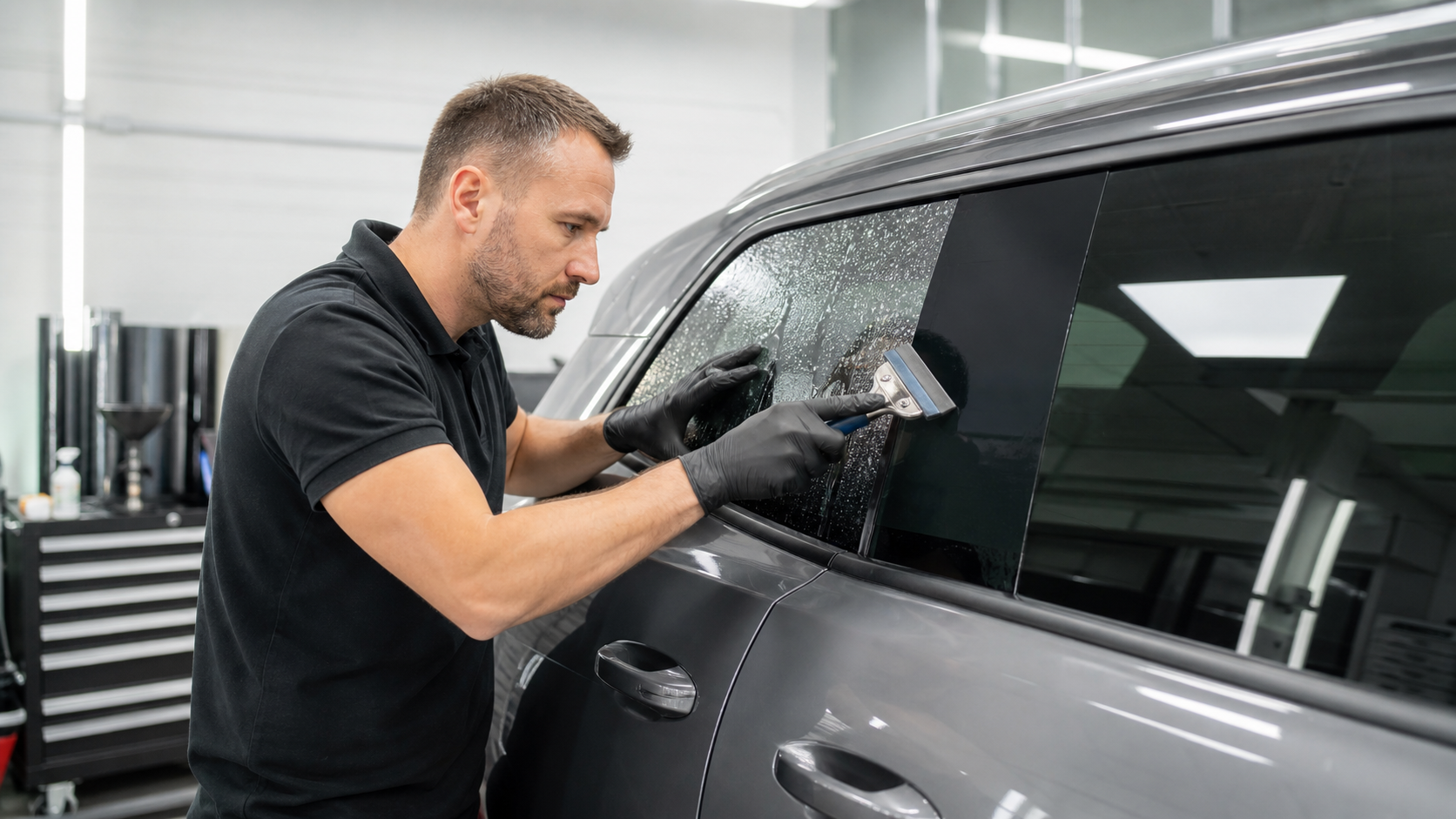
The film is installed using an application solution and carefully positioned.
A squeegee removes solution and air while seating the film against the glass.
Car Window Tinting Curing Process
Freshly installed film can temporarily appear hazy or show small moisture pockets while residual installation solution evaporates.
Cure time varies with film, weather and installation conditions.
Follow the installer’s instructions regarding window operation and cleaning during this period.
Professional Car Window Tinting Versus DIY Tint
DIY kits can reduce initial labor cost, but automotive film installation requires precision.
Challenges of DIY Application
Common difficulties include:
• Dust contamination
• Creases
• Poor edge cuts
• Bubbles
• Incorrect film orientation
• Damage during trimming
• Difficulty shaping curved glass
A small installation error can be highly visible once the film dries.
Professional Tools and Environment
Experienced installers use specialized cutting, shaping and application tools.
They also develop techniques through repeated installations.
Computer cut patterns may reduce the need for cutting directly against vehicle glass on supported models.
Warranty Differences
Manufacturer backed film warranties may depend on installation by authorized professionals.
Verify terms before purchasing.
Car Window Tinting and Heat Rejection
Heat performance is one of the areas where marketing can become confusing.
Infrared Rejection
Manufacturers may publish infrared rejection figures.
The tested wavelength range and methodology matter, so apparently impressive percentages from different brands may not be directly comparable.
Total Solar Energy Rejected
Total solar energy rejected, often abbreviated TSER, is a broader measure intended to describe how much incident solar energy the glazing system rejects.
It can provide more context than a narrowly selected infrared percentage.
Compare Like for Like
When comparing films, look for standardized manufacturer data.
Do not assume a high infrared number automatically means the product provides greater overall solar performance than every competitor.
Darker Car Window Tinting Does Not Always Mean Cooler
A modern lighter ceramic film can potentially outperform a darker basic film in relevant solar measurements.
Tint appearance and heat rejection are separate characteristics.
Choose film based on measured performance rather than darkness alone.
Tinting and Automotive Electronics
Modern vehicles contain antennas, cameras and sensors integrated into or around the glass.
Radio and Mobile Signals
Some metal containing films can potentially interact with wireless signals, depending on film construction and vehicle design.
Nonmetallic products are often selected when signal compatibility is a priority.
Driver Assistance Cameras
Cameras used by advanced driver assistance systems may be mounted near the windscreen.
Film should not interfere with required sensor or camera areas.
Follow vehicle manufacturer and installer guidance.
Defroster Lines
Rear glass commonly incorporates heating elements.
Professional installation should preserve their function.
Removing old film incorrectly can damage these elements.
Car Window Tint Maintenance and Cleaning
Quality tint requires simple but appropriate care.
Wait Before Operating Windows
Installers commonly advise keeping newly tinted windows closed for a period after installation.
Follow the specific instructions given for your film and climate.
Use Compatible Cleaners
Use cleaners approved by the film manufacturer.
Some aggressive chemicals or abrasive tools can damage film surfaces.
A clean microfiber cloth can help prevent scratching.
Avoid Sharp Objects
Seat belts, jewelry and cargo can damage tint when repeatedly contacting glass.
Take particular care around window edges.
How Long Does Car Window Tinting Last?
There is no single lifespan for every product.
Film construction, installation quality, climate, sun exposure and maintenance influence durability.
Manufacturer warranty length can provide useful information but should be read carefully for exclusions and coverage conditions.
Common Window Tinting Problems
Understanding potential defects can help distinguish temporary curing behavior from installation problems.
Bubbles
Small moisture related effects can sometimes be visible during curing.
Persistent air bubbles or contamination may indicate an installation defect.
Contact the installer if they remain beyond the expected curing period.
Peeling Edges
Edges can peel because of damage, contamination or installation issues.
Avoid picking at lifting film.
Professional assessment can determine whether replacement is required.
Purple or Discolored Tint
Some lower quality or aged dyed films can change color over time.
Modern quality films may provide stronger color stability, depending on construction.
Scratches
Film is softer than automotive glass and can be scratched.
Use nonabrasive cleaning tools.
Removing Old Car Window Tint
Old film can deteriorate and eventually require replacement.
Why Professional Removal Can Be Useful
Removing film can leave adhesive behind.
Rear windows also require care because defroster elements can be damaged during aggressive removal.
Professional installers have methods intended to remove both film and adhesive with less risk.
Can Tint Be Reapplied?
Yes, provided the glass is in suitable condition and old film and adhesive have been properly removed.
The installer should clean and prepare the window before applying replacement material.
Privacy and Security Considerations
Tint can make interior details less visible under many conditions, particularly through darker rear glass.
It does not make a vehicle secure.
People can still see through tint in certain lighting situations, and glass remains breakable.
Do not leave high value possessions exposed because the vehicle has privacy film.
How to Choose a Car Window Tinting Installer
Installation skill is as important as film quality.
Ask Which Film Is Used
Request the exact manufacturer and product series.
This allows you to verify published technical specifications.
Be cautious when an installer describes material only as premium ceramic without identifying it.
Review Warranty Terms
Understand whether the warranty covers bubbling, peeling, discoloration or other specific failures.
Determine whether coverage comes from the installer, manufacturer or both.
Inspect Previous Work
Look at edges, rear windows and complex glass.
Good installations should appear clean and consistent without obvious large contamination defects.
Questions to Ask Before Car Window Tinting
Before booking, ask:
• Which exact film will be installed?
• What is its VLT?
• What final VLT should I expect?
• Is that result legal locally?
• What solar performance data is available?
• Which windows are included?
• How long should curing take?
• What does the warranty cover?
• How should the film be cleaned?
A professional installer should be able to provide clear answers.
Choosing the Best Tint for Your Vehicle
Begin with legal compliance and visibility rather than choosing the darkest available shade.
Think about why you want tint.
If heat reduction is your priority, focus on verified solar energy performance. If privacy is most important, consider the darkest legally appropriate glazing for the applicable windows while maintaining safe visibility.
For a daily driver, balanced performance is usually more practical than extreme darkness.
Film should also be compatible with your vehicle’s electronics, glass and local regulations.
Frequently Asked Questions
What is car window tinting?
Car window tinting generally involves applying specialized film to automotive glass to modify visible light transmission and potentially reduce glare, UV exposure and solar heat.
Does car window tinting reduce heat?
Quality solar control film can reduce solar energy entering through treated glass, but performance depends on the specific film, glazing, vehicle and environmental conditions.
What does VLT mean in window tint?
VLT means visible light transmission. A lower percentage generally allows less visible light through the glazing and therefore produces a darker appearance.
Is car window tinting legal?
Window tint is regulated differently by jurisdiction and often by window location. Check current official requirements for the place where the vehicle is registered or driven.
Is ceramic window tint better?
Quality ceramic film can offer strong solar performance without relying on metallic construction, but value depends on the specific product, price and driver’s priorities.
How long after car window tinting can I roll down the windows?
The required curing period depends on film and environmental conditions. Follow your installer’s specific instructions before operating freshly tinted windows.
Conclusion
Car window tinting can improve glare control, solar heat management, UV reduction, privacy and vehicle appearance when the right film is professionally installed. Focus on legal VLT, verified solar performance, film construction and installer quality rather than simply choosing the darkest shade available. Local regulations should always be checked before installation because requirements vary significantly by jurisdiction. With suitable film, careful installation and proper maintenance, automotive tint can provide practical comfort and appearance benefits without compromising visibility or compliance.