OneVIN: How Vehicle History Checks Help You Buy a Used Car With Confidence
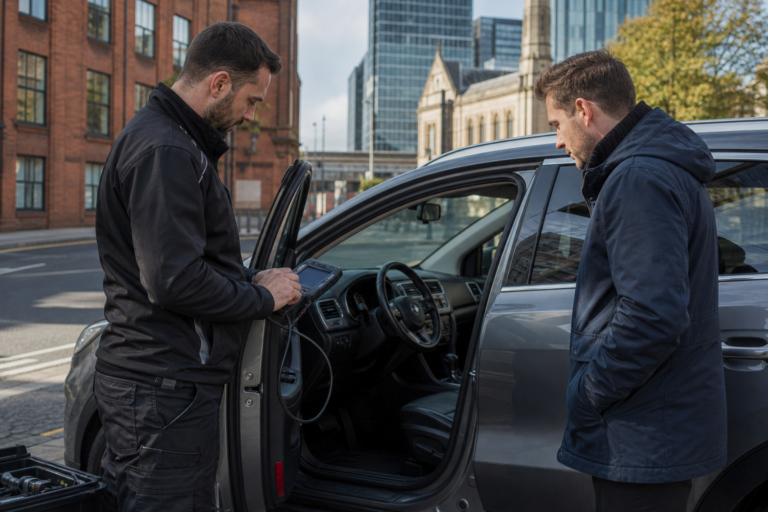
Buying a used vehicle can save money, but it also introduces questions that are difficult to answer by simply looking at the car. A clean exterior does not automatically reveal previous ownership, mileage patterns, servicing information or other historical records. OneVIN is designed to bring useful vehicle information together so buyers can examine available records before making a purchasing decision. A vehicle history report cannot replace a mechanical inspection, but it can provide valuable context that helps buyers know what questions to ask and what details deserve closer attention.
What Is OneVIN and What Does It Do?
OneVIN is an online vehicle information service designed to help motorists access available information about a car before buying, selling or evaluating it.
The platform provides services that can include vehicle history information, service history records and additional automotive data. According to OneVIN, its reports use information obtained from third party providers, public records and proprietary databases. Service history information may also be sourced from authorised OEM providers when records are available.
The basic idea is straightforward. Instead of relying entirely on what appears in an advertisement or what a seller remembers about a vehicle, a buyer can examine available historical information separately.
This is especially useful with used cars because several owners may have possessed the same vehicle during its lifetime. Documentation can become incomplete, paper service books may be lost and important events may not always be obvious during a quick inspection.
A vehicle history check therefore acts as an additional research step rather than a replacement for physical inspection, professional assessment or independent verification.
Why Vehicle History Matters Before Buying a Used Car
Two vehicles of the same model, year and specification can have very different histories.
One may have received consistent servicing and accumulated mileage gradually. Another may have incomplete maintenance records, unusual mileage patterns or historical information that requires further investigation.
Understanding the difference can influence how confidently a buyer proceeds.
Vehicle Condition Is More Than Appearance
Used car advertisements naturally focus on visible features.
Photos normally show:
- Exterior condition
- Interior condition
- Wheels
- Dashboard
- Seats
- Entertainment equipment
- Optional features
These details are useful, but they represent only the vehicle’s current visible condition.
Historical data can provide another perspective by helping the buyer understand how the car has been used and maintained over time.
A polished vehicle could still have unanswered questions about mileage or servicing. Conversely, a vehicle with minor cosmetic wear may have a well documented maintenance history.
Neither factor alone determines whether the car is worth buying.
The objective is to collect enough information to make a better informed assessment.
Historical Information Creates Better Questions
One of the most practical advantages of using OneVIN is not simply receiving data. It is knowing what to ask the seller afterwards.
For example, if available records show a period without documented servicing, a buyer can ask whether maintenance was completed elsewhere and whether receipts are available.
If mileage records rise consistently and then suddenly change in an unexpected way, the buyer can seek clarification.
If ownership information indicates several keeper changes within a relatively short period, the buyer may want additional context.
Good vehicle research is often about identifying questions before money changes hands.
1. Review the Vehicle Identity Information
Start by confirming that the vehicle being advertised matches the information associated with its records.
Vehicle identity information may include details such as:
- Make
- Model
- Fuel type
- Engine information
- Body style
- Transmission
- Registration information
- Manufacturing information
The exact information available depends on the vehicle, jurisdiction and underlying data sources.
Identity checks are useful because an incorrect registration detail in an advertisement can sometimes be an innocent mistake. However, significant inconsistencies should be investigated before proceeding.
Compare Records With the Actual Vehicle
Do not view a digital report in isolation.
Compare the available information with the car itself and its official documents.
Check whether the registration, vehicle identification details, make, model and specification appear consistent.
If something does not match, ask the seller for clarification and independently verify important details.
Why Identity Matching Matters
Vehicle history research works best when buyers combine several sources of evidence.
The vehicle, official paperwork, seller information, available history records and mechanical inspection should collectively tell a reasonably consistent story.
When those elements disagree, further investigation becomes more important.
2. Examine Available Mileage History
Mileage is one of the most closely watched details when evaluating a used vehicle.
A vehicle with 40,000 miles and the same vehicle with 100,000 miles can have different maintenance requirements, market values and levels of wear.
That makes historical mileage information particularly useful.
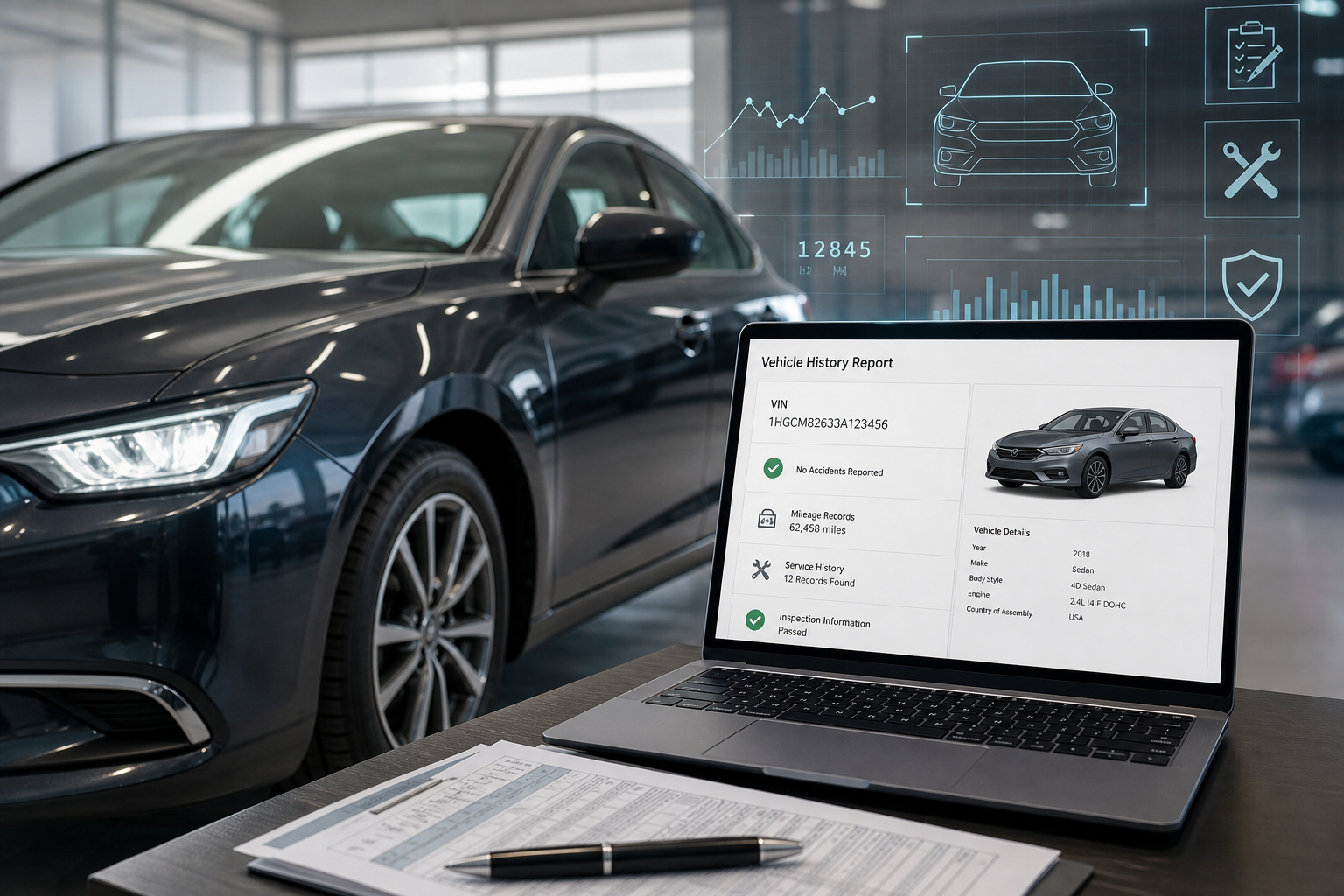
A OneVIN report example shows mileage information across multiple dates, allowing users to observe how recorded mileage changes over time.
Look for a Logical Mileage Progression
You normally expect mileage to increase as a vehicle gets older.
The amount driven each year can vary considerably. Some owners commute long distances while others use their cars only occasionally.
Therefore, high mileage is not automatically a negative sign, and low mileage is not automatically proof of better condition.
What matters is whether the available records make sense together.
Watch for:
- Unexpected mileage decreases
- Large unexplained jumps
- Long gaps between readings
- Differences between records and the displayed odometer
Any unusual pattern deserves additional verification.
Mileage Should Be Considered With Maintenance
A well maintained higher mileage vehicle may sometimes be a more transparent purchase than a poorly maintained vehicle showing lower mileage.
Buyers should therefore avoid making decisions based on mileage alone.
Look at mileage together with servicing, age, condition and inspection results.
3. Check the Available Service History
Maintenance history can help reveal how consistently a vehicle has been cared for.
Oil changes, filters, inspections, scheduled servicing and manufacturer recommended maintenance contribute to long term vehicle reliability.
OneVIN states that service history information is sourced from authorised OEM providers where relevant records are supplied. Availability can vary depending on the vehicle and provider.
What Service Records Can Tell You
Available service history may help establish:
- When servicing took place
- Mileage around the time of servicing
- Where servicing was recorded
- What maintenance work was documented
- Whether there are significant gaps between records
Not every workshop visit will necessarily appear in a database.
Independent garages may maintain their own records, and older documentation may exist only as paper invoices.
For this reason, the absence of a digital entry should not automatically be treated as proof that no service occurred.
Instead, ask the seller for supporting paperwork.
Compare Service Intervals
Manufacturers usually publish maintenance schedules based on time, mileage or both.
When reviewing a car, compare its available service records with the maintenance requirements for the particular model and engine.
This can help determine whether important maintenance may soon be due.
For complex vehicles, upcoming maintenance can materially affect ownership costs.
4. Review Ownership Information Where Available
Ownership history provides additional context about a car’s life.
A vehicle that has changed keepers several times is not automatically problematic. There can be perfectly reasonable explanations.
However, knowing the available ownership timeline helps the buyer understand the vehicle more completely.
Ask About Frequent Ownership Changes
If a vehicle appears to have changed hands repeatedly within short periods, ask why.
Possible explanations may include dealer transfers, personal circumstances or owners simply deciding that the vehicle did not suit them.
The important point is not to assume the reason.
Use the information as the starting point for further questions.
5. Investigate MOT and Inspection Information
For vehicles in markets where official roadworthiness testing applies, inspection history can provide valuable evidence about condition over time.
The sample report provided by OneVIN includes MOT information, mileage readings and test history for a UK vehicle.
Previous test information can be useful because it may reveal recurring maintenance concerns or components that required attention.
Pay Attention to Repeated Advisories
One advisory does not necessarily indicate a serious problem.
However, when similar issues appear repeatedly over multiple inspections, buyers may want to confirm whether proper repairs were eventually completed.
Examples could involve:
- Tyre condition
- Suspension components
- Braking components
- Lighting
- Corrosion
- Other wear related items
A professional inspection can help determine the current condition of these components.
6. Look for Import or Export Information
Imported vehicles can be perfectly legitimate purchases, but their records may differ from vehicles that have remained within one country throughout their lives.
Where OneVIN provides relevant import or export information, use it as additional context.
Why Imported Vehicle History Requires Attention
Historical records can sometimes become more fragmented when a vehicle moves between countries.
Different jurisdictions may maintain different registration, inspection and service databases.
If you are considering an imported vehicle, determine whether sufficient documentation exists for its earlier life.
Ask for:
- Original registration information
- Service documentation
- Import paperwork
- Maintenance invoices
- Relevant inspection records
The objective is transparency rather than automatically avoiding imported vehicles.
7. Assess the Vehicle’s Overall Data Consistency
Individual data points are useful, but patterns can be even more valuable.
Suppose a car has consistent mileage readings, regular servicing and documents that match its advertised identity. Those pieces of information reinforce one another.
On the other hand, several inconsistencies appearing together may justify deeper investigation.
Build a Complete Picture
Think of vehicle research as combining multiple pieces of evidence.
Consider:
- Vehicle history information
- Service records
- Mileage
- Ownership information
- Roadworthiness tests
- Physical condition
- Seller documentation
- Professional inspection
- Test drive observations
No single item should automatically determine the entire purchase.
OneVIN can support this process by organising available historical information into a form that is easier to review.
8. Use OneVIN Before Viewing the Vehicle
Running a vehicle history check before travelling to see a car can save time.
Used vehicle buyers often browse multiple listings before selecting a shortlist.
If historical information raises questions immediately, buyers can contact the seller before arranging a viewing.
Prepare Questions in Advance
After reviewing a report, create a short list of questions.
For example:
- Do you have complete service invoices?
- When was the most recent major service?
- Can you explain this gap in the maintenance history?
- Are there receipts for recent repairs?
- How long have you owned the vehicle?
- Are all registration documents available?
- Can the car be independently inspected?
A seller who can provide clear supporting information makes verification easier.
9. Combine Digital Data With a Physical Inspection
A vehicle history service cannot tell you everything about a car’s current mechanical condition.
OneVIN itself notes that data may not always be complete or current and advises users to independently verify important details.
This limitation is important.
What a Physical Inspection Can Reveal
A qualified mechanic can examine areas such as:
- Engine condition
- Transmission behaviour
- Fluid leaks
- Suspension
- Steering
- Brakes
- Tyres
- Electrical systems
- Underbody condition
- Signs of poor repairs
These are things that historical records alone cannot fully evaluate.
Take a Proper Test Drive
A test drive also provides information that databases cannot.
Listen for unusual sounds.
Check how smoothly the vehicle accelerates, changes gear, brakes and steers.
Test important electronics and observe whether warning lights remain illuminated.
When practical, arrange an independent pre purchase inspection before committing to an expensive vehicle.
10. Verify Important Information Independently
Online vehicle history tools are useful research resources, but responsible buyers should verify important findings with appropriate official or independent sources.
This principle matters because vehicle databases depend on the information supplied to them.
Records can occasionally be incomplete, delayed or unavailable.
Cross Check Critical Details
Depending on the country, useful verification sources may include:
- Vehicle registration authorities
- Roadworthiness testing agencies
- Manufacturer service networks
- Insurance documentation
- Finance providers
- Maintenance invoices
- Independent vehicle inspectors
If a detail could significantly affect your decision or financial risk, confirm it rather than relying on one source.
11. Use the Report as a Decision Support Tool
The purpose of OneVIN is not to make the purchasing decision for you.
It is more useful as a decision support tool.
The report can help you understand the available history and identify areas that should be investigated before purchase.
Separate Evidence From Assumptions
This is particularly important when buying vehicles online.
A history report may show that a particular record is available or that no corresponding record was found.
Those two outcomes should not automatically be turned into assumptions about the vehicle’s current mechanical condition.
Use documented information as evidence, then investigate unanswered questions separately.
Make the Final Decision Using Multiple Sources
A sensible used car buying process can include:
- Reviewing the advertisement
- Checking OneVIN vehicle information
- Comparing supporting paperwork
- Speaking with the seller
- Inspecting the vehicle
- Completing a test drive
- Obtaining a professional inspection where appropriate
- Verifying important records independently
- Considering upcoming maintenance and ownership costs
This approach reduces dependence on any single source.
How OneVIN Supports Modern Used Car Research
Used car buying has become increasingly data driven.
Buyers no longer need to rely exclusively on a printed service book and the seller’s description.
Digital records can help connect information from different stages of a vehicle’s life.
OneVIN fits into this process by providing access to available vehicle history and service information in a single online environment.
The convenience is valuable, particularly for buyers comparing several cars.
However, convenience should not be confused with certainty.
OneVIN states that its data may come from third party providers, public records and proprietary databases and that information may not always be complete or fully current.
That is why the most effective approach combines digital research with independent verification.
What Makes a Useful Vehicle History Check?
A useful vehicle history check should make complicated information easier to understand.
Instead of presenting data without context, buyers benefit from being able to see how individual records connect.
Mileage should be considered alongside dates.
Service history should be considered alongside mileage.
Ownership should be considered alongside the age of the vehicle.
Inspection records should be considered alongside current mechanical condition.
This contextual approach is also important for AI powered search and modern automotive research because clear entities, relationships and factual descriptions make information easier for both users and search systems to interpret.
Common Mistakes Buyers Should Avoid
Even buyers who obtain a vehicle history report can make mistakes if they treat the report as the entire buying process.
Relying Only on the Report
Historical data cannot guarantee future reliability.
A car could have good records and still develop a mechanical problem.
Always evaluate its present condition.
Ignoring Missing Information
Missing data does not automatically mean something negative happened.
It means the information is unavailable through that particular source.
Ask whether the seller can provide alternative documentation.
Assuming Low Mileage Means Excellent Condition
Low mileage can be attractive, but age, maintenance, storage conditions and driving patterns also matter.
A vehicle needs to be assessed as a complete package.
Skipping an Independent Inspection
For a high value used vehicle, an independent mechanical inspection can identify issues that would never appear in an online history report.
Failing to Calculate Future Costs
Purchase price is only one part of vehicle ownership.
Consider upcoming tyres, brakes, servicing, insurance, taxation, fuel and model specific maintenance.
When Should You Use OneVIN?
OneVIN can be useful at several stages of vehicle ownership.
The most obvious time is before purchasing a used car, but vehicle history information can also help sellers organise documentation or existing owners better understand available records associated with their vehicle.
For buyers, the ideal time to check is before making a non refundable financial commitment.
Running the check early gives you an opportunity to evaluate the information, speak with the seller and arrange further verification if necessary.
Frequently Asked Questions
What is OneVIN?
OneVIN is an online vehicle information service that provides access to available vehicle history, service history and related automotive data.
What information can OneVIN show?
Depending on the vehicle and available sources, information may include identity details, mileage records, service history, ownership information and inspection related data.
Is OneVIN a replacement for a vehicle inspection?
No. A history report provides useful background information, while a professional inspection evaluates the vehicle’s current physical and mechanical condition.
Can OneVIN show a car’s service history?
OneVIN offers service history checks and states that relevant service information may be sourced from authorised OEM providers when data is available.
Is every vehicle record guaranteed to be complete?
No. OneVIN states that third party data may not always be complete or current, so important information should also be independently verified.
Should I check OneVIN before buying a used car?
Checking available vehicle history before purchase can help identify questions about mileage, servicing, ownership and other records that deserve further investigation.
Conclusion
OneVIN can add an important research layer to the used car buying process by helping buyers review available vehicle history, mileage, servicing and identity information. The strongest purchasing decisions come from combining digital records with documentation, a proper test drive and an independent mechanical inspection. Treat vehicle history information as evidence that helps you ask better questions, verify important details and approach a used car purchase with greater knowledge.