Seattle Online Therapy: Powerful Benefits and How to Choose the Right Therapist
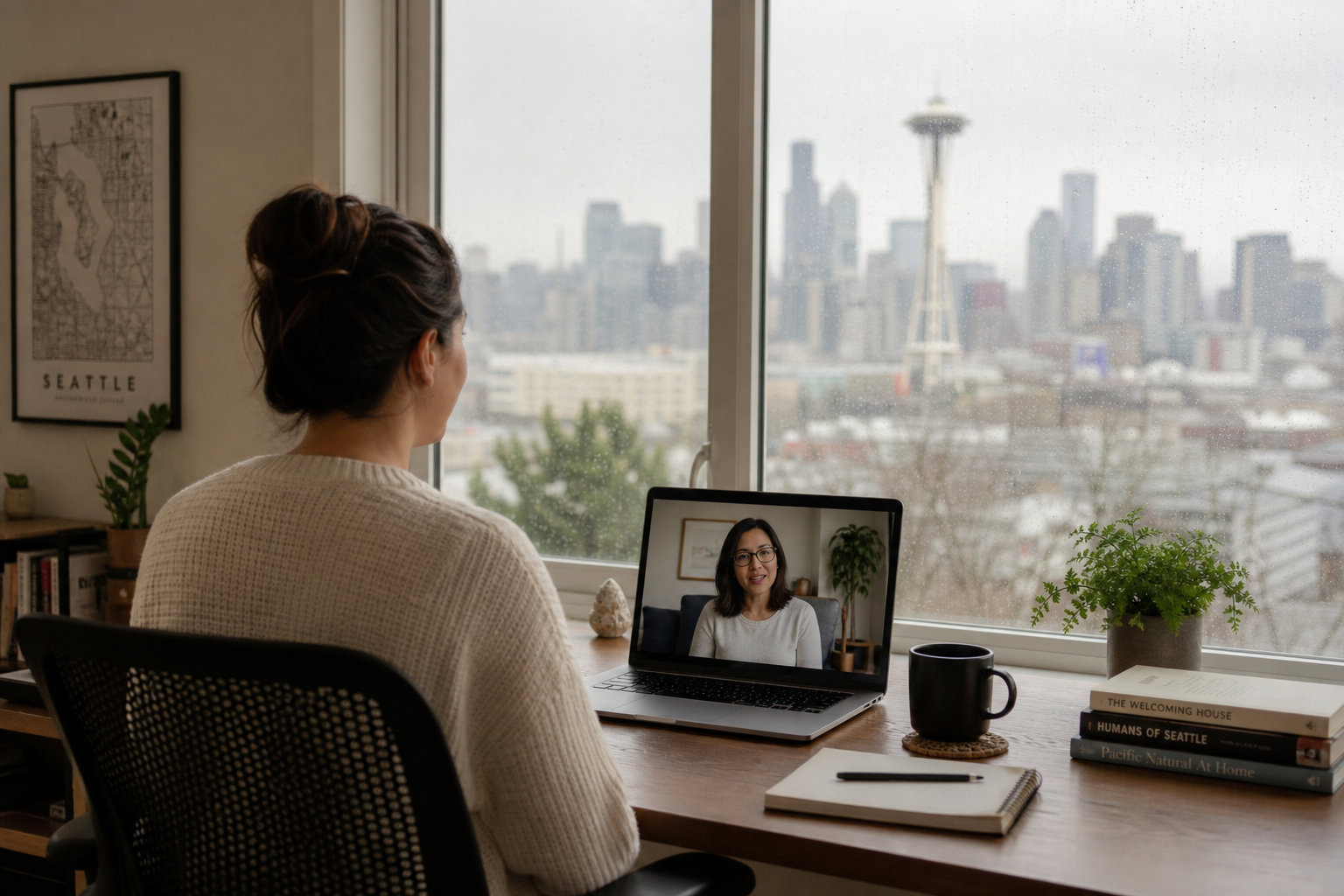
Finding mental health support no longer always requires travelling across the city, rearranging an entire workday or sitting in a waiting room. Seattle Online Therapy allows eligible clients to meet with licensed mental health professionals through secure video and other approved telehealth methods while remaining at home or another private location. For people living in Seattle and elsewhere in Washington, online counseling can make scheduling and access more practical, but choosing the right therapist still requires attention to credentials, privacy, insurance, clinical fit and the type of support you need.
What Is Seattle Online Therapy?
Seattle Online Therapy generally refers to mental health counseling provided remotely to people located in Seattle or elsewhere in Washington State.
Sessions are commonly conducted through secure video platforms, although some providers may offer phone based services when clinically and legally appropriate.
Online therapy can involve many of the same professional services available in a traditional office, including individual counseling, couples therapy, family therapy and behavioral health support.
The main difference is how the therapist and client meet.
Instead of sitting in the same room, they connect through telehealth technology.
The United States Department of Health and Human Services recognizes behavioral health care as an established use of telehealth and notes that psychiatrists, psychologists, counselors, social workers, therapists and other qualified professionals may provide behavioral health services remotely when applicable licensing requirements are met.
Is Online Therapy the Same as Mental Health Apps?
Not necessarily.
A wellness application that provides meditation exercises or automated self help content is different from treatment delivered by a licensed mental health professional.
Professional therapy normally involves an established therapeutic relationship, assessment, informed consent, confidentiality responsibilities and ongoing clinical judgment.
When comparing services, determine whether you are receiving:
• Therapy from a licensed clinician
• Coaching
• Peer support
• Self guided educational material
• Automated artificial intelligence tools
These services can serve different purposes and should not automatically be treated as interchangeable.
Why Seattle Online Therapy Has Become a Practical Care Option
Seattle is a large metropolitan area where commuting time, work schedules, family responsibilities and transportation can affect access to appointments.
Teletherapy can remove some of those practical obstacles.
It can also allow clients to search beyond therapists whose physical offices are located near their neighborhood.
However, convenience is only one factor.
Good therapy still depends on an appropriate therapist, professional standards, clear communication and a treatment approach suited to the client’s needs.
1. Seattle Online Therapy Can Make Scheduling More Flexible
One of the clearest advantages of online counseling is that clients do not normally need to travel to and from an office.
That can make appointments easier to fit around work, education, caregiving and other responsibilities.
Less Time Spent Travelling
An in person therapy appointment may involve more than the session itself.
A client may need time for:
• Driving
• Public transportation
• Parking
• Walking to the office
• Waiting before the appointment
• Travelling home afterward
With online therapy, much of this additional time can be reduced.
The client still needs a private and appropriate place for the session, but transportation becomes less of a concern.
Flexible Does Not Mean Available at Any Time
Therapists still work according to professional schedules.
Availability varies significantly between practices.
Some therapists provide morning or evening appointments, while others primarily work during standard business hours.
When contacting a therapist, ask about:
• Appointment days
• Session times
• Frequency of sessions
• Cancellation policies
• Rescheduling procedures
• Availability for ongoing treatment
Finding a schedule you can realistically maintain is important because therapy often involves more than a single appointment.
2. Online Therapy Can Expand Your Therapist Search
When therapy is limited to physical offices within a short distance, the number of practical options may be relatively small.
Telehealth can allow eligible Washington residents to consider therapists located elsewhere in the state, provided the professional is legally permitted to provide care where the client is located.
Location Still Matters for Licensing
Online therapy may feel location independent, but professional licensing laws still apply.
Federal telehealth guidance explains that health professionals generally need to be licensed or otherwise legally permitted to practice in the state where the patient is physically located at the time of care.
This means a Seattle resident should not assume that any therapist found online can legally provide treatment in Washington.
A therapist based in another state may need appropriate Washington authorization or another valid pathway.
Confirm Your Location During Sessions
Telehealth providers may ask where you are physically located at the beginning of an appointment.
This is not simply administrative information.
The patient’s location can affect licensing requirements and emergency procedures. Federal telehealth guidance specifically recommends verifying patient location before telehealth appointments.
3. You Can Verify Washington Therapist Credentials
Professional credentials deserve careful attention when selecting Seattle Online Therapy.
Washington licenses several types of behavioral health professionals.
Depending on your needs, you may encounter:
• Licensed Mental Health Counselors
• Licensed Marriage and Family Therapists
• Licensed Clinical Social Workers
• Psychologists
• Psychiatrists
• Other appropriately credentialed behavioral health professionals
Each profession has different education, training and scope requirements.
Washington Mental Health Counselor Requirements
The Washington State Department of Health requires applicants for full Mental Health Counselor licensure to meet education and supervised experience requirements.
The Department states that qualifying applicants need an appropriate master’s or doctoral education and that full licensure requires supervised postgraduate experience.
Washington also requires many health professionals providing telemedicine to complete state telemedicine training.
Verify the Credential Before Starting
Washington’s Department of Health provides a credential search system that can be used to check health care professional credentials.
Do not rely only on letters displayed after someone’s name on a commercial website.
Verify:
• Professional name
• Credential type
• License status
• State authorization
• Relevant disciplinary information when available
Credential verification is especially important when the entire relationship begins online.
4. Seattle Online Therapy Can Support Different Mental Health Needs
People seek therapy for many different reasons.
Some are dealing with a specific mental health condition, while others want professional help managing relationships, stress, major life changes or recurring emotional patterns.
Telebehavioral health is used for a range of mental health concerns.
Federal guidance identifies behavioral health telehealth as relevant to conditions including anxiety, depression and post traumatic stress disorder, among other needs.
Common Reasons People Seek Online Counseling
Depending on therapist training and clinical appropriateness, clients may seek support for:
• Anxiety
• Depression
• Stress
• Relationship difficulties
• Grief
• Workplace concerns
• Life transitions
• Parenting challenges
• Trauma related concerns
• Emotional regulation
• Personal development
• Family conflict
This does not mean every online therapist treats every concern.
Specialization matters.
Ask About Relevant Experience
A therapist should be able to explain the populations and concerns they commonly work with.
For example, someone seeking couples counseling may want a professional with substantial relationship therapy experience.
Someone looking for trauma focused treatment may prioritize a clinician specifically trained in that area.
Seattle Online Therapy Should Match Your Clinical Needs
Do not select a therapist only because the provider has convenient appointment times.
Clinical fit is more important.
Ask whether the therapist has relevant experience with your primary concern and what therapeutic approaches they commonly use.
5. Therapy From a Familiar Environment Can Feel More Convenient
Many clients appreciate attending therapy from their own home.
A familiar environment can eliminate the unfamiliarity of travelling to a new office.
However, home based therapy works well only when sufficient privacy is available.
Choose a Private Location
Mental health conversations may involve highly personal information.
HHS recommends using a private location for telehealth and suggests measures such as using headphones and positioning devices so other people cannot see or hear the conversation.
Possible locations could include:
• A private home office
• A bedroom with a closed door
• Another quiet room
• A private parked vehicle when appropriate
A busy café, shared workspace or public transportation generally provides much less privacy.
Tell Your Therapist When Privacy Is Limited
If you cannot speak freely because another person is nearby, tell your therapist.
HHS behavioral telehealth guidance emphasizes discussing privacy conditions and ensuring that patients are comfortable with anyone else present during a session.
Your therapist may help determine whether the environment is appropriate for the conversation.
6. Secure Technology Helps Protect Therapy Sessions
Mental health information is sensitive.
Privacy should therefore be part of the decision when selecting an online therapy provider.
HIPAA requires covered health care providers to protect protected health information, including information involved in telehealth appointments. HHS states that covered providers must use telehealth technology in a manner consistent with HIPAA requirements.
Ask How Sessions Are Conducted
Before the first appointment, determine:
• Which video platform is used
• How appointment links are delivered
• Whether a patient portal is available
• How forms are submitted
• How messages are handled
• Whether sessions are recorded
• How billing information is protected
A professional practice should be able to explain its privacy procedures.
Protect Your Own Device
Privacy is shared between the provider and the patient.
HHS recommends measures such as using password protected home internet, avoiding public WiFi when sharing health information and keeping devices updated.
Simple Privacy Steps for Online Therapy
Before an appointment:
• Close unnecessary applications
• Use a personal device when possible
• Connect through secured internet
• Use headphones
• Silence smart speakers
• Close the room door
• Prevent notifications from displaying private information
These small steps can make a remote session more private.
7. Seattle Online Therapy May Be Covered by Health Insurance
The cost of therapy depends on the provider, session structure, insurance plan and whether the therapist participates in the client’s insurance network.
Washington provides legal protections for behavioral health coverage.
The Washington State Office of the Insurance Commissioner explains that health plans subject to applicable requirements must cover services for mental health and substance use disorders, including therapy and counseling, and that mental health benefits are subject to parity protections.
That does not mean every therapist or every online session is automatically covered by every plan.
Questions to Ask Your Insurance Company
Before beginning therapy, ask:
• Is outpatient mental health therapy covered?
• Is telehealth therapy covered?
• Is this specific therapist in network?
• What is my copayment?
• Does my deductible apply?
• Is coinsurance required?
• Is prior authorization necessary?
• Are there session limits?
• What happens if I use an out of network provider?
Do not rely exclusively on a therapist directory stating that a provider accepts your insurer.
Confirm directly with both the practice and your health plan.
What If Insurance Denies Teletherapy?
Washington consumers have appeal rights when health plans deny behavioral health services.
The Office of the Insurance Commissioner specifically includes denial of telemedicine appointments among issues for which consumers can seek assistance or file complaints.
Keep copies of:
• Denial letters
• Explanation of benefits documents
• Provider recommendations
• Relevant correspondence
These documents can be useful if an appeal becomes necessary.
8. Online Therapy Offers Several Communication Advantages
Video therapy allows therapists and clients to see and speak with each other in real time while remaining in different locations.
This format can be particularly practical for people who travel frequently within the state, have limited transportation or prefer remote appointments.
Consistency Can Be Easier
When transportation is removed from the process, maintaining regular appointments may become more manageable for some clients.
A person who moves to another neighborhood within Washington may also be able to continue with the same therapist if licensing and practice policies permit.
Technology Can Also Create Challenges
Online therapy is not completely friction free.
Potential difficulties include:
• Unstable internet
• Poor audio
• Device problems
• Lack of privacy
• Distractions at home
• Video fatigue
• Difficulty finding a quiet environment
Discuss backup procedures before the first session.
For example, ask what happens if the video connection fails.
Some practices may switch to another permitted communication method, while others may reschedule.
9. Seattle Online Therapy Can Be Evaluated Before You Commit Long Term
Finding a therapist is not only about credentials.
The therapeutic relationship also matters.
It may take an initial appointment or several sessions to determine whether communication feels productive and whether the therapist’s approach makes sense for your goals.
Questions to Ask a Seattle Online Therapist
Consider asking:
• Are you licensed to provide therapy while I am located in Washington?
• Do you regularly work with my primary concern?
• What therapy approaches do you use?
• How long are sessions?
• How frequently do you usually meet with clients?
• Do you accept my insurance?
• What is the self pay rate?
• What is your cancellation policy?
• What telehealth platform do you use?
• What should I do during a mental health emergency?
A therapist should be able to answer practical questions clearly.
Therapy Fit Can Change
A provider may be qualified and professional without being the right match for every client.
Communication style, treatment approach and the client’s goals can all influence fit.
If you have concerns about progress, discuss them with the therapist.
When appropriate, the therapist may adjust the approach or help with referrals.
How to Choose the Best Seattle Online Therapy Option for Your Needs
There is no single therapist who is best for everyone.
A useful selection process considers several factors together.
Start With the Main Reason You Want Therapy
Try to identify the issue you most want help addressing.
You do not need a perfect diagnosis before contacting a therapist.
A simple description may be enough.
Examples include:
“I have been experiencing persistent anxiety.”
“I am struggling after a major relationship change.”
“My partner and I want help communicating.”
“I am having difficulty coping with grief.”
This information can help determine whether a therapist’s specialty is appropriate.
Review Professional Specialties
Therapists may focus on areas such as:
• Anxiety disorders
• Depression
• Trauma
• Relationships
• Couples counseling
• Family therapy
• Grief
• Workplace stress
• Life transitions
• LGBTQ related concerns
• Parenting
• Adolescents
• Older adults
A specialty should be supported by relevant training and experience, not simply listed for marketing purposes.
Consider Therapy Approach
Different clinicians use different therapeutic approaches.
Depending on the provider and the client’s needs, approaches may include cognitive behavioral therapy, acceptance and commitment based approaches, interpersonal therapy and other recognized methods.
You do not necessarily need to choose a therapy method yourself.
Ask the therapist why their proposed approach may be appropriate for your goals.
What Happens During a Seattle Online Therapy Appointment?
The exact experience varies by provider.
Before the first session, you may complete intake forms covering:
• Contact information
• Current concerns
• Relevant history
• Medications
• Emergency contact information
• Insurance information
• Consent forms
• Telehealth policies
The First Session
The first appointment usually gives the therapist an opportunity to understand your concerns, history and goals.
You also have an opportunity to ask questions.
Telebehavioral health providers commonly obtain informed consent explaining how online care works and how privacy and other limitations are handled. HHS notes that most states require formal informed consent before telehealth treatment.
Ongoing Appointments
Later sessions depend on your treatment plan.
Therapy may involve discussion, structured exercises, skill development, reflection or other evidence based clinical techniques chosen by the therapist.
Progress should be reviewed periodically rather than assuming that simply attending sessions guarantees improvement.
Online Therapy Versus In Person Therapy in Seattle
Neither format is automatically better for every person.
Both have strengths.
Online Therapy May Be Practical When
• Travel is difficult
• Your schedule is restrictive
• You value remote access
• You have reliable internet
• You have a private location
• Your clinical needs are appropriate for telehealth
In Person Therapy May Be Preferred When
• You do not have privacy at home
• Technology creates significant barriers
• You strongly prefer face to face interaction
• Your clinician recommends in person care
• Your treatment requires services that cannot be delivered remotely
Some practices offer both options.
Hybrid care can provide flexibility when clinically appropriate.
Is Seattle Online Therapy Appropriate for Couples?
Many therapists provide couples counseling through telehealth.
Video sessions can allow two partners to join from the same location or, depending on the therapist’s policies and licensing considerations, separate locations.
Ask the provider how remote couples sessions are structured.
Couples therapy may address areas such as:
• Communication
• Conflict patterns
• Trust
• Parenting differences
• Major transitions
• Relationship decisions
The therapist should explain confidentiality policies and expectations before treatment begins.
Can Children and Teenagers Use Online Therapy?
Some mental health professionals provide teletherapy for adolescents and, when appropriate, younger clients.
Whether online treatment is suitable depends on factors including:
• Age
• Development
• Presenting concern
• Privacy
• Attention
• Safety
• Family involvement
• Therapist training
Parents or guardians should discuss these factors directly with a clinician experienced in working with younger clients.
How Much Does Seattle Online Therapy Cost?
There is no universal Seattle therapy price.
Fees can vary according to:
• Therapist credentials
• Practice type
• Session length
• Insurance network status
• Specialty
• Individual versus couples therapy
• Sliding scale availability
• Benefits provided by your insurance plan
Ask for the full fee before scheduling.
Insurance Versus Self Pay
An in network therapist may bill the insurer directly and collect the client’s required cost sharing.
A self pay therapist charges the client directly.
Some out of network practices may provide documentation that clients can submit to insurance, but reimbursement is not guaranteed.
Confirm the details with your insurer before assuming a claim will be reimbursed.
How Privacy Works During Seattle Online Therapy
Professional confidentiality applies to teletherapy, but there are legal limits.
A therapist should explain confidentiality and its exceptions during informed consent.
Mental health records also receive protections under applicable privacy law.
HHS provides specific guidance regarding the protection and permitted disclosure of mental and behavioral health information under HIPAA.
Create a Privacy Routine
Before each session:
• Choose a quiet room
• Close the door
• Tell household members you need uninterrupted time
• Wear headphones
• Use secured internet
• Keep your device charged
• Position the camera comfortably
A consistent setup can make online appointments easier.
What Seattle Online Therapy Cannot Replace
Online therapy is not designed to replace every type of mental health or medical service.
Some situations require:
• Emergency intervention
• Hospital care
• In person assessment
• Medical evaluation
• Medication management by an authorized prescriber
• Specialized treatment programs
A therapist can help determine when another level or type of care may be appropriate.
Online Therapists Do Not All Prescribe Medication
Counselors, marriage and family therapists and clinical social workers generally provide psychotherapy rather than medication prescribing.
Psychiatrists and certain other authorized medical professionals may prescribe medications within their legal scope.
If medication evaluation is important to you, confirm that the provider offers or coordinates that service.
When Online Therapy Is Not an Emergency Service
Routine online therapy appointments are not a substitute for immediate crisis care.
If someone in Washington is experiencing a mental health, substance use or suicidal crisis, the Washington State Department of Health advises calling or texting 988 or using the 988 Lifeline chat service. The service is confidential, free and available 24 hours a day throughout the year.
For an emergency involving immediate danger, a suicide attempt in progress, serious injury or another life threatening situation, Washington guidance directs people to call or text 911.
Frequently Asked Questions
What is Seattle Online Therapy?
Seattle Online Therapy is professional mental health counseling delivered remotely to eligible clients in Seattle, typically through secure video or other approved telehealth methods.
Is Seattle Online Therapy confidential?
Licensed providers must follow applicable privacy and confidentiality requirements. Clients should also use a private location, secured internet and a personal device when possible.
Can any online therapist see clients in Seattle?
No. Therapists generally must be licensed or otherwise legally authorized to provide care in the state where the client is physically located during the appointment.
Does insurance cover Seattle Online Therapy?
Many Washington health plans include behavioral health coverage, but telehealth benefits, provider networks and client costs differ by plan. Verify coverage directly with your insurer.
How do I check if a Seattle therapist is licensed?
Use the Washington State Department of Health credential search and confirm the therapist’s professional name, credential type and current license status before beginning treatment.
Is online therapy suitable for anxiety or depression?
Telebehavioral health is used for concerns including anxiety and depression, but suitability depends on individual circumstances. A licensed clinician can assess whether online care is appropriate.
Conclusion
Seattle Online Therapy can provide a practical way to access licensed mental health care while reducing transportation and scheduling barriers. The most important steps are verifying professional credentials, finding a therapist experienced with your concerns, confirming insurance and costs, and protecting privacy during remote sessions. Online therapy can be a valuable care option when it matches your clinical needs, circumstances and personal preferences.