The Greener Way to Color Food That More Consumers Are Choosing
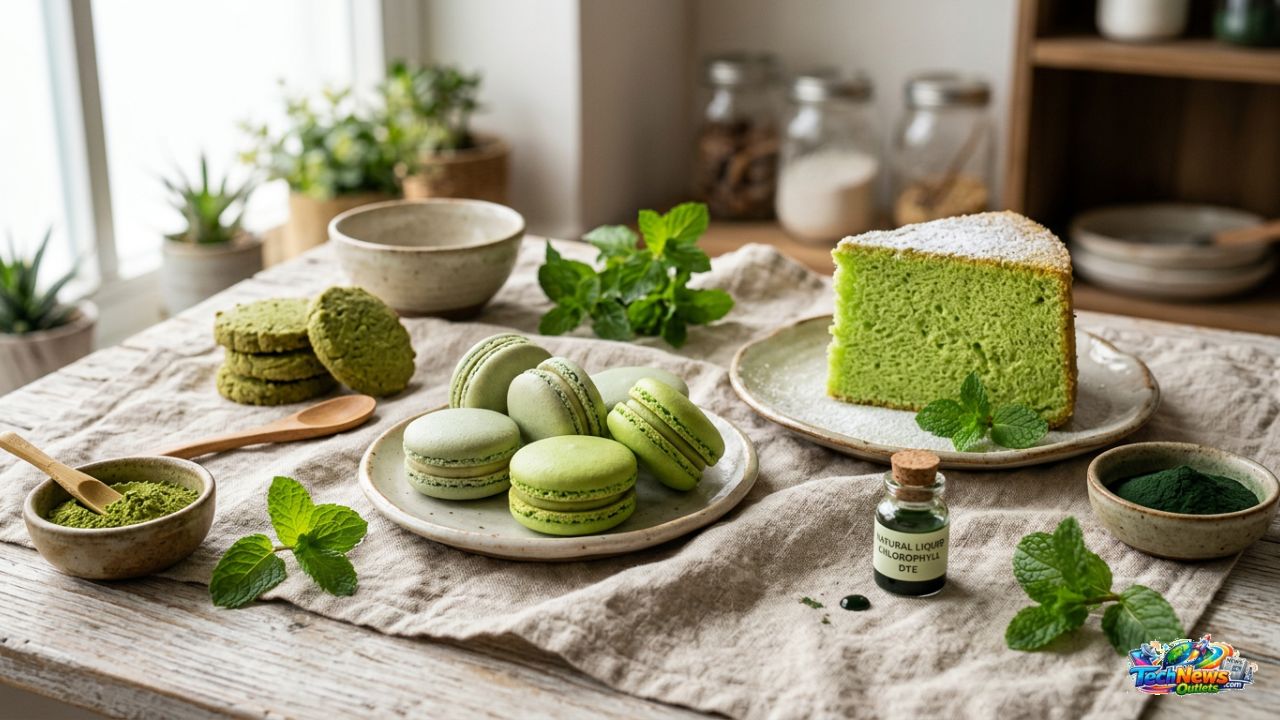
Color strongly influences how people perceive food, from bright green frosting and confectionery to beverages, sauces, desserts, and packaged snacks. As ingredient transparency becomes more important to shoppers and food manufacturers, natural green food coloring is attracting attention as an alternative to some synthetic color additives.
Natural colors are not automatically healthier, safer, or more sustainable simply because they come from natural sources. Their growing popularity is better understood as part of a broader movement toward recognizable ingredients, plant-derived pigments, cleaner labels, and food products designed to meet changing consumer preferences.
What Is Natural Green Food Coloring?
Natural green food coloring refers broadly to color ingredients derived from natural sources and used to give foods or beverages a green appearance. Depending on the formulation and jurisdiction, green shades may come from chlorophyll-related ingredients, spirulina-based colors, matcha, spinach and other plant ingredients, or carefully formulated combinations of permitted natural colors.
The exact definition of a natural color can vary between countries and regulatory systems. A color considered permissible or described in a particular way in one market may be regulated differently elsewhere.
For commercial applications, manufacturers should therefore evaluate both the source of natural green food coloring and its regulatory status in the market where the finished food will be sold.
Why Green Food Color Is Technically Challenging
Green is common in nature, but producing a stable green food color is not always straightforward.
A plant can look intensely green while fresh but behave differently once its pigments are extracted, processed, exposed to acid, heated, stored, or incorporated into another food.
Chlorophyll is responsible for much of the green color found naturally in plants. However, chlorophyll-related pigments can change under processing conditions, particularly when factors such as acidity and heat are involved.
This is one reason natural green food coloring requires more formulation consideration than simply adding a green plant extract to any recipe.
Natural Colors and Synthetic Colors Are Different
Synthetic food colors are manufactured color additives that can offer strong color intensity, consistency, and stability in suitable applications. Natural colors typically originate from plant, mineral, animal, or other naturally derived sources depending on the specific ingredient and applicable regulatory definition.
Neither category should be judged solely by the words natural or synthetic.
Food safety depends on the identity of the substance, purity, permitted use, manufacturing controls, dosage, regulatory approval, and other factors. Natural green food coloring should therefore be selected according to its suitability and legal status rather than on a general assumption that natural always means safer.
Why Natural Green Food Coloring Is Becoming Popular
The increased use of natural green food coloring is connected to broader developments in food purchasing and product development.
Many consumers now examine ingredient lists more closely and are interested in understanding where colors, flavors, sweeteners, and other ingredients come from. Food brands have responded by exploring ingredients that better fit their desired product positioning.
Natural color can also support products designed around plant-based, botanical, premium, artisanal, or minimally processed branding, although the finished product still needs to comply with relevant labeling rules.
Consumers Want More Ingredient Transparency
Ingredient transparency has become a major consideration in packaged food.
Some shoppers prefer ingredient lists containing components they recognize or perceive as familiar. This preference can influence manufacturers to reformulate products using naturally sourced colors where practical.
Natural green food coloring can fit this strategy when its source, performance, labeling, and regulatory status align with the finished food.
However, a shorter or more familiar ingredient list should not automatically be interpreted as proof that a food is nutritionally superior. Nutrition depends on the overall product.
Plant-Based Product Development Is Expanding
Plant-focused food development has encouraged manufacturers to investigate a wider range of botanical ingredients.
Green is naturally associated with vegetables, herbs, plants, freshness, and botanical flavors. As a result, naturally sourced green color can complement many plant-oriented products.
Natural green food coloring may appear in beverages, frozen desserts, bakery products, snacks, confectionery, dairy alternatives, sauces, and other applications where the regulations permit its use.
7 Important Reasons Natural Green Food Coloring Is Gaining Attention
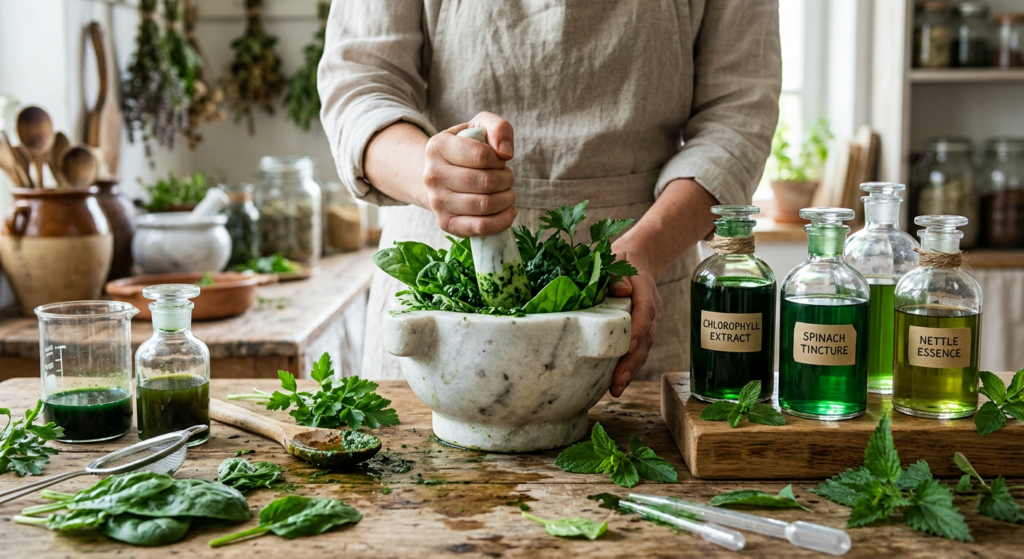
Several practical and consumer-driven factors explain the rising interest in naturally derived green shades.
1. Cleaner Label Positioning
Clean label does not have one universally binding definition across the food industry. It is commonly used to describe products with ingredient lists that consumers perceive as simpler, more familiar, or less heavily processed.
Natural green food coloring can help some brands develop products consistent with this positioning.
The appropriate labeling description depends on the actual ingredient and local law, so manufacturers should avoid assuming that any naturally sourced pigment can automatically be advertised with any desired claim.
2. Plant-Derived Ingredients Have Consumer Appeal
Ingredients associated with plants can fit naturally into products marketed around botanical or plant-based themes.
Matcha, spirulina-derived colors, vegetable ingredients, and chlorophyll-related colorants can offer visual possibilities depending on the food.
Natural green food coloring may therefore help align appearance with the broader identity of a product.
3. Natural Colors Offer Distinctive Shades
Synthetic green can often deliver intense and highly consistent shades. Naturally sourced colors may produce softer, earthy, botanical, olive, mint, or other nuanced tones depending on the system.
Those shades can be desirable rather than a limitation.
A pistachio dessert, botanical drink, matcha confection, or herb-inspired product may benefit from a green that looks less artificial and more closely connected with its flavor concept.
4. Brands Are Reformulating Existing Products
Some manufacturers are reviewing traditional formulations in response to changing retailer requirements, consumer preferences, or brand strategies.
Replacing a conventional color system with natural green food coloring can be part of such a reformulation.
The transition is not always a direct one-to-one replacement. Natural pigments may behave differently in relation to heat, pH, light, oxygen, packaging, and storage.
5. Natural Colors Can Strengthen Product Storytelling
Ingredient origin can form part of a brand’s story.
A company might explain that a product’s color comes from a specific plant or naturally derived pigment where such claims are accurate and legally appropriate.
Natural green food coloring can therefore provide both technical color and an ingredient narrative that may appeal to consumers interested in sourcing.
6. More Natural Color Technologies Are Available
Food color technology continues to develop.
Suppliers work on extraction, purification, formulation, encapsulation, stabilization, and blending techniques to make naturally sourced pigments more practical across different food systems.
This does not eliminate all stability limitations, but it broadens the applications in which natural green food coloring can potentially be used successfully.
7. Visual Expectations Are Changing
Consumers do not necessarily expect every naturally positioned food to have an extremely intense color.
Softer and more variable botanical shades can sometimes communicate authenticity, particularly in premium or plant-focused foods.
This makes natural green food coloring a viable creative choice even when it does not reproduce the exact visual characteristics of a synthetic green.
Common Sources of Natural Green Food Coloring
Different sources create different greens and behave differently during processing.
The best source depends on the food itself, desired shade, regulatory requirements, flavor profile, manufacturing process, and expected shelf life.
| Natural Source | Typical Color Character | Potential Uses | Key Consideration |
|---|---|---|---|
| Chlorophyll-related colors | Green to deep botanical green | Confectionery, sauces and selected foods | Stability depends on formulation |
| Spirulina-derived color | Blue-green to green in blends | Desserts, confectionery and beverages | Heat and acidity can affect performance |
| Matcha | Earthy yellow-green to deep green | Bakery, drinks and desserts | Adds flavor as well as color |
| Spinach ingredients | Botanical green | Homemade foods and selected formulations | Can contribute vegetal flavor |
| Barley grass or similar plant powders | Earthy green | Smoothies and specialty foods | Flavor and texture can be noticeable |
| Blue and yellow natural color blends | Adjustable green | Commercial food formulations | Components must suit the application |
This comparison is intentionally general. A specific commercial color preparation may perform differently because manufacturers can standardize, concentrate, blend, or otherwise formulate ingredients for particular food applications.
Chlorophyll in Natural Green Food Coloring
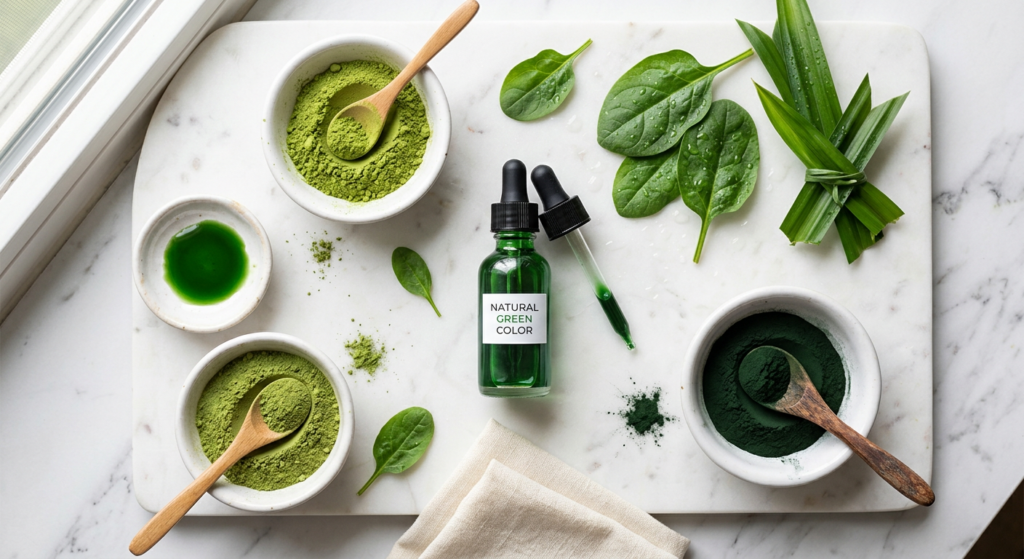
Chlorophyll is the pigment most strongly associated with the green appearance of plants.
It absorbs particular wavelengths of light and plays a central role in photosynthesis. From a food-color perspective, chlorophyll and related color systems can provide attractive green shades.
However, naturally occurring chlorophyll is not equally stable in every food environment.
How Acidity Affects Green Pigments
Acidic conditions can change the visual characteristics of chlorophyll-containing foods.
Anyone who has cooked green vegetables for too long in certain conditions may have noticed that a bright fresh green can shift toward a duller olive tone.
In manufactured foods, controlling formulation and processing conditions can therefore be essential to preserving the desired natural green food coloring.
Chlorophyll Derivatives and Regulations
Various chlorophyll and chlorophyll-derived colorants exist internationally, but permissions, terminology, and application rules vary between regulatory systems.
A manufacturer should not assume that because an ingredient is chlorophyll-derived it can be used in every food or marketed identically in every country.
Commercial users should verify specifications and applicable food-color regulations with qualified regulatory professionals and suppliers.
Spirulina as Part of a Green Color System
Spirulina is widely associated with blue-green appearance, although commercial spirulina-derived color preparations may be used specifically for blue shades.
A green shade can sometimes be created by combining an appropriate blue component with a permitted yellow natural color.
This blending principle can make spirulina relevant to natural green food coloring even where the individual preparation itself appears more blue than green.
Where Spirulina-Based Colors Can Work
Applications may include confectionery, frostings, frozen desserts, and other foods where the particular formulation performs adequately.
However, pigment stability needs to be evaluated under the conditions the product will actually encounter.
Processing temperature, acidity, exposure to light, and storage conditions can influence the result.
Why Product Testing Matters
A natural color that performs well in frosting may not behave the same way in a highly acidic beverage.
Likewise, natural green food coloring that looks excellent immediately after production could shift during storage.
Commercial product developers typically need to assess appearance over the intended shelf life rather than only immediately after formulation.
Matcha as a Natural Green Food Ingredient
Matcha can provide green color while also contributing its characteristic tea flavor.
This makes it fundamentally different from a dedicated food color designed primarily to affect appearance.
For matcha-flavored cakes, cookies, ice cream, drinks, and desserts, its flavor and color can work together naturally.
Matcha Is Not a Neutral Colorant
Using enough matcha to achieve a stronger green may also make its taste more pronounced.
That can be desirable in a matcha product but unsuitable in vanilla frosting or another food where no tea flavor is wanted.
For this reason, matcha is a useful natural green food coloring option primarily when its sensory characteristics complement the recipe.
Matcha Color Can Change
Matcha does not maintain exactly the same bright green indefinitely under all conditions.
Quality, storage, oxygen, light, heat, and recipe composition can influence its appearance.
Keeping matcha properly stored and limiting unnecessary exposure to adverse conditions may help preserve its desirable characteristics.
Spinach and Vegetable-Based Green Colors
For home cooking, spinach is an accessible way to create green foods without conventional artificial coloring.
Spinach puree or extracted liquid can add a green tint to pasta dough, pancakes, baked goods, sauces, and similar recipes.
The trade-off is that spinach is a food ingredient, not merely an isolated color.
When Spinach Works Best
Spinach-derived color works particularly well when a mild vegetal taste is acceptable.
Fresh pasta is a classic example because the green appearance and vegetable component make sense together.
It can be less suitable for delicately flavored confectionery where even a subtle savory note is undesirable.
Homemade and Commercial Coloring Are Not Equivalent
Homemade vegetable puree should not be assumed to behave like commercially formulated natural green food coloring.
Industrial color preparations may be concentrated, standardized, processed, and tested for defined applications. Homemade extracts can vary substantially between batches and can add water, flavor, solids, and other components to a recipe.
Natural Green Food Coloring for Baking
Baking presents a significant challenge for many natural pigments because the product experiences heat.
A green mixture that looks ideal before entering the oven may look different after baking.
The effect depends on the specific color, food matrix, temperature, baking duration, acidity, and other ingredients.
Frostings and Icings Can Be Easier Applications
Coloring added after baking avoids prolonged oven exposure.
Buttercream, icing, glaze, fillings, and decorative elements can therefore provide more flexibility for natural green food coloring than some baked interiors.
This does not guarantee stability because acidity, light, fat content, water activity, and storage can still matter.
Test Before Producing a Large Batch
When appearance is important, make a small test batch using the actual recipe.
Record the amount of color, photograph the product after preparation, and check it again after the expected storage period.
This approach is more reliable than assuming natural green food coloring will behave identically in every recipe.
Natural Green Food Coloring for Beverages
Beverages create another distinct formulation environment.
The color needs to work with the product’s pH, cloudiness, existing ingredients, packaging, processing, and storage conditions.
Some beverages are acidic, which can narrow the range of suitable green pigment systems.
Clear Versus Cloudy Drinks
A clear beverage can reveal pigment precipitation, haze, or uneven dispersion more readily than an opaque smoothie.
A cloudy drink has different visual requirements and may accommodate certain color ingredients more easily.
Selecting natural green food coloring for beverages should therefore begin with the complete beverage system rather than the desired shade alone.
Packaging Can Affect Color Stability
Light exposure can affect some naturally sourced colors.
Packaging design may therefore contribute to color protection in certain applications.
Food manufacturers should conduct appropriate stability testing using the actual container, processing method, and anticipated storage environment.
Natural Green Food Coloring for Confectionery
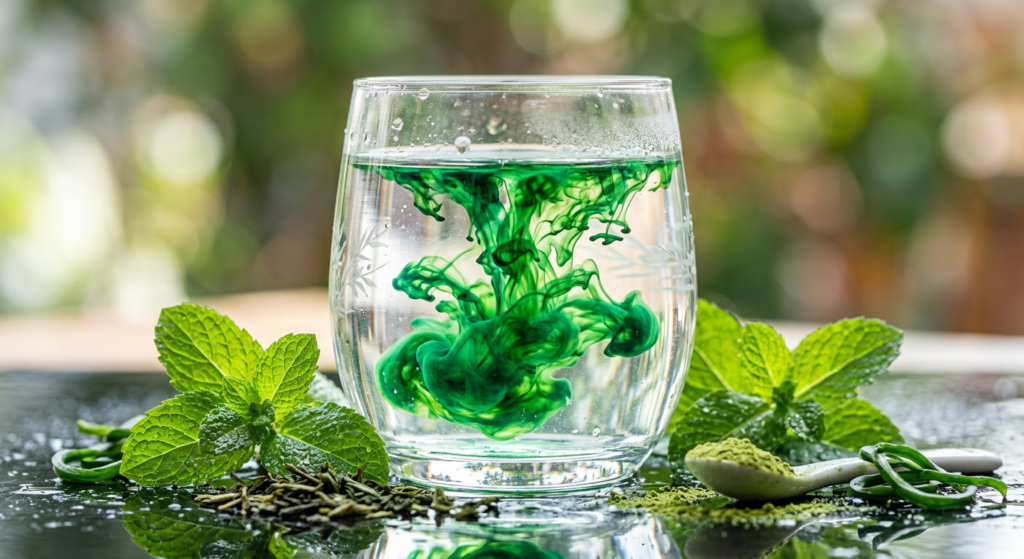
Candy, gummies, chocolate-based products, frostings, and decorative confectionery each create different technical requirements.
Temperature is particularly relevant because some confectionery processes involve substantial heat.
Water-based and fat-based products also handle color ingredients differently.
Solubility and Dispersibility Matter
Not every color distributes effectively in every food system.
A preparation designed for a water-based application may behave poorly when added directly to a fat-rich product.
When purchasing natural green food coloring, users should check whether the supplier recommends it for the intended application.
Flavor Should Remain Consistent
A dedicated color ingredient is often designed to affect appearance without substantially altering flavor at its recommended use level.
Whole-food ingredients such as matcha or spinach are different because their flavor may be part of their contribution.
Recipe developers should evaluate appearance and taste together rather than focusing only on the shade.
Benefits of Natural Green Food Coloring
The advantages of natural color depend on the source and intended application. They should not be overstated as universal health benefits.
For many manufacturers, the primary benefits are related to labeling, product positioning, ingredient sourcing, and visual identity.
Potential advantages include:
- Supports naturally positioned product concepts where regulations permit
- Offers botanical and plant-derived shade options
- Can complement plant-based product branding
- Provides softer or more distinctive green tones
- Helps some manufacturers respond to consumer ingredient preferences
- Can contribute to product storytelling
- Offers alternatives to certain synthetic color systems
These benefits explain much of the commercial interest in natural green food coloring without requiring claims that natural color itself makes a food nutritionally healthier.
Limitations of Natural Green Food Coloring
Natural colors also present challenges that should be understood before reformulating a product.
Ignoring these limitations can lead to disappointing color, unnecessary development costs, or reduced shelf stability.
Natural Colors May Be Less Stable
Some natural pigments are sensitive to factors such as:
- Heat
- Light
- Oxygen
- Acidity
- Processing conditions
- Interactions with other ingredients
- Storage time
Sensitivity varies substantially by pigment, so natural green food coloring should be evaluated individually.
Shade Consistency Can Require More Control
Agricultural inputs can exhibit natural variation.
Commercial color suppliers may use standardization and quality controls to reduce this variation, but natural source materials can still present different technical considerations from fully synthetic colors.
Manufacturers seeking precise brand colors should discuss acceptable color ranges with their supplier.
Cost Can Be Higher
Naturally sourced colors can sometimes cost more than conventional synthetic alternatives because of raw materials, extraction, processing, concentration, stabilization, and supply constraints.
The amount needed also affects cost.
A proper comparison should consider cost in the finished application rather than simply comparing the price of two containers of color.
Is Natural Green Food Coloring Healthier?
The word natural can influence health perceptions, but a food color should not be judged by that label alone.
A naturally sourced color does not automatically improve the nutritional profile of cake, candy, frosting, or another food. Similarly, regulatory authorities assess permitted food additives according to applicable safety frameworks rather than assuming synthetic substances are inherently unsafe.
Natural green food coloring can be preferred for sourcing, labeling, culinary, or consumer reasons without making unsupported health claims.
Whole-Food Color Sources Are Different
When spinach, matcha, or another whole-food ingredient is used, it may contribute components beyond color.
However, the quantity used for coloring may be small, and any nutritional significance depends on the recipe and amount consumed.
It would therefore be misleading to characterize a dessert as healthy merely because its natural green food coloring comes from a plant ingredient.
Natural Versus Artificial Green Food Coloring
Choosing between natural and synthetic color depends on the priorities of the product.
| Factor | Naturally Sourced Green | Synthetic Green Color Systems |
|---|---|---|
| Source | Natural raw materials | Manufactured color additives |
| Shade | Often botanical or nuanced | Often bright and consistent |
| Heat stability | Depends strongly on pigment | Can be strong for suitable colors |
| pH sensitivity | Can be significant | Varies by specific additive |
| Label positioning | Useful for some natural concepts | May not fit some clean-label strategies |
| Cost | Can be higher | Often economical at effective levels |
| Flavor effect | Depends on source | Often designed primarily for coloring |
| Regulation | Market-specific | Market-specific |
Neither category is universally superior. The appropriate choice depends on consumer expectations, product design, technical requirements, cost, regulations, and brand strategy.
How to Choose Natural Green Food Coloring
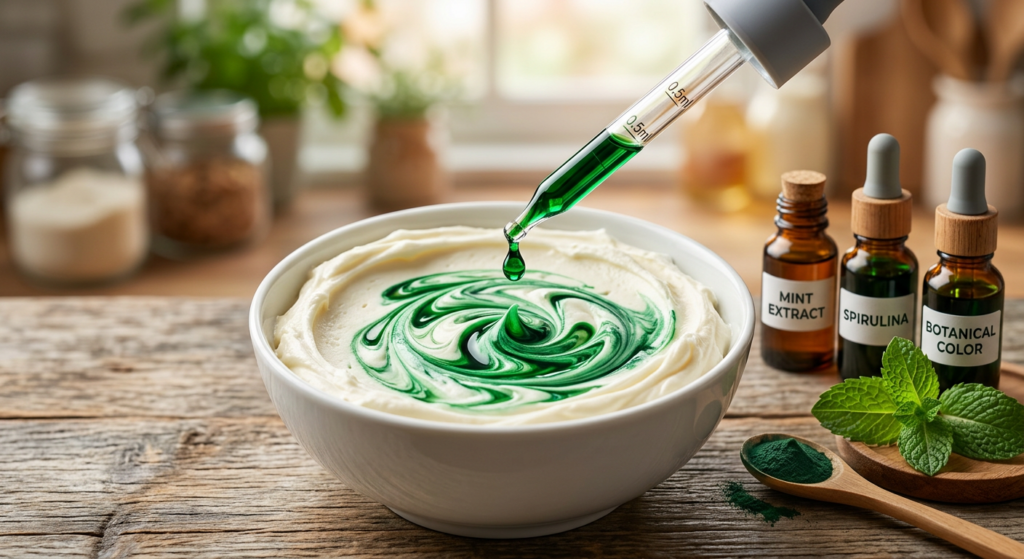
The first question should not be which green looks best in the container.
A food color needs to perform inside the finished product under real processing and storage conditions.
Check the Intended Application
Determine whether the natural green food coloring is intended for bakery products, beverages, confectionery, dairy applications, frostings, sauces, or another category.
Supplier documentation can provide important information about recommended applications.
Consider the Required Shade
Green includes a broad range of colors, from pale mint and yellow-green to leafy, emerald, olive, and deep botanical shades.
The food’s existing color influences the final result.
A naturally beige or brown product will not necessarily produce the same green as a white frosting even when the same natural green food coloring is used.
Evaluate Processing Conditions
Consider whether the food will be:
- Baked
- Boiled
- Pasteurized
- Frozen
- Refrigerated
- Stored at room temperature
- Exposed to light
- Kept for an extended shelf life
- Mixed into an acidic system
These conditions help determine which color technology is suitable.
Verify Regulatory Compliance
Food color regulations differ internationally.
In the United States, the Food and Drug Administration regulates color additives used in foods. The European Union has its own framework, while other countries and regions maintain separate permitted lists and conditions of use.
Commercial producers should verify that natural green food coloring is permitted for the specific food category, concentration, market, and intended labeling.
How to Use Natural Green Food Coloring at Home
Home cooks usually have more flexibility because they are preparing food for personal consumption rather than developing a shelf-stable commercial product.
Even so, a gradual approach tends to produce better color control.
Begin with a small quantity and mix thoroughly before adding more. Natural colors can take on a different appearance once fully dispersed throughout the food.
For powders, proper mixing can help prevent speckling. Liquids may alter consistency when added in larger quantities, so recipe balance should be considered.
Start Lighter Than the Final Target
It is usually easier to deepen a color than to remove excess color.
Add natural green food coloring gradually and observe the result under normal lighting.
If the food will be heated, test how the chosen color changes during cooking before preparing an important or large batch.
Account for the Base Color
White icing provides a relatively neutral background, while chocolate, egg-rich batter, fruit mixtures, and whole-grain doughs already contain substantial color.
The starting color will interact with the pigment.
This is one reason dosage recommendations cannot guarantee exactly the same shade in every recipe.
Storage and Shelf-Life Considerations
Natural colors should be stored according to the manufacturer’s instructions.
Some products may require protection from heat, moisture, oxygen, or light, while storage requirements differ among liquids, powders, pastes, and extracts.
Natural green food coloring that is incorrectly stored may lose intensity or perform unpredictably.
Keep Commercial Ingredients Identifiable
Food businesses should retain supplier documentation, specifications, lot information, and appropriate traceability records.
This helps with quality control and makes it easier to investigate any unexpected change in product appearance.
Traceability is particularly important when natural green food coloring forms part of a commercial ingredient supply chain.
Natural Green Food Coloring and Clean-Label Products
Natural color is often discussed alongside clean-label food, but the terms should not be treated as interchangeable.
A product can use naturally sourced coloring while still containing a long list of other ingredients. Conversely, a simple food may contain an approved additive that does not fit a particular brand’s definition of clean label.
Food manufacturers should define what their own product positioning means and ensure marketing language is accurate.
Clear Communication Builds Trust
Consumers should be able to understand what a product contains based on compliant labeling.
Marketing natural green food coloring should not imply that competing products are unsafe without evidence or that naturally sourced color provides health benefits that have not been established.
Transparent, specific claims are stronger than broad assumptions about natural ingredients.
What Food Businesses Should Ask Suppliers
Choosing a color supplier involves more than requesting a sample of the desired shade.
Technical documentation can help manufacturers decide whether a product is suitable for their process.
Important questions include:
- What is the source of the color?
- Which food applications are recommended?
- What pH range is suitable?
- How does heat affect the pigment?
- What storage conditions are required?
- Does light exposure affect stability?
- What is the recommended usage range?
- What allergens or other labeling considerations apply?
- In which countries is the ingredient permitted?
- What technical and regulatory documentation is available?
- How consistent is the color between batches?
- What shelf-life testing does the supplier recommend?
These questions make selecting natural green food coloring a technical decision rather than simply a visual one.
The Future of Natural Green Food Coloring
Demand for naturally sourced food colors is likely to continue encouraging innovation in extraction, formulation, blending, stabilization, and application technology.
The most significant developments may not involve discovering one perfect green pigment. Instead, progress can come from making existing color sources work more effectively in challenging foods.
Improved stabilization, optimized combinations of pigments, better processing methods, and application-specific formulations can all expand the possibilities for natural green food coloring.
Natural Color Will Still Require Formulation Expertise
Technological improvement does not remove the fundamental differences between pigments.
Food developers will still need to consider acidity, temperature, light, oxygen, packaging, water activity, ingredients, and shelf-life expectations.
The strongest natural green food coloring solution will therefore depend on the complete product rather than the pigment alone.
Consumer Expectations Will Shape Development
Food companies ultimately respond to a combination of consumer demand, technical feasibility, regulation, supply, cost, and brand strategy.
As shoppers continue to pay attention to ingredient origins, naturally sourced colors may remain relevant to new product development.
At the same time, responsible brands should avoid reducing a complex food safety or nutrition discussion to natural versus artificial. Clear evidence and transparent labeling provide a more useful basis for consumer decisions.
FAQ’s
What is natural green food coloring made from?
Natural green food coloring can come from chlorophyll-related ingredients, plant materials, or blends of permitted naturally sourced colors. The exact source and regulatory definition vary by product and country.
Is natural green food coloring safe?
Safety depends on the specific ingredient, its quality, permitted use, concentration, and applicable food regulations. A natural source should not automatically be assumed safer simply because it is natural.
What is the best natural green food coloring for baking?
The best option depends on baking temperature, recipe pH, desired shade, and flavor. Heat can affect some natural pigments, so testing the specific color in the actual recipe is important.
Can matcha be used as natural green food coloring?
Yes, matcha can add a natural green shade to suitable recipes, particularly desserts and drinks. It also adds a distinct tea flavor, so it is not a neutral substitute for dedicated food color.
Why does natural green food coloring change color?
Heat, acidity, oxygen, light, other ingredients, and storage can alter some natural pigments. Stability depends on the specific color source and the food formulation.
How do manufacturers choose natural green food coloring?
Manufacturers consider shade, food type, pH, processing temperature, packaging, storage, flavor effects, shelf life, cost, and regulatory requirements before selecting a color system.
Conclusion
Interest in natural green food coloring reflects a broader shift toward ingredient transparency, naturally sourced colors, botanical product concepts, and greater consumer attention to food labels. Chlorophyll-related ingredients, spirulina-based systems, matcha, vegetable sources, and natural color blends can all produce useful green shades, but their suitability varies considerably between applications.
Natural green food coloring is most successful when appearance, stability, flavor, processing conditions, shelf life, cost, and regulatory compliance are considered together. Rather than assuming natural automatically means healthier or technically better, home cooks and manufacturers can choose green colors based on reliable information, appropriate testing, and the requirements of the finished food.