Locks & Hardware: A Complete Guide to Door Locks and Security Ironmongery
Security begins at the door, and the door begins with the right hardware. Whether you are replacing a worn uPVC lock, upgrading a cylinder, or fitting out an entire property, the quality and compatibility of the hardware determine both how secure the door is and how smoothly it operates every day. Locks & Hardware is a UK supplier that has built its name around exactly this category, door locks, window hardware, security ironmongery, and the replacement parts that keep them working. This guide explains the main types of door locks, how uPVC and multipoint systems work, what to consider when buying hardware, and how a specialist supplier fits into the picture.
The Lock Types That Matter
The world of door hardware can seem complicated, but it resolves into a handful of distinct lock types, each with a defined role.
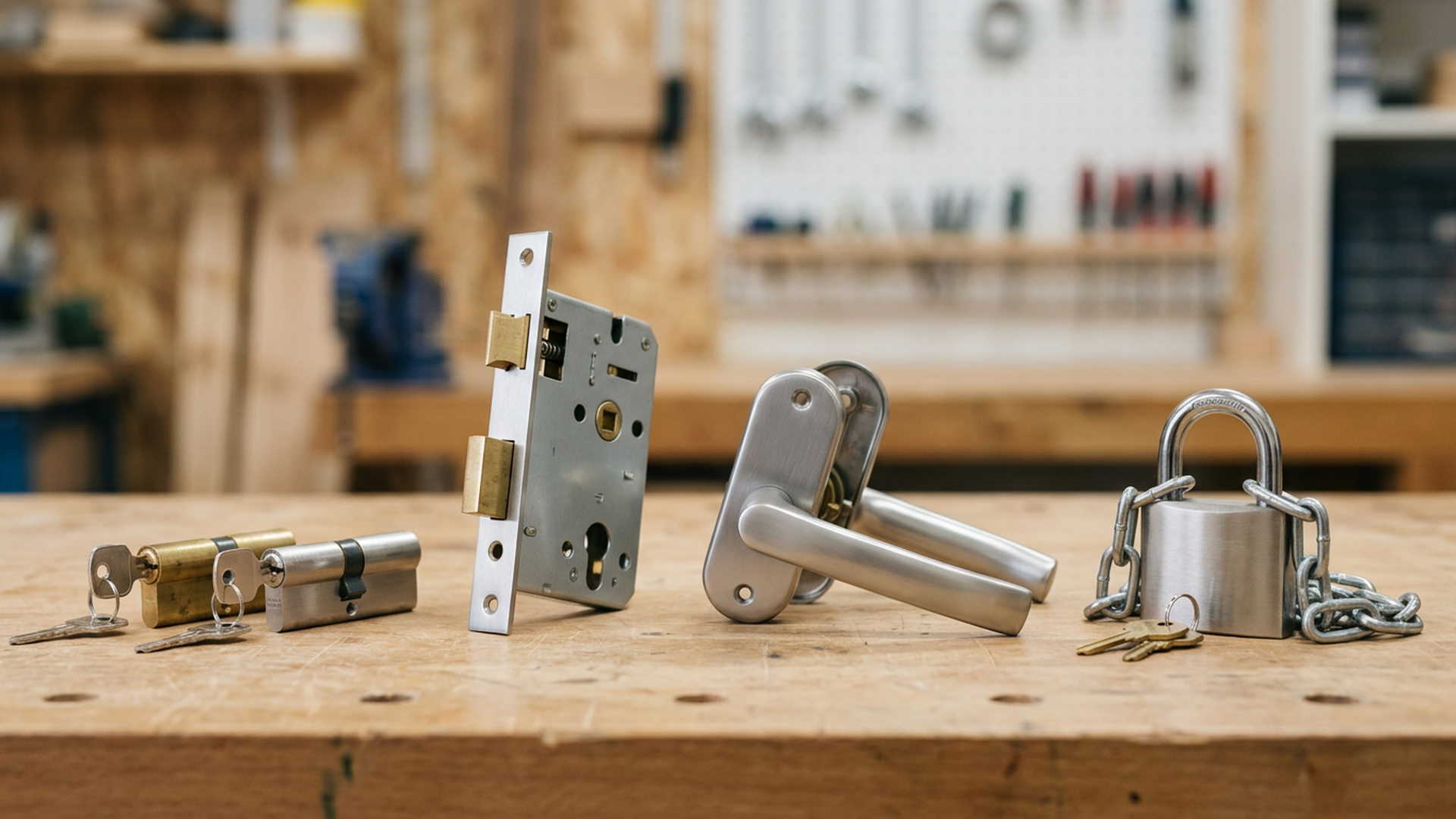
Cylinder locks are the most common type on modern doors, particularly uPVC and composite doors. The lock is operated by a euro cylinder, the familiar key-operated barrel that slots through the door, and it can be single, where the key works one side, or double, where a key is required on both sides. The cylinder is the security-critical component, and modern British Standard, TS007-rated cylinders are designed to resist snapping and picking.
Mortice locks are the traditional choice for wooden doors, set into a recess in the door’s edge rather than mounted on the surface. They range from simple two-lever designs for interior doors to five-lever, British Standard locks that insurers expect on external timber doors. The lever count matters because it corresponds to the lock’s resistance to picking and unauthorised key duplication.
Multipoint locks are the standard on uPVC doors, and they work differently from a single lock. Instead of one locking point, the mechanism throws multiple bolts along the door’s edge when the handle is lifted or the key is turned, securing the door at several points against the frame. The mechanism, known as a gearbox, is the part that fails over time, and replacing it is one of the most common uPVC repairs.
Beyond these three, the category extends to padlocks and chains for gates and sheds, additional security products such as hinge bolts and letterbox restrictors, and access control systems for buildings that need keyless or coded entry.
uPVC Hardware and Why It Matters
Much of the modern hardware market revolves around uPVC doors, and understanding that system is the key to buying the right parts.
uPVC doors rely on an integrated mechanism: the handle operates a multipoint gearbox, which throws the locking bolts, while the euro cylinder provides the key-operated security. These parts are matched to specific measurements, the PZ distance between the handle and cylinder centres, the screw centres, and the backset, and a replacement part must match the original’s dimensions or it will not fit.
This is why uPVC replacement is a specialist area. The multipoint gearbox, the handles, the hinges, and the letterplates are all standardised enough to be replaceable, but only if the buyer identifies the correct specification. A supplier that stocks genuine multipoint gearboxes, such as the Lockmaster range, and the matching handles and cylinders, makes the difference between a repair that fits first time and one that requires several attempts.
The good news for homeowners is that most uPVC failures are repairable without replacing the door. A worn gearbox, a failed cylinder, a broken handle, or a sagging hinge are all replacement jobs, and the parts are available to anyone who can identify them, which is where a well-organised supplier earns its place.
The Security Standards Worth Knowing
When buying locks, the standards are not marketing jargon; they are the difference between a lock that resists attack and one that fails in seconds.
The British Standard Kitemark is the traditional mark of a tested lock, and for external timber doors, a five-lever BS mortice lock is what many insurers require. The TS007 standard applies to euro cylinders, and it rates them by stars, with a three-star or one-star cylinder plus security handle providing the snap resistance that modern attack methods target. Euro cylinder snapping, in which an exposed cylinder is broken to gain access to the lock, is one of the most common methods used on uPVC doors, which is why the cylinder and the handle security both matter.
For a homeowner, the practical rule is simple: external doors should carry locks to the relevant British Standard, and uPVC doors should have a TS007-rated cylinder paired with a security handle. These upgrades are inexpensive relative to the protection they provide, and they are the single highest-value security improvement most homes can make.
Window Hardware and the Rest of the Picture
Security is about the whole property, not just the doors, and the hardware category extends accordingly.
Window handles and locks are the window equivalent of door hardware, and a worn or loose window handle is both a security gap and a daily annoyance. The replacement parts are specific to the window’s profile and the handle’s design, which again makes correct identification the central skill. Beyond windows, the category includes patio and sliding door hardware, which shares the multipoint principles of uPVC doors, and the full range of architectural ironmongery, door handles, hinges, and fittings, that a property needs.
For a homeowner or a trade buyer, the practical advantage of a specialist supplier is that all of this is in one place, with the measurements and specifications needed to order the right part the first time. That consolidation removes the single biggest frustration in hardware buying, which is the wrong part ordered from the wrong source.
What to Consider When Buying Locks and Hardware
The buying decision comes down to a few practical checks, and they apply whether you are replacing one part or fitting out a property.
The first check is identification. Before ordering, identify the existing part precisely, its type, its brand, and its measurements, because the measurements are what determine fit. For a euro cylinder, that means the overall length and the split between the two sides; for a multipoint gearbox, the PZ centres and the locking points; for handles, the screw centres.
The second check is security level. Match the replacement to the door’s security needs, upgrading to TS007 cylinders and BS-rated locks where the door is external, rather than simply replacing like for like.
The third check is compatibility. uPVC hardware in particular is profile-dependent, and the same-looking part can differ in the measurements that matter, which is why a supplier that lists the specifications clearly is worth more than one that lists only a price.
The fourth check is the supplier’s service. Delivery speed, clear returns, and the availability of the less common parts, the gearboxes, the hinges, the specific handles, are what make a hardware purchase reliable. Locks & Hardware advertises free delivery over £72, next-day delivery for orders before 5pm, VAT-inclusive pricing, and 14-day no-quibble returns, which addresses exactly those practical concerns.
Why Buyers Choose Locks & Hardware
For UK buyers, Locks & Hardware is a specialist online supplier of door locks, window hardware, security ironmongery, and replacement parts, and its positioning is built around reliability rather than the lowest price.
The company describes itself as one of the UK’s most trusted suppliers in the category, with a reputation built on dependable products, consistent availability, and a service-led approach. Its catalogue spans the categories described above, uPVC door locks and handles, cylinder locks, mortice locks, multipoint locks and gearboxes, hinges, patio hardware, window handles, padlocks, and access control, with brands including Lockmaster, Versa, TSS, and Yale represented in its featured products.
The practical value of the range is breadth combined with specificity. The same supplier carries the budget-conscious replacement and the British Standard security upgrade, and its listings include the measurements and standards, TS007 ratings, PZ distances, screw centres, that make a purchase confident rather than hopeful. For homeowners and trade buyers alike, that combination is what turns a confusing repair into a straightforward order.
Keeping Your Hardware Working
Buying the right hardware is half the job; keeping it working is the other half, and a little maintenance goes a long way.
Lubricate locks and hinges occasionally, because a lock that is stiff to operate is a lock that is wearing, and graphite or a light lubricant keeps the mechanism smooth. Check uPVC door hinges for sag, because a sagging door stresses the multipoint gearbox and shortens its life, and adjust or replace the hinges before the mechanism fails. Test the security of cylinders and handles periodically, tightening loose screws and replacing any component that shows movement.
Above all, do not ignore the early signs. A key that turns stiffly, a handle that rattles, a door that needs lifting to lock, these are all warnings of a part approaching failure, and the replacement is always cheaper and easier before the part fails completely than after.
Conclusion
In conclusion, Locks & Hardware represents the category it serves: a specialist supplier of door locks, uPVC hardware, window fittings, and security ironmongery, built around reliability, availability, and the practical details that make a hardware purchase work. The lock types, cylinders, mortice locks, and multipoint systems, each have their role, and the security standards, British Standard and TS007, define the difference between adequate and genuinely secure. For anyone replacing a uPVC gearbox, upgrading a cylinder, or fitting out a property, the keys to success are the same: identify the part precisely, match the security level to the door, and buy from a supplier whose listings give you the specifications rather than just a price. Locks & Hardware does exactly that, and it is that combination of range, clarity, and service that keeps the UK’s doors secure.
Frequently Asked Questions
1. What types of door locks does Locks & Hardware sell?
The company supplies cylinder locks, mortice locks, multipoint locks, uPVC door locks, padlocks, and access control systems.
2. What is a multipoint lock?
A multipoint lock secures a uPVC door at several points along its edge through a central gearbox, operated by the handle and key.
3. What does TS007 mean on a cylinder?
TS007 is a British security standard for euro cylinders, rating them by stars for resistance to snapping and other attack methods.
4. How do I identify the right uPVC replacement part?
Measure the key specifications, such as PZ centres, screw centres, and backset, and match them to the original part before ordering.
5. Does Locks & Hardware offer next-day delivery?
Yes, the company advertises next-day delivery for orders placed before 5pm, with free delivery on orders over £72.
6. What security standard should an external timber door have?
External timber doors should carry a five-lever British Standard mortice lock, which is the level most insurers require.