Difference Between 7443 and 7440 Bulbs: Fitment, Function, and LED Upgrades Explained
Shop for replacement tail, brake, or turn-signal bulbs and you will quickly meet two part numbers that look almost identical: the 7440 and the 7443. Both share the same T20 wedge body and drop into the same style of housing in many vehicles, and neither looks different when you hold them side by side — which is exactly why the difference between 7443 and 7440 bulbs trips up so many shoppers. So what is the difference between 7443 and 7440 bulbs, and does it actually matter which one you buy? It matters a great deal. The difference between 7443 and 7440 bulbs is internal, it affects which lighting functions work, and choosing the wrong one can leave you without a working brake light. This guide from Underground Lighting breaks down the difference between 7443 and 7440 bulbs: circuits, contacts, brightness, interchangeability, and LED upgrade options.
The difference between 7443 and 7440 bulbs at a glance
Here is the difference between 7443 and 7440 bulbs in plain terms, feature by feature.
- Function type — The 7440 is a single-function bulb; the 7443 is a dual-function bulb. This is the core difference between 7443 and 7440 bulbs, and everything else follows from it.
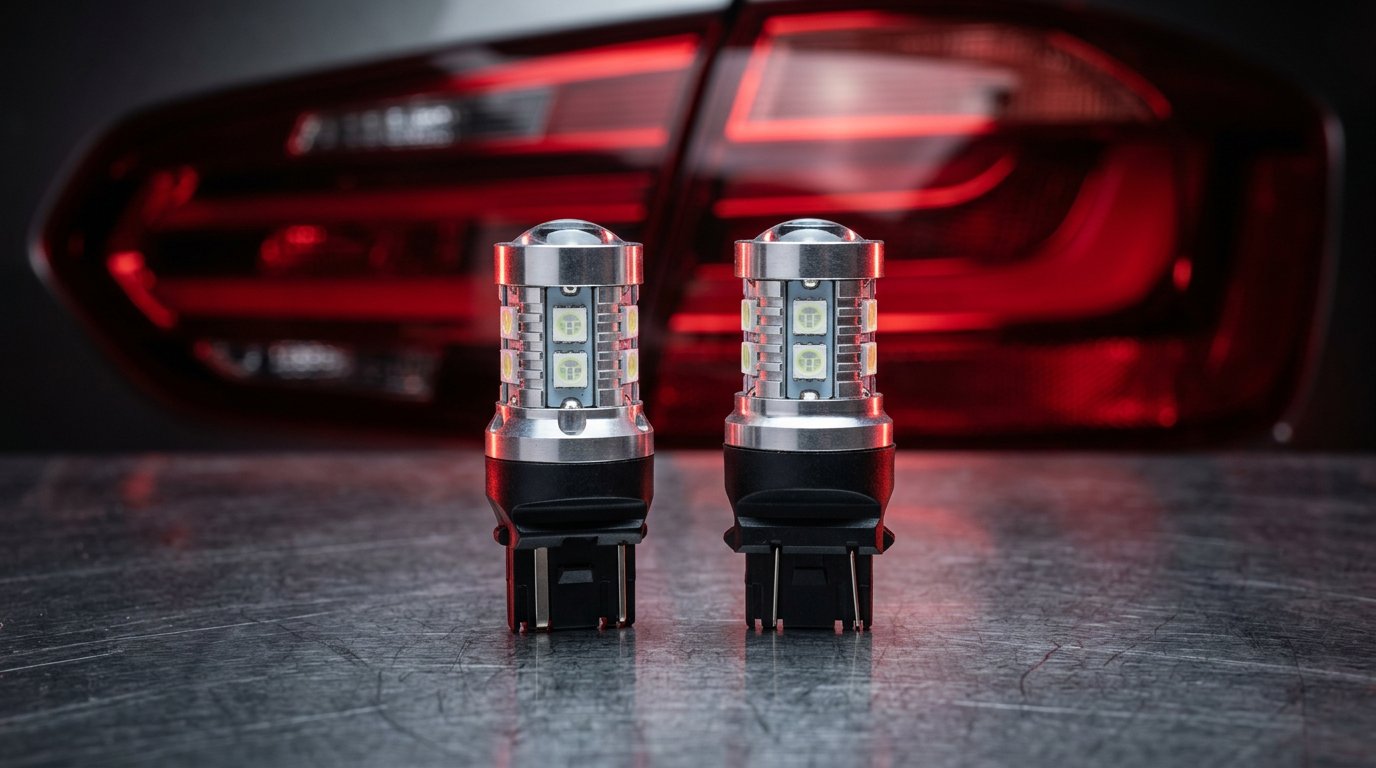
- Base and contacts — The 7440 uses a W3x16d wedge with 2 contacts; the 7443 uses a W3x16q wedge with 4 contacts. The two extra contacts are what allow the second circuit — a physical difference between 7443 and 7440 bulbs you can spot by eye.
- Circuits — One circuit in the 7440, two circuits in the 7443; this circuit difference between 7443 and 7440 bulbs sets everything else.
- Brightness levels — The 7440 runs at one fixed level; the 7443 runs at two levels, low and high — the brightness difference between 7443 and 7440 bulbs drivers notice first.
- Common applications — The 7440 is typically used for turn signals and reverse lights; the 7443 covers brake and taillight combos plus parking and brake setups — the usage difference between 7443 and 7440 bulbs in a single line.
- Interchangeability — A 7443 can stand in for a 7440, but a 7440 can never replace a 7443, the one-way street at the heart of the difference between 7443 and 7440 bulbs.
- Wattage — Expect roughly 3–5W in LED form for a 7440 (versus a 21W halogen) and 3–8W for a 7443 (versus a 21W/5W dual halogen). That wattage difference between 7443 and 7440 bulbs also affects heat and power draw.
Are 7443 and 7440 bulbs interchangeable?
The most practical part of the difference between 7443 and 7440 bulbs is that substitution works in one direction only. The two bulbs share the same wedge body and may fit the same socket, but their circuit designs differ — the electrical difference between 7443 and 7440 bulbs that decides everything below.
A 7443 will fit and function in a 7440 socket — the socket simply energizes the signal filament while the second circuit and its extra contacts touch nothing. A 7440 in a 7443 socket is a different story: the tail or running-light function has no filament to activate, so that function is completely absent, not just dimmer — the most costly difference between 7443 and 7440 bulbs to get wrong. Once you grasp the difference between 7443 and 7440 bulbs, the working rule is simple. The 7443 is a safe substitute for the 7440; the 7440 is never a substitute for the 7443. When in doubt, choose the 7443 — the forgiving side of the difference between 7443 and 7440 bulbs — and always confirm your socket type before ordering.
A real-world example makes the difference between 7443 and 7440 bulbs concrete. On a 2018 Toyota Camry, the rear turn-signal socket (7440) accepts a 7443 LED with no issues — the extra circuit simply sits unused. Fit a 7440 into the same car’s 7443 brake and tail socket, however, and the brake or tail function stops working entirely, the difference between 7443 and 7440 bulbs made painfully real on the driveway.
What is a 7440 bulb used for?
The 7440 runs one circuit at one fixed brightness: signal on, bulb lights; signal off, bulb stays dark. That single-channel behavior defines one side of the difference between 7443 and 7440 bulbs. That simplicity — the functional difference between 7443 and 7440 bulbs in miniature — makes it the standard choice wherever only a single on-and-off output is needed.
- Turn signals — The most common 7440 role, front or rear, clearly indicating your direction when turning or changing lanes.
- Reverse lights — In many vehicles the 7440 is the backup light, delivering bright white output the moment you shift into reverse. LED 7440 backup bulbs are among the most popular upgrades in this size, and for many owners the first brush with the difference between 7443 and 7440 bulbs.
- Stand-alone brake or auxiliary signal — Where a housing splits the brake function onto its own bulb, a 7440 can serve as a dedicated brake or auxiliary signal light.
Because the 7440 runs a single circuit, it cannot produce two brightness levels. If your housing needs one bulb to act as both a dim taillight and a bright brake light, you need a 7443 — another everyday example of the difference between 7443 and 7440 bulbs in action.
What is a 7443 bulb used for?
The 7443 can handle two to three simultaneous functions from a single bulb, which makes it the dominant choice in rear combination lamp assemblies. Its dual filament operates at two distinct levels: full 21W brightness for brake and signal duty, and a reduced 5W output for the tail or running light. The two can activate independently or together depending on circuit input — the dual-circuit difference between 7443 and 7440 bulbs working exactly as designed.
- Brake and tail combo — The 5W filament stays on with your headlights while the 21W filament fires when you press the brake pedal; both are energized together during braking. This is the standard setup in most rear combination lamps, and the clearest everyday proof of the difference between 7443 and 7440 bulbs.
- Parking and turn signal — The 5W filament runs daytime or parking light duty while the 21W filament flashes for turn signaling. Common where one socket handles both static and flashing duties.
- Switchback DRL and turn — A white running light switches to amber when the turn signal activates. This setup requires dual-channel wiring and a clear lens housing, and it is popular on trucks and modern builds for a factory-LED look — the dual-channel difference between 7443 and 7440 bulbs put to stylish use.
Picture a rear taillight with a single 7443 socket: headlights on and the 5W filament glows as a dim red tail; press the brake and both filaments burn bright red; indicate a turn and the 21W filament flashes. One bulb, three distinct states — the difference between 7443 and 7440 bulbs summed up neatly.
Bulbs related to the 7440 and 7443 family
Several other part numbers sit in the wider lighting family, and the difference between 7443 and 7440 bulbs logic still applies: filament and contact counts decide whether a swap actually works.
- 7444 — A dual 27W/7W bulb. It fits both sockets (signal-only in a 7440 socket) and runs slightly brighter than a 7443.
- 3157 — A dual 27W/8W bulb with similar functions to the 7443 but a different base. It is not interchangeable with either the 7440 or the 7443.
- 1156 — A single 27W bulb on a bayonet base rather than a wedge. Again, not interchangeable — a base difference that sits beyond the difference between 7443 and 7440 bulbs altogether.
The takeaway mirrors the difference between 7443 and 7440 bulbs: a 3157 and a 7443 do similar jobs but use different socket bases, so never substitute one for the other on function alone. Verify the base type — wedge versus bayonet — before ordering.
Color, lens, and housing rules
Part of the difference between 7443 and 7440 bulbs is choosing the right output color, which is both a brightness issue and a legal one. Match the color to the function: amber for turn signals and side markers, red for brake and tail lights, and white for reverse lights and daytime running lights. Most regions require these colors by function — DOT rules in the United States and ECE regulations elsewhere — so check your local lighting laws before changing bulb color.
Housings matter just as much as the difference between 7443 and 7440 bulbs themselves. Most factory taillight and signal housings use reflector bowls, so LED chip orientation is critical: a chip aiming away from the reflector runs dim no matter its lumen rating. Choose LED bulbs with 360-degree multi-chip designs for reflector housings. If your vehicle has colored lenses, use a white LED behind them — the lens filters output to the required legal color at maximum brightness, whereas a matching red or amber LED behind the same lens runs significantly dimmer — a lens detail every bit as important as the difference between 7443 and 7440 bulbs.
LED upgrades and the CANbus question
Modern LED replacements in these sizes deliver roughly 500 to 1,800 lumens per bulb — two to four times brighter than factory halogens — with instant activation and 30,000–50,000-hour lifespans — and the difference between 7443 and 7440 bulbs still applies in LED form. Before selecting a variant, confirm two things: the difference between 7443 and 7440 bulbs as it applies to your socket — single-filament (7440) or dual-filament (7443) — and whether your vehicle is CANbus-equipped.
That second check catches out many buyers who have already nailed the difference between 7443 and 7440 bulbs. LEDs draw only 3–8W compared with a halogen’s 21W, and on vehicles from around 2007 onward, circuits monitored by the body control module can read that lower draw as a dead bulb — triggering hyperflash or a dashboard bulb-out warning. LEDs with built-in resistors, or external load resistors, solve the problem without any wiring changes — a reminder that the difference between 7443 and 7440 bulbs is only half of a successful LED swap. Underground Lighting’s own range is built around the difference between 7443 and 7440 bulbs: a 1,200-lumen CANbus-ready red 7443 for brake and tail duty that installs plug-and-play in under ten minutes, an amber-and-white switchback for front turn signals with anti-hyperflash resistors, an amber CANbus turn bulb with a silent fan that engages only on the high filament, and a high-lumen white reverse bulb with four-sided illumination and a top projector lens.
Pre-purchase checklist
Lock in the difference between 7443 and 7440 bulbs before you order by confirming a few basics:
- Pull the factory bulb and check whether the socket has single contacts (7440) or dual contacts (7443); that contact count is the visible difference between 7443 and 7440 bulbs.
- Identify the function you need — turn signal, reverse, brake and tail, or parking and turn — because function is where the difference between 7443 and 7440 bulbs shows up in daily driving.
- Confirm the vehicle year — from around 2007 onward a CANbus-ready LED is the safer pick, a check that sits alongside the difference between 7443 and 7440 bulbs.
- Check the lens: colored lenses call for a white LED behind them, while clear lenses call for an amber or red LED — lens choice pairs with the difference between 7443 and 7440 bulbs for a legal, bright result.
- Choose a non-polarity LED design to eliminate reversal issues, and if you are going switchback, confirm a clear lens housing with dual-channel wiring.
- Never substitute a 3157 for a 7443, and never install a 7440 in a 7443 socket — ignore the difference between 7443 and 7440 bulbs here and the brake or tail function will disappear.
Conclusion
The difference between 7443 and 7440 bulbs is small to look at and significant in practice: one circuit and two contacts in the 7440, two circuits and four contacts in the 7443, with brightness levels and applications to match. Remember the one-direction rule — a 7443 can stand in for a 7440, but a 7440 can never do the 7443’s job — and the right choice becomes straightforward once the difference between 7443 and 7440 bulbs is clear. Confirm your socket, match the color to the function, pick a CANbus-ready design if your vehicle needs one, and your LED upgrade will work the first time — the difference between 7443 and 7440 bulbs fully put to use. Explore Underground Lighting’s full 7440 and 7443 LED range with free shipping on orders over $89.99, and put the difference between 7443 and 7440 bulbs to work for a brighter, safer drive.
Frequently Asked Questions
1. What is the difference between 7443 and 7440 bulbs?
The difference between 7443 and 7440 bulbs is circuit count. The 7440 is a single-function bulb with one circuit and two base contacts; the 7443 is a dual-function bulb with two circuits and four contacts, allowing two brightness levels from one bulb.
2. Can a 7443 bulb replace a 7440?
Yes. A 7443 fits and works in a 7440 socket; only the signal filament is energized, and the second circuit sits unused. It is the safe substitute when you are unsure — the most useful part of the difference between 7443 and 7440 bulbs.
3. Can a 7440 be used in a 7443 socket?
No. The single-filament 7440 cannot power the second circuit, so the tail or running-light function is completely absent. Never install a 7440 where a 7443 belongs; the difference between 7443 and 7440 bulbs leaves no room for a two-way swap.
4. Is a 3157 bulb the same as a 7443?
No. The 3157 performs similar dual-filament duties but uses a different base, so it is not interchangeable with the 7443 — base type matters just as much as the difference between 7443 and 7440 bulbs. Always match the socket base type before ordering.
5. What color LED should I choose for each position?
Amber for turn signals and side markers, red for brake and tail lights, and white for reverse lights and DRLs. Check local laws, and use a white LED behind a colored lens for maximum legal brightness.
6. Do I need a CANbus-ready LED bulb?
If your vehicle is from around 2007 or newer, likely yes. LEDs draw far less power than halogens, which can trigger hyperflash or bulb-out warnings; built-in-resistor LEDs or load resistors prevent this. The CANbus question sits right beside the difference between 7443 and 7440 bulbs as the two things to confirm before ordering.