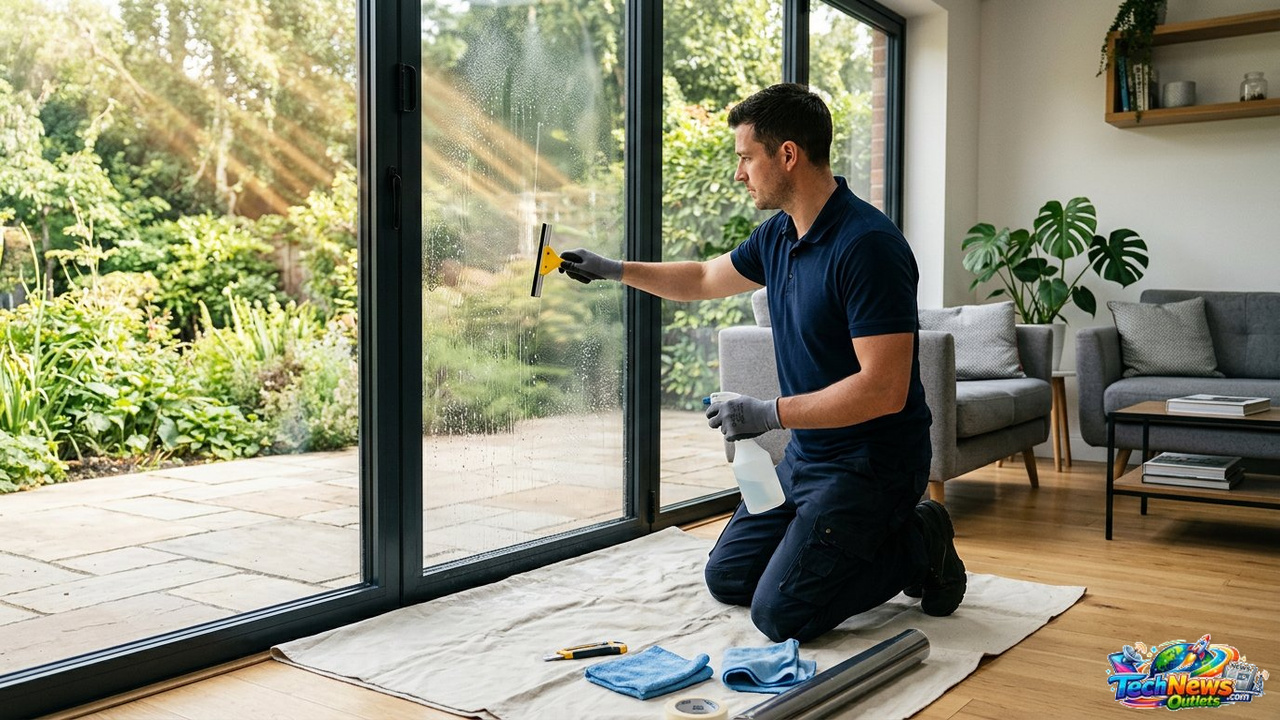
Energy Saving Window Film: 9 Powerful Ways to Upgrade Double Glazing Without Replacement
Replacing windows can improve building performance, but it is also a major project involving new glazing units, frames, labour, disruption, waste, and substantial capital expenditure. When otherwise serviceable windows have performance limitations rather than structural failures, energy saving window film can provide a less invasive way to modify how existing glazing interacts with solar radiation, visible light, ultraviolet radiation, and, for certain low-emissivity products, radiant heat. Applied to compatible glass, the right film can improve selected aspects of double-glazing performance without removing the existing windows.
The key phrase is “selected aspects.” Window film does not convert every older double-glazed unit into the equivalent of a newly engineered high-performance window. It does not repair failed seals between panes, eliminate condensation caused by broader humidity problems, straighten damaged frames, replace deteriorated gaskets, or solve serious air leakage around the window assembly.
What energy saving window film can do depends on the film technology and the problem being addressed. Solar-control films are primarily designed to reduce portions of incoming solar energy. Low-emissivity, or low-E, films can influence long-wave radiant heat transfer as well. Spectrally selective products attempt to reject significant solar infrared energy while retaining comparatively high levels of visible daylight. Other products prioritize glare reduction, privacy, UV control, or a combination of characteristics.
That variety is precisely why window film should be selected from measured performance data rather than appearance alone.
A very dark film may reduce glare dramatically but also reduce daylight more than a home or office wants. A highly reflective product can provide strong solar control but produce an exterior appearance unsuitable for a particular building. A clear spectrally selective film may preserve the view while targeting solar heat gain more subtly.
This guide explains how energy saving window film works with existing double glazing, where it can reduce cooling demand and improve comfort, what performance numbers to compare, and when window replacement remains the better investment.
Current-data note: film products, warranties, prices, energy regulations, glazing standards, installer networks, and performance specifications change. For a 2026 project, use the current technical data sheet for the exact film under consideration and confirm compatibility with the particular insulating glass unit before installation.
How Energy Saving Window Film Works on Double Glazing
A window manages several forms of energy simultaneously.
Visible light passes through the glass and allows occupants to see outside. Solar radiation also contains ultraviolet and infrared components. Once solar energy enters a room and is absorbed by floors, furniture, walls, and other surfaces, some of that energy becomes heat.
Glass also participates in conductive, convective, and radiant heat transfer between indoors and outdoors.
Double glazing improves performance by separating two panes with a sealed space, often containing air or an insulating gas. Modern insulating glass units can incorporate low-E coatings and other technologies that further improve thermal behavior.
Energy saving window film adds another functional layer to an existing compatible glass surface.
Different Energy Saving Window Film Technologies Solve Different Problems
The category includes several technologies.
Solar-control film can reduce solar heat gain.
Spectrally selective film can target solar infrared energy while maintaining higher visible-light transmission.
Low-E film can reduce surface emissivity and influence radiant heat transfer.
UV-filtering characteristics can reduce transmission of ultraviolet radiation.
Tinted films can reduce visible light and glare.
Reflective products can provide stronger solar rejection and privacy effects under suitable lighting conditions.
The appropriate energy saving window film therefore depends on whether the building’s problem is summer overheating, winter heat loss, glare, UV exposure, excessive brightness, or several of these together.
1. Energy Saving Window Film Can Reduce Solar Heat Gain
Rooms with large sun-exposed windows can become significantly warmer than adjacent areas.
The effect is particularly noticeable where glazing receives strong direct sunlight for prolonged periods.
Energy saving window film designed for solar control can reduce the amount of solar energy transmitted through compatible glazing.
Why Solar Heat Gain Matters
Imagine a room with a large west-facing glazed wall.
During the afternoon, direct solar radiation enters through the glass and heats:
Flooring
Furniture
Interior walls
Work surfaces
People
Other objects
Those surfaces subsequently transfer heat into the room.
An air-conditioning system then has to remove some of that heat to maintain the desired indoor temperature.
By reducing solar heat gain at the glazing, energy saving window film can reduce part of that cooling load.
Energy Saving Window Film Does Not Eliminate All Heat
Heat enters buildings in several ways.
It can pass through roofs, walls, windows, doors, air leakage, and ventilation. Appliances, lighting, and occupants also create internal heat.
Window film addresses the part associated with glazing and the specific mechanisms its construction is designed to influence.
A poorly insulated roof will not improve because film was installed downstairs.
Orientation Changes the Benefit
Not all windows receive the same solar exposure.
The most valuable energy saving window film installation may therefore be selective rather than whole-building.
Depending on hemisphere, building orientation, shading, season, surrounding structures, and climate, some elevations can receive substantially more problematic solar energy than others.
A site assessment should identify which glazing is actually contributing to overheating.
External Shading Can Also Be Effective
Window film is one solution among several.
External blinds, shutters, awnings, architectural shading, vegetation, and solar-control glass can also manage solar gain.
External shading has the advantage of intercepting solar energy before it reaches the glazing.
The right approach depends on architecture, budget, appearance, planning restrictions, maintenance, and desired daylight.
2. Energy Saving Window Film Can Improve Comfort Near Windows
Building energy efficiency is important, but occupants experience comfort rather than energy calculations.
A room can have an acceptable average temperature and still contain uncomfortable hot zones beside sunny glazing.
Energy saving window film can help reduce these localized effects when solar radiation is the cause.
Window-Side Workstations Can Become More Usable
This is relevant to:
Home offices
Commercial offices
Restaurants
Conservatories
Retail spaces
Reception areas
Living rooms
Meeting rooms
A desk beside a sun-exposed window may become uncomfortable every afternoon even when the HVAC system is operating.
Reducing direct solar energy can make that area more usable.
Energy Saving Window Film Can Reduce Radiant Discomfort
Human thermal comfort is influenced by more than air temperature.
The temperatures of surrounding surfaces and radiant exchange also matter.
Low-E energy saving window film can modify surface emissivity, while solar-control film can reduce the extent to which interiors are heated by incoming solar radiation.
The actual comfort change depends on film specification and building conditions.
Do Not Promise a Fixed Temperature Reduction
Claims such as “window film makes every room 8°C cooler” are too broad without test conditions.
Actual temperature changes depend on:
Window area
Orientation
Film specification
Outdoor temperature
Solar intensity
Ventilation
Insulation
Thermal mass
HVAC
Occupancy
Shading
A better method is to compare film performance data and model the building where energy consequences are important.
3. Energy Saving Window Film Can Improve Some Aspects of Double Glazing Without Removing It
Double glazing is already an insulating system.
Owners sometimes assume this means nothing can be added to improve its performance.
That is not necessarily true.
Compatible energy saving window film can modify the optical and thermal characteristics of an existing insulating glass unit.
Why Keep Existing Double Glazing?
Window replacement can be unnecessary when:
Frames remain sound.
Seals remain functional.
Glass is undamaged.
Air leakage is acceptable.
The primary problem is solar gain.
Glare is excessive.
UV exposure is a concern.
The owner wants to improve selected thermal characteristics.
In those circumstances, energy saving window film can preserve much of the existing asset.
Energy Saving Window Film Is an Overlay, Not a New Insulating Glass Unit
This distinction should remain clear.
A new high-performance window might incorporate:
Advanced low-E coatings
Warm-edge spacers
Optimized cavity dimensions
Argon or other gas fills
Thermally improved frames
Triple glazing
Improved seals
Better installation detailing
Applying film to existing double glazing cannot reproduce every one of these improvements.
It changes the performance of the existing glass assembly.
Failed Double Glazing Still Needs Repair or Replacement
If condensation appears between the panes of a sealed double-glazed unit, the seal may have failed.
Energy saving window film will not repair that seal.
Similarly, cracked panes, rotting frames, major air leakage, failed hardware, and structural defects need their appropriate remedies.
Film should be used to upgrade functioning glazing rather than hide failing glazing.
Diagnose the Window Before Installing Energy Saving Window Film
A professional assessment should identify:
Glass type
Pane construction
Low-E coatings already present
Tempering or heat treatment
Lamination
Pane thickness
Cavity configuration
Existing films
Damage
Seal condition
Orientation
Some films are unsuitable for particular glazing constructions because their absorption characteristics can increase thermal stress.
Compatibility is an engineering issue, not merely an installation preference.
4. Energy Saving Window Film Can Cost Less Than Full Window Replacement
One reason owners consider film is straightforward: the existing windows may not need to be discarded.
Installing energy saving window film generally involves substantially less construction than removing and replacing complete window systems.
However, cost comparisons should be made carefully.
Window Replacement Includes More Than Glass
Replacement can involve:
New units
Frames
Removal
Disposal
Internal making-good
External finishing
Access equipment
Labour
Decorating
Sealants
Potential disruption
Permits or approvals where applicable
Energy saving window film primarily adds performance to the existing glazing, avoiding many of these activities.
Compare Like-for-Like Objectives
If the problem is solar overheating, compare the cost of film with other solar-control strategies.
If the problem is poor whole-window insulation caused by obsolete frames, comparing film with replacement is less straightforward because the new window addresses more deficiencies.
The correct question is:
“What performance improvement am I purchasing?”
Energy Saving Window Film Payback Depends on the Building
Do not accept a universal claim that film “pays for itself in two years.”
Financial payback depends on:
Installation price
Cooling energy saved
Heating impact
Electricity or fuel tariffs
Climate
Film performance
HVAC efficiency
Operating schedule
Window orientation
Building use
For commercial buildings, hours of operation can make the calculation materially different from a residential home.
Obtain an Energy Model for Large Projects
For substantial commercial glazing, energy modeling can help estimate how energy saving window film may change cooling, heating, and peak-load requirements.
Measured product data should be used as inputs.
This produces more useful information than multiplying a generic “30% saving” claim across the building’s energy bill.
5. Energy Saving Window Film Can Reduce Glare Without Closing the Blinds
Solar glare can make otherwise attractive windows difficult to live or work beside.
People often respond by closing blinds or curtains.
That reduces glare, but it also removes the daylight and view that made the glazing desirable.
Appropriate energy saving window film can provide another option.
Visible Light Transmission Matters
Visible light transmission, commonly abbreviated VLT, indicates how much visible light passes through a glazing system or film under specified conditions.
A lower VLT generally creates a darker result.
However, film selection requires balance.
Too much visible-light reduction can make interiors unnecessarily dim.
Too little may leave the original glare problem largely unchanged.
Energy Saving Window Film Can Preserve More Daylight
Spectrally selective technologies aim to reject significant solar energy while retaining comparatively high visible-light transmission.
This can be attractive for homes and offices that want solar control without a heavily tinted appearance.
Again, performance varies by product.
Compare technical data.
Computer Screens and Glare
Office occupants can experience glare on monitors when windows sit in problematic positions.
Film may help, but workstation orientation, blinds, monitor positioning, and task lighting can remain relevant.
A combined daylight-control strategy can be more effective than expecting one product to solve every visual-comfort issue.
Night-Time Privacy Is Different
Reflective energy saving window film can create daytime privacy under appropriate lighting conditions because the brighter side tends to be more reflective.
At night, when the interior is brighter than outdoors, that effect can reverse.
Do not assume one-way privacy continues after dark.
Curtains or blinds may still be necessary.
6. Energy Saving Window Film Can Block a Large Portion of UV Radiation
Ultraviolet radiation contributes to fading and degradation of many interior materials.
Modern window films can substantially reduce UV transmission, depending on product specification.
This can support preservation of interiors.
UV Is Not the Only Cause of Fading
Furniture and artwork can fade because of multiple influences.
These include:
Ultraviolet radiation
Visible light
Heat
Material chemistry
Humidity
Age
Dyes and pigments
Energy saving window film can reduce one important contributor without eliminating all fading.
Areas That May Benefit
UV-reducing energy saving window film can be relevant to:
Homes with valuable flooring
Retail displays
Museums and galleries
Restaurants
Furniture showrooms
Offices
Hotels
Libraries
Vehicles, where automotive-specific film is used
Product suitability differs by application.
Architectural film should be used according to its intended purpose.
Protecting Artwork Requires Specialist Advice
Valuable or museum-grade collections can require carefully controlled lighting, UV exposure, humidity, temperature, and display systems.
Window film can form one part of a conservation strategy.
It should not replace specialist conservation advice.
7. Low-E Energy Saving Window Film Can Influence Winter Heat Transfer
Solar-control performance receives much of the attention, but certain films are engineered with low-emissivity characteristics.
Emissivity relates to how effectively a surface emits thermal radiation.
Reducing emissivity can reduce radiant heat exchange through the window system under appropriate conditions.
Low-E Energy Saving Window Film Is Different From Basic Solar Film
Not every solar-control film provides the same winter thermal benefit.
A film could reject substantial solar energy while having little effect on long-wave emissivity.
Another product may specifically incorporate low-E functionality.
Read the data sheet.
U-Value Matters
Window U-value describes overall heat transfer through a glazing assembly under specified conditions.
Lower values generally indicate better insulating performance.
When evaluating low-E energy saving window film, look for credible data showing how the film changes the performance of the particular reference glazing system.
Do not assume a film’s performance on single glazing will be identical on double glazing.
Solar Gain Can Be Helpful in Winter
This introduces an important trade-off.
In heating-dominated climates, winter sunlight entering through windows can provide useful passive heat.
A strong solar-control film remains installed year-round and may reduce some of that beneficial solar gain.
Therefore, a film that is excellent for a cooling-dominated building is not automatically the optimum choice for every cold-climate house.
Whole-year energy modeling can help resolve this trade-off.
8. Energy Saving Window Film Can Upgrade Commercial Buildings With Less Disruption
Replacing windows in an occupied commercial property can become a complicated construction project.
Tenants may need access restrictions.
Furniture must be moved.
Dust and noise need control.
External access may require scaffolding or lifting equipment.
Energy saving window film can often be installed with considerably less disruption when the existing glazing is suitable.
Commercial Spaces With Large Glazed Areas
Film can be particularly relevant in:
Offices
Hotels
Retail stores
Restaurants
Schools
Healthcare buildings
Showrooms
Reception areas
Public buildings
Apartment common areas
The needs differ.
A restaurant may prioritize customer comfort.
A retail store may prioritize fading control.
An office may prioritize glare and cooling.
A hotel may need all three.
Energy Saving Window Film Can Be Installed in Stages
A large building does not necessarily need to be completed at once.
Work can sometimes be scheduled:
Floor by floor
Elevation by elevation
Outside business hours
During low-occupancy periods
By tenant area
This can reduce operational disruption.
Commercial Glass Needs Professional Assessment
Large facade systems may incorporate sophisticated glass with existing coatings, laminates, heat treatments, or spandrel configurations.
Applying an inappropriate film can introduce thermal-stress concerns or warranty issues.
Commercial projects require careful glass identification and compatibility assessment.
9. Energy Saving Window Film Can Extend the Useful Life of Serviceable Windows
Replacing functional building components prematurely consumes materials and capital.
When existing double glazing remains structurally and mechanically sound, upgrading selected performance characteristics can extend its useful role.
Energy saving window film is one possible retrofit strategy.
Retrofit Before Replacement Where Appropriate
A sensible hierarchy is:
Diagnose the problem.
Repair defects.
Improve air sealing where needed.
Evaluate shading.
Consider film.
Replace windows when broader performance or condition justifies it.
This prevents a £/$/€-scale major project from being treated as the only answer to a relatively narrow solar-control problem.
Energy Saving Window Film Is Reversible Compared With New Windows
Film can generally be removed from compatible glazing by appropriate professionals.
This provides design flexibility that replacing the entire window does not.
Removal still requires correct technique.
Old adhesive and aged film can be more difficult to remove.
Extending Window Life Does Not Mean Keeping Bad Windows Forever
There is a point where replacement becomes logical.
If frames have serious deterioration, seals repeatedly fail, glass needs replacement, air leakage is substantial, or regulatory upgrades are required, continued retrofitting may offer poor value.
Energy saving window film works best when there is a fundamentally serviceable window worth retaining.
Understanding Energy Saving Window Film Performance Numbers
Technical data is essential when comparing film.
Marketing names can sound impressive while saying very little about actual performance.
Several measurements deserve particular attention.
Visible Light Transmission
VLT describes the proportion of visible light transmitted.
A high-VLT energy saving window film preserves more daylight.
A lower-VLT film produces more noticeable darkening.
Choose according to visual requirements rather than assuming darker is always more efficient.
Solar Heat Gain Coefficient
Solar heat gain coefficient, or SHGC, describes how much incident solar energy ultimately enters through the glazing system as heat.
Lower SHGC generally indicates less solar heat gain.
When possible, compare the complete filmed-glass assembly rather than film-only marketing numbers.
Total Solar Energy Rejected
Total solar energy rejected, often abbreviated TSER, is commonly used in film marketing.
It can be useful, but interpretation depends on the glazing to which the film is applied.
Do not compare percentages without confirming identical test conditions and reference glass.
U-Value
U-value measures heat-transfer performance.
It becomes particularly relevant to low-E energy saving window film and heating-season performance.
Lower is generally better for insulation.
Emissivity
Low-emissivity surfaces emit less long-wave thermal radiation.
An energy saving window film specifically intended for low-E performance should provide measured emissivity information.
Energy Saving Window Film vs. New Double Glazing
If a property still has single glazing, new double glazing can provide benefits that window film cannot fully reproduce.
If the building already has functioning double glazing, the comparison changes.
Film can potentially improve solar control or low-E characteristics without discarding the complete window.
Replacement Makes More Sense When:
Frames are failing.
Seals are failing.
Air leakage is substantial.
Glass is damaged.
Existing units are fundamentally inefficient.
Acoustic upgrades are required.
Security upgrades require new glazing.
The property is undergoing major renovation anyway.
Energy Saving Window Film Makes More Sense When:
Existing double glazing is sound.
Solar heat gain is the main problem.
Glare is excessive.
UV control is important.
Budget is limited.
Construction disruption is undesirable.
The property needs targeted improvement.
The desired performance exists in a compatible film.
There can also be cases where both are worthwhile at different stages.
Energy Saving Window Film vs. Curtains and Blinds
Internal blinds and curtains provide flexible control.
They can be opened when sunlight is desirable and closed when it is not.
That is an important advantage over permanently installed film.
However, solar energy has already passed through the glazing before it reaches an internal blind.
Some of that energy can remain inside as heat.
Energy saving window film alters the solar interaction at the glass itself.
Combine Film With Blinds
The two technologies can complement each other.
Film manages baseline solar performance.
Blinds provide adjustable glare, privacy, and light control.
This can be particularly effective in bedrooms and offices.
Energy Saving Window Film vs. External Shading
External shading can prevent significant direct solar energy from reaching the window.
Awnings, shutters, brise-soleil systems, and external blinds can therefore be highly effective.
However, they can be more expensive, visually prominent, mechanically complex, or restricted by building design.
Film offers a less physically intrusive alternative.
For some projects, both are appropriate.
Energy Saving Window Film vs. Secondary Glazing
Secondary glazing adds another glazing layer inside an existing window.
It can be particularly useful for thermal and acoustic improvements in certain buildings.
Energy saving window film is much thinner and generally provides less acoustic benefit.
The two approaches target different aspects of window performance.
Historic and listed buildings can also be subject to special restrictions, so approval requirements should be checked before altering windows.
Can Energy Saving Window Film Cause Glass to Crack?
Film changes the way solar energy is absorbed, transmitted, and reflected.
Some films can increase heat absorption within a pane.
If the film is inappropriate for the glass construction, resulting thermal stresses can increase breakage risk.
This is why glass compatibility matters.
Factors Can Include:
Glass type
Pane thickness
Heat treatment
Edge condition
Existing damage
Double-glazing configuration
Shading patterns
Film absorption
Existing coatings
Orientation
A professional installer should use manufacturer guidance or compatibility tools for the exact glazing.
Do not install an arbitrary automotive tint or generic decorative film on architectural double glazing and assume it is safe.
Can Energy Saving Window Film Damage Double-Glazing Seals?
A properly specified film should be selected with the complete insulating glass unit in mind.
Some window or glass manufacturers can have warranty conditions relating to aftermarket films.
Review the current warranties before installation.
A reputable energy saving window film installer should be willing to discuss compatibility and any film manufacturer’s glass-breakage or seal-related warranty provisions where offered.
Never rely on verbal warranty claims alone.
Interior vs. Exterior Energy Saving Window Film
Many architectural films are installed on the interior surface, where they are protected from direct weather.
Other products are specifically engineered for exterior installation.
Exterior energy saving window film can be useful where interior access is difficult or the glazing configuration makes exterior application preferable.
Exterior products face:
Rain
UV
Temperature variation
Cleaning
Windborne contamination
They therefore require construction and warranties suited to outdoor exposure.
Never install an interior-only product outside.
Spectrally Selective Energy Saving Window Film
Spectrally selective films are designed to distinguish between parts of the solar spectrum more effectively than simple dark tinting.
The goal can be to retain substantial visible daylight while reducing a larger proportion of solar infrared energy.
This can be particularly attractive for:
Homes with views
Retail storefronts
Offices
Architecturally important glazing
Properties where dark tint is undesirable
Compare actual VLT, SHGC, reflectance, and other performance values for the complete glazing system.
Reflective Energy Saving Window Film
Reflective films can provide strong solar-control performance.
They can also significantly change how a building looks.
Exterior reflectivity may be desirable in commercial architecture but inappropriate in some homes or regulated facades.
Reflectivity can also create neighbor or planning considerations in particular settings.
Check relevant rules.
Reflective Film and Privacy
Daytime privacy depends on relative light levels.
A reflective exterior can make it harder to see into a brighter exterior-facing window during daylight.
At night, interior lighting can defeat this effect.
Never treat reflective energy saving window film as permanent one-way privacy glass.
Clear Energy Saving Window Film
Owners sometimes want performance with minimal aesthetic change.
Clear or nearly clear spectrally selective film may be appropriate depending on required solar reduction.
There are trade-offs.
A visually subtle film may not provide the same glare reduction as a darker product.
Choose based on the dominant problem.
Energy Saving Window Film for Conservatories and Sunrooms
Highly glazed spaces can experience substantial solar gain.
That makes them obvious candidates for solar-control measures.
However, conservatory roofs and specialized glazing can have unusual materials and constructions.
Not every energy saving window film can be applied to polycarbonate, roof glass, or all multiwall systems.
Identify the substrate and use only approved products.
Film Cannot Correct Poor Ventilation
A sunroom can overheat because of solar gain and inadequate ventilation simultaneously.
Film may reduce the solar component.
Ventilation, shading, and HVAC may still require attention.
Energy Saving Window Film for Offices
Office glazing can create competing requirements.
Employees want daylight and exterior views, but excessive sunlight can produce glare and temperature imbalance.
A properly selected energy saving window film can support:
Solar control
Reduced glare
UV reduction
More balanced perimeter comfort
Potential cooling-load reduction
The film should be coordinated with lighting and HVAC strategy rather than specified in isolation.
Energy Saving Window Film for Retail Stores
Retail glazing is often essential for displaying products.
Closing blinds would defeat its purpose.
Film can reduce UV exposure and solar gain while retaining varying levels of visibility.
However, products can still fade from visible light and heat.
High-value displays may require additional conservation measures.
Energy Saving Window Film for Rental Properties
Tenants should obtain appropriate permission before permanently applying film.
Lease conditions may restrict alterations.
Poorly installed film can damage appearance and create removal obligations.
Landlords considering energy saving window film should evaluate it as a building retrofit and maintain records of the product and installer.
Energy Saving Window Film for Heritage Properties
Historic buildings can have strict alteration controls.
Film can sometimes offer a visually subtle retrofit, but this does not automatically mean installation is permitted.
Planning, conservation, or heritage consent may be required depending on location and building status.
Reflective films can be particularly visually sensitive.
Check before installation.
How Energy Saving Window Film Is Installed
Professional installation generally begins with glass inspection and preparation.
The surface is cleaned thoroughly.
Film is cut or prepared to fit.
A mounting solution may be used according to the film system.
The film is positioned and squeegeed to remove solution and establish adhesive contact.
Edges are finished according to product requirements.
The film then undergoes a drying or curing period.
Initial Haze Can Occur
Some installations can show temporary moisture, haze, or small visual effects during drying.
The expected appearance and cure time depend on film, temperature, humidity, and installation conditions.
Do not pierce bubbles or peel the film yourself.
Contact the installer if appearance remains abnormal beyond the advised period.
Maintaining Energy Saving Window Film
Follow the exact manufacturer’s care instructions.
After the appropriate curing period, compatible window-cleaning methods can usually be used.
Avoid abrasive tools.
Potentially damaging items include:
Razor blades
Metal scrapers
Abrasive pads
Harsh chemicals
Dirty squeegees
Aggressive brushes
A scratched film cannot necessarily be repaired invisibly.
Tell Future Window Cleaners About the Film
Commercial cleaners may use blades or other methods appropriate for bare glass but unsuitable for film.
Make sure anyone cleaning the windows knows energy saving window film is installed.
How Long Does Energy Saving Window Film Last?
There is no universal lifespan.
Service life depends on:
Product
Installation side
Orientation
Solar exposure
Climate
Glass construction
Maintenance
Film quality
Exterior vs. interior installation
Manufacturer warranties can provide useful expectations but should be read carefully.
A warranty period is not a promise that every installation fails immediately after that date—or lasts perfectly until it.
Does Energy Saving Window Film Bubble or Peel?
High-quality film installed correctly on compatible clean glass should be designed to remain stable over its intended service period.
Failures can occur because of:
Poor installation
Contamination
Edge damage
Incorrect product selection
Material aging
Environmental exposure
Mechanical damage
Adhesive problems
If peeling or bubbling develops, contact the installer before attempting a repair.
Can Energy Saving Window Film Be Removed?
Most architectural films are intended to be removable from suitable glass using appropriate procedures.
Removal can involve peeling the film and removing residual adhesive.
Older film may take more effort.
Use professional removal where glass coatings, delicate substrates, large elevations, or access issues create risk.
How Much Does Energy Saving Window Film Cost in 2026?
There is no universal installed price.
Cost depends on:
Film technology
Window area
Number of panes
Access
Window size
Location
Interior or exterior installation
Scaffolding or lift requirements
Commercial scheduling
Existing film removal
Installer
Warranty
Complexity
Obtain quotations based on actual measured glazing.
Calculate Cost Per Performance Objective
Do not simply compare price per square metre or square foot.
One film may be cheaper but provide substantially different solar performance.
Another may cost more because it provides low-E characteristics.
Compare:
Installed cost
VLT
SHGC
TSER where relevant
Emissivity
U-value impact
Warranty
Compatibility
Expected service life
Appearance
This creates a more rational comparison.
Choosing an Energy Saving Window Film Installer
The best film performs poorly if it is incorrectly specified or installed.
Ask potential installers:
What glass do I currently have?
How did you identify it?
Is this film approved for my double glazing?
What measured performance will change?
Which surface will receive the film?
What warranty applies?
Does the warranty cover film failure?
Is glass breakage covered under specified circumstances?
Are insulating glass seal issues covered?
How long is curing?
How should it be cleaned?
Can I see comparable installations?
The installer should be able to discuss technical data rather than only percentages from a brochure.
Common Energy Saving Window Film Mistakes
One mistake is buying the darkest film available without considering daylight.
Another is installing film without identifying the glass.
Some owners expect film to repair failed double glazing.
Others assume every film provides winter insulation.
Another mistake is choosing according to TSER alone while ignoring VLT, reflectivity, SHGC, and appearance.
Property owners can also overlook existing window warranties.
Poor DIY cutting and contamination create visual problems.
Finally, energy savings are sometimes exaggerated without considering the rest of the building.
Avoiding these errors makes the retrofit more predictable.
How to Measure Whether Energy Saving Window Film Works
Comfort improvement can be assessed subjectively, but energy performance benefits should ideally be measured over meaningful periods.
Potential measures include:
Indoor temperatures
Cooling-system runtime
Electricity consumption
Perimeter comfort
Glare complaints
Solar gain measurements
Energy modeling
Compare equivalent weather where possible.
One electricity bill before and after installation may not prove anything because weather, occupancy, tariffs, and appliance use can change.
Commercial projects can use more sophisticated building-management-system data.
Environmental Benefits of Retrofitting Double Glazing
Keeping serviceable windows avoids the immediate material and construction requirements of replacement.
That can reduce waste from discarded glazing and frames.
However, the environmental comparison depends on circumstances.
Replacing extremely inefficient windows could create operational energy savings that justify the embodied impacts over time.
Energy saving window film may be advantageous when the existing double glazing remains useful and needs only targeted performance improvement.
A lifecycle assessment would be needed to quantify the complete environmental trade-off reliably.
Real-Time Energy Saving Window Film Data in 2026
For a current project, use first-party technical sources.
Verify:
Exact film model
Compatible glazing
Visible-light transmission
Solar heat gain coefficient
Solar energy performance
Emissivity
U-value effects
UV transmission
Interior/exterior suitability
Warranty
Installation instructions
Cleaning requirements
Glass-breakage provisions
Seal warranty where offered
Current installed price
For building regulations and planning, consult the appropriate local government or building authority.
For commercial energy projects, use recognized building-energy professionals and standardized product data.
Static online claims should not replace project-specific specifications.
FAQ’s
1. Does energy saving window film work on double glazing?
Yes, compatible energy saving window film can modify solar, visible-light, UV, or low-emissivity performance of existing double glazing. The glass configuration must be checked before selecting a film.
2. Can energy saving window film replace new double glazing?
Energy saving window film can improve selected performance characteristics but cannot repair failed seals, deteriorated frames, serious air leakage, broken glass, or every limitation addressed by complete window replacement.
3. Does energy saving window film keep a house warmer in winter?
Low-E energy saving window film can reduce radiant heat transfer through compatible glazing, but basic solar-control film does not necessarily provide the same winter benefit. Check product-specific U-value and emissivity data.
4. Can energy saving window film reduce air-conditioning costs?
By reducing solar heat gain, appropriate energy saving window film can reduce cooling load in suitable buildings. Actual financial savings depend on climate, glazing, orientation, HVAC efficiency, tariffs, and building use.
5. Is energy saving window film safe for all double-glazed windows?
No film should be assumed universally compatible. Energy saving window film must be matched to glass type, coatings, heat treatment, pane construction, condition, and manufacturer guidance to manage thermal-stress risks.
6. How long does energy saving window film last?
The lifespan of energy saving window film varies by product, installation, orientation, climate, exposure, and maintenance. Use the current manufacturer’s warranty and technical documentation for the specific film.
Conclusion
Energy saving window film provides a compelling retrofit option when existing double glazing is still structurally sound but does not deliver the solar control, glare reduction, UV protection, or low-emissivity performance a property now requires. Rather than removing functioning windows, an appropriately specified film can modify how the existing glazing handles incoming solar energy and, with certain low-E products, long-wave radiant heat transfer. The result can include improved comfort beside sunny windows, reduced glare, lower solar cooling loads, better protection for interior materials, and a substantially less disruptive installation than complete window replacement. Energy saving window film nevertheless needs to be selected technically rather than cosmetically.
Glass compatibility, visible-light transmission, solar heat gain coefficient, emissivity, U-value, reflectivity, film location, warranty, and installer competence all matter. Film also cannot fix failed double-glazing seals, deteriorated frames, structural damage, or serious air leakage. When those limitations are understood, energy saving window film can extend the usefulness of good existing windows and provide a targeted performance upgrade without automatically incurring the financial, material, and construction cost of replacing the entire glazing system.