Heating and Cooling Albuquerque: A Complete Home Comfort Guide for Every Season
Reliable heating and cooling Albuquerque solutions need to handle a climate that can place very different demands on a home throughout the year. Albuquerque experiences hot summer conditions, cool winter nights and a generally dry environment, so homeowners may rely on central air conditioning, furnaces, heat pumps, ductless systems or evaporative coolers depending on the property. Choosing the right equipment, maintaining it correctly and addressing small problems early can improve comfort while helping prevent unnecessary energy use and unexpected breakdowns.
The National Weather Service reported temperatures reaching 101°F in Albuquerque during July 2026, while the area’s long term climate records demonstrate why dependable cooling remains important during summer. At the same time, winter conditions create genuine heating needs, making year round HVAC performance important rather than treating air conditioning as the only concern.
This guide explains how Albuquerque homeowners can evaluate HVAC systems, recognize common problems, plan maintenance and make informed decisions when repair or replacement becomes necessary.
Why Heating and Cooling Albuquerque Homes Requires Local Planning
Albuquerque sits in a high desert environment where dry air, strong sunshine and significant seasonal temperature changes influence home comfort.
An HVAC system that performs well in another part of the country may not always be the best fit for a New Mexico home.
Local considerations include:
- Hot summer afternoons
- Cool winter temperatures
- Dry outdoor air
- Dust and airborne debris
- Strong solar heat gain
- Monsoon season humidity changes
- Differences between older and newer housing
- Home insulation and duct conditions
The National Weather Service describes New Mexico as having a desert climate where dehydration and heat stress are important summer concerns. It also notes that many homes still use evaporative coolers, which can become less effective when humidity rises during the monsoon season.
That combination makes system selection particularly important.
Albuquerque Is Part of a Hot Dry HVAC Region
The U.S. Department of Energy places New Mexico within its hot dry Southwest category when evaluating residential air source heat pump efficiency.
DOE guidance explains that air source heat pumps can work effectively in hot dry and moderate climates while providing both heating and cooling from one system.
This makes heat pumps one option worth considering when homeowners are replacing older equipment.
However, no system should be selected solely because it is popular.
The home’s size, insulation, duct system, electrical capacity, budget and comfort requirements should all be considered.
7 Proven Tips for Better Heating and Cooling Albuquerque Performance
Good home comfort depends on the entire HVAC system rather than one piece of equipment.
These seven areas can help homeowners make better decisions throughout the life of their system.
1. Schedule HVAC Maintenance Before Peak Seasons
Waiting until the hottest afternoon of summer to discover an air conditioner problem can make repairs more stressful.
Preventive maintenance gives a technician an opportunity to identify issues before the equipment reaches its heaviest workload.
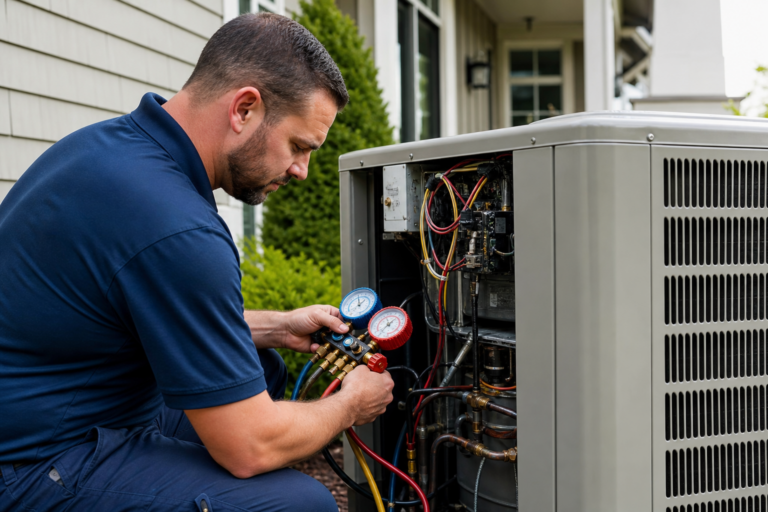
ENERGY STAR recommends annual heating and cooling equipment checkups. It suggests scheduling cooling maintenance during spring and heating maintenance during fall, before contractors become busiest during extreme weather.
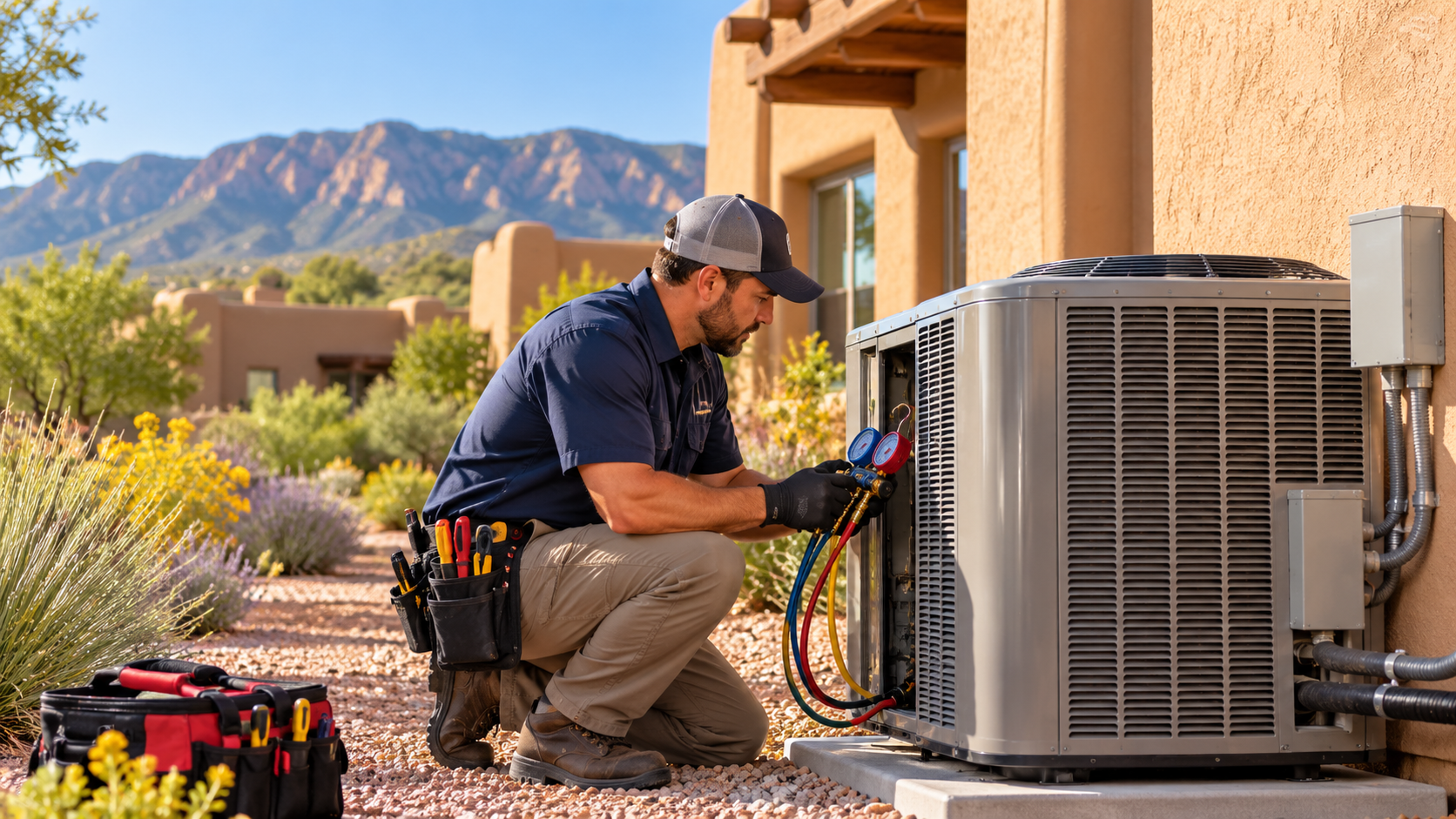
A professional cooling inspection may include checking:
- Thermostat operation
- Electrical connections
- Condenser condition
- Evaporator coil
- Refrigerant performance
- Blower components
- Condensate drainage
- Overall system operation
Heating maintenance can include additional checks appropriate to furnaces, heat pumps and other equipment.
Why Seasonal HVAC Maintenance Matters in Albuquerque
Dust and debris can accumulate around outdoor equipment and filters.
High summer temperatures can also require cooling equipment to operate for long periods.
Maintenance cannot guarantee that a system will never fail, but it can help identify worn parts, airflow problems or electrical issues before they become more serious.
Homeowners should also keep outdoor HVAC units clear of vegetation, leaves and other debris.
2. Check HVAC Filters Regularly
Air filters are simple components, but they can have a significant effect on system airflow.
A dirty filter makes it more difficult for air to move through a forced air HVAC system.
ENERGY STAR recommends checking filters monthly during periods of heavy heating or cooling use and replacing them when dirty. Its general guidance says filters should be changed at least every three months, although actual replacement frequency depends on the home, filter and equipment.
Homes may need more frequent attention when they have:
- Pets
- High dust levels
- Construction nearby
- Frequent HVAC operation
- Household members with particular air quality needs
Do not automatically install the most restrictive filter available.
The filter should match the airflow requirements of the equipment.
If unsure, ask an HVAC professional what filter specification the system is designed to use.
3. Understand the Cooling Systems Available in Albuquerque
Albuquerque homeowners have more than one cooling option.
The correct choice depends on the property and how consistent the homeowner wants indoor cooling to remain under changing weather conditions.
Central Air Conditioning
Central air conditioning uses a refrigeration cycle to remove heat from indoor air and distribute cooled air through ductwork.
It can provide predictable cooling even when outdoor humidity changes.
Central AC may be particularly attractive for households that want consistent indoor temperatures throughout summer.
Evaporative Cooling
Evaporative coolers draw warm outside air through wetted pads so evaporation lowers the air temperature.
The Department of Energy explains that evaporative coolers work best in arid climates, which is why they have traditionally been used throughout the Southwest.
They can use less electricity than conventional compressor based air conditioning under appropriate dry conditions.
However, evaporative cooling has limitations.
As humidity rises, the ability of water to evaporate decreases.
The National Weather Service specifically notes that New Mexico evaporative coolers can become much less effective during monsoon conditions.
Is an Evaporative Cooler Right for Every Albuquerque Home?
No.
Evaporative cooling can make sense when a homeowner accepts its operating characteristics and the climate remains sufficiently dry.
Central AC or a heat pump may provide more consistent temperature control during humid weather.
Homeowners should compare operating cost, water use, comfort expectations, maintenance and installation requirements before changing systems.
Ductless Mini Split Systems
Ductless mini splits are heat pump systems that can heat and cool individual areas without conventional central ductwork.
DOE identifies ductless air source heat pumps as a flexible option for homes without existing ducts and for zone based heating and cooling.
They may be useful for:
- Home additions
- Garages converted into living areas
- Older homes without ducts
- Individual rooms with comfort problems
- Zoned temperature control
Proper sizing and installation remain important.
4. Consider a Heat Pump for Heating and Cooling
A heat pump does not create heat in the same way as an electric resistance heater.
Instead, it transfers heat.
During summer, it moves heat from inside the house to the outdoors.
During winter, the process reverses and transfers heat into the home.
DOE states that air source heat pumps can provide both heating and cooling and identifies hot dry climates such as New Mexico as suitable applications.
Modern heat pumps are therefore worth discussing when replacing both an air conditioner and heating system.
Heat Pump Efficiency Ratings
When comparing systems, homeowners may see ratings such as:
- SEER2
- EER2
- HSPF2
These ratings describe different aspects of cooling and heating efficiency.
A higher efficiency rating can reduce energy consumption under comparable conditions, but equipment cost and actual household savings depend on usage, electricity prices, installation quality and building characteristics.
Do not select equipment based on one rating alone.
A correctly sized and properly installed system is essential for good performance.
5. Pay Attention to Ductwork and Airflow
A high quality furnace or air conditioner cannot perform properly if conditioned air is lost through damaged or poorly designed ducts.
Duct problems can contribute to:
- Uneven temperatures
- Weak airflow
- Longer operating cycles
- Excess dust
- Higher energy use
- Rooms that never feel comfortable
ENERGY STAR notes that sealing and insulating ducts can improve HVAC efficiency, especially when ducts run through unconditioned spaces such as attics or crawlspaces.
If one part of the house is consistently hotter or colder than another, the HVAC equipment itself may not be the only problem.
A technician may need to evaluate airflow, registers, dampers and duct condition.
Signs of Possible Airflow Problems
Homeowners may notice:
- Some vents produce much less air
- One room remains uncomfortable
- Whistling noises come from ducts
- HVAC cycles seem unusually long
- The filter becomes dirty very quickly
- Dust appears around supply registers
These symptoms can have several causes, so professional diagnosis is better than assuming the ductwork alone is responsible.
6. Use Thermostat Settings More Strategically
A thermostat controls when heating and cooling equipment operates.
Using it intelligently can improve comfort without forcing the HVAC system to run unnecessarily when nobody is home.
Programmable and smart thermostats can automatically adjust temperatures according to household schedules.
For example, homeowners may allow the indoor temperature to change during working hours and return to their preferred setting before they arrive home.
Avoid extreme thermostat changes intended to cool a hot house instantly.
Setting the thermostat dramatically below the desired indoor temperature generally does not make a conventional air conditioner cool the home proportionally faster.
Instead, aim for stable settings that match the household’s comfort needs.
7. Know When Repair Becomes Replacement
Not every HVAC problem means a complete system needs to be replaced.
A relatively new unit with one failed component may still have many useful years remaining.
An older system with repeated failures can present a different decision.
Factors worth considering include:
- Equipment age
- Repair history
- Cost of the current repair
- Availability of replacement parts
- Energy efficiency
- Comfort problems
- Refrigerant considerations
- Condition of other system components
Ask for an explanation of the diagnosis before approving a large repair.
For an expensive replacement, obtaining more than one detailed estimate can help homeowners compare system specifications and scope of work.
Common Signs You Need Heating and Cooling Albuquerque Service
HVAC equipment often provides warning signs before complete failure.
Recognizing them early can prevent discomfort and may reduce the risk of a larger problem.
Air Conditioner Blows Warm Air
Warm air from supply vents can result from several issues.
Possible causes include thermostat settings, refrigerant problems, electrical faults or compressor related issues.
Check that the thermostat is actually set to cooling mode before arranging service.
If the system continues blowing warm air, professional diagnosis may be needed.
Furnace Does Not Produce Enough Heat
Insufficient heating can be related to:
- Dirty filters
- Thermostat problems
- Burner issues
- Airflow restrictions
- Equipment faults
Gas heating equipment should be serviced by qualified professionals because combustion problems can create safety risks.
ENERGY STAR recommends professional inspection of gas connections, burner combustion and heat exchangers during heating system maintenance.
Unusual HVAC Noises
Some sound during operation is normal.
New grinding, banging, rattling or squealing sounds deserve attention.
A loose panel may be relatively simple.
Mechanical or motor related noises may indicate a developing problem.
Turning a potentially damaged system off until it is inspected may help prevent additional damage when severe noises occur.
Short Cycling
Short cycling occurs when HVAC equipment repeatedly starts and stops without completing normal operating cycles.
Potential causes can include thermostat issues, airflow restrictions, equipment sizing problems or internal faults.
Frequent cycling should be professionally diagnosed rather than repeatedly resetting the system.
Sudden Energy Bill Increases
Higher utility bills can result from weather, changing energy prices or increased household use.
However, a significant unexplained increase can also indicate that heating or cooling equipment is operating inefficiently.
Compare usage over similar periods before assuming the HVAC system is responsible.
Choosing an HVAC Contractor in Albuquerque
Contractor selection is as important as equipment selection.
Even efficient equipment can perform poorly when installation is incorrect.
New Mexico’s Construction Industries Division states that construction related contractors operating in the state must be properly licensed, including mechanical and plumbing contracting. Its Mechanical Bureau oversees HVAC installations and related state adopted standards.
Homeowners can use the state’s licensing resources to verify contractors.
Questions to Ask an Albuquerque HVAC Contractor
Before approving major work, ask:
- Is your New Mexico contractor license current?
- What equipment are you recommending and why?
- How will you determine the correct system size?
- Does the estimate include labor and equipment?
- What warranty applies?
- Will existing ductwork be inspected?
- Are permits required for this project?
- What maintenance will the new system need?
- Are there separate optional costs?
A professional estimate should clearly describe what is included.
Avoid Choosing Only by the Lowest Price
Price matters, but the least expensive proposal may not include the same equipment, warranty, labor or installation work.
Compare estimates carefully.
A lower quote may be perfectly reasonable, but homeowners should understand why prices differ before choosing.
Why Correct HVAC Sizing Matters
Bigger equipment is not automatically better.
An oversized air conditioner may cool a space quickly but cycle too frequently.
An undersized system may struggle to maintain comfortable temperatures during extreme weather.
Proper sizing considers factors such as:
- Home square footage
- Insulation
- Window size and orientation
- Air leakage
- Ceiling height
- Local climate
- Ductwork
- Building design
Professional HVAC contractors can perform load calculations instead of relying only on the size of the old system.
Replacing equipment with the same capacity may not always be correct if the original system was improperly sized or the home has been modified.
Improving Heating and Cooling Efficiency Beyond the HVAC Unit
The HVAC system is only part of the comfort equation.
A house that gains heat rapidly in summer or loses heat quickly in winter will require more heating and cooling.
DOE recommends combining efficient cooling with measures such as insulation, efficient windows, shading and ventilation where appropriate.
Seal Air Leaks
Gaps around windows, doors and building penetrations can allow conditioned air to escape.
Weather sealing can help reduce unnecessary air exchange.
Improve Insulation
Insulation slows heat transfer through the building envelope.
Homes with inadequate insulation may become uncomfortable more quickly after the HVAC system switches off.
Control Solar Heat
Albuquerque’s strong sunshine can create substantial heat gain through windows.
Shades, blinds, exterior shading and suitable window improvements can reduce the amount of solar heat entering the home.
Maintain Outdoor Equipment
Outdoor condenser units need airflow.
Avoid blocking them with landscaping, stored items or debris.
Follow the manufacturer’s required clearance.
Heating and Cooling Albuquerque Options for Older Homes
Older Albuquerque homes can present unique HVAC challenges.
Some may have limited ductwork.
Others may use older furnaces, evaporative cooling or systems that have been modified over decades.
Homeowners considering upgrades should evaluate the house as a whole.
A ductless heat pump may be useful where adding conventional ducts would be difficult.
A central system may be appropriate when sound ductwork already exists.
Some homes may benefit from improving insulation or sealing before installing larger equipment.
There is no single best configuration for every older property.
Indoor Air Quality and HVAC Systems
Heating and cooling systems influence indoor airflow but they are not a complete solution for every air quality concern.
Filters can capture certain airborne particles, depending on their design and the system’s ability to support them.
Homes may also benefit from controlling sources of dust, moisture and pollutants.
Do not install an unusually restrictive filter without confirming that the blower can handle the added resistance.
Poor airflow can reduce HVAC performance.
If indoor air quality is a significant concern, ask a qualified professional to evaluate both filtration and ventilation rather than relying on a single product.
When Is the Best Time for HVAC Service in Albuquerque?
Routine service is easiest to schedule before peak demand.
For cooling equipment, spring is generally a good time.
For heating equipment, early fall provides an opportunity to identify problems before cold weather.
ENERGY STAR specifically recommends spring cooling inspections and fall heating inspections.
Emergency problems should not wait for a preferred season.
A system showing signs of electrical damage, burning smells, refrigerant concerns or unsafe combustion should be evaluated promptly.
How to Prepare for a Heating and Cooling Albuquerque Appointment
Providing clear information can help the technician diagnose the problem efficiently.
Before the appointment, note:
- When the problem started
- Which rooms are affected
- Any unusual noises
- Thermostat settings
- Recent filter changes
- Whether the system stops unexpectedly
- Previous repairs
- Equipment model information where accessible
Do not remove safety panels or attempt electrical repairs unless you are qualified to do so.
The goal is to give the technician useful observations without creating additional risk.
Frequently Asked Questions
What is the best heating and cooling Albuquerque system?
There is no single best system for every home. Central AC, heat pumps, furnaces, ductless systems and evaporative coolers can all be appropriate depending on the property, budget and comfort requirements.
How often should Albuquerque HVAC systems be serviced?
ENERGY STAR recommends annual professional HVAC maintenance, with cooling equipment checked before summer and heating equipment checked before winter.
Are evaporative coolers effective in Albuquerque?
They can perform well in Albuquerque’s dry climate, but their effectiveness decreases as humidity rises, particularly during periods influenced by the summer monsoon.
Are heat pumps suitable for Albuquerque homes?
Yes, heat pumps can be suitable for New Mexico’s hot dry climate and provide both heating and cooling. Correct sizing and professional installation remain essential.
When should I replace my Albuquerque HVAC system?
Consider replacement when equipment has recurring failures, declining efficiency, major repair needs or persistent comfort problems. A contractor should evaluate the complete system before recommending replacement.
How can I choose a heating and cooling Albuquerque contractor?
Verify the contractor’s New Mexico licensing, compare detailed estimates, ask how equipment will be sized and review warranties, installation scope and maintenance requirements before approving work.
Conclusion
Heating and cooling Albuquerque homes effectively requires equipment that can handle hot summers, cool winters, dry conditions and changing seasonal demands. Regular maintenance, clean filters, correct system sizing and good airflow can improve comfort while helping HVAC equipment operate efficiently. Whether a home uses central AC, a furnace, a heat pump or evaporative cooling, choosing qualified service and considering the complete building can lead to more reliable year round comfort.