RS Online’s Connector Range: Choosing the Right Electrical Connection for Every Application
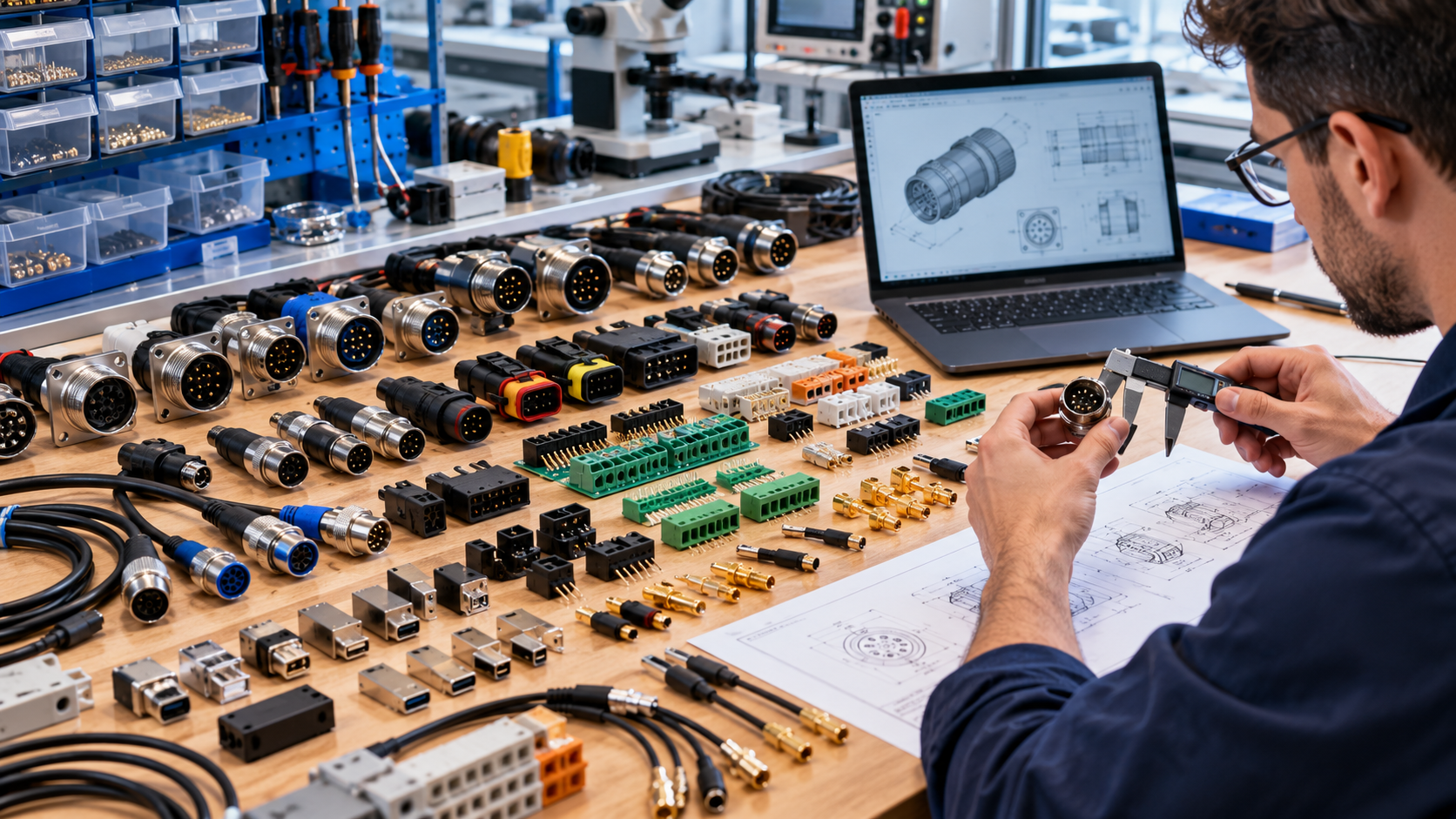
RS Online’s connector range covers a broad selection of electrical and electronic interconnection products designed for applications ranging from industrial automation and PCB assembly to automotive systems, communications, power distribution and audiovisual equipment. Current RS categories include power connectors, RF and coaxial connectors, PCB connectors, industrial circular connectors, terminal blocks, automotive electrical connectors, network and telecom products, USB and D Sub connectors, mains connectors and numerous wire terminals. Choosing correctly means looking beyond physical appearance and checking electrical ratings, contact count, termination method, environmental protection, mounting style and compatibility with the wider system.
Connectors are among the smallest components within many electrical systems, yet they can have a major effect on reliability.
A poor connection can introduce resistance, signal problems, intermittent faults or mechanical weakness.
An oversized industrial connector may be unnecessary for a protected indoor PCB, while a lightweight board connector may be completely unsuitable for a vibrating machine, exposed outdoor installation or high current application.
For engineers, technicians and maintenance teams, understanding the main connector families makes product selection considerably easier.
What Is RS Online’s Connector Range?
RS supplies electrical and electronic connectors from its own RS PRO range and established manufacturers across numerous specialist categories.
The current UK RS connector catalogue includes major product groups such as:
- Power connectors
- RF and coaxial connectors
- PCB connectors
- Audio and video connectors
- Industrial circular connectors
- Network and telecom connectors
- Mains and IEC connectors
- USB and D Sub connectors
- Terminal blocks
- DC power connectors
- Automotive connectors
- Industrial M12 connectors
- Wire terminals and splices
RS describes connectors as components that provide a path for electrical voltage, current or signals between devices and notes that the correct choice depends on the application and environment.
Why Are There So Many Connector Types?
Electrical systems have very different requirements.
A connector carrying an audio signal has different design priorities from one supplying power to industrial machinery.
Important variables can include:
- Voltage
- Current
- Signal frequency
- Number of contacts
- Cable diameter
- Environmental exposure
- Vibration
- Connection frequency
- Available installation space
Connector families have therefore evolved around particular industries and technical requirements.
Plug and Socket Terminology
Connectors are commonly described as male and female.
The male component is often referred to as a plug, while the corresponding female component is commonly described as a socket or receptacle.
However, professional selection should rely on the manufacturer’s exact terminology and contact gender rather than assumptions based only on housing shape.
7 Smart Tips for Selecting Products From RS Online’s Connector Range
Connector selection should begin with electrical and environmental requirements rather than the connector’s appearance.
These seven checks can reduce compatibility problems and improve long term reliability.
1. Identify the Electrical Requirements First
Start with the basic electrical specification.
Determine the maximum:
- Operating voltage
- Current
- Signal type
- Frequency where relevant
- Number of circuits
Every connector has limits.
A connector rated for low voltage signalling should not be substituted automatically into a higher power application simply because the plug fits physically.
Current Rating Matters
Current flowing through connector contacts produces heat.
The appropriate current rating can depend on:
- Contact material
- Contact size
- Number of loaded contacts
- Ambient temperature
- Connector design
Always use the manufacturer’s datasheet for the exact connector series.
A high pin count connector may also have different allowable loading depending on how many contacts carry current simultaneously.
Voltage Ratings Matter Too
Voltage requirements affect insulation spacing and connector design.
For mains or high voltage systems, products should have ratings and approvals appropriate to the intended installation.
Do not assume a connector is safe for mains power simply because its contacts appear physically large.
2. Match the Connector to the Environment
The operating environment is one of the most important selection criteria.
An office computer connector operates in relatively controlled surroundings.
A connector installed on factory equipment may face:
- Dust
- Water
- Oils
- Chemicals
- Temperature changes
- Vibration
- Mechanical impact
Industrial Circular Connectors
Circular connectors are widely used in industrial equipment because their housing geometry can provide strong mechanical engagement and support sealed designs.
RS currently groups industrial circular connectors alongside specialised M12 products within its broader connector offering.
Applications can include:
- Sensors
- Motors
- Automation systems
- Control equipment
- Instrumentation
For harsh environments, check the complete connector’s ingress protection rating when mated.
M12 Connectors
M12 connectors are commonly associated with industrial sensors, actuators, field devices and automation networks.
Different coding arrangements exist for different power and data applications.
A connector with the same approximate diameter is not necessarily electrically compatible.
Always check:
- Coding
- Pin count
- Gender
- Voltage
- Current
- Communication standard
This prevents accidental mating of incompatible circuits.
3. Choose the Correct Termination Method
The connector must attach securely to the cable, PCB or conductor.
Different termination technologies suit different production and maintenance requirements.
Common methods include:
- Crimp
- Solder
- Screw clamp
- Spring clamp
- Push in
- Insulation displacement
- PCB through hole
- Surface mount
Crimp Connections
Crimp contacts are widely used where reliable cable terminations and repeatable assembly are required.
A correctly made crimp creates a mechanical and electrical connection between the conductor and contact.
However, correct tooling is essential.
Using an unsuitable crimp tool can produce a joint that looks acceptable but has inadequate mechanical strength or electrical performance.
Screw Clamp Terminals
Screw terminals secure the conductor mechanically using a screw operated clamp.
RS lists screw clamp as one of the common terminal block connection technologies within its current range.
These connectors are familiar and practical for many panel and control applications.
Correct tightening torque should be followed where specified.
Spring Clamp and Push In Connections
Spring technology uses mechanical spring force to maintain conductor contact.
RS notes that spring clamp terminals can be useful in environments subject to vibration, while push in technology allows suitable conductors to be inserted directly into the connection point.
These designs can also reduce installation time in high volume panel wiring.
4. Select the Right PCB Connector
Printed circuit boards use a wide variety of connector styles.
The choice depends on how the board interfaces with other equipment.
Common PCB related connection requirements include:
- Wire to board
- Board to board
- Cable to board
- Pluggable terminal connections
PCB Terminal Blocks
RS currently lists thousands of PCB terminal block options with termination technologies such as spring clamp, screw clamp and insulation displacement connections.
Mounting methods include:
- Through hole
- Surface mount
- Panel mount
- Cable mount
- Screw mount
- Solder mount
The catalogue can be filtered by pitch, contact count, current, voltage, orientation, conductor size and other parameters.
Pitch Is Critical
Pitch describes the centre to centre distance between adjacent contacts.
A 5.08 mm terminal block cannot automatically replace another design with a different pitch.
Even small differences can prevent alignment with the PCB footprint.
Orientation Matters
Common PCB connector orientations include:
- Vertical
- Right angle
- Horizontal
The enclosure and cable path should be considered before the PCB layout is finalised.
A technically correct connector can still create assembly problems if the cable cannot reach it comfortably inside the finished product.
5. Understand Data and Computing Connectors
RS Online’s connector range includes numerous products designed for computing and digital communication.
Current categories include:
- USB connectors
- D Sub connectors
- Memory card connectors
- Edge connectors
- SCSI connectors
- Computing connector accessories
RS currently groups these products within its USB, D Sub and Computing Connectors section.
D Sub Connectors
D Sub connectors are recognised by their characteristic D shaped shell.
RS currently offers D Sub versions using multiple termination methods, including:
- PCB
- Crimp
- IDC
- Solder
- Screw terminal
- Spring terminal
- Panel mount
The catalogue also includes accessories, backshells and contact options.
D Sub connectors remain useful in industrial, serial communication, instrumentation and legacy computing applications.
USB Connectors
USB connector selection involves more than choosing the physical shape.
The complete system may also need to support a specific USB generation, data transfer capability and power requirement.
Mechanical compatibility should therefore be checked alongside electrical protocol requirements.
6. Check RF, Coaxial and Signal Requirements Carefully
High frequency signals require connector designs that maintain appropriate impedance and signal integrity.
RS currently offers RF and coaxial products including:
- Coaxial connectors
- RF connectors
- Coaxial adapters
- RF attenuators
- RF terminators
- Connector accessories
These products are listed within the current connector catalogue alongside power and PCB families.
Impedance Is Important
Common RF systems may use impedance values such as 50 ohms or 75 ohms depending on the application.
Using mismatched connectors can contribute to reflections and signal degradation.
Check the complete signal path, including:
- Cable
- Connector
- Adapter
- Equipment input
Frequency Rating
A connector suitable at relatively low frequencies may perform differently as frequency increases.
Use the manufacturer’s frequency specifications when designing RF systems rather than choosing by connector shape alone.
7. Think About Maintenance and Future Replacement
Connector selection affects how easy a system will be to maintain later.
An uncommon proprietary solution can create replacement difficulties.
A widely available standardised connector may simplify service.
Consider Mating Cycles
Some connectors are intended to remain connected for years.
Others are designed for frequent connection and disconnection.
Where repeated mating is expected, check the rated mating life.
Wear can affect:
- Contact resistance
- Mechanical retention
- Sealing
- Signal reliability
Use Keying to Prevent Mistakes
In equipment containing several similar cables, keyed connectors can reduce the risk of connecting the wrong circuit.
Colour coding, labelling and mechanical coding can provide additional protection.
Good connector architecture can make maintenance faster while reducing human error.
Major Product Categories Within RS Online’s Connector Range
Understanding the main families can make the catalogue easier to navigate.
Power Connectors
Power connectors are designed primarily to transfer electrical power rather than small data signals.
Applications can include:
- Machinery
- Power supplies
- Industrial equipment
- Battery systems
- Control cabinets
Selection depends heavily on voltage and current ratings.
Mechanical locking may also be important in equipment exposed to movement.
Mains and IEC Connectors
IEC style connectors are widely used for connecting electrical equipment to mains power.
Different inlet and outlet configurations are designed for specific electrical and temperature requirements.
Use only parts rated and approved for the intended equipment.
DC Power Connectors
DC connectors are common in:
- Electronic devices
- Test equipment
- Control systems
- Low voltage power supplies
Barrel style connectors are one familiar example.
Polarity, internal dimensions, voltage and current rating should all be verified before substitution.
Automotive Electrical Connectors
Automotive systems experience demanding environmental conditions.
RS currently provides automotive connector categories covering:
- Connector housings
- Accessories
- Backshells
- Seals
- Terminals
- EV charging connectors
- EV connectors
- Service disconnect products
These categories reflect the increasing range of electrical connection requirements within conventional and electric vehicles.
Automotive Sealing
Automotive connectors may encounter:
- Water
- Road contamination
- Oil
- Heat
- Vibration
Seals and secondary locks can therefore be important parts of the complete system.
Never assume that purchasing the connector housing alone creates a complete sealed assembly.
Terminal Blocks
Terminal blocks provide convenient methods for joining conductors and distributing power or signals.
RS currently lists families including:
- DIN rail terminal blocks
- PCB terminal blocks
- Distribution blocks
- Earth terminal blocks
- Barrier strips
- Pluggable terminal blocks
- Standard terminal blocks
Its terminal range includes major manufacturers such as Phoenix Contact, WAGO, Weidmüller, ABB and RS PRO.
DIN Rail Terminal Blocks
DIN rail mounting makes terminal blocks easy to organise inside industrial control cabinets.
Accessories can support:
- Labelling
- Bridging
- End stops
- Circuit separation
This modular approach makes panel wiring easier to expand and maintain.
Wire Terminals and Splices
Not every connection requires a detachable plug and socket.
RS offers wire termination products including:
- Ring terminals
- Fork terminals
- Blade terminals
- Bootlace ferrules
- Spade connectors
- Crimp pins
- Splice connectors
These products can provide secure conductor termination when selected and installed correctly.
Audio and Video Connectors
Current RS categories include familiar interfaces such as:
- HDMI
- DisplayPort
- DVI
- XLR
- RCA
- Jack plugs
- Speaker connectors
These products cover both professional and general audiovisual systems.
When digital interfaces are involved, the supported standard and bandwidth can be as important as the connector’s mechanical fit.
How to Compare Connectors on RS Online
Large catalogues become easier to use when technical filters are applied systematically.
Begin with nonnegotiable specifications.
Number of Contacts
Choose enough contacts for the circuit while considering future expansion where appropriate.
Unnecessary extra contacts can increase size and cost.
Mounting Type
Determine whether the component must be:
- Panel mounted
- PCB mounted
- Cable mounted
- DIN rail mounted
This can immediately remove many unsuitable options.
Contact Gender
Verify both sides of the mating pair.
A male housing does not always imply the contact gender users expect from everyday terminology.
Use the technical datasheet.
Wire Size
Terminals usually specify acceptable conductor sizes in AWG, square millimetres or both.
Using a conductor outside the stated range can lead to poor retention or unreliable contact.
Temperature Rating
Connectors near motors, heating equipment, engines or outdoor installations may experience substantial temperature variation.
The material, contact plating and seals must remain suitable across the expected operating range.
Connector Materials and Contact Plating
The electrical contacts and connector housing perform different jobs.
Contact Materials
Connector contacts may use copper alloys or other conductive materials selected for conductivity and mechanical properties.
Plating can influence:
- Corrosion resistance
- Contact resistance
- Wear
Common contact finishes can include tin, nickel or gold depending on application.
Gold plated contacts are often associated with reliable low level signal connections and corrosion resistance, but they can increase cost.
The correct choice depends on the system.
Housing Materials
Plastic housings can provide:
- Electrical insulation
- Mechanical protection
- Contact alignment
- Keying
Industrial connectors may also use metal shells for additional mechanical strength or shielding.
IP Ratings and Connector Protection
Where dust or water exposure matters, check the ingress protection specification.
An IP rating normally applies under specified conditions and may depend on the connector being fully assembled and correctly mated.
Do not assume an individual unmated plug maintains the same protection rating.
Accessories such as:
- Seals
- Cable glands
- Backshells
- Dust caps
may form part of the environmental protection system.
Why Datasheets Matter When Buying Connectors
Product photographs cannot show many of the most important specifications.
Before approving a connector for a design, review technical documentation for:
- Voltage
- Current
- Contact resistance
- Insulation resistance
- Wire size
- Operating temperature
- Mechanical dimensions
- Mating cycles
- Environmental ratings
- Applicable approvals
RS states that product pages across ranges such as PCB terminal blocks provide datasheets to support selection.
Saving the datasheet with project documentation can also make future maintenance easier.
RS PRO Connectors and Manufacturer Brands
RS carries its own RS PRO products alongside connectors from established manufacturers.
The current range includes brands such as:
- TE Connectivity
- Amphenol
- Phoenix Contact
- WAGO
- HARTING
- Weidmüller
- RS PRO
Availability varies by category.
Should You Mix Connector Manufacturers?
Only when technical compatibility is explicitly established.
Two products that appear mechanically similar may differ in:
- Tolerance
- Contact design
- Keying
- Sealing
- Certification
Where a connector system is designed as a matched series, using the manufacturer’s specified mating components is usually the safest approach.
Common Connector Selection Mistakes
Several problems can be avoided during the design stage.
Selecting Only by Appearance
Visual similarity does not guarantee electrical or mechanical compatibility.
Ignoring Current Rating
Underrated contacts may overheat.
Forgetting Environmental Protection
An indoor connector may fail prematurely outdoors or in a washdown environment.
Using Incorrect Crimp Tooling
Poor crimps can introduce intermittent faults that are difficult to diagnose.
Overlooking Accessories
A complete connector system may require:
- Contacts
- Housing
- Seal
- Backshell
- Cable gland
- Locking hardware
Check whether these parts are supplied separately.
Ignoring Cable Diameter
The cable must fit both the electrical contacts and any strain relief or sealing components.
Frequently Asked Questions
What products are included in RS Online’s connector range?
RS currently lists power, PCB, RF and coaxial, industrial circular, automotive, network, USB, D Sub, terminal block, mains and wire termination connector categories.
Does RS Online sell PCB connectors?
Yes. The range includes PCB connectors and thousands of PCB terminal block options with different pitches, contact counts, mounting methods and termination technologies.
Can I buy industrial connectors from RS Online?
Yes. RS lists industrial circular connectors, M12 connectors, terminal blocks and other interconnection products commonly used in automation and industrial control systems.
What should I check before choosing an electrical connector?
Check voltage, current, contact count, termination type, mounting style, wire size, environmental protection, temperature rating and compatibility with the mating connector.
Does RS Online’s connector range include automotive products?
Yes. Current categories include automotive connectors, terminals, seals, backshells, accessories, EV connectors and related products.
What termination methods are available for connectors?
Depending on the product family, options can include crimping, soldering, screw clamps, spring clamps, push in terminals, IDC, surface mount and through hole PCB connections.
Conclusion
RS Online’s connector range provides extensive options for power, signal, PCB, automotive, RF, computing and industrial applications, but successful selection depends on matching the connector to the complete electrical and mechanical environment. Current rating, voltage, termination method, mounting style, environmental protection and mating compatibility should all be checked before purchase. By using technical filters and manufacturer datasheets rather than selecting by appearance alone, engineers and maintenance teams can create safer, more reliable connections and reduce avoidable installation problems.