How Roofing Companies in Florida Help Protect Homes From Heat, Rain, and Storms
Choosing dependable roofing companies in Florida is an important decision for homeowners because the roof must perform in a climate shaped by intense sunlight, heavy rain, humidity, strong winds, tropical storms, and occasional hurricanes. A roofing system in Florida is more than a visible layer of shingles, tiles, or metal. It includes the roof deck, underlayment, flashing, ventilation, fasteners, drainage components, penetrations, and installation details that work together to keep the structure protected.
Florida homeowners should therefore look beyond appearance when planning roof repair or replacement. Material suitability, contractor qualifications, workmanship, local building requirements, storm resistance, drainage, and long term maintenance can all influence roofing performance.
A professional roofing contractor should inspect the existing roof carefully, explain any problems clearly, and recommend work based on the actual condition of the property rather than relying on general assumptions.
Why Roofing Companies in Florida Need Local Expertise
Florida presents roofing challenges that differ from many other regions of the United States.
Homes may experience strong ultraviolet exposure for much of the year. Heavy rainfall can place significant pressure on roof drainage systems. Coastal properties may also face salt exposure, while tropical weather can bring high winds and wind driven rain.
These conditions make local experience valuable.
Roofing companies in Florida should understand how different materials respond to the regional climate and how roof design, fastening methods, flashing, water protection, ventilation, and drainage work together.
Experienced contractors commonly evaluate:
• Existing roof condition
• Wind related damage
• Missing or damaged materials
• Flashing around roof penetrations
• Roof valleys
• Underlayment condition where visible
• Drainage problems
• Gutters and downspouts
• Ventilation components
• Roof deck condition
• Signs of interior moisture
Understanding these elements helps contractors identify whether the homeowner needs maintenance, a localized repair, or a larger roofing project.
What Professional Roofing Companies in Florida Inspect
A thorough roof inspection involves more than looking for missing shingles.
The roofing system should be considered as a complete assembly.
Roofing Companies in Florida Check the Roof Covering
The visible roofing material receives the most direct exposure to sunlight, rain, debris, and wind.
Depending on the roofing system, contractors may check for cracked tiles, displaced materials, damaged shingles, loose metal panels, exposed fasteners, surface deterioration, or signs of previous repairs.
On asphalt shingle roofs, inspectors may look for:
• Missing shingles
• Lifted shingles
• Cracking
• Curling
• Damaged edges
• Loose materials
• Improper fastening
• Areas affected by wind
A small amount of localized damage does not automatically mean the entire roof must be replaced.
The contractor should consider the age of the roof, extent of damage, surrounding material condition, and whether a durable repair can reasonably be completed.
Flashing and Roof Penetrations
Flashing is installed around areas where the roofing system meets another surface or where something penetrates the roof.
Common locations include:
• Chimneys
• Plumbing vents
• Exhaust vents
• Skylights
• Walls
• Roof transitions
• Valleys
Problems around these areas can allow water to enter even when the main roof covering looks acceptable.
Proper flashing is especially important in locations exposed to wind driven rain.
Roof Drainage
Florida can experience periods of intense rainfall, so drainage deserves careful attention.
Roof valleys, gutters, downspouts, scuppers, and drainage paths should allow water to leave the roof efficiently.
Standing water or repeated overflow may indicate:
• Blocked drainage
• Improper slope
• Damaged gutters
• Poor drainage design
• Debris buildup
• Other roof system problems
Water should be directed away from vulnerable building areas whenever the design allows.
How Florida Weather Affects Residential Roofing
Weather exposure affects every roof differently.
The roof design, orientation, material, surrounding environment, installation quality, age, and maintenance history all influence how quickly deterioration develops.
Intense Sunlight and Heat
Florida roofs receive substantial sunlight.
Continuous exposure to ultraviolet radiation and heat contributes to normal aging of many roofing materials.
Dark roofing surfaces may also absorb considerable heat during sunny conditions.
Roof material selection, attic insulation, ventilation, and overall building design can all influence how the home responds to heat.
Homeowners should not assume that replacing a roof alone will solve every indoor temperature problem because insulation, air sealing, windows, ventilation, and air conditioning performance can also contribute.
Heavy Rain
Heavy rainfall tests weak areas of a roofing system.
Water may enter around damaged flashing, failed penetrations, deteriorated roof coverings, valleys, or other vulnerable locations.
Some leaks are difficult to trace because water can travel along decking, framing, or other surfaces before becoming visible indoors.
This is why professional diagnosis is important.
Repairing only the location of an interior ceiling stain may not address the actual entry point.
Strong Wind
Wind can place pressure on roof edges, corners, coverings, flashing, and other components.
Loose or incorrectly installed materials may be more vulnerable during strong storms.
After significant weather, homeowners can inspect the property safely from ground level and look for:
• Missing roofing materials
• Loose flashing
• Roofing debris
• Damaged gutters
• Fallen branches
• Visible roof impact
• Interior water intrusion
Homeowners should avoid climbing onto wet, steep, damaged, or unfamiliar roofing surfaces.
Roofing Companies in Florida and Hurricane Preparedness
Florida roofing decisions often include consideration of tropical storms and hurricanes.
No roofing system can guarantee that a home will experience no damage during extreme weather, but proper design, approved materials, correct installation, and regular maintenance can help improve roof performance.
Florida building requirements also contain special roofing provisions for areas designated as High Velocity Hurricane Zones. Current Florida Building Code development materials identify Miami Dade and Broward Counties under these specialized requirements.
Local requirements can vary, so homeowners should ask their contractor which rules, permits, product approvals, and inspections apply to their particular address and project.
Wind Resistance Is a Complete System Issue
Wind resistance should not be viewed as a feature of shingles or metal panels alone.
Roof performance can involve:
• Roof deck attachment
• Underlayment
• Fasteners
• Edge details
• Flashing
• Roof covering
• Installation pattern
• Approved products
• Roof geometry
• Structural conditions
A contractor should evaluate the roofing system as a whole rather than promising performance based on one product feature.
Roofing Companies in Florida Should Explain Product Approvals
Homeowners should ask whether the roofing products proposed for their project are appropriate for the location and installation conditions.
Contractors should be able to identify the manufacturer, product, installation requirements, and applicable approvals when required.
This provides greater transparency and helps homeowners understand what is actually being installed.
Popular Roofing Materials for Florida Homes
Different roofing materials offer different benefits, limitations, costs, and maintenance requirements.
There is no single roofing material that is best for every Florida property.
Asphalt Shingles
Asphalt shingles remain a common residential roofing option.
Homeowners can choose from different styles, colors, performance ratings, and product lines.
Advantages may include:
• Familiar appearance
• Broad product selection
• Availability in many colors
• Suitability for many sloped residential roofs
Performance depends heavily on correct installation and compatibility with the roof design.
Homeowners should compare complete roofing systems rather than selecting materials solely by color or advertised warranty length.
Metal Roofing
Metal roofing is another option used throughout Florida.
Standing seam and other metal roof systems can provide a distinctive appearance and may be selected for durability and weather resistance.
However, metal roof performance depends on details such as panel type, fastening system, flashing, roof geometry, substrate, coatings, and installation quality.
A contractor with appropriate experience should evaluate whether the proposed metal roof system suits the property.
Concrete and Clay Tile
Tile roofing is common on many Florida homes, particularly properties with Mediterranean, Spanish, or coastal inspired architecture.
Tile can provide a distinctive appearance and long service potential when the complete system is properly designed and maintained.
Important considerations include:
• Roof structure
• Underlayment
• Fastening method
• Flashing
• Replacement tile availability
• Foot traffic
• Storm exposure
Tiles can crack from impact or improper walking, so inspections and repairs should be completed carefully.
Flat and Low Slope Roofing
Some Florida homes include low slope areas over additions, porches, garages, patios, or modern architectural sections.
These areas often require roofing systems specifically designed for low slopes.
Using materials outside their intended installation range can create drainage and water intrusion problems.
Qualified roofing companies in Florida should identify low slope sections before preparing an estimate.
Roof Repair or Full Replacement
Homeowners frequently want to know whether repairing the existing roof is enough.
The answer depends on the condition of the roofing system.
When Roof Repair May Be Suitable
A repair may be reasonable when damage is limited and surrounding roofing materials remain serviceable.
Possible examples include:
• Localized flashing problems
• Limited wind damage
• A few damaged shingles or tiles
• A problem around a single penetration
• Minor storm damage
• Localized seal or fastener issues
The contractor should explain both the immediate repair and the expected condition of the remaining roof.
When Replacement May Be More Practical
Complete replacement may deserve consideration when deterioration affects large areas or multiple parts of the roof system.
Examples can include:
• Widespread deterioration
• Repeated leaks
• Extensive storm damage
• Significant installation problems
• Large areas of damaged decking
• Multiple failed components
• A roofing system near the end of its practical service life
Roof age is useful information, but it should not be the only factor.
Actual condition matters.
How to Compare Roofing Companies in Florida
Selecting a contractor should involve more than searching for the lowest estimate.
Homeowners should compare qualifications, scope of work, communication, materials, warranty terms, and documentation.
Verify Contractor Credentials
Florida’s Department of Business and Professional Regulation provides online services for checking roofing contractor licensing information, including certified and registered roofing contractor categories.
Homeowners can verify contractor information before signing an agreement.
Ask the company for:
• Contractor name
• License information
• Business name
• Insurance documentation
• Written project proposal
• Warranty information
Details should match the company actually performing or contracting the work.
Request a Detailed Roofing Estimate
A professional proposal should clearly explain what is included.
Look for information about:
• Roof removal
• New roofing materials
• Underlayment
• Flashing
• Roof vents
• Decking repairs
• Fasteners
• Waste removal
• Property protection
• Permits
• Cleanup
• Warranty coverage
• Payment terms
A short estimate containing only a total price can make it difficult to compare contractors accurately.
Do Not Compare Roofing Estimates by Price Alone
Two roofing estimates can have very different scopes.
One contractor may include new flashing, upgraded underlayment, ventilation work, damaged decking allowances, cleanup, permits, and specific roofing accessories.
Another may offer a lower total while excluding several of those items.
The homeowner should compare what is included before deciding which proposal provides appropriate value.
Ask About Unexpected Deck Damage
Roof decking is often partly hidden until existing materials are removed.
The contract should explain what happens if deteriorated decking is discovered.
Ask:
• How will damage be documented?
• What material will be used?
• How will additional work be priced?
• Will approval be requested before major additional work?
Clear terms can reduce confusion during construction.
Roofing Warranties Explained
Roofing warranties can be misunderstood.
Homeowners may encounter manufacturer warranties, workmanship warranties, and other coverage depending on the project.
Manufacturer Warranty
A manufacturer warranty generally relates to the roofing product and is subject to specific terms, exclusions, installation requirements, and claim procedures.
The length printed in marketing materials should not be interpreted without reading the actual warranty.
Contractor Workmanship Warranty
A workmanship warranty normally relates to the contractor’s installation.
Homeowners should ask:
• How long is workmanship covered?
• What problems are included?
• What is excluded?
• How is a claim submitted?
• Is the warranty transferable?
• Is the warranty written in the contract?
A verbal promise is less useful than documented terms.
Why Underlayment Matters in Florida Roofing
Underlayment provides an additional layer beneath the primary roof covering.
Its purpose and installation depend on roof type, location, code requirements, and selected roofing system.
In storm exposed areas, the secondary water protection provided by the roofing assembly can become particularly important if the primary covering is damaged.
Underlayment should therefore be considered as part of the complete roofing system rather than simply an optional hidden material.
Homeowners should ask their roofer which underlayment is being proposed and why it is appropriate.
The Importance of Roof Flashing
Flashing protects transitions and penetrations where water is more likely to enter.
A roof replacement that ignores deteriorated flashing can leave vulnerable areas within an otherwise new roofing system.
Professional roofing companies in Florida should inspect flashing around:
• Walls
• Chimneys
• Valleys
• Skylights
• Vents
• Roof transitions
• Plumbing penetrations
Ask the contractor which flashing will be replaced and whether any existing flashing will remain.
Attic Ventilation and Roofing Performance
Ventilation can influence attic moisture and temperature conditions.
A balanced ventilation approach typically considers both intake and exhaust airflow where the roof design requires ventilation.
Simply adding more vents is not always the correct solution.
Contractors should evaluate:
• Existing intake ventilation
• Existing exhaust ventilation
• Attic layout
• Insulation location
• Blocked airflow
• Roof design
• Existing mechanical equipment
Ventilation should be planned as part of the overall roof system.
Storm Damage and Emergency Roofing Services
Storm related roof damage may require prompt attention.
Examples include:
• Active water entry
• Large missing roof sections
• Tree impact
• Damaged flashing
• Exposed decking
• Significant structural concerns
Safety should come first.
Do not enter rooms where ceilings appear heavily saturated, unstable, or at risk of collapse.
Temporary roof protection may sometimes reduce additional water entry, but temporary work should not automatically be treated as a permanent repair.
A full inspection should follow when conditions allow.
Questions to Ask Roofing Companies in Florida
Before selecting a contractor, homeowners can ask several practical questions.
• What problems did you find during the inspection?
• Do I need repair or replacement?
• Why are you recommending this roofing system?
• What exact materials will be installed?
• How will underlayment be handled?
• Will flashing be replaced?
• How will ventilation be evaluated?
• Who handles permits?
• What happens if damaged decking is found?
• How will my property be protected?
• What warranties apply?
• What is the payment schedule?
• Who will supervise the project?
• Who should I contact after completion if a problem appears?
Clear answers can help homeowners evaluate professionalism and transparency.
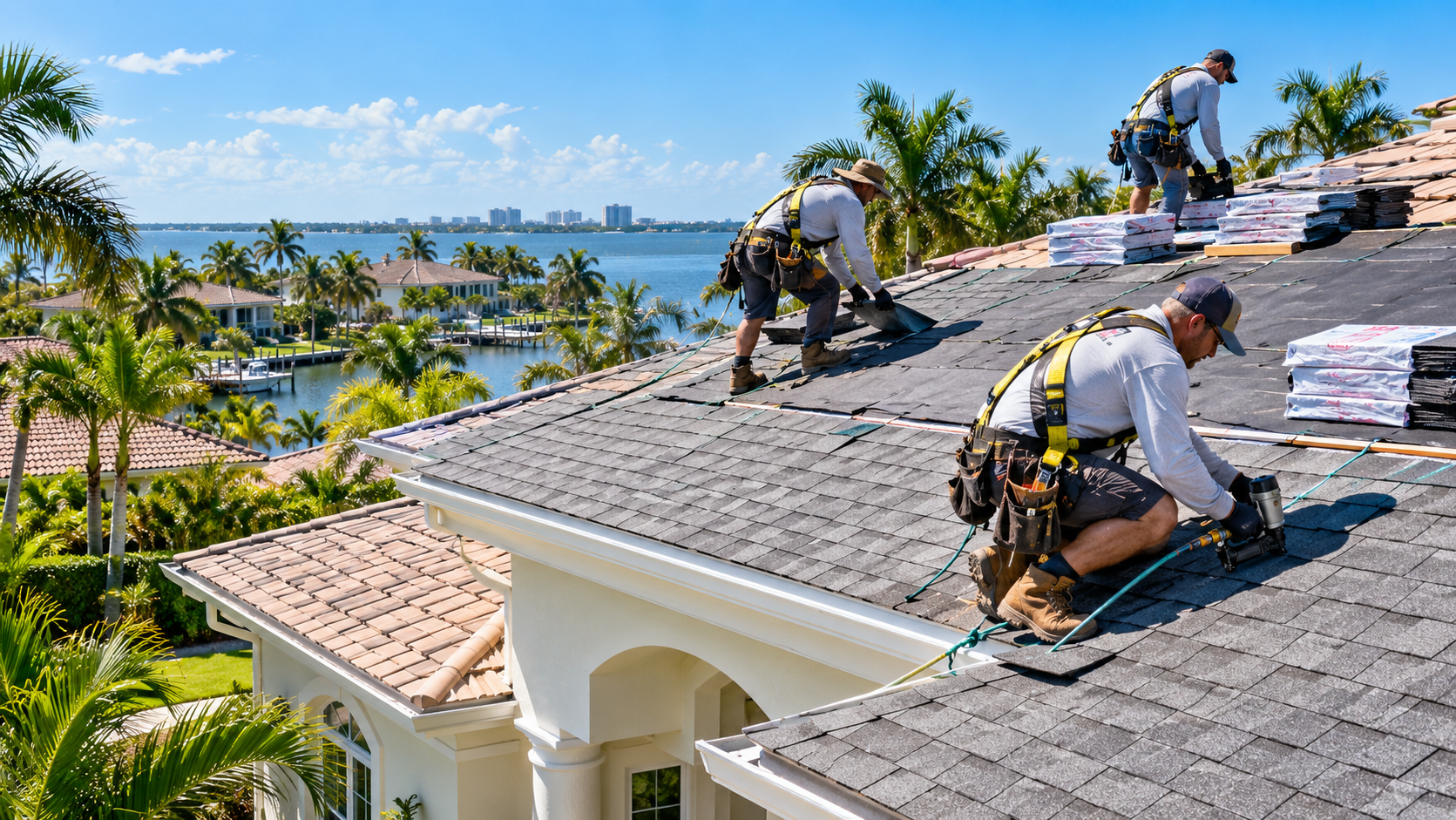
What Happens During a Typical Roof Replacement
Roof replacement usually involves several stages.
Property Preparation
The roofing crew prepares work areas, arranges materials, protects appropriate parts of the property, and establishes debris handling procedures.
Removal of Existing Roofing
Existing roofing materials may be removed according to the project scope and applicable requirements.
This allows the underlying roof deck to be examined more closely.
Roof Deck Inspection
Contractors inspect exposed decking for deterioration or damage.
Necessary repairs should be documented and handled according to the contract.
Installation of Roofing Components
The new roofing system may include underlayment, flashing, roof covering, ventilation components, edge materials, fasteners, and other required accessories.
Installation should follow the requirements applicable to the selected system and location.
Cleanup and Final Inspection
Professional crews should remove debris and clean the work area.
The contractor should also review completed work and provide relevant warranty, permit, product, and project documentation.
Roofing Companies in Florida Should Provide Clear Project Communication
Roofing work can uncover hidden conditions.
Homeowners should know who will communicate changes, how additional work is approved, and whom to contact with questions.
Consistent communication makes unexpected issues easier to manage.
Maintaining a Florida Roof After Installation
Roof maintenance does not stop after a new roof is completed.
Regular observation can help identify problems before they become more extensive.
Useful maintenance habits include:
• Keep drainage areas clear
• Check gutters when appropriate
• Remove excessive debris safely
• Monitor ceilings for water stains
• Inspect after significant storms
• Keep nearby trees maintained
• Address damaged flashing promptly
• Watch for missing roof materials
• Keep warranty documents
• Avoid unnecessary roof traffic
Professional inspections may also be useful when homeowners notice changes they cannot safely evaluate themselves.
Signs You Should Call a Roofer
Some roofing symptoms deserve professional attention.
Contact a qualified contractor if you notice:
• Active leaks
• Ceiling stains
• Missing shingles or tiles
• Loose metal panels
• Damaged flashing
• Fallen tree branches on the roof
• Visible storm damage
• Sagging roof areas
• Unexpected attic moisture
• Repeated drainage problems
Not every symptom means the roof needs replacement.
Professional evaluation can help determine the cause and appropriate repair.
Why Local Roofing Knowledge Matters
Florida is a large state with substantial differences between inland, coastal, northern, central, and southern communities.
A roof suitable for one property may not necessarily be the best solution for another.
Local roofers can consider factors such as:
• Wind exposure
• Coastal conditions
• Property design
• Roof slope
• Local permitting
• Material requirements
• Regional weather patterns
• Existing building conditions
This local understanding should be combined with proper licensing, detailed documentation, appropriate insurance, and quality workmanship.
Frequently Asked Questions
How do I choose reliable roofing companies in Florida?
Verify contractor credentials, compare detailed written estimates, review insurance and warranty information, and ask contractors to explain the roofing system and project scope clearly.
What roofing materials are common in Florida?
Asphalt shingles, metal roofing, concrete tile, clay tile, and systems designed for low slope roofs are commonly used. The appropriate choice depends on the property and local requirements.
Should I repair or replace my Florida roof?
Localized problems may be repairable, while widespread deterioration, repeated leaks, major storm damage, or multiple failing components may justify replacement.
Can roofing companies in Florida inspect hurricane damage?
Yes. Qualified roofing professionals can inspect visible damage to roof coverings, flashing, decking, penetrations, drainage components, and other accessible parts of the roofing system.
How can I verify a Florida roofing contractor?
Homeowners can use the Florida Department of Business and Professional Regulation license search and should confirm that the contractor information matches the company performing the work.
What should a Florida roofing estimate include?
A detailed estimate should explain materials, removal, underlayment, flashing, decking terms, ventilation, cleanup, permits, warranties, payment conditions, and other work included in the project.
Conclusion
Selecting roofing companies in Florida requires careful attention to contractor qualifications, roof condition, materials, storm exposure, installation details, and written project terms. A dependable contractor should inspect the complete roofing system, explain recommendations clearly, and follow the requirements that apply to the property. By comparing detailed proposals rather than price alone, homeowners can make better informed decisions about repairs, replacement, maintenance, and long term roof protection.