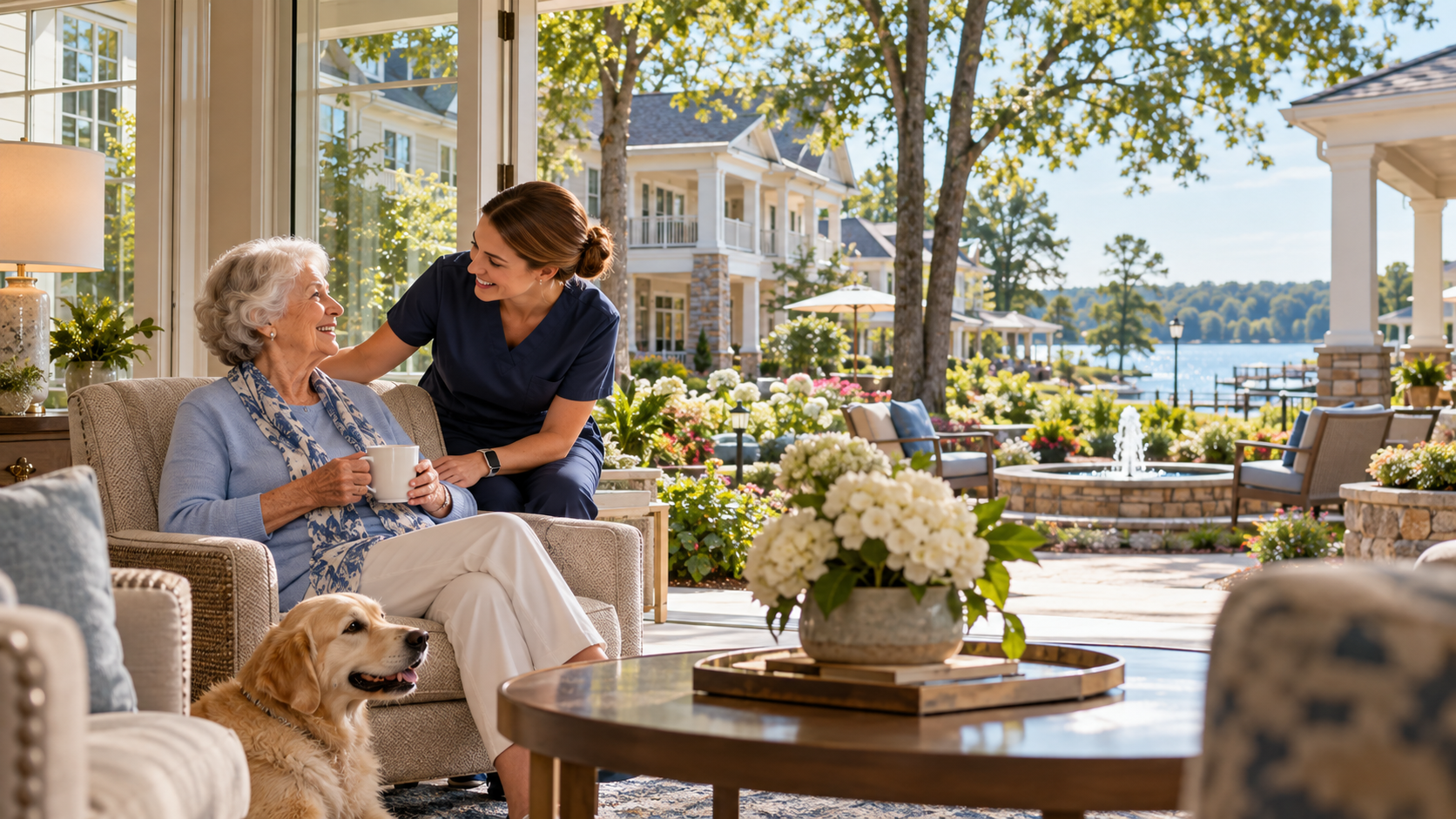
Assisted Living in Mooresville, NC for Comfortable and Supportive Senior Care
Choosing assisted living in Mooresville, NC can help older adults maintain greater independence while receiving support with everyday activities that have become difficult to manage alone. In North Carolina, assisted living facilities are generally licensed as adult care homes, which provide room, board, supervision, and assistance with activities of daily living such as bathing, dressing, mobility, eating, toileting, and medication administration. These communities are different from nursing facilities because assisted living is intended for people who need supportive personal care but do not necessarily require continuous skilled nursing care.
For families, selecting the right community involves much more than finding an attractive building.
Care needs, staff availability, licensing history, safety, meals, medication support, activities, room options, costs, transportation, and the personality of the community can all influence quality of life.
The best choice should support both current needs and likely future changes while helping the resident remain involved in decisions whenever possible.
What Is Assisted Living in Mooresville, NC?
Assisted living provides residential accommodation combined with personal support.
North Carolina describes adult care homes as residences for older adults and adults with disabilities who may require around the clock supervision and help with daily activities. Facilities can range from smaller family care homes to much larger communities.
The exact services available vary by community.
Common services may include:
• Private or shared accommodation
• Meals and snacks
• Housekeeping
• Laundry
• Medication assistance
• Help with bathing
• Help with dressing
• Mobility assistance
• Toileting support
• Social activities
• Transportation
• Emergency response arrangements
• Wellness monitoring
Not every resident needs every service.
A good care plan should reflect the individual’s abilities, preferences, medical needs, and level of independence.
Adult Care Homes and Family Care Homes
North Carolina distinguishes between different sizes of residential care settings.
Adult care homes can range from relatively small communities to facilities with more than 100 residents.
Homes serving two to six residents are generally classified as family care homes.
A smaller residence may appeal to someone who prefers a quieter environment.
A larger community may provide broader amenities, activities, dining options, or social opportunities.
Neither model is automatically better.
The right choice depends on the resident.
Why Families Consider Assisted Living in Mooresville, NC
Families often begin researching assisted living after recognising that an older adult needs more everyday support.
The transition may happen gradually.
Someone may initially manage independently but later find cooking, bathing, medication organisation, housekeeping, or mobility increasingly difficult.
Assisted living can provide a middle ground between living entirely independently and moving into a nursing facility.
Everyday Support Without Removing Independence
A resident may still make many personal decisions while receiving assistance where needed.
For example, someone may independently:
• Choose clothing
• Attend activities
• Visit family
• Manage hobbies
• Socialise with neighbours
while receiving help with bathing or medication administration.
The goal should be appropriate support rather than unnecessary dependence.
Reduced Home Maintenance
Living alone can involve significant responsibilities.
These may include:
• Cooking
• Cleaning
• Laundry
• Yard maintenance
• Home repairs
• Shopping
• Transportation
Removing some of these responsibilities can make daily life more manageable.
Greater Social Interaction
Social isolation can become a concern for older adults living alone.
Assisted living communities may offer:
• Group meals
• Games
• Exercise activities
• Crafts
• Music
• Holiday events
• Outings
• Clubs
• Religious or spiritual activities
Participation should remain a personal choice.
7 Smart Ways to Choose Assisted Living in Mooresville, NC
Families can make the search more manageable by comparing communities using the same basic criteria.
1. Confirm the Community Is Properly Licensed
Licensing should be one of the first checks.
North Carolina adult care homes are licensed through the Division of Health Service Regulation and monitored through state and local oversight systems.
The state maintains searchable information about licensed facilities.
Families can review details before making a final decision.
Do not rely only on brochures or online advertisements.
Official records provide an additional source of information.
2. Review Inspection Reports and Star Ratings
North Carolina’s Division of Health Service Regulation publishes adult care facility inspection information, star ratings, deficiencies, corrective actions, penalties, and certain licensing actions.
The state specifically recommends using these records as part of the decision process.
A star rating should not be viewed as the only measure of quality.
Families should also review the underlying inspection history.
Look at:
• Recent inspections
• Deficiencies
• Corrective actions
• Repeated problems
• Penalties
• Whether previous issues were corrected
The most recent information is generally more useful than relying only on an old rating.
3. Tour the Community in Person
An in person visit reveals things that websites cannot.
North Carolina regulators specifically encourage families to tour facilities, observe the physical environment, speak with staff and residents, and ask to review inspection reports.
During the tour, observe:
• Cleanliness
• Odours
• Staff interactions
• Resident engagement
• Dining areas
• Bedroom condition
• Outdoor spaces
• Accessibility
• Noise level
• General atmosphere
Pay attention to whether staff communicate respectfully with residents.
Assisted Living in Mooresville, NC Should Feel Comfortable to the Resident
Families naturally focus on safety and care, but the resident also needs to feel comfortable living there.
Ask the person who may move in:
• Do you like the atmosphere?
• Would you feel comfortable eating here?
• Do you like the room?
• Are the activities interesting?
• Does the community feel too large or too small?
• Can family visit easily?
The resident’s opinion should play a meaningful role whenever possible.
4. Understand the Care Services Included
Two assisted living communities may advertise similar monthly rates but include different levels of support.
Ask exactly what the base rate covers.
Then ask which services cost extra.
Potential additional care may include:
• Bathing assistance
• Dressing assistance
• Incontinence care
• Medication administration
• Mobility assistance
• Escorts within the building
• Additional housekeeping
• Transportation
• Personal laundry
• Higher levels of supervision
Understanding the complete care package can prevent unexpected costs later.
5. Ask How Care Needs Are Reassessed
Senior care needs can change.
Someone who needs only medication reminders today may eventually require more assistance with mobility or personal care.
Ask:
• How often are care plans reviewed?
• What happens when needs increase?
• How are families notified?
• Can the resident remain in the community?
• When would a higher level of care be required?
• How are changes in fees calculated?
A community should be able to explain its process clearly.
6. Evaluate Staffing and Communication
Care quality depends heavily on the people providing daily support.
Families can ask:
• Who is available overnight?
• Who assists with medications?
• How are emergencies handled?
• How are staff trained?
• Who should family members contact?
• How are changes in condition communicated?
• How are complaints addressed?
The precise staffing model varies by community.
Rather than focusing only on staff numbers, understand how care is actually delivered throughout the day and night.
7. Read the Residency Agreement Carefully
Do not sign based only on a tour or verbal promises.
Review the written agreement.
It should explain important matters such as:
• Monthly fees
• Additional care charges
• Deposits
• Refund policies
• Move in requirements
• Discharge rules
• Notice periods
• Medication services
• Transportation
• Room arrangements
• Personal property policies
• Services included
Ask for clarification before signing if anything is unclear.
Assisted Living in Mooresville, NC Versus Independent Living
Independent living and assisted living can look similar from the outside, but they serve different needs.
Independent Living
Independent living generally suits older adults who can manage most daily personal activities themselves.
A community may provide:
• Housing
• Dining
• Activities
• Maintenance
• Transportation
• Social opportunities
Personal care is usually not the central service.
Assisted Living
Assisted living adds support with activities of daily living.
This may include:
• Bathing
• Dressing
• Mobility
• Eating
• Toileting
• Medication administration
North Carolina Medicaid describes adult care homes as a level of care between independent living and nursing facility care.
Assisted Living Versus Nursing Home Care
These terms are sometimes used interchangeably, but they represent different levels of care.
Assisted living focuses primarily on residential support and personal care.
Nursing homes provide a higher level of nursing and medical supervision for people whose needs cannot appropriately be managed in an assisted living environment.
A healthcare professional can help families understand what level of care is appropriate when medical needs are complex.
When Assisted Living May Be Appropriate
It may be worth considering when a person:
• Needs help bathing or dressing
• Needs medication support
• Has difficulty preparing meals
• Needs supervision
• Has mobility limitations
• Is becoming socially isolated
• Struggles with household responsibilities
The decision should consider physical ability, cognition, medical conditions, safety, and personal preferences.
Medication Support in Assisted Living
Medication management is an important part of many assisted living care plans.
Some residents take several prescriptions at different times.
Support can help reduce confusion.
Depending on the resident and facility, services may involve:
• Medication reminders
• Medication administration
• Medication storage
• Coordination with healthcare providers
• Pharmacy coordination
• Documentation
Families should ask exactly how medication is managed and what happens when prescriptions change.
Memory Care and Assisted Living
Some older adults live with Alzheimer’s disease or other forms of dementia.
Their care requirements may be different from those of other assisted living residents.
North Carolina recognises licensed Special Care Units for residents with Alzheimer’s disease or related disorders.
When memory support is needed, ask about:
• Secure environment
• Staff training
• Behavioural support
• Daily routines
• Activities
• Family communication
• Medication support
• Emergency procedures
• Transition planning
Do not assume that every assisted living community provides the same level of dementia care.
Dining and Nutrition
Meals become an important part of daily life in residential care.
During a tour, ask whether you can see a menu or observe a meal.
Consider:
• Menu variety
• Resident preferences
• Special dietary needs
• Meal schedules
• Snacks
• Dining atmosphere
• Assistance with eating
• How dietary changes are handled
Food should provide nutrition while also remaining enjoyable.
Mealtimes are also important social opportunities.
Activities and Quality of Life
Good senior living should involve more than accommodation and basic care.
Activities can support social connection and give structure to the day.
Programs may include:
• Exercise
• Music
• Art
• Games
• Gardening
• Movies
• Discussion groups
• Celebrations
• Community outings
• Educational activities
• Religious services
The number of activities matters less than whether residents actually enjoy and participate in them.
Ask to see the current activity calendar.
Safety Features to Look For
Safety should be considered throughout the community.
During your visit, look for:
• Handrails
• Accessible bathrooms
• Good lighting
• Clear walking paths
• Emergency call systems
• Secure entrances
• Appropriate fire protection
• Well maintained flooring
• Accessible common areas
Ask how falls and medical emergencies are handled.
What Does Assisted Living in Mooresville, NC Cost?
There is no single monthly price that applies to every community.
Costs can vary depending on:
• Apartment size
• Private or shared room
• Level of personal care
• Medication services
• Memory care
• Transportation
• Amenities
• Laundry
• Additional supervision
• Community pricing structure
Instead of comparing only advertised starting prices, ask each community for an estimated monthly cost based on the person’s actual care needs.
This makes comparisons more realistic.
Does Medicare Pay for Assisted Living?
Families often assume that Medicare will pay the monthly cost of assisted living.
Medicare states that it generally does not cover long term custodial care, including the type of ongoing assistance with daily activities commonly provided in assisted living settings.
Medicare may still cover eligible medical services a resident receives, but that is different from paying the assisted living room and board bill.
Families should understand this distinction when budgeting.
North Carolina Financial Assistance Options
North Carolina operates a State and County Special Assistance program for certain low income individuals living in approved residential facilities.
The program can provide a cash supplement toward room and board for eligible people residing in adult care homes, family care homes, or certain group homes. Eligibility requirements apply.
Eligible Special Assistance recipients are also automatically eligible for Medicaid according to NCDHHS.
Medicaid may separately help eligible residents with certain personal care services.
North Carolina Medicaid states that personal care services can support eligible people who need help with activities including eating, dressing, bathing, toileting, and mobility.
Families should contact the appropriate local Department of Social Services for individual eligibility information.
Questions to Ask During an Assisted Living Tour
Prepare questions before visiting.
Useful questions include:
• What services are included in the monthly rate?
• Which services cost extra?
• How are care needs assessed?
• How often are care plans updated?
• Who is available overnight?
• How are medications handled?
• What happens during a medical emergency?
• How are families contacted?
• What transportation is available?
• Can residents choose meals?
• What activities are offered?
• What are the visiting policies?
• Can residents bring furniture?
• What happens if care needs increase?
• What are the discharge rules?
• Can I review recent inspection reports?
Taking notes makes it easier to compare several communities later.
Reviewing North Carolina Inspection Records
The North Carolina Division of Health Service Regulation maintains a public facility search that includes inspection reports, star ratings, penalties, and other information for adult care facilities.
This resource is especially useful because a polished website does not reveal a facility’s regulatory history.
Review both positive and negative information.
A deficiency does not always mean a community should automatically be rejected.
Look at:
• What happened
• How serious the issue was
• Whether it was corrected
• Whether the same problem occurred repeatedly
• How recent the event was
Context matters.
Moving Into Assisted Living in Mooresville, NC
Moving can be emotionally difficult even when the transition is the right decision.
Giving the resident as much control as possible may help.
Bring Familiar Items
Personal belongings can make a new room feel more familiar.
Consider bringing:
• Family photographs
• Favourite chair
• Bedding
• Artwork
• Books
• Small decorations
• Familiar lamps
• Meaningful keepsakes
Check the facility’s policies before moving large furniture.
Allow Time for Adjustment
A new environment includes unfamiliar people, routines, meals, and surroundings.
Adjustment may take time.
Family visits and regular communication can help maintain continuity.
Encourage Participation Without Pressure
Activities can help residents meet people, but forcing immediate participation may create additional stress.
Allow the resident to develop a routine gradually.
How Families Can Stay Involved
Moving into assisted living does not end the family’s role.
Families can remain involved by:
• Visiting
• Calling regularly
• Attending care meetings
• Monitoring changes
• Reviewing bills
• Communicating with staff
• Bringing personal items
• Participating in events
• Listening to the resident
If concerns arise, document them clearly and speak with the appropriate staff member.
North Carolina’s Long Term Care Ombudsman Program also advocates for residents in adult care homes and can assist with certain grievances.
Common Assisted Living Selection Mistakes
Choosing Only by Appearance
A beautiful lobby does not automatically indicate strong care.
Evaluate care practices and regulatory history.
Comparing Only the Base Price
A low starting rate may not include the level of assistance the resident actually needs.
Ignoring Inspection Records
Official records can provide information that marketing materials do not.
Failing to Consider Future Needs
Ask what happens if mobility, cognition, or personal care requirements increase.
Making the Decision Without the Resident
Whenever possible, involve the older adult throughout the selection process.
Touring Only Once
A second visit at another time of day can provide a different impression of the community.
Frequently Asked Questions
What is assisted living in Mooresville, NC?
Assisted living provides housing, supervision, meals, and personal care for people who need help with daily activities while generally requiring less medical care than a nursing facility.
How are assisted living communities regulated in North Carolina?
Adult care homes are licensed by the North Carolina Division of Health Service Regulation and are also subject to monitoring through local Departments of Social Services.
How can I check an assisted living facility’s inspection history?
North Carolina DHSR provides a public search containing inspection reports, star ratings, penalties, deficiencies, and related facility information.
Does Medicare pay for assisted living in Mooresville, NC?
Medicare generally does not pay for long term custodial care such as ongoing help with everyday personal activities in assisted living. Eligible medical services may be covered separately.
Can Medicaid help with assisted living care in North Carolina?
Eligible residents may receive Medicaid personal care services in licensed adult care homes, while North Carolina’s Special Assistance program may help certain low income residents with room and board.
What should families ask before choosing assisted living?
Ask about licensing, inspection history, staffing, personal care, medication management, monthly fees, additional charges, meals, activities, transportation, emergency procedures, and what happens if care needs increase.
Conclusion
Choosing assisted living in Mooresville, NC requires balancing safety, independence, personal care, community atmosphere, affordability, and future needs. Families should tour communities, verify North Carolina licensing, review recent inspection records, understand all monthly charges, and involve the future resident throughout the decision whenever possible. Careful comparison can help identify a community where an older adult receives appropriate support while continuing to enjoy dignity, social connection, and as much independence as possible.