Fast Company vs WIRED: Innovation Stories vs Deep Tech Reporting
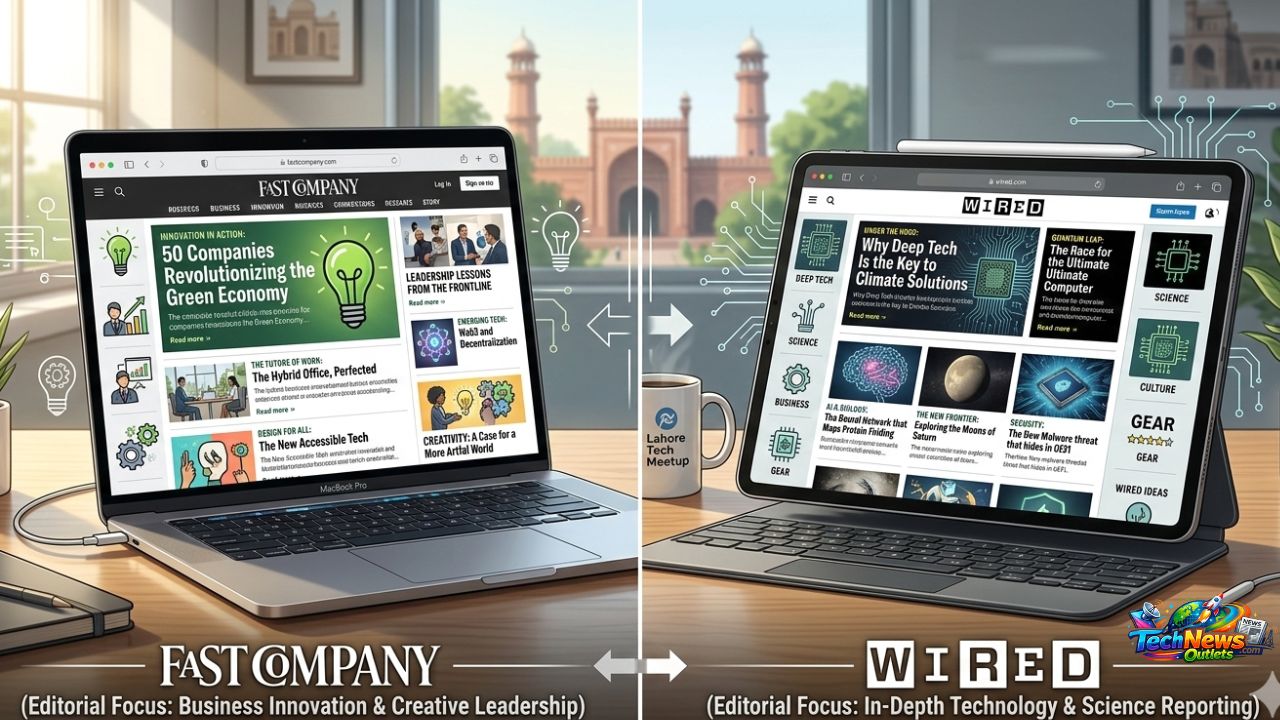
Fast Company and WIRED are both famous for “innovation” coverage—but they serve different reading needs. One leans toward business-friendly innovation stories: products, companies, design, and what’s next. The other leans toward deeper technology journalism: policy, societal impact, and long-form reporting.
If you’ve ever wondered which one to follow (or how to use both without overload), this guide breaks down the difference. You can also explore each outlet profile in our directory: Fast Company and WIRED.
Quick answer: which should you follow?
Pick based on your goal:
• Want business-friendly innovation stories and company/product narratives? Choose Fast Company.
• Want deeper tech reporting with policy, privacy, and societal impact? Choose WIRED.
Best combo for most readers: Fast Company for inspiration and innovation scanning + WIRED for weekly depth and context.
How to compare innovation publications
Use these criteria:
1) Audience: business/design vs tech/policy depth
2) Story type: inspiration and trends vs investigations and long-form
3) Time horizon: what’s changing now vs what matters long-term
4) Practical use: product/brand ideas vs risk and context
5) Signal-to-noise: how much you’ll actually finish each week
Fast Company: best for innovation stories, business trends, and product narratives
Fast Company is often strongest when you want a business-friendly innovation lens: new products, notable companies, design, culture, and trends. It’s great for founders, product teams, marketers, and leaders who want ideas and case studies.
Think of Fast Company as an “innovation inspiration” layer—useful for seeing what companies are trying, how they position themselves, and what’s gaining attention.
Strengths
• Innovation and business trends in a readable style
• Product, brand, design, and company narratives
• Good for scanning ideas and patterns
• Helpful for founders and product/marketing teams
Limitations
• Not always deeply technical or investigative
• Some stories are more “trend” than “proof”
• Best paired with a deeper reporting outlet for high-stakes topics
Best for
Founders, product leaders, designers, marketers, and anyone who wants innovation stories they can translate into strategy and ideas.
WIRED: best for deeper tech reporting, policy, and societal impact
WIRED is often strongest when you want deeper reporting: privacy, security, policy, science/technology intersections, and the societal impact of tech. It’s a great “weekly depth” source—read fewer stories, but read them fully.
WIRED is particularly useful when innovation intersects with risk: regulation, misinformation, surveillance, platform power, and how tech shapes culture.
Strengths
• Deeper tech reporting and long-form context
• Strong coverage of privacy, policy, and societal impact
• Useful for understanding why technology matters
• Great for weekly deep reading
Limitations
• Not designed for fast daily scanning
• Less focused on day-to-day product launches than consumer-tech sites
• Best used as a depth layer, not your only source
Best for
Readers who want deeper journalism, long-form tech context, and understanding of how technology impacts society and policy.
Head-to-head: which one wins by goal?
• Innovation inspiration and business case studies: Fast Company
• Deep reporting and long-form context: WIRED
• Best daily/weekly combo: Fast Company scan + WIRED weekly deep read
• Best for high-stakes topics (privacy, security, policy): WIRED
Which should you follow by role?
If you’re a founder or product leader
Use Fast Company for innovation stories and product narratives. Use WIRED for context when stories touch regulation, privacy, or broader tech impact.
If you work in marketing or brand strategy
Fast Company is often more directly useful for brand and innovation storytelling. Pair it with a business/markets outlet when needed.
If you care about privacy, policy, and long-term impact
WIRED is the better primary source. Add Fast Company only if you want innovation trends and business-friendly narratives.
If you want a quick daily scan
Neither is a pure briefings outlet. If you want a daily skim layer, pair either with Axios for fast updates, or add Bloomberg Technology for business context.
How to use both without overload (simple routine)
Daily (5 minutes)
1) Scan Fast Company headlines for 2–3 minutes.
2) Save one story only if it’s actionable or relevant.
3) Skip anything that feels like pure trend-chasing.
Weekly (30–45 minutes)
1) Read 1–2 WIRED long-form pieces fully.
2) Write a one-line takeaway for each.
3) If you want more research-forward framing, add MIT Technology Review as an optional depth source.
Explore more sources on TechNewsOutlets.com
Browse the full Outlets directory or return to the main tech news outlets hub to find more categories and comparisons.
FAQs
Is Fast Company technical?
It’s more business- and innovation-focused than deeply technical. It’s great for trends, products, and company stories, but it’s not usually a technical deep dive source.
Is WIRED better for serious tech reporting?
Often yes, especially when topics involve privacy, security, policy, and societal impact. WIRED is usually best as a depth layer rather than a daily scan source.
Should I follow both?
If you have time, yes—but use them differently: Fast Company for inspiration scanning, WIRED for weekly deep reporting. That way you get both innovation stories and real context.
Conclusion
Fast Company is best for innovation stories, business trends, and product narratives. WIRED is best for deep tech reporting, long-form journalism, and societal impact. For most readers, the best setup is Fast Company for scanning plus WIRED for weekly depth.

As an author, Nicai de Guzman focuses on helping readers quickly identify trusted and high-quality tech news platforms, making it easier for developers, entrepreneurs, students, and tech enthusiasts to stay informed without information overload. Through careful research and categorization, the goal is to provide clear, accurate, and up-to-date resources for the global tech community.