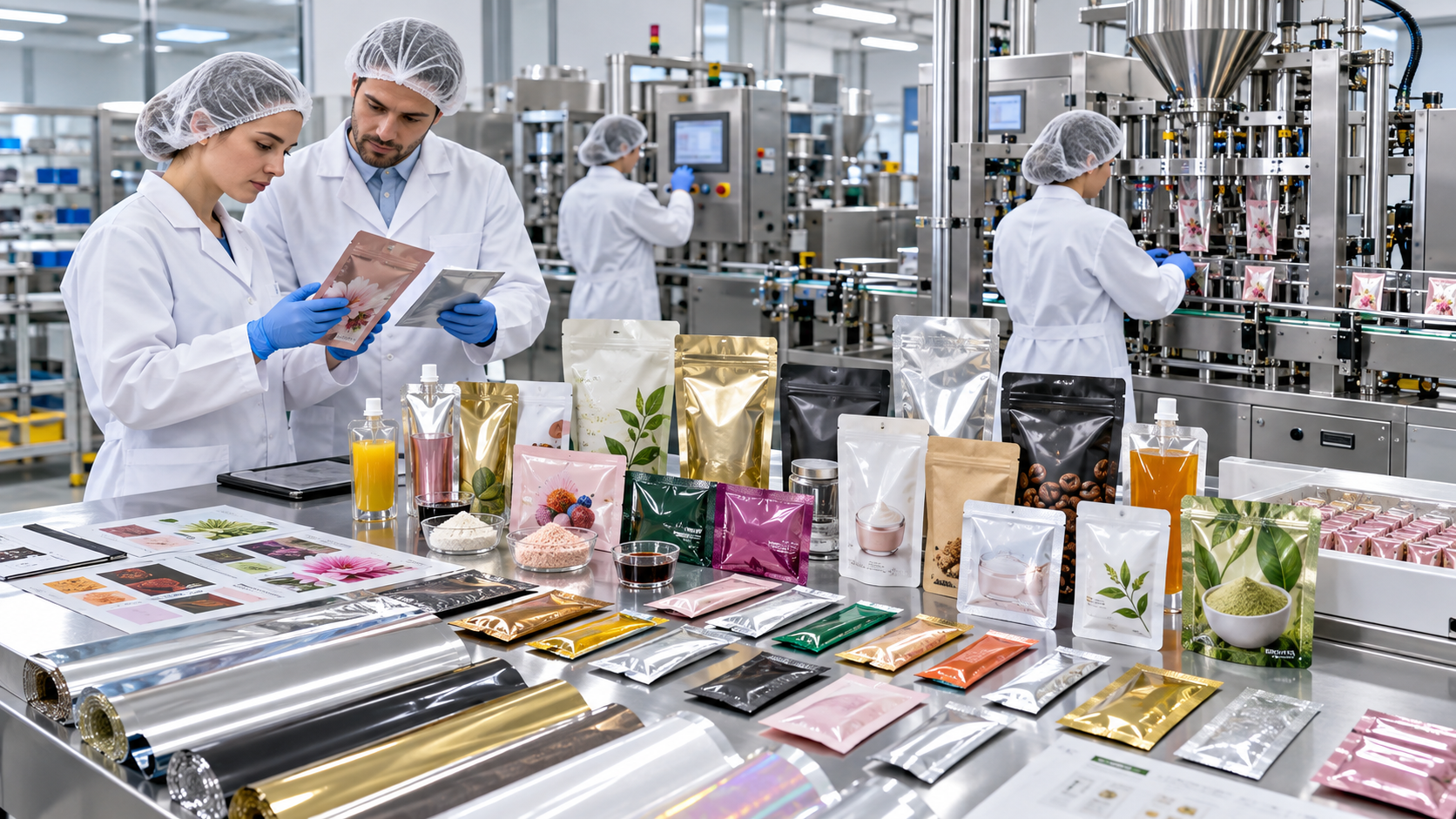
Custom Sachet Packaging: How Small Packs Can Create a Big Brand Impact
custom sachet packaging gives brands a compact way to package powders, liquids, gels, creams, condiments, supplements, samples, and other products while combining protection, portion control, convenience, and branded presentation in a single format. Sachets are especially useful when customers need one serving, one application, a trial quantity, or a lightweight product that is easy to distribute. The most successful sachet projects go beyond printing an attractive design. Material structure, barrier performance, seal strength, product compatibility, filling equipment, dimensions, regulatory requirements, sustainability goals, and the customer experience all need to work together.
Small packaging can play an important role in many industries.
A food company may use sachets for sauces or seasonings.
A cosmetics brand may provide shampoo, serum, or cream samples.
A supplement company may package a single serving of powder.
A hotel may distribute individual personal care products.
A pharmaceutical or healthcare supplier may need controlled single-use portions, subject to applicable regulatory requirements.
Because sachets can be lightweight and highly customizable, they provide an efficient format for both full-size portions and promotional samples.
What Is Custom Sachet Packaging?
Custom sachet packaging refers to flexible sealed packets designed specifically around a product and brand.
Customization may include:
• Sachet dimensions
• Film structure
• Barrier properties
• Printing
• Colours
• Branding
• Tear notches
• Seal configuration
• Surface finish
• Filling compatibility
• Product-specific protection
Unlike generic stock packaging, custom sachets are designed to match the product’s physical characteristics and the company’s visual identity.
What Can Be Packed in Sachets?
Depending on material and filling technology, sachets can hold products such as:
• Powders
• Granules
• Liquids
• Gels
• Pastes
• Creams
• Condiments
• Supplements
• Coffee
• Seasonings
• Cosmetic samples
• Personal care products
The packaging material must be selected specifically for the product.
A dry powder has different protection requirements from an oil-based cosmetic or acidic sauce.
7 Powerful Benefits of Custom Sachet Packaging
Sachets can provide advantages across manufacturing, marketing, distribution, and customer experience.
1. Custom Sachet Packaging Creates Strong Portion Control
One of the biggest advantages of sachets is the ability to package precise individual portions.
This can be useful for products where users benefit from a predetermined quantity.
Examples include:
• Coffee powder
• Protein supplements
• Electrolyte mixes
• Sauces
• Beauty treatments
• Shampoo
• Skincare creams
• Cleaning concentrates
Portion Control Improves Convenience
Customers do not need to measure the product manually.
They open one pack and use the intended amount.
This can make the experience:
• Faster
• Cleaner
• More portable
• More consistent
For products requiring specific dosage or serving instructions, packaging must also comply with all relevant labeling and product regulations.
Single-Use Formats Can Reduce Product Exposure
Once a large container is opened, the remaining product may repeatedly contact air, moisture, or other environmental conditions.
A single sealed sachet remains closed until use.
This can help preserve the unopened portion when an appropriate barrier material is selected.
2. Small Packs Can Be Excellent for Product Sampling
Getting customers to try a new product can be difficult.
Full-size products may represent too much commitment for first-time buyers.
Samples reduce that barrier.
Custom sachets are commonly used for:
• Skincare samples
• Haircare products
• Drink powders
• Sauces
• Supplements
• Fragranced products
• Cosmetic creams
Sampling Can Support Product Discovery
Brands can distribute sample sachets through:
• Retail stores
• Events
• Subscription boxes
• Ecommerce orders
• Direct mail
• Magazines
• Hotel amenities
• Trade exhibitions
The customer can experience the product before deciding whether to purchase a larger format.
Sample Packaging Should Still Look Professional
A small sample may be a customer’s first physical interaction with the brand.
Low-quality print or difficult-to-open packaging can create a poor first impression.
Even a tiny sachet should reflect the same brand standards as the primary product.
3. Custom Sachet Packaging Provides Flexible Barrier Protection
Flexible packaging can use multiple material layers to protect products from environmental exposure.
Depending on the application, a sachet may need resistance to:
• Moisture
• Oxygen
• Light
• Odours
• Oils
• External contamination
Barrier requirements depend heavily on the contents.
Moisture Barrier
Dry powders can become lumpy or unstable if moisture enters the pack.
A suitable moisture barrier helps protect product condition during storage.
Oxygen Barrier
Certain foods, supplements, and cosmetic formulations can change when exposed to oxygen.
A stronger oxygen barrier may therefore be required.
Light Barrier
Some ingredients can degrade when exposed to light.
Opaque or foil-based structures may offer greater protection than clear film.
Product Compatibility Comes First
The most attractive packaging is useless if the film reacts poorly with the contents.
Packaging suppliers should understand:
• Product composition
• Acidity
• Oil content
• Alcohol content
• Storage temperature
• Shelf-life expectations
• Filling temperature
Compatibility testing is important before large-scale production.
4. Custom Printing Strengthens Brand Presentation
The entire surface of a sachet can become part of the visual brand experience.
Custom printing can include:
• Logo
• Product name
• Colour system
• Instructions
• Ingredients
• Nutrition information
• Regulatory information
• Batch or date areas
• Marketing message
• Barcode
• QR code where appropriate
Because the available space is limited, layout needs to be carefully organized.
Prioritize Information
Do not attempt to place every marketing message on the front panel.
The customer should be able to quickly identify:
• Brand
• Product
• Variant
• Important benefit or use
Mandatory information should remain readable and compliant with the applicable market.
Small Text Requires Care
A design that looks clear on a large computer monitor may become difficult to read once printed on a small sachet.
Always review artwork at actual size before production.
5. Sachets Can Reduce Shipping and Storage Space
Flexible sachets are generally lightweight and compact compared with rigid packaging.
This can reduce the physical space required for:
• Warehousing
• Shipping
• Retail storage
• Promotional distribution
• Travel kits
Efficient for Ecommerce Samples
Ecommerce businesses can place lightweight sample sachets inside customer orders without significantly increasing package size.
This can support cross-selling and new product discovery.
Useful for Travel
Customers often prefer compact single-use products when travelling.
Examples include:
• Shampoo
• Conditioner
• Skincare
• Drink mixes
• Supplements
• Condiments
The sachet format can fit easily inside bags, luggage, kits, and sample packs.
6. Custom Sachet Packaging Supports Many Industries
Sachets are highly adaptable.
The same basic flexible-packaging concept can serve very different markets when materials and production methods are adjusted.
Food and Beverage
Applications may include:
• Sauces
• Sugar
• Salt
• Spices
• Coffee
• Drink powders
• Flavorings
• Condiments
Food-contact materials need to meet applicable safety requirements.
Cosmetics and Personal Care
Common uses include:
• Shampoo
• Conditioner
• Serum
• Face masks
• Creams
• Lotions
• Hair treatments
Cosmetic sachets often need strong visual branding because they are frequently used as samples.
Nutritional Products
Applications can include:
• Protein powder
• Electrolytes
• Vitamins
• Functional powders
• Single-serving drink mixes
Labeling should accurately reflect the product and comply with relevant regulations.
Hospitality
Hotels and travel businesses may use sachets for:
• Toiletries
• Coffee
• Sugar
• Condiments
• Cleaning products
Small packs can support convenience while providing controlled quantities.
7. Custom Sachet Packaging Can Improve Product Differentiation
Retail shelves and online marketplaces contain many competing products.
Distinctive packaging can help a brand become easier to recognize.
Differentiation can come from:
• Colour
• Shape
• Finish
• Typography
• Illustration
• Material feel
• Opening experience
Premium Finishes
Depending on the printing process and material, brands may consider:
• Matte finish
• Gloss finish
• Metallic appearance
• Soft-touch effects
• High-contrast graphics
The finish should match the brand positioning.
A premium beauty product may benefit from a different visual approach than an energetic sports supplement.
Choosing the Right Sachet Material
Material choice is one of the most important technical decisions.
Flexible sachets are often made from multi-layer structures.
Each layer may perform a different function.
Possible functions include:
• Printable outer layer
• Barrier layer
• Structural layer
• Heat-seal layer
Plastic Film Structures
Plastic-based laminates can provide:
• Flexibility
• Strong sealing
• Moisture resistance
• Good print surfaces
The exact structure depends on product requirements.
Foil Laminates
Aluminium foil can provide very strong barriers against:
• Light
• Moisture
• Oxygen
This can make it useful for sensitive products.
However, foil structures may have different recycling and processing considerations depending on local infrastructure.
Paper-Look Structures
Some brands prefer a paper-style visual appearance.
However, appearance should not be confused with technical performance.
A sachet may still require internal barrier layers to protect the product.
Clear Versus Opaque Sachets
Clear sections can allow customers to see the product.
This can work well for visually appealing dry goods.
However, transparency may not suit products that require strong protection from light.
Opaque structures can provide:
• Stronger visual branding
• Better light protection depending on material
• Greater control over appearance
The product’s technical needs should guide the decision.
Custom Sachet Packaging Sizes
Sachet dimensions depend on:
• Fill volume
• Product density
• Machine requirements
• Seal width
• Branding area
• User experience
Do Not Design Too Tightly Around the Product
A package that barely fits the required volume may create filling and sealing problems.
The manufacturer should calculate enough internal space for reliable production.
Avoid Excessive Empty Space
Oversized packaging can feel wasteful and may reduce distribution efficiency.
The goal is an appropriate fit.
Tear Notches and Easy Opening
A sachet can become frustrating if customers cannot open it easily.
A tear notch provides a defined starting point.
This can improve the experience for:
• Food products
• Cosmetics
• Supplements
• Travel products
Test Opening With Real Users
Packaging that opens easily in a factory test may behave differently for customers with:
• Wet hands
• Limited grip
• Long nails
• Reduced dexterity
Opening performance should be considered during development.
Sachet Filling and Sealing
Packaging design must match the filling equipment.
Common operations may include:
• Form-fill-seal
• Premade sachet filling
• Liquid filling
• Powder dosing
• Granule filling
The filling process affects:
• Sachet dimensions
• Seal areas
• Film roll specifications
• Registration marks
• Machine speed
• Material choice
Seal Integrity Is Critical
A poor seal can lead to:
• Leaks
• Contamination
• Product deterioration
• Customer complaints
• Waste
Seal performance should be validated before large production runs.
Custom Sachet Packaging for Liquids
Liquid products place significant demands on seals and film compatibility.
Potential products include:
• Sauces
• Oils
• Serums
• Lotions
• Gels
• Cleaning liquids
The packaging needs to withstand normal:
• Transport
• Handling
• Storage
• Pressure
Leak testing may be particularly important.
Custom Sachet Packaging for Powders
Powder products can create different challenges.
Fine particles may interfere with seal areas if the filling process is not controlled properly.
Applications include:
• Supplements
• Coffee
• Spices
• Drink mixes
• Protein powders
• Cosmetic powders
The sachet material should protect powders from moisture and external contamination.
Sachets for Cosmetics
Cosmetic brands frequently use sachets as trial formats.
A customer can test:
• Face cream
• Serum
• Shampoo
• Conditioner
• Mask treatment
• Body lotion
before purchasing a full-size product.
Sachet Design Should Reflect the Main Product
Sample packaging should use consistent:
• Colours
• Typography
• Product naming
• Brand tone
• Visual identity
This helps customers recognize the full-size version later.
Sachets for Food Products
Food packaging must prioritize safety and product stability.
Important considerations include:
• Food-contact compliance
• Barrier requirements
• Seal integrity
• Allergen information
• Ingredient labeling
• Storage instructions
• Shelf life
Businesses should work with qualified packaging and food-safety professionals where appropriate.
Sustainability and Custom Sachet Packaging
Sustainability is a significant challenge for small flexible packs.
Sachets use little material per individual unit, but multi-layer structures can be difficult to recycle in some systems.
Brands should evaluate options based on realistic infrastructure.
Possible approaches include:
• Simplified mono-material structures where technically suitable
• Reduced material thickness where safe
• Right-sized packaging
• Recyclable designs where collection exists
• Avoiding unnecessary secondary packaging
Do Not Make Unsupported Environmental Claims
Packaging terminology can be confusing.
Claims such as recyclable, biodegradable, compostable, or sustainable should be supported by the material specification and appropriate disposal infrastructure.
A theoretically recyclable material may still have limited practical recycling availability in some markets.
Custom Sachet Packaging and Shelf Life
Packaging influences product shelf life, but it is not the only factor.
Shelf life can also depend on:
• Product formulation
• Manufacturing hygiene
• Filling environment
• Temperature
• Light exposure
• Moisture
• Oxygen
• Storage
Brands should perform appropriate shelf-life testing.
Do not assume that using a foil laminate automatically guarantees a specific shelf life.
Printing Methods for Sachet Packaging
Different production volumes and design requirements may suit different printing technologies.
Digital Printing
Digital printing can be useful for:
• Smaller runs
• Multiple designs
• Trials
• Product launches
• Short lead times
Flexographic Printing
Flexographic printing can be suitable for larger production volumes.
Gravure Printing
Gravure may be used for high-volume applications requiring strong print consistency.
The best option depends on:
• Quantity
• Number of colours
• Design complexity
• Budget
• Repeat orders
• Lead time
Minimum Order Quantities
Custom packaging often involves minimum order quantities.
These can vary significantly based on:
• Printing method
• Film structure
• Sachet dimensions
• Custom tooling
• Manufacturing process
Startups should ask about minimums early.
Designing packaging before understanding production quantities can lead to unexpected costs.
Custom Sachet Packaging Costs
Pricing depends on many variables.
These include:
• Quantity
• Dimensions
• Material
• Barrier structure
• Number of colours
• Printing technology
• Finish
• Filling requirements
• Shipping
• Testing
A low unit price should not be the only goal.
Poor-quality packaging can create far greater costs through leaks, waste, damaged products, and customer dissatisfaction.
Artwork Preparation
Before production, confirm:
• Final dimensions
• Bleed
• Safe areas
• Colour mode
• Font handling
• Image resolution
• Barcode quality
• Regulatory text
• Product variant
• Contact details
Review Physical Proofs When Appropriate
Digital previews are useful, but printed colour and material appearance may differ from a screen.
For important launches, physical samples can help validate:
• Colour
• Finish
• Size
• Readability
• Opening
• Overall presentation
Choosing a Custom Sachet Packaging Supplier
A good supplier should understand more than printing.
Ask about:
• Material expertise
• Product compatibility
• Food or cosmetic requirements where relevant
• Barrier options
• Filling compatibility
• Printing methods
• Quality control
• Lead times
• Minimum quantities
• Sustainability options
• Technical support
Experience in Your Industry Matters
A supplier experienced with dry food powders may not automatically have the same expertise with oil-based cosmetics.
Relevant product experience can reduce development risk.
Questions to Ask Before Ordering
Useful questions include:
• Which film structure suits my product?
• What barrier properties are recommended?
• Can the material handle my filling temperature?
• Is it compatible with my filling machine?
• What is the minimum order quantity?
• What printing methods are available?
• Can I receive prototypes?
• What testing is performed?
• Which seal type is used?
• What is the expected lead time?
• Are sustainable alternatives available?
• Which regulatory documents can be supplied?
Clear answers can make supplier comparison easier.
Common Custom Sachet Packaging Mistakes
Choosing Packaging Only by Appearance
Product protection should come first.
Ignoring Filling Equipment
Packaging and machinery must be compatible.
Using Text That Is Too Small
Always review artwork at actual print size.
Poor Seal Design
Insufficient seal areas can cause failures.
Ignoring Product Chemistry
Some formulations require specific materials.
Ordering Before Testing
Prototype and compatibility testing can prevent expensive mistakes.
Making Unverified Sustainability Claims
Claims should reflect actual materials and disposal systems.
Choosing the Lowest Price Without Reviewing Quality
Packaging failure can cost far more than small unit-price savings.
Creating a Better Sachet Customer Experience
Packaging should be easy to:
• Identify
• Hold
• Open
• Use
• Dispose of appropriately
A successful sachet combines technical performance with usability.
For example, a premium skincare sample should not require scissors to open.
A sauce packet should not burst unpredictably.
A powder sachet should pour without excessive mess.
These details influence customer perception.
Frequently Asked Questions
What is custom sachet packaging?
Custom sachet packaging consists of branded flexible packets designed to hold products such as powders, liquids, gels, creams, condiments, supplements, and samples in controlled quantities.
What products can use custom sachet packaging?
Sachets can be suitable for food, drink powders, cosmetics, personal care, supplements, hospitality products, cleaning concentrates, and many other compatible products.
What materials are used for custom sachet packaging?
Materials can include plastic films, multi-layer laminates, foil structures, and other flexible packaging constructions selected according to barrier, sealing, printing, and product requirements.
Can custom sachet packaging be used for liquids?
Yes. Liquid sachets are widely used, but the material, seals, filling process, and product compatibility must be designed carefully to prevent leaks and protect product quality.
Is custom sachet packaging suitable for product samples?
Yes. Sachets are particularly useful for trial quantities because they are compact, lightweight, customizable, and capable of holding a controlled single-use portion.
How do I choose a custom sachet packaging supplier?
Compare material expertise, product compatibility, printing quality, minimum quantities, testing, seal performance, filling-machine compatibility, industry experience, lead times, and technical support.
Conclusion
Custom sachet packaging can provide an efficient combination of product protection, portion control, portability, and strong brand presentation across food, cosmetics, supplements, hospitality, and many other markets. Successful packaging begins with understanding the product and then selecting suitable materials, barriers, dimensions, seals, printing, and filling methods. Brands should test performance carefully rather than choosing a sachet based on appearance or price alone. When technical protection and customer experience are designed together, a small sachet can deliver significant practical and marketing value.