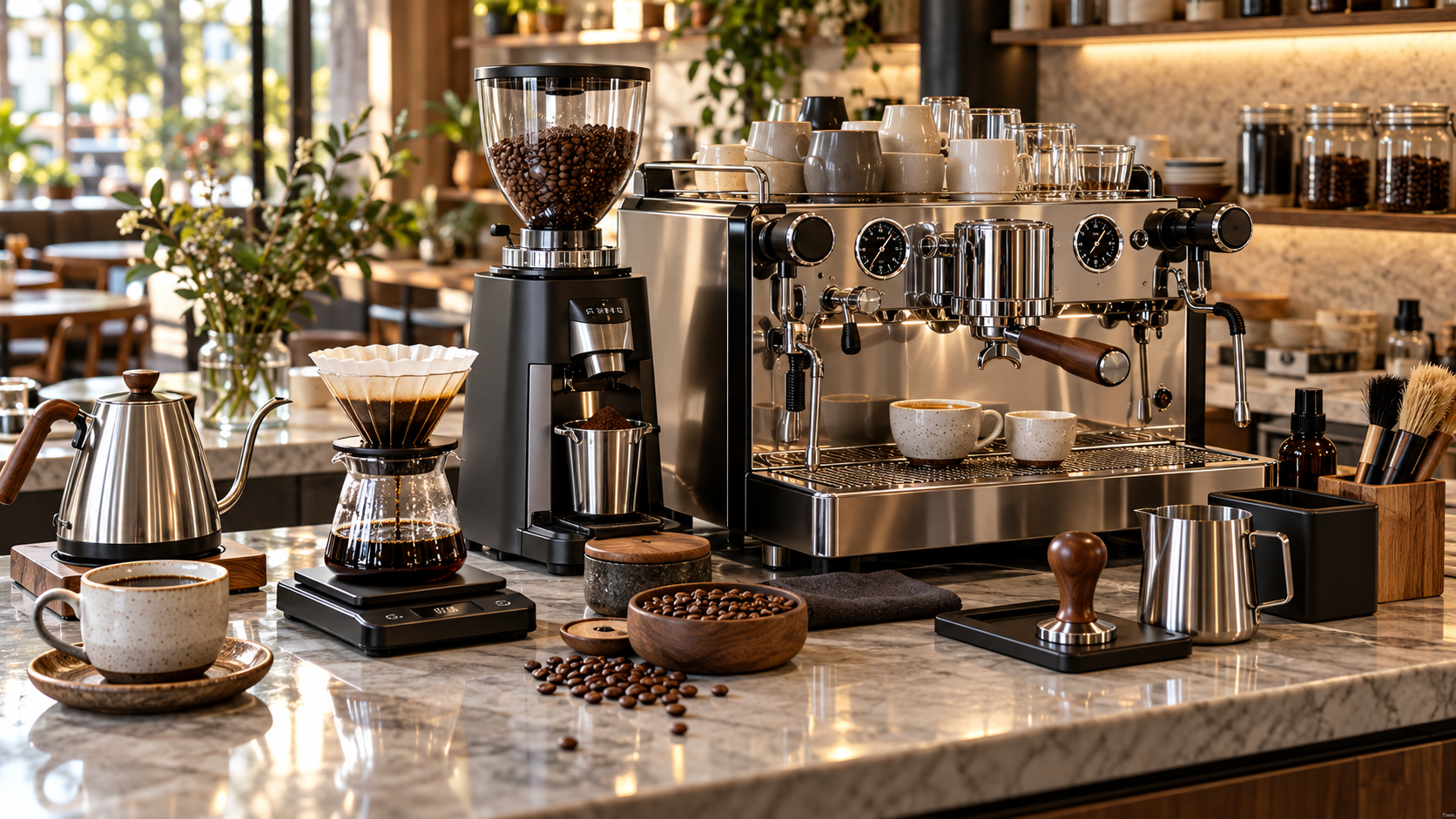
Coffee Equipments: How to Build a Better Brewing Setup for Home or Business
Choosing the right coffee equipments can make a major difference to flavour consistency, workflow, brewing speed, and the overall experience of preparing coffee. A good setup is not simply about buying the most expensive espresso machine or filling a counter with accessories. The best equipment combination depends on the type of coffee being prepared, the number of drinks produced, available space, maintenance capacity, skill level, and budget. For some people, a quality grinder and simple pour-over brewer may be enough. A busy café, on the other hand, may need commercial espresso machines, multiple grinders, water treatment, milk equipment, digital scales, brewing stations, cleaning tools, and dependable backup systems.
Coffee quality is influenced by many variables.
These include:
• Coffee freshness
• Grind size
• Water quality
• Brewing temperature
• Brew ratio
• Extraction time
• Equipment cleanliness
• Barista technique
Good equipment helps control these variables more consistently.
It does not replace good coffee beans or proper technique, but it makes repeatable results easier to achieve.
What Are Coffee Equipments?
Coffee equipment refers to the tools and machines used to grind, brew, serve, measure, and maintain coffee.
A complete setup may include:
• Espresso machine
• Coffee grinder
• Pour-over brewer
• Batch brewer
• French press
• Aero-style brewer
• Kettle
• Scale
• Tamper
• Milk pitcher
• Knock box
• Water filter
• Thermometer
• Cleaning brushes
• Backflush supplies
• Storage containers
The exact combination depends on the brewing method.
A home filter-coffee drinker needs a very different setup from a speciality café.
7 Powerful Tips for Choosing Coffee Equipments
A practical buying process should begin with actual brewing needs rather than brand popularity.
1. Coffee Equipments Should Match Your Preferred Brewing Method
The first question is simple.
What coffee do you want to make?
Possible answers include:
• Espresso
• Cappuccino
• Latte
• Americano
• Pour-over coffee
• French press
• Cold brew
• Batch filter coffee
• Turkish-style coffee
Different drinks require different equipment.
Espresso Setup
A basic espresso setup may include:
• Espresso machine
• Burr grinder
• Tamper
• Scale
• Knock box
• Milk pitcher
• Cleaning tools
Espresso requires relatively precise control over grind size, dose, water, pressure, and extraction.
The grinder is therefore particularly important.
Pour-Over Setup
Pour-over brewing may require:
• Manual dripper
• Filter papers
• Burr grinder
• Gooseneck kettle
• Digital scale
• Server
This setup is generally simpler and can produce excellent coffee without a large machine.
French Press Setup
French press preparation usually requires fewer tools.
A practical setup may include:
• French press
• Grinder
• Kettle
• Scale
The grinder should be capable of producing a relatively consistent coarse grind.
2. Invest in a Quality Coffee Grinder
The grinder is one of the most important pieces of coffee equipment.
Coffee begins losing aromatic compounds after grinding.
Grinding immediately before brewing can therefore improve freshness.
Burr Grinders Versus Blade Grinders
Burr grinders crush beans between two grinding surfaces.
Blade grinders chop beans with spinning blades.
Burr grinders generally provide better control over particle size.
Consistent grind size helps produce more even extraction.
Espresso Requires Fine Adjustment
Espresso grinding is particularly demanding.
A small change in grind size can noticeably affect extraction speed.
Look for a grinder with:
• Fine adjustment range
• Stable burr alignment
• Consistent dosing
• Low retention where practical
• Suitable motor capacity
Commercial cafés may need dedicated grinders for:
• House espresso
• Decaf
• Single-origin coffee
Using separate grinders can simplify workflow.
3. Choose an Espresso Machine Based on Real Usage
Espresso machines range from compact home units to large multi-group commercial systems.
The right choice depends on volume.
Home Espresso Machines
Home machines may prioritize:
• Compact size
• Fast warm-up
• User-friendly controls
• Single boiler or thermoblock systems
• Integrated milk steaming
They can work well for preparing a few drinks at a time.
Prosumer Machines
Prosumer machines sit between basic home and commercial equipment.
They may provide:
• More stable temperature
• Stronger steam performance
• Larger boilers
• Better workflow
• Greater manual control
These can suit enthusiasts who regularly prepare espresso and milk-based drinks.
Commercial Espresso Machines
Busy cafés need equipment designed for continuous service.
Important features may include:
• Multiple group heads
• Stable brewing temperature
• Strong steam capacity
• Large boilers
• Durable internal components
• Easy servicing
• Reliable water connections
A machine that performs well for five drinks per day may fail to keep up with fifty drinks per hour.
4. Coffee Equipments Need Accurate Measuring Tools
Coffee brewing becomes more repeatable when quantities are measured.
A digital scale is one of the most useful low-cost tools.
It can help measure:
• Coffee dose
• Water amount
• Espresso output
• Brew ratio
Why Brew Ratio Matters
Coffee-to-water ratio influences strength and extraction.
Instead of estimating by eye, using a scale allows the same recipe to be repeated.
For espresso, a barista may measure:
Coffee dose in
Espresso beverage out
Extraction time
This makes troubleshooting easier.
Timer Functions
Some scales include built-in timers.
These can be useful for:
• Espresso
• Pour-over
• French press
• Other manual brewing methods
A scale does not need many advanced features to be useful.
Accuracy and responsiveness matter more.
5. Water Equipment Can Affect Coffee Quality
Coffee is mostly water.
Water composition therefore has a substantial effect on taste and equipment health.
Water that is too hard can contribute to mineral buildup.
Water with unsuitable mineral balance can also affect extraction.
Water Filtration
Depending on local water quality, coffee setups may use:
• Carbon filtration
• Water softening
• Mineral-balancing systems
• Reverse osmosis with remineralisation
Commercial coffee businesses should evaluate water before installing expensive equipment.
Scale Buildup
Mineral deposits can accumulate inside:
• Boilers
• Pipes
• Valves
• Heating elements
This can reduce performance and lead to repairs.
Water treatment can therefore support both beverage quality and machine longevity.
6. Choose Milk Equipment for Your Drink Menu
Cafés and home users preparing milk-based beverages need appropriate milk tools.
Common equipment includes:
• Steam wand
• Milk pitcher
• Thermometer where useful
• Automatic milk frother
Steam Power Matters
Commercial cafés need enough steam capacity to prepare multiple drinks quickly.
Weak steam performance can slow service.
Milk Pitcher Size
Different pitcher sizes can help reduce milk waste.
A small drink may not require a large pitcher.
Having several sizes gives baristas more control.
Texture Matters
Good milk preparation aims for smooth, fine-textured foam rather than large dry bubbles.
The correct technique depends on the drink.
A cappuccino may need a different texture from a flat white.
7. Coffee Equipments Must Be Easy to Clean and Maintain
Cleanliness directly affects coffee quality.
Old coffee oils can create unpleasant flavours.
Milk residue can create hygiene problems.
Mineral buildup can damage equipment.
Daily Cleaning
A café may need to clean:
• Group heads
• Portafilters
• Steam wands
• Grinder chutes
• Drip trays
• Milk pitchers
• Brewing tools
Periodic Maintenance
Longer-term maintenance may include:
• Burr replacement
• Gasket replacement
• Water-filter changes
• Descaling where appropriate
• Professional servicing
• Pump inspection
• Boiler checks
Buying equipment without considering maintenance costs can lead to expensive surprises.
Essential Coffee Grinder Features
A grinder should match both the brewing method and expected workload.
Important factors include:
• Burr type
• Grind adjustment
• Grind consistency
• Dosing system
• Hopper capacity
• Motor power
• Noise
• Cleaning access
Flat Versus Conical Burrs
Both flat and conical burr grinders can produce excellent coffee.
Performance depends on the entire grinder design rather than burr shape alone.
Users should focus on:
• Consistency
• Adjustment range
• Workflow
• Coffee style
Grinder Retention
Retention refers to coffee remaining inside the grinder.
High retention can mean some old grounds mix with fresh coffee.
This can matter particularly when switching between coffees or adjusting recipes.
Coffee Equipments for Pour-Over Brewing
Manual brewing remains popular because it provides direct control over the brewing process.
Useful tools include:
• Cone dripper
• Flat-bottom brewer
• Filter papers
• Gooseneck kettle
• Scale
• Server
Gooseneck Kettle
A gooseneck kettle provides more precise pouring control than a conventional kettle.
This helps manage:
• Pour rate
• Saturation
• Agitation
• Brewing time
Temperature-controlled kettles can also make recipes easier to repeat.
Coffee Equipments for Batch Brewing
Batch brewers are useful when multiple customers need filter coffee quickly.
They are common in:
• Cafés
• Offices
• Hotels
• Restaurants
• Conference venues
Important considerations include:
• Brew capacity
• Temperature consistency
• Brew basket design
• Holding method
• Cleaning
Thermal Servers
Thermal servers can keep coffee warm without continuously heating the brewed coffee from below.
This can help preserve flavour compared with prolonged exposure to a hot plate.
French Press Coffee Equipment
French press is one of the simplest brewing methods.
It does not require electricity beyond heating water.
Advantages include:
• Low equipment cost
• Simple operation
• Full-bodied coffee
• Easy portability
The brewing process still benefits from:
• Fresh grinding
• Proper ratio
• Controlled brew time
• Suitable water temperature
Cold Brew Equipment
Cold brew production can range from a small home container to commercial brewing systems.
A basic setup may require:
• Brewing vessel
• Filter
• Grinder
• Scale
• Refrigerator storage
Commercial operations should also consider:
• Food safety
• Batch tracking
• Storage temperature
• Cleaning procedures
• Product shelf life
Cold brew should not be treated casually simply because the brewing water is cold.
Coffee Equipments for Home Users
Home users should avoid buying equipment purely because professionals use it.
Commercial equipment may be:
• Expensive
• Large
• Power hungry
• Slow to warm up
• Difficult to maintain
A smaller machine designed for home use may provide better practical value.
Simple Home Espresso Setup
A balanced home setup might include:
• Espresso machine
• Good grinder
• Scale
• Tamper
• Milk pitcher
• Basic cleaning tools
Improving the grinder often creates a greater quality improvement than adding many accessories.
Coffee Equipments for Cafés
Commercial cafés need to prioritize workflow and reliability.
Equipment may include:
• Commercial espresso machine
• Multiple grinders
• Batch brewer
• Hot water system
• Water treatment
• Refrigeration
• Ice equipment
• Scales
• Tampers
• Knock boxes
• Cleaning equipment
• Cups and serving ware
Redundancy Can Be Important
If one grinder fails during peak service, operations can slow significantly.
High-volume businesses may benefit from backup planning.
This does not always mean owning two of every machine.
It means knowing how service can continue if a critical component fails.
Coffee Equipment for Offices
Office coffee needs are different from specialty café operations.
Priorities may include:
• Simplicity
• Speed
• Minimal training
• Easy cleaning
• Large capacity
• Consistent drinks
Automatic machines may be more suitable than manual espresso equipment in some workplaces.
The right solution depends on staff size and expectations.
Automatic Versus Manual Coffee Machines
Automatic systems prioritize convenience.
Manual systems provide more direct control.
Automatic Machines
Benefits can include:
• Fast operation
• Consistency
• Lower training requirements
• Easy user experience
Potential limitations may include:
• Less manual control
• More complex internal maintenance
Manual Machines
Benefits may include:
• Greater control
• More traditional workflow
• Stronger customization
However, quality depends more heavily on operator skill.
Coffee Tampers
A tamper compresses ground coffee inside an espresso portafilter.
Consistency is more important than excessive force.
A proper tamper should fit the basket correctly.
Poor fit can leave uneven edges around the coffee bed.
Automatic Tampers
Commercial cafés may use automatic tamping systems.
Potential benefits include:
• Consistency
• Faster workflow
• Reduced repetitive strain
These can be useful in high-volume environments.
Distribution Tools
Some espresso users use distribution tools before tamping.
Their purpose is to improve the consistency of coffee placement within the basket.
However, unnecessary accessories can complicate workflow.
Start with:
• Good grinding
• Even dosing
• Proper distribution
• Level tamping
Then add tools only if they solve an actual problem.
Knock Boxes
A knock box provides a convenient place to remove used espresso coffee pucks.
Commercial versions should be:
• Durable
• Easy to clean
• Stable
• Appropriately sized
A small home knock box can be much simpler.
Coffee Bean Storage Equipment
Coffee should generally be protected from:
• Heat
• Moisture
• Excessive air exposure
• Direct sunlight
Suitable storage containers can help maintain freshness.
Avoid Oversized Open Hoppers
Coffee sitting in a grinder hopper for long periods is exposed to air and heat.
Busy cafés may refill frequently.
Home users may prefer adding smaller amounts as needed.
Cup Warmers and Serving Equipment
Serving temperature affects the experience.
Espresso cups that are extremely cold can cool the beverage quickly.
Some espresso machines include warming surfaces.
Serving equipment may include:
• Espresso cups
• Cappuccino cups
• Latte glasses
• Servers
• Takeaway cups
The right choice depends on the menu.
Cleaning Coffee Equipments
Cleaning should be part of the daily workflow rather than an occasional task.
Espresso Machine Cleaning
Typical routines may involve:
• Flushing group heads
• Cleaning portafilters
• Wiping steam wands
• Cleaning drip trays
• Backflushing compatible machines
Follow manufacturer instructions.
Grinder Cleaning
Grinders should be cleaned carefully to remove:
• Coffee oils
• Old grounds
• Dust
Avoid introducing water into components that are not designed to get wet.
Milk System Cleaning
Milk residue should be cleaned promptly.
Do not allow dried milk to remain on steam wands or inside automatic milk systems.
Choosing Commercial Coffee Equipments
Businesses should evaluate total operating requirements.
Ask:
• How many drinks per hour?
• Which drinks dominate the menu?
• How many baristas work simultaneously?
• What electrical supply is available?
• Is plumbing available?
• What water treatment is needed?
• How quickly can equipment be serviced?
• Are spare parts readily available?
Service Support Matters
A cheaper machine can become expensive if parts are unavailable or repairs take weeks.
Commercial buyers should consider local technical support.
Energy Use and Coffee Equipment
Heating water requires energy.
Commercial espresso machines may remain hot for long periods.
Businesses can consider:
• Energy-saving modes
• Programmable schedules
• Insulated boilers
• Right-sized equipment
Buying an oversized machine can increase both purchase cost and energy use.
Buying New Versus Used Coffee Equipments
Used equipment can reduce initial cost.
However, condition should be inspected carefully.
Check:
• Service history
• Boiler condition
• Pump performance
• Grinder burr wear
• Electrical safety
• Replacement parts
• Water-scale buildup
A low purchase price may become expensive if major repairs are required immediately.
Coffee Equipment Budget Planning
Do not spend the entire budget on the espresso machine.
A complete setup may also need:
• Grinder
• Water treatment
• Installation
• Electrical work
• Plumbing
• Accessories
• Cleaning supplies
• Spare parts
• Maintenance
The grinder and water system deserve significant attention.
Common Coffee Equipment Buying Mistakes
Spending Too Much on the Machine and Too Little on the Grinder
Grinding quality strongly affects brewing.
Ignoring Water Quality
Poor water can affect taste and equipment life.
Buying Commercial Equipment for Light Home Use
Bigger is not always better.
Choosing Equipment Without Service Support
Repairs are inevitable over long-term use.
Ignoring Cleaning Requirements
Dirty equipment damages flavour.
Buying Too Many Accessories
Start with essentials.
Failing to Measure Available Space
Check countertop dimensions, height, ventilation, and access before purchasing.
Creating a Complete Coffee Station
A well-designed coffee station supports an efficient workflow.
A logical arrangement may place:
Grinder near espresso machine
Tamper and scale within reach
Milk refrigerator nearby
Knock box close to the machine
Cleaning cloths in a dedicated area
Cups within easy reach
Reducing unnecessary movement can improve speed during busy service.
Frequently Asked Questions
What coffee equipments are essential for beginners?
Beginners usually benefit most from a reliable brewer, quality burr grinder, kettle, digital scale, fresh coffee storage, and basic cleaning tools.
Which coffee equipments are needed for espresso?
A typical espresso setup includes an espresso machine, suitable burr grinder, tamper, digital scale, knock box, cups, and cleaning equipment.
Is a coffee grinder more important than an expensive machine?
A good grinder is extremely important because grind consistency directly affects extraction. A balanced grinder and brewer combination usually provides better results than an expensive machine paired with a poor grinder.
What coffee equipments do cafés need?
Cafés may require commercial espresso machines, grinders, batch brewers, water treatment, milk tools, scales, refrigeration, tampers, knock boxes, cleaning equipment, and serving accessories.
How often should coffee equipments be cleaned?
High-use brewing equipment should receive routine daily cleaning, while deeper maintenance should follow manufacturer recommendations and actual usage.
Should I buy new or used coffee equipments?
Both can work. New equipment usually provides stronger warranty support, while used equipment can save money if it has a good service history and is professionally inspected before purchase.
Conclusion
Coffee equipments should be selected according to brewing style, expected volume, available space, water quality, maintenance requirements, and realistic budget rather than appearance alone. A reliable grinder, suitable brewer or espresso machine, accurate scale, proper water treatment, and good cleaning tools form the foundation of a strong coffee setup. Home users can achieve excellent results with relatively simple equipment, while commercial cafés need greater capacity, durability, service support, and workflow planning. Choosing each component carefully can improve consistency, reduce operating problems, and make every stage of coffee preparation more enjoyable and efficient.