Alarm Clock: 7 Smart Ways to Wake Up on Time and Create a Better Morning Routine
Waking up on time is an important part of maintaining a productive, organised and balanced daily routine. Whether someone needs to prepare for work, attend school, catch an early flight or manage a busy household schedule, a dependable Alarm Clock can make mornings easier to organise. From traditional mechanical clocks to modern digital devices with sunrise lighting, adjustable sounds and smart connectivity, today’s alarm clocks offer a wide range of features designed for different lifestyles.
Although smartphones provide convenient alarm functions, dedicated bedside clocks remain useful for people who prefer simplicity, reliable timekeeping and fewer digital distractions.
A carefully selected clock can provide an easy-to-read display, suitable alarm volume and practical controls without requiring the user to check messages or open applications immediately after waking.
However, choosing the right device involves more than selecting an attractive bedside accessory.
The best alarm depends on individual sleeping habits, bedroom conditions, hearing requirements, work schedules and personal preferences.
Some people prefer a gradual increase in light, while others need a louder sound or a vibrating alarm to notice that it is time to wake up.
Understanding these differences makes it easier to select a device that supports a consistent morning routine.
This guide explores seven essential strategies for choosing an alarm clock, compares different types of wake-up devices and explains how appropriate alarm settings can complement healthy sleeping habits in 2026.
What Is an Alarm Clock?
An alarm clock is a timekeeping device designed to alert someone at a predetermined time.
It typically produces an audible signal, although some modern models use light, vibration or a combination of methods.
Traditional clocks rely on mechanical or electronic components, while contemporary digital clocks may include programmable settings, automatic time adjustment and connectivity features.
The main purpose is straightforward: to help someone wake up or remember an important scheduled activity.
How Does an Alarm Clock Work?
A basic clock maintains the current time and compares it with the alarm time selected by the user.
When the programmed time arrives, the alarm mechanism activates.
In an electronic clock, this process is controlled by internal circuitry.
The device may activate a speaker, buzzer, light source or vibrating mechanism.
More advanced products may gradually increase the alarm volume or brightness.
Smart models can sometimes interact with mobile applications and other compatible home devices.
However, these extra capabilities are not essential for dependable basic operation.
Why Do People Still Use Dedicated Alarm Clocks?
A dedicated clock provides a simple alternative to smartphone alarms.
It can keep the time visible without requiring a phone screen to be activated.
Some people also prefer keeping their smartphones away from the bed to reduce unnecessary evening browsing and morning distractions.
A separate clock can support this arrangement.
However, a dedicated device does not automatically improve sleep quality.
Its usefulness depends on how it is selected and incorporated into the user’s routine.
Different Types of Alarm Clocks Available Today
Alarm clocks vary considerably in their design and functionality.
Understanding the main categories can help buyers identify an appropriate option.
Digital Alarm Clock
Digital clocks display the time using illuminated numbers.
They commonly include electronic alarm settings, snooze functions and adjustable display brightness.
Some models provide multiple alarms for different household members or schedules.
Digital displays may be especially useful when someone wants to check the time quickly.
However, very bright displays can be distracting in a dark bedroom.
Analog Alarm Clock
An analog clock uses a traditional dial with hour and minute hands.
Depending on its mechanism, it may operate mechanically or electronically.
Analog clocks appeal to people who prefer a traditional appearance and simple operation.
Some models use ticking movements, while others are designed to operate with little audible ticking.
Buyers who are sensitive to sound should consider this difference.
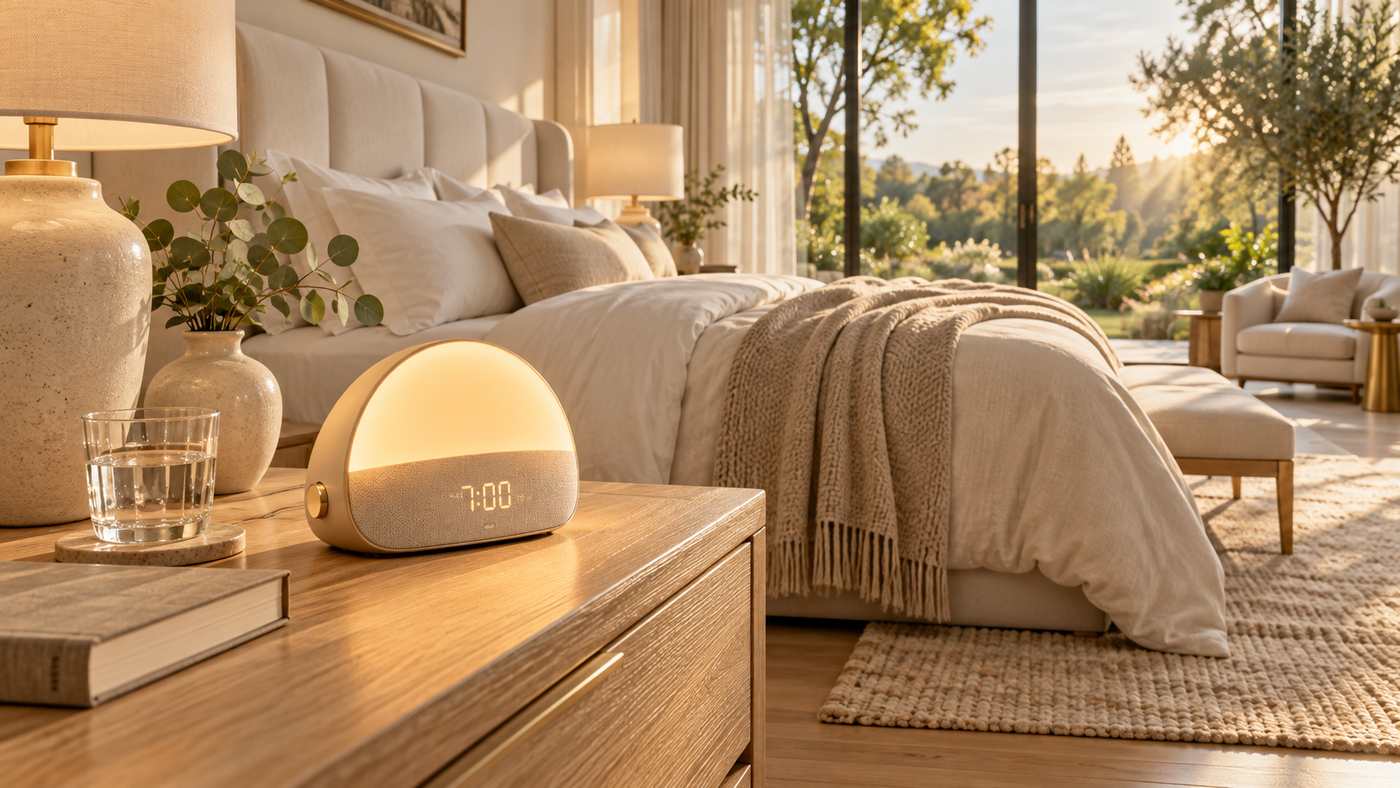
Sunrise Alarm Clock
A sunrise alarm gradually increases light output before the selected wake-up time.
The intention is to create a more gradual transition toward waking.
Some models combine light with a gentle sound.
This approach may appeal to people who dislike abrupt alarm tones or wake before natural sunrise.
However, research has not established that every sunrise device improves sleep quality or morning alertness for every person.
Individual results depend on the device, timing, light exposure and sleep habits.
Smart Alarm Clock
A smart clock may include wireless connectivity, application-based settings, voice controls or compatibility with other devices.
Certain models support customised routines involving lighting and other smart home functions.
These features can be convenient, but they may also introduce setup requirements and software dependencies.
Buyers should consider whether they actually need the connectivity.
Vibrating Alarm Clock
Vibrating alarms use movement or tactile signals rather than relying exclusively on sound.
Some are designed to be placed beneath a pillow or mattress.
They can be useful for certain heavy sleepers or people who cannot reliably hear ordinary alarm tones.
However, performance varies according to the vibration strength, placement and individual sensitivity.
Travel Alarm Clock
Travel clocks are typically designed to be compact and portable.
They may feature battery operation, folding designs and simple controls.
They can be useful when travelling between hotels or locations where access to electrical outlets is uncertain.
A travel clock should be easy to set and dependable during transportation.
7 Essential Tips for Choosing the Right Alarm Clock
A suitable clock should match the user’s practical needs rather than simply offer the largest number of features.
The following seven strategies can help buyers make an informed decision.
1. Choose an Alarm Clock That Matches Your Sleeping Habits
People have different sleeping patterns and wake-up preferences.
Some wake easily after a gentle sound.
Others may sleep through ordinary alarm tones, particularly when they are sleep-deprived.
The first step is understanding how reliably you respond to your current alarm.
Consider How Easily You Wake Up
If a standard audible alarm works consistently, a straightforward digital or analog model may be sufficient.
Someone who regularly misses alarms may benefit from adjustable volume, vibration or another appropriate alert method.
However, repeatedly sleeping through alarms can sometimes be associated with insufficient sleep or another sleep-related issue.
A more powerful alarm should not be treated as a substitute for adequate rest.
Evaluate Your Work Schedule
A person working conventional daytime hours may need one daily wake-up time.
Shift workers may need more flexible alarm scheduling.
Students may have different schedules on weekdays and weekends.
Some modern clocks support multiple stored alarm times.
Before purchasing, confirm whether the device provides the scheduling options you need.
Think About Your Bedroom Environment
A quiet bedroom may make even a moderate alarm sound noticeable.
A shared bedroom may require a more discreet alert.
For example, vibration can sometimes provide an alternative to a loud alarm that disturbs another person.
However, a vibrating device should be tested to establish whether it reliably wakes the intended user.
Avoid Assuming One Type Works for Everyone
There is no universally perfect alarm method.
A gentle sunrise alarm may be comfortable for one person but ineffective for another.
Similarly, a very loud buzzer may wake someone reliably while causing unnecessary disturbance.
The right choice balances reliability with comfort.
2. Look for Adjustable Sound and Wake-Up Options
The alarm signal is one of the most important features to evaluate.
Sound volume, tone, timing and repetition can influence the waking experience.
Adjustable Alarm Volume
A clock with adjustable volume allows users to select an appropriate sound level.
Some devices gradually increase volume instead of beginning at maximum intensity.
This may feel less abrupt for certain users.
However, the alarm must still be strong enough to wake the person reliably.
Choose a Suitable Alarm Tone
Different devices offer buzzers, bells, electronic sounds, radio audio or melodic tones.
Some people prefer a simple consistent signal.
Others find a melody more pleasant.
A 2020 systematic review of auditory approaches to sleep inertia found promising results for certain melodic sounds during ordinary waking, but the evidence was not sufficient to establish one universally superior alarm type.
Personal preference and reliability remain important.
Consider Multiple Alarm Methods
Some clocks combine sound, light and vibration.
A multimodal alarm may provide additional ways to attract attention.
However, combining signals does not automatically guarantee better alertness.
The effectiveness depends on the individual and the device’s implementation.
Test the Alarm Before Relying on It
After purchasing a clock, test its alarm volume and settings.
Ensure that the sound can be heard from your normal sleeping position.
This is particularly important before early flights, examinations or other time-sensitive commitments.
3. Select a Display That Supports Comfortable Nighttime Use
A bedside clock should make the time easy to see without creating unnecessary light disturbance.
Display quality matters both during the day and at night.
Adjustable Screen Brightness
Many digital clocks offer different brightness levels.
Some include automatic dimming features.
A dim display may be preferable in a dark bedroom.
The National Institutes of Health explains that exposure to bright artificial light late in the evening can affect the body’s normal sleep-related processes.
A very bright clock display is one potential source of unwanted nighttime light.
Consider Display Size
Large numbers may be useful for people who want to check the time from a distance.
However, a very large display is not necessary for everyone.
Choose a size that is easy to read from the bed.
Check Display Colour and Contrast
Some devices use amber, red, white or blue-toned lighting.
Perceived comfort depends on brightness, contrast, room conditions and individual sensitivity.
Avoid assuming that a particular display colour is automatically ideal in every situation.
Brightness control and placement are often more important than colour alone.
Analog Display Readability
Analog clocks may provide illuminated hands or subtle dial lighting.
These features can help users read the time in a dark room.
However, lighting should not be unnecessarily intrusive.
Placement Matters
A clock positioned directly in the line of sight may be more noticeable throughout the night.
Consider placing it where it remains accessible without dominating the sleeping environment.
The ideal arrangement depends on bedroom layout and user preference.
4. Consider Power Supply and Battery Backup Reliability
A clock is useful only when it keeps accurate time and activates the alarm as expected.
Power reliability is therefore an important purchasing consideration.
Mains-Powered Clocks
Many digital clocks operate through an electrical outlet or USB power connection.
These can be convenient for everyday bedside use.
However, a power outage may interrupt operation.
Some models require the user to reset the time after power is restored.
Battery-Powered Alarm Clocks
Battery-powered models can operate independently of an electrical outlet.
They are useful for travel, temporary accommodation and certain bedroom arrangements.
However, batteries must be replaced or recharged as needed.
Low battery power may affect display brightness or alarm reliability.
Battery Backup Systems
Some mains-powered clocks include backup batteries.
However, backup functionality varies.
One model may preserve the clock settings during an outage without activating the display or alarm.
Another may continue operating the alarm.
Read the manufacturer’s specifications carefully.
Do not assume that the presence of a backup battery guarantees full functionality during a power failure.
Automatic Time Adjustment
Certain devices can synchronise time through radio signals, internet connectivity or other supported mechanisms.
This may reduce manual adjustment.
However, automatic synchronisation depends on the device and the availability of the relevant signal or service.
Check Daylight Saving Time Settings
In US locations observing daylight saving time, clocks may need to change at seasonal transitions.
Some devices adjust automatically.
Others require manual changes.
Incorrect settings can cause missed appointments.
Review the clock’s time and alarm after relevant time changes.
5. Decide Whether Smart Features Are Worth the Cost
Modern clocks may include smartphone connectivity, voice assistants and integration with home automation systems.
These capabilities can be useful, but they also introduce complexity.
Smart Home Integration
A compatible clock may control selected smart lights or interact with other connected devices.
For example, a scheduled routine may turn on bedroom lighting at a set time.
However, features depend on supported hardware, software and network connections.
Compatibility should be verified before purchasing.
Smartphone Application Controls
Some clocks allow users to adjust alarm settings through an application.
This can be helpful when configuring multiple schedules.
However, users who prefer simple controls may find app-based setup unnecessary.
Voice Assistant Functions
Certain clocks support voice commands.
These can provide hands-free interaction.
However, connected microphones and cloud-based services raise privacy considerations.
Review the manufacturer’s privacy policy and available microphone controls.
Internet Connectivity and Outages
A smart clock may rely on connectivity for certain features.
Find out which functions continue working when Wi-Fi is unavailable.
The ability to sound a basic alarm should be confirmed independently.
Evaluate Software Support
Connected products may receive firmware updates and application changes.
Before buying, consider the manufacturer’s support history and product compatibility.
A connected device may become less useful if essential software services are discontinued.
Choose Simplicity When Appropriate
Someone who only needs an accurate time display and reliable morning alarm may not benefit from advanced connectivity.
A basic standalone clock can be a sensible option.
Buy technology that supports your routine rather than complicating it.
6. Understand Snooze Functions and Morning Alertness
The snooze button is one of the most familiar features of modern alarm clocks.
It temporarily stops an alarm and schedules another alert after a short interval.
Some people find this helpful.
Others experience repeated interruptions that make waking feel more difficult.
What Is Sleep Inertia?
Sleep inertia describes the period of grogginess and reduced alertness that can occur immediately after waking.
It may affect attention, reaction time and certain cognitive tasks.
The degree of impairment varies according to sleep timing, previous sleep duration and other factors.
Sleep inertia should be considered particularly carefully when someone must perform safety-critical tasks soon after waking.
Does Snoozing Make You More Tired?
Research has produced mixed results.
A 2022 study reported that repeated snooze alarms prolonged certain aspects of sleep inertia in a small laboratory sample.
However, a separate study published in the Journal of Sleep Research in 2023 found that a short snoozing period improved or did not impair certain cognitive measures among habitual snoozers.
These results suggest that snoozing does not have one identical effect on everyone.
Study conditions and individual habits matter.
Use Snooze Deliberately
If you use a snooze function, consider whether it actually helps you wake comfortably and on time.
Repeatedly postponing an alarm may reduce the available time for morning activities.
Someone who frequently feels exhausted despite sufficient time in bed may need to review their sleeping habits rather than simply change the snooze interval.
Try a Consistent Final Wake-Up Time
Some people find it useful to set the alarm for the time they genuinely intend to get up.
Others prefer a brief transition period.
The practical objective is to maintain a reliable schedule without routinely sacrificing needed sleep.
Do Not Confuse Alarm Features With Medical Treatment
Severe difficulty waking, persistent daytime sleepiness, loud snoring or other significant symptoms may warrant evaluation by a healthcare professional.
An alarm clock cannot diagnose or treat a sleep disorder.
7. Choose the Right Design, Durability, and Everyday Features
A clock should fit comfortably into the bedroom while remaining easy to operate.
Physical design affects usability, maintenance and long-term satisfaction.
Consider the Bedside Table
A compact clock may be more suitable for a small nightstand.
Larger sunrise models can occupy more space.
Check the dimensions before purchasing.
Leave enough room for safe cable placement and other bedside essentials.
Evaluate Button Placement
Controls should be easy to identify and operate.
A clock with tiny buttons or a complicated menu may be frustrating when adjusting alarms.
Consider whether the main alarm and snooze controls are clearly distinguishable.
Choose Suitable Materials
Alarm clocks are available in plastic, metal, wood-inspired and other finishes.
Material quality can influence appearance and durability.
However, appearance alone does not establish electronic reliability.
Consider Cleaning and Maintenance
A simple design may be easier to clean.
Follow the manufacturer’s recommendations for display surfaces and electronic components.
Avoid exposing devices to moisture beyond their stated limits.
Review Warranty and Support
Warranty terms differ between manufacturers.
Before purchasing, check the coverage period, exclusions and procedures for defective products.
Also consider availability of replacement power adapters or other necessary accessories.
Focus on Practical Value
A visually impressive clock is not necessarily the best choice.
Evaluate how consistently the device performs the functions you need.
Reliability, comfort and ease of use usually matter more than decorative extras.
Alarm Clock vs. Smartphone Alarm: Which Is Better?
Many people use their smartphones to wake up because a phone already provides an alarm function.
However, dedicated clocks offer different advantages.
Advantages of a Smartphone Alarm
A smartphone can store multiple alarms and provide different sounds.
It may support reminders, calendar notifications and scheduling applications.
Users do not need to buy a separate clock.
However, operation depends on the device’s settings, battery, speaker and software.
Advantages of a Dedicated Alarm Clock
A standalone device can provide a visible time display without notifications or social media applications.
Some models offer specialised wake-up features such as gradual lighting or powerful vibration.
A separate clock may also make it easier to keep a smartphone away from the bedside.
Which Option Is More Reliable?
Reliability depends on the individual devices.
A smartphone with sufficient power and appropriate settings may provide dependable alarms.
A poorly configured dedicated clock can also fail to wake someone.
Review power arrangements, alarm volume and operating instructions.
Which Option Supports Better Sleep Habits?
A separate clock may help someone reduce late-night smartphone use.
However, simply removing a phone does not guarantee better sleep.
A consistent sleep schedule and appropriate sleeping environment remain important.
The right choice depends on the person’s behaviour and preferences.
How an Alarm Clock Can Support a Consistent Sleep Routine
An alarm helps establish a scheduled waking time.
However, healthy sleep depends on broader daily habits.
The clock should support the routine rather than compensate for chronic sleep loss.
Maintain Consistent Sleep and Wake Times
The Centers for Disease Control and Prevention advises adults to maintain regular sleeping and waking schedules.
Consistency can help support the body’s natural sleep-wake rhythm.
Large changes between weekdays and weekends may make mornings more difficult for some people.
Allow Enough Time for Sleep
The CDC recommends that most adults obtain at least seven hours of sleep each night.
Individual needs can vary.
A person consistently waking after too little sleep may remain tired regardless of the alarm type.
When planning a morning schedule, consider the time needed for sufficient sleep.
Get Appropriate Daytime Light Exposure
Natural daylight helps regulate the circadian system.
Morning light can provide an important timing signal.
The CDC recommends obtaining natural light during the day, especially earlier in the day.
However, exposure needs and timing may differ for shift workers and people with specific sleep disorders.
Create a Comfortable Bedroom
A suitable sleeping environment can support rest.
Common considerations include temperature, noise, bedding comfort and unwanted light.
An alarm clock should not create excessive brightness or distraction during the night.
Develop a Predictable Evening Routine
A consistent wind-down period may help someone prepare for sleep.
Reducing unnecessary distractions and allowing sufficient time for rest can support the following morning.
The alarm should be part of an organised routine, not the only part.
Choosing an Alarm Clock for Different Users
Different households and lifestyles may require different wake-up arrangements.
Alarm Clock for Heavy Sleepers
A heavy sleeper may prefer adjustable high-volume alerts or a vibrating device.
However, very loud alarms should be used thoughtfully to avoid unnecessary disturbance.
If someone repeatedly fails to wake despite adequate sleep opportunity, further evaluation may be useful.
Alarm Clock for Students
Students may benefit from a straightforward clock with easy-to-set alarms.
A separate bedside device can help keep a phone away from the sleeping area.
Multiple alarm settings may be useful for varying schedules.
Alarm Clock for Office Workers
People with regular work schedules may prefer a dependable device with clear controls and a consistent daily alarm.
A dual-alarm option may help households with different starting times.
Alarm Clock for Older Adults
An easily readable display and accessible controls may be useful.
Some individuals may benefit from stronger volume, vibration or other alert options depending on hearing and vision.
The correct device should reflect the person’s actual abilities and preferences.
Alarm Clock for Shift Workers
Shift workers may sleep during daylight hours and wake at unusual times.
A flexible alarm schedule and suitable blackout arrangements may be important.
However, circadian challenges associated with shift work cannot be solved by alarm technology alone.
Alarm Clock for Frequent Travellers
Travellers may value compact dimensions, battery operation and easy time adjustment.
Consider time-zone changes and power compatibility.
Check the alarm settings after arriving at a new destination.
Alarm Clock for Shared Bedrooms
A shared sleeping environment may require consideration of different schedules.
Vibration or a lower-volume alarm may help reduce disturbance.
However, any discreet alarm must still wake the intended person reliably.
What Features Should a Modern Alarm Clock Have?
A reliable device does not need every available feature.
However, certain functions are worth reviewing.
Easy Time Adjustment
The clock should allow users to set the time without unnecessary difficulty.
Adjustable Alarm Settings
Users may benefit from selecting the desired wake-up time, alarm tone and volume.
Clear Display
The time should be legible from the intended viewing distance.
Nighttime Dimming
A dimming feature can reduce unwanted brightness.
Power Reliability
A backup power option may be useful, particularly in areas experiencing occasional outages.
Convenient Alarm Controls
Turning off or adjusting an alarm should be straightforward.
Suitable Physical Design
The clock should fit safely in the available space and be practical for everyday use.
These features may provide greater value than complex functions that rarely get used.
Are Sunrise Alarm Clocks Better Than Traditional Alarms?
Sunrise alarm clocks are increasingly discussed as an alternative to abrupt audible alarms.
They are designed to increase light gradually before the selected wake-up time.
Some people find the experience more comfortable.
However, the research should be interpreted carefully.
How Sunrise Simulation Works
A typical sunrise device begins with relatively low light output.
Brightness increases over a selected period.
The clock may then activate an audible alarm at the intended wake-up time.
This creates a combination of visual and auditory cues.
Potential Advantages
A gradual light signal may appeal to people who prefer a less abrupt transition.
It may be useful during dark winter mornings or in bedrooms with limited natural morning light.
However, the experience depends on device brightness, placement, timing and individual responsiveness.
Limitations of Current Evidence
A 2024 study examined a multimodal bedroom alarm system combining light, sound and temperature adjustments.
The findings contribute to research on reducing sleep inertia, but they do not establish that every commercial sunrise alarm produces the same benefits.
Research on waking interventions remains limited and context-dependent.
Should You Buy a Sunrise Model?
Consider one if you prefer gradual light-based waking and its additional cost fits your budget.
Check whether it includes a reliable audible backup.
Do not assume it will replace adequate sleep or medical evaluation for persistent sleepiness.
How to Set Up an Alarm Clock Correctly
Proper setup is important even with a high-quality device.
Choose a Stable Location
Place the clock on a suitable bedside surface.
Avoid positioning it where it can easily fall or become damaged.
Check the Power Connection
Confirm that the device is connected correctly or has sufficient battery power.
Where backup batteries are supported, follow the manufacturer’s instructions.
Set the Correct Time
Verify the time format, including AM and PM if the clock uses a 12-hour display.
Check the time-zone or daylight saving settings where relevant.
Choose the Alarm Time
Set the actual time you intend to wake.
Consider the amount of time required for morning activities.
Adjust the Alarm Signal
Select a suitable volume, tone, vibration or light setting.
Test the Alarm
Run a test before relying on the device for an important appointment.
Review Settings After Changes
Power interruptions, travel and clock adjustments may affect stored settings.
Check the device when circumstances change.
Common Alarm Clock Mistakes to Avoid
A clock can be reliable while still being used incorrectly.
Setting the Wrong AM or PM Time
This is a common problem with 12-hour displays.
Always verify the selected period.
Using an Alarm That Is Too Quiet
The sound must be noticeable from the normal sleeping position.
Making the Display Too Bright
An unnecessarily bright screen may create nighttime distraction.
Ignoring Battery Levels
Low batteries can affect some alarm devices.
Follow the manufacturer’s replacement or charging guidance.
Relying on Features You Have Not Tested
Do not assume that a new smart routine, power backup or vibration feature works as expected.
Test it in advance.
Setting Too Many Alarms
Multiple alarms can sometimes provide reassurance, but they may also create unnecessary interruptions.
Choose a practical approach that supports reliable waking.
Regularly Sacrificing Sleep
An alarm cannot replace sufficient rest.
A schedule that repeatedly requires waking after very little sleep may create ongoing fatigue.
How Much Does an Alarm Clock Cost?
Prices vary according to design, technology, build quality and features.
A basic analog clock generally has different manufacturing requirements from a sophisticated smart sunrise model.
Basic Alarm Clocks
Simple analog or digital devices may offer essential timekeeping and alarm functions without extensive connectivity.
These can be suitable for people who value straightforward operation.
Mid-Range Digital Models
Mid-range clocks may add adjustable brightness, multiple alarms, charging ports and improved display options.
Their value depends on the quality of the included features.
Premium Sunrise and Smart Clocks
More advanced devices may include gradual lighting, application controls, audio options and smart home integration.
However, higher prices do not automatically guarantee greater reliability.
Before buying, compare practical features, build quality, customer support and warranty coverage.
The Future of Alarm Clock Technology
Alarm devices continue to develop as manufacturers combine timekeeping with connected home technology.
However, the core purpose remains dependable wake-up notification.
More Personalised Wake-Up Options
Future products may offer increasingly flexible combinations of sound, light and vibration.
The value of these features will depend on reliable implementation and user preferences.
Improved Smart Home Integration
Connected clocks may work with compatible lighting, speakers and other devices.
However, compatibility and privacy will remain important considerations.
More Attention to Accessibility
Designers can improve products through readable displays, tactile controls, audible settings and alternative alert methods.
Accessible technology should respond to a range of user needs.
Better Power Management
Efficient electronics and appropriate backup arrangements can improve everyday convenience.
However, performance depends on the actual hardware and design.
Greater Focus on Simplicity
Not every innovation needs to add another application or connected service.
Easy operation and dependable alarms will remain important, especially for users who prefer minimal technology.
How to Choose the Best Alarm Clock for Your Bedroom
The best device is one that reliably wakes you while fitting your lifestyle and sleeping environment.
Start by considering whether you prefer sound, light, vibration or a combination.
Check the display brightness, control layout, power source and alarm scheduling.
If you share a bedroom, think about how your alarm affects others.
If you travel frequently, portability may matter.
If you prefer to keep smartphones away from your bed, a simple standalone clock may provide everything you need.
For people interested in connected technology, smart features may be useful, but they should be evaluated alongside privacy, compatibility and ongoing support.
Avoid purchasing a complex device simply because it offers more functions.
A dependable alarm clock should be straightforward to use, suitable for your needs and easy to maintain.
Ultimately, the goal is not to own the most advanced clock.
It is to establish a reliable wake-up routine that complements sufficient sleep and everyday responsibilities.
Frequently Asked Questions
1. What is an Alarm Clock used for?
An Alarm Clock alerts users at a selected time using sound, light or vibration. It helps people wake up for work, school, travel and other scheduled activities.
2. Which type of Alarm Clock is best for heavy sleepers?
Some heavy sleepers may benefit from adjustable high-volume or vibrating alarms. The right device depends on individual responsiveness and sleeping habits.
3. Is a digital Alarm Clock better than an analog clock?
Digital clocks often offer more features, while analog clocks may provide simpler operation. Neither is universally better; the choice depends on user preferences.
4. Do sunrise alarm clocks improve sleep quality?
Sunrise clocks may provide a more comfortable waking experience for some people, but evidence does not establish that all devices improve sleep quality.
5. Can an Alarm Clock work without electricity?
Battery-powered clocks can operate without mains electricity. Some plug-in models have battery backup, but the supported functions vary by device.
6. Is an Alarm Clock better than a smartphone alarm?
A dedicated clock can reduce reliance on a bedside smartphone and provide specialised wake-up features. However, reliability and usefulness depend on the individual device and routine.
Conclusion
Choosing the right Alarm Clock can help make daily wake-up routines more dependable, organised and comfortable. Digital, analog, sunrise and smart clocks offer different benefits, making it important to consider personal preferences, display settings, alarm volume and power reliability. A suitable device should be easy to operate and provide an alert that works consistently for the intended user. When combined with sufficient sleep and regular habits, a dependable alarm clock can become a practical part of a healthier morning routine