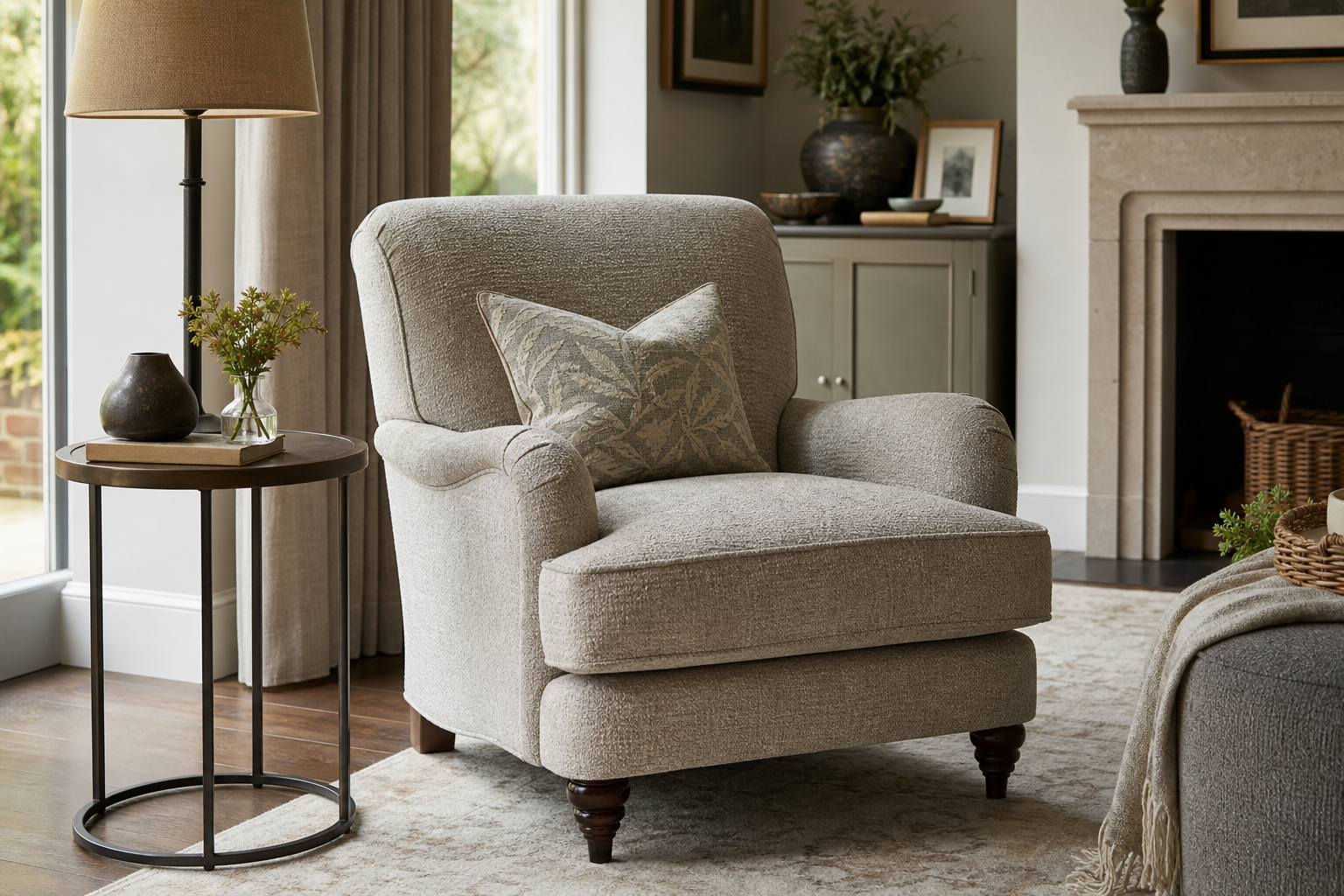
Fabric Arm chair: How to Choose Comfort, Style and the Right Fit
A Fabric Arm chair can completely change how a living space looks and feels by adding comfortable seating, visual warmth and a clear focal point. Whether it is placed beside a sofa, near a window, in a reading corner or within a bedroom, the right chair should combine comfort with practical dimensions and a style that complements the surrounding furniture. Choosing carefully matters because upholstery texture, seat depth, arm height, colour and overall proportions can all affect how well the chair works in everyday life.
Armchairs are also among the easiest pieces of furniture to introduce when a room needs additional seating without changing the entire furniture layout. A single chair can create a quiet reading area, balance a larger sofa or introduce a new colour and texture into an otherwise neutral room.
The following guide explains how to select a fabric armchair based on comfort, dimensions, upholstery, colour, placement and long term practicality.
What Is a Fabric Arm chair?
A Fabric Arm chair is an upholstered single seat chair designed with supportive arms and a padded seating area.
Unlike dining chairs or occasional stools, armchairs are generally designed for longer periods of sitting and relaxation. They may include deep cushioning, high backs, supportive side panels, reclining functions or more compact proportions depending on the intended use.
Fabric upholstery gives manufacturers and homeowners access to a broad variety of textures, colours and patterns.
Common materials may include:
- Woven fabric
- Chenille
- Velvet
- Suede style fabric
- Textured polyester blends
- Soft upholstery fabrics
Each material creates a slightly different appearance and feel.
A smooth weave can suit a clean contemporary room, while chenille or velvet can introduce more softness and visual depth.
Why Choose a Fabric Arm chair for Your Home?
Fabric seating remains popular because it works across many interior styles.
The material usually feels softer and warmer to the touch than harder surfaces, making it particularly suitable for relaxed spaces such as living rooms, bedrooms and reading corners.
A fabric chair can also be used either as a matching piece or as a deliberate contrast.
For example, a neutral sofa can be paired with a stronger coloured armchair to create an accent.
Alternatively, both pieces can use similar tones for a more coordinated appearance.
Comfortable Everyday Seating
Comfort is often the main reason people purchase an armchair.
A well proportioned chair can provide a dedicated place for reading, watching television, talking with family or simply relaxing.
Comfort depends on more than soft cushioning.
Seat height, seat depth, back support, arm position and the user’s own body proportions all contribute to how comfortable a chair feels.
A very deep seat may suit someone who likes to curl up, while a slightly shallower seat can make it easier to sit upright and stand again.
Flexible Interior Styling
A Fabric Arm chair can adapt to many different decorating styles.
It may suit:
- Modern interiors
- Traditional homes
- Minimalist spaces
- Scandinavian inspired rooms
- Contemporary living rooms
- Cosy country interiors
- Luxury inspired bedrooms
- Reading areas
Much of the final appearance depends on the shape of the frame and the upholstery selected.
Rounded arms can create a softer traditional look, while narrow arms and straight lines often feel more contemporary.
7 Brilliant Ways to Choose the Right Fabric Arm chair
Choosing a chair based only on colour can lead to disappointment if it does not fit properly or feel comfortable.
A better approach is to evaluate the chair as part of the entire room.
1. Measure the Available Space First
Measurements should come before style decisions.
Start by measuring the area where the chair will be positioned.
Record the available width, depth and nearby walking space.
Consider doors, radiators, windows, side tables and other furniture.
The chair needs enough room to sit comfortably without making the room difficult to move around.
A large armchair may look attractive online but overwhelm a small living room.
Likewise, a very compact chair can look visually weak beside a large sectional sofa.
Proportion matters as much as physical fit.
Measure Doorways Before Buying a Fabric Arm chair
Do not measure only the final position.
The chair also has to enter the home.
Check:
- Front door width
- Hallway width
- Internal doorways
- Staircases
- Tight corners
- Lift dimensions where relevant
Furniture dimensions should be compared with the full access route before delivery.
This simple step can prevent a difficult situation on delivery day.
2. Think Carefully About Seat Comfort
Two chairs with similar dimensions can feel completely different.
Seat firmness has a major effect on comfort.
A soft seat creates a relaxed feel, while firmer cushioning may provide more structured support.
Neither option is automatically better.
The correct choice depends on how the chair will be used.
A reading chair may benefit from supportive cushioning and an upright back.
A chair used mainly for relaxed television viewing may suit a deeper seat and softer back cushions.
People who find standing difficult may prefer a seat that is not excessively low or deep.
3. Select the Right Upholstery
The fabric influences both appearance and maintenance.
A household with children or pets may prioritise practical upholstery.
A formal sitting room may place more emphasis on texture and visual impact.
Woven Fabric
Woven upholstery can provide a textured but understated finish.
It is versatile and works well in both modern and traditional rooms.
The visible weave can also add interest without requiring a bold colour.
Chenille
Chenille generally has a softer surface and a slightly richer appearance.
It works particularly well in rooms where comfort and warmth are important.
Its texture can make a plain coloured chair feel more visually interesting.
Velvet
Velvet offers a smoother and more luxurious appearance.
Light reflects differently across the surface, which can make the colour appear richer depending on the direction of the pile.
It can work especially well as an accent chair in a living room or bedroom.
Suede Style Fabric
Suede inspired upholstery can provide a soft tactile finish without creating the exact appearance of a standard woven fabric.
It may suit casual, contemporary and comfortable seating designs.
Always follow the manufacturer’s individual care instructions because cleaning recommendations can differ between materials.
4. Choose a Colour That Works With the Room
Colour can determine whether an armchair blends into a room or becomes its main focal point.
There are two basic approaches.
The first is coordination.
Choose a shade similar to the sofa, curtains, flooring or other major furniture.
This creates a calmer and more consistent interior.
The second is contrast.
Select a colour that deliberately stands apart from the rest of the furniture.
A contrasting chair can become an accent piece.
Grey Fabric Arm chairs
Grey is one of the easiest colours to incorporate into modern interiors.
Light grey can keep a room looking open and neutral, while charcoal provides greater contrast.
Grey also works with many accent colours, including blue, green, cream, mustard and natural wood tones.
Cream and Beige Armchairs
Cream and beige create a softer appearance.
They can work particularly well in rooms with natural materials, light woods and warm neutral colour schemes.
Lighter upholstery can make an armchair appear less visually heavy.
However, households expecting frequent spills or muddy pet contact may want to consider how practical very pale upholstery will be.
Brown and Caramel Fabric Chairs
Brown, caramel and earthy shades can add warmth.
These colours work naturally with timber furniture, cream walls and warm lighting.
They can also provide an alternative to grey for homeowners who want a neutral colour with more warmth.
How to Style a Fabric Arm chair in a Living Room
An armchair should look connected to the room rather than appearing randomly placed.
The surrounding furniture can help create that connection.
Place a side table within comfortable reach.
Add a floor lamp if the chair will be used for reading.
A cushion can introduce a colour already used elsewhere in the room.
A rug can help visually connect the chair to the sofa and coffee table.
Small details can make one chair feel like an intentional part of the entire furniture arrangement.
Create a Reading Corner
A quiet corner is one of the best locations for a comfortable armchair.
Position the chair near natural light where practical.
Add a lamp for evenings and a small table for books or drinks.
The area does not need to be large.
Even an unused corner can become functional when the furniture proportions are correct.
Pair the Chair With a Sofa
An armchair does not need to be identical to the sofa.
Different pieces can work together when they share one or two design elements.
These may include:
- Similar leg finishes
- Related colours
- Comparable fabric textures
- Matching cushion colours
- Similar shapes
For example, a grey sofa could be paired with a caramel armchair and cushions that repeat both shades.
This creates coordination without making the room look like a complete matching furniture set.
Fabric Arm chair vs Leather Armchair
Both materials can work well, but they create different experiences.
Fabric tends to offer more variation in colour and texture.
It can also create a softer visual appearance.
Leather often provides a smoother surface and a more structured aesthetic.
The correct choice depends on personal preference, budget, maintenance expectations and the rest of the room.
People who value a warm and tactile seating surface may naturally prefer fabric.
Those looking for a different finish may prefer leather or other materials.
Neither material is suitable for every household.
The important point is to evaluate the actual upholstery and construction rather than relying only on the general material category.
Fixed Fabric Arm chair or Recliner?
Another important decision is whether the chair should remain fixed or include a reclining function.
Fixed Armchairs
Fixed armchairs usually have a simpler structure.
They work well when the chair is mainly required for reading, conversation or occasional seating.
They can also be easier to position because they do not require additional space behind or in front for reclining movement.
Manual Recliners
Manual recliners allow the user to adjust the sitting position using a lever or body movement depending on the design.
They can provide greater relaxation without requiring electricity.
The chair still needs enough surrounding space for the footrest and reclining mechanism to operate.
Electric Recliners
Electric recliners use powered controls to change the seating position.
They may be useful for people who prefer easier adjustment.
However, they normally need access to a suitable power source.
Placement should therefore consider both movement clearance and cable management.
Choosing a Fabric Arm chair for a Small Room
Smaller living spaces require careful furniture selection.
Look for designs with narrower arms and a relatively compact frame.
Visible legs can sometimes make a chair appear lighter because more floor remains visible underneath.
Avoid selecting an oversized design simply because it looks comfortable in a large showroom image.
Measure the actual footprint.
Also consider whether another item of furniture will need to move.
A compact chair with supportive cushioning may provide better everyday comfort than a much larger chair that restricts movement around the room.
Choosing an Armchair for a Large Living Space
Large rooms offer greater flexibility but still need balance.
One small chair can look isolated in a very large seating area.
Consider using two armchairs opposite a sofa or placing one substantial chair beside a larger seating arrangement.
Large spaces can also support stronger colours, deeper seats and more substantial arm designs.
The aim is to create visual balance.
Furniture should feel connected rather than distributed randomly around the edges of the room.
How to Care for a Fabric Arm chair
Regular care can help upholstery continue looking presentable.
Always begin with the care instructions supplied with the specific chair.
Different fabrics can react differently to cleaning products and moisture.
Vacuum Regularly
Use an upholstery attachment to remove dust, crumbs and hair.
Pay attention to:
- Seat edges
- Cushion gaps
- Arm areas
- Back cushions
- Under removable cushions
Regular cleaning prevents loose dirt from building up.
Respond Quickly to Spills
When a spill occurs, deal with it promptly according to the fabric care instructions.
Blotting is generally safer than aggressive rubbing because rubbing can spread the liquid or affect the fabric surface.
Avoid applying random household cleaning chemicals without checking whether they are appropriate for the upholstery.
Protect the Chair From Strong Sunlight
Constant strong sunlight can affect many upholstery materials over time.
Where practical, avoid leaving the chair in intense direct sun for extended periods.
Curtains and blinds can help manage strong light during the brightest part of the day.
How to Make a Fabric Arm chair More Comfortable
Even a comfortable chair can be improved through thoughtful accessories.
A small lumbar cushion can provide additional lower back support.
A soft throw makes the chair feel warmer during colder months.
A footstool can support a more relaxed sitting position.
However, avoid adding so many cushions that the usable seat depth becomes too small.
Accessories should improve comfort rather than reduce it.
Matching Your Fabric Arm chair With Existing Furniture
Before choosing a new chair, identify the dominant features already present in the room.
Look at:
- Sofa colour
- Flooring
- Wall colour
- Curtains
- Wooden furniture
- Metal finishes
- Existing cushions
- Rugs
The new chair does not need to match everything.
It simply needs enough visual connection to feel intentional.
For example, a dark grey chair might repeat the grey found in a patterned rug.
A caramel chair could connect with warm timber furniture.
A cream chair could repeat the lighter shades used in curtains.
For shoppers comparing upholstery options, browsing a dedicated Fabric Arm chair collection can make it easier to compare different colours, textures and seating styles before deciding what suits the room.
Common Mistakes When Buying a Fabric Arm chair
A few common mistakes can make an otherwise attractive chair unsuitable.
Ignoring Measurements
The most frequent problem is choosing based on photographs rather than dimensions.
Always measure the room and access route.
Choosing Colour Without Considering Lighting
Colours can appear different depending on natural and artificial light.
A dark grey may look almost black in a poorly lit corner, while a light neutral may appear warmer under yellow lighting.
Consider where the chair will actually sit.
Focusing Only on Appearance
A chair can look excellent but still feel uncomfortable.
Seat depth, cushion support and arm height are important practical considerations.
Forgetting How the Chair Will Be Used
A decorative occasional chair has different requirements from a chair used every evening.
The more frequently the chair will be used, the more attention should be paid to comfort and practical upholstery.
Is a Fabric Arm chair Worth Buying?
A fabric armchair can be a valuable addition when a room needs more seating, greater comfort or a stronger sense of visual balance.
Its main advantage is flexibility.
One chair can work as a reading seat, occasional chair, television chair or decorative accent.
Fabric also offers a wide choice of colours and textures, making it easier to adapt the chair to an existing interior.
The best purchase is not necessarily the largest or most expensive chair.
It is the chair that fits the user, the room and the way the space is actually used.
Frequently Asked Questions
What is the best Fabric Arm chair for a living room?
The best option depends on available space, preferred seat depth, upholstery, comfort and existing furniture. Measure the room first and choose a chair that balances comfort with suitable proportions.
What colour Fabric Arm chair is easiest to style?
Grey, beige, cream and brown are versatile choices because they work with many interior colour schemes. A stronger colour can also work well when the chair is intended as an accent piece.
Is a fabric armchair comfortable for everyday use?
Yes, provided the seat depth, cushioning, back support and height suit the user. Comfort depends more on the complete chair design than upholstery alone.
How do I clean a Fabric Arm chair?
Vacuum the upholstery regularly and follow the manufacturer’s cleaning instructions for stains or spills. Avoid using harsh cleaners unless they are specifically suitable for the fabric.
Should an armchair match the sofa?
No. An armchair can either coordinate with the sofa or provide contrast. Repeating one colour, texture or design detail elsewhere in the room can help different furniture pieces feel connected.
Where should I place a Fabric Arm chair?
Common locations include beside a sofa, near a window, in a reading corner or within a bedroom. Allow enough surrounding space for comfortable movement and any reclining mechanism.
Conclusion
A Fabric Arm chair can bring comfort, practical seating and visual character to almost any living space. Choosing the right option requires more than selecting an attractive colour, because dimensions, upholstery, cushioning and placement all affect everyday use. By measuring carefully and considering how the chair will function within the room, homeowners can choose seating that remains comfortable, attractive and useful for years.