Food Processing: 7 Powerful Strategies to Improve Food Safety, Product Quality, and Manufacturing Efficiency
The global food industry depends on reliable systems that transform agricultural ingredients into safe, convenient, and market-ready products. From cleaning fresh vegetables and pasteurising milk to preparing frozen meals and packaging ready-to-eat foods, food processing plays an essential role in modern food manufacturing. Well-designed processing operations help businesses manage food safety hazards, maintain consistent quality, reduce avoidable waste, and distribute products efficiently to retailers, restaurants, and consumers.
Modern food production involves far more than operating machinery on a factory floor. Manufacturers must coordinate ingredient sourcing, sanitation, equipment maintenance, processing conditions, quality assurance, packaging, and distribution.
Every stage can influence the safety and performance of the finished product.
For example, inadequate cleaning can create contamination risks, incorrect temperature controls may allow harmful microorganisms to survive or grow, and poor packaging can expose otherwise acceptable food to damage or deterioration.
As consumer expectations and supply chain requirements develop, food manufacturers are increasingly exploring automated machinery, digital monitoring systems, improved packaging technologies, and more comprehensive traceability.
However, new technology does not automatically guarantee safer products.
Successful operations require validated processes, trained employees, accurate records, and management systems appropriate for the particular food being produced.
In the United States, relevant requirements may fall under the Food and Drug Administration, the U.S. Department of Agriculture’s Food Safety and Inspection Service, or other regulatory authorities.
Understanding how these responsibilities interact can help manufacturers make better operational decisions.
This guide explores seven essential strategies for improving food processing, explains important food manufacturing technologies, and highlights practical approaches to creating safer and more efficient production systems.
What Is Food Processing?
Food processing refers to activities that transform, prepare, preserve, package, or otherwise modify food and food ingredients for consumption or further manufacturing.
These activities can be relatively simple or highly technical.
Washing vegetables, milling grain, freezing fruit, fermenting yoghurt, cooking prepared meals, and packaging food products are all examples of processing activities.
The methods used depend on the raw ingredients, desired characteristics, food safety requirements, and intended distribution conditions.
How Does Food Processing Work?
A typical food manufacturing operation begins with receiving ingredients from approved or otherwise appropriately evaluated suppliers.
The facility checks relevant information about the materials before accepting them into its production process.
Ingredients may then undergo washing, sorting, cutting, mixing, heating, chilling, drying, or other processing steps.
Quality and safety controls are applied at appropriate stages.
The finished products are packaged, identified, stored, and distributed under conditions suitable for their particular characteristics.
However, not every food passes through the same sequence.
A frozen vegetable facility has different operational requirements from a bakery, beverage plant, or commercial meat processing establishment.
Why Is Food Processing Important?
Food processing can support food safety, preservation, availability, convenience, and product consistency.
For example, appropriately validated thermal processing can reduce relevant microbial hazards in certain products.
Freezing can help maintain food quality during suitable storage.
Drying removes moisture and can contribute to preservation when the process and final product conditions are properly controlled.
Processing also enables manufacturers to produce foods in standardised quantities and distribute them across extensive markets.
However, the advantages depend on the specific processing method and its correct application.
Food Processing and Food Manufacturing
Food processing describes the operations used to prepare or transform food.
Food manufacturing is a broader commercial concept involving the production of food products, including equipment, personnel, quality management, packaging, and business operations.
The two terms frequently overlap.
A food manufacturing company may operate several processing lines within one production facility.
7 Essential Strategies for Improving Food Processing Operations
A well-managed production facility must balance safety, product quality, operational efficiency, and regulatory compliance.
The following seven strategies address important areas that manufacturers should evaluate when planning or improving their processing operations.
1. Establish Strong Food Safety and Sanitation Controls
Food safety should be the foundation of every processing facility.
Food can become contaminated through microorganisms, unsuitable chemicals, foreign materials, or allergen cross-contact.
Appropriate preventive measures help reduce these risks.
Understand Current Good Manufacturing Practices
In the United States, the FDA’s Current Good Manufacturing Practices, commonly called CGMPs, establish important requirements for many food facilities.
For human food, the modernised CGMP framework is contained in 21 CFR Part 117.
These requirements address areas including employee hygiene, plant design, equipment, sanitary operations, and production controls.
The rules help establish suitable conditions for producing food.
However, some products and operations are also subject to specialised regulations.
Maintain Hygienic Facility Conditions
A suitable food production environment should support effective cleaning and controlled material movement.
Important considerations include hygienic flooring, appropriate drainage, sufficient lighting, pest prevention, and separation of incompatible activities.
Facility design should minimise opportunities for contaminants to enter finished products.
For example, raw ingredient handling should be arranged to reduce the risk of contaminating exposed ready-to-eat food.
The correct separation methods depend on the process and hazards involved.
Develop Documented Cleaning Procedures
Cleaning removes product residues and other unwanted materials from equipment and surfaces.
Sanitising, where required, reduces relevant microorganisms through an appropriate treatment.
These are different activities.
A surface may need to be cleaned before sanitising can work effectively.
Facilities should establish procedures describing cleaning methods, suitable chemicals, responsibilities, inspection, and appropriate verification.
Chemical concentrations and contact times must follow relevant instructions and safety requirements.
Train Employees in Hygienic Practices
Employees should understand the food safety risks associated with their work.
Training may cover personal hygiene, protective clothing, handwashing, equipment handling, allergen controls, and contamination prevention.
However, training alone is not sufficient.
Management should also establish workable procedures and verify that employees follow them.
Maintain Equipment and Facility Conditions
Damaged seals, corroded surfaces, worn machinery components, and poorly maintained equipment may create contamination risks.
Preventive maintenance can help identify such conditions before they affect production.
Maintenance work should also prevent contamination by tools, lubricants, or other materials.
A strong food processing operation treats sanitation and maintenance as routine operational responsibilities rather than occasional corrective tasks.
2. Apply HACCP and Risk-Based Preventive Controls
Food manufacturers should evaluate the hazards associated with their ingredients, processes, equipment, and finished products.
A structured food safety system helps identify where specific controls are necessary.
What Is HACCP?
Hazard Analysis and Critical Control Point, commonly called HACCP, is a systematic approach to food safety.
It involves identifying relevant hazards and establishing controls at appropriate stages of production.
A HACCP system considers potential biological, chemical, and physical hazards.
Examples can include pathogenic microorganisms, hazardous chemical contamination, and foreign materials.
The specific hazards differ according to the product.
Identify Hazards in the Production Process
A hazard analysis should evaluate raw materials, processing methods, equipment, storage conditions, and intended use.
For example, a facility producing refrigerated ready-to-eat food may need to evaluate hazards associated with contamination after a processing step.
A dry ingredient facility may have different concerns.
The analysis should be grounded in the actual manufacturing process.
Establish Appropriate Control Measures
Some hazards are controlled through prerequisite programmes, while others require specific preventive controls or critical control points.
Under a HACCP framework, critical control points are stages where control is essential to address identified hazards.
Examples may involve validated heating or other treatment steps.
However, a particular temperature or processing time should not be copied from another product without appropriate scientific support.
Validate Food Safety Controls
Validation provides evidence that a control measure is capable of addressing the intended hazard.
For example, a manufacturer may need scientific or technical evidence demonstrating that a processing treatment consistently achieves the required safety outcome.
Monitoring confirms whether established conditions are being met during production.
Verification evaluates whether the system is operating as intended.
These activities have different purposes.
Understand US Regulatory Differences
Many FDA-regulated food facilities are subject to requirements for hazard analysis and risk-based preventive controls under the Food Safety Modernization Act, subject to applicable exemptions and modified requirements.
USDA-FSIS-regulated meat, poultry, and certain egg products operations are subject to their own applicable HACCP frameworks.
Other product categories, including certain juice and seafood operations, have specialised requirements.
Manufacturers should identify the regulatory framework applicable to their products instead of assuming that one generic HACCP template satisfies every obligation.
Maintain Meaningful Records
A food safety system should produce records that demonstrate relevant monitoring, corrective actions, and verification.
Records should be accurate and accessible to authorised personnel.
Digital systems can assist with documentation, but they must be configured correctly.
The goal is not simply to collect data.
It is to use reliable information to support control of actual food safety hazards.
3. Invest in Hygienic Food Processing Equipment and Automation
Equipment selection can affect productivity, employee safety, food quality, sanitation, and operating expenses.
Modern production lines may combine manual activities with automated systems.
The appropriate level of automation depends on the size and complexity of the business.
Common Types of Food Processing Equipment
Manufacturers use different machines according to the products being prepared.
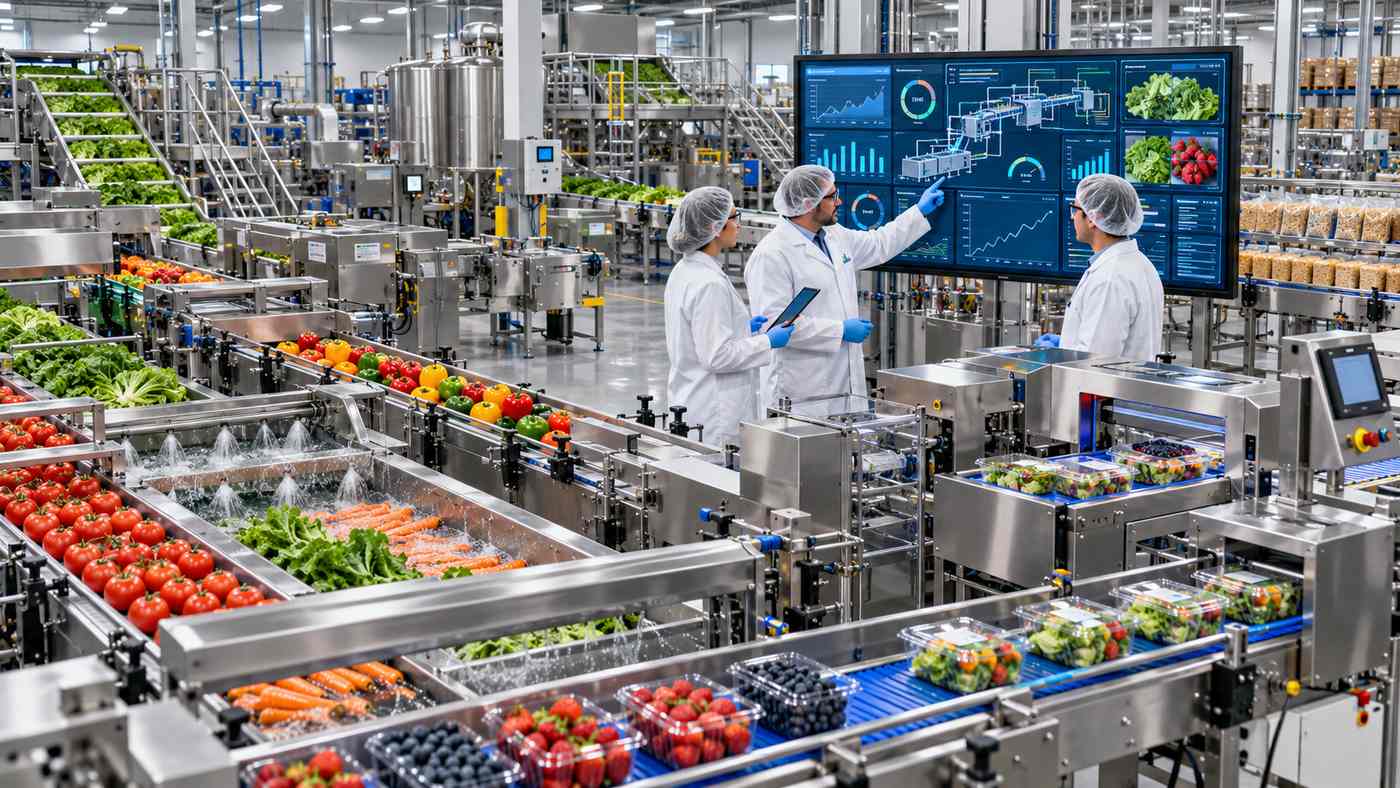
Common equipment categories include washing and grading systems, slicing machines, mixers, blenders, industrial ovens, heat exchangers, filling systems, conveyors, packaging machines, and inspection equipment.
Each machine performs a particular function.
Equipment should be selected according to product characteristics and processing requirements.
Hygienic Equipment Design
Food-contact equipment should be constructed from materials appropriate for its intended use.
Many applications rely on suitable grades of stainless steel.
However, stainless steel alone does not guarantee hygienic design.
The geometry of the equipment, accessibility for cleaning, surface finish, seals, and the ability to prevent residue accumulation all matter.
Dead spaces and difficult-to-clean components can create operational problems.
Automated Ingredient Handling
Automation can help facilities move and measure ingredients consistently.
For example, an automated dosing system may deliver predetermined quantities of dry or liquid ingredients.
This can support repeatable recipes and reduce some manual handling tasks.
However, calibration and validation remain necessary.
Incorrectly configured automation can produce repeated errors at high volume.
Automated Sorting and Inspection
Optical sorting equipment can identify products according to selected visual characteristics.
Some systems help separate foreign materials or unsuitable ingredients.
Metal detection and X-ray inspection technologies may also be used at appropriate stages.
However, detection capabilities depend on the material, product characteristics, equipment configuration, and validation.
No inspection technology detects every possible contaminant.
Production Line Integration
A food processing line works most effectively when individual machines operate as a coordinated system.
If one piece of equipment processes material faster than the next stage can accept it, bottlenecks may develop.
Material accumulation can affect throughput and, in some situations, food safety.
Manufacturers should evaluate line capacity, product transfer, sanitation access, and downtime together.
Preventive Maintenance and Calibration
Automated production systems require ongoing maintenance.
Sensors, temperature instruments, weighing equipment, and inspection systems may need calibration or performance checks.
A dependable maintenance programme can reduce unexpected failures.
The relevant records can also support quality investigations.
Automation Should Support Skilled Workers
Technology can reduce repetitive tasks and improve process visibility.
However, qualified employees remain necessary to manage exceptions, investigate alarms, verify results, and maintain equipment.
The most useful automation enhances well-designed operational processes rather than replacing safety management responsibilities.
4. Improve Allergen Management and Product Labelling
Food allergens require careful attention because unintended exposure can cause serious reactions in sensitive consumers.
Manufacturers must control ingredients, production changes, packaging, and labels appropriately.
Understand the Nine Major US Food Allergens
The FDA identifies nine major food allergens under US federal law:
- Milk
- Eggs
- Fish
- Crustacean shellfish
- Tree nuts
- Peanuts
- Wheat
- Soybeans
- Sesame
Sesame became the ninth major allergen requiring relevant labelling on January 1, 2023.
Manufacturers should also evaluate other allergen-related hazards relevant to their products and customers.
Prevent Allergen Cross-Contact
Cross-contact can occur when an allergen unintentionally transfers from one food or surface to another.
For example, shared equipment may present risks when switching between products containing different ingredients.
Suitable controls may include production scheduling, validated cleaning methods, dedicated equipment, material segregation, and employee training.
The appropriate approach depends on the facility.
Control Ingredients and Recipes
A recipe change can affect allergen declarations.
Manufacturers should use a formal process for approving ingredients and updating relevant product information.
Supplier substitutions also deserve attention.
A replacement ingredient may have a different composition or allergen profile from the original material.
Verify Packaging and Labels
A correctly manufactured product can still create a serious consumer risk if it receives the wrong label.
Facilities should establish checks to confirm that the correct packaging is used for each product.
This may include barcode verification, packaging reconciliation, line clearance, or other suitable controls.
The design should account for how packaging changes occur during production.
Understand Advisory Statements
Statements such as “may contain” or “produced in a facility that also processes” are different from mandatory ingredient allergen declarations.
Under FDA guidance, such advisory statements are voluntary.
They should not be treated as a substitute for appropriate manufacturing controls or required labelling.
Review Label Information Carefully
Packaged food labels may need to include an ingredient list, Nutrition Facts information, allergen declarations, and other legally required details.
Requirements depend on the product and regulatory category.
A company producing USDA-regulated meat products may face different labelling procedures from one producing FDA-regulated packaged snacks.
Accurate labelling should be considered part of the overall food safety programme.
5. Select Appropriate Processing and Preservation Technologies
Food processing uses a wide range of techniques to prepare products and manage their shelf life.
Different technologies achieve different results.
A method suitable for one food may be ineffective or inappropriate for another.
Thermal Processing
Heat is used in numerous food processing operations.
Examples include cooking, blanching, pasteurisation, and commercial sterilisation.
Properly designed treatments can reduce specified microbial hazards or achieve other intended product characteristics.
However, treatment conditions depend on the food’s properties and safety objectives.
Manufacturers should use scientifically supported, validated processes rather than generic processing assumptions.
Pasteurisation
Pasteurisation uses controlled treatment conditions to address relevant microorganisms.
It is widely associated with milk and certain beverages.
The correct requirements depend on the product and processing method.
Pasteurisation is not identical to commercial sterilisation.
The two terms should not be used interchangeably.
Freezing and Refrigeration
Chilling and freezing can help manage food quality and microbial growth under appropriate conditions.
However, freezing does not reliably eliminate every harmful microorganism.
Some pathogens can survive frozen storage.
A frozen product may still require appropriate cooking or other handling before consumption.
Drying and Dehydration
Drying removes moisture from foods.
Reducing available water can inhibit the growth of certain microorganisms when the final product characteristics and storage conditions are suitable.
However, removing water does not automatically destroy pathogens or eliminate every hazard.
Product design should account for water activity, processing conditions, and shelf-life requirements.
Fermentation
Fermentation uses microorganisms or their activities to produce specific food characteristics.
It is involved in products such as yoghurt, certain cheeses, and fermented vegetables.
The safety of fermented foods depends on suitable ingredients, microbial cultures, processing conditions, and controls.
Uncontrolled fermentation should not be assumed safe simply because it is described as natural.
High-Pressure Processing
High-pressure processing, or HPP, applies very high pressure to suitable food products.
It can reduce certain vegetative pathogens under validated conditions.
Some manufacturers use it for selected refrigerated foods and beverages.
However, HPP does not necessarily inactivate bacterial spores or make every product shelf-stable.
Its effectiveness depends on product composition, pressure, treatment time, temperature, and other factors.
Choosing the Right Preservation Method
A manufacturer should consider the desired shelf life, product composition, packaging, storage temperature, target hazards, and consumer expectations.
Sometimes a combination of processing methods is appropriate.
The final product must be evaluated under its intended storage and distribution conditions.
A successful food processing method should achieve its safety and quality objectives without relying on unverified performance claims.
6. Optimise Food Packaging, Storage, and Cold Chain Management
Packaging and storage affect product protection after the main processing steps have been completed.
A food that is safely processed can become unsuitable for sale if it is contaminated during packaging or stored incorrectly.
Choose Appropriate Packaging Materials
Food packaging can serve several purposes.
It may protect the product against external contamination, reduce physical damage, support identification, and help maintain suitable product conditions.
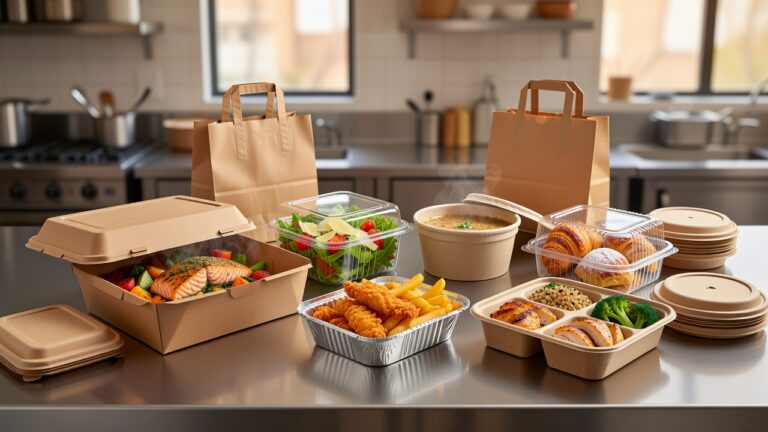
Common packaging formats include containers, pouches, trays, films, cartons, and bottles.
The correct material depends on the food.
Manufacturers should use materials suitable for the intended food-contact application.
Understand Modified Atmosphere Packaging
Modified atmosphere packaging changes the gas composition surrounding a food within the package.
It may be used to support product quality or shelf life under appropriate conditions.
However, modified atmosphere packaging is not a universal food safety treatment.
Certain products may still require strict refrigeration and other controls.
The package design must be appropriate for the product’s hazards.
Evaluate Packaging Integrity
Packaging seals should perform reliably under the intended handling and distribution conditions.
Weak seals, punctures, and improper closures may compromise product protection.
Suitable inspections and validation can help evaluate sealing performance.
The necessary methods depend on the packaging format.
Maintain Appropriate Storage Conditions
Different foods require different storage environments.
Some are shelf-stable under suitable conditions, while others require refrigeration or freezing.
Manufacturers must understand the product’s temperature and storage requirements.
It is not enough to label a product refrigerated without ensuring the supply chain can maintain suitable conditions.
Cold Chain Monitoring
Cold chain management involves maintaining appropriate temperature conditions throughout relevant stages of storage and distribution.
Digital monitoring systems may record temperature data in warehouses, vehicles, and other environments.
However, data collection must be supported by procedures for responding to deviations.
A temperature alarm is only useful when employees understand how to assess and manage the affected products.
Reduce Packaging Waste Responsibly
Manufacturers may seek to reduce packaging weight or use different materials.
However, changes should be evaluated for product protection, compatibility, safety, and regulatory compliance.
A lighter package that fails during transport may increase overall food waste.
Packaging sustainability should therefore be considered across the product’s life cycle.
7. Strengthen Food Traceability and Continuous Improvement
Traceability helps businesses identify where ingredients and products came from, how they were handled, and where they moved.
Accurate records can support quality investigations and product recalls.
What Is Food Traceability?
Food traceability involves maintaining information that connects products with relevant supply chain events.
Depending on the operation, records may identify suppliers, manufacturing batches, ingredients, processing dates, and distribution destinations.
This information helps companies investigate problems and identify affected products.
Understand Lot and Batch Identification
A production lot or batch allows manufacturers to associate products with particular manufacturing conditions.
The identification system should support the organisation’s actual operations.
Clear batch records can help determine which items may be affected when an issue is discovered.
The amount of detail needed depends on the product and regulatory requirements.
FDA Food Traceability Requirements
The FDA’s Food Traceability Rule establishes additional recordkeeping requirements for certain foods on the Food Traceability List.
Covered entities must maintain specified information associated with relevant critical tracking events and key data elements, subject to applicable exemptions.
The rule supports faster identification of affected foods during certain investigations.
As of October 2026, Congress has directed the FDA not to enforce the rule before July 20, 2028.
This does not remove other existing food safety or traceability obligations.
Businesses potentially affected by the rule should continue preparing suitable systems and reviewing official requirements.
Digital Batch Tracking
Modern production systems can link ingredient records with manufacturing batches and finished product information.
Barcode scanning, enterprise resource planning systems, and other software may help maintain these connections.
However, digital technology cannot compensate for inaccurate information entered at the source.
Staff should verify relevant data and establish procedures for correcting errors.
Prepare for Product Recalls
Food manufacturers should have appropriate procedures for investigating and managing potentially unsafe products.
A recall plan may identify responsibilities, communication methods, product identification procedures, and recordkeeping arrangements.
Simulated recall exercises can help test whether records are useful.
The objective is to identify and manage affected products effectively.
Monitor Production Performance
Manufacturers can track indicators relevant to operations.
Examples include product yield, equipment downtime, packaging rejection rates, maintenance activity, and process deviations.
These measurements should be interpreted carefully.
Increasing production speed is not a meaningful improvement if it compromises safety or quality.
Build a Continuous Improvement Culture
Employees should be encouraged to report equipment concerns, process problems, and opportunities for improvement.
Management can use verified data to identify recurring issues and prioritise corrective actions.
Small, well-supported improvements can contribute to stronger long-term performance.
Common Food Processing Methods Used in Modern Manufacturing
Different processing methods are selected for different product requirements.
Mechanical Processing
Mechanical operations include cutting, grinding, mixing, peeling, sorting, and forming.
These processes can change the physical characteristics of food without necessarily applying a preservation treatment.
For example, vegetable slicing equipment creates pieces of a selected size.
However, the operation still requires appropriate sanitation and contamination controls.
Thermal Processing
Thermal methods use controlled heating or cooling.
Examples include cooking, baking, pasteurisation, chilling, and freezing.
Each method has a different purpose and set of operating requirements.
Chemical and Biochemical Processing
Some food processes involve ingredients or biochemical reactions that change product properties.
Examples include selected fermentation processes and the use of approved food additives.
The safety and legal status of the materials and processes must be verified.
Separation Processes
Filtration, centrifugation, and other separation methods are used to remove or isolate specific components.
Applications vary across dairy, beverage, oil, and other food industries.
Equipment selection depends on the product’s physical characteristics.
Packaging Operations
Packaging operations fill, close, seal, label, and prepare food products for distribution.
They are an important part of the overall manufacturing process.
Packaging procedures must protect the product and ensure the correct information is applied.
Essential Equipment for a Modern Food Processing Plant
Food facilities use different machinery depending on their products and production capacities.
Washing and Cleaning Equipment
Industrial washing systems may remove soil and selected unwanted materials from incoming produce.
However, washing does not automatically eliminate every pathogen.
The process should follow appropriate water quality and sanitation requirements.
Sorting and Grading Machines
These systems separate materials according to selected criteria, such as size, colour, or other characteristics.
Automated sorting may support consistent processing.
However, the suitability of the equipment depends on the product.
Industrial Mixers and Blenders
Mixers combine ingredients to achieve a desired distribution or texture.
A manufacturer should verify that the equipment can deliver the required result at the intended production scale.
Cutting and Slicing Machinery
Cutting systems can prepare ingredients or portion finished products.
Blade condition, cleaning access, and foreign material prevention are important considerations.
Thermal Processing Equipment
Industrial ovens, kettles, cookers, heat exchangers, and similar systems apply controlled temperature treatments.
Safety-critical conditions must be appropriately established and monitored.
Filling and Packaging Machines
Automated packaging equipment can fill containers and close packages at controlled rates.
However, suitable checks are needed for fill accuracy, packaging integrity, and correct labels.
Inspection and Detection Systems
Metal detectors, X-ray inspection devices, checkweighers, and selected vision systems may support quality control.
Their performance limitations must be understood and validated for their intended purpose.
How Automation Is Transforming Food Processing
Automation can help manufacturers improve repeatability and production visibility.
However, its effectiveness depends on proper system design.
Automated Production Scheduling
Digital scheduling systems may help coordinate production orders, equipment availability, and material requirements.
This can reduce unnecessary changeovers when implemented appropriately.
Robotics in Food Manufacturing
Robotic systems may be used for selected handling, packing, and palletising tasks.
Their suitability depends on product shape, hygiene requirements, space, and required production speed.
Intelligent Inspection Systems
Camera-based systems may assist with identifying visible defects or incorrect packaging.
Some use machine learning to classify products.
However, performance must be evaluated using appropriate real-world production conditions.
Predictive Maintenance
Maintenance software may analyse machine conditions to identify patterns associated with potential failures.
This can support planned maintenance.
However, prediction accuracy depends on sensor quality, historical data, and equipment characteristics.
Digital Quality Documentation
Electronic records can improve information accessibility and consistency.
They may also support audits and investigations.
However, access controls, data accuracy, and retention responsibilities remain important.
Food Processing and the Importance of Quality Control
Food safety and quality are related but distinct concepts.
Food safety concerns hazards that may make food harmful.
Quality can include sensory attributes, consistency, appearance, texture, and other product specifications.
A food product can meet certain quality expectations while still presenting a safety hazard.
Similarly, a safe product may not meet the manufacturer’s intended quality standards.
Establish Product Specifications
Manufacturers should define suitable specifications for incoming ingredients and finished products.
Examples may include appearance, composition, weight, and relevant process-related characteristics.
Use Appropriate Testing
Testing may support verification of product specifications or selected safety controls.
However, testing alone cannot guarantee the safety of every unit produced.
Sampling has limitations.
Preventive controls remain essential.
Control Production Variability
Changes in ingredients, equipment settings, and handling can affect product consistency.
Documented specifications and calibrated equipment can help manage variability.
Investigate Nonconforming Products
When products fall outside established requirements, manufacturers should follow appropriate procedures.
These may involve evaluation, segregation, reprocessing where permitted, or disposal.
Product release decisions should be based on relevant evidence and applicable food safety requirements.
Sustainable Food Processing and Waste Reduction
Food manufacturers may improve resource efficiency by understanding where materials, water, and energy are used.
However, sustainability initiatives should preserve food safety and product quality.
Improve Raw Material Yield
Sorting and cutting processes can generate substantial by-products.
Some materials may have potential secondary uses when they are suitable and legally permitted.
However, reuse must not introduce unsafe materials into the food supply.
Reduce Water Waste
Water is used for cleaning, cooling, and selected processing activities.
Facilities may evaluate opportunities to reduce unnecessary consumption.
Changes to water use must still satisfy sanitation and process requirements.
Improve Energy Efficiency
Heating, cooling, ventilation, and refrigeration can represent significant operational expenses.
Suitable insulation, heat recovery, equipment maintenance, and process optimisation may reduce energy demand.
The financial benefit depends on the individual facility.
Minimise Packaging Losses
Improving machine setup and packaging inspection can reduce rejected materials.
However, packaging reduction should not compromise product protection.
Measure Before Making Changes
Resource efficiency projects should begin with reliable measurements.
Businesses can compare the operational results before and after improvements.
Claims of environmental benefits should be supported by meaningful evidence.
Challenges Facing the Food Processing Industry
Food manufacturers operate under a combination of technical, commercial, and regulatory pressures.
Supply Chain Uncertainty
Changes in ingredient availability can affect production planning.
Alternative sourcing may require additional evaluation of product characteristics and supplier controls.
Equipment Downtime
Unplanned breakdowns can interrupt production and create additional expenses.
Preventive maintenance can help manage certain risks.
Food Safety Compliance
Different products and facilities may fall under different regulatory requirements.
Companies need procedures appropriate to their actual operations.
Labour and Training Needs
Modern machinery requires suitably trained operators and maintenance personnel.
Automation does not remove the need for technical skills.
Product Quality Expectations
Consumers expect reliable food quality and accurate labels.
Manufacturers should maintain effective systems for identifying and responding to quality concerns.
Operational Costs
Energy, packaging materials, labour, logistics, and equipment can affect the cost of food production.
Efficiency projects should consider financial sustainability without compromising safety.
How to Choose the Right Food Processing Equipment
Businesses planning a new production line or equipment upgrade should assess their needs carefully.
Begin by defining the product and required output.
Determine the processing conditions, sanitation requirements, and relevant food safety hazards.
Compare equipment based on suitability rather than purchase price alone.
A machine that appears inexpensive may require substantial maintenance or difficult cleaning procedures.
Ask suppliers about the materials used in food-contact components, spare parts availability, installation requirements, and after-sales support.
Consider whether the equipment can be cleaned and inspected adequately.
Request demonstrations or trials using representative products when appropriate.
Also evaluate the space, utilities, staff training, and production line integration needed.
The most appropriate equipment is the one that consistently supports the required process under realistic operating conditions.
The Future of Food Processing Technology
Food processing technology continues to develop through improvements in automation, inspection, data management, and equipment design.
Manufacturers are exploring better ways to coordinate production while maintaining suitable control of product quality and safety.
Greater Use of Digital Monitoring
Sensors and software may provide more detailed information about processing conditions.
However, accurate measurement and appropriate interpretation remain essential.
More Connected Production Systems
Manufacturers may connect equipment information with inventory, quality records, and distribution systems.
Interoperability can reduce unnecessary manual work when systems are designed correctly.
Improved Hygienic Equipment Design
Equipment manufacturers continue to develop machinery that supports easier cleaning, maintenance, and inspection.
Suitable design can help reduce operational difficulties.
Advanced Preservation Techniques
Processing methods such as high-pressure treatment may continue to find applications where technically and economically suitable.
However, every method requires appropriate evaluation and validation.
More Detailed Supply Chain Records
Regulatory developments and commercial expectations are encouraging some businesses to improve traceability.
Reliable data can support investigations and recall management.
More Focus on Resource Efficiency
Water, energy, material yield, and packaging performance may become increasingly important operational measures.
Sustainable improvements should be evaluated using evidence rather than broad marketing claims.
How to Build a More Efficient Food Processing Operation
Improving a production facility begins with understanding the existing process.
Map the flow of ingredients from receiving through processing, packaging, storage, and dispatch.
Identify the relevant food safety hazards and controls.
Evaluate sanitation, equipment accessibility, staff responsibilities, and production bottlenecks.
Establish meaningful performance measures.
Then prioritise improvements according to their potential impact, cost, and practical feasibility.
Equipment upgrades may be useful, but some facilities can also benefit from better maintenance, clearer procedures, and stronger communication between production and quality teams.
A successful improvement plan should include validation where appropriate, employee training, and ongoing monitoring.
The objective is to create a production system that consistently delivers food meeting applicable safety requirements and defined quality expectations.
Frequently Asked Questions
1. What is food processing?
Food processing involves preparing, transforming, preserving, or packaging ingredients into food products. Common methods include washing, cutting, mixing, heating, freezing, drying, and fermentation.
2. What equipment is commonly used in food processing?
Typical equipment includes washing machines, sorting systems, mixers, slicers, industrial ovens, conveyors, heat exchangers, packaging machines, and quality inspection systems.
3. How does food processing improve food safety?
Appropriately designed processes can control specified hazards through validated treatments, hygienic handling, sanitation, temperature management, and preventive food safety systems.
4. What is HACCP in food processing?
HACCP stands for Hazard Analysis and Critical Control Point. It is a systematic method for identifying relevant food safety hazards and establishing appropriate controls during production.
5. How does automation help food processing companies?
Automation can support consistent ingredient handling, production monitoring, packaging, and inspection. However, reliable performance still requires maintenance, calibration, validation, and trained employees.
6. What is the future of food processing?
Future developments include improved hygienic machinery, connected production systems, advanced monitoring, digital traceability, selected preservation technologies, and more efficient use of manufacturing resources.
Conclusion
Food processing is essential to modern food manufacturing, supporting the preparation, preservation, and distribution of products across diverse markets. Reliable operations depend on hygienic equipment, validated safety controls, accurate labelling, suitable packaging, and effective traceability. Automation and digital technologies can improve efficiency when supported by trained employees and responsible management. By prioritising food safety, consistent quality, and continuous improvement, manufacturers can develop more dependable and sustainable production systems