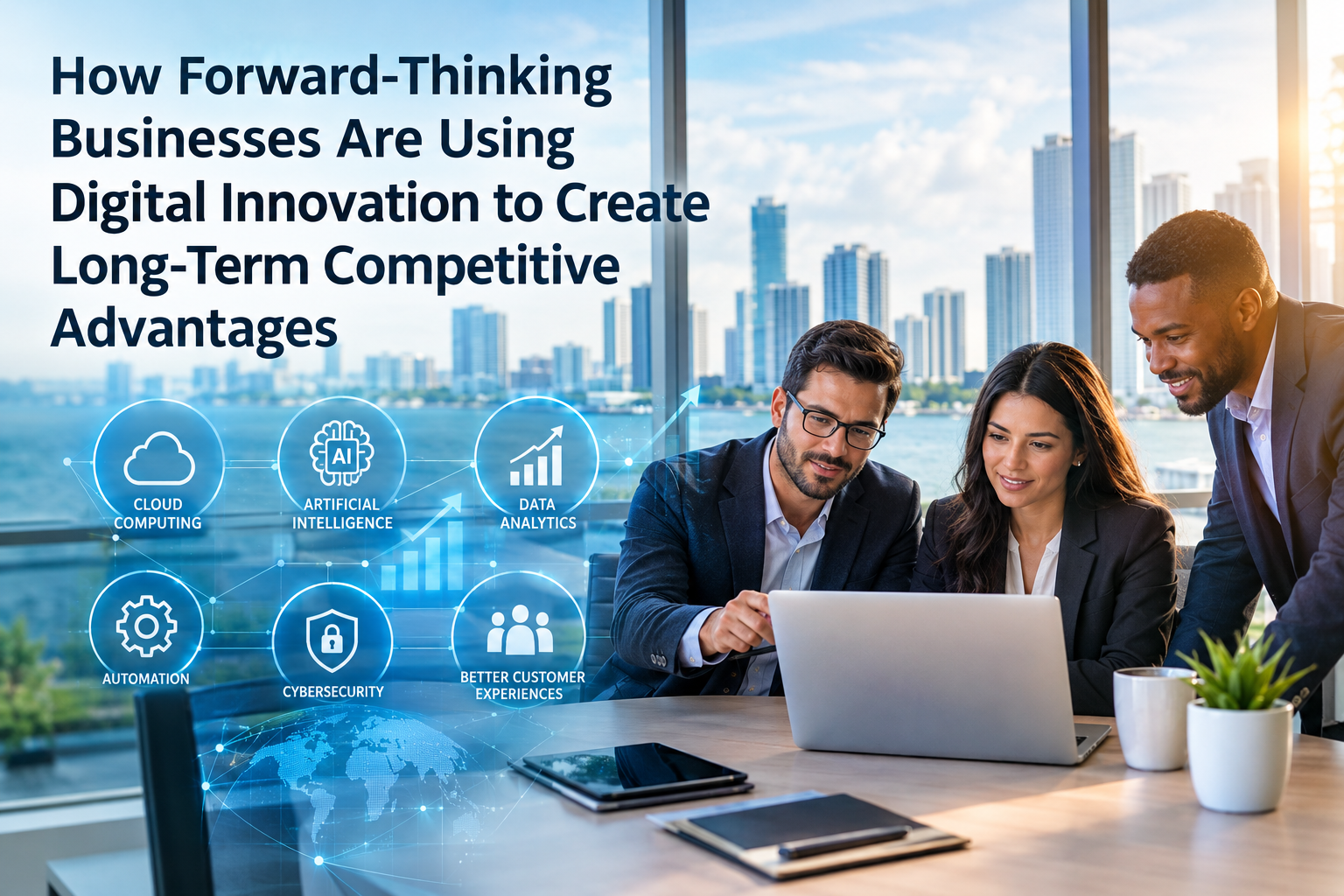
How Forward-Thinking Businesses Are Using Digital Innovation to Create Long-Term Competitive Advantages
Introduction
The way businesses compete has changed significantly in the digital age. Organizations are increasingly evaluated not only by the products or services they offer but also by how effectively they adapt to changing market conditions, use technology, and meet customer expectations. As competition evolves, businesses are exploring digital strategies that can improve efficiency, strengthen operations, and support better customer experiences.
Digital innovation can support business growth by helping organizations rethink traditional processes and identify new ways to create value. Technologies such as automation, cloud computing, artificial intelligence, and data analytics offer opportunities to streamline workflows, improve access to information, and respond more effectively to changing business requirements.
For companies operating in competitive markets such as Miami, adopting an appropriate technology strategy has become increasingly important. Businesses are evaluating their existing systems, identifying operational challenges, and exploring solutions that align with their objectives and available resources.
Technology is no longer limited to supporting everyday operations. When implemented strategically, it can also help businesses explore new opportunities, improve decision-making, and prepare for future challenges.
Understanding Digital Innovation in Modern Business
Digital innovation involves using technology, digital tools, and strategic approaches to improve business processes, enhance customer experiences, and identify new opportunities. It extends beyond purchasing new software or upgrading existing systems. Effective digital innovation requires organizations to consider how technology can address specific challenges and support broader business objectives.
Businesses can use artificial intelligence, cloud platforms, automation, data analytics, and cybersecurity solutions to improve operational performance. Depending on their needs, these technologies may reduce repetitive work, improve communication, support more informed decisions, and make information easier to access.
However, adopting technology simply because it is available does not guarantee better results. A more strategic approach involves identifying specific challenges, assessing available options, and selecting solutions that provide measurable improvements.
By connecting technology investments to practical business goals, organizations can make more informed decisions about where digital improvements are likely to provide the greatest value.
Why Digital Innovation Can Create a Competitive Advantage
Customer expectations, industry trends, and market conditions continue to evolve, creating new demands for businesses across different sectors. Organizations need to assess whether their existing processes and technology systems can accommodate these changes.
Businesses that rely on outdated systems may encounter slower workflows, limited visibility into operations, and difficulties adapting to new requirements. Modern digital tools can help address some of these challenges by improving access to information, automating selected tasks, and supporting more flexible operations.
Digital innovation can also help organizations understand customer needs, evaluate performance, and identify areas for improvement. These capabilities can help businesses respond more effectively to changing customer and market requirements.
The benefits depend on how well a solution fits the organization’s needs, how effectively it is implemented, and whether its performance is evaluated over time. In a rapidly changing economy, adaptability has become an increasingly important part of long-term business planning.
Improving Business Efficiency Through Digital Transformation
Operational efficiency is one area where digital innovation can provide practical benefits. Some organizations continue to rely on manual processes, disconnected applications, or outdated systems that make routine tasks more complicated than necessary. These limitations can affect productivity and leave employees with less time for higher-value work.
Digital transformation can help businesses streamline operations by introducing automation, improving communication, and creating more consistent ways to manage information. Cloud-based platforms may support collaboration between teams, while automated workflows can reduce repetitive tasks and help limit manual errors.
Businesses that work with experienced IT professionals can identify technology gaps, assess existing infrastructure, and implement solutions suited to their operational needs. This process may involve reviewing software, improving network performance, migrating selected services to the cloud, or integrating systems that do not communicate effectively.
Before introducing new technology, organizations should consider implementation costs, employee training, system compatibility, and ongoing maintenance. These factors can influence whether a proposed solution delivers its intended benefits.
With appropriate planning and evaluation, digital improvements can help businesses reduce unnecessary complexity, use resources more effectively, and give employees more time to focus on customer needs and strategic priorities.
Creating Better Customer Experiences Through Digital Innovation
Customer expectations have evolved alongside digital services. Many consumers value timely communication, convenient access to information, personalized interactions, and straightforward purchasing processes.
Digital tools can help organizations better understand customer needs and improve the way they communicate with their audiences. When collected and analyzed appropriately, customer data can reveal preferences, recurring questions, and areas where existing services may need improvement.
For example, businesses can use customer relationship management systems to organize interactions, digital support platforms to handle routine inquiries, and analytics tools to evaluate engagement. Personalized recommendations and simplified online purchasing processes may also make it easier for customers to find relevant products or services.
The effectiveness of these approaches depends on factors such as data quality, privacy practices, implementation, and the relevance of the experience being offered. Businesses should also consider how digital channels complement human support, particularly when customers need assistance with complex issues.
These improvements can contribute to better customer experiences and stronger long-term relationships. Organizations that prioritize customer-focused technology strategies may be better positioned to understand changing expectations and identify opportunities to improve their services.
The Role of Data in Business Decision-Making
Business data can provide valuable insight into customer behavior, operational performance, and changing market conditions when it is collected and analyzed appropriately. However, gathering information alone does not necessarily improve business decisions. Organizations also need reliable processes for interpreting data and applying relevant findings.
Data analytics tools can help businesses identify patterns, monitor performance indicators, assess customer engagement, and investigate operational challenges. Depending on the quality and availability of the information, these insights may support planning, resource allocation, and the evaluation of business initiatives.
For example, a company may analyze sales trends to understand changes in demand or review workflow data to identify recurring delays. Managers can then use these findings alongside employee feedback, industry knowledge, and other relevant information when considering potential changes.
Accurate data can support more informed decisions, but it does not eliminate uncertainty. Results depend on the quality of the underlying information, the assumptions used in analysis, and the context in which findings are interpreted.
Organizations that establish clear data management practices and regularly review their performance measures can develop a more consistent basis for evaluating progress and identifying areas for improvement.
Building Flexible and Future-Ready Businesses
Business requirements can change as organizations expand, introduce new services, or respond to market developments. Technology systems that are difficult to scale or update may make these adjustments more complicated.
Digital innovation can help businesses develop more flexible technology environments. Scalable cloud services, modern software platforms, and adaptable infrastructure allow organizations to adjust selected resources as operational requirements change.
For businesses in Miami and other growing markets, flexibility may be particularly relevant when opening new locations, supporting remote employees, or managing changes in customer demand. The appropriate technology approach will depend on the organization’s size, industry, existing systems, and plans for expansion.
Businesses should also evaluate the long-term costs of technology ownership, including subscriptions, support, security, and staff training. A solution that works well for one organization may not be appropriate for another.
Preparing for future requirements is an ongoing process rather than a one-time investment. Regular system reviews, performance monitoring, and planned upgrades can help businesses determine whether their technology continues to meet operational needs.
Strengthening Security in a Digital Business Environment
As businesses rely more heavily on digital systems, cybersecurity becomes an important consideration in technology planning. Greater connectivity can support collaboration and efficiency, but it can also introduce risks involving unauthorized access, data exposure, service disruptions, and system vulnerabilities.
Organizations need security practices that reflect their operations, the sensitivity of their information, and the risks associated with their technology environments. The NIST Cybersecurity Framework 2.0 provides guidance that organizations can use to understand, assess, prioritize, and manage cybersecurity risks.
Practical security measures may include access controls, multifactor authentication, regular software updates, security monitoring, employee awareness training, data backups, and incident response planning. The appropriate combination depends on the organization’s risk profile and existing capabilities.
Businesses should also review how employees and third-party providers access company systems, particularly when teams work remotely or use cloud-based applications. Clear access policies and regular reviews can help organizations manage these arrangements more consistently.
Cybersecurity requires ongoing attention because systems, business requirements, and potential threats change over time. Regular risk assessments and periodic reviews can help organizations identify gaps and determine where additional safeguards may be appropriate.
Integrating security considerations into technology decisions can support business continuity, help protect sensitive information, and maintain customer confidence.
The Importance of Strategic Technology Expertise
Successful digital transformation involves more than purchasing software or introducing new equipment. Businesses also need to consider planning, implementation, employee adoption, maintenance, and ongoing performance evaluation.
Some organizations may lack the internal expertise needed to assess cloud infrastructure, cybersecurity, software integration, network management, or broader technology strategy. Others may have internal IT teams that require additional support for specialized projects.
Working with experienced technology professionals can help businesses evaluate their options, address technical challenges, and align proposed solutions with operational priorities. External expertise may also help organizations identify compatibility issues, assess implementation risks, and avoid investments that do not address their actual needs.
For businesses looking to strengthen their technology capabilities, choosing the right IT Solutions Miami partner can provide access to expertise that supports a secure, scalable, and efficient digital environment.
When evaluating a potential technology partner, businesses should consider relevant experience, service scope, communication practices, security capabilities, support arrangements, and the ability to accommodate future requirements. Clear expectations and measurable objectives can help both parties assess the effectiveness of the engagement.
The goal is to establish a technology approach that supports business priorities and can be reviewed as those priorities change.
How Businesses Can Build a Successful Digital Innovation Strategy
Developing a digital innovation strategy begins with a clear understanding of business objectives and existing technology capabilities. Rather than adopting multiple tools at once, organizations can take a structured approach to identifying priorities and evaluating potential improvements.
Several steps can help guide this process:
- Assess existing systems. Review current infrastructure, software, workflows, security practices, and recurring operational challenges.
- Define measurable objectives. Establish what the business wants to improve, such as reducing processing time, improving service response, or increasing system reliability.
- Evaluate potential solutions. Compare available technologies based on functionality, cost, compatibility, security, and expected business value.
- Plan implementation carefully. Consider timelines, employee training, data migration, system integration, and potential disruption to existing operations.
- Monitor performance. Use relevant indicators to evaluate whether the solution is meeting its objectives and identify areas that require adjustment.
- Review and improve. Reassess technology needs as the business grows, customer expectations change, and new requirements emerge.
Organizations should also involve employees and relevant stakeholders in the process. Their feedback can help identify practical challenges, improve adoption, and ensure that new systems address real operational needs.
A successful strategy does not have to involve a large-scale transformation. In some cases, targeted improvements to existing processes may offer more practical value than replacing an entire technology environment.
By prioritizing business needs, evaluating outcomes, and making adjustments over time, organizations can approach digital innovation in a more deliberate and sustainable way.
The Future of Competitive Advantage Will Be Digital
Technology will continue to influence how businesses manage operations, communicate with customers, and develop products and services. The extent of its impact will vary by industry, organizational priorities, and the ability to implement solutions effectively.
Businesses that evaluate technology in relation to specific goals may find opportunities to improve efficiency, respond to changing requirements, and develop new ways of serving customers. However, these outcomes depend on more than the technologies themselves. Planning, employee adoption, data quality, security, and ongoing management all contribute to the results.
Organizations do not necessarily need the largest technology budgets to make useful progress. A clearer understanding of business challenges and a considered approach to investment can help decision-makers focus resources on areas with the greatest potential value.
Viewing digital transformation as an ongoing process can also help businesses avoid treating technology upgrades as isolated projects. Regular evaluation allows organizations to determine whether existing solutions remain appropriate and where further improvements may be warranted.
Conclusion
Digital innovation can help businesses improve operational efficiency, enhance customer experiences, strengthen cybersecurity, and develop more adaptable processes. The results depend on selecting appropriate technologies, implementing them effectively, and evaluating their contribution to business objectives.
Developing an appropriate technology strategy has become an increasingly important part of long-term business planning. Organizations can begin by reviewing their existing systems, identifying practical opportunities for improvement, and prioritizing investments that address clearly defined needs.
With careful planning, ongoing evaluation, and access to the right expertise when needed, businesses can use digital innovation to support informed decisions and respond to changing operational requirements. Continued assessment and improvement may help them remain prepared for emerging opportunities and future business challenges.