Tow-Behind Log Splitter Guide: How to Choose Power, Towing, and Safety Features
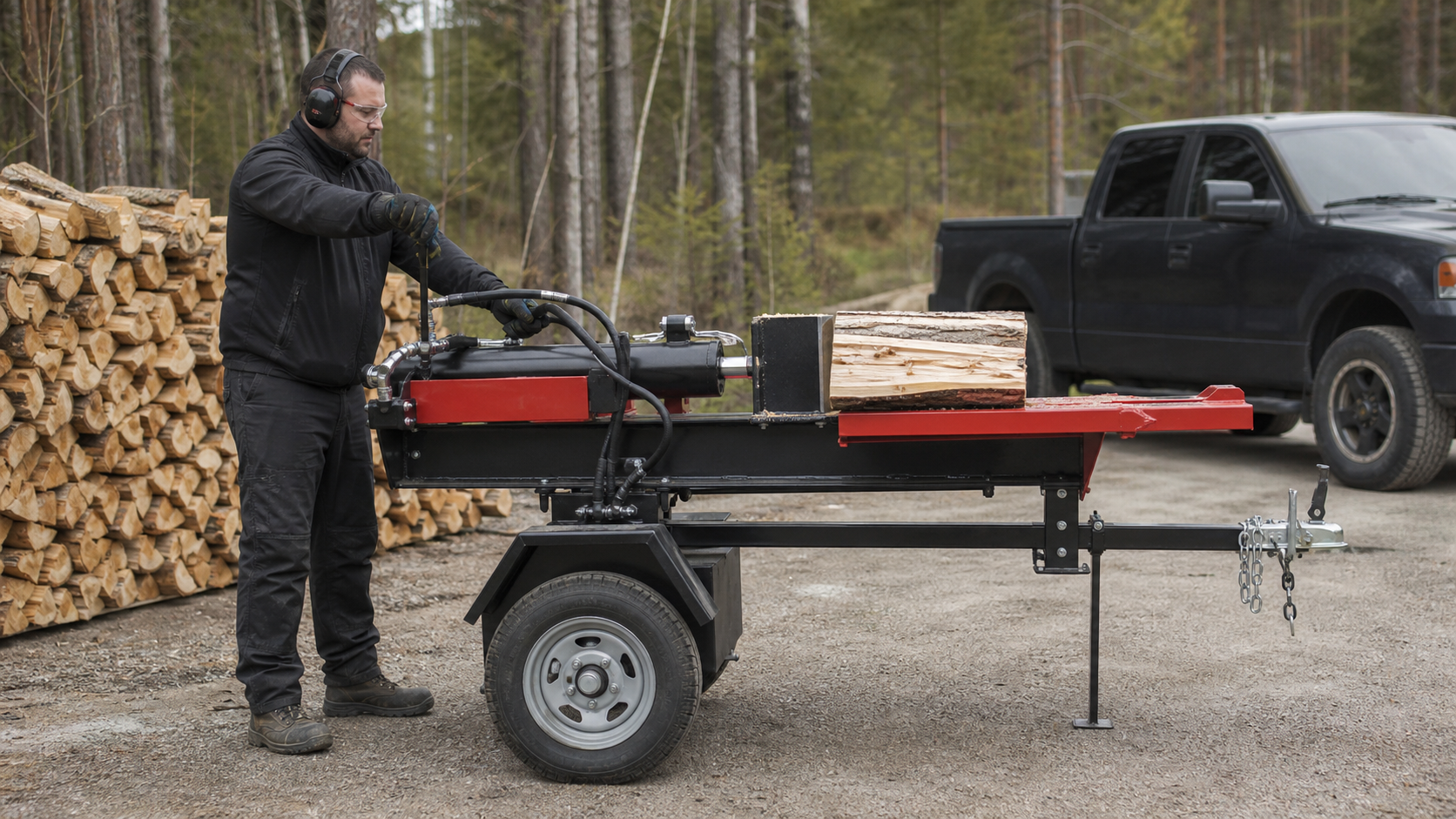
A tow-behind log splitter combines hydraulic wood splitting equipment with a wheeled chassis that makes the machine easier to move around a property and, on some models, transport behind an appropriate towing vehicle. That convenience should not be confused with universal road legality. Splitters differ in couplers, tires, wheel bearings, lighting, safety chains, rated speeds, weight, hydraulic capacity, engines, and manufacturer transport restrictions. Some are designed only for slow movement around private property, while others may be configured for road transport subject to local laws. Buyers should compare actual equipment specifications, log capacity, cycle performance, operating orientation, servicing requirements, towing limits, and safety features before choosing a machine.
What Is a Tow-Behind Log Splitter?
A tow-behind log splitter is a wood splitting machine mounted on a wheeled frame with a hitching or towing arrangement.
Most consumer models use a hydraulic cylinder to drive a wedge into a log or push a log against a fixed wedge. Power commonly comes from a petrol engine, although equipment configurations vary.
The wheeled chassis makes the splitter easier to reposition than many stationary machines.
How Does a Tow-Behind Log Splitter Work?
A typical hydraulic system includes:
• Engine or another power source
• Hydraulic pump
• Hydraulic fluid reservoir
• Control valve
• Hydraulic hoses
• Cylinder
• Ram or push plate
• Splitting wedge
When the operator moves the control valve, hydraulic fluid powers the cylinder and creates the force needed to split suitable logs.
Is Every Tow-Behind Log Splitter Road Legal?
No.
The presence of wheels, tires, and a hitch does not automatically mean a machine can legally travel on public roads.
Road use can depend on the equipment’s design as well as local requirements covering speed, registration, lighting, tires, safety chains, reflectors, braking, width, and other factors.
The manufacturer’s towing restrictions and applicable law should be checked before transport.
7 Powerful Tow-Behind Log Splitter Buying Tips
A useful splitter should match the wood being processed and the way the machine will actually be moved and operated. These seven considerations address the most important buying decisions.
1. Choose Tow-Behind Log Splitter Force for Your Wood
Manufacturers commonly market hydraulic splitters using a tonnage or splitting force rating.
A larger advertised number is not automatically necessary for every user.
What Makes a Log Difficult to Split?
Difficulty can be influenced by:
• Wood species
• Log diameter
• Knots
• Grain direction
• Crotches
• Moisture condition
• Log shape
• Wedge design
• Machine condition
Two logs with identical dimensions can behave very differently.
Do You Need the Highest Tonnage?
Not necessarily.
People processing relatively straight, manageable firewood may not benefit from purchasing the largest available residential machine.
Compare More Than Tonnage
Evaluate hydraulic performance, build quality, cycle characteristics, engine support, log capacity, wedge design, operating height, warranty, and parts availability.
An advertised tonnage figure alone does not describe the complete machine.
2. Check the Maximum Log Capacity
Every splitter has physical limits for the logs it can accept safely.
These limits can involve maximum log length, diameter, or both.
Log Length
Firewood is often cut to match a stove, fireplace, boiler, or storage arrangement.
Choose a splitter that accommodates the lengths you normally process.
Log Diameter
Large diameter rounds can be heavy even when the machine has enough hydraulic force to split them.
Handling Weight Matters
A machine capable of splitting a very large round does not mean one person can safely lift that round onto a horizontal beam.
Log handling can become the more important ergonomic concern.
Consider a Log Lift
Some larger machines support hydraulic or mechanical log lifting accessories.
A log lift can reduce manual handling for heavy rounds when designed and operated correctly.
3. Compare Horizontal and Vertical Splitting
Some machines operate horizontally only, while others can change between horizontal and vertical configurations.
Each orientation has practical advantages.
Horizontal Splitting
Horizontal operation can work efficiently with logs that are light enough to lift onto the beam.
A table or log cradle can help support pieces during processing where compatible.
Vertical Splitting
Vertical mode can allow large rounds to remain closer to ground level.
This can reduce the need to lift heavy material to beam height.
Vertical Operation Still Requires Safe Positioning
Keep hands and feet away from the wedge, ram, and pinch points.
Use the manufacturer’s specified operator position.
Never stabilize a log with your foot.
4. Evaluate Tow-Behind Log Splitter Transport Features
A splitter intended to move behind a vehicle needs more than a coupler.
Review the complete transport system.
Check the Hitch
Confirm:
• Coupler type
• Required hitch ball size where applicable
• Maximum towing arrangement
• Safety chain requirements
• Tongue condition
• Manufacturer towing instructions
The coupler and tow vehicle need to be compatible.
Tires and Wheels
Tires can have maximum loads, inflation requirements, and speed limitations.
Highway Tires Versus Property Transport Tires
Some equipment tires are intended for low speed off road use.
Never assume that a small trailer style tire is highway rated merely because it resembles one.
Read sidewall information and manufacturer instructions.
Wheel Bearings
Bearings require inspection and lubrication according to the equipment manufacturer.
A failed bearing during transport can create a serious road hazard.
5. Compare Engine and Hydraulic Performance
The engine powers the hydraulic pump on many towable splitters.
Reliable hydraulic performance depends on the engine, pump, fluid, filter, valve, cylinder, and hoses working together.
Engine Size Is Not the Only Metric
Horsepower can provide some information but does not independently determine splitting performance.
Hydraulic pressure and cylinder area influence force, while flow influences movement speed.
Cycle Time
Cycle time commonly describes how quickly the ram completes its travel and returns under defined conditions.
Faster Is Not Always Better
A very fast ram can reduce waiting between logs, but safe control and deliberate handling remain essential.
Operators should never attempt to save time by placing hands near moving components.
Two Stage Hydraulic Pumps
Some hydraulic splitters use two stage pumps designed to provide higher flow under lower load and transition to a lower flow, higher pressure mode as resistance increases.
This arrangement can support practical cycle speed while retaining substantial splitting force.
Specific operation varies by system.
6. Prioritize Tow-Behind Log Splitter Safety
Hydraulic splitters can generate enormous force.
Hands or body parts caught between a log, wedge, ram, or machine structure can be severely injured.
Read the Operator Manual
Before use, understand:
• Controls
• Emergency stopping procedures
• Operator position
• Log limits
• Hydraulic safety
• Maintenance
• Transport restrictions
• Personal protective equipment
• Fuel handling
• Setup requirements
Instructions for the exact machine take priority over generic online advice.
Personal Protective Equipment
Depending on manufacturer guidance and working conditions, appropriate protection can include:
• Safety glasses or other eye protection
• Hearing protection around combustion engines
• Sturdy footwear
• Close fitting work clothing
• Suitable gloves for handling wood
Gloves should never create confidence to place hands near pinch points.
Keep Bystanders Away
Children, pets, and unnecessary bystanders should remain outside the operating area.
Logs can shift or split unpredictably.
7. Evaluate Maintenance Before Buying
A splitter that cannot be serviced easily can become expensive downtime.
Check parts and support before purchase.
Routine Maintenance Can Include
Depending on the machine:
• Engine oil
• Air filter
• Spark plug
• Fuel system
• Hydraulic fluid
• Hydraulic filter
• Hoses
• Fittings
• Tires
• Wheel bearings
• Coupler
• Fasteners
• Wedge condition
Follow the specific maintenance schedule.
Replacement Parts Availability
Ask whether the supplier stocks:
• Hydraulic filters
• Hoses
• Seals
• Coupler parts
• Tires
• Engine service parts
• Control valves
• Cylinder components
• Wedge accessories
Warranty Support Matters
A low purchase price becomes less attractive when replacement parts or authorized service are difficult to obtain.
Review both equipment and engine warranty terms.
Tow-Behind Log Splitter Safety Basics
Safety requires more than protective equipment.
Worksite setup and operating technique matter just as much.
Use Level, Stable Ground
Operate the splitter on a stable surface according to manufacturer instructions.
Unstable equipment can shift as heavy logs are loaded or split.
Prevent Unintended Movement
Use stabilizers, wheel chocks, parking arrangements, or other measures specified by the manufacturer.
Disconnect From the Tow Vehicle When Required
Some models have specific instructions about whether they may be operated while connected to a vehicle.
Follow those instructions exactly.
Do not assume the towing configuration is also the operating configuration.
Hydraulic Safety
Hydraulic systems operate under high pressure.
A damaged hose can create hazards that may not be obvious.
Inspect Hoses
Before operation, look for:
• Abrasion
• Cracks
• Bulges
• Leakage
• Damaged fittings
• Kinks
Replace defective components using suitable rated parts.
Never Check for Hydraulic Leaks With Your Hand
High pressure hydraulic fluid can penetrate skin and cause a medical emergency.
Use Safe Leak Detection Methods
Follow manufacturer procedures, which can involve appropriate visual inspection or safe detection materials.
If fluid injection through the skin is suspected, seek urgent medical care.
A small puncture can conceal serious internal injury.
Engine Safety on a Tow-Behind Log Splitter
Petrol engines produce carbon monoxide and hot exhaust gases.
They should be operated only in locations allowed by the manufacturer with adequate outdoor ventilation.
Carbon Monoxide
Never run combustion powered equipment inside garages, sheds, basements, or other enclosed areas where dangerous exhaust can accumulate.
Refuelling
Allow the machine to cool and follow manufacturer instructions before adding fuel.
Keep Ignition Sources Away
Petrol vapors are flammable.
Avoid smoking, flames, and inappropriate electrical ignition sources around refuelling.
Understanding Log Splitter Tonnage
Splitting force is often calculated from hydraulic pressure and cylinder piston area.
Published ratings should come from credible manufacturer specifications.
Why Higher Force Helps
Difficult grain, knots, and large rounds can require greater force.
However, force alone cannot compensate for inappropriate log size or unsafe loading.
Avoid Modifying Hydraulic Pressure
Increasing relief pressure beyond specifications can overload hoses, valves, pumps, cylinders, or structural components.
Never Modify the System for More Tonnage
Hydraulic settings should remain within manufacturer limits.
Unauthorized modifications can damage equipment, void warranty coverage, or create dangerous failures.
Tow-Behind Log Splitter Wedge Types
Wedge design affects how wood is divided.
The standard straight wedge is common because it concentrates force into a single split.
Four Way Wedges
Some machines support compatible four way wedge accessories that can divide suitable logs into several pieces.
More Splits Require More Force
A multiway wedge encounters more wood simultaneously and may perform differently on difficult rounds.
Use Approved Accessories
Do not weld unapproved attachments to the wedge or beam.
Structural modifications can introduce failure points and alter loads.
Log Cradles and Work Tables
Split pieces can fall from the beam immediately after separation.
Cradles or tables can support them and reduce repeated bending.
Productivity Benefits
Supported pieces are easier to reposition for another split.
Check Compatibility
Accessories need to fit the specific machine without interfering with controls or operator position.
Tow-Behind Log Splitter for Hardwood
Hardwood is a broad category and does not define splitting difficulty by itself.
Species and grain structure matter.
Knotted Hardwood
Crotches, twisted grain, and knots can substantially increase resistance.
Fresh Versus Seasoned Wood
Some species split more easily when green, while others may behave differently after seasoning.
Test Actual Firewood
If possible, ask a dealer for a demonstration using wood similar to what you process.
Real logs provide more useful information than ideal straight demonstration rounds.
Tow-Behind Log Splitter for Large Rounds
Large rounds create both force and handling challenges.
Machine capacity needs to account for each.
Vertical Mode
Vertical splitting can reduce lifting requirements on compatible machines.
Mechanical Handling
High volume operations may use log lifts, winches, loaders, or other equipment designed for the job.
Never Stand Under Suspended Loads
If machinery is used to position wood, follow all equipment safety procedures and keep people away from suspended material.
Tow-Behind Log Splitter for Commercial Use
Commercial firewood production places greater demands on equipment than occasional residential use.
Duty cycle, throughput, serviceability, and operator ergonomics become increasingly important.
Production Factors
Commercial buyers should evaluate:
• Real cycle speed
• Engine durability
• Hydraulic cooling
• Reservoir capacity
• Log handling
• Operator positioning
• Parts access
• Dealer support
• Downtime
• Fuel consumption
Residential Machines May Not Suit Continuous Production
Check manufacturer duty recommendations and warranty terms.
Commercial use can receive different warranty coverage.
Gas Versus Electric Log Splitters
Tow-behind units are commonly engine powered, although electric splitters are also available in the broader market.
Each power source fits different use cases.
Petrol Powered Splitters
Advantages can include independence from electrical outlets and practical outdoor portability.
They also involve fuel, exhaust, noise, engine maintenance, and carbon monoxide hazards.
Electric Splitters
Electric machines can be quieter and require less engine related maintenance.
Electrical Limitations
Power requirements, extension cord restrictions, weather exposure, outlet protection, and machine size affect portability.
Follow manufacturer electrical requirements.
Tow-Behind Log Splitter Towing Safety
Transport can be as hazardous as operation when equipment is attached incorrectly.
Complete a pre-tow inspection.
Before Moving the Splitter
Verify:
• Coupler engagement
• Safety chains where required
• Tires
• Tire pressure
• Wheel bearings
• Hydraulic components secured
• Beam locked in transport position
• Engine and fuel controls configured for transport
• Jack or stand secured
• Lighting where required
• Loose accessories removed
Manufacturer instructions determine the exact checklist.
Respect Maximum Towing Speed
Never exceed the equipment manufacturer’s rated transport speed.
Local Road Laws Still Apply
Even equipment rated by its manufacturer for a particular speed can require registration, lighting, reflectors, or other equipment for lawful public road operation.
Check the laws where the splitter will be transported.
Can a Tow-Behind Log Splitter Be Towed on a Highway?
Only when the exact machine is designed and equipped for that use and local law permits it.
Many splitters are intended only for low speed off road towing.
Verify Manufacturer Specifications
Look for an explicit maximum towing speed and road use instructions.
Absence of such information should not be treated as approval for highway travel.
Trailer Transport Can Be Safer
When a splitter is not road rated, transporting it on a properly rated utility or equipment trailer can be more appropriate.
Secure the Machine Properly
Use appropriate tie downs, attachment points, load ratings, and trailer procedures.
Do not rely on the splitter’s own hitch as the only securement when it is being carried on a trailer.
Tow-Behind Log Splitter Setup
Before starting work, inspect the machine and operating area.
Pre-Operation Checklist
Check:
• Fluid levels
• Hydraulic hoses
• Fasteners
• Tires
• Controls
• Beam position
• Wedge
• Work area
• Fuel
• Engine condition
• Safety labels
Report or repair abnormalities before operation.
Warm Up Procedures
Some hydraulic systems can require warm up procedures, particularly in cold conditions.
Follow the manual.
Using a Tow-Behind Log Splitter Safely
Load one log according to the machine’s intended orientation.
Position it so the ram and wedge engage the wood appropriately.
Keep Hands Away From Ends and Cracks
Wood can shift, twist, or split suddenly.
Never reach into a developing split while the ram is under pressure.
One Operator Is Safer
Many machines are designed around one person controlling and handling the log.
Avoid Two-Person Hand Placement
A second person positioning wood while another controls the hydraulic valve can create dangerous communication failures.
Follow manufacturer instructions concerning operators and helpers.
What If a Log Becomes Stuck?
Do not place hands between a jammed log and wedge.
The wood can remain under stored force.
Follow the Manufacturer’s Jam Procedure
Different machines have specific instructions for handling stuck logs.
Use only approved procedures and tools.
Never Strike Pressurized Components
Do not hammer the cylinder, hydraulic fittings, or other loaded components to release wood.
Tow-Behind Log Splitter Maintenance
Preventive maintenance improves reliability and can identify safety problems.
Hydraulic Fluid
Use the fluid type and service schedule specified by the manufacturer.
Mixing incompatible fluids can affect system performance.
Hydraulic Filter
Replace filters at the documented intervals.
Dispose of Fluids Responsibly
Used hydraulic oil and engine oil should be handled according to local disposal or recycling requirements.
Do not pour oil onto the ground or into drains.
Winter Storage
Seasonal storage should protect the engine, hydraulic system, tires, and exposed components.
Fuel Storage
Follow engine manufacturer recommendations for fuel management during long storage periods.
Battery Maintenance
If the machine has electric starting, battery maintenance can be required.
Protect From Weather
Covered, dry storage can reduce unnecessary corrosion and weathering.
Maintain ventilation and fuel safety requirements.
Buying a New Tow-Behind Log Splitter
New equipment provides access to current warranties and dealer support, but specifications still need comparison.
Ask the Dealer
Useful questions include:
• What is the real log capacity?
• What is the cycle time at the proposed settings?
• Is vertical operation supported?
• What is the maximum tow speed?
• Is public road towing permitted?
• Which tires are fitted?
• Which hydraulic fluid is required?
• What maintenance is needed?
• Are parts stocked locally?
• What warranty applies?
Document important answers.
Buying a Used Tow-Behind Log Splitter
Used equipment should be inspected carefully because hydraulic repairs can become expensive.
Check the Hydraulic System
Look for visible leaks, damaged hoses, scoring, unusual cylinder movement, and contaminated fluid.
Run the Machine
Where safe and permitted, observe operation under actual splitting load.
Inspect the Frame
Look for cracks, bent components, poor weld repairs, or unauthorized modifications around the beam, wedge, axle, and hitch.
Check the Engine
Difficulty starting, smoke, abnormal noise, or unstable operation can indicate service needs.
How Much Does a Tow-Behind Log Splitter Cost?
There is no universal price.
Small residential machines, premium high force splitters, and commercial equipment occupy very different price categories.
Tow-Behind Log Splitter Cost Factors
Price can depend on:
• Splitting force
• Engine
• Pump configuration
• Cylinder
• Cycle time
• Beam construction
• Vertical mode
• Log lift
• Accessories
• Road transport equipment
• Brand support
• Warranty
• Commercial duty capability
Total ownership cost matters more than purchase price alone.
Renting a Tow-Behind Log Splitter
Rental can be economical when firewood processing occurs only a few times per year.
Rental equipment also reduces long term storage requirements.
Ask About Transport
The rental company should explain whether the splitter can be towed directly, requires a trailer, or will be delivered.
Inspect Before Leaving
Document pre-existing damage and ask for operating instructions.
Understand Fuel and Cleaning Policies
Rental agreements can include requirements for fuel, cleaning, transport, or damage.
Read the contract before taking possession.
Common Tow-Behind Log Splitter Mistakes
Several mistakes create unnecessary injury or equipment risk.
Assuming It Is Highway Legal
Check equipment specifications and local laws first.
Splitting Oversized Logs
Respect manufacturer capacity.
Reaching Near the Wedge
Hydraulic force can cause severe crushing injuries.
Ignoring Hydraulic Leaks
High pressure fluid injection injuries require immediate medical attention.
Using the Machine Indoors
Combustion engine exhaust can cause fatal carbon monoxide poisoning.
Skipping Maintenance
White smoke, leaks, damaged hoses, and loose hardware should not be ignored.
Frequently Asked Questions
What is a tow-behind log splitter?
A tow-behind log splitter is a wheeled wood splitting machine with a hitch arrangement that allows it to be moved behind an appropriate vehicle under manufacturer specified conditions.
Can a tow-behind log splitter be towed on public roads?
Some can, while others are limited to low speed private property use. Check the machine’s rated towing specifications and applicable road laws before transport.
How much splitting force does a tow-behind log splitter need?
Required force depends on log species, diameter, grain, knots, moisture condition, and wedge design. Choose based on the wood you actually process rather than tonnage alone.
Is vertical operation useful on a tow-behind log splitter?
Yes, vertical mode on compatible machines can reduce the need to lift heavy rounds onto a horizontal beam. Safe operator positioning remains essential.
How often does a tow-behind log splitter need maintenance?
Maintenance frequency depends on the engine, hydraulic system, usage, and manufacturer. Follow specified intervals for fluids, filters, hoses, bearings, tires, and engine service.
Is a tow-behind log splitter worth buying?
It can be worthwhile for regular firewood processing when portability, capacity, and storage justify ownership. Occasional users may find rental more economical.
Conclusion
A tow-behind log splitter can make firewood processing more efficient while providing useful portability around large properties and worksites. The best machine is not simply the one with the highest advertised tonnage; log capacity, operating orientation, hydraulic design, cycle performance, service support, maintenance, and safe towing characteristics all matter. Checking manufacturer specifications and public road requirements before transport, along with following disciplined hydraulic and operating safety procedures, can help owners use the equipment reliably and responsibly.