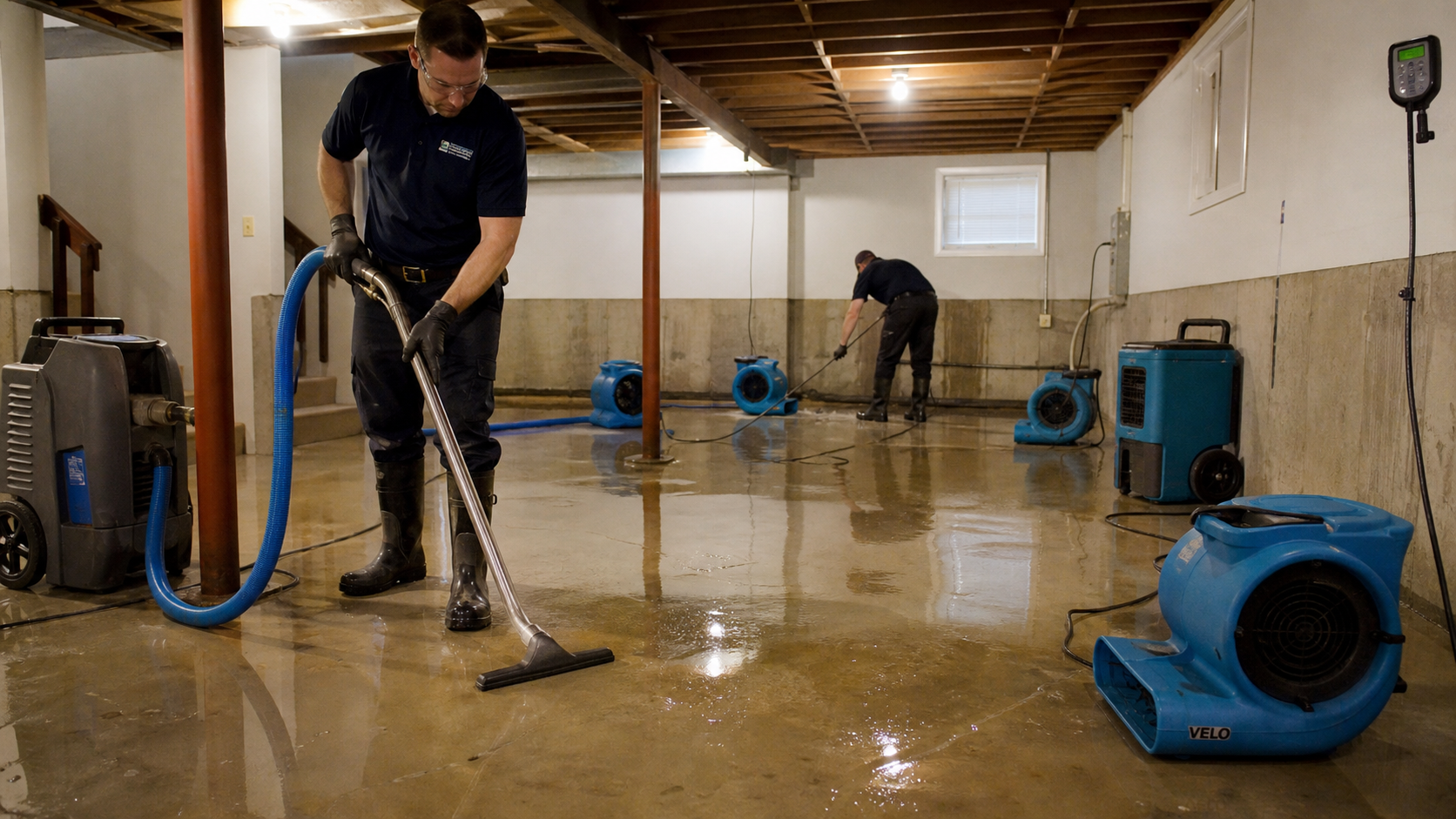
Basement Water Cleanup: How to Remove Water Safely and Restore Your Home
Fast, careful basement water cleanup can limit additional damage after a plumbing failure, appliance leak, storm, drainage problem, sewer backup, or groundwater intrusion. The first priority is not immediately pumping or mopping the floor. Electricity, contaminated water, structural instability, hidden moisture, and possible mold can create hazards that need to be assessed before anyone enters or begins restoration. After the area is safe, effective cleanup focuses on stopping the source, removing water, evaluating contamination, drying affected materials, documenting damage, and fixing the underlying problem so the basement is less likely to flood again.
What Does Basement Water Cleanup Involve?
Basement water cleanup is the process of safely removing unwanted water and addressing the materials and building components affected by it.
A complete response can include water extraction, removal of contaminated or unsalvageable materials, cleaning, disinfection when appropriate, moisture measurement, structural drying, and repairs.
It should also include identifying why the water entered the basement.
Simply removing visible standing water does not guarantee that walls, flooring, insulation, framing, or other materials are dry.
Why Basement Water Cleanup Requires Quick Attention
Water can migrate into porous materials and concealed spaces. Drywall, insulation, carpeting, wood products, cabinetry, and wall cavities can retain moisture after the floor appears dry.
Prompt action can reduce the amount of secondary damage, but safety should never be sacrificed for speed.
The U.S. Environmental Protection Agency advises that wet materials should generally be dried promptly, commonly within about 24 to 48 hours where practical, to reduce the potential for mold growth. This window is guidance rather than a guarantee that mold will or will not develop.
Not All Basement Water Is the Same
The source of water strongly influences cleanup decisions.
A clean supply pipe leak is fundamentally different from a sewage backup or outdoor floodwater that may contain microorganisms, chemicals, soil, or other contaminants.
When the water source is unknown, potentially contaminated, or involves sewage or flooding, professional restoration assistance may be appropriate.
7 Powerful Basement Water Cleanup Tips for Safe Recovery
A logical cleanup sequence helps prevent important hazards from being overlooked. These seven steps cover the priorities from initial safety assessment through long term prevention.
1. Make Safety the First Basement Water Cleanup Priority
Do not enter a flooded basement automatically.
Water and electricity can create a life threatening combination, and flood conditions can introduce additional hazards.
Check for Electrical Hazards
Standing water may contact:
• Electrical outlets
• Extension cords
• Appliances
• Furnaces
• Water heaters
• Electrical panels
• Wiring
• Sump pump equipment
If electrical equipment is wet or water prevents safe access to the electrical system, stay out of the area and contact appropriate emergency or electrical professionals.
Never Stand in Water to Reach the Breaker Panel
Do not walk through standing water to switch off electrical power.
A panel or other electrical equipment can itself be affected by water.
If power cannot be disconnected safely from a dry, appropriate location, seek professional assistance.
Consider Gas and Fuel Hazards
Basements can contain gas fired furnaces, boilers, water heaters, and other combustion equipment.
Flooding can damage controls and safety components.
If you smell gas, leave the property and follow the gas utility’s emergency instructions. Do not create sparks or operate electrical switches in the affected area.
Look for Structural Concerns
Severe flooding can damage walls, foundations, stairs, floors, and other building components.
Do not enter an area showing signs of collapse, major movement, unstable ceilings, or other serious structural damage.
A qualified professional should evaluate questionable conditions.
2. Identify and Stop the Water Source
Cleanup will not succeed while water continues entering.
The appropriate response depends on whether the source is plumbing, appliances, drainage, groundwater, rainfall, or sewage.
Plumbing Leaks
If a supply pipe or fixture is responsible, shut off the affected fixture or main water supply when this can be done safely.
Knowing the location of the main water shutoff before an emergency can save valuable time.
Appliance Failures
Washing machines, water heaters, softeners, refrigerators, and other equipment can release water when hoses, connections, tanks, or valves fail.
Do not approach electrically powered equipment standing in water until electrical safety has been established.
Groundwater and Rain Entry
Water can enter through foundation cracks, openings, window wells, failed drainage systems, or other pathways.
Heavy rainfall can also overwhelm sump pump systems or drainage infrastructure.
Removing the water without correcting these causes can lead to repeated basement flooding.
Sewer Backup
Wastewater backing up through floor drains, toilets, or plumbing fixtures presents significant contamination concerns.
Avoid direct contact and keep children and pets away.
Professional remediation is often appropriate because cleanup may involve contaminated porous materials, specialized protective equipment, cleaning, disinfection, and disposal requirements.
3. Assess Water Contamination Before Cleanup
What the water contacted is almost as important as where it originated.
Outdoor floodwater may contain contaminants even when it does not look visibly dirty.
Clean Water Events
Water from a potable supply line can begin with relatively low contamination.
However, its condition can deteriorate after contacting dirty surfaces, building materials, or standing for prolonged periods.
Cleanup decisions should therefore account for both source and exposure history.
Contaminated Water
Water associated with sewage, storm flooding, or other contaminated sources requires more stringent precautions.
Potential exposure can involve microorganisms and other harmful substances.
Do not assume ordinary household cleaning alone is sufficient for heavily contaminated flood materials.
Use Appropriate Personal Protection
Personal protective equipment depends on the hazard.
Gloves, protective footwear, eye protection, and other equipment may be appropriate during certain cleanup work.
Respiratory protection requires correct selection and use. A disposable mask should not be assumed to protect against every biological, chemical, or airborne hazard.
4. Remove Standing Water Safely
Once hazards have been addressed and the source has been controlled, extraction can begin.
The method depends on water depth, contamination, basement design, and available equipment.
Options for Water Removal
Suitable methods can include:
• Professional extraction equipment
• Pumps appropriate to the application
• Wet vacuums designed for water recovery
• Mops and containers for small events
Electrical equipment should only be used according to manufacturer instructions and in safe electrical conditions.
Do Not Use an Ordinary Household Vacuum
A standard dry household vacuum is not designed to collect water and can create electrical hazards or damage the appliance.
Only equipment specifically rated for wet pickup should be used for water extraction.
Be Cautious With Deep Basement Flooding
When deep water is present around below grade foundation walls, rapid pumping can sometimes create potentially damaging pressure differences between saturated exterior soil and the interior.
Conditions vary by building and flood event.
For significant basement flooding, particularly where groundwater remains high outside, obtain guidance from experienced restoration or building professionals before aggressive pumping.
5. Dry the Basement Beyond What You Can See
Visible water removal is only the beginning.
Moisture can remain behind walls, under flooring, inside insulation, beneath sill plates, and within other porous materials.
Use Moisture Measurements
Restoration professionals commonly use moisture meters and other diagnostic tools to assess affected materials.
Measurements help determine whether drying is progressing rather than relying solely on touch or appearance.
Air Movement and Dehumidification
Professional drying strategies often combine controlled air movement with dehumidification.
The exact equipment and placement depend on temperature, humidity, materials, room configuration, and contamination conditions.
More airflow is not always appropriate. For example, aggressively moving air in an area containing significant mold contamination can spread particles into previously unaffected spaces.
Ventilation Depends on Outdoor Conditions
Opening windows may help in some situations, but it can hinder drying when outdoor air is warm and humid.
Dehumidification can be more useful when exterior humidity is high.
Evaluate actual indoor and outdoor conditions rather than assuming windows should always be opened.
6. Decide What Can Be Cleaned and What Must Be Removed
Different building materials react to water differently.
Nonporous materials can often be cleaned more readily than highly absorbent products, particularly after contaminated water exposure.
Drywall and Insulation
Drywall can absorb water beyond the visible wet line.
Insulation inside a wall may also retain moisture.
Whether these materials can remain depends on contamination, duration of wetting, material condition, and whether they can be dried effectively.
Carpet and Padding
Carpet salvageability depends heavily on the water source and duration of exposure.
Padding can hold significant moisture beneath an apparently improving carpet surface.
Carpet exposed to sewage or heavily contaminated floodwater may require removal rather than conventional cleaning.
Wood and Framing
Solid framing lumber may often be dried when contamination and structural conditions allow.
Engineered wood products, finishes, cabinets, and wood flooring can respond differently.
The important question is whether the material can be safely cleaned, adequately dried, and remain structurally sound.
Personal Belongings
Porous belongings exposed to contaminated water can be difficult to salvage.
Important documents, photographs, textiles, furniture, and valuable items may require specialized restoration.
Do not discard high value or irreplaceable property before discussing potential restoration with appropriate specialists or an insurer when circumstances permit.
7. Prevent Mold After Basement Water Cleanup
Mold spores are naturally present in indoor and outdoor environments. Moisture allows mold to grow on suitable materials.
The most important preventive measure after a water event is effective moisture control.
Dry Materials Promptly
The EPA commonly recommends drying wet materials within 24 to 48 hours when possible.
This does not mean materials automatically become unsafe at a precise 48 hour deadline. Actual microbial growth depends on moisture, temperature, material, contamination, and other conditions.
The principle is straightforward: prolonged dampness increases risk.
Do Not Paint Over Mold
Paint does not correct an active moisture problem or properly remediate mold growth.
The moisture source must be corrected and contaminated materials appropriately cleaned or removed before refinishing.
Avoid Relying Only on Bleach
Mold remediation is not simply a matter of spraying bleach on every affected surface.
Cleaning methods depend on the material, extent of contamination, and underlying moisture conditions.
EPA guidance emphasizes moisture correction and appropriate cleaning or material removal rather than relying on a universal chemical treatment.
Basement Water Cleanup After a Sewer Backup
A sewage event requires additional precautions because wastewater can contain disease causing microorganisms.
Direct skin contact should be minimized.
Keep the Area Isolated
Keep occupants and pets away from affected areas until cleanup is completed.
Contaminated footwear, tools, and materials can transfer contaminants to other parts of the home.
Porous Materials Need Careful Evaluation
Materials that absorb sewage can be difficult to clean sufficiently.
Depending on the event, items such as carpet padding, certain insulation, damaged drywall, and some furnishings may need disposal.
Professional remediation can help determine which materials are salvageable.
Clean and Disinfect Appropriately
Physical cleaning generally needs to remove soil and organic material before an appropriate disinfectant can work effectively.
Use products according to their labels and never mix household chemicals.
Combining bleach with ammonia or certain acids, for example, can produce dangerous gases.
Basement Water Cleanup After Heavy Rain
Storm related basement water can enter through several paths.
Understanding the entry route is essential for prevention.
Check Gutters and Downspouts
Roof drainage should move water appropriately away from vulnerable foundation areas.
Blocked gutters, damaged downspouts, or unsuitable discharge locations can contribute to water concentration near the building.
Examine Site Grading
Ground surfaces should manage drainage according to the site’s design and local conditions.
Persistent water accumulation against the foundation can indicate grading or drainage problems.
Major drainage modifications should consider neighboring properties and local requirements.
Inspect Window Wells
Below grade windows can become entry points when drains fail, covers are unsuitable, or water accumulates in wells.
The appropriate correction depends on the specific window and drainage design.
Basement Water Cleanup After a Burst Pipe
A ruptured supply pipe can release substantial water quickly.
If conditions are electrically safe, shutting off the water supply is a priority.
Find the Cause of Pipe Failure
Possible causes include freezing, corrosion, physical damage, excessive pressure, material failure, or defective connections.
Repairing the break without considering the underlying cause can allow future failures elsewhere.
Check Adjacent Areas
Water from a basement pipe can travel into wall cavities, under flooring, or through lower building assemblies.
Inspect beyond the visibly wet location and use moisture measurements when necessary.
Sump Pumps and Basement Water Cleanup
A sump pump can be an important part of basement water management, but it is not a complete waterproofing system.
Pumps can fail due to mechanical issues, electrical outages, blocked discharge, overwhelmed capacity, or other problems.
Test the Sump Pump
Follow manufacturer instructions for testing and maintenance.
Keep the pit and accessible components in appropriate condition.
Consider Backup Protection
Depending on the property and local conditions, homeowners may consider backup pumping or power options.
Every backup system has operating limitations.
Equipment should be properly installed and maintained rather than assumed to provide guaranteed flood protection.
Check the Discharge Location
Sump water needs to be discharged appropriately.
Local requirements can regulate where sump pumps may discharge.
Water should not simply be routed in a way that immediately returns it toward the foundation or creates problems for neighboring property.
Basement Water Cleanup and Electrical Systems
Electrical equipment that has been submerged or exposed to contaminated water requires careful evaluation.
Dry appearance does not prove electrical equipment is safe to energize.
Have Affected Equipment Inspected
A qualified electrician may need to evaluate:
• Panels
• Breakers
• Receptacles
• Switches
• Wiring
• Junction boxes
• Appliances
• HVAC equipment
Applicable electrical safety standards and manufacturer guidance determine whether components can be reconditioned or require replacement.
Do Not Experiment With Wet Appliances
Do not plug in or switch on equipment simply to see if it still works.
Internal moisture or contamination can create shock, fire, or equipment hazards.
HVAC Equipment After Basement Flooding
Many homes contain furnaces, air handlers, boilers, water heaters, or ductwork in the basement.
Flood exposure can affect controls, electrical systems, insulation, combustion components, and other parts.
Avoid Operating Flooded HVAC Equipment
Have affected systems assessed by appropriately qualified professionals before returning them to service.
Gas appliances may require evaluation by licensed professionals or the utility, depending on local procedures.
Duct Contamination
If contaminated floodwater enters ductwork, ordinary surface cleaning may not adequately address the problem.
Professional assessment can determine the appropriate response based on duct material and contamination.
How Much Does Basement Water Cleanup Cost?
There is no reliable universal price.
A small clean water event addressed quickly is fundamentally different from a deep sewage flood involving walls, flooring, HVAC equipment, and contents.
Basement Water Cleanup Cost Factors
Pricing can depend on:
• Amount and depth of water
• Water source
• Contamination level
• Basement size
• Extraction requirements
• Drying equipment
• Duration of drying
• Materials requiring removal
• Mold remediation
• Electrical or HVAC damage
• Content restoration
• Local labor costs
• Emergency service timing
A professional inspection provides more meaningful pricing than a broad national average.
Ask for a Detailed Scope
An estimate should identify extraction, demolition, drying, monitoring, cleaning, disposal, and reconstruction separately when possible.
This makes it easier to understand what work is actually included.
Basement Water Cleanup and Homeowners Insurance
Insurance coverage depends on the policy and cause of water damage.
Different policies can treat sudden plumbing failures, groundwater, overland flooding, sewer backups, and maintenance related damage differently.
Document the Damage
When safe, photograph and record affected rooms, materials, belongings, and equipment.
Keep receipts and contractor documentation related to emergency mitigation.
Contact the Insurer Promptly
Ask what documentation is required and whether the policy includes relevant water, sewer backup, or flood coverage.
Do not assume every type of basement flooding is handled the same way.
External flood coverage may be separate from a standard homeowners policy.
Protect the Property From Additional Damage
Policies commonly impose responsibilities related to reasonable steps to prevent additional loss, although exact language varies.
Safety remains the priority.
Discuss emergency mitigation and documentation requirements with the insurer when possible.
DIY Basement Water Cleanup Versus Professional Restoration
A small, recent, clean water spill may sometimes be manageable by a homeowner when there are no electrical, structural, contamination, or mold concerns.
Larger or more hazardous situations deserve professional help.
When to Consider Professional Basement Water Cleanup
Professional assistance is particularly appropriate for:
• Sewage backups
• Significant outdoor flooding
• Electrical exposure
• Deep standing water
• Structural damage
• Extensive hidden moisture
• Large affected areas
• Significant mold growth
• Contaminated HVAC systems
• Repeated basement flooding
• Situations requiring specialized drying equipment
Some restoration work may also be subject to local licensing or certification requirements.
Choosing a Basement Water Cleanup Company
Emergency conditions can make homeowners feel pressured to hire the first available service.
Where safety allows, verify the company before authorizing extensive work.
Questions to Ask
Consider asking:
• What is the suspected water source?
• How is contamination being assessed?
• What materials need removal and why?
• How will moisture be measured?
• What drying equipment will be used?
• How will drying completion be verified?
• Is mold remediation included if needed?
• Is reconstruction included?
• What credentials and insurance does the company carry?
• How will costs be documented?
A reputable company should be able to explain why each major step is necessary.
Avoid Guaranteed Drying Claims Without Measurements
Drying time varies according to building materials, conditions, water volume, equipment, and humidity.
Objective moisture measurements are more useful than promises that every basement will be dry after a predetermined number of days.
Preventing Future Basement Water Problems
Cleanup should end with prevention whenever the cause can be identified.
There is rarely one universal waterproofing solution.
Exterior Water Management
Potential measures can include maintaining gutters, directing downspouts appropriately, correcting drainage problems, managing window wells, and repairing specific exterior defects.
The correct strategy depends on where the water originates.
Foundation Repairs
Visible foundation cracks can have different causes and do not all require the same treatment.
Recurring seepage through cracks should be evaluated for both water entry and possible structural concerns.
Interior Drainage Systems
Some properties use interior perimeter drains and sump systems to manage groundwater.
These systems can be effective in appropriate applications but should be designed around the building and site conditions.
A drainage system should not be sold as a universal solution without first diagnosing the water source.
Common Basement Water Cleanup Mistakes
One common mistake is focusing only on the visible puddle.
Hidden moisture can remain after surface water has disappeared.
Another is rebuilding too soon.
Do Not Close Wet Walls
Replacing drywall and insulation before structural materials are adequately dry can trap moisture in the assembly.
Verify drying before reconstruction.
Do Not Ignore Odors
Persistent musty odors can indicate continuing dampness or microbial growth.
Odor masking products do not correct the moisture source.
Do Not Mix Cleaning Chemicals
Household chemicals can produce toxic gases when combined.
Always follow product labels and keep incompatible cleaners separate.
Frequently Asked Questions
How quickly should basement water cleanup begin?
Begin safety assessment and source control as soon as practical. EPA guidance generally recommends drying wet materials within about 24 to 48 hours when possible to reduce mold growth potential.
Can I clean up basement water myself?
Small clean water events may be manageable when no electrical or structural hazards exist. Sewage, extensive flooding, contamination, or major hidden moisture generally warrants professional assistance.
How long does basement water cleanup take?
There is no fixed timeline. Water volume, materials, contamination, humidity, equipment, and hidden moisture all influence extraction, drying, cleaning, and restoration time.
Does basement flooding always cause mold?
No, but prolonged dampness creates conditions that can support mold growth. Prompt source control, extraction, and thorough drying can reduce the risk.
Should wet basement drywall be replaced?
It depends on contamination, damage, duration of wetting, and whether the material can be dried effectively. Sewage contaminated or badly deteriorated drywall often requires removal.
Does homeowners insurance cover basement water cleanup?
Coverage depends on the policy and water source. Plumbing failures, sewer backups, groundwater, and external flooding can be treated differently, so contact the insurer for policy specific guidance.
Conclusion
Successful basement water cleanup starts with safety and ends only after the structure is adequately dry and the cause of water entry has been addressed. Electrical hazards, sewage, deep flooding, hidden moisture, and mold can turn a seemingly simple cleanup into a specialized restoration project. Prompt extraction, appropriate material decisions, objective moisture checks, and targeted prevention measures can help protect both the home and its occupants from further damage.