Metal Roofing Explained: How to Choose a Durable, Stylish Roof for Your Home
Choosing metal roofing can give a home a durable, distinctive roof covering with options ranging from traditional exposed fastener panels to contemporary standing seam systems and profiles designed to resemble shingles, shakes, or tile. Its performance, however, depends on much more than the metal itself. Panel design, coatings, underlayment, flashing, fasteners, roof geometry, ventilation, climate, workmanship, and local building requirements all influence how the finished roof performs. Understanding these factors allows homeowners to compare systems accurately, avoid exaggerated longevity or energy saving claims, and choose a roof appropriate for both the building and local environment.
What Is Metal Roofing and How Does It Work?
Metal roofing is a category of roof coverings manufactured from metals such as steel, aluminum, copper, or zinc. Products are available as long panels, interlocking pieces, modular shingles, tiles, and other architectural profiles.
Like other roof coverings, the primary function is to shed water and protect the building from weather. A complete roof generally combines the visible metal covering with an appropriate deck, underlayment, flashing, edge details, penetrations, ventilation or other roof assembly measures, and attachment components.
What Makes Metal Roofing Different?
A major distinction is how metal responds to temperature. Metal expands and contracts as temperatures change, so roof systems need attachment and joint details designed to accommodate expected movement.
Different systems manage that movement differently. Standing seam roofs commonly use concealed clips or fasteners in configurations designed for the panel system, while many agricultural or residential exposed fastener panels attach directly through the panel.
The manufacturer’s installation requirements should determine the correct approach.
Is a Metal Roof One Continuous Sheet?
Usually not. A completed roof is assembled from individual panels or modular components that overlap or interlock according to the system design.
Seams, flashing, penetrations, roof edges, valleys, and transitions are therefore critical to water management. Proper detailing at these locations is just as important as panel quality.
7 Powerful Metal Roofing Benefits and Considerations
Metal can provide significant practical advantages for appropriate buildings, but no roof material is perfect for every property. These seven factors offer a balanced framework for evaluating it.
1. Metal Roofing Can Provide Long Term Durability
Metal roofs are often chosen because quality systems can provide a long service life when correctly specified, installed, and maintained.
Actual longevity cannot be reduced to one guaranteed number. Metal type, coating, climate, roof design, installation, salt exposure, maintenance, and physical damage all influence service life.
Resistance to Everyday Weather Exposure
Properly designed metal systems can resist rain, sunlight, and other normal environmental exposure.
Performance in severe weather depends on the tested or approved roof assembly rather than the visible panel alone.
Fasteners, clips, decking, edge conditions, and installation details can all influence resistance to high winds.
Corrosion Resistance Varies
Metal does not mean corrosion proof.
Galvanized or coated steel, aluminum, copper, and zinc behave differently in various environments. Coastal salt exposure, industrial pollutants, incompatible metals, standing water, and damaged coatings can all affect corrosion potential.
Choose a material and finish documented as suitable for local exposure conditions.
2. Metal Roofing Offers Multiple Material Choices
The phrase describes a broad family of systems rather than one product.
Understanding the primary metals helps homeowners compare cost, appearance, maintenance, and environmental suitability.
Steel Roofing
Steel is widely used for residential roofs and is typically protected with metallic and painted coatings designed for exterior exposure.
Available profiles include standing seam systems, exposed fastener panels, and various modular products.
The specific coating system matters because it helps protect the base metal and influences color retention and weathering.
Aluminum Metal Roofing
Aluminum is naturally corrosion resistant and can be attractive in environments where corrosion exposure is a significant concern.
It is lighter than steel but has different structural and impact characteristics.
Suitability should be determined using the specifications for the exact product and project.
Copper Roofing
Copper provides a distinctive appearance and naturally develops a patina as it ages.
It is frequently used for premium roofs and architectural accents but generally carries a higher material and installation cost than common steel products.
Its interaction with other metals and runoff conditions needs proper detailing.
Zinc Roofing
Zinc is another architectural roofing material known for developing a protective surface patina.
It is commonly associated with specialized installations and requires installers familiar with the material’s fabrication and detailing requirements.
3. Metal Roofing Provides Extensive Design Options
A metal roof does not have to resemble a commercial warehouse.
Modern residential products are available in numerous profiles, colors, textures, and finishes.
Standing Seam Metal Roofing
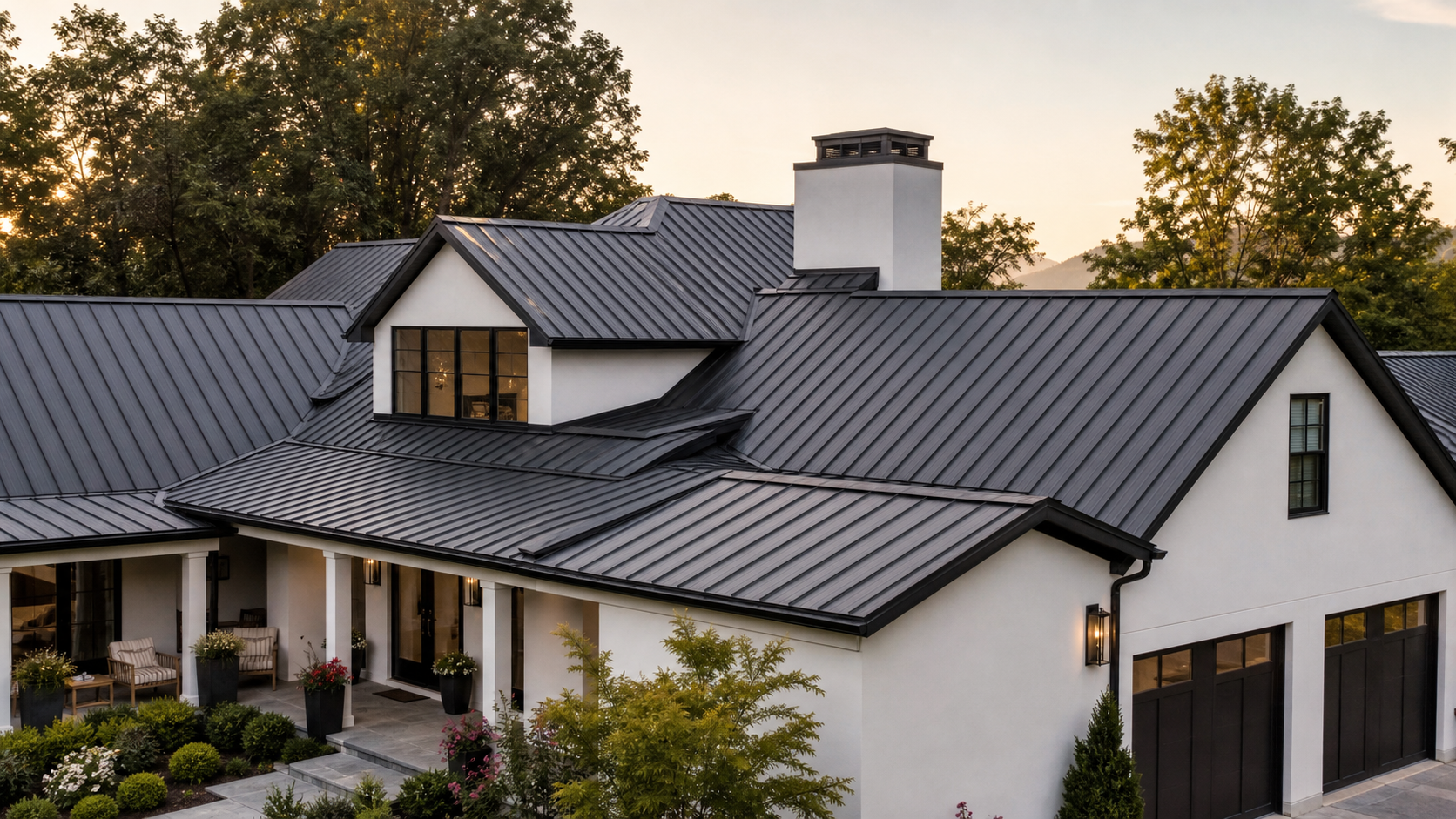
Standing seam roofs have prominent vertical seams with primary attachment hardware generally concealed from direct weather exposure.
The clean linear appearance works especially well with contemporary, farmhouse, mountain, and minimalist architecture.
Specific seam profiles and attachment methods differ among manufacturers.
Metal Shingles and Tiles
Modular metal products can be shaped to resemble shingles, slate, shakes, or tile.
These systems allow homeowners to combine characteristics of metal with more traditional architectural patterns.
Installation details differ substantially from long panel systems, so installers should have experience with the chosen product.
Exposed Fastener Panels
Exposed fastener systems use screws that penetrate the panel and remain visible.
These products can be economical and practical for appropriate applications, but washers and fasteners remain important maintenance points because they are directly exposed to weather.
They should not be assumed to perform identically to concealed fastener standing seam systems.
4. Metal Roofing Can Support Energy Efficient Roof Design
Metal roofing is sometimes promoted with aggressive claims about reducing utility bills. The actual relationship is more nuanced.
Roof surface color and solar reflectance can influence solar heat gain, particularly in cooling dominated climates.
Reflective Roof Finishes
Some metal roof coatings are designed with relatively high solar reflectance and thermal emittance characteristics.
Performance varies by color and coating.
Homeowners interested in cool roof performance should compare documented values for specific products rather than assuming every metal roof is inherently reflective.
Does Metal Roofing Lower Energy Bills?
It may contribute to a roof assembly designed for better thermal performance, but no universal savings percentage is reliable.
Attic insulation, air sealing, roof color, ventilation where appropriate, climate, orientation, HVAC efficiency, thermostat settings, and existing construction all affect household energy consumption.
Evaluate the complete building rather than treating the roof covering as an independent energy system.
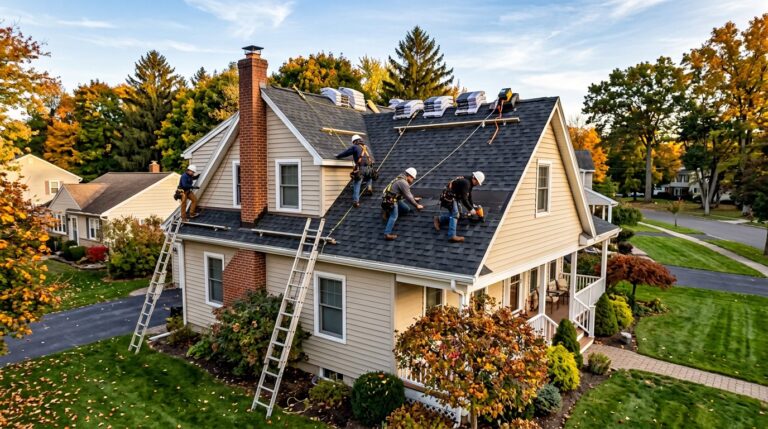
5. Proper Metal Roofing Installation Is Essential
Metal roof performance depends heavily on workmanship.
Long panels, specialized flashing, thermal movement, complex valleys, and penetrations can make these systems technically demanding.
Start With a Suitable Roof Deck
The deck needs to meet requirements for the chosen system.
A replacement project also provides an opportunity to identify deteriorated sheathing, moisture problems, or unsuitable substrates before new roofing conceals them.
Damaged decking should be repaired appropriately.
Use the Correct Underlayment
Underlayment requirements depend on roof system, climate, roof slope, code, and manufacturer specifications.
Synthetic materials, self adhering membranes, and other products may be specified in different areas of a roof.
The underlayment should be selected as part of the complete tested or approved system.
Flashing Requires Precision
Critical locations commonly include:
• Valleys
• Chimneys
• Skylights
• Plumbing vents
• Sidewalls
• Roof to wall intersections
• Eaves
• Rakes
• Ridges
• Other penetrations
Improvised flashing can undermine an otherwise high quality panel system.
Allow for Thermal Movement
Long metal panels can undergo measurable dimensional movement with temperature changes.
Fastening and seam details should accommodate the behavior expected for the material and system.
This is one reason manufacturer specific installation procedures matter.
6. Metal Roofing Can Perform Well in Severe Weather When Properly Specified
Weather performance depends on the system, location, and installation.
Homeowners in high wind, hail, snow, wildfire, or coastal areas should evaluate documentation relevant to those particular hazards.
Metal Roofing and Wind
Metal roofing assemblies can be designed for significant wind conditions, but not all products have identical ratings.
Local building requirements can depend on wind speed, building height, exposure category, location, and roof geometry.
A contractor should propose a system appropriate for applicable local conditions.
Metal Roofing and Hail
Metal roofs can resist many impacts, but sufficiently severe hail can dent or damage some products.
Material thickness, profile, substrate, metal type, and storm conditions influence outcomes.
Where hail is a major concern, ask for applicable impact performance information for the exact system.
Metal Roofing and Snow
Smooth metal surfaces can allow accumulated snow to slide suddenly under certain conditions.
Snow guards or retention systems may be appropriate above entrances, walkways, mechanical equipment, or other sensitive locations.
Design requirements depend on roof geometry and local snow conditions.
Metal Roofing and Wildfire
Certain metal roof assemblies can achieve strong fire performance, making them potentially useful in wildfire prone regions.
However, roof fire classification applies to an assembly and not simply to the fact that the outer surface is metal.
Vents, gutters, eaves, decks, vegetation, and nearby combustible materials also influence wildfire vulnerability.
7. Metal Roofing Requires Maintenance
Metal is often described as low maintenance, which is different from maintenance free.
Periodic inspections can help identify small issues before they become larger problems.
What Should Be Inspected?
Depending on system design, check for:
• Damaged panels
• Loose or problematic fasteners
• Deteriorated sealants where specified
• Debris accumulation
• Scratched or damaged coatings
• Corrosion
• Flashing problems
• Blocked drainage
• Changes around penetrations
Roof inspection from the ground or another safe location is preferable for homeowners.
Avoid Walking on Metal Roofing Unnecessarily
Metal surfaces can be slippery, particularly when wet, icy, dusty, or covered with biological growth.
Walking can also dent or damage certain profiles.
Professional roofing contractors should handle inspections requiring roof access and follow appropriate fall protection procedures.
Standing Seam Versus Exposed Fastener Metal Roofing
These two systems are frequently compared, but they differ structurally as well as visually.
Standing seam systems generally conceal primary fasteners and can use clips or other approaches designed to accommodate panel movement.
Benefits of Standing Seam
Potential advantages include concealed attachments, clean architectural lines, and fewer exposed penetrations through the primary panel surface.
Standing seam can also work well for some rooftop attachments when compatible clamps designed for the seam are available.
System specific engineering remains important.
Exposed Fastener Systems
Exposed fastener panels can have lower initial material and installation costs and remain useful for houses, agricultural structures, garages, and other buildings when appropriate.
Fasteners penetrate the roof surface, so their washers, placement, installation torque, and long term condition matter.
The system should be inspected as it ages.
How Much Does Metal Roofing Cost?
There is no reliable universal installed price.
Cost depends on metal, panel profile, roof size, geometry, slope, tear off, deck condition, coating, flashing, labor, location, and code requirements.
Major Metal Roofing Cost Factors
Pricing may be affected by:
• Steel, aluminum, copper, or zinc
• Standing seam or modular construction
• Panel thickness or specification
• Roof size
• Roof pitch
• Number of valleys and penetrations
• Dormers and architectural details
• Existing roof removal
• Deck repairs
• Underlayment
• Flashing fabrication
• Local labor costs
• Permits and inspections
Copper and specialty architectural systems generally represent a very different budget category from common steel panels.
Compare Complete Proposals
Ask each contractor to identify the exact metal, panel manufacturer, coating, profile, underlayment, flashing scope, fastener system, warranties, and removal work.
Comparing only price per square foot can hide important differences.
Metal Roofing Over Existing Shingles
Installing metal over an existing roof may be possible in some projects, but it is not universally appropriate.
Local codes, manufacturer requirements, existing roof layers, deck condition, roof geometry, moisture concerns, and structural considerations all matter.
Benefits and Limitations of an Overlay
Avoiding tear off can reduce demolition and disposal, but it also limits direct inspection of the roof deck.
Existing damage should not be concealed beneath a new roof.
Confirm Manufacturer Requirements
Some products have specific requirements for installation over existing materials, underlayment, ventilation spaces, or attachment.
A contractor should verify those requirements before recommending an overlay.
Does Metal Roofing Need Underlayment?
Most residential metal roof systems incorporate underlayment or another specified secondary layer, although exact requirements vary.
Underlayment provides supplementary protection during construction and as part of the completed assembly.
Ice and Water Protection
Cold climate requirements may call for self adhering or other protective membrane at eaves, valleys, or specified locations.
Applicable code and manufacturer requirements determine where it is needed.
High Temperature Underlayments
Certain metal assemblies can expose underlayment to elevated temperatures.
Products must be suitable for the conditions anticipated beneath the roof covering.
Contractors should choose underlayment based on documented compatibility rather than convenience alone.
Metal Roofing and Condensation
Metal does not create moisture from nothing, but roof assemblies can experience condensation when warm humid air contacts a sufficiently cold surface.
Moisture management depends on the complete roof design.
Control Indoor Moisture
Air sealing, insulation, ventilation when applicable, and indoor humidity management can all influence condensation risk.
A roof replacement should not be expected to correct unrelated building moisture problems automatically.
Vented and Unvented Roof Assemblies
Both vented and properly designed unvented roof assemblies are possible.
They require different insulation, air control, and moisture strategies.
Building specific design becomes especially important when changing an attic or roof assembly configuration.
Is Metal Roofing Noisy in Rain?
The answer depends largely on the roof assembly.
A metal panel installed over solid decking, underlayment, insulation, ceilings, and attic space behaves differently acoustically from a thin panel installed over open framing.
Interior Sound Depends on Construction
Rain or hail can still be audible, as it is with other roofing materials, but homeowners should not assume every residential metal roof will produce the amplified sound associated with an uninsulated agricultural building.
If noise is a concern, discuss the complete assembly with the contractor.
Insulation Should Be Designed for Building Performance
Adding insulation purely as an improvised sound treatment can affect moisture and ventilation conditions.
Any insulation changes should be compatible with the roof assembly.
Does Metal Roofing Attract Lightning?
Metal roofing does not inherently cause lightning to strike a building.
Lightning behavior depends on factors such as location, building height, surrounding terrain, and storm conditions.
Metal Is Electrically Conductive
Metal can conduct electricity, but conductivity should not be confused with attracting lightning.
Buildings requiring lightning protection should use systems designed according to applicable standards rather than relying on roof material alone.
Grounding Questions Require Professional Guidance
Electrical and lightning protection requirements are specialized.
Consult qualified professionals when a building requires a lightning protection system or when local requirements apply.
Metal Roofing and Solar Panels
A metal roof can work well with photovoltaic systems when roof and solar attachments are properly designed.
Some standing seam profiles can accommodate specialized clamps that attach without penetrating the primary panel.
Verify System Compatibility
Not every seam can accept every clamp.
Solar installers should confirm compatibility with the roof manufacturer, attachment manufacturer, structural requirements, and wind or snow loads.
Coordinate Roof and Solar Service Life
Installing solar on a deteriorated roof can create additional expense when the roof later requires replacement.
If both projects are anticipated, coordinating them can reduce unnecessary removal and reinstallation work.
Metal Roof Colors and Finishes
Color affects architectural appearance and can also influence solar performance.
Dark roofs often create a bold contrast, while lighter finishes may provide different reflective characteristics depending on coating.
Compare Physical Samples
Screens do not display roofing colors reliably.
View manufacturer samples outdoors and, where possible, observe completed roofs using the same product.
Understand Coating Warranties
Paint finish warranties can cover particular forms or degrees of coating deterioration under defined conditions.
They should not be interpreted as a promise that the roof will look completely unchanged throughout the warranty period.
Read exclusions and measurement criteria carefully.
Metal Roofing and Gutters
Metal roofs can use conventional gutter systems, but drainage needs to account for roof geometry and local rainfall.
Water and snow can move differently across a smooth metal surface.
Coordinate Eave Details
Drip edges, panel termination, underlayment, gutters, and fascia need to work together.
Poor coordination can allow runoff to overshoot or flow behind drainage components.
Consider Snow Movement
In snowy climates, sudden sliding snow can damage gutters or create hazards below.
Snow retention design should be considered alongside gutter placement where conditions warrant it.
Metal Roofing Warranties
A project can involve several distinct warranties.
The roofing manufacturer may provide material or finish coverage, while the installer may provide a separate workmanship warranty.
Material and Finish Coverage
Review the duration, exclusions, transfer provisions, environmental limitations, maintenance requirements, and claim process.
Coastal locations can have specific warranty restrictions for some products.
Workmanship Coverage
Ask what happens if a leak results from installation rather than a material defect.
Know how long the contractor’s coverage lasts and what expenses it includes.
Keep all contracts, invoices, product specifications, and warranty documents.
Choosing a Metal Roofing Contractor
Metal installations require skills that do not always transfer directly from conventional asphalt shingle roofing.
Look for contractors experienced with the exact system under consideration.
Questions to Ask a Contractor
Useful questions include:
• Which panel system will you install?
• What metal and coating does it use?
• How will panels accommodate thermal movement?
• What underlayment is specified?
• How will valleys and penetrations be flashed?
• Are permits included?
• What manufacturer warranty applies?
• What workmanship warranty do you provide?
• How will existing roofing be handled?
• How will debris and metal scraps be collected?
Detailed answers make estimates easier to compare.
Verify Licensing and Insurance
Roofing licensing requirements vary by jurisdiction.
Check applicable requirements and current insurance before signing the contract.
Common Metal Roofing Mistakes
Many problems attributed to the material are actually related to design or installation.
Incorrect fasteners, poorly detailed penetrations, incompatible metals, insufficient movement allowance, and careless flashing can all undermine a roof.
Avoid Mixing Incompatible Metals
Contact between certain dissimilar metals can contribute to galvanic corrosion when conditions permit.
Runoff from one material onto another can also matter.
Installers should use compatible components specified for the roofing system.
Do Not Overlook Cut Edges
Field cutting can affect protective finishes and exposed edges differently depending on the product.
Manufacturers provide approved cutting methods and touch up instructions where appropriate.
Tools and procedures should follow those requirements.
Frequently Asked Questions
How long does metal roofing last?
Service life varies by metal, coating, climate, installation, exposure, and maintenance. There is no single accurate lifespan for every metal roof.
Is metal roofing more expensive than shingles?
Many residential metal systems have a higher initial installed cost than common asphalt shingles, but actual pricing depends on roof design, material, labor, and location.
Can metal roofing be installed over shingles?
Sometimes. Existing roof condition, building codes, manufacturer requirements, structural factors, and the number of existing layers determine whether an overlay is appropriate.
Does metal roofing make a home hotter?
Not inherently. Roof temperature and building heat gain depend on color, reflectance, insulation, ventilation or assembly design, climate, and other factors.
Is metal roofing noisy when it rains?
Noise depends on the complete roof assembly. Solid decking, underlayment, insulation, attic space, and ceilings can substantially affect sound heard indoors.
Does metal roofing require maintenance?
Yes. Periodic inspection can identify coating damage, flashing issues, corrosion, debris, and fastener concerns before they develop into larger problems.
Conclusion
Metal roofing can provide durable weather protection and distinctive architectural design when the system is matched to the home, climate, and local requirements. Material selection matters, but proper decking, underlayment, flashing, fastening, thermal movement details, and professional installation are equally important. Comparing documented product specifications and detailed contractor proposals can help homeowners choose a metal roof based on verified performance rather than generalized marketing claims.