Custom Backsplashes That Transform Kitchens and Bathrooms With Distinctive Style
Well designed custom backsplashes can turn a functional wall surface into one of the most distinctive features of a kitchen, bathroom, bar, laundry room, or other interior space. Unlike choosing a standard tile and repeating it across a wall without modification, a customized design can coordinate material, color, pattern, layout, grout, edging, niches, outlets, cabinetry, countertops, and architectural details. The best results balance appearance with practical requirements such as moisture exposure, cleaning, heat conditions, substrate preparation, and installation. Understanding these elements makes it easier to create a backsplash that looks intentional and remains practical for everyday use.
What Are Custom Backsplashes?
Custom backsplashes are wall finishes designed for a particular room, surface, or architectural composition rather than treated as a generic covering.
Customization can involve the material, pattern, dimensions, color combination, decorative inserts, tile orientation, layout, border treatment, fabrication, or installation method.
In some projects, individual pieces are fabricated to fit the space. In others, readily available materials are arranged in a distinctive custom layout.
What Is the Purpose of a Backsplash?
A backsplash provides a cleanable surface in areas exposed to ordinary splashes, food preparation, cooking residue, or bathroom moisture.
Kitchen installations commonly appear behind:
• Sinks
• Countertops
• Cooktops
• Ranges
• Beverage stations
• Coffee areas
Bathroom applications can include vanity walls and other suitable splash areas.
A backsplash should not be confused with a complete waterproofing system. In locations subject to substantial water exposure, such as showers, the underlying wall assembly generally requires appropriate water management independent of the decorative tile surface.
What Makes Custom Backsplashes Different?
A custom design responds to the dimensions and visual features of the actual room.
Instead of stopping a pattern awkwardly around a cabinet or outlet, the installer can plan where cuts, joints, focal points, and transitions should occur.
This detailed planning can make even a relatively simple material look more deliberate.
7 Stunning Custom Backsplashes Ideas
Material and pattern possibilities are extensive. These seven approaches provide a useful starting point while leaving room for personalization.
1. Create Custom Backsplashes With Natural Stone
Natural stone can introduce unique color variation, veining, texture, and movement.
Popular choices can include marble, granite, quartzite, travertine, limestone, and other stones suitable for the intended application.
Because stone is a natural material, appearance and properties vary.
Marble Backsplashes
Marble is often chosen for its veining and classic appearance.
Depending on the specific stone and finish, marble can be susceptible to staining, scratching, or etching from acidic substances.
Owners should understand maintenance requirements before choosing it for a heavily used kitchen.
Use Slab Stone for Continuous Visual Movement
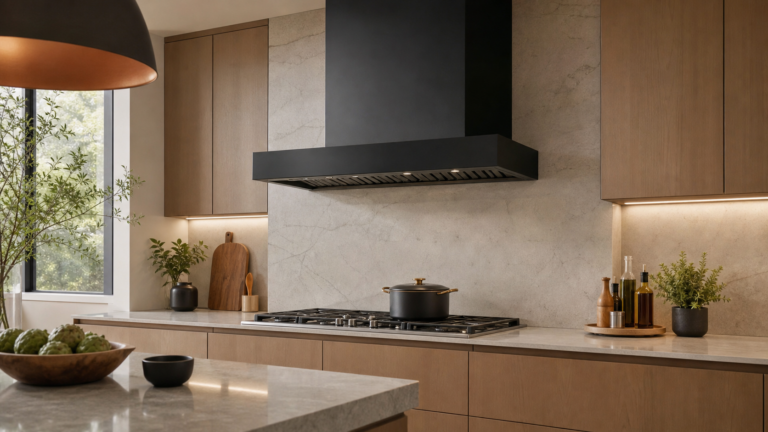
A slab backsplash can minimize grout joints and showcase natural veining across a broad surface.
Fabrication should account for:
• Outlets
• Switches
• Corners
• Cabinet clearances
• Countertop transitions
• Range or cooktop areas
• Edge finishing
Accurate field measurements are especially important because fabricated slab errors can be costly to correct.
Match Stone With Countertops Carefully
Using the same stone on the countertop and wall can create visual continuity.
Alternatively, a quieter backsplash can balance a strongly patterned countertop.
Request physical samples whenever possible because photographs and screens do not reliably reproduce natural stone color or variation.
2. Design Custom Tile Backsplashes
Tile offers exceptional design flexibility because individual pieces can be combined in different formats, colors, and patterns.
Ceramic and porcelain products are widely available, while specialty installations can use handmade or decorative tiles.
Ceramic Tile
Ceramic tile comes in numerous shapes, colors, finishes, and sizes.
Some products have glazed surfaces that are relatively straightforward to clean, while handmade products may have deliberate irregularities.
Performance characteristics differ, so confirm that the chosen product is appropriate for the intended wall application.
Porcelain Tile
Porcelain is a category of ceramic tile manufactured to meet particular characteristics, including defined water absorption criteria.
It is available in designs that can resemble stone, concrete, wood, metal, or other surfaces.
For backsplash use, appearance and cleanability often have more practical importance than the strength requirements associated with floor applications.
Handmade Tile
Handmade or artisan tiles can feature irregular edges, surface variation, glazing differences, and subtle dimensional changes.
These characteristics may be intentional rather than manufacturing defects.
Homeowners seeking a perfectly uniform installation should understand the visual variation before purchasing artisan products.
3. Use Patterns to Personalize Custom Backsplashes
Layout can transform familiar materials.
A simple rectangular tile can produce very different results depending on orientation and pattern.
Popular Backsplash Layouts
Design options include:
• Running bond
• Straight stack
• Vertical stack
• Herringbone
• Chevron
• Basket inspired patterns
• Geometric arrangements
• Custom mosaics
Complex patterns typically require additional planning and more cuts.
Herringbone Custom Backsplashes
Herringbone uses rectangular pieces arranged in an angular repeating pattern.
It can create movement without requiring highly decorative tile.
Successful execution depends on establishing accurate reference lines so the pattern remains visually aligned.
Create a Focal Point
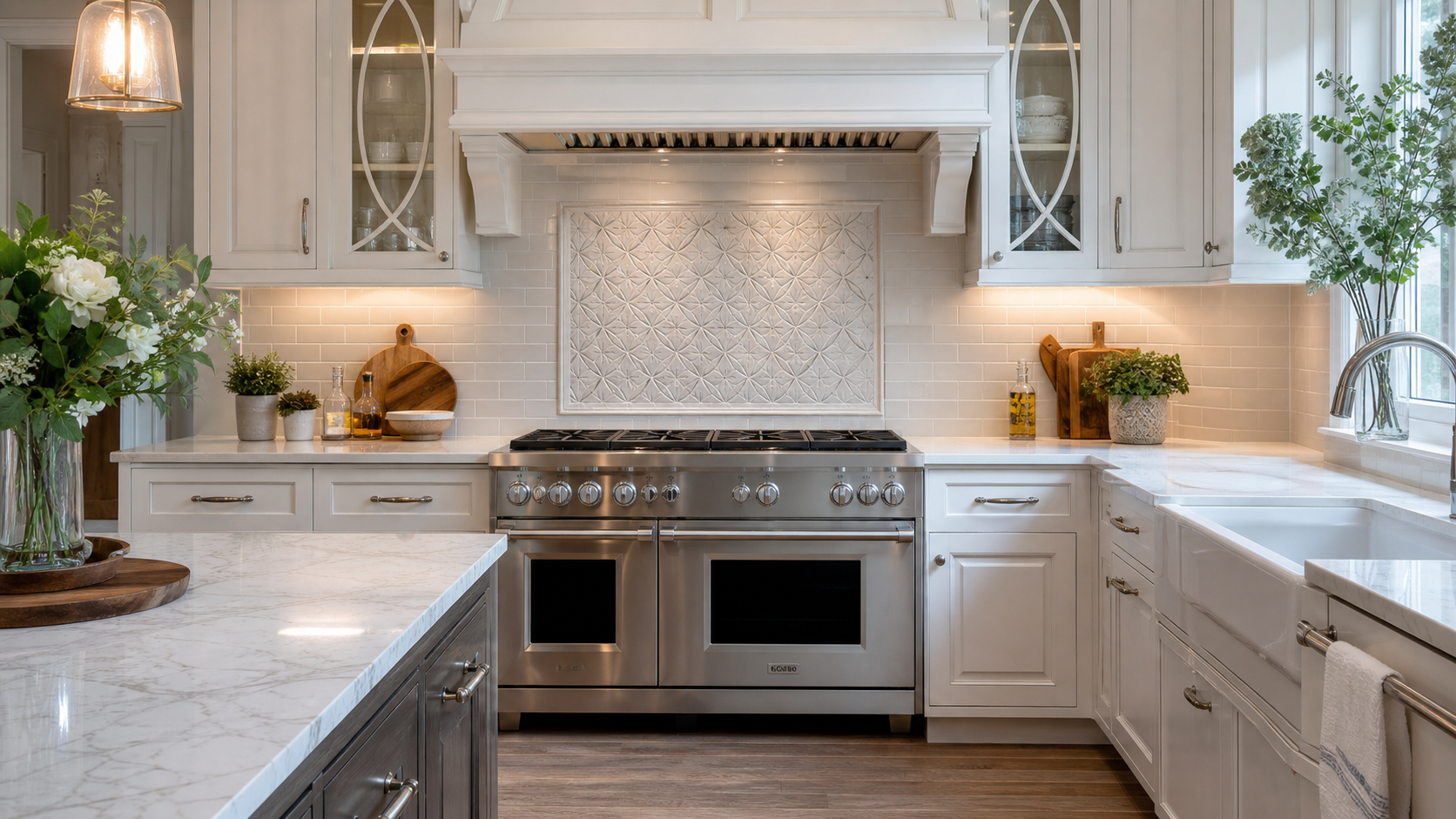
One approach is to use a restrained pattern throughout most of the room and introduce a more detailed design behind a range or another architectural feature.
The focal section can use different tile, orientation, framing, or decorative material.
Avoid adding competing focal points to every wall unless that is an intentional part of the design.
4. Coordinate Custom Backsplashes With Countertops
A backsplash is viewed directly beside the countertop, making coordination essential.
Trying to match similar colors that are slightly different can sometimes create more visual conflict than choosing purposeful contrast.
Start With the Most Visually Complex Surface
If the countertop has prominent veining or several colors, a more restrained wall surface may allow it to remain the primary feature.
With a simple countertop, a detailed backsplash can introduce pattern and personality.
Examine Undertones
White, gray, beige, and other neutrals can have warm or cool undertones.
Compare samples physically in the room alongside cabinets and counters.
Natural daylight, under cabinet fixtures, and evening lighting can make the same material appear significantly different.
Avoid Designing From Screens Alone
Online visualizers can help narrow choices, but screen calibration, camera settings, and room lighting influence color reproduction.
Always verify important finish decisions with actual material samples when possible.
5. Extend Custom Backsplashes Beyond Standard Heights
A backsplash does not have to stop a few inches above a countertop.
Full height installations can extend to upper cabinetry, shelves, ceilings, or another deliberate architectural boundary.
Counter to Cabinet Backsplashes
Covering the complete area between a counter and upper cabinets creates a continuous visual surface.
This arrangement also avoids an arbitrary horizontal stopping point.
Full Wall Custom Backsplashes
A full wall treatment can work particularly well around open shelving, range hoods, or areas without upper cabinets.
Before committing, consider material cost, pattern intensity, outlet placement, and how the wall interacts with adjacent surfaces.
Continue Material Around Corners
Some designs wrap the same material around adjacent walls.
The transition should be planned carefully because exposed cut edges, pattern alignment, and changes in wall dimensions can affect the result.
An installer should decide how inside and outside corners will be finished before installation begins.
6. Use Grout as Part of the Custom Design
Grout is functional, but it also affects appearance.
A grout color close to the tile can create a quieter surface. Contrasting grout can emphasize individual tile shapes and patterns.
Choose Grout for the Application
Different grout products have different performance, preparation, and maintenance requirements.
Options can include cementitious and resin based products, among others.
The tile manufacturer, grout manufacturer, installation conditions, and installer should inform product selection.
Test Grout Color
Small color samples can appear different when applied across a complete wall.
Testing a sample board with the actual tile and proposed grout can help predict the finished appearance.
Understand Grout Maintenance
Maintenance depends on grout type and exposure.
Some cement based grouts may benefit from sealing when recommended for the product and application. Other formulations may have different maintenance requirements.
Follow manufacturer guidance rather than assuming all grout needs identical treatment.
7. Add Functional Details to Custom Backsplashes
A beautiful design still needs to work around electrical devices, cabinetry, appliances, and everyday cleaning.
Planning these details early can significantly improve the finished appearance.
Consider Electrical Outlet Placement
Electrical outlets and switches can interrupt intricate patterns.
Any relocation or modification of electrical devices needs to comply with applicable electrical requirements and should be completed by appropriately qualified professionals where required.
Do not conceal required electrical access simply to achieve an uninterrupted pattern.
Coordinate Under Cabinet Lighting
Under cabinet lighting can emphasize texture and material variation.
Lighting also affects perceived color, so evaluate samples with the lighting that will actually be used.
Highly reflective materials can produce more glare than matte surfaces.
Plan Around Ranges and Cooktops
Materials located near cooking appliances need to be suitable for their location.
Appliance manufacturers specify required clearances and installation conditions. Local building, mechanical, fuel gas, and fire requirements may also apply.
Decorative appearance should never override required safety clearances.
Best Materials for Custom Backsplashes
There is no universally best material.
The choice should reflect the intended environment, desired aesthetic, cleaning requirements, budget, and installation details.
Ceramic and Porcelain
These materials provide broad design flexibility and are widely used on interior walls.
Glazed products can provide a durable, cleanable finish.
Glass
Glass tiles can create reflective and translucent effects unavailable with many opaque materials.
Proper substrate preparation and suitable setting materials matter because the installation can sometimes remain visible through the glass.
Natural Stone
Natural stone provides unique variation but may require more maintenance than some glazed products.
Sealing recommendations and chemical sensitivity depend on the stone.
Stainless Steel and Metal
Metal backsplashes can suit contemporary and commercial inspired interiors.
Some designs use continuous sheets, while others use tile formats.
Metal finishes can show fingerprints, scratches, or cleaning marks differently, so understand care requirements.
Engineered and Manufactured Surfaces
Some countertop manufacturers offer slab materials suitable for vertical backsplash applications.
These can provide visual continuity and fewer joints.
Confirm that the exact product is approved for the intended wall location and exposure.
Custom Backsplashes for Kitchens
Kitchen backsplashes must coordinate with cabinetry, appliances, counters, lighting, and architectural features.
Starting with these fixed elements helps keep the palette cohesive.
Backsplash Behind a Range
The range wall often becomes a natural focal point.
Potential approaches include a slab panel, patterned tile, framed decorative section, or continuous material carried from surrounding walls.
Consider Cleaning
Cooking can produce grease, food splatter, steam, and other residue.
Highly textured materials or numerous grout joints may require more detailed cleaning than smooth surfaces.
Design expectations should therefore align with maintenance preferences.
Custom Backsplashes for Bathrooms
Bathroom vanity areas can provide opportunities for more decorative designs because they may have smaller wall areas than kitchens.
Water exposure still needs consideration.
Vanity Backsplashes
A vanity installation can extend only around the sink or continue upward as a full feature wall.
Coordinate the material with mirrors, lighting, faucets, cabinetry, and countertops.
Backsplashes Are Not Shower Waterproofing
Tile and grout should not be assumed to make a shower wall waterproof.
Wet areas require suitable substrates and water management systems beneath the decorative finish.
When extending a design into a shower, installation needs to meet requirements for that wet environment.
How Much Do Custom Backsplashes Cost?
Pricing varies considerably according to material, area, pattern complexity, fabrication, removal, substrate condition, and labor market.
A straightforward ceramic installation is fundamentally different from a fabricated natural stone slab.
Factors Affecting Custom Backsplash Cost
Major variables include:
• Material choice
• Wall area
• Tile dimensions
• Pattern complexity
• Number of cuts
• Existing backsplash removal
• Substrate repair
• Grout type
• Edge details
• Niches or decorative sections
• Outlet modifications
• Slab fabrication
• Local labor costs
A site specific estimate provides more reliable pricing than a generic cost per square foot.
Account for Material Waste
Tile projects require additional material for cuts, breakage, pattern layout, and future repairs.
The required amount depends on material and pattern complexity.
An installer or supplier can calculate an appropriate quantity for the specific design rather than relying on a universal waste percentage.
Custom Backsplash Installation Process
Professional results depend heavily on planning and substrate preparation.
Even expensive tile can look poor when installed over an unsuitable surface or without a deliberate layout.
Measure the Wall
Record overall dimensions as well as cabinets, windows, outlets, switches, appliances, and other interruptions.
Walls are not always perfectly square, so field measurements matter.
Prepare the Substrate
The installation surface should meet requirements for the selected setting system and material.
Loose finishes, significant irregularities, moisture problems, or damaged wallboard may require correction first.
Dry Plan the Layout
Before installation, determine where full pieces, cuts, focal elements, and transitions will occur.
This is particularly important with herringbone, mosaics, large format tile, and highly varied natural stone.
Install With Compatible Materials
Setting products need to be compatible with the tile, substrate, and environment.
Natural stone, glass, ceramic, and porcelain can have different requirements.
Use manufacturer specified products and procedures.
Edge Finishing for Custom Backsplashes
Exposed edges can strongly influence whether a backsplash looks finished.
Planning edge treatments after tile has already been installed can limit the available options.
Common Edge Approaches
Depending on material, possibilities include:
• Coordinating trim tile
• Finished tile edges
• Metal profiles
• Fabricated stone edges
• Purpose designed transition pieces
The best choice depends on the surrounding architecture.
Plan Transitions Before Ordering
Some product lines do not include matching trim pieces.
Confirm availability before purchasing the main material, particularly when exposed edges are prominent.
How to Maintain Custom Backsplashes
Maintenance depends on the selected surface.
Glazed tile, stone, glass, grout, and metal can require different cleaning products.
Clean Spills Appropriately
Removing cooking residue and splashes before they harden generally makes cleaning easier.
Use cleaners approved for the material.
Acidic or abrasive products can damage certain natural stones and finishes.
Follow Sealer Requirements
Not every tile or grout needs sealing.
When sealing is recommended, use a product compatible with the material and follow its application instructions.
Sealer can improve resistance to some forms of staining but does not make an installation maintenance free.
DIY Versus Professional Custom Backsplashes
Simple tile layouts can be approachable DIY projects for homeowners with suitable skills and tools.
Complex patterns, natural stone slabs, glass, extensive substrate repairs, and projects involving electrical changes are generally more demanding.
When Professional Installation Makes Sense
Consider an experienced installer when the project includes:
• Expensive materials
• Complex mosaics
• Intricate patterns
• Large format products
• Slab fabrication
• Difficult walls
• Numerous architectural transitions
• Specialized setting materials
Quality installation can be especially important when replacement materials have substantial natural variation or limited availability.
Electrical Work Requires Additional Care
Removing outlet covers for tile work differs from modifying electrical wiring or relocating boxes.
Electrical alterations should comply with applicable codes and licensing requirements.
Common Custom Backsplash Mistakes
One common design mistake is choosing materials independently without comparing them to counters and cabinetry.
Another is failing to establish the layout before installation.
Avoid Awkward Tiny Cuts
A planned layout can reduce conspicuous narrow pieces at corners or boundaries.
Some cuts remain unavoidable, but thoughtful positioning can make them less distracting.
Do Not Ignore Wall Condition
Installing a beautiful finish over an unstable, damaged, or moisture affected substrate does not solve the underlying problem.
Repair the wall first.
Avoid Too Many Competing Features
Patterned counters, dramatic cabinets, decorative floors, statement lighting, and highly complex backsplashes can compete for attention when all are equally dominant.
Visual restraint can sometimes make the customized element more effective.
Custom Backsplashes and Home Value
An attractive backsplash can improve the presentation of a kitchen or bathroom, but no design can guarantee a specific increase in property value.
Buyer preferences vary.
Design for Quality Rather Than a Guaranteed Return
A well planned neutral installation may appeal to a broad audience, while a highly individual design can be ideal for an owner intending to remain in the property.
Resale should be one consideration, not the only design principle.
Installation Quality Matters
Poor alignment, uneven joints, unfinished edges, and awkward cuts can undermine expensive materials.
Accurate planning and workmanship are often more visible than the price of the tile itself.
How to Choose a Custom Backsplash Installer
Look for experience with the actual material and pattern being considered.
An installer highly experienced with conventional ceramic tile may not necessarily specialize in large stone slabs or intricate glass mosaics.
Questions to Ask
Consider asking:
• Have you installed this material before?
• How will the layout be planned?
• What substrate preparation is included?
• Which setting material will be used?
• How will exposed edges be finished?
• Who handles electrical devices?
• Is sealing included where required?
• How will unexpected wall damage be priced?
• What workmanship warranty is offered?
Written project details make contractor comparisons easier.
Review Relevant Work Samples
Photographs of previous installations can demonstrate experience with patterns, edges, corners, and material transitions.
Focus on workmanship comparable to the planned project rather than unrelated remodeling photographs.
Frequently Asked Questions
What are custom backsplashes?
Custom backsplashes are wall finishes designed specifically around a room’s dimensions, materials, layout, colors, architectural details, and functional requirements.
What material is best for custom backsplashes?
There is no single best choice. Ceramic, porcelain, glass, natural stone, metal, and approved slab surfaces offer different aesthetics and maintenance requirements.
How much do custom backsplashes cost?
Cost depends on wall area, material, pattern, preparation, fabrication, labor, and installation complexity. A project specific estimate provides the most reliable price.
Are custom backsplashes waterproof?
Not necessarily. Many backsplash surfaces resist ordinary splashes, but decorative tile and grout should not replace required waterproofing systems in wet areas such as showers.
Can custom backsplashes be installed over existing tile?
Sometimes, but suitability depends on the existing surface, added thickness, adhesion, condition, and product requirements. An installer should evaluate the wall before proceeding.
Are custom backsplashes difficult to maintain?
Maintenance depends on the material. Glazed surfaces can be relatively straightforward, while some natural stone, textured tile, and grout installations require additional care.
Conclusion
Custom backsplashes combine practical wall protection with an opportunity to create a distinctive interior feature. Material selection, countertop coordination, layout, grout, edges, substrate preparation, and installation quality all influence the finished result. By testing physical samples and planning technical details before installation begins, homeowners can create a backsplash that complements the room while remaining practical for daily use.