Master Backyard Cooking With a Grill Setup That Delivers Every Time
A gas grill makes outdoor cooking convenient because heat is available quickly, temperature is relatively easy to adjust, and different burner configurations can support everything from weeknight burgers to larger backyard gatherings. Getting consistently good results, however, requires more than turning every burner to maximum heat. Preheating, heat-zone management, grate condition, food preparation, safe handling, cleaning, and routine maintenance all influence the final meal.
For beginners and experienced backyard cooks alike, a gas grill works best when it is treated as a cooking appliance rather than simply an outdoor source of flame. Understanding direct and indirect heat, knowing when to keep the lid closed, preventing grease buildup, checking the fuel system, and using a reliable food thermometer can improve both cooking consistency and safety. These fundamentals matter more than owning the largest or most expensive model available.
What Is a Gas Grill
A gas grill is an outdoor cooking appliance that uses gaseous fuel to create heat beneath a cooking surface.
Depending on the model and location, grills may operate with propane or natural gas. These fuels and their associated components are not automatically interchangeable.
Most designs use burners positioned beneath heat-distribution components and cooking grates. Controls regulate fuel flow and therefore influence heat output.
Some models include additional features such as side burners, infrared cooking areas, rotisserie burners, warming racks, integrated temperature displays, storage cabinets, and multiple cooking zones.
The essential principle remains straightforward. A gas grill provides controllable outdoor heat for cooking food on a grate or compatible accessory.
Why gas grilling remains popular
Convenience is one of the strongest advantages.
Charcoal cooking has its own characteristics and loyal following, but it normally requires additional time to ignite and manage the fuel bed. A gas grill can usually reach cooking conditions more quickly.
Other practical advantages can include:
- Adjustable burners
- Multiple heat zones
- Straightforward shutdown
- Less solid fuel to handle
- Repeatable everyday cooking
- Easy weeknight use
- Broad food versatility
- Compatibility with many accessories
None of these advantages removes the need for safe operation.
Combustible fuel and high temperatures require appropriate placement, inspection, and supervision.
Why Gas Grill Technique Matters More Than Maximum Heat
Many first-time grill users approach outdoor cooking with one idea: hotter is better.
High heat is useful for certain foods and techniques, but cooking everything over the strongest possible flame can burn surfaces before interiors reach appropriate doneness.
A gas grill offers controllability, and good cooking takes advantage of that capability.
Different burners can create separate temperature zones.
Food can begin over stronger direct heat and move to a cooler area, or it can cook primarily through indirect heat with the lid closed.
Learning to control heat rather than merely maximize it is one of the biggest improvements a backyard cook can make.
9 Amazing Proven Gas Grill Tips for Better Backyard Cooking
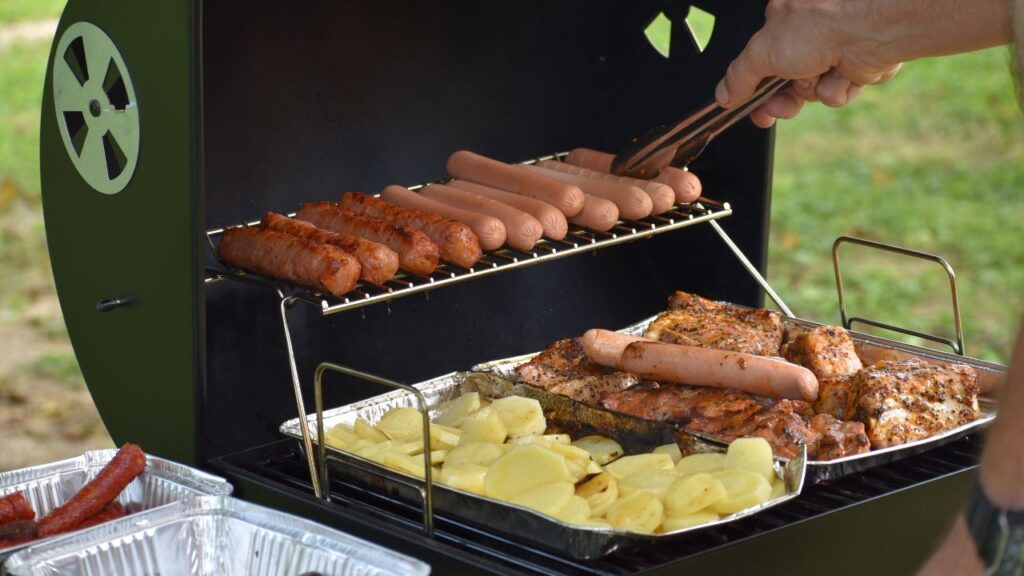
Better grilling does not require dozens of specialized gadgets.
A dependable process, suitable ingredients, a clean appliance, and a few essential tools can solve most everyday problems.
1. Preheat the Gas Grill Before Cooking
Preheating allows the cooking chamber and grates to become hot before food is added.
This helps create more predictable cooking conditions and prepares the grates for cooking and cleaning.
The appropriate preheating procedure depends on the grill manufacturer and intended food.
Follow the appliance instructions rather than using one fixed time for every gas grill.
Why preheating makes a difference
Placing cold food onto cold grates can increase sticking and make heat management less predictable.
Preheated grates begin transferring heat immediately.
For foods where surface browning matters, that initial contact can be useful.
A preheated gas grill also makes it easier to remove loose residue with an appropriate cleaning tool before cooking.
Avoid unnecessary extended preheating
Preheating longer than necessary wastes fuel.
It can also expose components to high temperatures without providing a cooking benefit.
Once the gas grill reaches suitable cooking conditions according to the recipe and manufacturer guidance, begin using it.
Efficiency is part of temperature control.
2. Create Direct and Indirect Heat Zones
Heat zoning is one of the most useful techniques available on a multi-burner gas grill.
Direct cooking places food over an active heat source.
Indirect cooking positions food away from the strongest active burners so that heat circulates around it when the lid is closed.
This gives the cook more control over foods with different thicknesses and cooking times.
Direct heat
Direct heat can be useful for relatively quick-cooking foods.
Examples can include certain burgers, steaks, vegetables, seafood, and smaller portions depending on thickness and desired result.
The exact burner setting varies.
A gas grill should not be assumed to produce identical heat across every part of its grate.
Indirect heat
Indirect cooking is helpful when food needs more time without continuous intense heat directly beneath it.
On a multi-burner gas grill, this can involve turning off one or more burners beneath the food while keeping adjacent burners operating.
Exact configurations vary by model.
Follow manufacturer instructions for indirect cooking and ensure the appliance is designed to operate safely in the chosen configuration.
A cooler zone gives you somewhere to move food
Even during direct grilling, leaving a lower-temperature area available can be extremely useful.
If fat causes flare-ups or food browns faster than expected, it can be moved temporarily.
A gas grill with every burner locked on maximum gives the cook fewer options when something starts going wrong.
3. Learn the Real Hot Spots on Your Gas Grill
Control knobs show burner settings, not exact grate temperatures.
Every grill can have variations across its cooking surface because of burner design, wind, lid shape, heat shields, grate material, and other factors.
Learning those zones makes cooking more consistent.
A cook can notice where bread browns faster, where vegetables soften first, or where steaks consistently develop more color.
Use temperature measurements sensibly
Some gas grill models have a lid-mounted thermometer.
This can provide useful general information about the cooking chamber, but it does not necessarily represent the exact temperature at grate level.
A suitable grate-level probe can provide more precise information when a recipe requires it.
For most casual cooking, learning the appliance through repeated use is equally valuable.
Rotate food when heat distribution requires it
If one side of the gas grill is consistently hotter, rotating or repositioning food may improve evenness.
This differs from flipping constantly without purpose.
Use movement to manage heat exposure.
The objective is even, controlled cooking rather than rigidly following a rule that every item can only be touched once.
4. Use a Food Thermometer Instead of Guessing
Color alone is not a reliable way to determine whether certain foods have reached a safe internal temperature.
A digital food thermometer is one of the most useful gas grill accessories because it provides objective information.
Food-safety authorities publish minimum internal-temperature guidance for different foods.
Because recommendations can differ by jurisdiction and can be updated, cooks should consult current guidance from their relevant public-health or food-safety authority.
Measure temperature in the right place
Insert the probe into the thickest relevant part of the food while avoiding inappropriate contact with bone, the grate, or other surfaces that could distort the reading.
Thin foods may require side insertion.
For larger pieces, checking more than one location can help identify uneven cooking.
A gas grill can create an attractive browned exterior while the center remains undercooked.
Clean the probe appropriately
A thermometer moves between food items and can become a source of cross-contamination if handled carelessly.
Clean it according to its manufacturer’s instructions and good food-safety practices.
Do not use a contaminated probe from raw poultry and immediately insert it into ready-to-eat food.
Better grilling combines temperature accuracy with hygienic handling.
5. Keep Gas Grill Grates Properly Clean
Old food residue can affect flavor, sticking, smoke, and cleanliness.
Routine grate care is easier than waiting for a thick layer of burned debris to accumulate.
Cleaning methods depend on grate material.
Cast iron, stainless steel, porcelain-coated surfaces, and other materials can have different maintenance requirements.
Follow the gas grill manufacturer’s recommendations.
Be careful with wire grill brushes
Traditional wire-bristle brushes have been associated with cases in which loose bristles contaminate food and cause serious injury if swallowed.
Inspect any cleaning tool before use.
Consider appropriate alternatives recommended for the grate material, and inspect the cooking surface after cleaning.
If using a wire brush, never continue using it when bristles are damaged, loose, or heavily worn.
Gas grill maintenance should never introduce a preventable foreign-object hazard.
Clean while residue is manageable
A slightly warm cooking surface may be easier to clean than completely hardened residue, but avoid touching dangerously hot components.
Follow the safe cleaning method specified by the manufacturer.
A well-maintained gas grill generally requires less aggressive scraping.
6. Control Flare-Ups Instead of Cooking in Flames
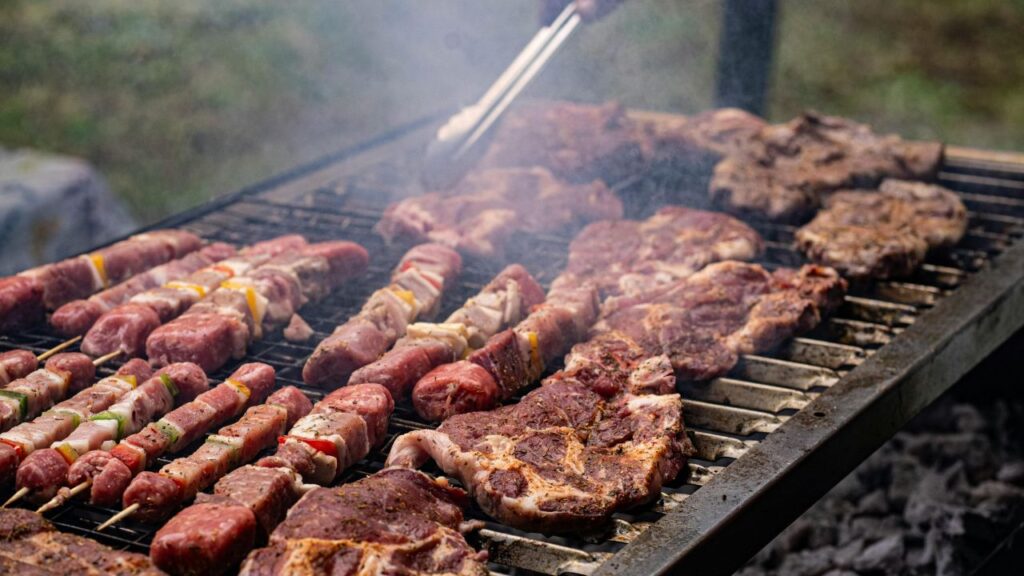
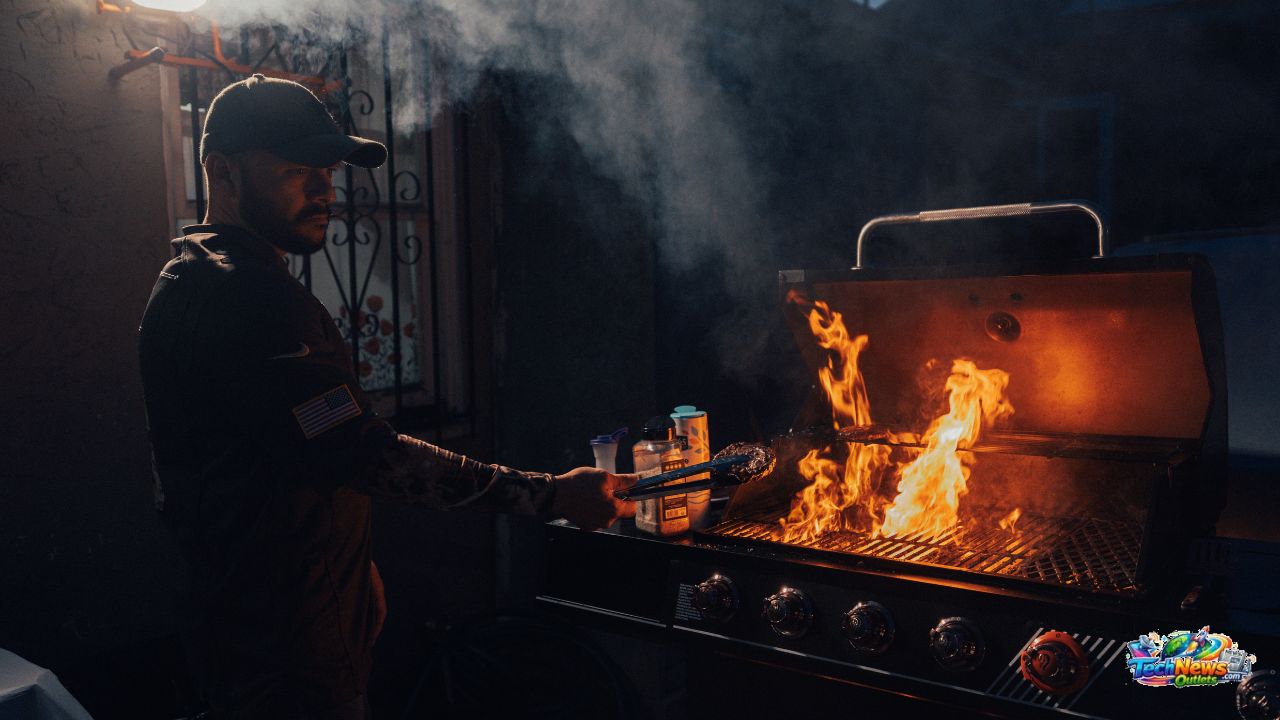
Flare-ups happen when fat or juices reach hot components and ignite.
A brief flame is common during grilling, particularly with fatty foods.
Sustained flames directly surrounding food can create heavy charring and unpredictable cooking.
A gas grill gives cooks the ability to move food and adjust burner output.
Use that control.
Trim excessive external fat where appropriate
Some fat contributes flavor and texture, but very large external sections can drip heavily.
Preparation can reduce unnecessary flare-ups depending on the food.
Do not remove all fat automatically.
The goal is controlled cooking.
A gas grill should produce heat, not function as an uncontrolled open fire beneath the meal.
Never spray water into a grease flare-up
Water can spread burning grease and create dangerous splattering.
If a flare-up occurs, move food away from the affected area if this can be done safely, adjust burners, and follow the grill manufacturer’s fire-safety instructions.
Keep the lid and fuel controls managed according to the nature of the situation.
For a significant fire, personal safety comes before saving the food or appliance.
7. Keep the Lid Closed When the Cooking Method Calls for It
Constantly opening the lid releases heat.
For indirect cooking, larger foods, and recipes relying on the cooking chamber, this can extend cooking time and create temperature swings.
The lid effectively turns a gas grill into a more oven-like environment.
That does not mean the lid should always remain closed.
Thin foods cooked very quickly over direct heat may require closer visual attention.
Open the grill with a purpose
Check, turn, move, baste, or measure food when necessary.
Avoid opening the lid every minute merely from curiosity.
A consistent gas grill environment produces more predictable results.
This becomes particularly important during longer indirect cooks.
8. Maintain the Fuel System and Burners
Reliable heat depends on clean burners and a properly functioning fuel system.
Blocked burner ports, corrosion, damaged hoses, regulator problems, or incorrect connections can affect operation and safety.
Inspect the gas grill according to manufacturer instructions.
Never modify fuel components to make incompatible systems fit.
Propane and natural gas are not automatically interchangeable
A gas grill designed for propane should not simply be connected to natural gas, or vice versa.
Fuel pressure, orifices, valves, regulators, and other components can differ.
Some manufacturers offer approved conversion kits for particular models, while others do not permit conversion.
Use only procedures specifically authorized for that gas grill.
Check hoses and connections
Propane systems can use hoses and regulators that should be inspected for cracking, abrasion, damage, or other deterioration.
Connections should be secure.
Manufacturer instructions may specify a leak-check procedure using an appropriate solution.
Never test for a gas leak using an open flame.
9. Clean Grease Management Components Regularly
Grease accumulation can become both a maintenance and fire issue.
Many grills use removable trays, cups, pans, or channels to collect grease and cooking residue.
These areas are easy to forget because they sit below the cooking grate.
A dirty gas grill can accumulate enough grease to create serious flare-ups or fires.
Build cleaning into the cooking routine
The exact schedule depends on how frequently the appliance is used and what is being cooked.
Fatty foods generally create more grease than vegetables or leaner ingredients.
Inspect grease-management areas regularly.
Follow manufacturer instructions before removing or cleaning components.
The gas grill should be cool and safely shut down before deeper maintenance begins.
Choosing the Right Gas Grill
The best gas grill is not necessarily the model with the highest burner count or largest cooking area.
Choose according to how many people are normally served, the available outdoor space, preferred fuel, cooking style, storage requirements, and budget.
Construction quality and serviceability also matter.
A smaller high-quality gas grill can be more useful than a huge model that consumes excessive space and rarely has its full cooking area used.
Consider burner configuration
Multiple independently controlled burners create flexibility.
They make it easier to establish direct and indirect zones.
For someone who regularly cooks larger foods or prepares several items at different temperatures, burner control can matter more than headline heat-output numbers.
Evaluate the entire gas grill design rather than comparing a single specification.
Cooking area
Marketing may quote total cooking area including warming racks.
Check the actual primary grate dimensions.
Imagine the foods you normally prepare.
A couple may not need the same gas grill space as someone routinely hosting large gatherings.
More space also means more surface to preheat and clean.
Propane Gas Grill Versus Natural Gas Grill
Propane provides portability because fuel is stored in a cylinder.
Natural gas models connect to a suitable household supply where available and professionally installed according to local codes.
Each arrangement has advantages.
A propane gas grill can be moved more easily within permitted safe locations, while a natural gas model avoids replacing or refilling portable cylinders.
Consider fuel availability
Natural gas requires an appropriate connection.
Installing or modifying gas lines should be performed in accordance with applicable codes and by qualified professionals where required.
Propane cylinders require proper storage, transport, connection, and inspection.
The gas grill manufacturer’s requirements and local fire regulations should always take priority.
How Many Burners Does a Gas Grill Need
Burner count affects zoning flexibility.
Two burners can provide a basic direct and indirect configuration on many designs.
Three or more can provide finer control over larger cooking areas.
Burner quality and placement matter as much as quantity.
A gas grill with six poorly distributed burners is not automatically superior to a well-designed three-burner appliance.
Buy for actual cooking patterns rather than specification competition.
Understanding Gas Grill Grate Materials
Cooking grates can influence heat retention, maintenance, durability, and cooking behavior.
Common types include cast iron, porcelain-coated cast iron, and stainless steel, although products vary.
Cast iron can retain heat effectively but may require specific care.
Porcelain coatings can protect underlying material but should not be damaged with unsuitable cleaning tools.
Stainless steel can offer durability and comparatively straightforward maintenance depending on construction.
Follow the gas grill manufacturer’s recommendations because broad material descriptions do not capture every grate design.
What Are Heat Tents and Flame Tamers
Many grills place metal components between burners and cooking grates.
Manufacturers use different names, including heat tents, flavorizer-style bars, flame tamers, or heat plates.
These components can distribute heat, shield burners from dripping food, and influence vaporization and flare-ups.
They are consumable or serviceable gas grill parts on some models.
Inspect them periodically for severe corrosion, holes, grease accumulation, or damage.
Essential Gas Grill Tools
You do not need a drawer filled with specialized gadgets.
A few quality tools handle most backyard cooking.
Useful items include:
- Long-handled tongs
- Suitable spatula
- Reliable digital food thermometer
- Heat-resistant grill gloves used appropriately
- Manufacturer-compatible grate-cleaning tool
- Basting brush
- Trays for separating raw and cooked food
- Timer
- Grilling basket or skewers when useful
Avoid tools that make food handling more complicated.
The best gas grill accessory is one that solves a recurring problem.
Food Preparation Before Gas Grilling
Better grilling often begins in the kitchen.
Drying the surface of suitable foods can help with browning. Seasoning can be applied according to the recipe. Vegetables can be cut to sizes that cook evenly and will not easily fall through grates.
Keep raw meat separated from ready-to-eat foods.
Do not place cooked food back onto a tray that held raw meat unless the tray has been properly cleaned.
A gas grill can cook safely only when food handling around it is also safe.
Should Meat Reach Room Temperature Before Grilling
Advice to leave meat out until it fully reaches room temperature is often oversimplified.
Perishable food should not remain in temperature conditions that promote unsafe bacterial growth for unnecessary periods.
Follow food-safety guidance relevant to the ingredient and jurisdiction.
A gas grill can cook food taken safely from refrigeration.
Temperature control during storage is more important than trying to warm raw meat for an arbitrary length of time.
Gas Grilling Burgers
Burgers benefit from good heat control and food-safety awareness.
Ground meat has different safety considerations from intact whole cuts because bacteria present on the surface can become distributed throughout during grinding.
Cook burgers to the internal temperature recommended by the relevant food-safety authority.
Use a thermometer instead of relying on color.
Avoid excessive pressing
Repeatedly crushing a burger with a spatula can force out juices and encourage flare-ups.
Let the gas grill provide heat while handling the burger only as necessary.
If flare-ups become excessive, move the food to another zone and adjust heat.
Gas Grilling Steaks
Steak cooking depends on thickness, cut, preferred doneness, starting temperature, grill heat, and technique.
A two-zone gas grill provides flexibility.
The cook can develop surface browning over stronger heat and move the steak away from direct flame if the center requires additional cooking.
A food thermometer provides more reliable information than timing alone.
Resting can affect final temperature
Food temperature can continue changing after removal from heat.
The degree varies with size and cooking conditions.
Account for this when following a trusted recipe or food-safety method.
Do not use a generic resting rule to justify serving meat below applicable safety recommendations when minimum temperatures are required.
Gas Grilling Chicken
Poultry needs particularly careful temperature verification.
Exterior charring is not proof that the interior has reached a safe temperature.
Bone-in pieces can be especially challenging because the surface can brown well before thicker areas finish cooking.
Indirect heat can help manage this.
A gas grill with separate zones allows chicken to be moved away from intense direct heat while cooking continues.
Use current food-safety guidance for minimum internal temperatures.
Gas Grilling Fish
Fish can cook quickly and may stick or break apart.
A clean, appropriately prepared cooking surface helps.
Depending on the fish, a grill basket, suitable plank used according to safe instructions, foil method, or direct grate cooking can work.
Oil and marinades can influence flare-ups.
A gas grill should be monitored closely because delicate fish can move from undercooked to dry relatively quickly.
Gas Grilling Vegetables
Vegetables are ideal for developing heat-control skills.
Large pieces can cook directly on suitable grates, while smaller pieces benefit from a basket or other grill-safe accessory.
Different vegetables cook at different rates.
Harder vegetables may require more time than delicate items.
A gas grill with separate zones lets cooks move vegetables according to their progress rather than removing everything simultaneously.
Using Marinades Safely
Marinades can add flavor and influence surface browning.
A marinade that has contacted raw meat should not automatically be brushed onto cooked food.
If it will be reused as a sauce, follow an appropriate food-safety procedure such as reserving a clean portion before contact or cooking contaminated marinade according to authoritative guidance.
Cross-contamination can undermine otherwise safe gas grill cooking.
Sugar and High Heat
Sauces containing substantial sugar can burn rapidly over strong direct heat.
Barbecue sauces are a common example.
Applying sugary sauces later in cooking can sometimes help limit burning, depending on the recipe.
A gas grill gives the cook the flexibility to lower heat or move the food to an indirect zone after saucing.
Taste is improved by controlled caramelization, not a thick layer of carbonized sugar.
Smoke Flavor on a Gas Grill
Gas combustion itself does not create the same smoke profile as charcoal or wood.
Some cooks use manufacturer-approved smoker boxes or appropriate accessories with wood chips.
Follow the gas grill instructions.
Never place burning wood, charcoal, or improvised smoking materials inside an appliance not designed for them.
Excessive smoke can also make food unpleasant.
More smoke is not automatically better flavor.
Gas Grill Lid Open or Closed
The answer depends on the cooking method.
Closing the lid retains heat and supports indirect cooking.
Keeping it open can be appropriate for certain fast direct-cooking situations where the cook needs close control.
Instead of memorizing one universal rule, understand what the lid does to the cooking environment.
A gas grill with the lid closed behaves more like an outdoor oven than an exposed burner.
Gas Grill Safety and Location
Outdoor placement is critical.
Gas grills produce combustion gases, high heat, and potentially dangerous carbon monoxide.
Never operate a gas grill indoors, in a garage, or in another enclosed or inadequately ventilated space.
Follow manufacturer clearance requirements from walls, roofs, combustible materials, railings, and structures.
Local rules may restrict grilling on balconies or multifamily properties.
Carbon monoxide can be deadly
Carbon monoxide is colorless and odorless.
An open garage door does not necessarily make indoor grilling safe.
A gas grill should be used outdoors in accordance with the manufacturer’s ventilation and placement instructions.
Never bring it inside during rain or cold weather merely for convenience.
Lighting a Gas Grill Correctly
Ignition procedures vary between models.
Follow the manufacturer’s sequence.
Generally, the lid position, fuel valve, burner control, and ignition steps matter because unburned gas should not be allowed to accumulate.
If a burner fails to ignite, turn controls off and follow the specified waiting and retry procedure.
Never repeatedly click the ignition while allowing gas to build up.
If you smell gas
Do not continue trying to ignite the gas grill.
Shut down the system according to safe procedures, move away where appropriate, and investigate the problem when safe.
Avoid flames, sparks, and ignition sources.
If there is a significant uncontrolled leak or immediate danger, contact emergency or gas-safety services as appropriate to the location.
Propane Cylinder Safety
Propane cylinders should be stored, transported, connected, and refilled according to applicable rules and supplier guidance.
Do not use severely damaged or inappropriate cylinders.
Keep the cylinder in the orientation and location specified for the gas grill.
Never store spare propane cylinders in inappropriate enclosed living areas.
Local fire codes and regulations can establish additional requirements.
Cleaning a Gas Grill After Cooking
Routine cleaning is easier than seasonal restoration.
After the grill has been shut down and reached a safe condition, clean grates according to manufacturer instructions and inspect obvious grease accumulation.
Empty grease trays before they overflow.
Exterior stainless steel or painted surfaces may require different cleaning products.
Avoid highly abrasive chemicals unless the gas grill manufacturer approves them.
Deep Cleaning a Gas Grill
Periodic deeper maintenance can include removing and cleaning compatible cooking grates, heat plates, drip components, and accessible interior residue.
Burner cleaning should follow the manual carefully.
Do not enlarge burner holes using inappropriate tools.
Before disassembly, shut down and disconnect the fuel supply as required.
Take photographs during disassembly if the manufacturer permits user servicing and the component arrangement is complex.
Incorrectly reassembled gas grill parts can create operational problems.
Preventing Rust and Corrosion
Outdoor appliances experience humidity, rain, salt, food acids, grease, and temperature changes.
Corrosion resistance varies by material and environment.
A suitable gas grill cover can help when recommended, but covering a damp appliance can potentially trap moisture.
Allow the grill to cool and dry according to manufacturer guidance.
Clean corrosive food residue and inspect fasteners, burners, grates, and body components periodically.
Gas Grill Covers
A cover should fit properly and provide suitable weather protection without interfering with safe cooling or ventilation requirements.
Never place a cover on a hot gas grill.
In windy environments, loose covers can rub against finishes or blow away.
Follow manufacturer recommendations.
A cover can reduce weather exposure but cannot compensate for poor materials or lack of maintenance indefinitely.
Gas Grill Storage During Winter
Seasonal storage depends on climate, fuel type, and manufacturer instructions.
Some owners leave grills outdoors under suitable protection, while others move them to an appropriate storage location.
Propane-cylinder storage has separate safety requirements.
Never move a gas grill with fuel into a location prohibited by fire or building rules.
Clean it before long storage so grease and food residue do not remain for months.
How Long Does a Gas Grill Last
There is no universal lifespan.
Durability depends on materials, construction, weather, frequency of use, maintenance, replacement-part availability, and storage.
Burners, heat shields, ignition components, grates, and regulators can have different service lives from the main body.
A gas grill with available replacement parts may remain useful much longer than one whose first failed component cannot be sourced.
Repair or Replace a Gas Grill
Some worn components are designed to be replaced.
A deteriorated cooking grate or igniter does not necessarily justify replacing the entire appliance.
Structural corrosion, severe fire damage, unavailable safety-critical components, or a compromised firebox can make replacement more appropriate.
Never attempt improvised repairs to gas-carrying components.
Use parts specified for the gas grill and qualified service where necessary.
Common Gas Grill Mistakes
Several habits repeatedly undermine backyard cooking.
One is cooking everything over maximum heat.
Another is skipping preheating entirely.
Poor grease-tray maintenance can create dangerous flare-ups, while opening the lid constantly disrupts indirect cooking.
Other mistakes include guessing food temperatures, using the wrong fuel, ignoring damaged hoses, and assuming more burners automatically mean better performance.
A gas grill becomes easier to use once heat control and maintenance replace improvisation.
How to Buy a Gas Grill Without Overspending
Start with normal cooking needs. Estimate how many people you serve most frequently rather than the maximum number who might visit once a year.
Think about whether you use indirect cooking, rotisserie equipment, side burners, or other features.
Then consider construction, warranty, parts availability, burner control, cleaning access, and customer support.
The cheapest gas grill can become expensive if replacement components are unavailable, while a premium model provides little value if most of its features remain unused.
Gas Grill Versus Charcoal Grill
Gas and charcoal provide different experiences rather than one being objectively superior.
A gas grill generally offers faster startup and easier burner adjustment.
Charcoal provides a different fuel-management process and flavor opportunities.
Some enthusiasts own both.
For everyday backyard cooking, the best choice depends on time, desired flavor, local rules, storage, budget, and willingness to manage fuel.
Gas is often attractive when convenience and temperature control are priorities.
Gas Grill Versus Pellet Grill
Pellet grills commonly use electrically controlled systems to burn compressed wood pellets and are particularly associated with temperature-controlled smoking and roasting.
A gas grill generally reaches direct high-heat cooking conditions quickly and does not need pellet fuel.
Products vary substantially.
Buyers should choose according to preferred cooking style rather than assuming one appliance can perfectly reproduce every technique of another.
Planning a Better Backyard Cooking Session
Preparation reduces stress once the burners are lit.
Clean and inspect the gas grill before guests arrive.
Prepare ingredients, sauces, tools, clean serving trays, and a thermometer in advance.
Know which foods need direct heat and which need indirect cooking.
Begin items with the longest cooking requirements first.
This simple planning prevents the common problem of trying to chop vegetables indoors while high-fat meat creates uncontrolled flare-ups outside.
Hosting With a Gas Grill
When cooking for a group, select foods that can be managed safely and predictably.
Trying six unfamiliar recipes simultaneously can make heat management difficult.
Use the grill’s zones intentionally.
Keep cooked food separate from raw ingredients, maintain appropriate food temperatures, and avoid leaving perishable foods sitting outside longer than recommended by relevant food-safety authorities.
A successful gas grill gathering depends as much on organization as cooking skill.
A Practical Gas Grill Checklist
Before cooking, take a minute to review the essentials:
- Position the grill outdoors in a safe location
- Check fuel availability
- Inspect visible hoses and connections
- Confirm grease trays are not overloaded
- Clean the cooking grate appropriately
- Preheat according to instructions
- Establish direct and indirect zones
- Prepare separate raw and cooked food trays
- Keep a reliable thermometer available
- Monitor flare-ups
- Keep children and pets away from hot surfaces
- Never leave active burners unattended
- Shut down the gas grill correctly
- Clean and inspect it after cooling
These habits make backyard cooking more predictable while reducing avoidable safety problems.
FAQ’s
What is a gas grill?
A gas grill is an outdoor cooking appliance that burns propane or natural gas to heat cooking grates. Fuel type, burner arrangement, and features vary by model.
How long should a gas grill preheat?
Preheating time depends on the grill, weather, burner setting, and cooking method. Follow the manufacturer’s guidance and preheat only until suitable cooking conditions are reached.
Should a gas grill lid stay open or closed?
It depends on the cooking method. Closed-lid cooking retains heat and supports indirect techniques, while some fast direct grilling benefits from closer open-lid control.
Can a gas grill use both propane and natural gas?
Not automatically. The fuels can require different components and pressures. Convert a gas grill only when the manufacturer specifically supports an approved conversion procedure.
How often should a gas grill be cleaned?
Clean cooking surfaces and inspect grease accumulation regularly, with deeper cleaning based on use and manufacturer guidance. Fatty cooking generally requires more frequent maintenance.
Is food cooked on a gas grill safe?
It can be when the grill is used correctly and good food-safety practices are followed. Prevent cross-contamination and verify appropriate internal temperatures with a food thermometer.
Conclusion
A gas grill can make backyard cooking fast, flexible, and repeatable when the cook learns to control heat instead of simply maximizing it. Preheating properly, creating direct and indirect zones, learning hot spots, checking internal food temperature, controlling flare-ups, and keeping grates and grease systems clean can improve both cooking results and safety. Basic technique has a greater impact than collecting unnecessary accessories.
A reliable gas grill also depends on maintenance beyond the cooking surface. Inspect fuel components, use only the fuel specified for the appliance, keep burners and grease-management areas in good condition, and always operate the grill outdoors with appropriate clearance. With sound food handling, deliberate temperature control, and routine care, the same gas grill can handle quick weekday meals and larger backyard gatherings without turning outdoor cooking into guesswork.