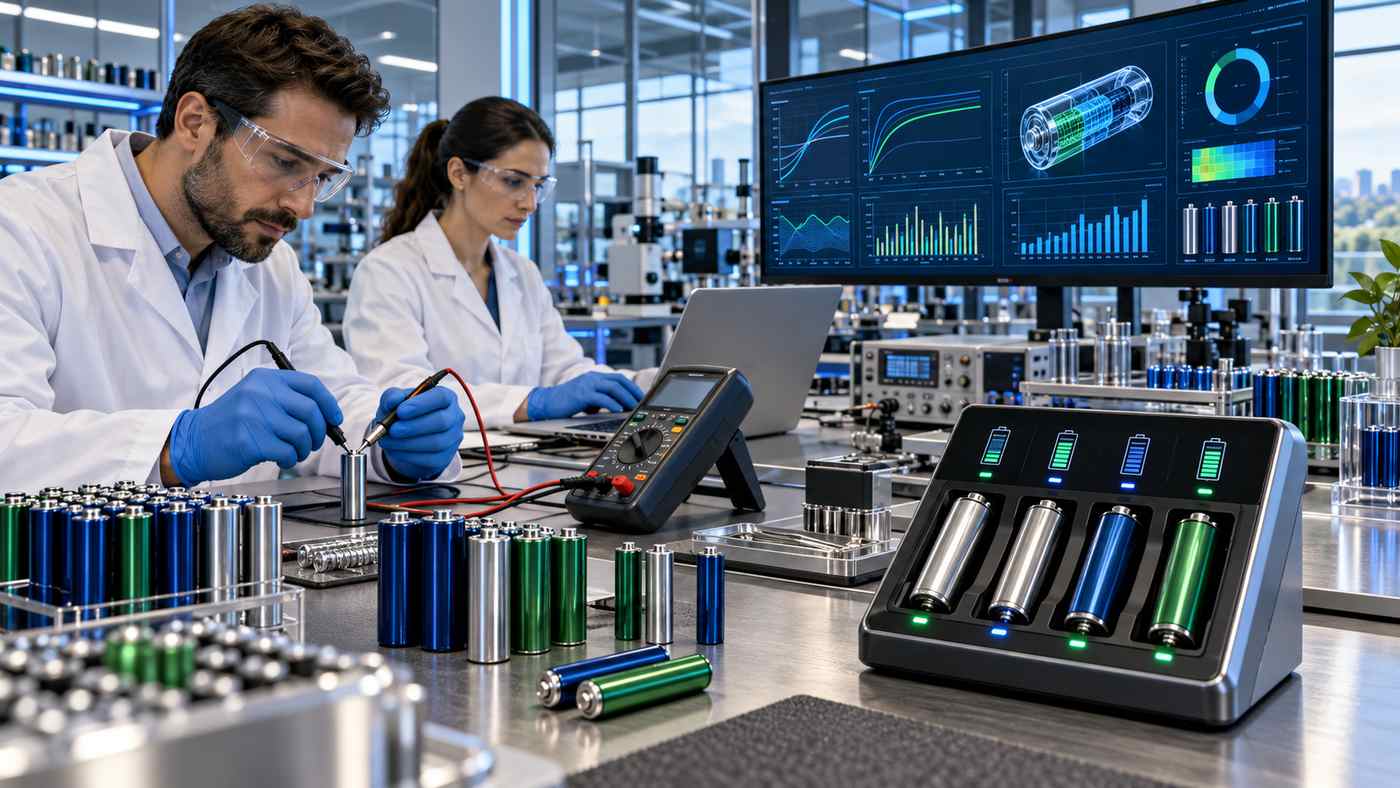
NiMH Battery: 7 Essential Tips for Better Performance, Safe Charging, and Longer Battery Life
Rechargeable batteries have become an important part of modern electronics, providing reusable power for household devices, professional equipment, and selected industrial applications. Among the available rechargeable technologies, the NiMH Battery remains a practical choice for people who want dependable performance without constantly purchasing disposable batteries. From digital cameras and gaming controllers to wireless accessories and specialised equipment, nickel-metal hydride technology continues to provide useful energy storage capabilities.
Unlike conventional disposable alkaline batteries, NiMH cells are designed to be recharged and used repeatedly. This makes them especially attractive for devices that consume batteries frequently.
However, rechargeable batteries vary in capacity, charging requirements, discharge behaviour, and overall durability.
A battery suitable for a wireless keyboard may not be the best choice for a camera flash, cordless device, or high-drain electronic accessory.
Understanding these differences can help consumers and businesses select batteries that match their equipment.
Proper charging is also essential. Using an unsuitable charger, exposing batteries to excessive heat, or allowing cells to become deeply discharged can reduce their service life and create safety concerns.
Low self-discharge technology, intelligent charging systems, and improved electrode materials have made modern NiMH batteries more convenient than earlier rechargeable designs.
Nevertheless, they remain subject to normal chemical aging and performance limitations.
This guide explores seven essential strategies for choosing and maintaining NiMH batteries, explains their operating principles, compares them with other battery technologies, and provides practical advice for safe charging, storage, and recycling.
What Is a NiMH Battery?
A NiMH Battery, also known as a nickel-metal hydride battery, is a rechargeable electrochemical energy storage device.
It stores electrical energy through reversible chemical reactions involving a nickel-based positive electrode and a hydrogen-absorbing metal alloy negative electrode.
When the battery supplies power to a device, electrochemical reactions generate an electrical current.
During charging, an appropriate external power source drives the reactions in the reverse direction, restoring usable stored energy.
This ability to undergo repeated charging and discharging makes NiMH technology suitable for many reusable battery applications.
How Does a NiMH Battery Work?
A typical cell contains a nickel oxyhydroxide-based positive electrode, a hydrogen-storing metal alloy negative electrode, an alkaline electrolyte, and a separator.
During discharge, the positive and negative electrodes participate in reactions that release electrical energy through the connected circuit.
The metal alloy stores hydrogen during charging and releases it during discharge through the relevant electrochemical process.
The alkaline electrolyte facilitates ionic transport within the battery.
Charging reverses the principal discharge reactions.
However, real batteries are not perfectly efficient, and unwanted side reactions can occur.
This is why appropriate charging control and temperature management are necessary.
What Is the Voltage of a NiMH Battery?
A standard rechargeable NiMH cell has a nominal voltage of approximately 1.2 volts.
This differs from the nominal 1.5 volts commonly associated with primary alkaline AA and AAA batteries.
However, nominal voltage does not fully describe how a battery performs inside a device.
Battery voltage changes with charge level, electrical load, temperature, and other factors.
NiMH cells can maintain useful voltage during discharge, which makes them suitable for certain high-current applications.
Compatibility should always be checked against the device manufacturer’s requirements.
Common NiMH Battery Sizes
Nickel-metal hydride batteries are available in several forms.
Popular consumer formats include AA and AAA rechargeable cells.
Some manufacturers also offer larger cylindrical cells, specialised battery packs, and custom industrial configurations.
Certain applications use multiple cells connected together to achieve higher overall voltage or capacity.
The appropriate size and configuration depend on the equipment being powered.
Why NiMH Battery Technology Remains Relevant
Lithium-ion batteries dominate many modern portable electronic products, but nickel-metal hydride technology continues to offer practical advantages.
One important benefit is its availability in familiar household battery formats.
Consumers can use compatible rechargeable AA and AAA cells in many devices originally designed around replaceable batteries.
NiMH batteries can also deliver useful current for selected high-drain applications.
Another benefit is their ability to undergo repeated charging cycles.
Instead of discarding a battery after one discharge, users can recharge it using suitable equipment.
However, this does not mean every device should automatically switch to NiMH.
Some equipment has specific voltage, chemistry, or operating requirements.
The best choice depends on compatibility and intended use.
7 Essential Tips for Choosing and Using a NiMH Battery
Getting dependable results from rechargeable batteries requires more than selecting the highest advertised capacity.
The following strategies explain the most important factors influencing performance, safety, and long-term value.
1. Choose the Right NiMH Battery Capacity for Your Device
Battery capacity describes the amount of electrical charge a battery can deliver under specified test conditions.
For many consumer rechargeable batteries, capacity is expressed in milliampere-hours, abbreviated as mAh.
Understanding this rating helps users compare products.
What Does mAh Mean?
A battery rated at 2,000 mAh has a nominal charge capacity of 2,000 milliampere-hours under its specified testing conditions.
In simplified terms, that corresponds to a theoretical delivery of 2,000 milliamperes for one hour, although actual performance varies with load and operating conditions.
Capacity is not a guarantee of a particular runtime.
Temperature, discharge rate, device efficiency, and battery age can influence the amount of usable energy.
Typical AA NiMH Battery Capacity
Modern AA rechargeable batteries are available with different capacities.
For example, Panasonic lists a standard eneloop AA cell with a typical capacity of up to 2,000 mAh and a minimum rated capacity of 1,900 mAh.
Higher-capacity variants are also available.
However, greater rated capacity does not necessarily mean better overall performance in every situation.
A higher-capacity cell may offer a different balance of cycle life, charge retention, and other characteristics.
Typical AAA NiMH Battery Capacity
AAA batteries are physically smaller and usually provide less capacity than comparable AA cells.
Panasonic’s standard eneloop AAA, for example, is specified at up to 800 mAh, with a minimum rated capacity of 750 mAh.
Different manufacturers may offer other capacities.
The correct choice depends on device requirements and the quality of the individual cell.
High-Drain vs. Low-Drain Devices
High-drain equipment draws relatively large amounts of current.
Examples can include certain camera flashes, portable lights, and electronic toys.
Low-drain devices generally consume electricity more slowly.
Examples may include some remote controls, clocks, and wireless accessories.
A battery with suitable high-current performance may be especially useful in demanding equipment.
For devices used infrequently, low self-discharge characteristics may be more valuable than maximum advertised capacity.
Avoid Misleading Capacity Claims
Very high capacity numbers printed on inexpensive cells should be evaluated carefully.
Battery size places practical limits on the capacity available from a given chemistry.
Look for recognised manufacturers, meaningful specifications, and reliable testing information.
A realistic capacity rating is more useful than an unsupported marketing claim.
2. Use a Compatible Smart NiMH Battery Charger
Charging equipment has a major influence on rechargeable battery safety and service life.
Different battery chemistries require different charging methods.
A charger designed exclusively for lithium-ion batteries should not be assumed suitable for NiMH cells.
Why a Dedicated NiMH Charger Matters
Nickel-metal hydride batteries respond differently to charging than lithium-ion batteries.
NiMH chargers may monitor voltage behaviour, temperature, elapsed charging time, and other conditions.
Suitable charging control helps reduce the risk of excessive charging and overheating.
Manufacturers establish charging requirements for their particular products.
Users should follow those instructions.
Benefits of a Smart Battery Charger
A smart charger may detect the charging condition of individual cells and adjust or terminate charging appropriately.
Some models provide separate charging channels for each battery.
Independent charging can be useful when cells have different remaining charge levels.
However, the term smart charger is not a guarantee of quality.
Review the manufacturer’s supported chemistries, charging controls, and safety information.
Understand Charging Speed
Faster charging can improve convenience.
However, higher charging currents may generate more heat.
The Energizer NiMH application handbook generally favours suitable moderate-rate smart charging and notes that extremely fast charging can affect cycle life.
The appropriate charging time depends on capacity, charger design, temperature, and the battery manufacturer’s limits.
Avoid assuming that faster is always better.
Is Overnight Charging Safe?
Some chargers are designed for slower overnight charging.
However, safety depends on the actual charger and battery specifications.
A charger that automatically terminates charging can offer advantages over an unsuitable device that continues applying excessive current.
Do not leave batteries charging contrary to the manufacturer’s instructions.
Charge them on a stable, suitable surface away from excessive heat and combustible clutter.
Avoid Charging Damaged Batteries
Do not charge a cell showing leakage, unusual swelling, serious deformation, corrosion, or other signs of damage.
If a battery becomes abnormally hot or develops an unusual smell, stop using the equipment when it is safe to do so and follow the manufacturer’s instructions.
Damaged rechargeable batteries require appropriate handling and recycling.
Match the Charger to the Battery
Before charging, confirm the battery chemistry, size, polarity, and supported charging conditions.
Never attempt to recharge ordinary disposable alkaline batteries unless they are explicitly designed and labelled for that purpose and used with approved equipment.
Correct charger selection is fundamental to safe battery use.
3. Understand Low Self-Discharge NiMH Battery Technology
Self-discharge occurs when a battery gradually loses stored charge while not powering a device.
All common battery chemistries experience some degree of self-discharge.
However, the rate differs substantially between products.
What Is Self-Discharge?
Even when a battery is not connected to a device, internal chemical processes can gradually reduce its available stored energy.
Temperature influences these reactions.
Higher storage temperatures often increase the rate of self-discharge.
This is one reason batteries should generally be stored in suitable cool, dry conditions.
Conventional NiMH vs. Low Self-Discharge NiMH
Some conventional rechargeable NiMH cells lose a noticeable amount of charge during extended storage.
Low self-discharge, or LSD, designs are engineered to retain more of their charge.
They can be particularly convenient for devices used irregularly.
For example, rechargeable batteries stored as spares may be more useful if they retain sufficient charge between uses.
Advantages of Pre-Charged Rechargeable Batteries
Certain low self-discharge batteries are supplied with charge already present.
This can make them convenient to use shortly after purchase.
However, stored charge may change during shipping and storage.
Some manufacturers recommend recharging before important use, especially when maximum available runtime is needed.
Long-Term Charge Retention Claims
Panasonic advertises selected eneloop batteries as retaining up to 70% of their capacity after ten years of storage under stated test conditions.
This is a product-specific claim, not a general guarantee for every NiMH battery.
Actual results depend on temperature, battery condition, and storage duration.
Consumers should review the specifications of the exact model.
When Low Self-Discharge Matters Most
Low self-discharge cells may be attractive for remote controls, emergency accessories, wireless devices, and equipment used occasionally.
For devices discharged and recharged frequently, capacity and high-current performance may be more important.
The best battery depends on the pattern of use.
4. Avoid Overcharging, Over-Discharging, and Excessive Heat
Battery lifespan depends partly on how the cell is operated.
Improper charging, severe discharge, and unsuitable temperatures can contribute to deterioration.
What Happens During Overcharging?
Once a NiMH battery approaches full charge, continued charging beyond the intended conditions can create unwanted chemical reactions and heat.
Appropriate charging systems manage this process.
Persistent overcharging may reduce battery performance and increase safety risks.
Users should not attempt to bypass protective charging controls.
Why Deep Discharge Can Be Harmful
Deep discharge occurs when a battery is depleted beyond its intended operating range.
Panasonic advises against repeatedly allowing certain NiMH cells to become severely over-discharged.
Some devices continue drawing a small amount of power even when switched off.
This can further discharge batteries during extended storage.
Battery Reversal in Multi-Cell Devices
When multiple batteries operate in series, differences between individual cells can create additional problems.
A weaker cell may become excessively discharged before the others.
Under certain conditions, continued current flow can drive an exhausted cell into voltage reversal.
This can damage the battery.
Using matched cells of the appropriate type and condition helps reduce such risks.
Understand Temperature Effects
Temperature affects battery charging, storage, and discharge performance.
Excessive heat can accelerate deterioration and increase self-discharge.
Cold conditions may temporarily influence available performance.
The acceptable temperature range depends on the manufacturer’s specifications.
Avoid storing batteries in direct sunlight, near heaters, or in vehicles exposed to extreme temperatures.
Do Not Mix Unsuitable Batteries
Avoid combining rechargeable and disposable batteries in the same device unless the equipment manufacturer expressly permits it.
Also avoid mixing significantly different capacities, chemistries, or battery conditions in a series-powered device.
Using appropriately matched cells helps support consistent operation.
Stop Using Faulty Batteries
A battery that repeatedly overheats, leaks, or performs abnormally should be removed from service.
Do not puncture, crush, dismantle, short-circuit, or attempt to repair damaged cells.
Professional handling may be necessary for large battery packs.
5. Maintain NiMH Battery Performance Through Proper Storage
Storage practices influence how much charge remains available and how well batteries perform after periods of inactivity.
Choose a Cool, Dry Storage Location
Rechargeable batteries should generally be stored away from excessive heat, direct sunlight, and moisture.
A suitable room-temperature environment is practical for most household applications.
Avoid locations where batteries could become wet or exposed to extreme temperature changes.
Protect the Terminals
Loose batteries can short-circuit if their terminals contact conductive objects.
Store them in suitable battery cases or other protective packaging.
Do not carry loose cells alongside metal keys, coins, or other conductive objects.
Store Batteries Separately From Metal Objects
A dedicated battery organiser can help prevent accidental contact between terminals and surrounding materials.
It can also make it easier to separate charged, discharged, and retired batteries.
Recharge After Extended Storage
Some manufacturers recommend periodic charging for batteries that are not used for long periods.
Panasonic’s guidance for certain conventional NiMH products recommends recharging approximately every six months during extended storage.
However, recommendations vary.
Follow the instructions for the actual cell rather than applying one universal schedule.
Avoid Leaving Batteries in Unused Equipment
Some electronic devices consume small amounts of current even when switched off.
Over long periods, this can drain installed batteries.
If equipment will remain unused for an extended time, follow the device manufacturer’s storage recommendations.
Removing accessible batteries may help prevent prolonged discharge or leakage-related damage.
Inspect Before Reuse
After storage, examine batteries for visible damage, corrosion, and leakage.
Check whether the terminals are clean.
If the cells appear suitable, recharge them using an approved charger before important use.
Do not attempt to revive visibly damaged batteries through improvised charging methods.
6. Compare NiMH Batteries With Alkaline and Lithium-Ion Alternatives
Different battery chemistries offer different advantages.
Choosing the appropriate technology requires considering voltage, capacity, charging requirements, cost, safety, and device compatibility.
NiMH Battery vs. Alkaline Battery
Alkaline batteries are generally designed for single use.
NiMH batteries are rechargeable.
A typical alkaline AA battery has a nominal voltage of 1.5 volts, while a typical NiMH AA cell has a nominal voltage of 1.2 volts.
However, alkaline voltage falls during discharge, and actual runtime depends on the device.
Rechargeable NiMH cells can perform well under relatively high current demands.
For frequently used compatible devices, recharging may also reduce repeated battery purchases.
NiMH Battery vs. Lithium-Ion Battery
Lithium-ion technology is commonly used in smartphones, laptops, rechargeable power tools, and many electric vehicles.
A typical lithium-ion cell has a different nominal voltage and charging profile from a NiMH cell.
The exact voltage depends on the lithium-ion chemistry.
These battery types should not be substituted solely because their physical dimensions appear similar.
Lithium-ion generally offers higher energy density for many applications.
NiMH can remain useful where established equipment, cell configuration, or other requirements favour it.
NiMH Battery vs. Nickel-Cadmium Battery
Nickel-cadmium, or NiCd, is another rechargeable battery chemistry.
NiCd and NiMH share certain design characteristics.
However, NiMH replaces the cadmium-based negative electrode with a hydrogen-absorbing metal alloy.
This avoids the use of cadmium in the NiMH cell chemistry.
Nevertheless, NiMH batteries still contain metals and other materials that require responsible handling.
Are NiMH Batteries More Environmentally Friendly?
Reusable batteries can reduce the number of single-use cells consumed in frequently used devices.
However, the environmental impact depends on manufacturing, transportation, charging electricity, lifespan, utilisation, and end-of-life management.
A battery that is rarely used may not provide the same overall benefit as one that completes many useful charging cycles.
Responsible recycling remains important.
Which Battery Technology Is Best?
There is no universally superior choice.
For replaceable AA and AAA equipment, NiMH may offer a convenient rechargeable option.
For compact electronics requiring specific energy density and integrated battery management, lithium-ion may be more suitable.
For devices with extremely low power consumption and infrequent battery replacement, disposable cells may sometimes remain practical.
Always follow the device manufacturer’s compatibility guidance.
7. Recycle Used NiMH Batteries Responsibly
Rechargeable batteries contain materials that should be managed properly at the end of their useful life.
Responsible recycling helps recover valuable resources and prevents inappropriate waste handling.
Why Battery Recycling Matters
Nickel-metal hydride batteries contain materials that can be recovered through suitable recycling processes.
Recycling may reduce the need for certain virgin raw materials.
It also provides a controlled route for managing exhausted or damaged cells.
However, the environmental benefits depend on the actual collection and recycling processes.
Follow EPA Recommendations
The United States Environmental Protection Agency recommends that rechargeable batteries, including NiMH cells, should not be placed in ordinary household trash or municipal recycling bins.
Instead, consumers should use specialised battery recyclers, participating retail take-back programmes, or appropriate local collection services.
The exact options depend on the location.
Protect Battery Terminals Before Collection
The EPA advises placing removable rechargeable batteries in individual plastic bags or covering their terminals with nonconductive tape.
This helps reduce the risk of accidental short circuits during collection and transport.
Follow the collection programme’s specific requirements.
Do Not Open Battery Cells
Consumers should never dismantle NiMH batteries to recover materials.
Battery disassembly can create chemical exposure and short-circuit risks.
Recycling should be performed through qualified facilities.
Handle Damaged Batteries Carefully
Leaking, swollen, or otherwise damaged batteries may require special handling.
Do not transport obviously compromised cells without following suitable collection instructions.
Contact the relevant recycling service or manufacturer for guidance.
Encourage Responsible Workplace Collection
Businesses using large numbers of rechargeable cells can establish appropriate battery collection procedures.
Separate collection, clear identification, and staff training can help ensure that retired batteries are managed correctly.
Commercial facilities should also review applicable waste-management requirements.
Common Applications of NiMH Battery Technology
Nickel-metal hydride batteries have been used across household, professional, industrial, and transportation applications.
Digital Cameras and Photography Equipment
Certain cameras, external flashes, and photography accessories use replaceable rechargeable cells.
NiMH technology can be useful because some products deliver suitable performance under relatively high current demand.
However, photographers should verify compatibility with their equipment.
Wireless Keyboards and Computer Accessories
Wireless keyboards, mice, and selected computer peripherals may use AA or AAA batteries.
Low self-discharge NiMH products can be convenient where rechargeable operation is supported.
Gaming Controllers
Some gaming controllers accept replaceable batteries.
Rechargeable NiMH cells can provide a practical alternative to repeated disposable battery purchases.
However, not every controller is designed to recharge installed batteries.
Use a compatible external charger unless the equipment explicitly supports another method.
Children’s Electronic Toys
Battery-powered toys may consume substantial amounts of energy.
Rechargeable cells can be useful in suitable products.
Adults should supervise battery handling and follow manufacturer safety instructions.
Portable Lighting
Certain torches, work lights, and camping lanterns use replaceable batteries.
NiMH cells may be suitable when the equipment supports their voltage and discharge characteristics.
Medical and Professional Equipment
Some specialised devices use NiMH battery packs.
However, professional equipment may require manufacturer-approved replacements and specific maintenance procedures.
Never substitute a battery pack in safety-critical equipment without appropriate authorisation.
Hybrid Electric Vehicles
Nickel-metal hydride technology has a long history in hybrid electric vehicles.
The U.S. Department of Energy notes that early hybrid vehicles widely used NiMH battery systems.
Larger automotive packs differ significantly from household AA cells.
They involve specialised battery management, cooling, and electrical safety procedures.
Vehicle traction batteries should only be serviced by appropriately trained personnel.
How Long Does a NiMH Battery Last?
Battery lifespan can be described in different ways.
Cycle life refers to the number of charging and discharging cycles a battery completes before reaching a defined performance threshold.
Calendar life refers to deterioration over time, regardless of how many cycles occur.
Understanding Charge Cycles
A rechargeable battery can be used repeatedly, but its capacity generally decreases as it ages.
Charging temperature, current, discharge conditions, and storage practices influence this process.
Manufacturers may specify cycle life using laboratory standards.
Actual results can differ from the advertised figures.
Why Cycle-Life Claims Vary
Panasonic has explained that certain standard eneloop batteries were previously rated for up to 2,100 cycles under a 2011 IEC testing method.
Under more demanding conditions introduced in the 2017 revision, the corresponding figure is approximately 600 cycles.
This illustrates why cycle-life claims must be interpreted alongside the test method.
An advertised number is not a promise that every consumer will experience that many identical full cycles.
Signs a Rechargeable Battery Is Aging
Common signs may include shorter runtime, reduced charge retention, or difficulty maintaining normal performance.
However, a faulty charger or device problem can sometimes produce similar symptoms.
Check the equipment before concluding that every battery has failed.
When Should a Battery Be Replaced?
Replacement may be appropriate when a battery no longer provides sufficient runtime, fails to charge normally, or shows signs of physical damage.
Do not continue using a damaged cell.
Retire and recycle it appropriately.
Does a NiMH Battery Have a Memory Effect?
The term memory effect is often used to describe reduced available battery performance after repeated patterns of charging and discharging.
It became particularly associated with certain nickel-cadmium applications.
Modern NiMH batteries generally have less concern with the classic memory effect than older NiCd designs.
However, NiMH cells can experience voltage depression and other performance changes under particular conditions.
Do NiMH Batteries Need Full Discharge Before Charging?
No, routine complete discharge is generally unnecessary.
Panasonic recommends avoiding excessive discharge in its modern eneloop cells.
Regularly draining cells to extremely low levels can increase stress.
Is Battery Conditioning Necessary?
Some suitable battery analysers offer discharge and recharge programmes.
These may help evaluate capacity or address certain performance concerns in appropriate circumstances.
However, users should not repeatedly perform deep discharge cycles without a specific reason.
Follow the cell and charger manufacturer’s guidance.
Can Frequent Recharging Damage NiMH Batteries?
Rechargeable cells are designed to be charged repeatedly.
The important factors are appropriate charging control, temperature, current, and avoiding excessive overcharge.
A suitable smart charger can help manage these conditions.
There is no need to wait until every cell is completely empty before recharging.
How to Select the Best NiMH Battery for Everyday Use
A good battery selection process begins with device compatibility.
First, confirm that the device supports nickel-metal hydride rechargeable cells.
Next, identify the required physical size.
For AA or AAA equipment, compare suitable capacity and self-discharge characteristics.
Consider how often the device is used.
A regularly operated high-drain device may benefit from different battery characteristics than an occasionally used remote control.
Review manufacturer’s specifications, including minimum capacity, tested cycle life, and relevant operating temperature information.
Select an appropriate charger.
Also consider the ease of obtaining replacement cells and recycling them when their useful life ends.
The best battery is not necessarily the one displaying the highest mAh number.
It is the product that provides reliable performance for the intended equipment over a realistic service life.
Common NiMH Battery Problems and Solutions
Rechargeable cells can sometimes appear faulty even when the problem involves the charger, equipment, or handling conditions.
Battery Does Not Charge
Check that the charger supports NiMH chemistry and the correct cell size.
Confirm the polarity and examine accessible contacts for dirt or damage.
If the charger reports an error, follow the manufacturer’s instructions.
Do not attempt to bypass safety protections.
Battery Runtime Is Too Short
Short runtime may result from incomplete charging, aging, excessive load, or reduced capacity.
Try checking the battery in compatible equipment.
A suitable battery analyser may provide additional capacity information.
Battery Loses Charge During Storage
All NiMH batteries experience some self-discharge.
The amount depends on the product and storage conditions.
Low self-discharge variants may be more convenient for infrequently used devices.
Battery Becomes Hot During Charging
Some warming may occur during normal charging, but excessive heat can indicate a problem.
Stop using the charger if the battery becomes unusually hot or shows signs of damage.
Follow the manufacturer’s safety instructions.
Device Does Not Recognise Rechargeable Batteries
Some devices have voltage detection thresholds or chemistry-specific requirements.
A nominal 1.2 V NiMH cell may not be suitable for every product designed for 1.5 V disposable batteries.
Check compatibility rather than attempting unsafe modifications.
Battery Performance Varies Between Cells
Different ages, capacities, and charge levels can cause uneven performance.
For series-powered equipment, use appropriately matched batteries.
Replace poorly performing cells when needed.
Are NiMH Batteries Cost-Effective?
Rechargeable batteries usually have a higher initial purchase cost than individual disposable cells.
A charger may also be required.
However, repeated use can reduce the need for replacement purchases.
The total financial benefit depends on how frequently batteries are discharged, the cost of charging equipment, battery life, and replacement prices.
Frequently Used Devices
For devices that consume batteries regularly, rechargeable cells may offer meaningful long-term value.
Gaming accessories, portable lights, and certain photography devices are common examples.
Infrequently Used Devices
For devices consuming very little power, the calculation may be different.
Long periods between battery changes can reduce the financial advantage of rechargeable cells.
Low self-discharge products may still provide practical benefits.
Long-Term Ownership Costs
Consumers should consider the cost of the cells, charger, electricity, replacement batteries, and recycling arrangements.
The purchase price alone does not establish the best value.
Actual usage patterns matter most.
The Future of NiMH Battery Technology
Nickel-metal hydride technology remains relevant in applications where its characteristics suit the equipment.
While lithium-ion dominates many new portable electronics and electric vehicle platforms, NiMH continues to offer value in established battery formats and selected specialised systems.
Improved Charge Retention
Low self-discharge designs have improved the convenience of rechargeable household cells.
Further development may focus on material stability and storage performance.
Better Charging Electronics
Modern charging systems can provide more precise control and individual cell monitoring.
However, performance depends on the charger and battery combination.
Continued Use in Existing Equipment
Many devices and industrial systems already use NiMH chemistry.
Replacement cells and battery packs can help extend the practical life of compatible equipment.
Hybrid Vehicle Applications
NiMH has an established record in hybrid vehicle systems.
Future adoption will depend on the technical and economic requirements of particular vehicle designs.
Greater Attention to Recycling
Recovering useful battery materials remains an important part of responsible energy storage management.
Improved collection and recycling infrastructure can support better end-of-life outcomes.
However, battery recycling should be evaluated using actual environmental and economic evidence.
Frequently Asked Questions
1. What is a NiMH Battery?
A NiMH Battery is a rechargeable nickel-metal hydride cell that stores energy using reversible electrochemical reactions. It is commonly used in compatible AA, AAA, and specialised battery applications.
2. What is the voltage of a NiMH Battery?
A standard NiMH cell has a nominal voltage of approximately 1.2 volts, compared with the nominal 1.5 volts of a typical disposable alkaline cell.
3. How many times can a NiMH Battery be recharged?
Cycle life varies by model and test conditions. Some products are rated for hundreds of cycles, while higher advertised figures may use different testing standards.
4. Can I charge a NiMH Battery with a lithium-ion charger?
Not unless the charger explicitly supports NiMH chemistry and the particular battery configuration. Using an incompatible charger can damage batteries and create safety risks.
5. Are NiMH batteries better than alkaline batteries?
NiMH batteries are reusable and can perform well in suitable high-drain devices. Alkaline batteries may remain practical for some low-drain applications. Compatibility and usage determine the better option.
6. How should I dispose of an old NiMH Battery?
Use an appropriate rechargeable battery recycling or take-back programme. The EPA recommends keeping rechargeable batteries out of ordinary household trash and municipal recycling bins.
Conclusion
NiMH Battery technology continues to provide a practical rechargeable power source for many household, professional, and specialised electronic applications. Choosing suitable capacity, using a compatible smart charger, controlling temperature, and avoiding excessive discharge can help maintain dependable performance. Understanding battery lifespan, device compatibility, and safe storage supports better long-term value. With proper care and responsible recycling, nickel-metal hydride batteries remain a useful part of modern energy storage technology