NicView for NICU Families: How Secure Remote Viewing Supports Connection and Care
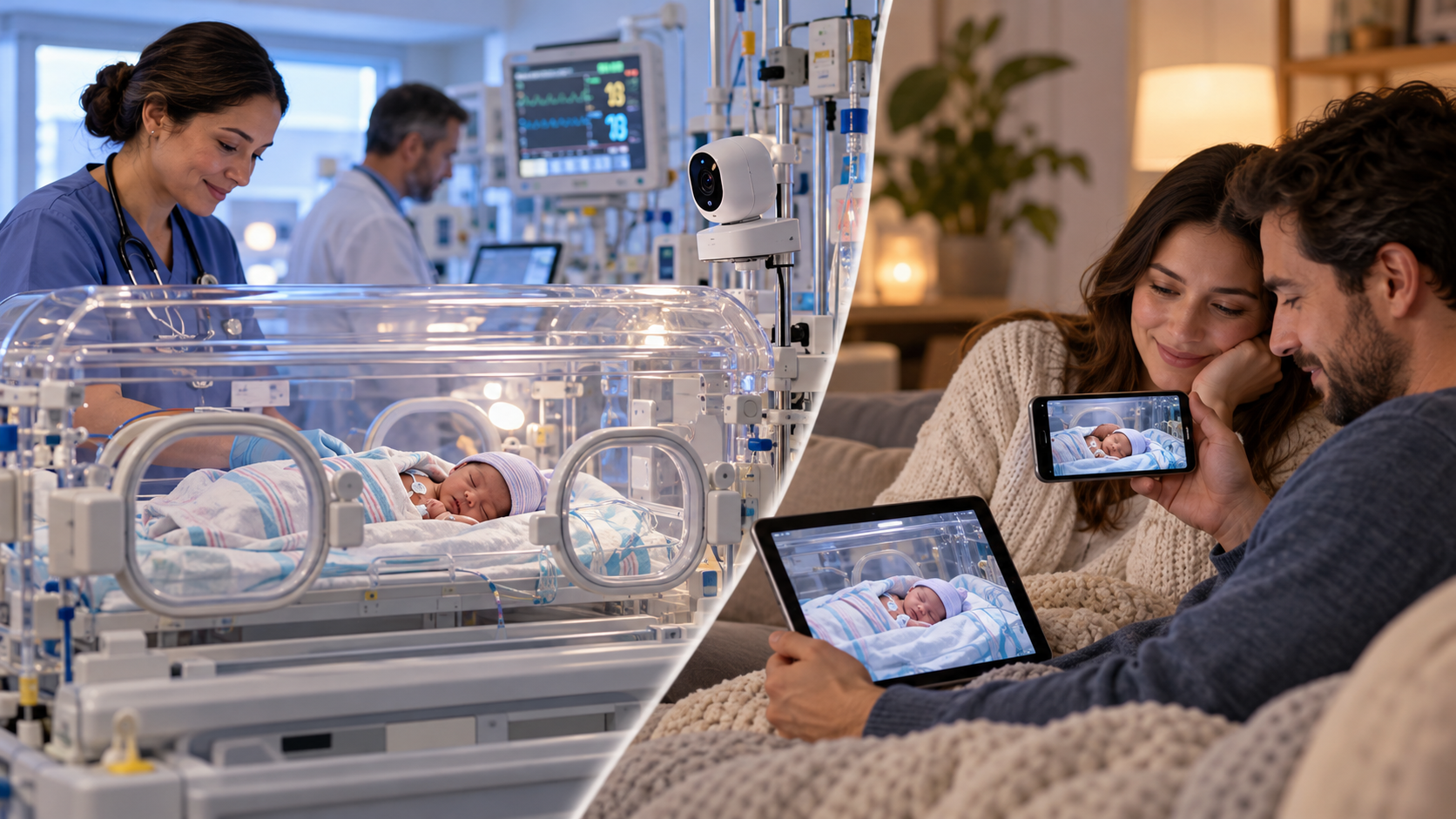
NicView is a neonatal intensive care viewing system designed to help parents and approved family members stay visually connected with a hospitalized newborn when they cannot remain physically at the bedside. NICU admissions can last days, weeks, or sometimes longer, while parents may also need to manage work, other children, travel, recovery after childbirth, and responsibilities at home. A secure remote viewing system gives families another way to see their baby while clinical teams continue to control care, privacy, and appropriate viewing periods inside the neonatal intensive care unit.
Technology cannot replace physical contact, communication with medical professionals, or participation in a baby’s care.
Its role is different.
Remote NICU viewing creates an additional connection between the hospital and family during periods of unavoidable separation.
Parents can visually check in without assuming that the camera is a medical monitor or a substitute for speaking with the neonatal team.
That distinction is important for safe and appropriate use.
What Is NicView?
NicView is designed specifically around remote visual access to infants receiving hospital care in neonatal intensive care environments.
A small camera is positioned near the baby’s designated bed space.
Authorized viewers use approved login credentials to access the available live image through an internet connected device.
Depending on the hospital’s policies and system configuration, family members may be able to view from:
• Smartphones
• Tablets
• Laptops
• Desktop computers
The camera is intended to support family connection rather than clinical diagnosis.
Parents should continue to contact the NICU team for medical information, changes in condition, treatment questions, feeding updates, or concerns about what they observe.
Why NICU Family Connection Matters
Having a newborn admitted to intensive care can change the early parenting experience dramatically.
Instead of taking their baby home, parents may spend significant time travelling between the hospital and home.
Practical circumstances can make continuous bedside presence difficult.
These may include:
• Distance from hospital
• Employment
• Childcare responsibilities
• Maternal recovery
• Transportation limitations
• Family responsibilities
• Illness precautions
• Overnight travel
Remote viewing can give parents another opportunity to remain connected during these periods.
7 Powerful Benefits of NicView for NICU Families
The value of remote neonatal viewing is best understood as part of a wider family centered care approach.
1. NicView Helps Families Stay Visually Connected
One of the clearest benefits is the ability to see a baby when physical presence is not possible.
Parents may need to return home at night or care for other children.
Some relatives may live in another city or country.
Visual access can help families remain involved in everyday moments.
A parent may be able to see:
• Baby sleeping
• Small movements
• Position in the incubator
• Blankets and comfort items
• Quiet periods between clinical care
These ordinary moments can feel meaningful during a difficult hospital stay.
NicView Does Not Replace Bedside Presence
Remote viewing should complement rather than replace physical visits whenever visits are medically permitted and practical.
Being physically present may allow parents to participate in:
• Skin to skin care when appropriate
• Feeding
• Diaper changes
• Comforting
• Conversations with nurses
• Care education
• Discharge preparation
The camera simply provides another way to maintain connection between visits.
2. It Can Support Parents Who Live Far From the Hospital
Specialized neonatal care may not always be available close to a family’s home.
Some newborns are transferred to larger hospitals with advanced neonatal services.
This can create significant travel demands.
Parents may need to balance:
• Fuel costs
• Accommodation
• Work schedules
• Childcare
• Travel time
• Recovery after delivery
Remote viewing does not remove these challenges, but it can provide visual access during periods when travel is difficult.
This can be particularly useful for family members who cannot visit frequently.
3. NicView Can Support Wider Family Involvement
A newborn’s NICU stay affects more than parents.
Grandparents, siblings, and other close family members may also want to feel connected.
Hospitals generally control how system access is issued, and parents should follow the hospital’s instructions before sharing credentials.
When approved access is available, remote viewing can help relatives participate from a distance.
This may be valuable when:
• Grandparents live far away
• Family members cannot enter the NICU
• Siblings have visiting restrictions
• Relatives live internationally
• A parent must remain home with other children
Credentials should be treated as private information.
They should only be shared with people whom the parent or guardian genuinely wants to have access.
4. It Can Provide Reassurance Between Hospital Visits
Leaving the NICU can be emotionally difficult.
Parents may understand that their baby is receiving specialist care while still finding separation stressful.
Seeing the baby can provide a sense of connection during quieter moments at home.
However, families should understand the limitations of what the camera shows.
A visual stream does not provide:
• Vital signs
• Medical interpretation
• Treatment details
• Laboratory results
• Clinical assessments
• Medical alarms
• Diagnostic information
If parents have concerns, the correct source remains the clinical team.
5. NicView Supports Family Centered NICU Technology
Modern neonatal care increasingly recognizes the importance of including families wherever practical.
Technology can contribute to that approach when it supports rather than interferes with clinical care.
A NICU viewing system may help create a connection between:
• Parents
• Babies
• Extended family
• Nurses
• Hospital support systems
Its value is greatest when expectations are clear.
Parents should know:
• When viewing may be available
• Why the camera may temporarily be unavailable
• Who controls the camera
• How technical support works
• Who to contact for medical questions
Clear communication helps prevent misunderstandings.
6. Secure Access Helps Protect Patient Privacy
Privacy is particularly important in healthcare.
A NICU camera is not the same as a public livestream or an ordinary consumer webcam.
Hospitals need controlled systems designed around clinical environments.
Families should protect login information carefully.
Good practices include:
• Do not post credentials publicly
• Do not share passwords in group chats unnecessarily
• Use trusted devices
• Log out from shared computers
• Follow hospital privacy instructions
• Avoid unauthorized screenshots or recordings where prohibited
Even when technology provides security controls, user behavior remains part of privacy protection.
7. Hospitals Can Keep Clinical Care as the Priority
A remote camera should never interfere with medical care.
There will be times when the image is unavailable.
This can occur when:
• Nurses are providing care
• Physicians are examining the baby
• Procedures are taking place
• The baby’s position changes
• Equipment blocks the camera
• Privacy mode is used
• The camera requires adjustment
Parents should not interpret temporary loss of viewing as evidence that something is wrong.
Clinical teams may intentionally pause access while providing care or protecting privacy.
How NicView Works in a NICU
The exact process can vary between hospitals, but families generally receive instructions directly from the neonatal unit.
Parent Consent and Enrollment
A hospital may require a parent or guardian to complete a consent process before using the camera.
This helps establish:
• Who is authorized
• How access works
• Privacy expectations
• Appropriate use
• Technical responsibilities
Parents should read these instructions carefully.
Login Credentials
After enrollment, the family receives credentials or access information.
These details should be protected.
A parent who chooses to share access with approved relatives should explain that the credentials must not be forwarded without permission.
Camera Placement
The camera is positioned near the baby’s bed space.
Parents should usually ask staff or technical support for help if the view needs adjustment rather than attempting to move clinical equipment themselves.
Remote Viewing
Once access is active, authorized users can view the available stream from a compatible internet connected device.
Image quality can depend on:
• Hospital connection
• Viewer internet speed
• Device
• Camera position
• Lighting
• Incubator covering
• Clinical equipment
NicView and Privacy in the NICU
Healthcare privacy must remain central to any bedside camera system.
A neonatal intensive care unit contains sensitive medical activity.
The system should therefore focus the view appropriately and allow staff to control access when needed.
Why Privacy Mode Is Important
There may be situations where camera viewing should stop temporarily.
Examples can include:
• Medical examination
• Nursing care
• Procedures
• Patient repositioning
• Privacy sensitive activity
• Clinical emergencies
This protects both the infant and healthcare environment.
Family Responsibilities
Parents and approved relatives also have responsibilities.
Families should respect:
• Hospital rules
• Staff privacy
• Other patients
• Medical confidentiality
• Access restrictions
A remote camera is a privilege intended to support family connection.
It should not become a tool for monitoring staff performance or attempting to interpret treatment without clinical context.
NicView Is Not a Medical Monitoring System for Parents
This distinction deserves its own section because it prevents unnecessary anxiety.
A baby may:
• Move
• Stretch
• Cry
• Sleep deeply
• Turn away from the camera
• Lose a pacifier
• Be temporarily covered
• Be receiving phototherapy
• Be repositioned
A parent watching remotely may not understand why something looks different.
The livestream does not provide enough information to make medical conclusions.
When Should Parents Contact the NICU?
Parents should contact the neonatal team when they need:
• Medical updates
• Treatment explanations
• Feeding information
• Test results
• Discharge planning
• Guidance about something concerning
Technical support should be used for camera or login problems.
Medical staff should be contacted for health related concerns.
NicView and Parent Anxiety
Remote viewing can be comforting for many parents.
For others, continuous access may increase anxiety.
A parent may feel the need to check the stream repeatedly.
They may become worried when the camera is offline or when the baby moves in an unfamiliar way.
Families should use the technology in whatever way best supports their wellbeing.
Healthy Viewing Habits
Parents may find it useful to:
• Avoid checking continuously
• Remember that offline periods can be normal
• Contact nurses for clinical information
• Rest when possible
• Focus on recovery
• Follow the hospital’s guidance
If remote viewing becomes stressful rather than reassuring, parents can discuss the issue with the NICU team.
NicView for Parents With Other Children
Families with older children often face difficult scheduling decisions during a NICU stay.
A parent may need to split time between the hospital and home.
Remote access can help provide visual connection while they are caring for siblings.
Supporting Siblings
Older children may also want to see the baby.
Whether and how they should use remote viewing depends on:
• Age
• Family preferences
• Hospital policy
• Emotional readiness
Parents can explain that the baby is receiving special care and that medical equipment is there to help.
NicView for Long NICU Stays
Some infants need extended hospitalization.
Over time, parents may experience fatigue from travel and disrupted routines.
Remote viewing can remain useful as part of a broader communication plan.
Families should still maintain regular contact with:
• Nurses
• Physicians
• Social workers
• Lactation teams
• Care coordinators
• Other NICU professionals
The camera provides visual connection, while the care team provides medical understanding.
NicView for Grandparents and Distant Relatives
Extended family can provide emotional support to parents during a neonatal admission.
Remote viewing may allow approved relatives to feel closer to the newborn.
This can be especially meaningful for:
• Grandparents overseas
• Relatives with health limitations
• Family members unable to travel
• People excluded by visitor limits
Parents should still control access carefully.
A baby’s hospital experience is private.
Internet and Device Requirements
Remote viewing requires reliable internet access.
Performance may vary according to:
• Wi Fi quality
• Mobile connection
• Browser
• Device age
• Network restrictions
If the stream does not load, the problem may be technical rather than related to the camera itself.
Basic Troubleshooting
Families can try:
• Checking internet connection
• Refreshing the viewing session
• Reopening the browser
• Confirming login information
• Trying another supported device
• Contacting designated technical support
Parents should avoid repeatedly calling clinical staff for purely technical problems if the hospital provides separate technical assistance.
NicView and Hospital Workflow
Technology used inside a NICU must fit around clinical care rather than create additional disruption.
A well managed system should allow staff to:
• Control privacy
• Pause viewing
• Manage camera position
• Support family access
• Maintain normal bedside care
The camera should remain secondary to direct patient care.
Clinical Teams Need Control
Nurses and medical staff should be able to prioritize treatment without worrying about maintaining a perfect camera view every minute.
A baby’s position and clinical needs will naturally change throughout the day.
Families should expect this.
What Parents May See Through NicView
Remote viewing provides a limited visual perspective.
Parents may see:
• Baby resting
• Incubator or cot
• Blankets
• Positioning supports
• Portions of medical equipment
The view can change depending on the camera angle.
Why the Picture May Look Different
Image appearance can be affected by:
• Low lighting
• Incubator covers
• Phototherapy
• Reflections
• Camera movement
• Medical equipment
• Baby position
A colour change on screen does not automatically mean the baby’s actual appearance has changed.
Preparing Families to Use NicView
Hospitals can improve the experience by setting expectations at enrollment.
Useful information includes:
• Purpose of the camera
• Access instructions
• Privacy rules
• Technical support details
• Reasons for temporary offline periods
• Appropriate credential sharing
• Difference between camera support and medical communication
Good education can reduce confusion later.
Benefits for Hospitals Offering NicView
The primary benefit is family connection, but hospitals may also use remote viewing as part of their wider family centered care strategy.
Potential operational benefits can include:
• Supporting distant families
• Offering another communication resource
• Strengthening family engagement
• Providing a structured remote viewing option
• Supporting modern NICU services
However, successful implementation requires more than installing cameras.
Hospitals also need:
• IT support
• Privacy procedures
• Staff training
• Parent education
• Access management
• Maintenance
NicView and Cybersecurity Considerations
Healthcare technology should be managed through strong security practices.
Hospitals need to consider:
• Authentication
• Encrypted transmission
• Network architecture
• User access
• Software updates
• System administration
• Device management
Parents do not control these hospital systems, but they can protect their side of access by keeping credentials private and using secure personal devices.
What NicView Cannot Do
Understanding limitations makes the technology more useful.
NicView cannot replace:
• Nursing care
• Physician assessment
• Medical monitoring
• Parent education
• Clinical communication
• Physical bonding
• Feeding support
• Emergency response
It should be understood as a viewing and connection tool.
Questions Parents Can Ask Their Hospital
Before using a NICU camera system, families may want to ask:
• How do I receive access?
• Can I share access with relatives?
• What should I do if the camera is offline?
• Who handles technical problems?
• When will staff pause the camera?
• Can I use multiple devices?
• Are screenshots or recordings allowed?
• How is privacy protected?
• Who should I contact for medical questions?
Clear answers make the experience easier.
Frequently Asked Questions
What is NicView?
NicView is a NICU remote viewing system that allows authorized parents and approved family members to see a hospitalized newborn through a secure online viewing experience.
Can parents watch their baby through NicView from home?
Yes, when the hospital has activated access and the stream is available, authorized viewers can generally connect remotely using a compatible internet connected device.
Is NicView a medical monitoring system?
No. NicView is intended for visual family connection. Parents should contact the neonatal care team for medical information, treatment updates, or concerns about their baby’s health.
Why does NicView sometimes show the camera as offline?
The stream may be paused while clinical care is being provided, for privacy, during procedures, because of camera positioning, or for technical reasons.
Can family members use NicView?
Access policies vary by hospital. Parents may be able to share approved credentials with trusted relatives, but login details should never be distributed without permission.
Does NicView replace visiting a baby in the NICU?
No. Remote viewing supplements family connection when parents cannot be physically present. Bedside participation and communication with clinical teams remain important whenever possible.
Conclusion
NicView can provide an important visual connection between NICU babies and families during periods when parents or relatives cannot remain at the hospital. Its greatest value comes from combining convenient remote access with clear privacy expectations, controlled clinical use, secure account practices, and realistic understanding of what the camera can and cannot provide. Parents should treat the system as a family connection tool rather than a medical monitor and continue relying on the NICU team for all health related information. Used thoughtfully, remote viewing can become a supportive part of a broader family centered neonatal care experience.