Custom Architectural Lighting: 7 Powerful Benefits That Transform Modern Spaces
Lighting is one of the most influential elements of architecture and interior design. It affects how people experience rooms, notice building details, perform everyday activities, and feel within their surroundings. While conventional lighting primarily focuses on providing enough illumination, custom architectural lighting combines thoughtful design, carefully selected fixtures, and strategic light placement to create spaces that are functional, visually appealing, and suited to the people who use them.
From luxury residences and contemporary offices to hotels, restaurants, and commercial buildings, tailored lighting solutions help reveal architectural character. Recessed ceiling lights, illuminated wall features, linear LED systems, decorative pendants, and discreet landscape lighting can all contribute to a cohesive design.
However, successful architectural lighting involves more than installing expensive fixtures or increasing brightness. Designers must consider room dimensions, natural daylight, building materials, visual comfort, energy consumption, and the activities performed in each area.
A properly developed lighting plan can make a modest interior feel inviting, highlight distinctive architectural details, and improve the usability of a property without unnecessary illumination.
This guide explores seven major benefits of professional architectural lighting design, popular lighting techniques, important technical considerations, and practical ways to create beautiful, efficient lighting for residential and commercial environments.
What Is Custom Architectural Lighting?
Custom architectural lighting is a design approach in which lighting is planned around the specific structure, purpose, and visual characteristics of a building.
Instead of relying entirely on standard ceiling fixtures, designers select and position lighting elements to complement architectural features and support different activities.
A custom solution may include recessed luminaires, concealed LED strips, pendant fixtures, wall washers, adjustable spotlights, and integrated lighting controls.
The design can be subtle, with fixtures almost invisible, or expressive, with decorative lighting forming a prominent architectural feature.
How Architectural Lighting Design Works
Professional lighting design begins with understanding the space.
The designer evaluates room dimensions, ceiling heights, material finishes, window placement, furniture arrangements, and intended activities.
Next, the lighting plan establishes the type, quantity, placement, and control of fixtures.
Important technical considerations include light output, beam distribution, correlated color temperature, color rendering, glare, and power consumption.
The Illuminating Engineering Society emphasizes that good lighting design must consider both visual tasks and how people perceive the surrounding space.
Illuminating Engineering Society
This approach helps create lighting that is useful as well as attractive.
Custom Lighting vs. Standard Lighting
Standard lighting often involves selecting conventional fixtures after construction or interior design decisions have already been made.
Custom architectural lighting is more closely integrated with the planning process.
For example, a designer may incorporate hidden LED lighting into ceiling recesses, coordinate pendant positions with furniture, or create dedicated illumination for a textured feature wall.
The result can be more cohesive because lighting is treated as part of the architecture rather than an unrelated accessory.
7 Powerful Benefits of Custom Architectural Lighting
1. Enhances Interior Design and Architectural Beauty
One of the strongest benefits of custom architectural lighting is its ability to highlight the visual qualities of a building.
Architecture contains shapes, textures, proportions, and details that may become less noticeable under poorly positioned illumination.
Thoughtful lighting can bring attention to these features and create a stronger sense of visual identity.
Highlighting Architectural Features
Stone walls, timber ceilings, decorative panels, staircases, and sculptural elements can become focal points when illuminated appropriately.
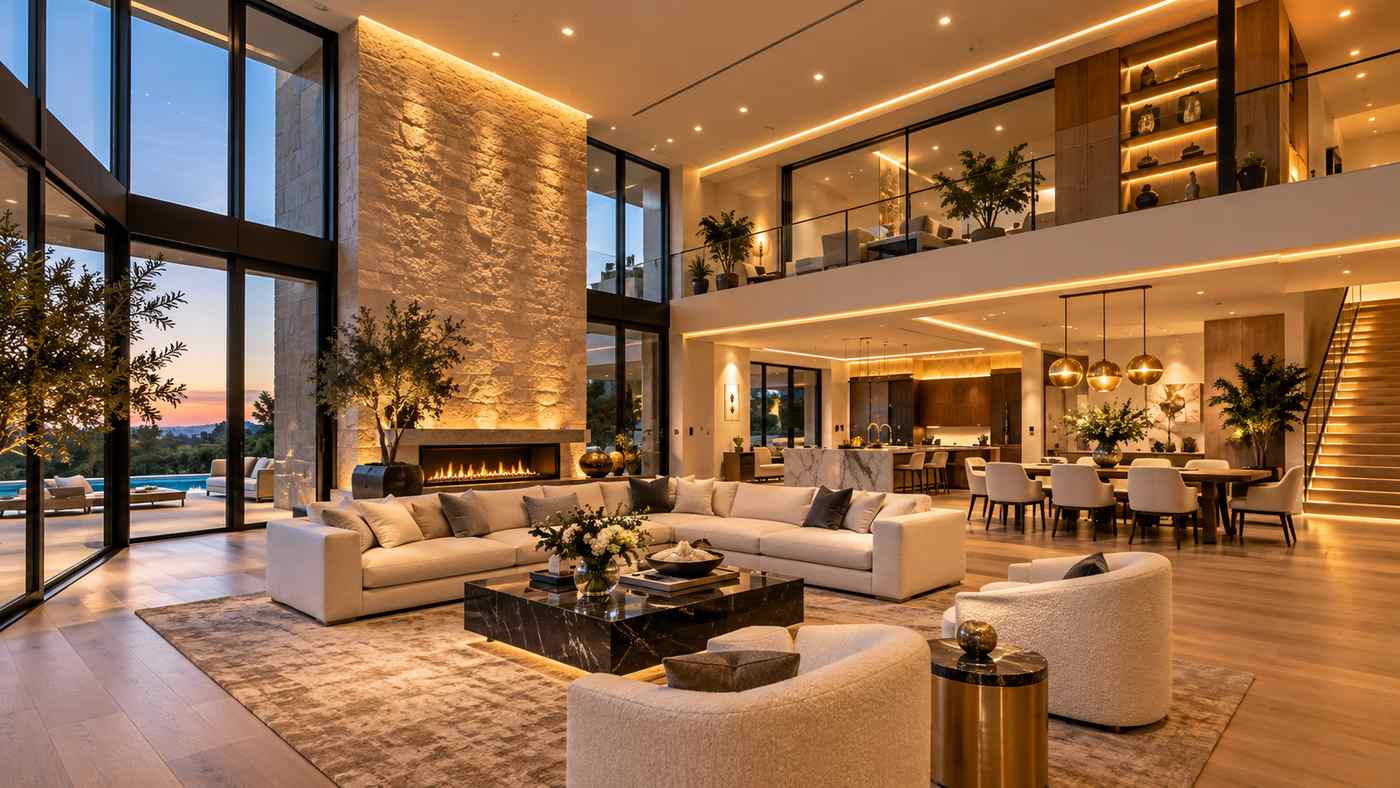
For example, carefully positioned wall-grazing fixtures can emphasize the texture of natural stone.
Concealed ceiling lighting may draw attention to architectural recesses without exposing the light source.
The objective is to reveal the building’s character rather than overwhelm it with brightness.
Creating Visual Depth
A room illuminated by a single central fixture may appear visually flat.
Combining multiple lighting layers creates differences in brightness that give the interior greater depth.
Soft background illumination can establish a welcoming atmosphere, while focused accent lighting directs attention toward selected details.
This technique can make rooms feel more thoughtfully composed.
Complementing Interior Materials
Different materials respond differently to light.
Polished marble reflects illumination, textured stone produces shadows, and natural wood can appear warmer under suitable lighting.
The color and direction of light influence how these finishes look.
A professional lighting designer considers these interactions before selecting fixtures.
2. Creates Comfortable and Personalized Atmospheres
Lighting influences the visual character and perceived comfort of an interior.
A bright kitchen may require a different arrangement from a relaxing living room or an elegant dining area.
Custom lighting makes it possible to develop solutions suited to specific activities and personal preferences.
Designing Warm and Inviting Living Spaces
Residential living rooms often benefit from a balance of gentle ambient light and focused accent lighting.
Warm-white light can complement natural wood, neutral furniture, and soft interior finishes.
Dimmable fixtures can provide flexibility for conversation, reading, entertaining, or relaxation.
The most comfortable arrangement depends on the occupants and the room design.
Adjusting Lighting for Different Activities
A space may serve several purposes throughout the day.
For example, a dining area may be used for family meals, homework, or evening gatherings.
Lighting controls allow occupants to adjust selected fixture groups rather than relying on one fixed brightness level.
This flexibility can improve everyday usability.
Reducing Uncomfortable Glare
Excessively bright or poorly positioned lights can cause visual discomfort.
Unshielded light sources may produce glare when viewed directly, while reflective materials can create unwanted brightness.
Careful fixture placement, suitable diffusers, and appropriate beam angles can reduce these problems.
Visual comfort should be considered alongside the desired decorative effect.
3. Improves Functionality and Visual Comfort
Lighting should help people use a space effectively, not simply make it look attractive.
Homes, offices, restaurants, and other buildings have different illumination requirements based on the activities taking place within them.
A customized lighting plan considers these practical needs.
Improving Kitchen and Workspace Lighting
Kitchens need appropriate light for food preparation, cooking, and cleaning.
Under-cabinet LED lighting can illuminate countertops without relying entirely on overhead fixtures.
Similarly, home offices benefit from task lighting that supports reading, computer work, and other activities.
The Illuminating Engineering Society recognizes ambient, accent, and task lighting as complementary layers serving different visual needs.
Illuminating Engineering Society %
Supporting Comfortable Movement
Hallways, staircases, entrances, and transitional areas require enough illumination for people to move comfortably.
Well-positioned fixtures can help people distinguish changes in floor levels, identify obstacles, and navigate unfamiliar spaces.
However, lighting should not be assumed to eliminate every safety risk.
Appropriate building design, handrails, floor finishes, and compliance with applicable codes remain essential.
Improving Lighting for Different Age Groups
People’s visual needs can change with age.
Older adults may need more carefully distributed light to perform certain tasks comfortably.
At the same time, excessive glare can make visual conditions worse.
A professional lighting designer can consider these differences when developing lighting for multigenerational homes, healthcare environments, and other shared spaces.
4. Supports Energy Efficiency and Lower Operating Costs
Energy-efficient architectural lighting can reduce unnecessary electricity consumption when appropriate fixtures and controls are selected.
Modern LED technology provides several advantages over traditional incandescent lighting.
However, actual savings depend on the installed equipment, operating hours, light output, and control settings.
Benefits of LED Architectural Lighting
LED lighting is widely used in modern architectural projects because it offers efficient operation and flexible design options.
The U.S. Department of Energy reports that LEDs can consume approximately 75% less energy than traditional incandescent bulbs and offer substantially longer service life.
Department of Energy
These characteristics make LED technology suitable for many residential and commercial installations.
Using Dimmers and Smart Controls
Dimming allows occupants to reduce lighting output when full brightness is unnecessary.
Smart lighting controls may also provide automated schedules, occupancy detection, and separate lighting scenes.
For example, a living room might have different settings for reading, entertaining, and watching television.
When properly configured, these features can reduce unnecessary electricity use.
Integrating Natural Daylight
A well-designed lighting system should account for sunlight entering through windows and skylights.
Daylight-responsive controls can adjust artificial lighting when sufficient natural light is available.
The Department of Energy identifies daylighting and advanced lighting controls as important components of efficient building design.
Department of Energy
However, designers must also manage glare and unwanted solar heat gain.
Considering Long-Term Maintenance
LED lighting may require less frequent replacement than certain older technologies.
Nevertheless, integrated luminaires still contain electrical components, including drivers and control equipment, that can eventually fail.
Selecting reliable products with suitable warranty and service options can support long-term value.
5. Provides Flexible Lighting for Different Spaces
Every property has unique characteristics.
Room size, ceiling height, architectural style, finishes, and occupant preferences influence the appropriate lighting solution.
Custom design allows these factors to guide fixture selection and placement.
Residential Architectural Lighting
Residential projects often combine general illumination, decorative elements, and focused task lighting.
A modern home might feature recessed fixtures in the kitchen, pendant lighting above a dining table, and concealed LED lighting in the living room.
Bedroom lighting may emphasize softer illumination and adjustable controls.
Each arrangement should support the activities performed in the room.
Commercial Architectural Lighting
Commercial properties may require lighting solutions that balance visual appearance with workplace requirements.
Offices often need appropriate task illumination and glare management.
Retail stores may use accent lighting to highlight merchandise, while restaurants may prioritize inviting atmosphere and comfortable table lighting.
The final design must reflect relevant occupancy and safety requirements.
Hospitality and Luxury Interiors
Hotels, upscale restaurants, and other hospitality environments frequently use architectural lighting to create distinctive experiences.
Concealed light sources, decorative pendants, illuminated wall finishes, and carefully coordinated color temperatures can contribute to a cohesive visual identity.
Lighting should remain functional even when aesthetics are a major priority.
Outdoor Architectural Lighting
Exterior lighting can reveal building entrances, pathways, facades, and landscaping.
However, brighter does not necessarily mean better.
Responsible outdoor lighting should illuminate the intended area while reducing unnecessary glare and light spill.
DarkSky International and the Illuminating Engineering Society recommend outdoor lighting that is useful, targeted, appropriately low in brightness, controlled, and warm-colored where possible.
DarkSky International
6. Enables Smart Lighting and Personalized Control
Modern architectural lighting can incorporate digital control systems that make spaces more adaptable.
Rather than operating every fixture using an independent wall switch, homeowners and building managers may use integrated controls to manage several lighting zones.
Creating Custom Lighting Scenes
Lighting scenes allow multiple fixture groups to operate according to predetermined settings.
For example, a residential lighting system may include separate scenes for daytime activities, evening relaxation, and entertaining.
The settings can adjust fixture brightness and, where supported, color appearance.
Occupancy and Motion Sensors
Sensors can turn lights on or adjust illumination when movement or occupancy is detected.
These systems are particularly useful in certain corridors, storage rooms, utility spaces, and commercial areas.
However, sensor placement and sensitivity must be appropriate for the application.
Incorrectly configured systems may switch lights off while spaces are still occupied.
Integrating Lighting With Home Automation
Compatible smart lighting equipment may connect with broader building automation platforms.
Homeowners can potentially manage lighting through wall controls, mobile applications, or other supported interfaces.
The availability of these functions depends on the products and communication systems selected.
Planning for Future Upgrades
Technology compatibility deserves attention during the design stage.
Some lighting systems use proprietary components, while others support more widely adopted control methods.
A professional designer can help assess the advantages and limitations of each approach.
Future maintenance, replacement parts, and software support should also be considered.
7. Creates a Distinctive Architectural Identity
Custom architectural lighting can contribute to the visual character of a home or commercial building.
Lighting influences how people notice architectural forms, decorative details, and relationships between interior spaces.
It can also make a building recognizable after dark.
Highlighting Signature Design Features
A carefully illuminated staircase, dramatic entrance, or textured feature wall can create a memorable impression.
The effect does not necessarily require complicated fixtures.
Sometimes a discreet linear light or carefully positioned spotlight provides the desired visual emphasis.
Creating Cohesive Interior Design
Architectural lighting is most effective when coordinated with the wider design.
Fixture finishes, light color, placement, and visibility should complement furniture, materials, and architectural details.
A modern minimalist interior may benefit from concealed lighting, while a more traditional space may incorporate decorative sconces and pendants.
Supporting Commercial Brand Identity
Lighting can help businesses communicate a desired atmosphere.
For example, a luxury retail boutique may use focused illumination and warm architectural accents, while a contemporary technology showroom may prefer a cleaner, more uniform appearance.
These choices can contribute to brand presentation.
However, lighting should not be treated as a guaranteed method of increasing sales or customer retention.
Considering Property Appeal
A well-executed lighting installation may improve a property’s appearance and practical usability.
Potential buyers may appreciate efficient fixtures, thoughtful controls, and attractive architectural details.
Nevertheless, increased property value is not guaranteed, and expensive lighting systems may not recover their full installation cost at resale.
Different Types of Custom Architectural Lighting
Professional lighting design uses several techniques to achieve different results.
Understanding these options can help homeowners and business owners communicate their preferences.
Recessed Architectural Lighting
Recessed lights are installed within ceilings or other suitable architectural surfaces.
They can provide general or focused illumination without the visual prominence of hanging fixtures.
The spacing, beam angle, and glare characteristics should be considered carefully.
Linear LED Lighting
Linear LED fixtures create continuous or nearly continuous lines of light.
They can be integrated into ceiling details, wall recesses, cabinetry, and architectural features.
Suitable diffusers and installation methods help produce a consistent appearance.
Cove Lighting
Cove lighting places fixtures within concealed architectural recesses.
The light is generally directed toward nearby ceilings or walls, creating soft indirect illumination.
This technique can add visual depth while reducing direct exposure to bright light sources.
Wall Washing and Wall Grazing
Wall washing creates relatively even illumination across a vertical surface.
Wall grazing places light close to a textured surface to emphasize shadows and material details.
Both methods can be effective, but they produce different visual results.
Pendant and Decorative Lighting
Pendant fixtures combine functional illumination with decorative design.
They may be used above dining tables, kitchen islands, reception desks, and other focal areas.
Fixture scale and mounting height should be appropriate for the surrounding space.
Landscape and Facade Lighting
Outdoor architectural lighting can illuminate pathways, entrances, planting areas, and building surfaces.
Fixtures should be suitable for outdoor conditions, carefully aimed, and selected with local light-pollution requirements in mind.
Understanding Important Architectural Lighting Specifications
Choosing a lighting system involves more than selecting a fixture shape.
Several technical characteristics influence how the completed installation performs.
Lumens and Brightness
Lumens measure the amount of visible light emitted by a source.
Wattage measures electrical power consumption.
A higher-wattage fixture is not necessarily brighter than a more efficient lower-wattage fixture.
Lighting designers also consider illuminance, typically measured in lux or foot-candles, to assess the light reaching a particular surface.
The required illumination depends on the activity, setting, and applicable design criteria.
Color Temperature
Correlated color temperature, or CCT, describes whether white light appears relatively warm or cool.
Typical examples include:
- 2700K: Warm, inviting white light often selected for residential interiors.
- 3000K: Warm white light commonly used in homes, hospitality spaces, and lobbies.
- 3500K: A more neutral appearance that may suit certain workplaces.
- 4000K: Neutral-to-cool white light that may be appropriate for some task-oriented environments.
These are design examples, not mandatory settings.
The Department of Energy explains that color temperature affects the appearance and perceived atmosphere of interior spaces.
Department of Energy
Color Rendering
Color rendering describes how a light source influences the appearance of object colors.
The Color Rendering Index, or CRI, is one commonly used metric.
A higher CRI can be useful where accurate color appearance is important, such as residential interiors, retail displays, and artwork.
However, CRI alone does not describe every aspect of light quality.
A professional designer may review additional color metrics for demanding applications.
Beam Angle and Light Distribution
Beam angle affects how broadly light spreads from a fixture.
Narrow beams can highlight particular objects or details, while wider distributions can illuminate larger areas.
Choosing the correct beam pattern helps prevent uneven lighting and unnecessary glare.
Dimming Compatibility
Not all LED fixtures operate correctly with every dimmer.
Incompatible combinations may create flickering, buzzing, limited dimming range, or unstable operation.
Fixture drivers and control equipment must be selected as compatible components.
Custom Architectural Lighting Design for Different Rooms
Different rooms benefit from different combinations of lighting.
Living Room Lighting
Living rooms often require flexible lighting for social activities, reading, relaxation, and entertainment.
An effective design may combine indirect ceiling illumination, floor or table lamps, and accent lights.
Separate controls allow occupants to adjust the atmosphere.
Kitchen Lighting
Kitchens require practical illumination for food preparation and cleaning.
Under-cabinet task lighting can brighten countertops, while suitable ceiling fixtures support general use.
Decorative pendant lights may complement a kitchen island.
Careful positioning helps prevent shadows over working surfaces.
Bedroom Lighting
Bedrooms typically benefit from adjustable illumination.
Bedside reading lights, concealed accent lighting, and appropriately controlled general fixtures can serve different needs.
Dimming may be useful when transitioning from active tasks to relaxation.
Bathroom Lighting
Bathrooms require suitable illumination around mirrors, showers, and other fixtures.
Lighting near mirrors should reduce harsh facial shadows.
Electrical fixtures must be appropriate for their location and comply with relevant wet- or damp-location requirements.
Staircase and Hallway Lighting
Stairs and circulation areas need sufficient light for comfortable navigation.
Integrated step lights and discreet wall-mounted fixtures may complement general illumination.
Decorative lighting should not replace lighting required for safe movement or applicable building codes.
How the Professional Architectural Lighting Design Process Works
Successful projects usually begin with planning rather than fixture installation.
Step 1: Initial Consultation
The designer discusses the client’s preferences, intended uses, architectural style, and budget.
Existing plans, photographs, and site conditions may be reviewed.
Step 2: Site Assessment
The professional evaluates room dimensions, ceiling details, building materials, natural daylight, and electrical infrastructure.
Potential restrictions involving construction, access, or existing fixtures are identified.
Step 3: Lighting Concept Development
The design team develops an approach for ambient, task, and accent lighting.
Concept drawings or visualizations may help communicate the intended result.
Step 4: Fixture and Control Selection
Suitable luminaires, drivers, dimmers, and control systems are chosen.
The design should account for lighting quality, energy use, reliability, compatibility, and maintenance.
Step 5: Electrical and Architectural Coordination
Lighting installations may require coordination among architects, interior designers, electricians, and building contractors.
Fixtures integrated into ceilings, walls, or cabinetry must be planned around construction details.
Step 6: Installation and Testing
Qualified contractors install the equipment according to applicable codes and manufacturer instructions.
Electrical connections should be handled by appropriately licensed professionals.
After installation, the lighting should be tested, aimed, and adjusted to achieve the intended effect.
Step 7: Final Adjustments and Handover
The design team may adjust brightness, lighting scenes, or fixture positions after installation.
Owners should receive relevant operating instructions, warranty details, and maintenance guidance.
How Much Does Custom Architectural Lighting Cost?
The cost of custom architectural lighting varies considerably between projects.
A small residential installation may involve only a few specialized fixtures, while a luxury home or commercial building may require an extensive integrated system.
Factors That Affect Pricing
Major cost considerations include fixture quality, project size, custom fabrication, electrical work, controls, installation complexity, and professional design fees.
Concealed fixtures and integrated architectural details may require additional coordination and construction work.
Custom Fixtures vs. Standard Products
Some projects use standard fixtures arranged in a custom lighting design.
Others require bespoke luminaires manufactured for a particular application.
Custom fabrication can provide additional design flexibility but may increase costs and replacement complexity.
Budgeting for Long-Term Value
Initial price should not be the only consideration.
Energy consumption, expected service life, repairability, warranty coverage, and maintenance access can all affect long-term value.
A detailed estimate should identify what is included and explain potential additional expenses.
Common Custom Architectural Lighting Mistakes to Avoid
Even an expensive installation can perform poorly when basic design considerations are overlooked.
Using Too Many Recessed Lights
Installing numerous ceiling downlights does not automatically create better illumination.
Excessive fixtures can produce glare, uneven brightness, and an overly clinical appearance.
Layered lighting often provides a more balanced result.
Ignoring Natural Daylight
Rooms with large windows may have very different lighting requirements during the day and evening.
The design should consider changing daylight conditions instead of assuming artificial lighting must remain constant.
Choosing the Wrong Color Temperature
Inconsistent color temperatures can make adjoining areas feel visually disconnected.
Designers should coordinate light appearance with the architecture, finishes, and intended atmosphere.
Forgetting Maintenance Access
Concealed lighting can be attractive, but equipment still requires servicing.
Integrated drivers and other components should be accessible where required.
Ignoring Outdoor Light Spill
Poorly aimed exterior lighting may create unwanted glare for neighbors or contribute to skyglow.
DarkSky recommends directing light only where it is necessary, limiting brightness, using appropriate controls, and selecting warmer-colored outdoor lighting where feasible.
DarkSky International
How to Choose a Professional Architectural Lighting Designer
The right professional should understand both visual design and technical lighting requirements.
Review Previous Projects
Examine completed projects involving spaces similar to yours.
Look for balanced illumination, appropriate fixture placement, and thoughtful architectural integration.
Ask About Technical Experience
A lighting designer should understand illuminance, glare, color rendering, fixture performance, controls, and energy efficiency.
Complex projects may require collaboration with electrical engineers or other specialists.
Discuss the Complete Project Budget
Ask whether the quoted services include concept design, fixture specifications, technical drawings, installation coordination, commissioning, and revisions.
Clear scope definitions can prevent misunderstandings.
Confirm Installation Responsibilities
Lighting designers do not necessarily perform electrical installation.
Clarify which professionals will install, wire, test, and maintain the proposed equipment.
Electrical work must comply with the applicable local requirements.
Consider Long-Term Support
Ask about warranties, replacement components, system compatibility, and ongoing maintenance.
For integrated smart lighting, understand what happens if a control device or proprietary component is discontinued.
Frequently Asked Questions
1. What is custom architectural lighting?
Custom architectural lighting is a tailored lighting design approach that integrates fixtures and controls with a building’s architecture to improve appearance, functionality, and visual comfort.
2. Is custom architectural lighting expensive?
Costs vary according to project size, fixture selection, design complexity, controls, and installation requirements. A detailed professional estimate helps establish a realistic budget.
3. What is the difference between architectural lighting and decorative lighting?
Architectural lighting emphasizes the illumination and visual structure of a space, while decorative lighting often highlights the fixture itself. A successful design may combine both.
4. Is LED lighting suitable for architectural projects?
Yes. LED technology is widely used because of its efficiency, compact form, flexible light distribution, and available control options. Product quality and installation compatibility remain important.
5. Can custom architectural lighting reduce energy bills?
Efficient LED fixtures, dimmers, occupancy sensors, and daylight controls may reduce electricity use compared with less efficient installations. Actual savings depend on the design and operation.
6. How do I choose the best architectural lighting designer?
Review relevant projects, verify technical experience, discuss budgeting and controls, and confirm how the designer coordinates with electricians, architects, and other contractors.
Conclusion
Custom architectural lighting brings together aesthetics, technology, and practical illumination to create more attractive and functional buildings. From highlighting architectural details and improving visual comfort to supporting energy efficiency and personalized controls, a thoughtfully planned system can enhance residential and commercial spaces. The best results come from balancing fixture quality, suitable light levels, architectural integration, and long-term maintenance. By working with experienced lighting professionals and selecting appropriate technology, property owners can create distinctive environments that remain comfortable, efficient, and visually appealing for years to come.