AI Receptionist: Complete Guide to Automated Call Answering and Smart Business Scheduling
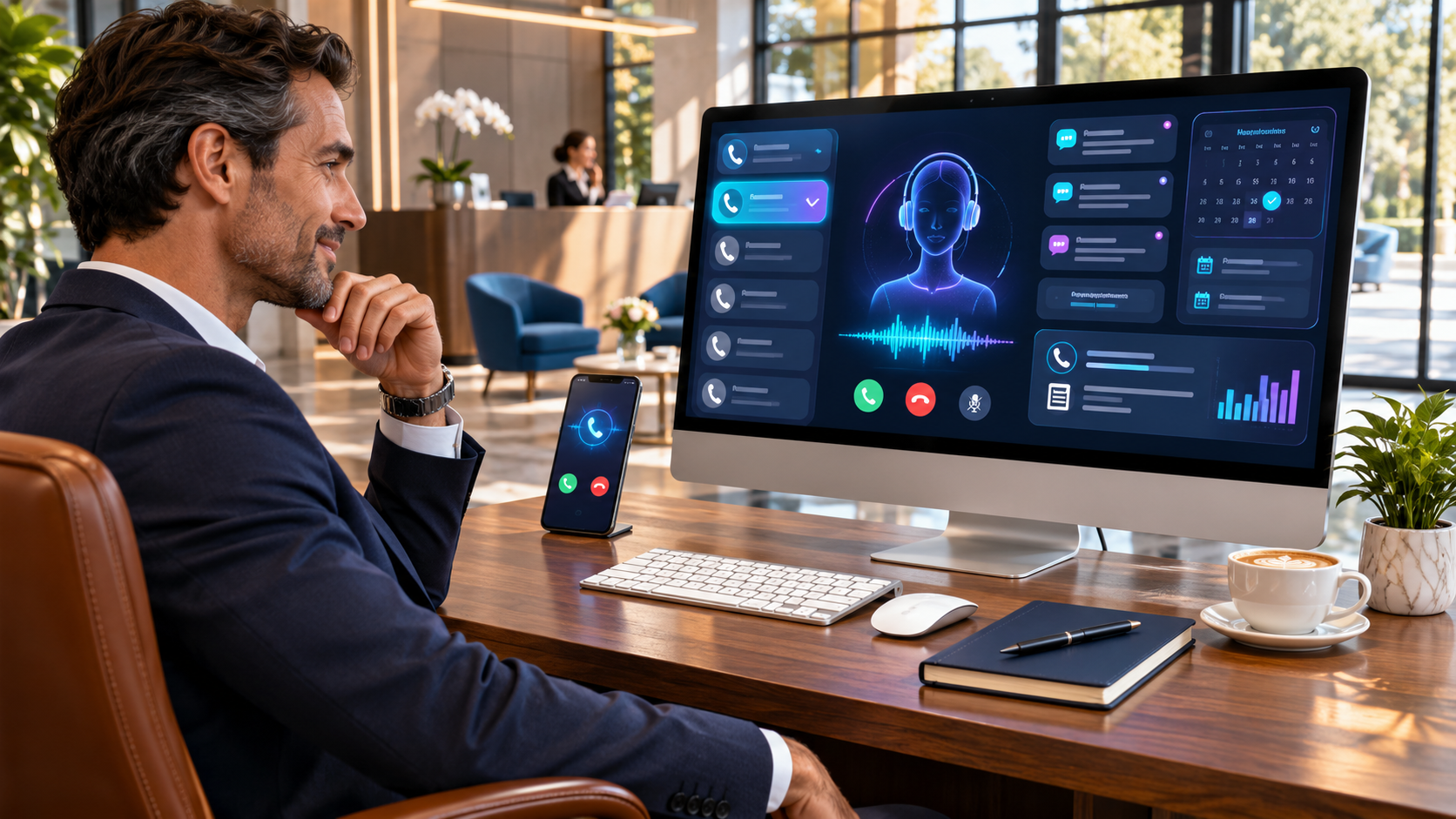
Every missed business call can represent a customer looking for information, requesting an appointment, or trying to arrange an important service. For small businesses with limited staff, answering every call while serving customers can be difficult. A modern AI receptionist helps solve this challenge by answering incoming calls, responding to common questions, collecting customer information, and managing appointment bookings through automated conversations.
Artificial intelligence is changing how businesses approach front desk operations. Instead of relying exclusively on voicemail, manual appointment scheduling, or a full-time receptionist, companies can use intelligent communication systems to remain accessible during busy periods and outside regular operating hours.
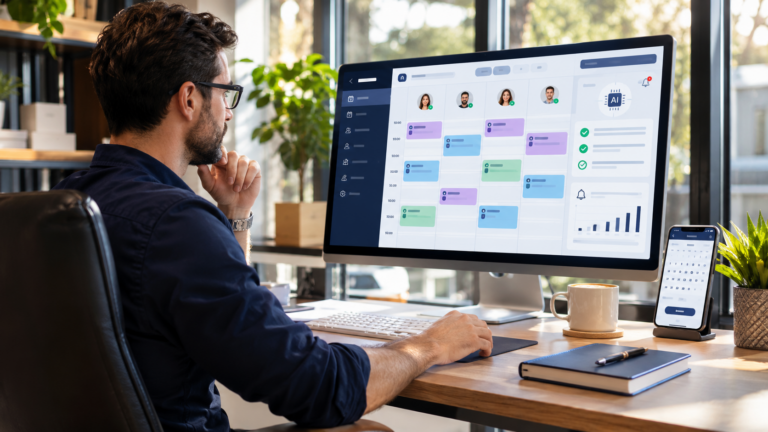
Platforms such as Scheduley combine AI-powered telephone answering with text messaging, online booking pages, customer records, and appointment calendars. These capabilities can be especially useful for salons, barbershops, cleaning companies, contractors, consultants, and other businesses that depend on frequent customer inquiries.
Understanding the technology, its benefits, costs, limitations, and implementation requirements can help business owners select a solution that improves customer communication without creating unnecessary complexity.
What Is an AI Receptionist?
An AI receptionist is an automated communication system that uses artificial intelligence to perform selected duties commonly handled by a human receptionist.
These duties can include answering telephone calls, greeting customers, explaining business services, collecting contact information, scheduling appointments, and forwarding requests that require human assistance.
Unlike traditional voicemail systems, which generally record messages after a caller leaves information, AI-powered reception systems can participate in conversations and respond to customer requests.
For example, a customer calling a hair salon may ask whether a haircut appointment is available tomorrow afternoon. When connected to an accurate booking calendar, the system can check available times, suggest an appointment, and complete the reservation if the customer agrees.
How AI Reception Differs From Traditional Automation
Conventional telephone automation often requires customers to navigate fixed menus by pressing numbers.
AI-powered reception uses speech recognition and natural language processing to interpret spoken questions.
This can create a more conversational experience because callers may explain what they need using ordinary language.
However, the quality of that experience depends on the system’s capabilities, business configuration, and accuracy of its underlying information.
How Does an AI Receptionist Work?
AI reception systems combine several technologies to interpret customer requests and complete supported actions.
1. Incoming Call Handling
When a customer calls a connected business number, the automated receptionist answers according to the configured call-handling rules.
Some businesses choose to let AI answer every call, while others use it only when employees are unavailable or outside operating hours.
This flexibility allows businesses to balance automation with human customer service.
2. Speech Recognition
Speech recognition converts spoken language into information that the system can process.
For example, when a customer asks about opening hours or requests a particular service, the system attempts to identify the customer’s intent.
Performance can vary depending on background noise, pronunciation, telephone connection quality, and the complexity of the request.
3. Natural Language Processing
Natural language processing helps the software interpret the meaning of a conversation.
Instead of requiring callers to follow a strict sequence of menu options, conversational systems can handle supported questions and follow-up requests.
A customer might ask about pricing, then request an appointment, and finally ask whether another time is available.
The system attempts to respond using the business information and scheduling tools available to it.
4. Business Knowledge and Service Information
An effective AI receptionist needs accurate information about the business.
This may include operating hours, available services, appointment durations, service locations, prices, and booking policies.
For example, an electrical contractor may want the system to explain service areas and collect information about repair requests.
Businesses should review this information regularly because outdated prices or opening hours can lead to customer confusion.
5. Appointment Calendar Integration
When the system is connected to a supported scheduling calendar, it can check availability and assist customers with making reservations.
Configured booking rules may include appointment duration, staff availability, scheduling buffers, and advance notice periods.
Accurate calendar information is essential to reduce scheduling conflicts.
6. Confirmation and Follow-Up
After completing a supported request, the system may send a confirmation message or record details for employees.
Some platforms also provide call transcripts, summaries, and customer communication histories.
These records help business owners understand customer inquiries without reviewing every conversation manually.
Why Small Businesses Are Adopting AI Reception Technology
Small businesses often operate without a dedicated front desk team. Owners may personally handle customer service, scheduling, marketing, payments, and daily operations.
When several responsibilities compete for attention, answering calls consistently can become challenging.
Reducing Missed Calls
Customers may contact a business while employees are serving other clients or traveling between jobs.
AI reception can provide coverage during these periods, reducing dependence on voicemail and missed-call notifications.
Answering additional inquiries may create more opportunities to schedule services, although it does not guarantee increased revenue.
Providing After-Hours Availability
Customers do not always contact businesses during regular operating hours.
Some search for services in the evening, on weekends, or during holidays.
An automated receptionist can handle supported inquiries around the clock when the platform is operating normally.
This allows businesses to receive appointment requests without requiring employees to remain available continuously.
Reducing Administrative Interruptions
Repeated telephone calls can interrupt employees who are delivering services.
For example, a massage therapist working with a customer should not need to stop frequently to answer routine appointment questions.
An AI receptionist can handle certain inquiries while employees concentrate on their work.
Improving Customer Convenience
Customers benefit when they can obtain information and arrange appointments without waiting for a callback.
Clear communication and accurate availability can make the booking process more straightforward.
Maintaining Consistent Responses
Automated systems can provide information using approved business details.
This may reduce inconsistencies in answers about services, prices, and operating hours.
However, businesses remain responsible for maintaining accurate information and reviewing unexpected responses.
Essential Features of a Modern AI Receptionist
Not every automated receptionist offers the same capabilities. Businesses should compare features according to their customer communication needs.
24/7 Call Answering
Round-the-clock call answering is one of the main attractions of automated reception technology.
Businesses can provide basic assistance outside staffed hours, subject to platform availability and configured operating rules.
Natural Voice Conversations
Modern systems use synthetic voices designed to support conversational telephone interactions.
Some platforms allow businesses to choose different voices and customize greetings.
The objective is to provide understandable communication that reflects the business’s preferred customer service style.
Automated Appointment Booking
An integrated booking system can check available appointments and create reservations during supported conversations.
This feature is particularly useful for appointment-based businesses.
Rescheduling and Cancellations
Some AI reception systems allow customers to change or cancel existing bookings.
Businesses should configure policies that define cancellation deadlines and other scheduling restrictions.
Customer Information Collection
The system may collect customer names, telephone numbers, service requests, and other relevant appointment information.
Data collection should be limited to legitimate business needs and handled according to applicable privacy requirements.
Human Call Transfers
Not every customer request should be handled through automation.
A capable system should provide a method for transferring callers to an employee or recording a message when human assistance is necessary.
Call Summaries and Transcripts
Call records can help employees review customer requests and identify follow-up actions.
Businesses should establish suitable access controls and comply with applicable call recording and consent requirements.
Text Messaging Support
Some platforms also manage customer communication through SMS.
This can help businesses respond to routine inquiries and share appointment information.
How Scheduley Provides AI-Powered Reception
Scheduley offers an automated front desk platform designed for small businesses, appointment-based services, and home service companies.
Its published capabilities include telephone answering, text messaging, supported social messaging, appointment scheduling, customer communication records, and human call handoff.
Answering Calls as the Business
Scheduley allows businesses to configure greetings, operating hours, and service information.
Customers calling the connected number can receive responses based on those configured details.
Businesses can choose when the system answers calls, depending on their preferred workflow.
Booking During Customer Conversations
The platform can check its scheduling calendar and offer available appointment times.
For example, a customer requesting a haircut may be offered an available appointment with a particular stylist.
When the customer confirms, the system can place the booking on the calendar and send a confirmation.
Handling Calls, Texts, and Social Messages
Scheduley advertises customer communication through telephone calls, SMS, and connected Instagram and Facebook messages.
Businesses should verify the setup requirements and availability of each communication channel.
Human Handoff
The platform supports transferring callers to a person or taking a message when necessary.
This is useful for complex questions, complaints, or situations that require professional judgment.
Call Summaries and Daily Information
Scheduley provides call summaries, transcripts, and follow-up information.
Its published features also include dashboard information about scheduled appointments and recent customer activity.
These capabilities can help business owners review communications more efficiently.
Setting Up Scheduley With an Existing Business
Businesses can configure Scheduley using existing online business information or enter their details manually.
Importing Business Information
The platform allows users to provide a business website, supported booking page, or public business listing.
Scheduley can use available information to populate service descriptions, prices, and operating hours.
Businesses should review imported details before relying on them.
Connecting a Telephone Number
Users can choose a supported local business number or configure forwarding from an existing telephone number.
The best arrangement depends on how the business currently handles calls.
Customizing the Greeting
Business owners can configure the greeting and review the information the receptionist uses.
A clear greeting helps customers understand which business they have contacted.
Testing Customer Conversations
Before launching, businesses should make test calls that reflect common customer inquiries.
Testing should include booking requests, pricing questions, appointment changes, and requests for human assistance.
Unexpected responses should be corrected through configuration changes or appropriate escalation rules.
AI Receptionist for Hair Salons and Barbershops
Hair salons and barbershops frequently receive appointment calls while employees are working directly with customers.
Service-Specific Questions
Customers may ask about haircuts, styling, beard trimming, or other grooming services.
Automated reception can provide configured service details and available appointment information.
Stylist Availability
When supported by the booking calendar, the system can help customers select an available staff member.
Accurate schedules are necessary to avoid overlapping appointments.
Appointment Changes
Customers sometimes need to reschedule or cancel their bookings.
Automated scheduling tools can handle supported changes according to business policies.
AI Receptionist for Plumbing and Home Services
Home service businesses often receive telephone inquiries while technicians are working at customer properties.
Answering every call manually may be impractical.
Capturing Service Requests
An automated receptionist can collect basic information about the customer’s problem, location, and preferred appointment time.
This information can help the business determine appropriate follow-up actions.
Managing Appointment Availability
When connected to suitable scheduling tools, the system can offer available service appointments.
Actual technician assignments and emergency response procedures should follow the company’s operational rules.
Handling Urgent Requests
Some service requests involve immediate safety risks.
Businesses should establish clear escalation procedures for urgent inquiries.
Automated reception should not replace emergency services or qualified professional judgment.
AI Receptionist for Cleaning Companies
Cleaning businesses may receive inquiries about one-time services, recurring appointments, and estimates.
Automated reception can help collect information about property types, requested services, and preferred dates.
Businesses should verify that the platform supports any required recurring scheduling and team assignment features.
AI Receptionist for Consultants and Professional Services
Consultants, agencies, accountants, and other professionals frequently arrange initial consultations and follow-up meetings.
Consultation Scheduling
AI-supported booking can help prospective clients identify available meeting times.
Collecting Inquiry Details
The system may gather basic information about the customer’s reason for contacting the business.
This can help professionals prepare for the conversation.
Reducing Scheduling Conversations
Automated appointment booking can reduce repeated exchanges about availability.
However, complicated requests may still need personal attention.
AI Receptionist for Healthcare and Wellness Businesses
Clinics, spas, wellness studios, and related businesses may use automated communication to manage routine administrative inquiries.
Potential applications include appointment booking, operating hours, and basic service information.
However, healthcare organizations must evaluate privacy, security, and regulatory requirements before allowing any system to process sensitive patient information.
AI reception technology should not independently provide medical diagnoses or replace qualified healthcare professionals.
AI Receptionist vs. Traditional Receptionist
Human receptionists and automated systems offer different benefits.
Availability
Human receptionists usually work scheduled shifts.
Automated systems may provide coverage outside normal office hours, subject to technical availability.
Communication Quality
Human employees can respond empathetically to unusual situations and make judgments based on context.
AI systems are generally more suitable for repeatable inquiries and clearly defined workflows.
Cost Structure
Hiring employees involves salaries, training, scheduling, and other employment-related expenses.
AI reception platforms commonly charge monthly subscriptions, usage fees, or a combination of both.
The most economical option depends on call volume, conversation length, and the complexity of customer inquiries.
Hybrid Reception Models
Many businesses benefit from combining automation with human support.
AI can handle routine requests while employees manage complaints, specialized questions, and complex customer situations.
This approach can improve operational flexibility without eliminating the value of personal communication.
Understanding AI Receptionist Pricing
Costs vary according to the provider, subscription plan, call usage, and additional features.
Scheduley currently advertises both a free starting option and a paid Premium subscription.
Free Starting Plan
The platform advertises a free business number and booking page with 10 introductory AI call minutes.
Additional AI call usage is billed according to the published pay-as-you-go structure.
This option may help businesses test the service before selecting additional features.
Premium Subscription
Scheduley advertises a Premium plan costing $39 per month.
The published plan includes 25 AI call minutes and 50 text messages per month, along with additional website, staff scheduling, and job management features.
Included allowances reset according to the billing period, and unused minutes do not roll over.
Additional Usage Charges
The provider lists additional AI call usage at $2 per minute, billed by the second.
Outgoing SMS messages are listed at $0.10 each, while incoming texts are advertised as free.
The provider also states that there is no separate fee for booking, rescheduling, or canceling appointments.
Businesses should verify current pr