CoinMarketCap Guide for Smarter Crypto Research in 2026
Crypto markets move fast, and investors need reliable information before making decisions. CoinMarketCap is one of the most recognized platforms for checking cryptocurrency prices, rankings, market capitalization, trading volume, circulating supply, charts, and basic token data. In 2026, crypto research is no longer just about watching whether a coin is “up” or “down.” Smarter users look at liquidity, exchange listings, supply structure, historical performance, project fundamentals, and overall market context before forming an opinion.
For beginners, CoinMarketCap can make the crypto market easier to understand by organizing thousands of digital assets into searchable rankings and asset pages. For experienced traders, it can support market comparison, watchlist creation, trend tracking, and deeper analysis. However, it is important to remember that market data is not financial advice. A price chart or ranking can help you research, but it cannot guarantee whether a token is safe, undervalued, or likely to rise.
This guide explains what CoinMarketCap is, how it works, which metrics matter most, and how to use it responsibly for crypto research in 2026.
What Is CoinMarketCap?
CoinMarketCap is a cryptocurrency market data platform that tracks digital assets, exchanges, price movements, token rankings, and related market statistics. It helps users view crypto market information in one place instead of checking multiple exchanges separately.
A typical cryptocurrency page may include details such as current price, percentage change, market capitalization, trading volume, circulating supply, total supply, fully diluted valuation, historical price chart, exchange availability, and project information.
This kind of data is useful because crypto assets can differ greatly. Two tokens may have similar prices but completely different market caps, supply models, liquidity levels, and risk profiles. Without understanding these differences, users may make decisions based on incomplete information.
CoinMarketCap is best used as a starting point for research. It helps users identify what to investigate next, but it should be combined with official project documentation, blockchain explorers, security audits, exchange information, and independent analysis.
Why CoinMarketCap Matters for Crypto Research
CoinMarketCap matters because crypto markets are highly fragmented. A single asset may trade across multiple centralized exchanges, decentralized exchanges, and regional platforms. Prices and liquidity may vary from one trading venue to another.
By collecting and organizing market data, CoinMarketCap helps users answer important questions:
- What is the current price of a cryptocurrency?
- What is its market ranking?
- How much trading volume does it have?
- How large is its market capitalization?
- What is the circulating supply?
- Which exchanges list the token?
- How has the asset performed over time?
- Is the token part of a larger category or sector?
These questions are important for both short-term traders and long-term investors. A token with high social media attention may still have weak liquidity, unclear tokenomics, or extreme volatility. CoinMarketCap can help users notice these signals before making emotional decisions.
How CoinMarketCap Shows Price and Market Cap
Price is usually the first number users notice, but it is not always the most important. A token’s price alone does not show whether it is large, small, risky, or undervalued. Market capitalization provides more context.
Market cap is generally calculated by multiplying the current token price by the circulating supply. For example, a token with a low price but billions of circulating units may have a larger market cap than a token with a high price and limited supply.
This matters because many beginners assume a low-priced coin has more room to grow simply because it costs less per token. That can be misleading. Supply, demand, liquidity, utility, and market sentiment all affect valuation.
CoinMarketCap helps users compare market cap across assets, which can give a clearer picture of relative size. However, market cap is not perfect. It does not prove adoption, revenue, security, or long-term value. It should be considered alongside other research factors.
CoinMarketCap Charts and Historical Trends
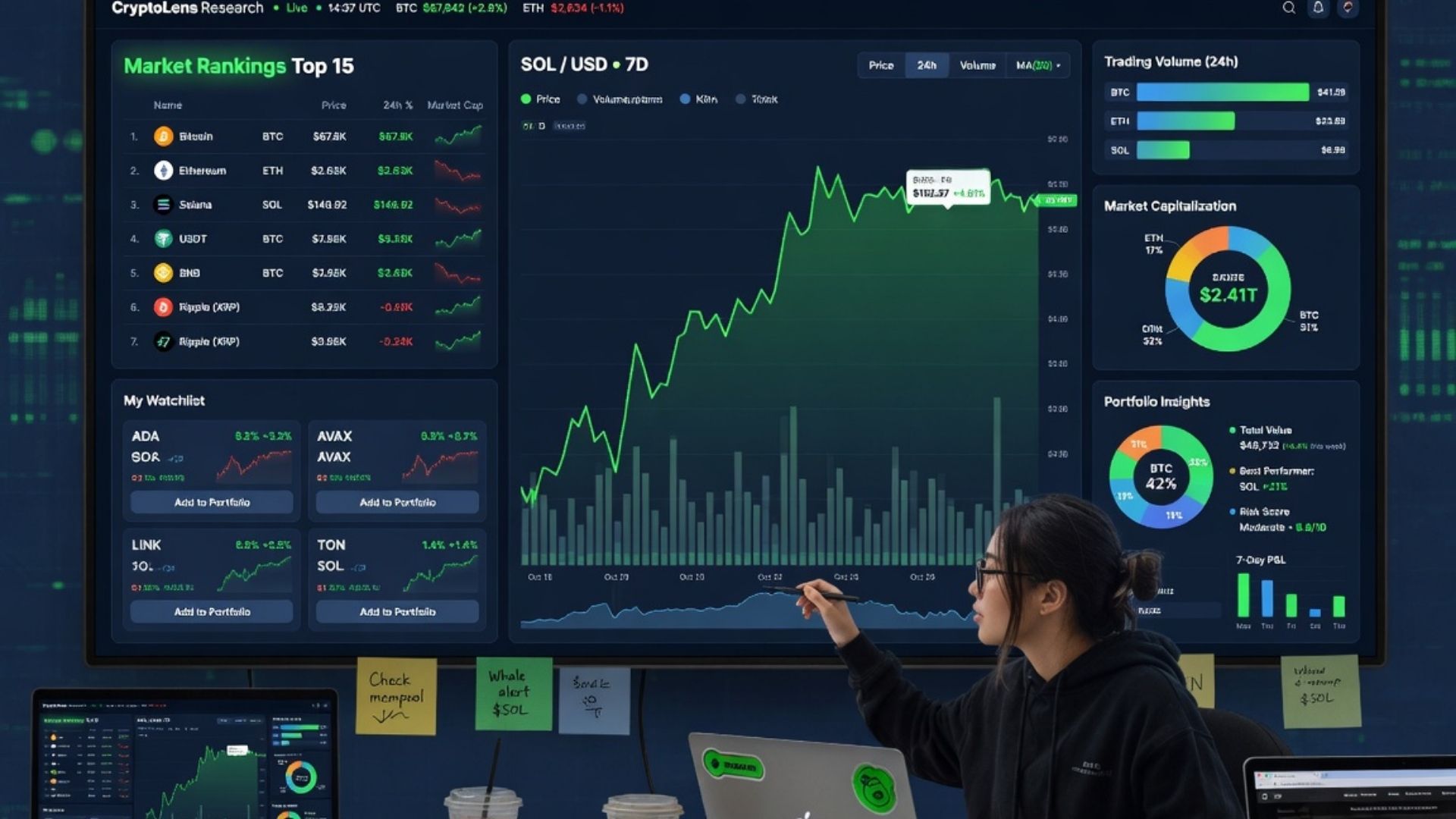
CoinMarketCap charts allow users to review how a cryptocurrency has moved over different time periods. This can include short-term price action, longer-term trends, previous highs, market corrections, and volatility patterns.
Charts can help users understand whether an asset has been rising, falling, consolidating, or moving with broader market cycles. They can also help identify moments when volume increased sharply or price moved unusually fast.
However, charts should not be interpreted without context. A strong past rally does not guarantee future performance. A large decline does not automatically mean a token is cheap. Crypto prices can be influenced by market sentiment, exchange listings, liquidity changes, token unlocks, regulatory news, network upgrades, hacks, macroeconomic conditions, and broader Bitcoin or Ethereum trends.
A useful way to read charts is to ask why the movement happened, not just what happened.
CoinMarketCap Volume and Liquidity Signals
Trading volume shows how much of a cryptocurrency has been traded over a selected time period, often 24 hours. High volume can indicate active market interest, while low volume may suggest weaker activity.
Liquidity is closely related to volume. A liquid asset is easier to buy or sell without significantly affecting the price. Low liquidity can lead to slippage, wider spreads, and more volatile price moves.
CoinMarketCap volume data can help users compare activity across assets and exchanges. But users should still be careful. Reported volume can vary in quality depending on the exchange and market structure. A high volume number alone does not guarantee strong demand or safety.
Before buying or trading any crypto asset, users should consider whether there is enough liquidity to enter and exit positions reasonably.
Using CoinMarketCap Watchlists and Categories
CoinMarketCap watchlists can help users organize assets they want to follow. Instead of reacting to random trending coins, users can create a focused list of cryptocurrencies related to their goals or research interests.
A watchlist may include:
- Major assets like Bitcoin and Ethereum
- Tokens from a specific sector
- DeFi projects
- Layer-1 or layer-2 networks
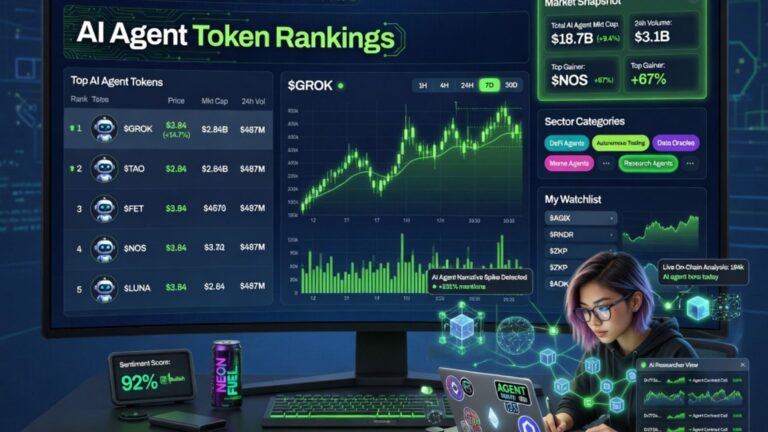
- AI-related crypto assets
- Gaming or metaverse tokens
- Stablecoins
- Tokens being researched before buying
Categories are also useful because they allow users to compare projects within the same sector. For example, comparing a DeFi token with another DeFi token may be more meaningful than comparing it with a gaming token or a stablecoin.
This helps users think in terms of market sectors, competition, adoption, and use cases rather than price alone.
CoinMarketCap for Beginners
For beginners, CoinMarketCap is useful because it introduces the basic language of crypto markets. New users can learn how price, market cap, supply, volume, rankings, and exchanges work together.
Beginners should focus on understanding core metrics before making investment decisions. Important concepts include:
- Price is not the same as value
- Market cap gives size context
- Circulating supply affects valuation
- Volume can show activity
- Liquidity affects trade execution
- Rankings can change quickly
- Trending tokens may be risky
- Crypto assets can lose value rapidly
New users should avoid buying a token only because it appears on a trending list or has recently increased in price. Fast-moving assets may attract attention, but they can also reverse quickly.
CoinMarketCap can help beginners become more informed, but education and risk awareness are still essential.
CoinMarketCap Risk Checks Before Buying Crypto
Before buying any cryptocurrency, users should perform basic risk checks. CoinMarketCap can help with some of these checks, but it should not be the only source used.
Key risk questions include:
- Is the token actively traded?
- Does it have enough liquidity?
- Is the circulating supply clear?
- Is the fully diluted valuation unusually high?
- Are there upcoming token unlocks?
- Is the project information easy to verify?
- Are official links and community channels active?
- Is the asset listed on reputable exchanges?
- Has the project had security issues?
- Does the token have a real use case?
These questions help users move beyond hype. A responsible crypto decision should combine data, project research, risk management, and personal financial judgment.
This article is for educational purposes only and should not be considered financial advice.
Common Mistakes When Using CoinMarketCap
Many users make avoidable mistakes when reading crypto market data. One of the most common mistakes is focusing only on token price. A coin priced at a few cents may seem affordable, but if the supply is extremely large, the market cap may already be high.
Another mistake is chasing the biggest gainers. A token that rises quickly may continue moving, but it may also correct sharply. High volatility can create opportunity, but it also increases risk.
Other common mistakes include:
- Ignoring trading volume
- Not checking liquidity
- Confusing market cap with fully diluted valuation
- Assuming trending means trustworthy
- Ignoring supply changes
- Not checking exchange quality
- Relying only on social media excitement
- Forgetting transaction and withdrawal costs
- Treating historical performance as a guarantee
- Failing to create an exit plan
Good crypto research requires patience. CoinMarketCap provides useful data, but users must interpret that data carefully.
CoinMarketCap and Responsible Crypto Decisions
CoinMarketCap can support responsible decision-making by giving users access to organized market information. But responsible investing also requires discipline.
Users should consider their risk tolerance, time horizon, portfolio size, and financial situation before buying crypto. Digital assets are volatile, and losses can happen quickly. Even well-known tokens can experience major drawdowns.
A responsible approach includes:
- Researching before buying
- Avoiding emotional decisions
- Using only money you can afford to lose
- Diversifying carefully
- Reviewing tokenomics
- Checking liquidity
- Understanding custody risks
- Protecting wallets and exchange accounts
- Monitoring market changes
- Knowing when to exit
The goal is not to predict every market move. The goal is to make decisions based on better information and realistic expectations.
Conclusion: CoinMarketCap for Smarter Crypto Research
CoinMarketCap is a valuable tool for anyone who wants to understand crypto prices, rankings, charts, market cap, trading volume, supply data, and exchange information. It helps beginners learn basic market metrics and gives experienced users a faster way to compare assets and track trends. However, CoinMarketCap should be used as a research tool, not as financial advice or proof that a token is safe. In 2026, smarter crypto decisions require combining market data with independent research, security awareness, risk management, and clear judgment before taking action.
FAQs
What is CoinMarketCap?
CoinMarketCap is a crypto market data platform that tracks prices, charts, rankings, market cap, volume, supply, and exchange information.
Is CoinMarketCap good for beginners?
Yes, CoinMarketCap helps beginners understand crypto metrics such as price, market capitalization, circulating supply, and trading volume.
Does CoinMarketCap provide financial advice?
No. CoinMarketCap provides market data, but users should do independent research before buying or trading crypto.
Why is market cap important on CoinMarketCap?
Market cap helps users compare the relative size of crypto assets by considering both token price and circulating supply.
Can CoinMarketCap show where a crypto is traded?
Yes, CoinMarketCap usually shows exchange listings, but users should still check liquidity, fees, and regional availability.
How should I use CoinMarketCap safely?
Use it as a research tool, verify information from multiple sources, avoid hype-driven decisions, and manage crypto risk carefully.