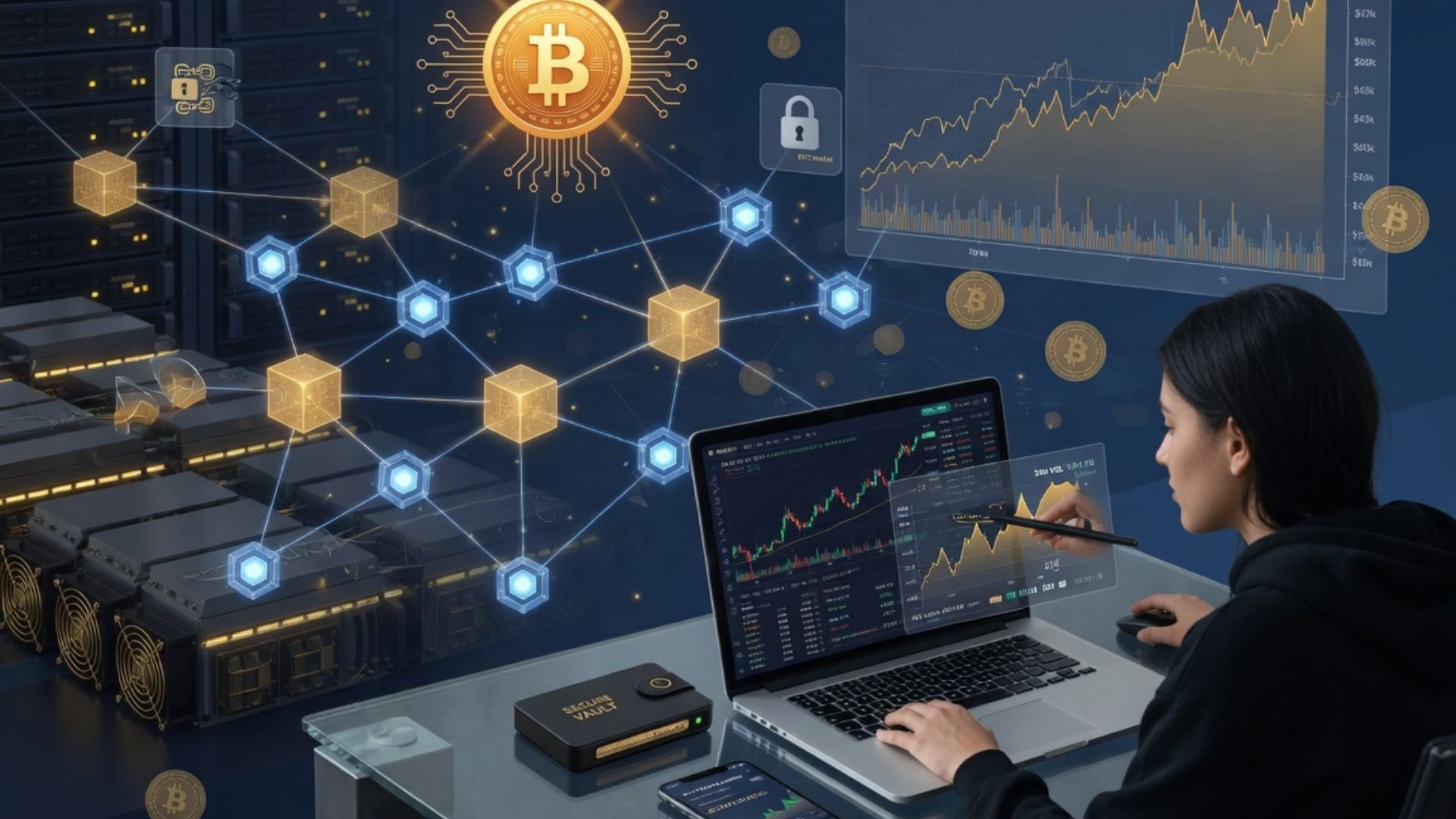
Bitcoin Guide for 2026: How It Works, Why It Matters, and What to Know
Bitcoin remains the most recognized cryptocurrency in the world, and in 2026 it continues to be an important topic for investors, developers, businesses, policymakers, and everyday users trying to understand digital money. Unlike traditional currencies issued by central banks, Bitcoin operates on a decentralized peer-to-peer network where transactions are verified by participants and recorded on a public blockchain. Its limited supply, open-source design, and global accessibility have made it a major part of the crypto economy, but it also carries serious risks such as volatility, security mistakes, regulatory uncertainty, and market speculation.
Understanding Bitcoin requires more than watching its price. It is important to know how the network works, why scarcity matters, what mining does, how wallets protect funds, and why responsible risk management is essential. This guide explains Bitcoin in clear terms for beginners and provides practical context for anyone researching cryptocurrency in 2026.
What Is Bitcoin?
Bitcoin is a decentralized digital currency designed to allow value transfer without relying on a central bank or traditional payment intermediary. It was introduced in 2009 and is powered by blockchain technology, which records transactions in a public, tamper-resistant ledger.
The Bitcoin network is maintained by thousands of computers, often called nodes, that verify transactions and enforce the network’s rules. No single company, government, or individual controls the entire system. This decentralization is one of the main reasons Bitcoin is different from traditional digital payment systems.
Bitcoin can be used as:
- A digital asset
- A peer-to-peer payment method
- A long-term store-of-value experiment
- A settlement network
- A hedge considered by some users against currency debasement
- A technology platform for financial innovation
However, Bitcoin is not risk-free. Its price can rise or fall sharply, and users are responsible for securing their own funds when using self-custody wallets.
How Bitcoin Works
Bitcoin works through a combination of cryptography, blockchain records, network consensus, and proof-of-work mining. When someone sends Bitcoin, the transaction is broadcast to the network. Nodes verify that the sender has enough balance and that the transaction follows protocol rules.
Once verified, transactions are grouped into blocks. Miners compete to add new blocks to the blockchain by solving computational puzzles. This process is called proof of work. The miner who successfully adds a block receives newly issued Bitcoin and transaction fees as a reward.
This design helps protect the network from easy manipulation. Changing past transactions would require enormous computing power, making Bitcoin’s blockchain difficult to alter once transactions have enough confirmations.
In simple terms:
- Users create transactions
- Nodes verify the rules
- Miners secure the network
- Blocks record transactions
- The blockchain stores the history
This system allows Bitcoin to function without a central authority.
Why Bitcoin Has a Limited Supply
One of Bitcoin’s most important features is its fixed supply limit. The protocol is designed so that no more than 21 million Bitcoin will ever exist. This scarcity is a major part of its economic design.
New Bitcoin enters circulation through mining rewards. Over time, these rewards decrease through events known as halvings. A halving reduces the amount of new Bitcoin issued to miners, slowing the rate of supply growth.
This fixed supply is different from traditional currencies, where central banks can increase money supply. Supporters argue that scarcity gives Bitcoin long-term value potential. Critics argue that price still depends heavily on demand, market sentiment, regulation, liquidity, and investor behavior.
A limited supply does not guarantee price increases. It simply means Bitcoin’s issuance schedule is predictable.
Bitcoin Mining and Network Security
Bitcoin mining is the process that secures the network and confirms transactions. Miners use specialized hardware to compete for the right to add the next block to the blockchain.
Mining serves several purposes:
- It verifies transaction history
- It helps prevent double-spending
- It distributes new Bitcoin according to protocol rules
- It makes attacks expensive
- It supports decentralized consensus
Mining requires electricity and computing resources, which has led to ongoing debate about energy use. Some mining operations use renewable energy, stranded energy, or other power sources, but the environmental impact varies by location and energy mix.
From a user perspective, mining is important because it helps make Bitcoin resistant to censorship and manipulation. However, users do not need to mine Bitcoin in order to hold, send, or receive it.
Bitcoin Wallets and Private Keys
A Bitcoin wallet is a tool that allows users to store and manage private keys. A private key is a secret code that gives control over Bitcoin associated with a wallet address. Whoever controls the private key controls the funds.
There are several wallet types:
- Hardware wallets
- Mobile wallets
- Desktop wallets
- Web wallets
- Custodial exchange wallets
- Paper wallets, though less common today
Hardware wallets are often preferred for long-term self-custody because they keep private keys offline. Mobile wallets may be convenient for smaller amounts and daily use. Custodial wallets, such as those held on exchanges, may be easier for beginners but require trusting a third party.
Security is critical. If a user loses their private key or recovery phrase, they may lose access to their Bitcoin permanently. If someone else steals the key, they can move the funds.
Bitcoin as a Store of Value
Many people view Bitcoin as a potential store of value because of its limited supply and decentralized design. Some compare it to digital gold, although the comparison is imperfect. Gold has thousands of years of history, while Bitcoin is a newer and more volatile asset.
Bitcoin’s store-of-value argument is based on:
- Fixed supply
- Global transferability
- Decentralized ownership
- Resistance to easy inflation
- High liquidity compared with many crypto assets
- Growing institutional and retail awareness
However, Bitcoin’s price volatility remains a major challenge. It can experience large drawdowns, and investors should not assume it behaves like a stable savings account. Anyone considering Bitcoin should understand that short-term price swings can be severe.
Bitcoin Payments and Everyday Use
Bitcoin can be used for peer-to-peer payments, but its use as everyday money varies by region, fees, regulation, merchant adoption, and user preference. On-chain Bitcoin transactions are secure but may become slower or more expensive during periods of high network activity.
To improve payment usability, second-layer solutions such as the Lightning Network have been developed. These systems aim to support faster and cheaper transactions while still using Bitcoin as the underlying settlement asset.
Bitcoin payments may be useful for:
- Cross-border transfers
- Digital commerce
- Donations
- Payments in regions with limited banking access
- Long-term settlement between parties
Still, users must consider transaction fees, confirmation times, tax rules, and volatility before using Bitcoin for payments.
Bitcoin Risks Every User Should Understand
Bitcoin has potential benefits, but it also has real risks. Responsible users should understand these risks before buying, holding, or trading.
Important Bitcoin risks include:
- Price volatility
- Loss of private keys
- Exchange hacks or failures
- Phishing scams
- Regulatory changes
- Transaction mistakes
- High fees during congestion
- Market manipulation concerns
- Tax reporting obligations
- Emotional trading decisions
A common mistake is buying Bitcoin only because the price is rising. Another mistake is storing funds carelessly or sharing recovery phrases. Security habits matter as much as market research.
This article is for educational purposes only and should not be considered financial advice.
How to Research Bitcoin Responsibly
Good Bitcoin research should include both technical and economic understanding. Users should avoid relying only on social media hype, price predictions, or influencer opinions.
Responsible research includes learning about:
- Blockchain basics
- Wallet security
- Private key management
- Transaction fees
- Market cycles
- Liquidity
- Regulation
- Tax responsibilities
- Custody options
- Personal risk tolerance
It is also wise to compare Bitcoin with other assets carefully. Bitcoin is different from stocks, bonds, fiat currency, gold, and newer crypto tokens. Each has its own risk profile and purpose.
Before buying Bitcoin, users should ask: Why am I buying it? How long do I plan to hold it? What amount can I afford to lose? How will I store it safely? What is my exit or rebalancing plan?
Bitcoin Security Best Practices
Security is one of the most important parts of using Bitcoin. Because transactions are usually irreversible, prevention is essential.
Best practices include:
- Use a trusted wallet
- Back up your recovery phrase securely
- Never share private keys
- Enable two-factor authentication on exchanges
- Use strong and unique passwords
- Beware of fake apps and phishing links
- Test small transactions first
- Keep long-term holdings offline where appropriate
- Update wallet software carefully
- Avoid storing large funds on unsecured devices
Self-custody gives users control, but it also creates responsibility. Beginners may want to start with small amounts while learning how wallets and transactions work.
Bitcoin in 2026 and the Future of Digital Assets
In 2026, Bitcoin continues to influence the broader cryptocurrency market. It is often the first digital asset new users learn about and remains a benchmark for crypto market sentiment. Developers, businesses, miners, investors, and regulators continue to evaluate its role in the financial system.
Bitcoin’s future may depend on several factors:
- Network security
- Adoption trends
- Regulatory clarity
- Institutional participation
- Layer-2 development
- User education
- Mining economics
- Global macroeconomic conditions
No one can predict Bitcoin’s future with certainty. Its long-term success depends on continued network reliability, market demand, usability, and trust in its decentralized model.
Conclusion: Why Bitcoin Still Matters
Bitcoin matters because it introduced a working model for decentralized digital money and continues to shape how people think about value, ownership, payments, scarcity, and financial independence. Its blockchain, limited supply, proof-of-work security, and global accessibility make it one of the most important innovations in the crypto space. At the same time, Bitcoin carries real risks, including volatility, custody mistakes, scams, regulatory uncertainty, and emotional investing. Anyone researching Bitcoin in 2026 should focus on education, security, risk management, and realistic expectations before making financial decisions.
FAQs
What is Bitcoin?
Bitcoin is a decentralized digital currency that allows peer-to-peer transactions without a central bank or traditional payment intermediary.
How does Bitcoin work?
Bitcoin works through a public blockchain, network nodes, cryptographic keys, and proof-of-work mining that verifies transactions.
Why is Bitcoin limited to 21 million coins?
Bitcoin’s protocol sets a maximum supply of 21 million coins, creating predictable scarcity and limiting future issuance.
Is Bitcoin safe to use?
Bitcoin’s network is highly secure, but users must protect wallets, private keys, passwords, and recovery phrases to avoid loss or theft.
Can Bitcoin be used for payments?
Yes, Bitcoin can be used for payments, though fees, confirmation times, merchant acceptance, and volatility should be considered.
Is Bitcoin a guaranteed investment?
No. Bitcoin is volatile and does not guarantee profit. Users should research carefully and understand the risks before buying.