DeFiLlama Guide for DeFi Protocol Research in 2026
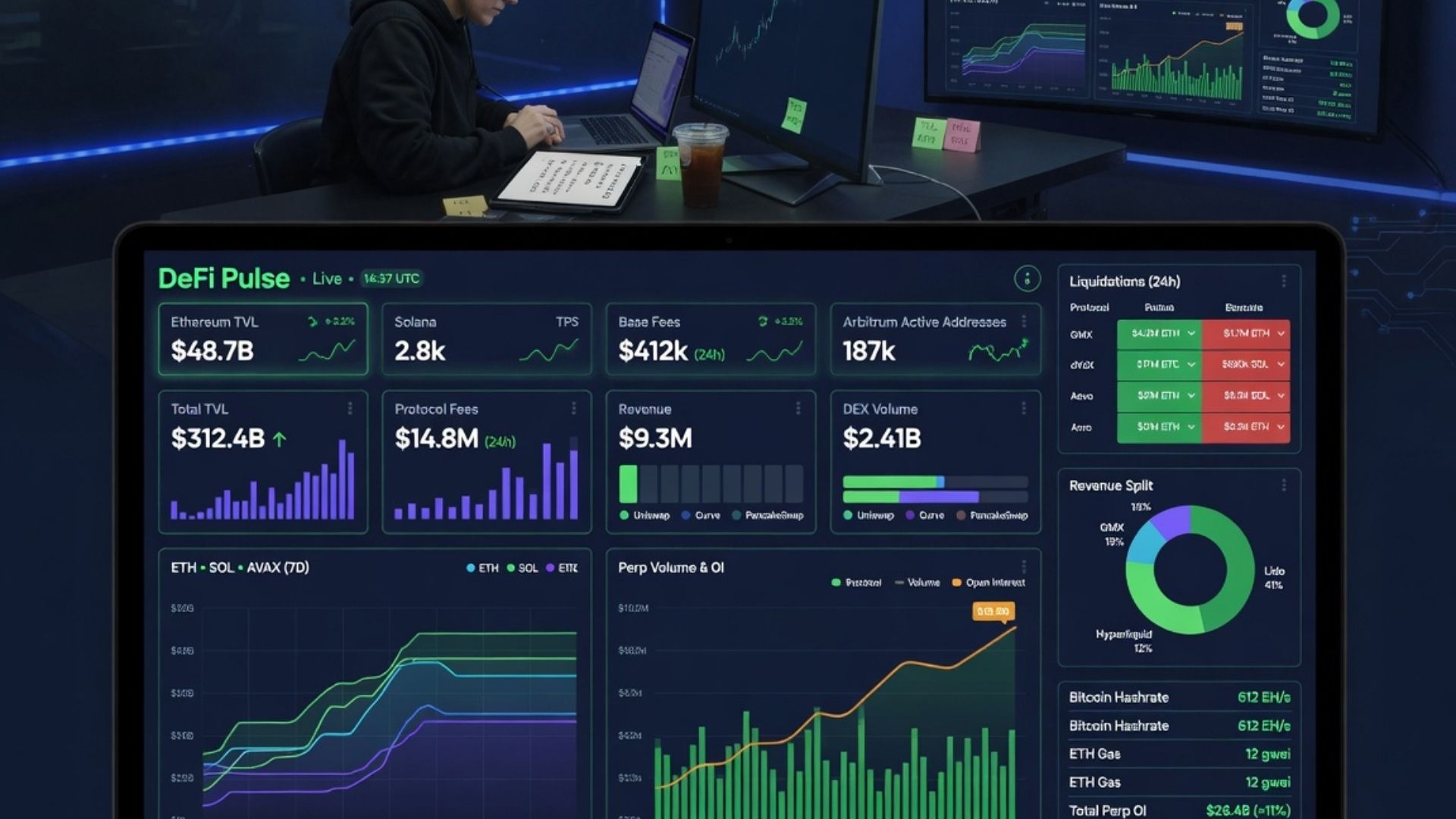
DeFiLlama has become an important research tool for crypto users who want to understand decentralized finance data beyond basic token prices. In 2026, serious DeFi research often includes total value locked, fees, revenue, DEX volume, perpetual futures volume, liquidity, open interest, liquidation data, chain activity, and protocol-level performance. Instead of relying only on social media narratives or short-term price movement, users can review structured on-chain and market data to better understand how a protocol is being used.
The DeFi market changes quickly. A project may appear popular because its token is trending, but protocol data may tell a more detailed story. High trading volume, rising fees, strong liquidity, or growing total value locked can indicate activity, while declining usage, low liquidity, or unusual liquidation patterns may signal risk. Still, no analytics platform should be treated as financial advice. DeFiLlama can support research, but users must interpret data carefully and verify important information from multiple sources.
This guide explains what DeFiLlama is, which metrics matter, how to use protocol pages for research, and how crypto users can avoid common mistakes when analyzing DeFi platforms in 2026.
What Is DeFiLlama?
DeFiLlama is a decentralized finance analytics platform that tracks data across protocols, chains, tokens, stablecoins, bridges, decentralized exchanges, lending markets, derivatives platforms, and other crypto ecosystems. It is widely used by traders, analysts, researchers, builders, and everyday crypto users who want a clearer view of DeFi activity.
A DeFiLlama protocol page may include information such as:
- Total value locked
- Chain-level TVL breakdown
- Protocol fees
- Protocol revenue
- DEX trading volume
- Perpetual futures volume
- Liquidation volume
- Open interest
- Token market data
- Methodology notes
- Category and ecosystem information
This type of information helps users move beyond price speculation. A token price can rise or fall for many reasons, but protocol metrics can show whether a platform is generating activity, attracting capital, or supporting real usage.
Why DeFiLlama Matters for Crypto Research
DeFiLlama matters because crypto markets are often noisy. New narratives appear quickly, and many users make decisions based on hype, influencer opinions, or short-term charts. Protocol analytics can provide a more grounded research process.
For example, if a DeFi protocol claims strong adoption, users may want to check whether TVL, volume, fees, and revenue support that claim. If a derivatives platform is gaining attention, users may review perp volume, open interest, liquidation volume, and fee generation to understand trading activity.
DeFiLlama helps answer practical questions such as:
- How much capital is locked in a protocol?
- Which chains are supporting most of the activity?
- Is trading volume increasing or declining?
- Does the protocol generate fees or revenue?
- How active is the derivatives market?
- Is usage concentrated in one product or spread across several areas?
- Are incentives driving growth, or is activity organic?
These questions do not guarantee a correct investment decision, but they help users think more clearly.
DeFiLlama TVL Explained
Total value locked, often called TVL, is one of the most common DeFi metrics. It usually represents the value of assets deposited into a protocol’s smart contracts, liquidity pools, lending markets, bridges, or related systems.
TVL can help users understand how much capital a protocol currently holds. A rising TVL may suggest growing participation, while falling TVL may suggest withdrawals, lower asset prices, reduced incentives, or declining confidence.
However, TVL should not be viewed alone. A protocol can have high TVL but low revenue. Another protocol may have lower TVL but strong trading volume or fee generation. TVL can also be affected by token price changes, not just user deposits.
When using DeFiLlama, it is better to compare TVL with other metrics such as fees, revenue, volume, liquidity, and protocol category.
DeFiLlama Fees and Revenue Data
Fees and revenue are important because they can show whether a protocol is generating economic activity. Fees usually refer to charges paid by users for trading, borrowing, lending, bridging, or interacting with a protocol. Revenue may represent the portion of fees retained by the protocol, token holders, treasury, or another defined recipient, depending on methodology.
This distinction matters. A protocol may generate large fees but retain only a portion as revenue. Another may distribute revenue differently. DeFiLlama often includes methodology notes that help users understand how figures are calculated.
When analyzing fees and revenue, users should ask:
- Are fees increasing consistently?
- Is revenue growing with usage?
- Are incentives driving activity?
- Is revenue sustainable without rewards?
- How does revenue compare with market valuation?
- Are fee sources diversified or dependent on one product?
Fee and revenue analysis is especially useful when comparing DeFi exchanges, derivatives platforms, lending protocols, and yield platforms.
DeFiLlama DEX Volume and Perp Volume
DEX volume measures trading activity on decentralized exchanges. It can show how much spot trading is happening through a protocol or ecosystem. Perp volume refers to perpetual futures trading activity, which is especially relevant for decentralized derivatives platforms.
For protocols such as Hyperliquid and similar trading-focused ecosystems, perp volume can be a key metric because it reflects derivatives market activity. High perp volume may suggest strong trader participation, but users should still examine open interest, liquidations, fees, and liquidity conditions.
Volume should also be viewed carefully. Large volume can indicate activity, but it does not automatically mean a protocol is low-risk or undervalued. Users should ask whether volume is consistent, whether it is supported by real liquidity, and whether it depends heavily on incentives or short-term market volatility.
DeFiLlama Open Interest and Liquidation Data
Open interest shows the value of active derivatives positions that remain open. It can help users understand how much leverage or market exposure exists on a trading platform. Liquidation volume shows the value of positions closed due to insufficient margin or forced liquidation events.
These metrics are important for derivatives research because high leverage can increase market risk. A platform with rising open interest may be attracting traders, but large liquidation spikes may indicate volatility, crowded positions, or aggressive leverage.
When reviewing DeFiLlama derivatives data, users should consider:
- Is open interest rising with volume?
- Are liquidations increasing during volatile periods?
- Is trading activity stable or highly event-driven?
- Are fees growing alongside volume?
- Does liquidity support large trades?
These questions help users understand the health and risk profile of a trading protocol more clearly.
DeFiLlama for Hyperliquid Research
DeFiLlama can be useful for researching Hyperliquid because it organizes protocol-level metrics such as TVL, fees, revenue, DEX volume, perp volume, liquidation data, open interest, and token-related market information. This gives users a broader view than simply checking the token price.
For a derivatives-focused ecosystem, users may want to compare several metrics together. Perp volume can show trading activity. Open interest can show active exposure. Liquidation volume can highlight risk during volatile conditions. Fees and revenue can show whether trading activity is producing measurable economic value. TVL can provide additional context about capital held within the ecosystem.
No single metric gives the full answer. A stronger research process compares multiple signals over different time periods.
How Beginners Can Use DeFiLlama
Beginners can use DeFiLlama to learn how DeFi protocols are measured. Instead of starting with complex trading strategies, new users should first understand the basic terms.
Important beginner concepts include:
- TVL shows capital in a protocol
- Fees show user-paid activity
- Revenue shows retained or distributed value
- DEX volume shows spot trading activity
- Perp volume shows derivatives trading activity
- Open interest shows active futures exposure
- Liquidations show forced position closures
- Chain breakdowns show where activity happens
Beginners should not assume that a high number always means a safe project. DeFi carries smart contract risk, liquidity risk, market risk, governance risk, oracle risk, bridge risk, and regulatory uncertainty.
Common Mistakes When Using DeFiLlama
DeFiLlama provides valuable data, but users can still misread it. One common mistake is focusing only on TVL. TVL is useful, but it does not show profitability, user quality, or long-term sustainability by itself.
Another mistake is ignoring methodology. Different protocols calculate fees, revenue, and volume differently. Methodology notes can help users understand what is included or excluded.
Other common mistakes include:
- Treating high volume as guaranteed strength
- Ignoring token unlocks and valuation
- Confusing fees with revenue
- Not checking chain-specific risk
- Overlooking incentives
- Ignoring liquidity depth
- Following rankings without research
- Assuming data removes market risk
- Forgetting smart contract risk
- Making decisions based on one metric
A careful user treats DeFiLlama as a research dashboard, not a decision-making shortcut.
DeFiLlama and Responsible DeFi Decisions
DeFiLlama can help users make more informed decisions, but responsible DeFi research requires more than data. Users should also review official documentation, tokenomics, audits where available, governance activity, risk disclosures, community updates, and broader market conditions.
Before using or investing in any DeFi protocol, users should ask:
- What problem does the protocol solve?
- Is there real usage beyond incentives?
- Are the smart contracts audited?
- How is revenue generated?
- Who controls governance or upgrades?
- What risks exist for users?
- How liquid are the markets?
- What happens during extreme volatility?
- Is the token valuation reasonable?
- Can I afford the risk?
This article is for educational purposes only and should not be considered financial advice.
Conclusion: DeFiLlama for Smarter DeFi Research
DeFiLlama is a valuable analytics platform for users who want to understand DeFi protocols through data such as TVL, fees, revenue, DEX volume, perp volume, open interest, liquidation activity, and chain-level metrics. It can help beginners learn key DeFi concepts and give experienced users a clearer way to compare protocols like Hyperliquid and other decentralized finance platforms. However, DeFiLlama should be used as a research tool, not as financial advice or proof that a protocol is safe. Smart DeFi research in 2026 requires combining on-chain data with risk management, independent verification, and realistic expectations.
FAQs
What is DeFiLlama?
DeFiLlama is a DeFi analytics platform that tracks protocol data such as TVL, fees, revenue, volume, chains, and market activity.
Why is DeFiLlama useful?
DeFiLlama helps users compare DeFi protocols using structured data instead of relying only on token prices or market hype.
What does TVL mean on DeFiLlama?
TVL means total value locked, which represents the value of assets held in a protocol’s smart contracts or related systems.
Does DeFiLlama track perp volume?
Yes, DeFiLlama tracks perp volume for supported derivatives protocols, helping users review decentralized futures trading activity.
Can DeFiLlama predict crypto prices?
No. DeFiLlama provides data, but it does not predict prices or guarantee investment outcomes.
How should beginners use DeFiLlama?
Beginners should use DeFiLlama to learn key metrics, compare protocols, check methodology, and support broader crypto research.