Cryptocurrency Exchange Platform Fundamentals for Secure Digital Asset Trading
The digital asset economy relies heavily on the infrastructure that connects buyers and sellers across the globe. A cryptocurrency exchange platform serves as this critical bridge, facilitating the trading, conversion, and liquidity of digital tokens. Without these platforms, the broader adoption of decentralized assets would remain fragmented and illiquid. As the market matures and attracts institutional capital, understanding the underlying architecture and security mechanisms of these exchanges becomes essential for every participant.
The operational complexity of a modern trading venue goes far beyond a simple user interface. It requires high-performance matching engines, deep liquidity pools, regulatory compliance frameworks, and institutional-grade custody solutions. Consequently, evaluating a cryptocurrency exchange platform requires a deep dive into how these systems process trades, secure funds, and maintain market integrity under extreme volatility.
What Defines a Cryptocurrency Exchange Platform?
At its core, a cryptocurrency exchange platform is a digital marketplace where users can trade fiat currencies for cryptocurrencies, or swap one digital asset for another. These platforms operate similarly to traditional stock exchanges but are specifically designed for the 24/7 nature of global blockchain markets. They provide the necessary infrastructure for price discovery, order matching, and settlement.
However, unlike traditional stock markets that close on weekends and holidays, digital asset markets never sleep. Therefore, a robust cryptocurrency exchange platform must maintain high availability and fault tolerance around the clock. This continuous operation demands enterprise-grade server architecture and distributed systems that can handle sudden spikes in trading volume without experiencing downtime during critical market movements.
Order Books and Market Liquidity
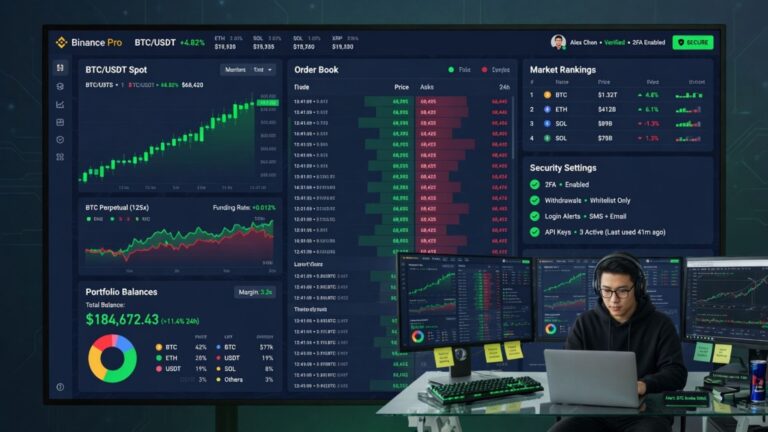
The efficiency of an exchange is largely determined by its order book. An order book is a real-time, electronic list of all buy and sell orders for a specific asset. Buy orders, or bids, are placed at specific prices, while sell orders, or asks, are listed at higher prices. The difference between the highest bid and the lowest ask is known as the spread.
A highly liquid cryptocurrency exchange platform will have a deep order book. This means there are substantial volumes of both buy and sell orders at prices close to the current market rate. Deep liquidity ensures that traders can execute large orders without causing drastic price slippage. Slippage occurs when a large order consumes all the available liquidity at the current price, forcing the remainder of the order to fill at progressively worse prices. As a result, institutional traders heavily prioritize exchanges with deep, liquid markets.
Custodial vs. Non-Custodial Architecture
Most traditional exchanges operate on a custodial model. When a user deposits fiat or crypto, the cryptocurrency exchange platform takes control of those funds and credits the user’s internal account balance. The actual blockchain transactions only occur during deposits and withdrawals. Internal trades between users are simply ledger updates within the exchange’s database. This allows for instant trading and low fees but requires users to trust the platform’s security measures.
Conversely, decentralized exchanges (DEXs) operate on a non-custodial model. Trades are executed directly on the blockchain via smart contracts, meaning users never surrender control of their private keys. While this eliminates counterparty risk, it often results in slower execution times and higher transaction costs during network congestion. The choice between custodial and non-custodial models depends entirely on a user’s priority between operational speed and absolute asset control.
Security Infrastructure Within a Cryptocurrency Exchange Platform

Because custodial platforms hold vast amounts of user funds, they are prime targets for cyberattacks. The security architecture of a cryptocurrency exchange platform is its most critical component. A single vulnerability can lead to catastrophic financial loss and the immediate collapse of user trust. Therefore, leading platforms employ multi-layered security protocols to mitigate both external and internal threats.
The most fundamental security practice is the segregation of hot and cold wallets. A hot wallet is connected to the internet to facilitate automated withdrawal requests. A cold wallet, however, is entirely offline, storing the vast majority of user funds securely away from hackers. A well-designed cryptocurrency exchange platform typically keeps 90% to 95% of its assets in cold storage, utilizing multi-signature authorization to ensure no single employee can access the funds.
Cold Storage and Multi-Party Computation
Modern exchanges have evolved beyond simple paper backups for cold storage. Many now utilize Hardware Security Modules (HSMs) and Multi-Party Computation (MPC) to secure offline assets. MPC technology splits a private key into multiple mathematical shares distributed across different geographic locations and secure environments. To authorize a transaction, a threshold of these shares must work together cryptographically.
This means an attacker would need to physically compromise multiple secure facilities simultaneously to access the funds. Furthermore, utilizing MPC within a cryptocurrency exchange platform eliminates the fragility of traditional single-signature cold storage without sacrificing security. It allows institutions to enforce complex governance policies directly at the cryptographic level, ensuring that large withdrawals require multi-person approval.
Regulatory Compliance and KYC Integration
Security is not just about defending against hackers; it is also about regulatory compliance. Operating a cryptocurrency exchange platform legally requires strict adherence to Anti-Money Laundering (AML) and Know Your Customer (KYC) regulations. These frameworks prevent illicit actors from using the platform to launder funds or finance terrorism.
Before a user can deposit or withdraw fiat currency, they must submit government-issued identification and verify their address. This data must be stored securely and audited regularly. Compliance also extends to market surveillance. A regulated exchange must monitor trading activity for manipulative practices, such as wash trading or spoofing. Therefore, implementing robust compliance software is non-negotiable for any platform seeking to operate in tier-one jurisdictions.
Centralized vs. Decentralized Exchange Models
The debate between centralized and decentralized models is a defining narrative in the digital asset space. A centralized cryptocurrency exchange platform (CEX) is operated by a corporate entity that acts as the intermediary between buyers and sellers. It offers a user-friendly experience, high liquidity, and customer support. However, it introduces counterparty risk, as users must trust the entity to safeguard their funds and process withdrawals faithfully.
Decentralized exchanges (DEXs) remove the middleman entirely. They utilize automated market makers (AMMs) or on-chain order books to facilitate peer-to-peer trading. Because a DEX operates via smart contracts, there is no corporate entity to regulate or shut down. Users maintain custody of their assets at all times. However, DEXs often suffer from lower liquidity, higher transaction costs during peak times, and a lack of fiat currency onboarding options.
The Role of Smart Contracts
In a decentralized cryptocurrency exchange platform, smart contracts replace the traditional matching engine. These self-executing codes automatically handle order routing, asset swapping, and settlement. For example, an AMM uses liquidity pools funded by users, pricing assets algorithmically based on the ratio of tokens in the pool.
While this democratizes market making, it introduces smart contract risk. If the underlying code contains a bug or vulnerability, attackers can drain the liquidity pool. Consequently, DEXs require rigorous, ongoing security audits. The evolution of the industry will likely see hybrid models emerge, where the user experience of a centralized platform is combined with the non-custodial security of decentralized smart contracts.
Evaluating a Cryptocurrency Exchange Platform for Institutional Use

Institutional investors have fundamentally different requirements compared to retail traders. When a hedge fund or asset manager evaluates a cryptocurrency exchange platform, their due diligence process is exhaustive. They look beyond trading fees and focus heavily on infrastructure reliability, regulatory clarity, and depth of liquidity.
Institutions require features like over-the-counter (OTC) desks for executing massive block trades without moving the public market price. They also demand API reliability for algorithmic and high-frequency trading strategies. A minor API outage can result in millions of dollars in unrealized losses for an automated trading desk. Therefore, the technical stability of the exchange’s API is a primary concern.
Furthermore, institutional clients require prime brokerage access and sub-account structures to manage complex portfolios and segregate client funds effectively. A cryptocurrency exchange platform aiming to serve this demographic must invest heavily in enterprise-grade infrastructure that mirrors the standards of traditional Wall Street venues.
Insurance and Asset Protection
Even with flawless security, institutional clients demand a safety net. A top-tier cryptocurrency exchange platform will maintain comprehensive digital asset insurance policies. These policies, often underwritten by syndicates at Lloyd’s of London, cover losses resulting from cyberattacks, internal collusion, or physical theft of cold storage keys.
However, insurance coverage often has strict limits and exclusions. It rarely covers market volatility or user error. Institutions must carefully verify the scope of the policy and ensure the coverage limit is proportional to the assets they plan to hold on the platform. In some cases, large institutions negotiate private insurance arrangements or utilize qualified third-party custodians rather than keeping funds directly on the exchange.
Liquidity Aggregation and Market Depth
Liquidity is the lifeblood of any trading venue. A cryptocurrency exchange platform without sufficient liquidity is functionally useless, as traders cannot enter or exit positions at fair market prices. To ensure deep liquidity, exchanges employ market makers—specialized firms that provide continuous buy and sell quotes on various trading pairs.
In return for providing liquidity, market makers often receive fee rebates or co-location privileges, allowing their servers to be physically close to the exchange’s matching engine to reduce latency. This symbiotic relationship tightens the spread and creates a smoother trading experience for all users. Consequently, an exchange’s ability to attract and retain top-tier market makers is a direct indicator of its overall market health.
Additionally, some modern platforms aggregate liquidity from multiple external venues. By routing orders to other exchanges when better prices are available, a cryptocurrency exchange platform can offer its users the best possible execution price. This smart order routing technology is standard in traditional equity markets and is rapidly becoming a requirement in the digital asset space.
Frequently Asked Questions
What is a cryptocurrency exchange platform?
It is a digital marketplace that facilitates the trading of digital assets and fiat currencies by matching buy and sell orders through an electronic ledger or smart contract.
What is the difference between a centralized and decentralized exchange?
Centralized exchanges are operated by corporate entities that custody user funds, while decentralized exchanges use smart contracts to enable peer-to-peer trading without intermediaries.
How do exchanges protect user funds?
Leading platforms store the vast majority of user funds in offline cold storage using Hardware Security Modules and Multi-Party Computation to prevent unauthorized access.
Why is liquidity important for trading?
High liquidity ensures that traders can buy or sell assets quickly at stable prices without experiencing severe slippage on large orders.
Do cryptocurrency exchanges require identity verification?
Regulated centralized exchanges mandate Know Your Customer (KYC) and Anti-Money Laundering (AML) verification to prevent illicit financial activities.
Can institutional traders use standard crypto exchanges?
While they can, institutions typically require specialized features like OTC desks, prime brokerage services, and institutional custody solutions that standard retail platforms may lack.
Conclusion
The infrastructure supporting digital asset trading has evolved tremendously since the early days of Bitcoin. Today, a sophisticated cryptocurrency exchange platform must balance the competing demands of high-speed trading, deep liquidity, regulatory compliance, and impenetrable security. Whether operating on a centralized custodial model or utilizing decentralized smart contracts, these platforms are the vital engines of the digital economy. As the line between traditional finance and blockchain technology continues to blur, the platforms that prioritize transparency, institutional-grade architecture, and rigorous asset protection will ultimately lead the market. For investors and traders, understanding these underlying mechanics is essential for navigating the complex landscape of digital asset trading safely and effectively.