MEXC Exchange Guide for Crypto Traders in 2026
MEXC is a cryptocurrency exchange that many traders research when comparing platforms for buying, selling, and trading digital assets. In 2026, crypto users are more cautious than ever because exchange choice affects security, liquidity, fees, trading experience, asset access, and overall risk management. A trading platform can provide useful tools, but it cannot remove market volatility or guarantee profit. That is why users should understand how an exchange works before depositing funds or placing trades.
Crypto exchanges play an important role in the digital asset market. They connect buyers and sellers, provide price discovery, offer trading pairs, and allow users to manage portfolios. Some users look for simple spot trading, while others want futures, advanced charts, order books, mobile access, or broader token availability. However, convenience should always be balanced with safety.
This guide explains what MEXC is, how crypto exchanges generally work, what features traders should evaluate, and how beginners can approach trading more responsibly in 2026.
What Is MEXC?
MEXC is commonly known as a cryptocurrency exchange where users can access digital asset markets. Like other crypto exchanges, it may provide trading tools for different types of users, including beginners, active traders, and market researchers.
A crypto exchange typically allows users to:
- Create an account
- Deposit supported assets
- Buy or sell cryptocurrencies
- Trade spot markets
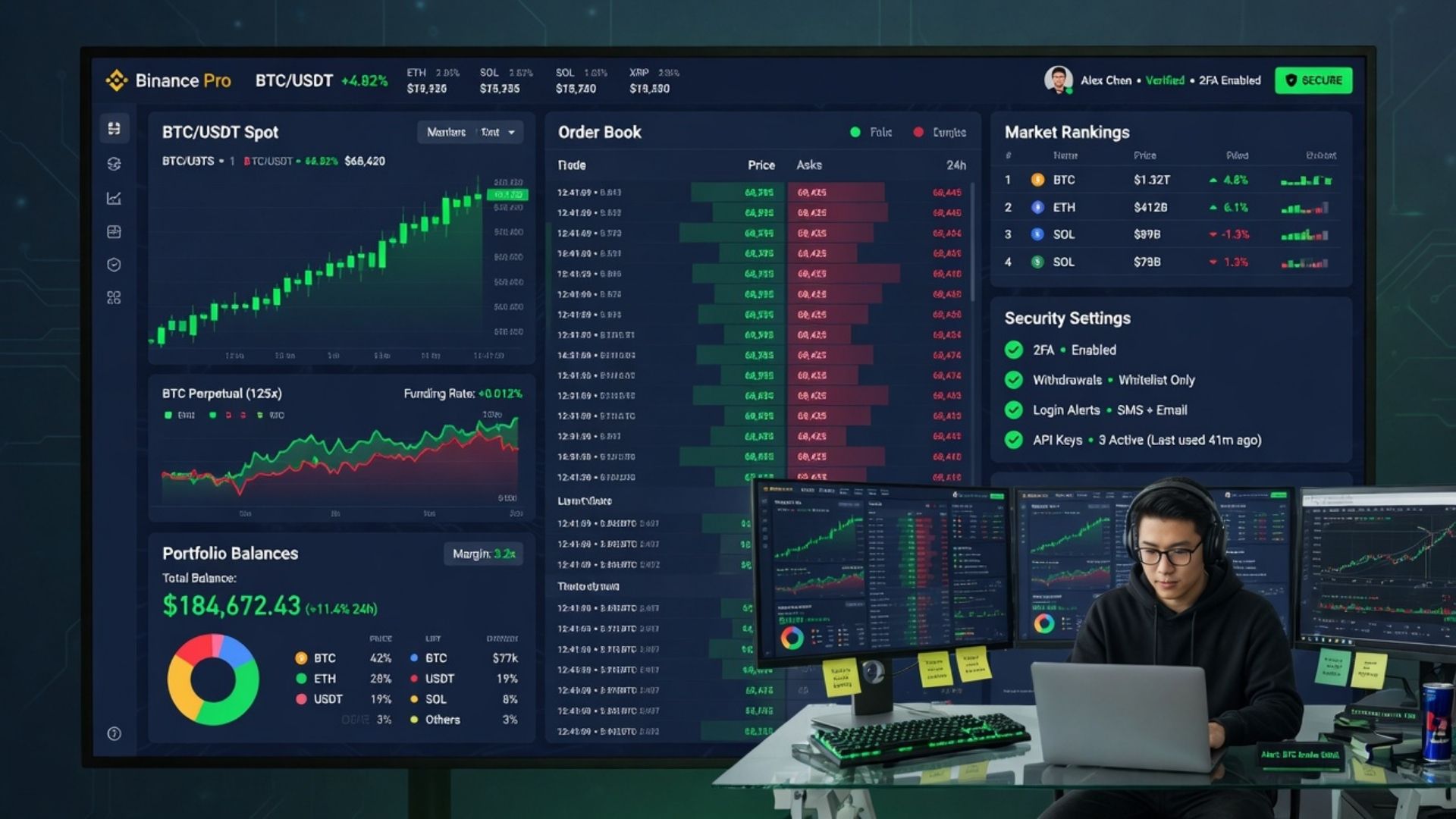
- Access charts and order books
- Monitor portfolio balances
- Use security settings
- Withdraw funds to external wallets
Some exchanges also offer advanced products such as futures trading, margin-related tools, staking, launchpad features, copy trading, or market analytics. Availability can vary by region, regulation, account status, and platform updates, so users should always check the latest official details directly before using any feature.
The most important point is simple: MEXC should be evaluated like any financial platform, with attention to security, transparency, fees, liquidity, and risk.
Why MEXC Matters for Crypto Trading
MEXC matters to traders because exchange selection can affect the entire trading experience. A user may choose an exchange based on asset availability, interface design, supported markets, trading costs, or mobile usability. Active traders may also care about execution speed, charting tools, order types, futures markets, and liquidity.
For beginners, the exchange should feel understandable. A confusing platform can lead to mistakes, especially when sending deposits, selecting networks, placing orders, or withdrawing funds. For experienced traders, deeper tools may matter more, including advanced order types, derivatives access, and market depth.
When comparing MEXC with any other exchange, users should ask:
- Is the platform available in my region?
- Which cryptocurrencies are supported?
- What trading products are offered?
- What fees apply?
- How strong is account security?
- What withdrawal limits or requirements exist?
- Is liquidity sufficient for the assets I want to trade?
- Does the platform provide clear risk information?
These questions help traders choose based on practical needs rather than hype.
MEXC Spot Trading Explained
Spot trading is the simplest form of crypto trading. It means buying or selling an asset at the current market price or through a limit order. When users spot trade, they usually own the asset after purchase, assuming the order is completed and the asset remains in their exchange wallet.
For example, a trader may buy Bitcoin, Ethereum, or another supported crypto asset using a stablecoin trading pair. If the price rises, the asset value may increase. If the price falls, the position loses value.
Spot trading is often more beginner-friendly than futures or leveraged trading because it does not involve liquidation in the same way. However, spot trading still carries risk. Crypto prices can move sharply, and users may lose money if they buy during hype or sell during panic.
Before using MEXC spot markets, users should understand order types such as market orders, limit orders, and stop-related orders where available.
MEXC Futures Trading and Risk
Futures trading allows users to speculate on price movement without necessarily holding the underlying asset in the same way as spot trading. Futures may include leverage, which means traders can control a larger position with a smaller amount of margin.
Leverage can increase potential gains, but it also increases potential losses. If the market moves against a leveraged position, the trader may face liquidation. This makes futures trading significantly riskier than basic spot trading.
Users considering MEXC futures or any derivatives product should understand:
- Leverage settings
- Margin requirements
- Liquidation price
- Funding rates
- Position size
- Stop-loss planning
- Market volatility
- Risk of rapid losses
Beginners should be especially careful with futures. Many new traders lose money because they use high leverage without understanding how quickly crypto markets can move.
MEXC Fees and Trading Costs
Fees are an important part of exchange evaluation. Even small trading fees can add up, especially for active traders who place many orders. Users should review all applicable costs before trading.
Common exchange-related costs may include:
- Spot trading fees
- Futures trading fees
- Withdrawal fees
- Funding rates for perpetual futures
- Spread between buy and sell prices
- Conversion costs
- Network fees for blockchain withdrawals
It is also important to understand maker and taker fees. A maker order usually adds liquidity to the order book, while a taker order removes liquidity by filling immediately. Fee structures can vary, so users should check the latest fee schedule before trading.
A strategy that appears profitable on a chart may perform differently after fees, spreads, slippage, and funding costs are included.
MEXC Liquidity and Market Depth
Liquidity refers to how easily an asset can be bought or sold without causing a major price movement. Market depth shows the number and size of buy and sell orders available at different price levels.
Liquidity matters because low-liquidity markets can create slippage. Slippage happens when an order fills at a different price than expected. This can be especially risky for large trades, volatile tokens, or newly listed assets.
When researching a trading pair on MEXC, users should consider:
- 24-hour trading volume
- Order book depth
- Spread between bid and ask prices
- Price stability
- Exchange availability
- Token volatility
- Market news and events
A token may look attractive because it is trending, but if liquidity is weak, entering and exiting the position may be difficult.
MEXC Account Security Tips
Security should be one of the first priorities when using any crypto exchange. Because digital assets can be difficult or impossible to recover after theft, users need strong account protection.
Important security practices include:
- Use a strong and unique password
- Enable two-factor authentication
- Avoid sharing login details
- Beware of phishing websites
- Confirm official app sources
- Set withdrawal security controls where available
- Keep email accounts secure
- Avoid public Wi-Fi when trading
- Monitor account activity regularly
- Do not trust fake support messages
Many crypto losses happen because users click fake links, share verification codes, download malicious apps, or trust impersonators. Good security habits can reduce these risks.
MEXC for Beginners
MEXC may be researched by beginners who want access to crypto markets, but new users should move slowly. Crypto trading is complex, and mistakes can be expensive.
Beginners should learn basic concepts before depositing significant funds:
- How wallets work
- Difference between spot and futures trading
- How deposits and withdrawals work
- Why blockchain networks must match
- What trading fees mean
- How market orders differ from limit orders
- Why volatility matters
- How to protect account access
- Why private wallets may be useful
- How to avoid scams
A beginner-friendly approach is to start with small amounts, test deposits and withdrawals carefully, and avoid leveraged trading until the risks are fully understood.
MEXC and Responsible Crypto Research
Before buying any asset on MEXC, users should do independent research. Exchange listings do not automatically mean a token is safe, valuable, or suitable for investment. Some crypto assets are highly speculative, and new tokens can be especially volatile.
Responsible research includes reviewing:
- Project documentation
- Token supply and tokenomics
- Market cap and fully diluted valuation
- Liquidity and trading volume
- Development activity
- Community quality
- Security audits, if available
- Exchange listings
- Use case and adoption
- Risk factors and unlock schedules
Users should avoid buying only because a token is trending or promoted on social media. Strong research takes time and should include multiple sources of information.
This article is for educational purposes only and should not be considered financial advice.
Common Mistakes to Avoid on MEXC
Many crypto users make similar mistakes when trading on exchanges. These mistakes can lead to unnecessary losses, account problems, or security risks.
Common mistakes include:
- Using high leverage without experience
- Ignoring trading fees
- Sending funds on the wrong blockchain network
- Buying tokens based only on hype
- Not using two-factor authentication
- Leaving large balances on exchanges without a plan
- Placing market orders in illiquid markets
- Not setting stop-loss levels
- Confusing spot and futures balances
- Ignoring withdrawal limits or verification requirements
Avoiding these mistakes can make the trading experience safer and more disciplined.
How to Evaluate MEXC Before Using It
Before using MEXC or any exchange, users should evaluate whether it fits their needs. Not every exchange is suitable for every trader. A beginner may need simplicity and security, while an advanced trader may need deeper liquidity, futures tools, and advanced charting.
Evaluation questions include:
- Is MEXC supported in my location?
- What verification requirements apply?
- Are my preferred assets available?
- Are fees competitive for my trading style?
- Is liquidity strong enough for my order size?
- What security features can I enable?
- Are withdrawal rules clear?
- Does the interface feel easy to use?
- What risks apply to the products I want to use?
- Do I understand the terms before trading?
Taking time to evaluate these points can prevent poor decisions later.
Conclusion: Is MEXC Worth Researching?
MEXC is worth researching for users who want to compare crypto exchanges and understand available trading tools, supported assets, fees, liquidity, and security features. Like any cryptocurrency platform, it should be used with caution, especially by beginners or anyone considering futures and leveraged products. The best approach to MEXC is not simply opening an account and trading immediately; it is learning how the platform works, securing the account properly, reviewing costs, understanding market risk, and making decisions based on research rather than hype. In 2026, responsible crypto trading requires education, discipline, and careful risk management.
FAQs
What is MEXC?
MEXC is a cryptocurrency exchange that users research for buying, selling, and trading digital assets across supported markets.
Is MEXC good for beginners?
MEXC may be useful for beginners who learn basic crypto concepts first, start with small amounts, and avoid high-risk trading products.
Does MEXC offer spot trading?
Crypto exchanges like MEXC commonly provide spot trading, where users buy and sell digital assets directly through supported trading pairs.
Is futures trading on MEXC risky?
Yes. Futures trading can involve leverage, liquidation risk, funding costs, and rapid losses during volatile market conditions.
What should I check before using MEXC?
Check regional availability, fees, supported assets, liquidity, withdrawal rules, security settings, and verification requirements.
How can I use MEXC more safely?
Use two-factor authentication, avoid phishing links, start small, understand fees, manage risk, and never trade money you cannot afford to lose.