Gemini Robotics 2 Explained: Whole-Body AI for Humanoids
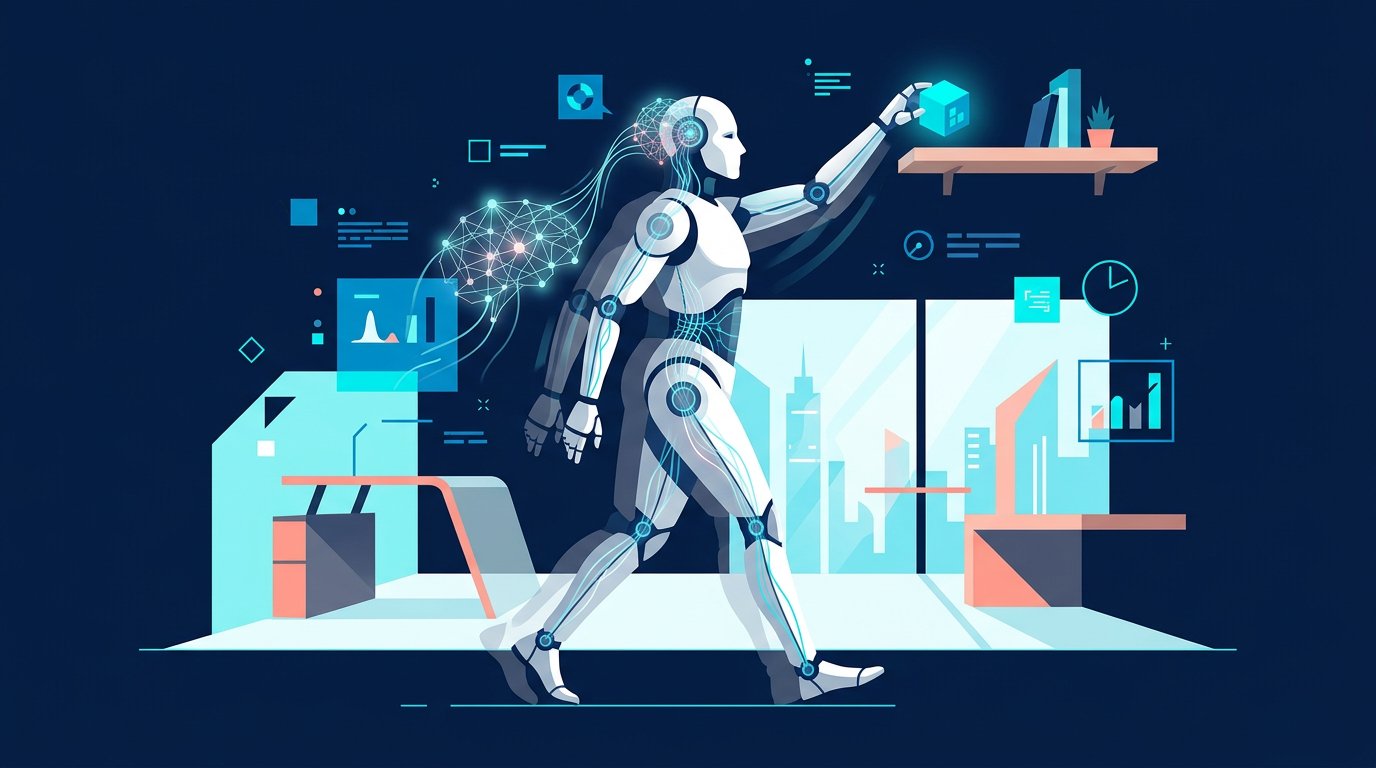
Google DeepMind unveiled Gemini Robotics 2 on July 30, 2026, and it may be the year’s biggest leap in physical AI. Earlier robotics models controlled only a humanoid’s upper body. In contrast, Gemini Robotics 2 commands an entire robot, from its feet to its fingertips. It walks, crouches, balances, and handles objects with five-fingered hands.
Moreover, this release is not a single model. It is a family of three systems that split action, reasoning, and on-device control. This guide explains what Gemini Robotics 2 does, how the models cooperate, what the benchmarks reveal, and how developers can get access. Our analysis draws on Google DeepMind’s announcement materials, published model cards, and reported benchmark data.
Key Takeaways
- Gemini Robotics 2 is a vision-language-action model that controls full humanoid bodies, not just arms.
- The family includes Gemini Robotics ER 2 for planning and Gemini Robotics On-Device 2 for offline operation.
- Demonstrations show Apptronik’s Apollo 2 walking, fetching, and placing objects from one spoken prompt.
- Multi-finger dexterity ranges from 32% to 92% success, so delicate tasks remain the weak axis.
- ER 2 is in public preview through Google AI Studio, while the other models require early access.
What Is Gemini Robotics 2?
Gemini Robotics 2 is Google DeepMind’s most advanced vision-language-action model to date. It converts camera input and spoken instructions into continuous motor commands. As a result, a robot can see a room, understand a request, and physically act on it.
Traditional industrial robots follow rigid, pre-programmed routines. They fail when environments change. However, Gemini Robotics 2 reasons through movement instead of replaying fixed scripts. It adapts to clutter, shifting objects, and unfamiliar layouts in real time.
For years, physical automation struggled with brittle programming that broke outside controlled lab settings. In fact, most deployed machines still handle only narrow, repetitive task sequences. Skills learned on one robot rarely transfer to another body. This release targets all three of those limits at once.
Notably, this is the first model in the family to unify legs, torso, arms, and fingers under one learned policy. Previous versions managed only tabletop manipulation. Therefore, Google DeepMind describes Gemini Robotics 2 as an intelligence layer for a new generation of adaptable machines.
The Gemini Robotics 2 Family: Three Models, One Intelligence Layer
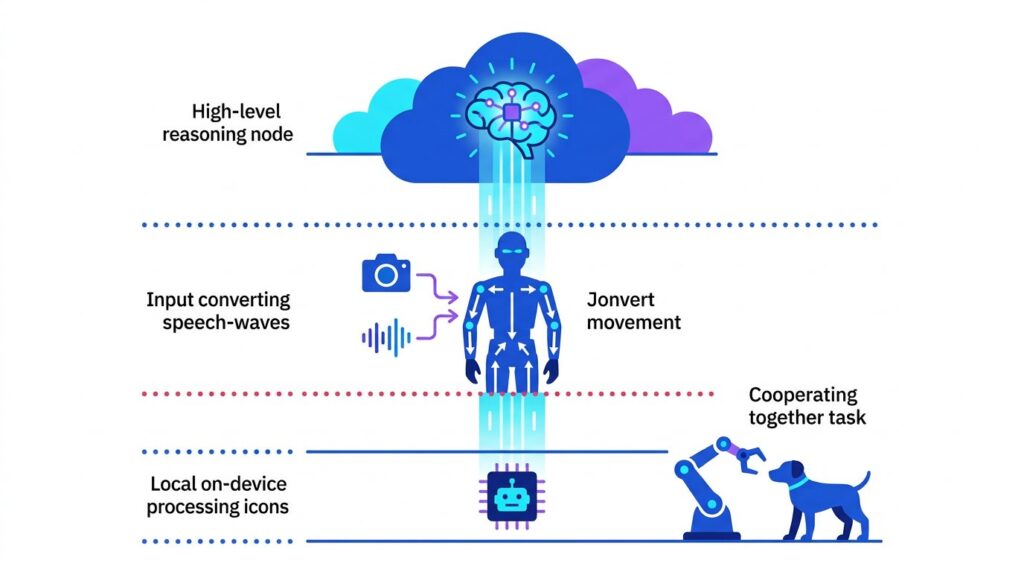
The release ships as three coordinated models. Each one covers a distinct layer of robot intelligence. Together, they let machines plan, act, and react without constant human guidance.
Gemini Robotics 2: The Action Model
The core VLA model turns vision and language into motor control. It drives full humanoids and bi-arm robots with equal fluency. In addition, it operates both five-fingered hands and conventional two-finger grippers. One checkpoint even powered Apollo 2 with two different hand types, plus a Franka Duo gripper setup.
Gemini Robotics ER 2: The Reasoning Model
Gemini Robotics ER 2 acts as the high-level brain. It listens to people, reads the scene, and breaks goals into steps. According to its model card, ER 2 builds on Gemini 3.5 Flash. It accepts interleaved text, image, video, and audio with a 128K context window. Furthermore, it plans task sequences lasting several minutes and involving hundreds of decisions.
Gemini Robotics On-Device 2: The Offline Model
On-Device 2 is an efficient VLA that runs locally on the robot. It suits sites where network latency or connectivity is unreliable. It inherits the motion-transfer techniques of Gemini Robotics 1.5 and Google’s on-device Gemma models. Consequently, it adapts to new bi-arm embodiments in a few hours, typically with fewer than 200 examples. This holds even for bodies with drastically different shapes, sensors, and degrees of freedom.
Whole-Body Control From Feet to Fingertips
The headline upgrade in Gemini Robotics 2 is whole-body motion. Earlier generations stopped at the waist. Now, humanoids can walk across rooms, bend, stretch, and balance while manipulating objects.
In one demonstration, Apollo 2 received a single instruction: put the watering can into the green bin on the bottom shelf. The robot processed the command, walked to a table, grasped the can, crossed the room, and placed it precisely. That entire chain unfolded autonomously from one prompt. In addition, other released videos show the same humanoid bending low to retrieve objects and finding specific items on crowded shelves.
Google DeepMind calls this an important step toward the skills needed for complex, real-world tasks. Such work demands whole-body coordination that tabletop systems simply cannot deliver.
Reported whole-body results are encouraging, though not perfect:
| Whole-body task (Apollo 2 with Inspire hands) | Success rate |
|---|---|
| Pick up from shelf | 76.3% |
| Pick up from table | 68.4% |
| Pick up from floor | 45.7% |
As the table shows, floor-level retrieval remains hardest. Google DeepMind also concedes that movement speed needs work. Still, the company calls this a crucial step toward real-world coordination.
Dexterity Benchmarks: Honest Strengths and Weak Spots
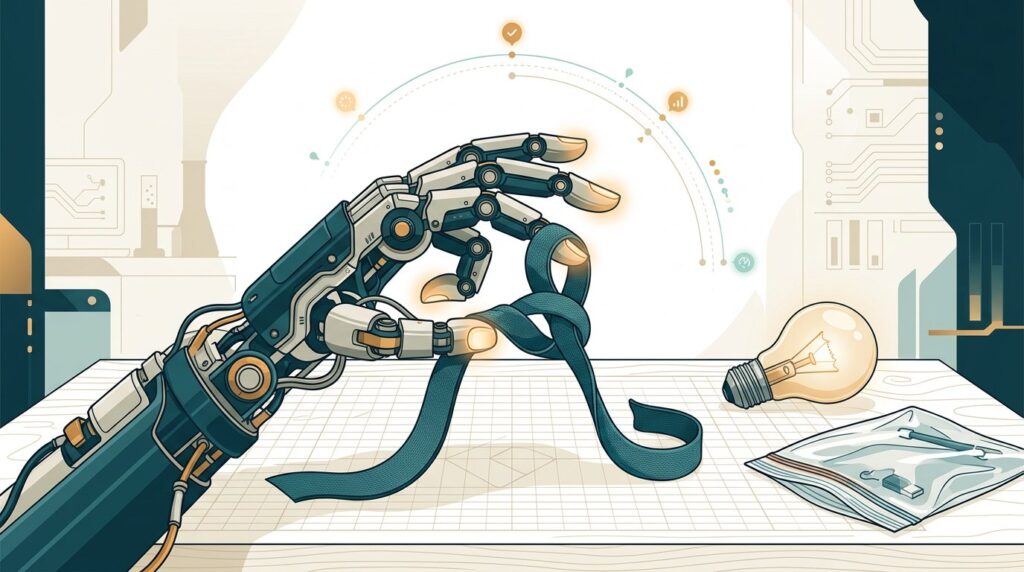
Gemini Robotics 2 can now steer a five-fingered hand with 22 degrees of freedom, built by Sharpa. That unlocks delicate actions like tying knots, sealing zip bags, and screwing in light bulbs.
However, the numbers reveal a mixed picture:
| Dexterity task | Embodiment | Success rate |
|---|---|---|
| Unscrew light bulb | Apollo 2 + Sharpa hands | 92% |
| Tie trash bag | Apollo 2 + Sharpa hands | 44% |
| Seal ziplock bag | Apollo 2 + Sharpa hands | 40% |
| Screw in light bulb | Apollo 2 + Sharpa hands | 36% |
| Use dustpan | Apollo 2 + Sharpa hands | 32% |
| Precise insertion | Franka Duo grippers | 89.6% |
| Diverse tool kitting | Franka Duo grippers | 78.9% |
| General pick and place | Franka Duo grippers | 74.2% |
Two lessons stand out. First, gripper-based industrial tasks look close to deployment-ready. Second, multi-finger manipulation is still the weak axis of the whole stack. Results swing from 92% down to 32%. Buyers should weigh that gap before promising fine-motor use cases to customers.
Multi-Robot Teamwork and Embodied Reasoning
Another striking advance is collaboration between different machines. Gemini Robotics ER 2 can divide work between robots that share no hardware. In one demo, Apollo 2 directed a dual-arm robot to place tools inside a bin while cleaning a garage. Separately, ER 2 guided a Boston Dynamics Spot through a fetch task using the Live API, with sample code published on GitHub.
Equally useful is how people interact with the system. The robot explains its approach while performing an action. Users can then redirect it with plain, everyday language rather than technical commands. Consequently, guiding a machine through a volatile or hazardous space becomes far more practical.
Moreover, ER 2 tracks progress over long horizons. Google reports 91.3% accuracy on moment-finding, with a 0.96-second mean absolute distance. In addition, it detects when tasks begin and end, recovering from failed actions instead of freezing. Progress classification sits at 57.4% across five bins, which leaves room to grow. Even so, the vendor frames ER 2 as roughly four times faster than larger competing models on these video understanding tests.
Because of this orchestration layer, the full stack suits warehouses, factories, and field operations where fleets must cooperate. A humanoid and a bi-arm unit can now split a job that neither could finish alone.
Safety: ASIMOV-Agentic and Human Proximity
Safety anchors the entire release. Google DeepMind calls ER 2 its safest robotics model so far on the ASIMOV2 benchmark. It detects nearby humans more reliably, triggers safety tool calls, and brings robots to a controlled stop when someone steps too close.
Alongside the models, the company released ASIMOV-Agentic. This new benchmark evaluates agentic physical AI, and it is available on Hugging Face under a CC-BY-4.0 license. It tests whether robots refuse unsafe commands involving tools. It also checks whether a robot admits uncertainty and calls a human for help.
That last point matters for real-world deployments. Machines entering homes, hospitals, and shops must know their limits. An embedded escalation path is therefore as valuable as raw dexterity. Carolina Parada, DeepMind’s VP and Head of Robotics, frames the trio as three capable models that work together or independently, depending on context.
Gemini Robotics 2 vs Gemini Robotics 1.5
The generational jump is easiest to see side by side:
| Capability | Gemini Robotics 1.5 | Gemini Robotics 2 |
|---|---|---|
| Body control | Upper body, tabletop focus | Whole body, feet to fingertips |
| Locomotion | Not supported | Walking, crouching, balancing |
| Hand dexterity | Simple grippers and basic hands | Five-fingered, 22-DoF hands plus grippers |
| Reasoning layer | ER 1.6 | ER 2, based on Gemini 3.5 Flash |
| Multi-robot teamwork | Limited | Built in through ER 2 orchestration |
| New-body adaptation | Motion transfer, slower | A few hours, under 200 examples |
| Safety evaluation | ASIMOV benchmark | ASIMOV2 plus ASIMOV-Agentic |
In short, the new generation expands every axis at once: body, hands, planning, teamwork, and safety.
Where Gemini Robotics 2 Fits in the Real World
Early deployments will cluster where adaptability pays the fastest. Warehousing and logistics lead the list, since goods vary endlessly in shape and position. Meanwhile, manufacturing follows closely, especially for precise insertion and tool handling, where gripper success already nears 90%.
Beyond the factory floor, hazardous industrial maintenance is a natural fit. Notably, a machine that understands spoken redirection can enter unstable sites while people stay clear. Retail stocking and healthcare support become plausible later, once dexterity and speed improve.
Investors are watching for the same reason. Humanoids can work in spaces built for people, so they demand no costly infrastructure changes. That economic logic explains why adaptable robot brains attract so much capital right now.
Availability: Who Can Use Gemini Robotics 2 Today
Access tiers differ per model. Gemini Robotics ER 2 is the most open. It runs in public preview through the Gemini API and Google AI Studio. It is also in private preview on the Gemini Enterprise Agent Platform.
By contrast, the core VLA model is reserved for early-access partners. Developers can apply through Google DeepMind’s waitlist. On-Device 2 remains limited to trusted testers for now. Therefore, most teams will start with ER 2 and integrate the action models later.
Apptronik, for example, is the flagship hardware partner. Its Apollo 2 humanoid stars in every major demo. The robots train at Robot Park, a large data-collection facility in Austin, Texas. Other validated platforms include Franka Duo arms, Inspire hands, and Sharpa’s dexterous hand. Wider enterprise rollout will depend on additional hardware partners joining the program.
Competition is intensifying, of course. NVIDIA pushes its Cosmos world models for simulation. Meanwhile, Figure, 1X, and several Chinese labs pursue vertically integrated humanoids. Google’s bet is different: one transferable brain across many bodies.
Frequently Asked Questions About Gemini Robotics 2
What is Gemini Robotics 2?
It is Google DeepMind’s latest vision-language-action model for robots, announced on July 30, 2026. The system converts visual input and spoken language into physical actions. Crucially, it controls entire humanoid bodies, including walking, balancing, and five-fingered manipulation.
When did the model launch, and who can use it?
Google DeepMind announced the family on July 30, 2026. The embodied reasoning model, ER 2, is in public preview via the Gemini API and Google AI Studio. However, the VLA and on-device models remain restricted to early-access partners and trusted testers.
What is the difference between Gemini Robotics 2 and Gemini Robotics ER 2?
The VLA model handles low-level motor control, turning perception into movement. In contrast, ER 2 is the high-level planner that talks to people, decomposes multi-minute tasks, and coordinates multiple robots. Think of ER 2 as the manager and the VLA as the hands.
Can Gemini Robotics 2 control different robot bodies?
Yes. A single checkpoint has driven Apptronik’s Apollo 2 with two hand types and a Franka Duo gripper rig. Additionally, On-Device 2 adapts to new bi-arm bodies in a few hours, usually with fewer than 200 training examples.
How safe is the system around people?
Google DeepMind calls it the company’s safest robotics stack to date. ER 2 tops the internal ASIMOV2 evaluation, detects human proximity, and stops robots when people approach. The new public ASIMOV-Agentic benchmark also tests tool-use refusals and escalation to humans.
What can the new models do in the real world?
Demonstrations show humanoids fetching objects, stocking shelves, sealing bags, tying trash bags, and screwing in light bulbs. Gripper robots achieve up to 89.6% success on precise insertion. Early target sectors include warehousing, logistics, manufacturing, and hazardous maintenance.
Conclusion
Gemini Robotics 2 marks a genuine shift in physical AI. For the first time, one model family unifies whole-body motion, five-finger dexterity, long-horizon planning, and multi-robot teamwork. The benchmarks prove real progress, even though fine manipulation still lags behind gripper tasks.
For developers, ER 2’s public preview offers an immediate entry point. For enterprises, the early-access program signals where adaptive automation is heading. Robots that walk, reason, and cooperate are leaving the lab. Gemini Robotics 2 is the clearest evidence yet that general-purpose physical intelligence is becoming a practical technology, not a distant promise.