AI Video Generator: Studio-Grade Video From a Single Prompt
The pitch behind every AI video generator sounds identical — type a prompt, receive a film. The reality usually disappoints: one model, one text box, and output you cannot steer. Higgsfield approaches the problem differently. Its AI video generator is built as a full creative workspace that places seven leading models side by side, wraps them in genuine camera and lens simulation, and lets you lock frames, dictate motion and even edit existing footage. For creators who discovered that a generic AI video generator cannot hold a character across two shots, that distinction is the whole story.
Seven leading models inside one AI video generator
The strongest argument for choosing this AI video generator is consolidation. Each model on the platform ships with its own strengths, and switching between them takes seconds rather than a second subscription:
Kling 3.0 — positioned as the new standard in photorealism, with advanced motion complexity.
Seedance 2.0 — the first native audio-video model, generating synced lip-sync, sound effects and music in one pass.
Wan 2.7 — marketed as the perfect balance between generation speed and visual richness.
Kling o1 — a next-generation reasoning model built for complex, multi-layered scene composition.
Sora 2 — deep world simulation with accurate physics and object permanence.
Veo 3.1 — crystal-clear 4K generation with native cinematic visual flows.
Kling 2.6 — the proven engine for fast, stable, consistent character animation.
Because the AI video generator updates on release day, new models land in the same workspace the day they ship rather than months later elsewhere.
Control an editor would recognise
A serious AI video generator earns its keep in the controls, and four features carry that weight here. First and Last image reference lets you lock the starting point and final frame of a clip, producing seamless consistency across a sequence. Edit any video accepts uploaded footage so you can change styles, swap objects or refine details without a reshoot. Motion control goes further still: upload a reference video and dictate the exact pace and gesture of the generation. Add a visual reference image before generating and the AI video generator adopts your creative direction for colour, mood and composition.
Cinema Studio: optical physics replace the prompt lottery
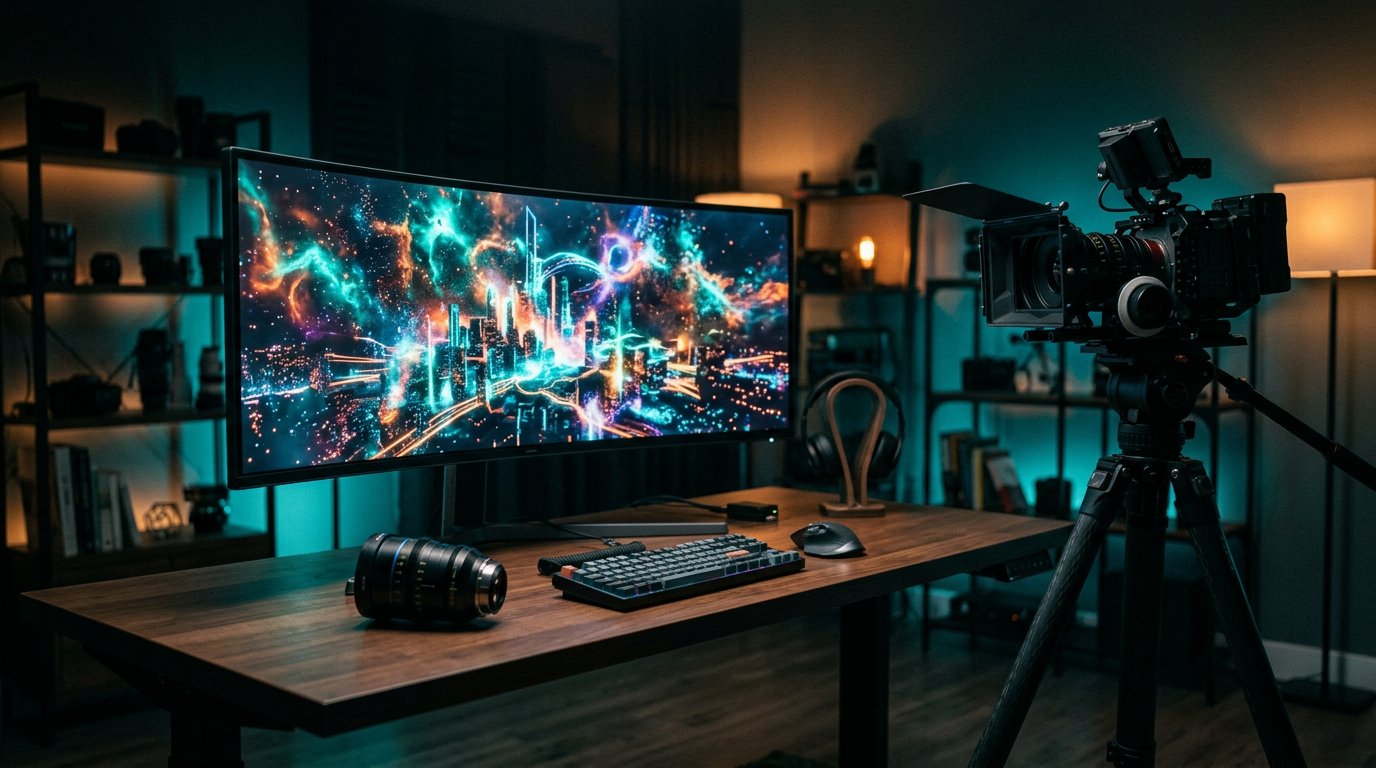
The flagship layer of this AI video generator is Cinema Studio, described by Higgsfield as the first AI cinema studio with real optical physics. Instead of hoping the model interprets “cinematic” correctly, you build the shot: choose a virtual camera body, lens type and focal length — a demo on the page pairs a modular 8K digital camera with a classic anamorphic 35mm — control depth of field, and lock characters so they persist across angles.
Multi-axis motion control stacks up to three simultaneous camera movements, because simple pans are, in the platform’s words, for amateurs. A hybrid workflow toggles instantly between Photography and Videography modes, letting you iterate on the still frame before committing to motion. Script-to-scene generation builds lighting, subject and mood from a single written prompt, and output runs at 16-bit cinematic grade in formats that include the 21:9 widescreen ratio. For anyone who has used a less deterministic AI video generator, that shift from random generation to a professional workflow is the headline feature.
Who puts the AI video generator to work
The use cases Higgsfield lists read like a map of the AI video generator economy. Filmmakers and directors visualise screenplays with precise camera control, cinematic lighting and consistent characters — pre-visualisation without the location budget, the AI video generator as storyboard department on call. Marketing agencies use the AI video generator to produce high-performing campaigns at the speed of social media, scaling creative output without scaling spend. Content creators generate scroll-stopping visuals across every platform and aspect ratio from one AI video generator workspace, with 16:9, 9:16, 4:3, 3:4, 1:1 and 21:9 all supported. E-commerce brands turn static product photos into converting video ads, dropping products into any environment without booking a photoshoot — the AI video generator equivalent of a location library — and educators assemble training and explainer videos the same way.
What the plans look like
Getting started with this AI video generator is free — Higgsfield confirms free access up front, with paid plans unlocking more generations and priority features. Annual billing carries discounts that range roughly from 18% to 30%, and four tiers are listed:
Basic — $9 per month billed annually. Aimed at first-time AI video generator users, with selected models, parallel generation and early access to advanced features.
Pro — $23 per month (regularly $29, saving $72 a year). For consistent, easy content creation, adding unlimited use of headline models such as Kling 3.0.
Max — $59 per month (regularly $79, saving $240 a year). Tagged “most popular,” this AI video generator tier suits creators building serious AI projects, with up to eight parallel video generations.
Team — $65 per seat per month (regularly $79). Two to nine members share a workspace and credit pool, with SSO, admin spend control, priority support and queue, SOC 2 security, indemnification and a stated policy of no training on your data.
Prices exclude VAT, unlimited use may see dynamic speed adjustments at peak times, and new models roll out progressively — candid fine print for an AI video generator pricing page.
From first prompt to finished clip
No editing experience is required for this AI video generator: a beginner writes a single prompt and holds a finished clip minutes later; a professional can graduate to motion control, frame locking and Cinema Studio when projects demand precision. That gentle curve — simple at the start, deep when needed — is how an AI video generator should onboard, and the platform’s experts blog extends the learning with how-to guides and model breakdowns.
Conclusion
Choosing an AI video generator once meant picking one model and accepting its blind spots. Higgsfield makes the better case: every top model in one workspace, genuine optical and motion control, editing that rescues footage instead of restarting it, and a free start before the paid tiers. Whether you are pre-visualising a short film, shipping daily social content or converting product photos into ads, the AI video generator that behaves like a studio is the one worth your next project.
Frequently Asked Questions
1. What is an AI video generator?
It is a tool that creates video from text prompts, reference images or existing footage instead of a camera shoot. Higgsfield’s AI video generator adds control over camera movement, character consistency and optical style.
2. Which models can I use on the platform?
Seven headline models in one workspace — Kling 3.0, Seedance 2.0, Wan 2.7, Kling o1, Sora 2, Veo 3.1 and Kling 2.6 — with new models added on release day.
3. What is Cinema Studio?
The professional layer of the AI video generator: simulated optical physics with selectable camera bodies, lenses and focal lengths, depth-of-field control, character locking and up to three stacked camera movements.
4. Do I need editing experience?
No. Start with a text prompt and generate in minutes; advanced controls are there when you want them, not obligatory.
5. Can I use my own images or footage?
Yes. Upload reference images to steer style and composition, lock first and last frames for consistency, or import video to restyle, swap objects and refine without reshooting.
6. Is the AI video generator free?
Free access is included to get started. Paid plans from $9 per month (billed annually) add more generations, unlimited headline models and team features like SOC 2 security and SSO.