Aluminum Pergolas: 7 Smart Ways to Create a Beautiful and Comfortable Outdoor Living Space
A well-designed backyard can become one of the most enjoyable areas of a home. Whether you want a comfortable place to relax, entertain guests, or enjoy meals outdoors, the right shade structure can make a significant difference. Aluminum pergolas have become an attractive option for American homeowners seeking modern outdoor design, durable construction, and flexible protection from sunlight. Their clean architectural appearance and relatively low maintenance requirements make them suitable for many contemporary patios and residential landscapes.
Unlike traditional wooden pergolas, aluminum structures do not require routine wood staining or treatment against rot. Many designs also include adjustable roof louvers, integrated drainage systems, motorized controls, and optional lighting.
However, choosing a pergola involves more than selecting an attractive design. Material quality, structural engineering, local weather conditions, installation requirements, and long-term maintenance all influence performance.
This guide explains seven essential considerations for selecting an aluminum pergola, explores popular designs, and provides practical advice for planning a functional outdoor living area.
What Are Aluminum Pergolas?
Aluminum pergolas are outdoor structures built primarily from aluminum framing components. They typically feature vertical support posts, horizontal beams, and an overhead framework that provides shade or supports an adjustable roof system.
Some pergolas have fixed open slats, while others include rotating louvers that allow homeowners to adjust sunlight and ventilation.
Depending on the design, a pergola may be installed as an independent structure or attached to an existing building.
These structures are commonly used over patios, backyard seating areas, outdoor kitchens, poolside lounges, and restaurant terraces.
Why Aluminum Is Popular for Outdoor Structures
Aluminum offers several useful material properties.
It is relatively lightweight, has a favorable strength-to-weight ratio for appropriately engineered structures, and naturally develops a protective oxide layer that helps resist corrosion.
According to the Aluminum Association, aluminum’s strength, workability, and corrosion resistance depend partly on the alloy and its composition.
These properties make aluminum suitable for many architectural applications.
However, not every aluminum product has identical strength or weather resistance. The alloy, frame dimensions, connections, protective finish, and installation method all matter.
7 Essential Tips for Choosing Aluminum Pergolas
Selecting the right pergola requires balancing appearance, comfort, safety, and practical performance.
The following considerations can help homeowners make a confident purchasing decision.
1. Choose the Right Pergola Design for Your Backyard
The first step is identifying how the pergola will fit into your existing outdoor space.
Some homeowners want a shaded seating area near the house, while others prefer a separate backyard retreat.
The structure should complement the property’s architecture and provide enough space for its intended use.
Freestanding Aluminum Pergolas
A freestanding pergola is supported independently of the house.
It can be positioned over a garden seating area, poolside terrace, or designated outdoor dining space.
This arrangement provides greater flexibility when choosing the installation location.
A freestanding structure generally requires suitable foundations and secure anchoring.
Its structural design must account for loads acting on the roof, posts, connections, and foundation.
Attached Aluminum Pergolas
An attached pergola connects to an existing building.
These designs can create a visual transition between indoor living areas and outdoor spaces.
They may work particularly well next to large sliding doors or covered patios.
However, attaching a pergola to a house requires careful evaluation of the building structure.
The connection must transfer the required loads safely.
Attaching a pergola directly to decorative siding or other unsuitable surfaces can create serious structural problems.
Selecting the Best Location
Consider sunlight, prevailing winds, available space, nearby landscaping, drainage, and accessibility.
A pergola installed on the western side of a home may face strong afternoon sunlight.
A structure near mature trees may experience falling branches or additional maintenance needs.
Choose a location that supports everyday use without blocking important access routes.
2. Compare Fixed Roof and Adjustable Louvered Pergolas
The roof design strongly influences how an aluminum pergola performs.
Some structures provide partial shade through fixed overhead slats.
Others use adjustable louvers that allow users to change the balance between sunlight, airflow, and rain protection.
Fixed Roof Pergolas
Traditional open pergolas typically include stationary beams or slats.
Their main function is to provide an architectural feature and varying degrees of shade.
The amount of shade depends on slat spacing, orientation, and the sun’s position.
An open roof does not provide substantial rain protection.
Fixed designs may appeal to homeowners who prefer a simple appearance without mechanical roof components.
Adjustable Louvered Pergolas
Louvered aluminum pergolas use rotating roof blades that can open, close, or stop at intermediate positions.
When opened, the louvers allow greater sunlight and ventilation.
When closed, compatible systems can provide additional overhead shade and help manage rainfall.
Some designs use manual operation, while others incorporate electric motors.
Are Louvered Pergolas Waterproof?
Not necessarily.
A properly designed system with closed louvers and integrated drainage may provide effective rain protection under suitable conditions.
However, wind-driven rain, imperfect seals, blocked drainage channels, and severe weather can allow water to enter.
Homeowners should review the manufacturer’s tested performance rather than assume that every closed louver system is completely waterproof.
Motorized Pergola Systems
Motorized designs allow homeowners to adjust the roof using compatible controls.
Depending on the product, available features may include remote operation, integrated lighting, and weather sensors.
These systems can improve convenience, particularly when the pergola is used frequently.
However, motors, controllers, and electrical components introduce additional maintenance considerations.
Electrical installation should be completed according to manufacturer instructions and applicable local requirements.
3. Evaluate Aluminum Quality and Protective Finishes
Not all aluminum pergolas offer the same material quality.
Two structures may look almost identical in photographs while using different frame dimensions, alloys, connections, and finishes.
These details can affect long-term performance.
Understanding Aluminum Alloys
Aluminum alloys are produced by combining aluminum with other elements to achieve particular material properties.
Magnesium and silicon are among the elements used in certain common architectural aluminum alloys.
The appropriate alloy depends on the product design and engineering requirements.
Instead of relying on a claim such as premium aluminum, ask for meaningful technical specifications.
These may include the alloy designation, material thickness, structural design documentation, and protective finish.
Powder Coated Aluminum Pergolas
Powder coating is a common finishing process used on architectural aluminum.
It creates a decorative protective layer that can help maintain appearance and resist environmental exposure.
Available colors often include charcoal gray, black, white, bronze, and other contemporary finishes.
However, coating quality varies.
Some finishes are designed for more demanding outdoor environments than others.
Understanding Architectural Coating Standards
The Fenestration and Glazing Industry Alliance publishes the AAMA 2603, 2604, and 2605 specifications for architectural aluminum coatings.
The organization released updated versions in 2026.
These specifications address performance considerations such as weathering, appearance, and coating integrity.
For an outdoor pergola, ask whether the finish has been tested against a recognized standard appropriate to its exposure.
A coating marketed as weather resistant should ideally be supported by relevant performance information.
Coastal Weather Considerations
Homes near coastal areas may experience exposure to airborne salt and persistent moisture.
Although aluminum resists many forms of corrosion, it is not completely immune to environmental damage.
Fasteners, dissimilar metal connections, and damaged coatings can also develop problems.
For coastal installations, review material compatibility, coating requirements, hardware specifications, and the recommended cleaning schedule.
4. Plan Shade, Comfort, and Outdoor Living Features
A pergola should do more than look attractive.
Its primary value often comes from making outdoor spaces more comfortable and enjoyable.
The ideal configuration depends on how the space will be used.
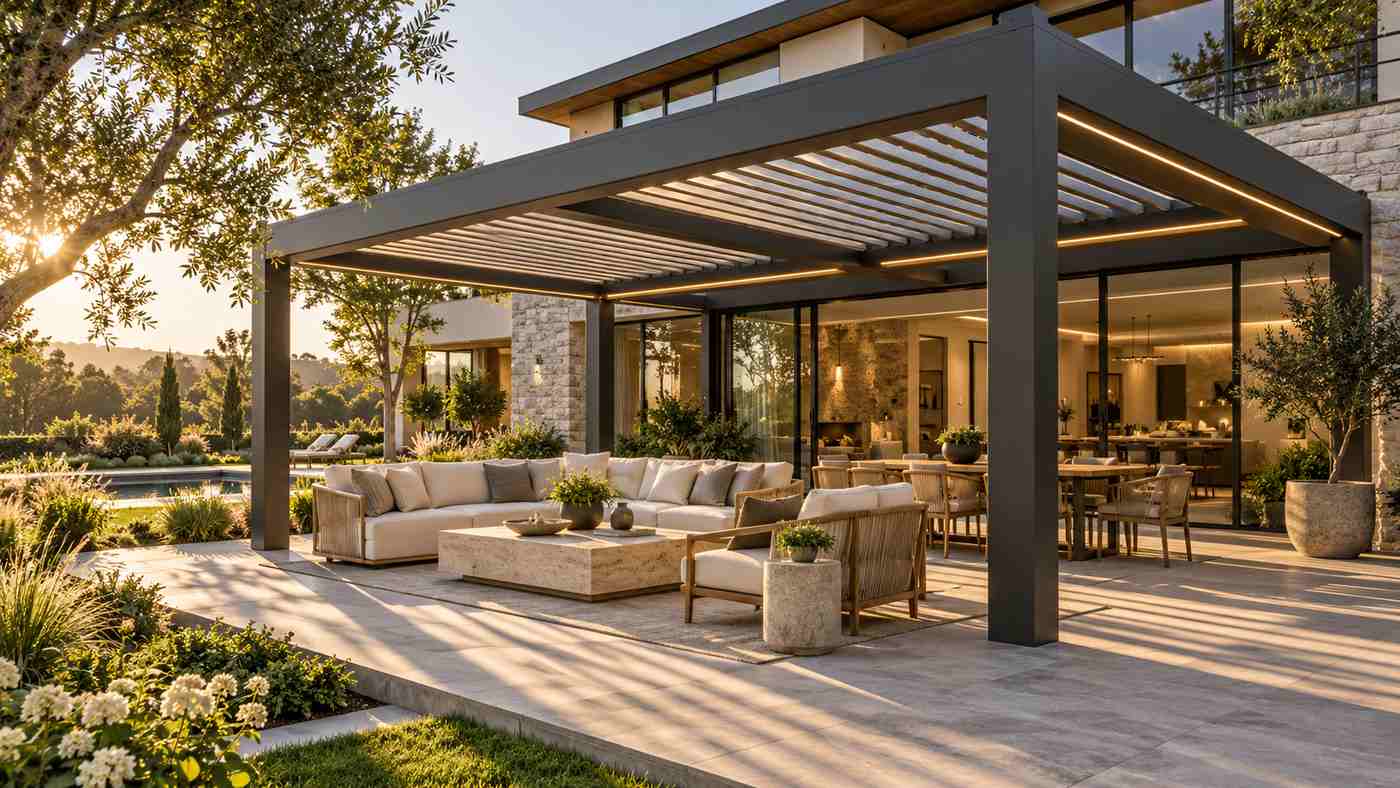
Create a Comfortable Outdoor Lounge
Many homeowners install aluminum pergolas over seating arrangements.
A comfortable layout might include an outdoor sofa, weather-resistant chairs, a coffee table, and suitable accent lighting.
The furniture should fit beneath the structure without making the space feel crowded.
Leave enough room for people to move around seating and access nearby doors.
Design an Outdoor Dining Area
Pergolas can create an appealing setting for outdoor meals.
A dining layout should provide sufficient space around the table for chairs and circulation.
Consider the direction of sunlight during the hours when the space will be used most often.
If the dining area receives intense afternoon sun, adjustable louvers or appropriate side shading may improve comfort.
Add Integrated Lighting
Some pergolas support integrated LED lighting.
Other designs can accommodate appropriately approved exterior lighting fixtures.
Lighting can improve evening usability and highlight the structure’s architectural features.
However, electrical components must be suitable for outdoor exposure.
Installation should comply with applicable electrical requirements.
Consider Privacy Screens
Outdoor privacy screens can reduce visibility from nearby properties.
Available options may include fixed slats, sliding panels, and compatible motorized screens.
These accessories may also affect airflow and wind loading.
Do not add substantial screens or wall panels without confirming that the structure is designed to support them.
Outdoor Fans and Heating
Selected pergola systems can accommodate approved fans or outdoor heating equipment.
However, installation requirements depend on the specific product and its clearances.
Heating devices must be suitable for the intended location and must not create fire or ventilation hazards.
The pergola manufacturer should confirm whether the proposed accessory is supported.
5. Verify Wind Resistance and Structural Engineering
One of the most important considerations when purchasing aluminum pergolas is structural safety.
A structure that appears sturdy in photographs may not be suitable for every climate or installation site.
Wind, snow, exposure, foundation conditions, and connections all influence structural design.
Wind Resistance in American Backyards
Outdoor structures experience wind pressures that depend on their location, height, surrounding terrain, and configuration.
A pergola in a sheltered inland backyard may face different conditions from one installed near an exposed coastline.
Wind can create lateral forces and uplift.
The roof, beams, posts, connections, and foundation must work together to transfer these loads safely.
Hurricane-Prone Regions
Homeowners in Florida and other hurricane-prone regions should pay particular attention to local wind requirements.
A product’s advertised wind rating is not necessarily sufficient for every installation.
Building authorities may require project-specific calculations, approved construction documents, and appropriate anchoring.
Ask whether the manufacturer can provide technical information suitable for the local permitting process.
Snow Load Requirements
Pergolas installed in regions with significant snowfall need appropriate structural consideration.
Snow can place considerable weight on overhead components.
The load may also vary because of drifting, nearby buildings, roof geometry, and weather conditions.
Some adjustable louver systems have specific manufacturer instructions for winter operation.
Do not assume that opening the louvers automatically eliminates every snow-related risk.
Follow the manufacturer’s limitations and the requirements established by qualified designers.
Foundation and Anchorage Design
A pergola requires a dependable connection to the supporting ground or structure.
Suitable foundations depend on soil conditions, loads, frost requirements, and local regulations.
Anchoring directly to an existing patio slab may not be appropriate unless the slab and connections are confirmed to support the structure.
A qualified installer or engineer should evaluate the required foundation design.
6. Understand Installation and Building Permit Requirements
A pergola installation may appear straightforward, especially when purchased as a prefabricated kit.
However, permanent outdoor structures can be subject to building regulations.
Permit requirements depend on the property’s location, structure size, attachment method, and scope of work.
Do Aluminum Pergolas Require Permits?
Some local jurisdictions require permits for freestanding pergolas, attached patio covers, or certain outdoor shade structures.
Others provide exemptions for specified smaller projects.
The existence of an exemption does not necessarily eliminate zoning, setback, structural, or other applicable requirements.
Homeowners should contact the local building department before purchasing or installing a permanent pergola.
Check Property Setbacks
Setbacks determine how close certain structures may be placed to property boundaries.
Local zoning rules may also restrict height, lot coverage, and installation within designated easements.
Properties governed by homeowners associations may have additional design approval requirements.
Obtain the necessary information early to avoid costly relocation or redesign.
Professional Installation vs. DIY Kits
Aluminum pergola kits may include prepared components, labeled hardware, and assembly instructions.
Some are marketed for homeowner installation.
However, the suitability of DIY assembly depends on the structure, project complexity, and local requirements.
Large systems may require lifting equipment, foundation work, electrical installation, or professional inspections.
Incorrect assembly can affect stability and roof operation.
When Should You Hire a Professional?
Professional installation is especially advisable when the project involves structural attachment to a home, significant wind or snow loads, complicated foundations, motorized electrical equipment, or required engineering documents.
Ask installers about relevant qualifications, insurance, previous projects, and applicable licensing requirements.
A properly installed pergola should satisfy both manufacturer specifications and local regulations.
7. Compare Long-Term Value, Maintenance, and Warranty Coverage
A pergola is a significant outdoor improvement for many households.
Evaluating the complete ownership experience is more useful than comparing purchase prices alone.
Consider Total Project Costs
The final price may involve more than the pergola kit.
Potential expenses include foundations, delivery, installation labor, electrical work, drainage arrangements, permits, and accessories.
A motorized louvered system may involve more components and a higher overall cost than a simple fixed slat structure.
Request a written estimate describing the complete proposed installation.
Review Warranty Terms
Pergola warranties may cover different components separately.
The aluminum frame, protective finish, motorized roof mechanism, electronic controls, and installation workmanship may have different coverage periods.
Read the warranty carefully.
Ask about exclusions for severe weather, unauthorized modifications, improper installation, and maintenance failures.
Plan for Replacement Parts
For motorized systems, consider whether replacement motors, controllers, and related components are available.
A pergola’s long-term usefulness can depend partly on access to compatible repair parts.
Confirm how the manufacturer handles service requests and whether local technicians can support the product.
Popular Aluminum Pergola Designs for Modern Homes
Aluminum pergolas can complement a wide range of American architectural styles.
The design should coordinate with the exterior of the house and surrounding landscape.
Modern Black Aluminum Pergolas
Black and dark charcoal finishes create a strong architectural appearance.
They work particularly well with contemporary houses featuring large windows, stone accents, and simple exterior lines.
Light-colored outdoor furniture can create visual contrast.
However, darker surfaces exposed to strong sunlight may become hotter to the touch than lighter finishes.
White Aluminum Pergolas
White pergolas create a bright appearance that can suit traditional, coastal, and contemporary properties.
They often coordinate with pale exterior walls and neutral stone patios.
Cleaning requirements should be considered because some dirt and discoloration may be more visible on lighter surfaces.
Wood Look Aluminum Pergolas
Some aluminum pergolas incorporate finishes intended to resemble natural wood.
These designs can create a warmer appearance while retaining an aluminum structure.
However, decorative wood look finishes vary in texture, realism, and long-term performance.
Examine physical samples and review the finish warranty before ordering.
Luxury Louvered Pergolas
Premium louvered pergolas often emphasize adjustable shade, integrated drainage, lighting, and compatible accessories.
They may create a highly functional outdoor living area when properly designed.
The additional features should be evaluated according to actual usage rather than appearance alone.
Aluminum Pergolas vs. Wooden Pergolas
Both aluminum and wooden pergolas can create attractive outdoor structures.
Their advantages and maintenance requirements differ.
Maintenance Requirements
Wooden pergolas may require periodic staining, sealing, painting, or other protective treatments.
Wood can also be affected by moisture, insects, and weather exposure, depending on species and treatment.
Aluminum does not rot like wood and generally avoids routine wood preservation tasks.
However, its coatings, fasteners, drainage components, and moving parts still require inspection and maintenance.
Appearance and Design
Wood provides a natural grain and traditional appearance that many homeowners appreciate.
Aluminum offers clean lines, consistent manufactured profiles, and a wide selection of finishes.
Wood look aluminum provides another option for those who prefer natural styling.
Durability
Both materials can provide dependable performance when properly specified, installed, and maintained.
Durability depends on structural design, exposure, material quality, and ongoing care.
Neither should be considered maintenance free or automatically superior in every environment.
How Much Do Aluminum Pergolas Cost in the USA?
There is no single national price that accurately represents every pergola installation.
Costs vary according to size, roof design, material specifications, accessories, site preparation, labor rates, and location.
A simple freestanding kit generally involves a different scope of work from a custom motorized installation with integrated lighting and engineered foundations.
Factors That Affect Pergola Pricing
Important considerations include:
- Pergola width, length, and height
- Fixed or adjustable roof construction
- Manual or motorized operation
- Frame alloy and material specifications
- Protective coating quality
- Integrated drainage requirements
- Lighting and privacy accessories
- Foundation preparation
- Installation labor
- Permit and engineering requirements
- Warranty and service arrangements
Homeowners should compare quotations that cover equivalent materials and installation responsibilities.
Are Expensive Aluminum Pergolas Worth It?
A higher price may reflect additional engineering, stronger components, more sophisticated controls, or enhanced finishes.
However, price alone does not establish better performance.
Ask for specifications and documentation that explain the difference.
A relatively simple, correctly engineered pergola may provide better value than an elaborate system with features the household rarely uses.
How to Maintain Aluminum Pergolas
Aluminum pergolas generally require less surface treatment than untreated wooden structures.
However, periodic care is important for preserving appearance and functionality.
Clean the Aluminum Frame
Remove loose dust, leaves, and other debris using appropriate cleaning methods.
Many powder coated surfaces can be cleaned with mild soap, water, and a soft cloth, subject to manufacturer instructions.
Avoid abrasive tools and harsh chemicals that may damage the finish.
Rinse thoroughly when recommended.
Inspect Fasteners and Connections
Check accessible components for signs of damage, looseness, or corrosion.
Do not disassemble structural connections or attempt repairs involving loaded components without qualified assistance.
Arrange professional inspection when movement, deformation, or unusual noises develop.
Maintain Louvered Roof Systems
Adjustable louvers require clean movement paths and functioning controls.
Remove leaves and debris that may interfere with operation.
Do not force jammed louvers.
Follow the manufacturer’s instructions for motors, sensors, and mechanical components.
Keep Drainage Channels Clear
Pergolas with integrated drainage may collect water in roof gutters or internal channels.
These systems can become blocked by leaves or other debris.
Routine inspection and appropriate cleaning help water flow toward intended outlets.
Check where rainwater is discharged to ensure it does not create pooling near foundations or walkways.
Are Aluminum Pergolas Suitable for Every Climate?
Aluminum pergolas can be used in many American climates, but their specifications should match local environmental conditions.
Hot and Sunny States
In Arizona, Nevada, and parts of California, shade and solar exposure may be major considerations.
Adjustable louvers can help manage direct sunlight.
However, a pergola does not replace appropriate heat precautions during extremely hot weather.
Furniture, flooring, and metal surfaces may still become hot.
Humid and Coastal Regions
In Florida and other coastal regions, material compatibility, coating performance, drainage, and wind resistance deserve attention.
High humidity and salt exposure may increase maintenance requirements.
Structural design must address applicable local weather loads.
Snowy Northern States
In northern states, snow and ice can affect roof mechanisms and structural loads.
Homeowners should obtain appropriate snow load specifications and follow winter operating instructions.
A system designed for a warm climate may not be suitable for heavy snowfall without additional engineering.
How to Design a Beautiful Backyard Around an Aluminum Pergola
A well-planned pergola should feel like a natural extension of the surrounding landscape.
Coordinate Patio Flooring
Natural stone, concrete pavers, and other suitable exterior surfaces can complement aluminum frames.
Choose flooring that provides appropriate drainage and slip resistance.
The patio should also support the intended furniture and activities.
Choose Comfortable Outdoor Furniture
Select furniture suitable for exterior exposure.
Weather-resistant upholstery, appropriately finished frames, and practical seating arrangements help make the pergola more inviting.
Allow enough space between furniture pieces for easy movement.
Introduce Greenery
Planters, ornamental grasses, and carefully selected shrubs can soften the appearance of metal structures.
Avoid plants that obstruct moving louvers or block drainage outlets.
Choose landscaping appropriate to the local climate and available sunlight.
Create a Balanced Lighting Scheme
Soft ambient lighting can make the space comfortable during evening use.
Path lighting may help improve visibility around entrances and walkways.
Use exterior rated fixtures and appropriate electrical installation methods.
Common Mistakes to Avoid When Buying Aluminum Pergolas
One common mistake is selecting a pergola based entirely on its appearance.
An attractive product may lack the specifications required for a particular property.
Another mistake is assuming every aluminum pergola is completely waterproof.
Open pergolas and louvered roof systems provide different levels of weather protection.
Homeowners should also avoid overlooking foundations and wind requirements.
A strong frame cannot perform safely if its anchoring system is unsuitable.
Ignoring permit requirements can create delays and additional expenses.
Finally, avoid choosing motorized features without considering future maintenance and replacement parts.
The best purchase balances design, engineering, comfort, and long-term practicality.
Frequently Asked Questions
1. Are aluminum pergolas durable?
Yes, properly engineered aluminum pergolas can provide durable outdoor performance. Their longevity depends on material quality, structural design, protective finishes, installation, and maintenance.
2. Are aluminum pergolas better than wooden pergolas?
Aluminum typically requires less routine surface maintenance and does not rot like wood. However, wooden pergolas may appeal to homeowners who prefer natural materials and traditional styling.
3. Are aluminum pergolas waterproof?
Traditional open pergolas are not waterproof. Some louvered systems provide effective rain protection when closed, but performance depends on drainage, seals, installation, and weather conditions.
4. How much do aluminum pergolas cost?
Costs vary according to size, roof type, motorized features, finish quality, foundations, and installation requirements. Obtain a detailed local quote for accurate pricing.
5. Do aluminum pergolas need building permits?
Many permanent pergola installations may require permits or zoning approval. Requirements vary by location, size, attachment method, and project scope.
6. How do you maintain aluminum pergolas?
Clean the frame using approved products, remove debris, inspect accessible components, and maintain drainage systems. Motorized louvers should be serviced according to manufacturer recommendations.
Conclusion
Aluminum pergolas offer American homeowners a stylish and practical way to create comfortable outdoor living spaces. Their durable materials, modern designs, and available adjustable roof features make them suitable for many backyard layouts and architectural styles. However, careful attention to structural engineering, local weather conditions, installation requirements, and product quality is essential. By selecting the right pergola and maintaining it properly, homeowners can create an inviting outdoor environment for relaxation, dining, and everyday enjoyment.