Garage Door Repair Contractor: 7 Essential Tips for Safe, Reliable Home Repairs
Your garage door is one of the largest moving components in your home. It protects vehicles, provides convenient access, and contributes to your property’s security and appearance. When the system stops operating correctly, choosing a reliable garage door repair contractor becomes important for restoring functionality and preventing potential safety hazards.
For homeowners across the United States, garage door problems can range from noisy rollers and worn weather seals to broken springs, damaged tracks, and malfunctioning automatic openers. Some issues require immediate professional attention, while others can be identified during routine inspections.
Understanding common repair problems, contractor qualifications, maintenance requirements, and pricing considerations helps homeowners make informed decisions. This guide explains how to recognize warning signs, choose qualified professionals, and maintain a dependable residential garage door system.
What Does a Garage Door Repair Contractor Do?
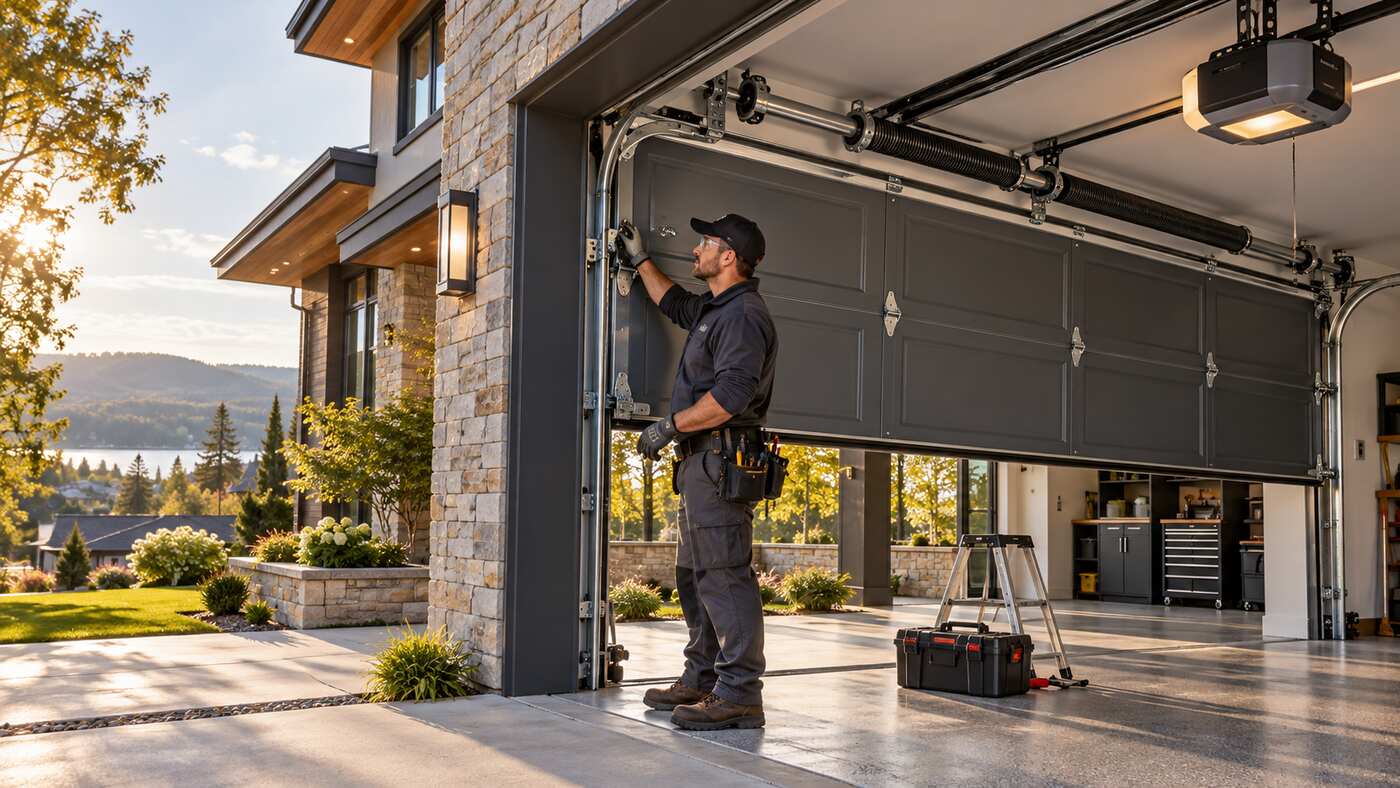
A garage door repair contractor specializes in inspecting, diagnosing, maintaining, and repairing residential garage door systems.
These systems contain several interconnected components, including panels, tracks, rollers, cables, springs, brackets, hinges, and automatic openers.
When one component fails, it can affect the performance of other parts.
For example, a broken spring may prevent a garage door from opening normally, while damaged tracks may cause the door to move unevenly.
A qualified technician examines the complete system before recommending repairs.
Common Garage Door Repair Services
Professional garage door contractors commonly provide services such as:
- Garage door spring replacement
- Broken or worn cable replacement
- Damaged roller and hinge repairs
- Track inspection and adjustment
- Automatic opener troubleshooting
- Safety sensor repair and alignment
- Weather seal replacement
- Damaged panel replacement
- Garage door maintenance and inspections
- Emergency repair services
The services available depend on the company’s qualifications, equipment, and supported garage door brands.
When Should You Call a Garage Door Repair Contractor?
Not every unusual noise indicates a serious failure, but some symptoms suggest the door may be unsafe to operate.
Recognizing these warning signs can help homeowners avoid additional damage.
Garage Door Will Not Open or Close
A garage door that suddenly stops moving may have an opener issue, broken spring, damaged cable, or another mechanical problem.
A power interruption or remote control problem may also prevent normal operation.
However, homeowners should not assume the opener is responsible.
If the door is unusually heavy, crooked, or visibly damaged, avoid attempting to force it open.
A qualified technician can determine whether the problem involves electrical controls, mechanical components, or the counterbalance system.
Unusual Grinding or Scraping Noises
Garage doors may produce some sound during ordinary operation.
However, sudden grinding, scraping, or repeated loud impacts can indicate a mechanical problem.
Possible causes include worn rollers, misaligned tracks, loose hardware, or damaged hinges.
These symptoms should be evaluated before they develop into more serious failures.
Visible Spring or Cable Damage
Garage door springs and lifting cables operate under significant mechanical tension.
A broken spring, frayed cable, or displaced component can create a dangerous situation.
Do not loosen brackets, adjust springs, or attempt to reconnect damaged lifting cables yourself.
Stop using the door and contact a trained professional.
7 Important Tips for Choosing a Garage Door Repair Contractor
Selecting a contractor requires more than searching for the lowest advertised service price.
The following considerations can help homeowners identify experienced professionals and reduce the risk of unexpected expenses.
1. Verify Professional Experience and Qualifications
Garage door repair involves both mechanical systems and safety-sensitive components.
A contractor should understand the different types of residential garage doors and the equipment used to operate them.
Ask how long the company has performed garage door repairs and whether its technicians have experience with your particular door system.
A technician familiar with sectional doors, torsion springs, automatic openers, and common hardware problems may be better prepared to diagnose complex issues.
Check Licensing and Insurance
Licensing requirements vary by state, county, and municipality.
Some locations regulate garage door installation or repair under broader contractor licensing requirements.
Before hiring, verify any applicable license through the relevant government authority.
Also ask for evidence of liability insurance and other required coverage.
Professional experience is valuable, but it should be supported by appropriate business practices and compliance with local requirements.
2. Look for Accurate Diagnosis Instead of Quick Assumptions
A reliable garage door repair contractor should inspect the relevant components before recommending major repairs.
For example, a door that moves unevenly may have a damaged roller, cable problem, track issue, or counterbalance failure.
Replacing the opener without examining the mechanical system may not solve the underlying problem.
A careful diagnosis helps identify the actual cause rather than treating only the visible symptoms.
Ask for a Clear Explanation
A professional technician should be able to explain:
- Which component is damaged or malfunctioning
- How the problem affects garage door operation
- Whether continued operation is unsafe
- Which repair options are available
- What parts and labor are required
- Whether replacement is more appropriate
Homeowners should feel comfortable asking questions before authorizing work.
A trustworthy contractor provides understandable information without relying on unnecessary technical language or pressure.
3. Prioritize Garage Door Safety Standards
Safety should be a central consideration when selecting a repair service.
Garage doors are heavy, and the systems that lift them can store substantial energy.
Improper repairs may lead to uncontrolled movement, falling components, or entrapment hazards.
The Door and Access Systems Manufacturers Association recommends that trained technicians handle hazardous spring and cable repairs.
Homeowners should never attempt to adjust high-tension components simply because online instructions make the work appear straightforward.
Automatic Opener Safety
Modern residential garage door openers include safety features intended to reduce the risk of entrapment.
Federal requirements for newly manufactured residential automatic openers introduced additional entrapment protection beginning in 1993.
These systems may use photoelectric sensors or other approved protection methods.
A qualified technician should check the functionality of applicable safety devices after completing repairs.
A malfunctioning safety sensor should never be bypassed as a permanent solution.
4. Compare Written Estimates and Repair Costs
Garage door repair prices depend on the specific problem, replacement parts, labor requirements, and location.
A minor adjustment may cost considerably less than replacing a spring system, damaged sections, or an automatic opener.
Emergency or after-hours appointments may also involve additional charges.
Before approving repairs, request a written estimate whenever practical.
What Should a Repair Estimate Include?
A useful estimate should identify the service charge, required replacement parts, labor, and any additional fees.
Ask whether the quoted price includes testing, disposal of old components, and applicable taxes.
If a technician discovers additional damage, request an explanation and an updated estimate before authorizing extra work.
Comparing estimates from different companies can help homeowners understand the available repair options.
Be cautious of unusually low advertised prices that do not explain potential additional charges.
5. Read Customer Reviews and Check Business Information
Customer feedback can provide insight into how a company communicates, schedules appointments, and handles service concerns.
Look for reviews describing actual repair experiences rather than focusing exclusively on star ratings.
Useful details include technician punctuality, transparency about costs, repair quality, and how the company responds when something goes wrong.
A pattern of repeated complaints may deserve further investigation.
Verify the Company’s Identity
Before scheduling a service visit, confirm the business name, contact information, and service area.
Check whether the company has a verifiable business presence.
The Better Business Bureau has warned consumers about garage door repair scams involving unclear business identities, misleading advertised prices, and high-pressure sales tactics.
Homeowners should be cautious when a technician refuses to provide identification or pressures them into immediate expensive work without a reasonable explanation.
6. Ask About Replacement Parts and Warranties
The quality and compatibility of replacement components matter.
Garage door springs, rollers, hinges, cables, and opener parts must be suitable for the installed system.
A replacement part that is not properly matched to the door can affect its operation and reliability.
For example, spring specifications depend on factors such as door weight and system configuration.
Using an incorrect spring can create an improperly balanced door.
Understand Warranty Coverage
Before hiring a garage door repair contractor, ask whether the work includes a parts warranty, labor warranty, or both.
Clarify what the warranty covers and what conditions may limit protection.
Some components have manufacturer warranties, while the contractor may provide a separate workmanship warranty.
Request the warranty terms in writing.
The length of the warranty is important, but the clarity of coverage and the company’s ability to provide follow-up service also matter.
7. Choose a Contractor Who Provides Preventive Maintenance Advice
A professional repair service should help homeowners understand how to maintain the system after the repair is complete.
Preventive maintenance can identify wear before a component fails unexpectedly.
A technician may recommend visual inspections, appropriate lubrication, weather seal care, and periodic professional servicing.
The exact maintenance schedule depends on the door model, operating frequency, climate, and manufacturer instructions.
Schedule Regular Safety Inspections
DASMA recommends monthly homeowner safety checks and periodic service by trained garage door technicians.
An annual professional inspection can be useful for identifying wear in springs, cables, rollers, tracks, and opener components.
Homes with frequently used garage doors may require additional attention.
Maintenance does not prevent every possible failure, but it can help detect developing problems.
Common Residential Garage Door Problems and Professional Solutions
Understanding typical repair issues can make conversations with contractors more productive.
Broken Garage Door Springs
Springs help counterbalance the weight of a garage door.
Two common systems are torsion springs and extension springs.
Torsion springs are generally mounted on a shaft above the garage door, while extension springs are used in certain systems along the horizontal tracks.
When a spring breaks, the door may become too heavy for normal operation.
A trained technician should inspect the system and select a compatible replacement.
Do not attempt spring replacement without appropriate professional training.
Damaged Garage Door Cables
Lifting cables help support and move the door in combination with the counterbalance system.
Frayed or broken cables can affect door alignment and create a serious safety risk.
Cable repairs should be completed by trained technicians because the connected components may be under substantial tension.
Worn Rollers and Damaged Tracks
Rollers guide the door through its tracks.
Damaged rollers, bent tracks, and loose support components can interfere with smooth operation.
A contractor should inspect the cause of the problem and determine whether repair or replacement is appropriate.
Do not force a door that appears to have left its track.
Malfunctioning Garage Door Openers
Automatic openers may develop problems involving motors, drive systems, electronic controls, remote receivers, or safety devices.
A technician can evaluate whether a component can be repaired or whether replacing the opener offers better value.
Older openers lacking modern entrapment protection may be candidates for replacement rather than continued repair.
How Much Does Garage Door Repair Cost in the USA?
There is no single price that accurately represents every garage door repair.
Costs vary between cities and depend on the type of repair, required parts, door design, and labor rates.
A basic service visit or minor hardware repair will generally involve a different scope of work from replacing multiple springs or an automatic opener.
Factors That Influence Repair Pricing
Important considerations include the size and weight of the garage door, hardware compatibility, the complexity of the damaged system, and whether specialized replacement parts are required.
Labor availability and travel distance may also affect the final price.
Some contractors charge a diagnostic fee that may or may not be credited toward the repair.
Weekend, holiday, and emergency appointments can carry additional charges.
Homeowners should request itemized local estimates rather than relying on broad national averages.
Avoid Paying for Unnecessary Repairs
A contractor should explain why each recommended repair is necessary.
If an estimate includes extensive component replacement without a clear explanation, consider requesting a second professional opinion.
Major repairs should be supported by an identifiable problem, appropriate technical reasoning, and clear pricing.
Garage Door Repair vs. Replacement: Which Is Better?
Repair is often appropriate when the door is structurally sound and the problem affects individual components.
For example, replacing worn rollers or repairing a compatible opener may restore normal operation without requiring an entirely new door.
However, replacement may be more practical when the door has substantial structural damage, severe corrosion, widespread panel deterioration, or repeated failures.
Consider the Age and Condition of the Door
An older garage door is not necessarily unsuitable for continued use.
Its condition, maintenance history, compatibility with replacement parts, and safety features matter more than age alone.
If multiple major components require replacement, compare the complete repair estimate with the cost of a suitable new door system.
Evaluate Security and Energy Efficiency
A replacement garage door may provide opportunities to improve insulation, weather sealing, appearance, and certain security features.
These benefits depend on the selected product and installation quality.
Homeowners in hurricane-prone or high-wind regions should also consider applicable wind-load requirements.
Replacing a garage door should involve selecting a system appropriate for the home’s location and local building regulations.
What Happens During a Professional Garage Door Repair Visit?
Knowing the typical service process can help homeowners prepare for an appointment.
Initial Inspection
The technician examines the reported problem and relevant parts of the garage door system.
This may include the panels, tracks, cables, springs, opener, mounting hardware, and safety devices.
The technician should identify potential hazards before operating a damaged door.
Diagnosis and Repair Estimate
After evaluating the system, the contractor explains the likely cause and recommends suitable corrective work.
A written estimate allows the homeowner to review the proposed repair before authorizing it.
Repair and Component Replacement
The technician completes the approved work using appropriate tools, replacement components, and safe procedures.
Some repairs involve specialized spring-handling equipment or electrical troubleshooting.
The homeowner should remain clear of the work area and avoid touching disconnected components.
Final Testing and Walkthrough
Once repairs are complete, the contractor should verify proper door movement and the operation of applicable safety features.
The final walkthrough can include an explanation of the repairs, maintenance guidance, and warranty information.
Keep the invoice and any supporting documentation for future reference.
Emergency Garage Door Repair: When Immediate Help Is Necessary
Some garage door failures require prompt attention because they affect safety or security.
Examples include a door hanging unevenly, a broken lifting cable, visible track displacement, or a damaged door that cannot be secured.
A door stuck open may also expose the garage and connected home to unauthorized access.
What to Do While Waiting for a Contractor
Keep children, pets, and other people away from the damaged door.
Avoid operating the opener repeatedly.
Do not stand beneath a suspended or unstable garage door.
Never attempt to adjust springs, cables, or loaded brackets.
If the door has been struck by a vehicle or appears structurally unstable, leave it alone until a professional can inspect it.
An emergency service appointment should prioritize safe diagnosis rather than simply forcing the door to operate.
Simple Garage Door Maintenance Tips for Homeowners
Homeowners can perform certain basic observations without disassembling the system.
However, maintenance should always follow the door and opener manufacturers’ instructions.
Perform Visual Inspections
Look for damaged panels, visible rust, frayed cables, loose weather seals, and obvious changes in door alignment.
Visual inspections should be performed from a safe position without touching tensioned components.
If something appears damaged, arrange professional service.
Keep Safety Sensors Clear
Where photoelectric sensors are installed, keep the sensor area free from stored objects and debris.
Check for obvious obstruction or dirt without modifying safety wiring or bypassing protection.
If the door repeatedly refuses to close or fails a prescribed safety test, contact a qualified technician.
Use Appropriate Lubrication
Certain garage door hinges, rollers, and springs may require lubrication according to manufacturer guidance.
Use only the lubricant recommended for the relevant components.
Avoid applying products indiscriminately to tracks, belts, or electronic equipment.
If you are uncertain about a lubrication point, ask a garage door technician.
Follow Recommended Safety Testing
The U.S. Consumer Product Safety Commission recommends testing automatic garage door reversing features according to the manufacturer’s instructions.
Perform these tests at the recommended intervals.
If a reversing system fails, stop using the automatic door until the problem has been corrected.
Common Mistakes to Avoid When Hiring Garage Door Contractors
One frequent mistake is selecting a company solely because it advertises an unusually inexpensive service call.
The final cost may be substantially higher when parts, labor, and additional services are included.
Another mistake is authorizing repairs without obtaining a clear explanation or written estimate.
Homeowners should also avoid overlooking insurance, applicable licensing requirements, and warranty conditions.
Finally, never assume that a working opener means the entire garage door is safe.
A door can open and close while still having damaged springs, worn cables, or malfunctioning safety devices.
Professional evaluation is especially important when unusual movement or visible component damage is present.
Frequently Asked Questions
1. How do I choose a reliable garage door repair contractor?
Verify relevant experience, insurance, applicable licensing, customer reviews, written estimates, and warranty terms. Choose a contractor who explains repairs clearly and prioritizes safety.
2. How much does a garage door repair contractor charge?
Costs depend on the problem, replacement parts, local labor rates, and service urgency. Request an itemized estimate to understand the total price before authorizing work.
3. Can I repair a broken garage door spring myself?
Garage door springs are under dangerous tension. Spring replacement should be performed by trained professionals using appropriate tools and safety procedures.
4. How often should garage doors be professionally serviced?
An annual inspection is a useful general recommendation, although the appropriate schedule depends on the door model, usage, condition, and manufacturer guidance.
5. Should I repair or replace my garage door?
Repair may be suitable for isolated mechanical problems. Replacement may be preferable when the door has major structural damage, significant deterioration, or extensive repair needs.
6. Do garage door repair contractors offer emergency services?
Many contractors provide emergency appointments for broken springs, damaged cables, stuck doors, and security-related problems. Availability and additional charges vary by provider.
Conclusion
Choosing a reliable garage door repair contractor helps homeowners address mechanical problems, maintain property security, and reduce preventable safety risks. Professional diagnosis, appropriate replacement parts, transparent pricing, and proper safety testing are important parts of a successful repair. Regular inspections and sensible maintenance can also help identify developing issues before they become more serious. By hiring qualified technicians and following manufacturer guidance, American homeowners can keep their garage door systems operating safely and reliably