Easy Kitchen Tile Upgrades That Can Transform Your Living Space
Installing modern kitchen tiles is one of the most practical ways to refresh a kitchen without changing every cabinet, appliance, or fixture. New backsplash, wall, or floor tiles can introduce color, texture, and a cleaner finish while protecting surfaces that regularly encounter water, grease, food spills, and everyday wear.
Kitchen tiles also work well within a broader home improvement plan. The right material and layout can complement existing countertops and cabinetry, while careful preparation can make the finished surface easier to clean and maintain. Whether you plan a small DIY backsplash or a professional floor renovation, good results begin with choosing tiles for the location rather than appearance alone.
Why Installing Modern Kitchen Tiles Are a Practical Home Improvement
Large renovations are not always necessary to make a living space feel noticeably different. Smaller changes can have a strong visual effect when they improve surfaces that occupy prominent areas of a room.
Installing modern kitchen tiles can accomplish both decorative and practical goals. A backsplash creates a cleanable surface behind counters, while suitable floor tiles provide a durable finish for an area that usually receives frequent foot traffic.
Modern kitchen tile designs are also available in a broad range of materials, formats, colors, textures, and patterns. That gives homeowners considerable flexibility without requiring the rest of the kitchen to follow a particular style.
An important distinction, however, is that not every tile is appropriate for every kitchen surface. Floor tiles need appropriate durability and slip characteristics. Backsplash tiles have different performance demands. Product specifications and manufacturer guidance should always be checked before installation.
How Installing Modern Kitchen Tiles Changes the Room
Kitchen surfaces have a large influence on how the room looks because floors and walls form the visual background for almost everything else.
Installing modern kitchen tiles can make an older kitchen appear more current, particularly when existing surfaces are damaged, difficult to clean, or visually dated. A simple backsplash can also create a focal point without dominating the whole room.
The effect depends on more than tile color. Grout width, tile size, orientation, finish, lighting, cabinetry, countertops, and installation quality all influence the final appearance.
Installing Modern Kitchen Tiles Can Add Visual Continuity
Tiles can help connect otherwise separate kitchen elements.
For example, a backsplash containing subtle tones from both the countertop and cabinets can visually bridge those surfaces. Neutral tiles can create continuity when the kitchen already contains strong colors or prominent materials.
Installing modern kitchen tiles with a consistent palette can be particularly useful in open-plan homes, where the kitchen is visible from dining or living areas.
Tiles Can Protect Working Surfaces
Kitchen walls near sinks and food preparation areas may be exposed to splashes and stains. Properly selected and installed tiles can provide a durable, cleanable finish.
A tiled backsplash does not make a wall maintenance free. Grout and sealants can still require care, depending on the products used. Nevertheless, appropriate tile provides a practical surface for many kitchen environments.
Choosing the Right Tiles for Your Kitchen
Installing modern kitchen tiles successfully starts before any adhesive is mixed. Material selection should account for the location, expected wear, maintenance requirements, substrate, moisture exposure, and desired design.
A tile that works beautifully on a backsplash may not be rated or suitable for flooring.
Before purchasing, review the manufacturer’s technical information. Confirm the intended application and determine whether the product has installation or maintenance requirements that affect your project.
Ceramic Kitchen Tiles
Ceramic tile is frequently used for residential wall applications and is available in numerous colors, shapes, and finishes.
Glazed ceramic can provide an easy-to-clean backsplash surface. Some ceramic products are also designed for floors, but homeowners should not assume that every ceramic wall tile can be used underfoot.
When installing modern kitchen tiles made from ceramic, follow the product’s stated application and installation requirements.
Porcelain Kitchen Tiles
Porcelain is a type of ceramic tile manufactured to meet stricter water-absorption criteria under relevant standards. It is widely used for flooring and walls when the particular product is rated for that application.
Porcelain can be dense and durable, although this may also make cutting more demanding.
Installing modern kitchen tiles made from porcelain may therefore require appropriate cutting equipment, particularly for large-format or thick products.
Natural Stone Tiles
Marble, slate, travertine, granite, and other natural stones can produce distinctive surfaces because individual pieces naturally vary.
That variation is part of their appeal, but natural stone can require different installation, sealing, cleaning, and maintenance methods from ceramic or porcelain.
Acid-sensitive stones such as marble can also react to acidic substances. Anyone considering stone should investigate the exact material rather than treating all natural stone as equivalent.
Glass Tiles
Glass tiles are frequently used for backsplashes and decorative areas because they can reflect light and create visual depth.
Installation requires attention to compatible adhesives, cutting methods, substrate appearance, and manufacturer instructions. Because some glass products can reveal what is behind them, adhesive application can influence the finished look.
Installing modern kitchen tiles made from glass is therefore a project where product-specific recommendations matter considerably.
Selecting Tile According to Location
The word kitchen describes several very different installation environments.
A backsplash behind a counter does not experience the same loads as a floor. A surface immediately behind a cooking appliance may have considerations that differ from a decorative wall elsewhere in the room.
Before installing modern kitchen tiles, define precisely where they will be installed.
Backsplash Tiles
A backsplash offers considerable design freedom because it is not subjected to foot traffic.
Ceramic, porcelain, glass, and suitable stone products are among the available possibilities. Ease of cleaning is particularly useful around food preparation areas.
Backsplashes are also manageable renovation projects because they usually cover much less area than a kitchen floor.
Kitchen Floor Tiles
Flooring requires greater attention to wear, loads, substrate stability, and slip characteristics.
Only choose products intended for floor applications. Check the manufacturer’s specifications and applicable ratings rather than deciding based on thickness or appearance alone.
Installing modern kitchen tiles on a floor also requires careful substrate assessment because movement or deflection can contribute to installation failure.
Feature Walls
A tiled feature wall can add texture to a dining nook or open kitchen.
Because feature walls can cover substantial visual area, samples are useful. Observe the material under natural daylight and artificial evening lighting before placing a large order.
Modern Kitchen Tile Designs Worth Considering
Trends can provide inspiration, but a kitchen does not need to follow every current fashion. Surfaces that are expensive or disruptive to replace generally benefit from design choices you can comfortably live with for years.
Installing modern kitchen tiles should therefore balance personality with longevity.
Large Format Tiles
Larger tiles can create a visually continuous surface with fewer grout joints.
They work particularly well in some modern kitchens where clean lines are a priority. However, large-format tile places greater demands on substrate flatness and installation technique.
Fewer grout joints do not necessarily mean an easier installation.
Subway and Rectangular Tiles
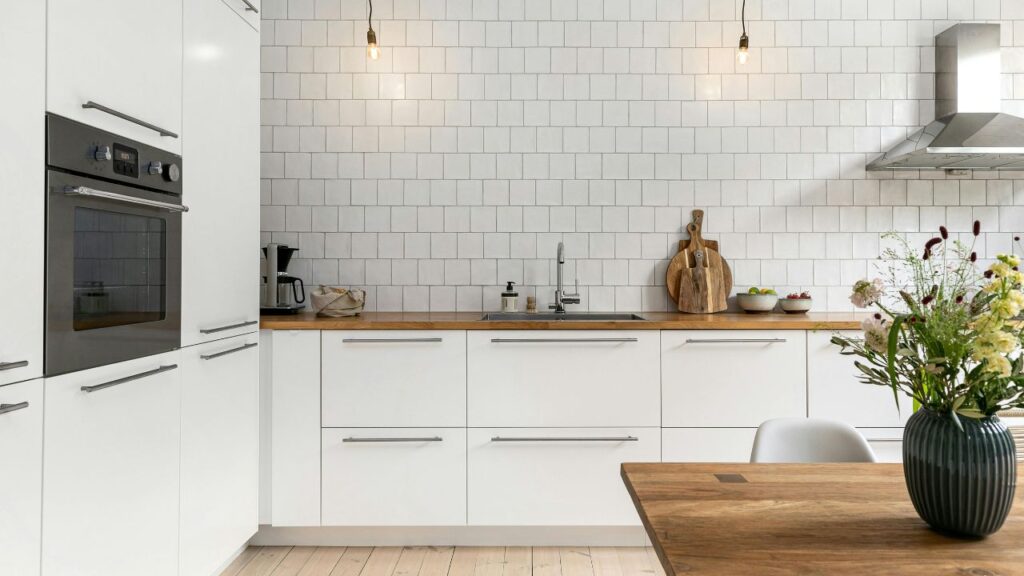
Rectangular wall tiles remain adaptable because changing their orientation or pattern can substantially alter the appearance.
Straight horizontal layouts can feel restrained, while vertical layouts emphasize height. Offset, stacked, and herringbone arrangements provide additional possibilities.
When installing modern kitchen tiles in complex patterns, remember that additional cuts and planning can increase labor and material requirements.
Geometric Kitchen Tiles
Hexagons and other geometric forms can create distinctive backsplashes and floors.
They can be particularly effective in limited areas where the pattern acts as a focal point rather than competing with the rest of the kitchen.
Accurate alignment becomes especially visible with geometric patterns, making layout preparation important.
Textured Tiles
Texture can introduce depth even when the color palette remains neutral.
For a kitchen, maintenance should be considered alongside appearance. Deeply textured surfaces can potentially collect grease or residue more readily than smoother surfaces in cooking areas.
This does not make textured tile unsuitable, but placement matters.
Color Choices That Work in Modern Kitchens
Color affects how installing modern kitchen tiles changes the character of the room.
Neutral colors such as white, cream, gray, beige, taupe, and muted earth tones can create a restrained background. Strong colors such as green, blue, terracotta, or black can provide greater contrast.
There is no universally correct option. Existing cabinetry, countertops, lighting, flooring, and adjacent rooms should influence the choice.
Light Tiles and Small Kitchens
Light surfaces reflect more visible light than very dark surfaces, which can help a room feel visually brighter.
That does not mean white tile automatically makes a small kitchen look large. Layout, natural light, artificial lighting, cabinet color, and visual clutter also affect perception.
Installing modern kitchen tiles in a light palette can nevertheless support an airy design when combined with other light finishes.
Dark Tiles for Contrast
Dark tile can create a strong backdrop against pale cabinetry.
Black, charcoal, deep green, and navy finishes can produce sophisticated results, but practical maintenance should be considered. Certain dark or highly polished surfaces may show water marks, dust, grease, or fingerprints more readily.
Samples make these characteristics easier to judge before purchase.
Plan the Tile Layout Before Installation
A professional-looking installation starts with layout planning.
Immediately beginning from one edge can leave narrow or awkward cuts in highly visible locations. Dry planning allows you to understand how full and partial tiles will distribute across the surface.
When installing modern kitchen tiles, identify focal points, edges, corners, fixtures, outlets, cabinetry, and transitions before committing to the layout.
Find the Most Visible Areas
Not every edge of a tiled installation attracts equal attention.
The section above a cooker, the center of a backsplash, or the transition at an exposed wall edge may be particularly noticeable. Planning can place balanced cuts where they matter most.
This is particularly useful for patterned tiles where misalignment is easy to see.
Include Grout Joints in Measurements
Tile dimensions alone do not determine the finished layout. Grout joints occupy space and must be included.
Suitable joint dimensions depend on the tile, installation, substrate, applicable standards, and manufacturer’s recommendations.
Tile spacers can help maintain consistency, but they do not replace measurements and alignment checks.
Measure How Much Tile You Need
Accurate measurement helps prevent both unnecessary purchases and shortages.
For a rectangular area, multiply width by height for walls or length by width for floors, using consistent units. Divide irregular areas into simpler sections, calculate each separately, and combine the results.
Installing modern kitchen tiles generally requires ordering more than the exact measured coverage because cutting, breakage, pattern matching, and future repairs can consume additional material.
The appropriate extra quantity varies by project. A straightforward layout usually creates less waste than a diagonal or complex patterned installation.
For costly materials or complicated rooms, calculate the layout before ordering rather than relying on a universal waste percentage.
Prepare the Surface Properly
Surface preparation is one of the most important aspects of installing modern kitchen tiles.
Beautiful materials cannot compensate for an unsuitable substrate. The underlying surface must meet the requirements of the tile, adhesive or mortar, and installation system.
Depending on the project, preparation may involve removing loose material, cleaning contamination, repairing defects, addressing flatness, or installing a suitable tile substrate.
Clean the Substrate
Grease, dust, loose paint, residues, and other contaminants can interfere with bonding.
Kitchen walls around cooking surfaces deserve particular attention because invisible films can accumulate over time.
Use preparation methods compatible with the existing surface and installation products.
Check Flatness and Condition
A surface can look relatively smooth while still containing enough variation to complicate tile alignment.
This is especially noticeable with larger tiles. Check the substrate with an appropriate straightedge and address unacceptable irregularities before tiling.
Cracks, movement, moisture problems, or deteriorated materials may require investigation before installing modern kitchen tiles.
Do Not Tile Over Unknown Problems
Covering a damaged surface does not resolve the underlying cause.
Persistent moisture, structural movement, loose substrate, or significant cracking should be addressed before the decorative finish is installed.
When the cause is uncertain, consulting an appropriate building or tile professional can prevent a cosmetic project from concealing a larger problem.
Tools Commonly Needed for Tile Installation
The necessary tools depend on the material and size of the tile.
A simple ceramic backsplash may require different cutting equipment from a porcelain floor. Before installing modern kitchen tiles, verify that your tools are appropriate for the product.
Common equipment can include:
- Tape measure and pencil
- Spirit or laser level
- Tile spacers
- Suitable notched trowel
- Mixing equipment where required
- Tile cutter or wet saw appropriate for the material
- Grout float
- Sponges and clean buckets
- Straightedge
- Personal protective equipment
- Appropriate drill bits for penetrations
Silica-containing materials can generate hazardous respirable dust when cut or ground. Use cutting methods, controls, and respiratory protection appropriate to the material and local safety requirements. Wet cutting can help control dust for suitable products.
Installing Modern Kitchen Tiles Step by Step
The exact procedure depends on the tile and installation system, so manufacturer instructions should take priority over generalized online guidance.
Still, understanding the overall workflow can make planning easier.
Prepare and Mark the Layout
Confirm measurements and establish reference lines.
Dry-lay tiles where practical to inspect spacing and determine where cuts will occur. For patterned tiles, verify orientation before adhesive application begins.
Select Compatible Setting Material
Different substrates and tile materials can require different adhesives or mortars.
Do not choose purely by price or use an unidentified leftover product. Check compatibility with both the tile and substrate, and follow mixing, application, open-time, and curing instructions supplied by the manufacturer.
Apply the Setting Material Properly
Use a suitable trowel and work in areas that can be tiled within the product’s working time.
The objective is adequate contact and coverage appropriate to the installation. Requirements can differ according to tile size, location, material, and applicable installation standards.
When installing modern kitchen tiles, periodically checking coverage can identify technique problems before the entire area has been completed.
Position and Align the Tiles
Set tiles according to the layout lines, keeping joints consistent.
Regularly check level, alignment, and surface consistency. Correcting a problem while the setting material remains workable is easier than discovering it after curing.
Make Accurate Cuts
Edges around outlets, cabinets, corners, pipes, and other obstacles require careful measurement.
Use cutting equipment designed for the tile. Natural stone, porcelain, ceramic, and glass can behave differently when cut.
Electrical outlets introduce additional safety concerns. Power should be isolated appropriately before work occurs near electrical components, and electrical modifications should be handled according to applicable laws and codes.
Allow the Installation to Set
Do not rush directly into grouting.
Setting materials require appropriate curing or setting time. Follow the product instructions because environmental conditions, substrate, material, and product formulation can affect timing.
Installing modern kitchen tiles carefully includes respecting these waiting periods.
Grout Has Both Practical and Visual Importance
Grout is not merely an aesthetic detail. It fills tile joints and contributes to the completed installation.
Color can dramatically influence appearance. Similar grout and tile colors create a more continuous visual field, while contrasting grout emphasizes each tile and the layout pattern.
Choose Grout for the Application
Grout formulations vary. Selection can depend on joint size, tile type, exposure conditions, maintenance expectations, and installation environment.
Follow manufacturer recommendations and verify compatibility, particularly with materials that could stain or scratch.
Seal Where Necessary
Whether sealing is necessary depends on the grout and tile products.
Some natural stones and cementitious materials may require sealing, while other products may have different maintenance requirements. Follow the manufacturers’ recommendations instead of assuming every tiled surface needs the same treatment.
DIY or Professional Tile Installation
Installing modern kitchen tiles can be a realistic DIY project for homeowners with suitable skills, tools, time, and a straightforward installation.
A simple backsplash on a sound, flat substrate is substantially different from a large-format porcelain floor over a questionable base.
When DIY Can Make Sense
DIY may be reasonable when:
- The area is relatively small
- The substrate is sound and straightforward
- Cuts are manageable
- No complex waterproofing is involved
- You have appropriate tools
- You can work safely
- The material is forgiving enough for your skill level
Starting with a limited area can help an inexperienced installer understand the process without committing to a large floor.
When a Professional May Be Better
Professional installation should be considered when the project involves expensive materials, complicated patterns, large-format tiles, substrate problems, uncertain movement, extensive cutting, demanding transitions, or building work beyond your competence.
The price of installation should be considered against the potential cost of removing and replacing a failed tile system.
An experienced installer can also identify substrate issues that may not be obvious during initial planning.
Kitchen Tile Mistakes Worth Avoiding
Several preventable mistakes can undermine an otherwise attractive renovation.
Installing modern kitchen tiles successfully depends as much on preparation and patience as on tile selection.
Choosing Appearance Over Suitability
A visually attractive wall tile is not automatically suitable for floors.
Always verify the manufacturer’s intended use, relevant performance characteristics, and installation guidance.
Skipping the Dry Layout
Failure to plan can result in tiny cuts, poorly centered patterns, or unattractive transitions.
A dry layout requires time but can prevent obvious visual problems.
Using the Wrong Adhesive
Setting materials are not universally interchangeable.
Compatibility depends on the substrate, tile, environment, and product. Use a system recommended for the intended installation.
Ignoring Existing Surface Problems
Loose surfaces, cracks, grease, excessive movement, and moisture issues do not disappear once covered by tile.
Installing modern kitchen tiles over unresolved defects can transfer those problems to the finished surface.
Grouting Too Early
Premature grouting can interfere with the installation system’s intended curing process.
Follow the setting material manufacturer’s timing rather than judging readiness only by touch.
Make Kitchen Tiles Work With Other Simple Improvements
New tile can look even more effective when coordinated with smaller home upgrades.
A complete renovation is not necessary. Simple improvements can make the kitchen feel more coherent without replacing functional components.
Update Cabinet Hardware
Handles and knobs can change the character of existing cabinetry at relatively low complexity.
When installing modern kitchen tiles alongside new hardware, consider repeating finishes or complementary tones to connect the design.
Improve Kitchen Lighting
Lighting significantly affects how tile color and texture appear.
Under-cabinet lighting can illuminate work surfaces and highlight a backsplash, while improved ambient lighting can change the entire room’s appearance.
Electrical installation should comply with relevant codes and may require a qualified professional depending on the work and jurisdiction.
Refresh Wall Paint
Paint can complement new tile at a comparatively modest cost.
Rather than selecting both independently, compare paint and tile samples under the actual kitchen lighting. Undertones can look different once materials are placed next to cabinetry and countertops.
Reduce Visual Clutter
A renovated backsplash can disappear behind overcrowded counters.
Organizing frequently used items and relocating occasional-use equipment can reveal more of the improved surface while increasing practical working space.
Caring for Modern Kitchen Tiles
Maintenance should be considered before purchasing rather than after installing modern kitchen tiles.
Smooth glazed surfaces may have different cleaning requirements from textured porcelain or porous natural stone. Grout maintenance also depends on the chosen product.
Use cleaning agents compatible with the tile and grout. Aggressive acidic or abrasive products can damage certain materials.
Deal With Spills Promptly
Prompt cleaning can reduce the chance of staining, particularly with porous surfaces.
Cooking oils, strongly colored foods, acidic liquids, and other kitchen substances can affect materials differently. Follow care guidance for the specific tile.
Inspect Grout and Sealant
Movement joints and sealant at transitions can deteriorate with time.
Periodic inspection allows damaged material to be addressed before deterioration becomes more extensive. Do not assume that cracked joints are purely cosmetic if they continue to recur.
How Tile Choices Can Support a Better Living Space
A better living space is not simply one that looks newer. It should also function better for the people using it. Installing modern kitchen tiles can contribute by creating durable working surfaces, simplifying appropriate cleaning, refreshing the room visually, and coordinating the kitchen with adjacent spaces.
The strongest improvement is therefore not necessarily the most expensive or fashionable tile. It is the material that fits the household, installation location, maintenance expectations, existing architecture, and realistic budget.
Balance Trends With Long Term Design
Kitchen design trends change, while tiled surfaces may remain for many years.
Homeowners can reduce the risk of quickly tiring of a trend by placing stronger colors or patterns in smaller areas and using more adaptable finishes across larger surfaces.
Installing modern kitchen tiles does not require a completely neutral result. It requires understanding where visual emphasis will have the greatest effect.
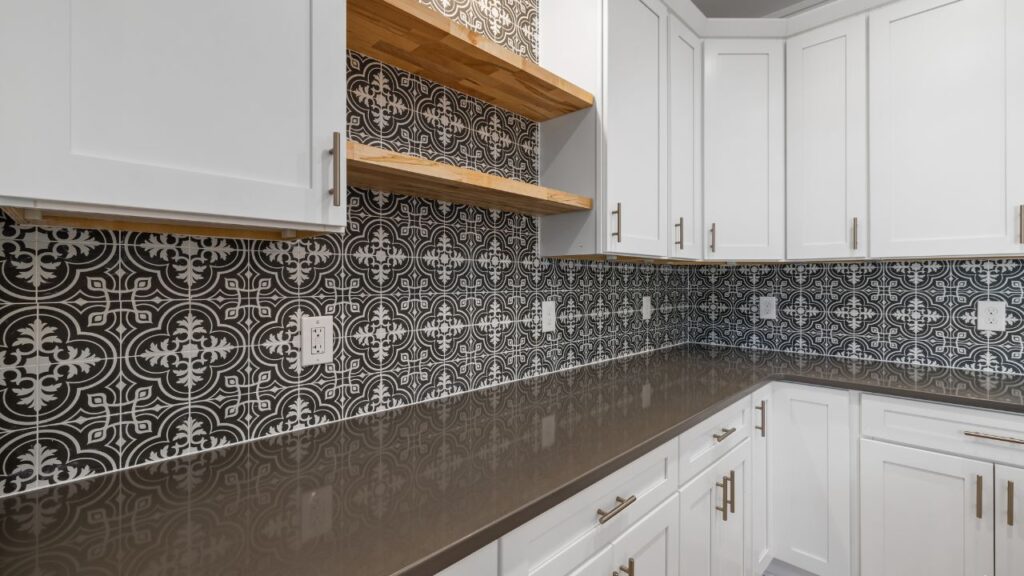
A patterned backsplash, for example, is easier to contain visually than an identical pattern covering an entire open-plan floor.
Budget Beyond the Tile Price
The displayed price of a tile is only one component of project cost.
Installing modern kitchen tiles can also require setting material, grout, substrate preparation, trims, sealant, delivery, cutting equipment, protective equipment, waste allowance, and professional labor.
Unexpected substrate repairs may add further expense.
For this reason, comparing tiles solely by price per unit area can create an incomplete budget.
Expensive Tiles Do Not Guarantee Better Results
Installation quality can matter as much as material cost.
A moderately priced tile installed on a properly prepared substrate with careful alignment can provide a more satisfactory result than an expensive product installed poorly.
Allocate enough budget for the elements that are not visible after completion, particularly substrate preparation and compatible installation materials.
Think About Future Repairs Before Installation
Tile surfaces can occasionally be damaged by impact or need to be removed to access concealed building systems.
Keeping a small quantity of matching tiles after installing modern kitchen tiles can make future repairs easier because the exact product, shade, or production batch may no longer be available years later.
Store spare tiles in a dry, protected place and retain useful product information where possible.
This simple planning step costs little and can prevent difficulty later.
How an Updated Kitchen Supports the Wider Home
Simple home improvements are most effective when they work together.
Installing modern kitchen tiles can create a visual starting point for changes elsewhere. Colors from the backsplash can influence dining room accessories, wall paint, lighting finishes, or other surfaces without requiring every room to match exactly.
In an open-plan layout, visual relationships become particularly important because several functional spaces can be seen simultaneously.
Using a limited family of complementary materials and colors can create cohesion while still allowing each zone to have its own identity.
A Practical Checklist Before You Start
Installing modern kitchen tiles is easier to manage when the major decisions are made before demolition or adhesive application begins.
Before starting, confirm:
- The tile is suitable for its intended location
- Measurements have been checked
- Extra material has been allowed for cuts and breakage
- The substrate is sound and appropriately prepared
- Tile layout has been planned
- Setting material is compatible
- Grout is suitable for the installation
- Correct cutting tools are available
- Required safety equipment is available
- Electrical and plumbing obstacles have been considered
- Manufacturer instructions have been reviewed
- Enough time has been allowed for setting and curing
- Spare tiles will be retained for future repairs
This preparation can prevent a visually simple project from becoming unnecessarily complicated midway through installation.
Why Installing Modern Kitchen Tiles Is More Than a Cosmetic Update
Installing modern kitchen tiles is often discussed as a decorating project, but its practical effects can be equally important.
A properly planned backsplash protects the wall surface and creates a cleanable working-zone finish. Appropriate floor tile can provide a durable surface suited to daily kitchen activity. Thoughtful color and layout choices can improve visual continuity with the rest of the home.
At the same time, tile cannot fix structural, moisture, electrical, or substrate problems on its own. Those issues should be addressed before the decorative installation proceeds.
That distinction is important for any home improvement. Cosmetic changes produce their best results when the underlying building components are in appropriate condition.
FAQ’s
Is installing modern kitchen tiles a good home improvement?
Yes. Installing modern kitchen tiles can refresh the kitchen while providing durable and cleanable wall or floor surfaces when suitable products are correctly installed.
What tile is best for a modern kitchen?
There is no single best material. Ceramic, porcelain, glass, and natural stone can all be appropriate, depending on whether the tile is intended for a floor, backsplash, or decorative wall.
Can I install modern kitchen tiles myself?
A straightforward backsplash can be suitable for a capable DIYer. Complex floors, difficult substrates, costly materials, or advanced patterns may justify professional installation.
How do I choose a modern kitchen tile color?
Compare tile samples with cabinetry, countertops, floors, paint, and kitchen lighting. Choose a palette that complements permanent finishes rather than relying exclusively on current trends.
What should I do before installing modern kitchen tiles?
Measure the area, verify tile suitability, inspect and prepare the substrate, plan the layout, obtain compatible installation products, and review the manufacturers’ instructions.
Are large modern kitchen tiles harder to install?
They can be. Large-format tiles may require tighter substrate flatness, appropriate handling, cutting equipment, and careful setting techniques to achieve a consistent finish.
Conclusion
Installing modern kitchen tiles can be a highly visible home improvement without requiring a complete kitchen replacement. With suitable tiles, careful layout, compatible installation materials, and proper surface preparation, homeowners can create a kitchen that feels more current while remaining practical for everyday use.
The best results come from balancing appearance with durability, maintenance, safety, and the realities of the existing space. Whether you choose a modest backsplash or a new tiled floor, thoughtful planning can turn installing modern kitchen tiles into an improvement that works naturally with your wider living space for years to come.
