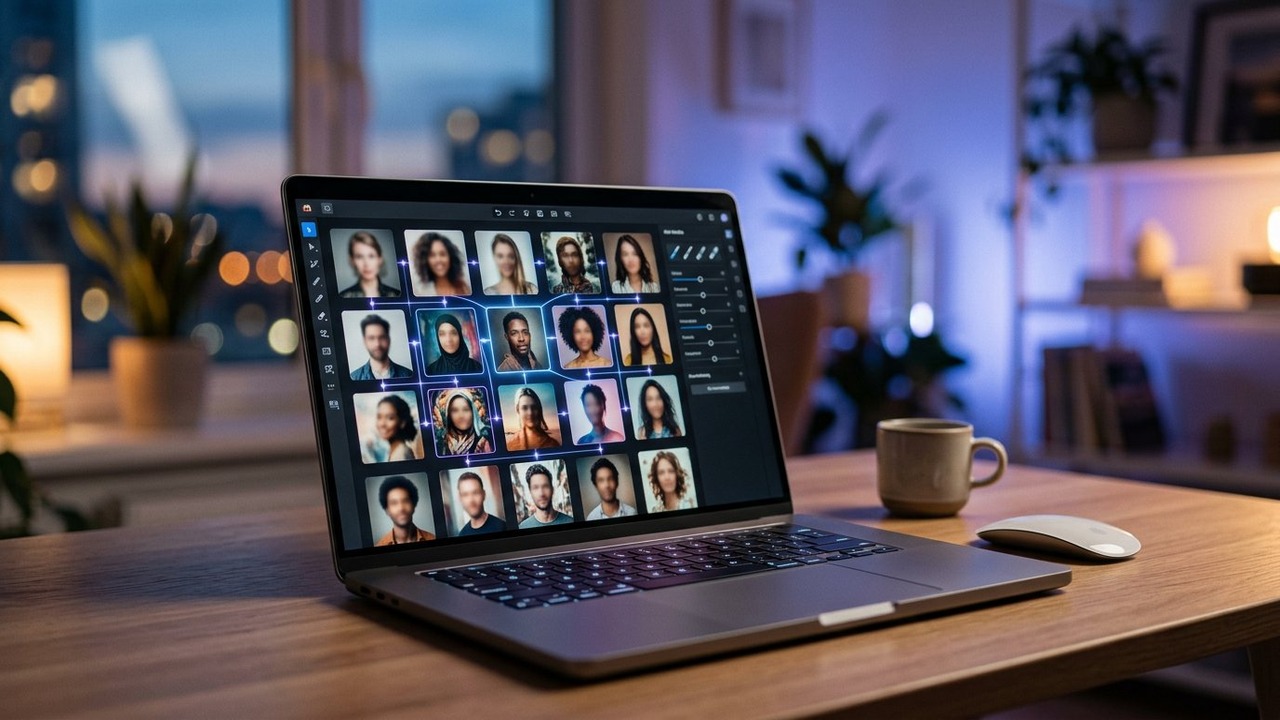
Multiple Face Swap: Practical Steps for Lifelike Results
Editing faces in a group photo used to mean tedious manual work, but the latest tools handle everyone together. Multiple face swap detects each person in a frame and lets you assign a different replacement to every subject, all within the same run. The result spares hours of masking and blending, and the steps below turn that power into clean, natural-looking output. Clean source material is the quiet secret behind every believable result. The engine can only work with what it is given, so quality in means quality out.
A group picture, a family video, or a team clip all share the same challenge: several faces, several angles, and lighting that shifts across the scene. Tools built for multiple face swap tackle the whole frame together, keeping expressions and head positions intact while the identities change.
Why This Approach Stands Out
Older editors force you to repeat the same routine for every person in the shot. A dedicated multiple face swap approach flips that workflow, treating the frame as a unified project instead of a stack of separate jobs. A calm, well-lit portrait gives the software the detail it needs to blend convincingly. Sharp eyes and clear jawlines anchor the swap better than soft or distant shots.
The Whole Grid, Handled Together
With a group photo, you upload the image, the tool finds each face automatically, and you assign a source image to every detected subject. Every detected face receives its own assignment before generation starts. The whole grid changes in the same run, which keeps the result coherent rather than patchy. That coherence is the core advantage of a genuine multiple face swap over stitching several separate edits together. Background clutter rarely matters, but a busy frame can confuse detection. Steady footage yields smoother tracking than handheld motion.
Photos and Video Alike
The same engine works across still images and moving clips. In video, the software tracks each face through every frame, holding the swap steady as people turn, gesture, or step through changing light. Choosing sources taken under similar conditions removes most of the tell-tale seams. The engine tracks subjects across frames without manual keying. A unified multiple face swap session can therefore cover a full scene rather than a frozen moment. Group shots with even spacing detect cleanly, since faces never overlap. Overlapping subjects may need an extra pass to separate them properly.
How the Process Works
Understanding the pipeline makes it easier to feed the tool what it needs and to spot when something went wrong. Patience during assignment pays off in the finished image. The software grows more accurate as it sees clearer inputs.
Detect and Align
The first pass finds every visible face and marks its key points. Natural results favor editors who respect the source material. A matched skin tone blends far more smoothly than a mismatched tone. Modern engines map over a hundred landmarks per subject, from the eyes to the jawline, so the replacement face sits correctly over the original structure.
Assign and Generate
Next, you match each detected face with the source image you want to use. The engine blends identity into the target while preserving the target’s pose, expression, and lighting, then writes the finished frame. Exporting at the native resolution preserves the detail the engine produced. Another look after export confirms nothing shifted during encoding.
Landmarks Keep It Natural
Those landmark points are what prevent the stretched, floating look of older editors. Head angle and gaze direction shape how believable the swap feels. Consistent lighting across sources keeps the whole frame unified. Because the swap anchors to real facial geometry, the result keeps believable proportions even when heads turn or tilt.
Practical Steps for Lifelike Results
The output quality depends on what you feed in and how you sequence the work. These steps apply to nearly every multiple face swap project. The preview step exists precisely so small flaws never reach the final file. Reviewing at full zoom reveals seams that a thumbnail hides.
Start With Clear Source Photos
Use a source image with a front-facing, well-lit subject. Blurry or heavily shadowed sources give the engine less to work with, and the weakness shows up in every swapped face.
Match Lighting and Angle
A source taken in bright daylight will look odd placed into a dim indoor scene. Choosing replacements that share the target’s lighting and head angle produces a far more convincing multiple face swap, because the blend has less to hide. Framing and composition stay untouched during the edit. The original file remains intact when the new version is exported. Export settings matter too, since compression can soften fine detail. A quick check of each subject before exporting prevents embarrassing oversights.
Assign Each Face Separately
Resist the urge to apply the same source everywhere unless the goal calls for it. Assigning per person lets you match skin tone, expression, and angle case by case, which raises the realism of the whole frame.
Review Before You Export
Zoom into eyes, hairlines, and jaw edges before finishing. Small seams that look fine at a glance become obvious at full size, and catching them early keeps a multiple face swap from needing a full redo. Ethical use keeps the feature helpful rather than harmful. Clear permission protects everyone whose likeness appears in the work.
Respect Consent and Context
Only swap faces you have permission to use, and stay away from misleading contexts. Ethical use keeps the tool a creative asset rather than a risk, and it protects the people whose likeness appears in the frame. Keeping a backup of the source material is a wise habit. The edited output lands as a fresh file rather than overwriting the original. The tool handles geometry while the editor handles judgment. Good results come from a careful hand as much as a clever engine.
Situations That Suit This Tool
Some projects gain more from this approach than others, and knowing which ones helps you plan ahead.
Group Portraits
Family reunions, team photos, and class pictures all contain several faces that benefit from the same careful treatment. Handling them in a unified session keeps the style consistent across the frame.
Event and Scene Videos
Clips with several people moving through a scene suit the tool well, since the tracking holds each identity steady as the action unfolds. The workflow suits team photos, group videos, and multi-person clips alike. Batch handling removes the repetition that older tools demanded. Multi-person footage that once demanded hours of manual work now finishes in a far shorter overall span.
Common Mistakes
A frequent error is feeding the tool a tiny or angled source and expecting it to compensate, which stretches the result. Another is ignoring lighting mismatch, the fastest way to make a multiple face swap look artificial. Rushing the review step lets small seams survive, and skipping consent creates problems no editor can undo. Practice with a few sample frames builds confidence before a serious project. Small adjustments to angle and brightness often rescue a weak swap. A matched source and a patient eye make the real difference.
Conclusion
Multiple face swap has matured into a practical editing skill rather than a novelty. When you combine clear sources, matched lighting, per-face assignment, and a careful review, a well-planned session can transform every subject in a photo or an entire video clip with natural results. A calm, unhurried pass at this stage always yields a cleaner final frame. The engine handles the geometry and the tracking; the editor’s job is to feed it honest material and check the outcome. Done with care, the result looks effortless even when the process behind it is precise.
Frequently Asked Questions
What is a multiple face swap?
It is an editing method that detects every face in a photo or video and replaces each with a different source in the same pass.
How many faces can be handled together?
Modern tools detect every visible face in a frame, with support for six subjects in a project.
Does it work on video as well as photos?
Yes, the same engine tracks faces across frames, holding the swap steady through motion and changing light.
How does the tool keep faces looking natural?
It maps landmark points on each subject and blends the new identity over the original pose, expression, and lighting.
What makes a swap look convincing?
Clear front-facing sources, matched lighting and angle, and per-face assignment produce the most seamless results.
Is permission required to use a face?
Yes, use only faces you have the right to use, and avoid misleading or deceptive contexts entirely.






5 Comments