Practical Steps Toward Sustainability: 7 Powerful Secrets for Eco-Friendly Living, Energy Efficiency, and Lower Bills
Accelerating global climate volatility, escalating municipal utility tariffs, and mounting plastic waste pollution require households to transition from passive environmental awareness into active domestic stewardship. Implementing verifiable practical steps toward sustainability empowers homeowners, apartment dwellers, and modern families to reduce their carbon footprint, eliminate everyday plastic pollution, and conserve precious natural resources without compromising comfort, health, or financial stability. While popular discussions surrounding ecological preservation often focus on multi-thousand-dollar capital upgrades—such as purchasing electric vehicles or installing geothermal heating systems—meaningful long-term ecological impact begins directly within the domestic household envelope. By combining strategic building insulation audits, passive thermodynamic solar management, greywater recycling, organic food waste composting, and conscious consumer habits, everyday citizens transform their living environments into efficient micro-ecosystems that lower monthly utility bills while safeguarding the planet for future generations.
The Ecological and Financial Imperatives of Domestic Sustainability
Modern residential buildings account for over twenty percent of total nationwide greenhouse gas emissions and consume more than seventy percent of commercially generated electrical grid power, according to data from the International Energy Agency and the Department of Energy. Recognizing the intersection of thermodynamics, material waste streams, and household economics explains why sustainable living represents both an environmental and financial imperative.
Mitigating Building Envelope Energy Dissipation
The primary driver of domestic carbon emissions is residential space heating and cooling:
- Convective Air Infiltration: Uninsulated exterior walls, drafty door perimeters, single-pane windows, and leaky attic access hatches allow conditioned indoor air to escape, forcing heating and cooling systems to cycle continuously.
- Direct Utility Expense Escalation: Wasted thermal energy translates directly into inflated monthly utility expenses, with the average household losing hundreds of dollars annually to poor insulation and thermal bridging.
The Compound Waste Stream: Single-Use Plastics and Packaging
Beyond energy dissipation, modern consumer households generate tremendous volumes of physical solid waste:
- Municipal Landfill Saturation: Over ninety percent of consumer plastics manufactured worldwide are never recycled, ending up incinerated or buried in municipal landfill facilities where they take hundreds of years to fragment into toxic microplastics.
- Methane Emissions from Landfills: Organic food scraps and yard trimmings trapped inside anaerobic landfill environments decompose into methane gas—a greenhouse gas over twenty-eight times more potent than carbon dioxide at trapping atmospheric heat over a twenty-year horizon.
Practical Steps to Slash Household Energy Consumption
Reducing household energy consumption is the most immediate, high-impact action a homeowner can take to cut domestic carbon emissions and lower monthly expenses.
Thermal Envelope Optimization and Smart Climate Management
- Comprehensive Air Sealing: Installing heavy-duty elastomeric weatherstripping around exterior doors, applying expanding spray foam around plumbing pipe penetrations, and caulking window frames blocks convective air bypasses.
- Upgrading Attic Floor Insulation: Adding blown-in cellulose or fiberglass batt insulation to achieve an R-value of R-49 or R-60 over ceiling planes stops buoyant winter heat from escaping into cold roof attics.
- Programmable Smart Thermostat Integration: Installing learning smart thermostats automatically dials back heating or cooling by seven to ten degrees while occupants are sleeping or away at work, trimming annual HVAC utility expenditures by ten to fifteen percent.
Transitioning to Solid-State LED Illumination
Replacing legacy incandescent and compact fluorescent (CFL) light fixtures with high-efficiency solid-state Light Emitting Diode (LED) bulbs delivers immediate electrical load reduction:
- 80% Lower Electrical Consumption: Modern ENERGY STAR certified LED bulbs produce identical luminous flux (lumens) while drawing only nine to twelve watts of electricity, compared to sixty watts for traditional incandescent bulbs.
- Exceptional Operating Lifespan: LED lighting lasts between twenty-five thousand and fifty thousand operational hours (fifteen to twenty years of normal daily use), eliminating the continuous manufacturing, packaging, and shipping overhead of disposable light bulbs.
Eliminating Phantom “Vampire” Electrical Loads
Many household electronics continue drawing electrical current even when powered off:
- Standby Power Consumption: Smart televisions, game consoles, microwave clocks, coffee makers, and phone chargers consume continuous standby power, accounting for up to ten percent of residential electricity use.
- Smart Power Strip Deployment: Utilizing advanced smart power strips automatically cuts electrical current to peripheral accessories (such as soundbars, gaming accessories, and printers) when the primary television or computer is switched off.
Sustainable Action Impact Matrix
| Sustainability Practice | Initial Financial Outlay | Time to Implement | Carbon Footprint Reduction | Direct Household Benefit |
|---|---|---|---|---|
| Attic Insulation & Air Sealing | Moderate ($300 – $1,500) | 1 to 2 Weekends | High (15% to 30% HVAC energy cut) | Dramatically lower monthly utility bills |
| Whole-Home LED Lighting Retrofit | Low ($50 – $150) | 1 to 2 Hours | Moderate (Slashes lighting watts by 80%) | Long bulb life (15+ years); lower electric bills |
| Smart Thermostat Automation | Moderate ($120 – $250) | 1 Hour | High (10% to 15% annual HVAC reduction) | Automatic temperature scheduling; comfort |
| Organic Food Scrap Composting | Low ($30 – $120) | Ongoing daily habit | High (Diverts methane-generating waste) | Rich organic fertilizer for gardens |
| Rainwater Harvesting Barrels | Low to Moderate ($80 – $250) | Half-Day Setup | Moderate (Saves municipal treated water) | Free irrigation water for lawn & gardens |
| Low-Flow Aerator Installation | Very Low ($15 – $40) | 30 Minutes | Moderate (Cuts water use by 30% to 50%) | Reduces hot water heating energy |
Water Conservation and Natural Hydrological Stewardship
Fresh, potable municipal water requires immense electrical energy to pump, chemically treat, and distribute to residential taps. Conserving water directly reduces environmental strain.
Installing Low-Flow Aerators and WaterSense Fixtures
- Faucet Aerators: Screwing high-efficiency 1.5-gallon-per-minute (GPM) aerators onto bathroom and kitchen faucets mixes air into the water stream, maintaining strong rinse pressure while cutting water flow by thirty to fifty percent.
- High-Performance Showerheads: Upgrading to 1.75 GPM WaterSense-certified showerheads saves thousands of gallons of water annually per household, simultaneously reducing the natural gas or electrical energy required to heat shower water.
Rainwater Harvesting and Greywater Utilization
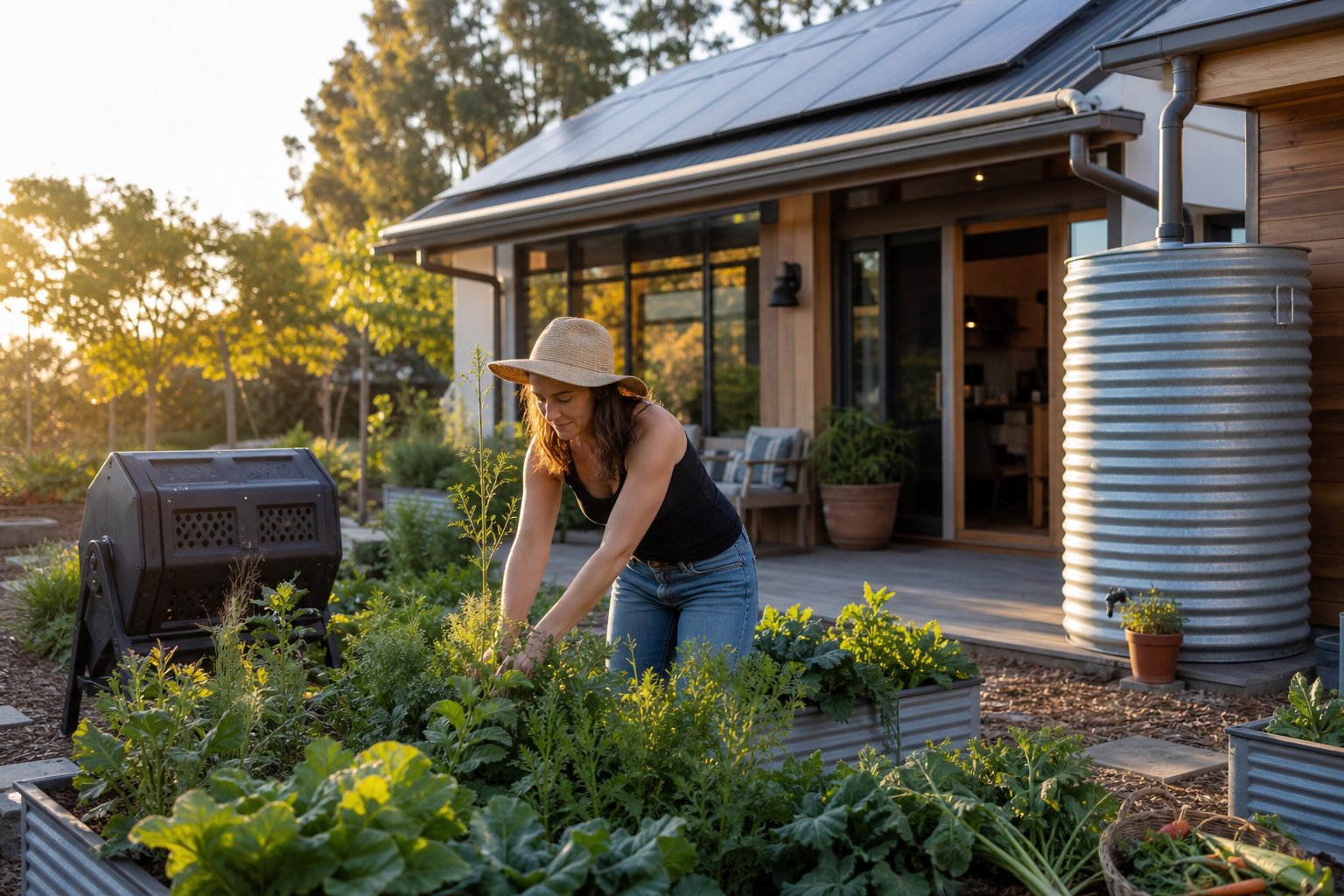
- Rain Barrel Capture: Connecting fifty-five-gallon rain collection barrels to gutter downspouts captures hundreds of gallons of clean rainwater during seasonal downpours. This non-chlorinated water is ideal for irrigating flower beds, organic vegetable patches, and indoor houseplants without touching municipal tap lines.
- Native Drought-Tolerant Landscaping (Xeriscaping): Replacing thirsty, manicured turf grass with regional native drought-tolerant perennials, ornamental grasses, and organic wood mulch eliminates the need for wasteful automated sprinkler systems while supporting local pollinators like bees and butterflies.
Waste Diversion, Composting, and Closed-Loop Living
Transitioning toward zero-waste living requires rethinking household consumption and managing organic material streams responsibly.
Backyard Composting and Bokashi Fermentation
Food scraps and yard waste make up over thirty percent of the residential solid waste stream:
- Aerobic Backyard Tumbler Composting: Layering carbon-rich “brown” materials (dry autumn leaves, shredded non-glossy cardboard) with nitrogen-rich “green” materials (vegetable peelings, fruit rinds, coffee grounds) creates rich organic compost within eight to twelve weeks, enriching garden soil without synthetic chemical fertilizers.
- Indoor Bokashi Fermentation: For apartment dwellers without outdoor yard space, airtight Bokashi bran fermentation buckets break down food scraps—including dairy, small bones, and citrus peels—indoors without foul odors or pest attraction.
Eliminating Single-Use Plastics Through Mindful Consumption
- Reusable Shopping & Produce Bags: Keeping washable canvas tote bags and organic cotton mesh produce bags in your vehicle eliminates hundreds of disposable plastic shopping bags each year.
- Plastic-Free Pantry Storage: Purchasing bulk dry grains, beans, and spices in reusable glass mason jars reduces single-use plastic packaging while keeping food fresh and pest-free.
- Solid Bar Toiletries: Replacing plastic-bottled liquid shampoos, conditioners, and body washes with concentrated solid soap bars eliminates single-use plastic bottles from bathroom waste streams.
Frequently Asked Questions About Practical Steps Toward Sustainability
What is the most cost-effective practical step toward sustainability for a homeowner?
Sealing air leaks around windows, doors, and plumbing penetrations with caulk and weatherstripping is the most cost-effective action, delivering an immediate return on investment by cutting heating and cooling bills.
Can renters implement practical steps toward sustainability without modifying their apartments?
Yes, renters can install screw-on low-flow faucet aerators, switch to LED light bulbs, use smart power strips, manage food waste with indoor composting buckets, and adopt reusable shopping bags.
Does composting food scraps attract rodents and pests to my yard?
No, using an elevated, fully enclosed dual-chamber compost tumbler and avoiding meat, dairy, and oily foods keeps the composting process pest-free and odor-free.
How much money can I expect to save by adopting sustainable home practices?
A typical household combining air sealing, LED lighting, smart thermostat scheduling, and water-efficient fixtures saves between three hundred and eight hundred dollars annually on utility bills.
Is rainwater collected from a roof safe for irrigating home vegetable gardens?
Rainwater collected from asphalt shingle roofs is generally safe for irrigating ornamental plants and soil around vegetables, provided you avoid watering edible plant leaves directly.
What is the difference between recycling and pre-cycling?
Recycling processes waste materials into new products, while pre-cycling avoids waste entirely by refusing single-use items, buying package-free bulk goods, and choosing reusable alternatives.
Conclusion
Building an environmentally sustainable future does not demand drastic personal sacrifices or expensive technological investments; it begins by taking thoughtful, consistent, and practical steps toward sustainability right at home. By methodically sealing building envelope drafts, optimizing heating and cooling schedules with smart thermostats, conserving water with high-efficiency fixtures, and composting organic food waste, everyday citizens build a cleaner, healthier, and more resilient world. These manageable domestic choices compound over time, delivering substantial financial savings on monthly utility bills while diverting thousands of pounds of greenhouse gases and plastic waste from landfills. Embracing mindful, eco-friendly living transforms your home into a sustainable sanctuary, proving that individual actions create profound, lasting benefits for our shared planet.