Tucson Car Accident Lawyer: 7 Essential Steps to Protect Your Rights After an Arizona Car Crash
A serious car accident can leave drivers and passengers dealing with physical injuries, unexpected medical expenses, vehicle damage, missed work, and confusing insurance procedures. Whether a collision happens on Interstate 10, Speedway Boulevard, Broadway Boulevard, or another road in southern Arizona, understanding your legal options can help you make informed decisions. Consulting a Tucson car accident lawyer may be valuable when injuries are significant, responsibility is disputed, or insurance coverage does not adequately address the losses associated with a crash.
Tucson is one of Arizona’s major metropolitan areas, with busy intersections, residential streets, interstate highways, and commercial transportation routes. Drivers share these roads with pedestrians, cyclists, motorcyclists, and commercial vehicles.
Although many collisions involve relatively minor property damage, others can cause serious injuries with lasting financial and personal consequences.
Arizona personal injury law provides a framework for pursuing compensation when another party’s legally actionable negligence contributes to an accident.
However, obtaining compensation is not automatic. Injured individuals must consider fault, supporting evidence, applicable insurance coverage, documented damages, and important filing deadlines.
An experienced attorney can help evaluate these issues, explain available legal options, and represent clients during insurance negotiations or litigation when appropriate.
This guide explores seven essential considerations after a car accident in Tucson, explains how Arizona’s comparative negligence rules work, and outlines what individuals should know before choosing legal representation.
What Does a Tucson Car Accident Lawyer Do?
A Tucson car accident lawyer is an attorney who represents individuals involved in automobile collisions and related personal injury disputes.
These legal professionals may investigate accidents, evaluate liability, review medical documentation, communicate with insurance companies, and pursue compensation for eligible clients.
Their work may involve negotiations with insurers, preparation of legal claims, and court proceedings when necessary.
Investigating the Accident
A lawyer may examine how a collision occurred and identify evidence relevant to determining responsibility.
This can include police reports, photographs, witness statements, available surveillance footage, vehicle damage, and other records.
Some cases require assistance from accident reconstruction professionals or technical experts.
The purpose is to develop a factual understanding of the accident rather than assume that one driver must be responsible simply because a collision occurred.
Evaluating Injuries and Damages
An attorney may review available records concerning medical treatment, lost income, property damage, and other claimed losses.
Serious injuries can require additional investigation of future medical needs and their effects on employment or daily life.
The appropriate legal assessment depends on the circumstances.
Communicating With Insurance Companies
Insurance claims sometimes involve disagreements concerning fault, treatment expenses, or the extent of losses.
A lawyer may assist in presenting the claim and responding to disputed issues.
However, legal representation does not guarantee that an insurer will accept every claimed amount.
Representing Clients in Litigation
When a dispute cannot be resolved through an acceptable settlement, an attorney may evaluate whether filing a lawsuit is appropriate.
Litigation can involve pleadings, evidence exchange, depositions, motions, negotiations, and potentially a trial.
The process depends on the issues involved and applicable procedural requirements.
7 Essential Steps to Take After a Car Accident in Tucson
The period immediately following a collision can be stressful.
Understanding the following steps may help injured individuals protect their safety, preserve useful information, and avoid unnecessary legal complications.
1. Prioritize Safety and Obtain Medical Attention
Personal safety should always come before insurance paperwork or legal considerations.
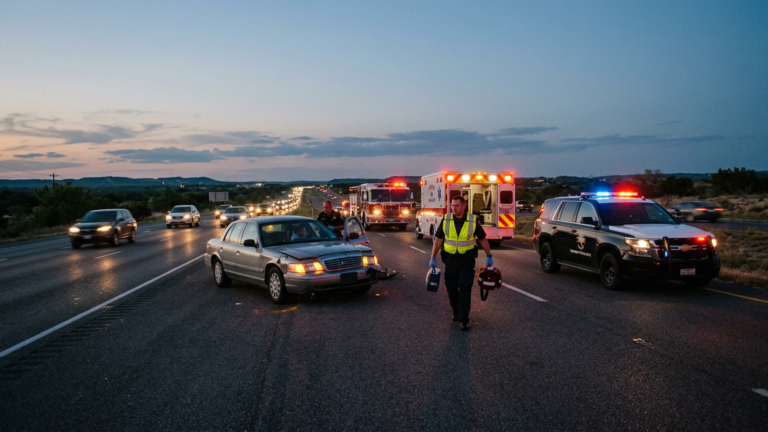
If a collision causes injuries or creates dangerous roadway conditions, contact emergency services.
Follow instructions from responding personnel and avoid placing yourself at further risk.
Seek Appropriate Medical Evaluation
Some injuries are obvious immediately after a crash.
Others may not become fully apparent until symptoms develop or change.
A qualified healthcare professional can assess the injury, recommend treatment, and document relevant findings.
Medical care should be based on actual health needs rather than an effort to increase the value of a claim.
Follow Recommended Treatment
Keep records of appointments, prescriptions, therapy recommendations, and other relevant care.
If symptoms worsen or new concerns develop, seek appropriate medical advice.
Accurate medical documentation can also help explain the relationship between an injury and the accident.
However, medical records must be interpreted according to the circumstances.
Protect Yourself at the Accident Scene
If the roadway is unsafe, follow emergency guidance and take reasonable precautions.
Do not attempt to take photographs while standing in traffic or near unstable vehicles.
If someone is seriously injured, do not move them unnecessarily unless immediate danger makes movement essential.
2. Preserve Accident Evidence and Obtain the Police Report
Evidence can play an important role when responsibility is disputed.
A collision scene may change quickly as vehicles are moved, debris is cleared, and traffic resumes.
Photographs and observations collected safely may become useful later.
Document Important Details
When possible, record the accident date, location, and approximate time.
Photographs may document vehicle positioning, damage, traffic signals, roadway conditions, and relevant surroundings.
Witness contact information may also be important.
However, avoid asking witnesses to speculate about facts they did not observe.
Obtain the Tucson Police Collision Report
The Tucson Police Department maintains a process for requesting public records and collision reports.
According to its official records guidance, collision reports are available through the Crashdocs system.
The appropriate reporting agency depends on which law enforcement department investigated the collision.
For example, incidents occurring on certain state highways may involve a different agency.
Retain any report number or incident information provided by responding officers.
What Information Can a Crash Report Contain?
A report may include involved vehicles, driver information, reported accident circumstances, officer observations, and other relevant details.
However, a police report does not automatically determine the outcome of a civil claim.
Additional evidence may be necessary.
Preserve Digital Evidence
If relevant dashcam footage or other recordings are available, preserve the original files.
Avoid altering photographs or videos in a way that could misrepresent the event.
Store copies securely.
Potential evidence can also include relevant communications, vehicle repair records, and insurance correspondence.
A Tucson car accident lawyer may help identify additional records that should be requested or preserved.
3. Understand Arizona’s Comparative Negligence Rules
Determining fault is one of the most important aspects of a personal injury claim.
Arizona uses a comparative negligence framework that allows responsibility to be evaluated among the parties involved.
Arizona Revised Statutes Section 12-2505 explains the state’s approach to comparative negligence.
What Is Comparative Negligence?
Comparative negligence considers whether the injured person contributed to the accident and, if so, to what extent.
Under the applicable Arizona rule, a claimant’s damages may be reduced according to the claimant’s percentage of fault.
Importantly, Arizona does not generally impose a 50% fault cutoff for ordinary negligence claims.
This differs from the modified comparative negligence rules followed in some other states.
Example of Comparative Fault
Consider an illustrative collision involving $100,000 in legally established damages.
If the claimant is assigned 20% responsibility, that percentage may reduce the damages to $80,000 under the applicable comparative negligence calculation.
If the claimant is assigned 60% responsibility, the calculation may reduce the damages to $40,000 rather than automatically eliminating recovery.
These examples are mathematical illustrations, not estimates of actual case value.
Actual outcomes depend on applicable law, evidence, the allocation of fault, and other relevant issues.
Important Exceptions
Arizona law contains an important limitation concerning claimants who intentionally, wilfully, or wantonly caused or contributed to the injury or wrongful death.
Other legal doctrines may also affect particular claims.
A qualified attorney should evaluate the specific conduct rather than rely on a simplified fault percentage.
Why Accident Evidence Matters
Comparative negligence disputes may involve questions about speed, right of way, distracted driving, traffic controls, and reasonable driving behavior.
Vehicle data, witness accounts, roadway conditions, and other information may influence the assessment.
A lawyer can evaluate how available evidence relates to Arizona’s negligence rules.
4. Review Insurance Coverage Before Accepting a Settlement
Automobile insurance is central to many car accident claims.
Arizona requires drivers to maintain specified minimum liability coverage, subject to the applicable financial responsibility framework.
However, minimum coverage may not be sufficient to address every loss arising from a serious accident.
Arizona’s Minimum Liability Insurance Requirements
The Arizona Department of Transportation identifies the following minimum liability coverage amounts:
- $25,000 for bodily injury or death to one person
- $50,000 for bodily injury or death to two or more people in one accident
- $15,000 for property damage
These limits are commonly described as 25/50/15 coverage.
They establish minimum liability requirements, not the amount that an injured person is automatically entitled to receive.
Actual recovery depends on legally established liability, damages, available coverage, and other circumstances.
What Is Uninsured Motorist Coverage?
Uninsured motorist coverage, often called UM coverage, can provide certain protections when an at-fault driver does not carry applicable liability insurance.
Arizona law requires insurers writing covered automobile liability policies to make available and offer uninsured motorist coverage under specified conditions.
However, it is generally optional for the policyholder to purchase it.
Coverage availability and claim rights depend on the policy and applicable law.
What Is Underinsured Motorist Coverage?
Underinsured motorist coverage, commonly called UIM coverage, may provide additional protection when an at-fault driver’s liability limits are insufficient to cover legally recoverable bodily injury damages.
Arizona law also requires covered insurers to offer this protection.
However, UIM coverage is not automatically included in every policy.
The actual benefits depend on the purchased coverage and policy terms.
Medical Payments Coverage
Some Arizona auto insurance policies include optional medical payments coverage.
This may help with specified medical expenses regardless of who caused the accident, subject to the policy.
Medical payments coverage should not be confused with bodily injury liability or uninsured motorist coverage.
Be Careful Before Signing a Release
Insurance settlements often involve a release of specified claims.
Signing an agreement can affect the ability to seek additional compensation for the same incident.
For significant injuries or unresolved medical issues, consider obtaining independent legal advice before accepting a settlement.
An attorney can explain the scope and consequences of the proposed agreement.
5. Understand Arizona’s Car Accident Filing Deadlines
Personal injury claims are subject to legal deadlines.
Missing an applicable deadline may prevent an otherwise potentially valid claim from proceeding.
Arizona Revised Statutes Section 12-542 establishes a general two-year limitations period for personal injury actions, subject to applicable exceptions.
The General Two-Year Deadline
In an ordinary car accident injury case, the general limitations period is typically two years from the date the claim accrues.
This is not always identical to the date a lawsuit must be filed in every possible circumstance.
Accrual rules, tolling provisions, and statutory exceptions can affect the analysis.
A Tucson car accident lawyer should evaluate the deadline for the specific claim.
Claims Against Government Entities
Certain cases involving public entities or public employees have significantly shorter deadlines.
Arizona Revised Statutes Section 12-821.01 generally requires a qualifying notice of claim within 180 days after accrual.
The notice must satisfy specific legal requirements.
Arizona Revised Statutes Section 12-821 generally provides a one-year period for bringing actions against public entities or public employees.
These rules can apply in circumstances involving certain government vehicles or other legally relevant government conduct.
However, the classification of the defendant and the applicable exceptions must be evaluated carefully.
Why the Notice Requirements Matter
A government notice of claim generally must contain sufficient facts explaining the basis of the claim.
Arizona law also requires a specific settlement amount and facts supporting that amount.
An informal complaint or ordinary insurance report should not be assumed to satisfy these requirements.
Because the legal consequences of an incorrect notice can be substantial, appropriate legal advice is particularly important.
Special Circumstances
Claims involving minors, wrongful death, or other unusual facts may involve different timing considerations.
Do not assume that a family member’s deadline or a standard online summary applies to every case.
6. Evaluate the Full Financial and Personal Impact of the Accident
The value of a personal injury claim depends on more than vehicle damage or the first medical bill.
A serious accident can affect employment, daily activities, physical comfort, and future expenses.
An attorney may help identify legally recoverable damages supported by evidence.
Medical Expenses
Medical losses may involve emergency treatment, hospital care, diagnostic testing, rehabilitation, medications, and other necessary services.
In some cases, ongoing treatment needs may also be relevant.
Future medical expenses generally require appropriate supporting evidence.
Lost Income
An injury may prevent someone from working temporarily.
Supporting documentation can include employment records, wage information, and medically supported work restrictions.
For self-employed individuals, business income records and other financial evidence may be relevant.
Loss of Future Earning Capacity
A serious injury may affect the ability to perform certain work in the future.
This is different from wages already lost.
Evaluation may require professional evidence concerning the person’s employment background, limitations, and future earning potential.
Pain and Suffering
Arizona personal injury claims may include legally recoverable noneconomic damages when appropriately supported.
These can relate to physical pain, mental anguish, and other recognised injury consequences.
There is no universal formula that guarantees a particular amount.
Property Damage
Vehicle repair or replacement costs may be part of the financial consequences of a collision.
Relevant documentation can include photographs, repair estimates, and appropriate vehicle valuations.
Wrongful Death Claims
When a collision results in death, Arizona law provides a framework for wrongful death actions.
Arizona Revised Statutes Section 12-612 identifies who may bring such a claim and on whose behalf.
The available damages and procedural requirements depend on the facts and applicable law.
Families facing these circumstances may benefit from advice tailored to their particular situation.
Why Compensation Estimates Vary
Two accidents involving similar vehicle damage can produce very different legal claims.
The extent of injuries, proof of causation, comparative fault, insurance coverage, and future consequences may all differ.
A responsible attorney should explain this uncertainty rather than promise a guaranteed settlement.
7. Choose an Experienced Tucson Car Accident Lawyer
Selecting legal representation is an important decision, particularly when injuries are serious or the insurance claim is contested.
Not every attorney has the same experience handling motor vehicle collision cases.
The objective is to identify a professional who can evaluate the specific legal issues and communicate clearly.
Verify Arizona Attorney Credentials
The State Bar of Arizona maintains a public member directory.
Individuals can search for attorneys by name, practice area, and office location.
The directory can also provide relevant professional status and disciplinary information.
Verifying credentials helps establish whether an attorney is authorized to practice law in Arizona.
Ask About Relevant Accident Case Experience
Useful questions include:
- Have you handled car accident claims in Arizona?
- Who will manage my case?
- How do you investigate disputed liability?
- What evidence should be preserved?
- How are insurance coverage issues evaluated?
- What deadlines apply to my situation?
- What happens if settlement negotiations fail?
- How are attorney fees and case expenses calculated?
The attorney should provide clear explanations without guaranteeing a particular result.
Understand Contingency Fee Agreements
Many personal injury attorneys use contingency fee arrangements.
Under a contingency agreement, the attorney’s compensation is linked to a specified recovery.
The State Bar of Arizona explains that contingency fee agreements must meet applicable ethical requirements, including a signed written agreement.
The agreement should explain the fee calculation and how litigation expenses are handled.
Do not assume every case involves the same fee percentage.
Ask About Litigation Costs
Court filing fees, expert expenses, deposition costs, and medical record charges can arise during litigation.
The agreement should explain how these expenses are paid and whether the client may owe any costs if there is no recovery.
Review these provisions before signing.
Evaluate Communication
A legal case may involve several stages and periods of limited activity.
A professional attorney should establish reasonable expectations about communication.
Ask how frequently updates will be provided and who will answer questions.
An attorney’s approach to communication can be as important as the initial consultation experience.
Common Causes of Car Accidents in Tucson, Arizona
Automobile collisions occur for many reasons.
The cause must be established from the facts rather than inferred solely from the type of collision.
Distracted Driving
Distractions can reduce a driver’s attention to traffic signals, surrounding vehicles, and changing roadway conditions.
Mobile devices are one potential source of distraction.
However, a distracted driving allegation should be supported by relevant evidence.
Speeding and Unsafe Driving
Excessive or inappropriate speed can affect stopping distance and reaction time.
A driver traveling at the posted speed limit may still be driving too fast for particular traffic or weather conditions.
Fault depends on the circumstances and applicable legal standards.
Failure to Yield
Intersection collisions may involve questions about traffic signals, turning movements, and right-of-way rules.
Evidence can include roadway markings, vehicle movement, witness observations, and available recordings.
Impaired Driving
Alcohol or drug impairment can affect the ability to operate a motor vehicle safely.
A collision involving suspected impairment may result in criminal proceedings as well as separate civil liability issues.
The two processes have different legal standards and purposes.
Rear-End Collisions
Rear-end accidents can occur because of following distance, distraction, sudden traffic changes, or other factors.
The driver of the rear vehicle is not automatically legally responsible in every possible situation.
A proper investigation should consider the complete circumstances.
Left-Turn Accidents
Left-turn collisions may involve disputes about traffic signals, oncoming vehicle speed, visibility, and the right of way.
An attorney may review physical evidence and witness accounts to evaluate responsibility.
Tucson Roads and Accident Investigation Considerations
Tucson drivers travel through a combination of city streets, interstate connections, and surrounding regional roads.
The exact location can influence which agency investigates an accident and where relevant records are held.
Interstate 10 and Interstate 19
Interstate routes carry passenger vehicles and commercial traffic.
Collisions may involve higher travel speeds and multiple vehicles.
The responsible investigating agency should be identified from the available incident information.
Broadway Boulevard and Speedway Boulevard
These major Tucson corridors contain intersections, business access points, and everyday commuter traffic.
Relevant evidence may involve signal timing, lane configuration, and surrounding traffic conditions.
Oracle Road and Grant Road
Busy surface roads can involve turning movements, commercial entrances, and interactions among different road users.
Each collision should be assessed according to its specific circumstances.
Pedestrian and Bicycle Collisions
Tucson roadways also serve cyclists and pedestrians.
When a motor vehicle strikes a vulnerable road user, injury severity and liability questions may require particular attention.
The applicable traffic rules, observations, and available physical evidence should be evaluated carefully.
What Happens During a Car Accident Insurance Claim?
After an accident, insurers may investigate the collision, review available documentation, and determine whether coverage applies.
The process depends on the policy, the parties involved, and the type of claim.
Initial Claim Notification
The policyholder should review their insurance contract’s reporting requirements.
The insurer may request basic information about the accident.
Provide accurate factual information and avoid speculation.
Liability Investigation
The insurer may assess police reports, photographs, statements, vehicle damage, and other available evidence.
Disagreements can occur when the parties provide different accounts.
A lawyer may help evaluate disputed responsibility.
Damage Evaluation
The insurer may consider property damage, bodily injury documentation, and claimed losses.
For serious injuries, the amount of legally recoverable damages can be disputed.
Settlement Negotiations
A settlement is a negotiated resolution of specified claims.
An attorney may communicate settlement demands supported by available evidence.
The insurer may accept, reject, or make a counteroffer.
There is no guarantee that negotiations will produce an acceptable agreement.
Litigation When Necessary
If settlement is not reached, the injured person may consider filing a lawsuit when supported by the facts and law.
Litigation introduces additional procedural requirements.
The decision should account for deadlines, costs, uncertainty, and the client’s objectives.
How Much Does a Tucson Car Accident Lawyer Cost?
Legal fees vary according to the attorney, the representation agreement, and the nature of the case.
Many personal injury firms use contingency arrangements, but their terms are not identical.
Contingency Fee Structure
A contingency fee is usually calculated according to the agreed recovery-based formula.
The written agreement should identify how the fee changes, if at all, between settlement and litigation.
Expenses and Case Costs
A case may involve fees for records, expert opinions, court filings, or other necessary services.
The client should understand whether expenses are deducted before or after the attorney’s fee is calculated.
Initial Consultations
Some personal injury lawyers offer an initial consultation without charging a consultation fee.
Others may use different arrangements.
Ask about the cost before scheduling.
A free consultation does not automatically mean that every aspect of legal representation is free.
How Long Does a Tucson Car Accident Case Take?
There is no standard timeline for every automobile injury claim.
A straightforward dispute involving clearly documented losses may follow a different process from a complex case involving multiple vehicles and serious injuries.
Factors That Affect the Timeline
Relevant considerations include medical treatment, disputed fault, the availability of evidence, insurance coverage, and the number of involved parties.
Some cases require additional expert analysis.
Court scheduling may also affect litigation.
Why Medical Developments Matter
When injuries are still being evaluated or treated, it may be difficult to establish certain long-term consequences.
However, uncertainty about future medical needs must be balanced against applicable deadlines.
A lawyer can help assess timing considerations without making unsupported predictions.
Can Every Case Settle?
No.
Some disputes resolve through negotiation.
Others proceed to litigation or trial.
The availability of a settlement depends on the parties, the evidence, applicable law, and their positions.
What If the Other Driver Has No Insurance?
A collision involving an uninsured driver can create additional concerns.
The injured person should review their own policy to determine whether uninsured motorist coverage may apply.
Review UM Coverage
Uninsured motorist coverage may provide applicable bodily injury protection when the conditions of the policy and Arizona law are satisfied.
Coverage limits and exclusions should be reviewed carefully.
Consider Underinsured Motorist Coverage
If an at-fault driver has insurance but the available bodily injury liability coverage is insufficient, underinsured motorist protection may become relevant.
The policy terms and statutory requirements determine how it applies.
Investigate Other Potential Coverage
Some cases involve additional insured parties, vehicles, or coverage arrangements.
A lawyer may review these questions when supported by the facts.
Do not assume that one insurance declaration page necessarily identifies every possible source of applicable coverage.
What If a Government Vehicle Caused the Accident?
Collisions involving government-owned or government-operated vehicles can raise special procedural issues.
For example, an accident may involve a city vehicle, public employee, or another governmental entity.
However, government involvement does not automatically establish legal responsibility.
Special Notice Requirements
Arizona law generally requires qualifying notices of claim against public entities or public employees within 180 days of accrual.
The notice must comply with statutory requirements.
Shorter Filing Period
Arizona also generally requires covered lawsuits against public entities or public employees to be brought within one year after accrual.
This differs from the ordinary two-year personal injury limitations period.
Seek Case-Specific Guidance
Government claims can involve complicated questions concerning the defendant’s status, the circumstances of the accident, and procedural exceptions.
A person considering such a claim should obtain timely legal advice.
Common Mistakes to Avoid After a Tucson Car Accident
A common mistake is delaying necessary medical care.
Health concerns should be assessed by qualified professionals.
Another mistake is assuming that a police report conclusively establishes civil liability.
The report may be important, but additional evidence can matter.
Some individuals also fail to preserve photographs, communications, or other relevant records.
Others assume that Arizona’s comparative negligence law prevents recovery whenever they share substantial responsibility.
Arizona’s ordinary comparative fault framework is more nuanced.
Another serious mistake is waiting too long to evaluate filing deadlines.
Claims involving public entities may have particularly short notice requirements.
Finally, avoid accepting or rejecting a settlement based solely on advertisements promising large financial results.
Every claim requires an individual legal assessment.
How to Find a Reliable Tucson Car Accident Lawyer
Start by verifying the attorney’s professional status through the State Bar of Arizona.
Review the lawyer’s relevant experience with motor vehicle collision cases.
Ask how liability investigations are handled and whether the firm works with appropriate experts when necessary.
Discuss insurance questions, applicable deadlines, and the strengths and limitations of the available evidence.
Request a clear written explanation of fees and expenses.
Consider how comfortable you are with the attorney’s communication style and whether the proposed representation fits your needs.
The Pima County Bar Association also offers a lawyer referral service, which may help individuals seeking a local consultation.
The most suitable attorney should explain realistic legal options, acknowledge uncertainty, and make decisions based on the facts and the client’s interests.
Frequently Asked Questions
1. What does a Tucson car accident lawyer do?
A Tucson car accident lawyer investigates vehicle collisions, evaluates negligence, reviews insurance coverage and damages, negotiates claims, and represents eligible clients in personal injury litigation.
2. How long do I have to file a car accident lawsuit in Arizona?
Arizona generally has a two-year personal injury limitations period, subject to exceptions. Claims involving public entities may require notice within 180 days and suit within one year.
3. Can I recover compensation if I was partly at fault?
Possibly. Arizona generally follows pure comparative negligence, reducing recoverable damages according to the claimant’s percentage of fault, subject to applicable legal limitations.
4. How much does a Tucson car accident lawyer charge?
Many personal injury attorneys use contingency fees. The exact fee, expense deductions, and financial obligations depend on the signed agreement.
5. What if the other driver does not have car insurance?
Uninsured motorist coverage may apply if purchased and the policy conditions are satisfied. An attorney can evaluate relevant coverage and other potential legal options.
6. What evidence is important after a Tucson car accident?
Useful evidence may include the police collision report, photographs, witness information, medical records, vehicle damage documentation, insurance records, and available video footage.
Conclusion
A Tucson car accident lawyer can help injured individuals understand Arizona’s personal injury laws, insurance procedures, and important legal deadlines after a serious collision. Accurate medical documentation, timely evidence preservation, and careful assessment of liability are essential parts of evaluating a potential claim. Arizona’s comparative negligence rules and special government claim deadlines make case-specific legal guidance particularly valuable. Choosing a qualified attorney with relevant experience can help accident victims make informed decisions about their rights and available legal remedies