Window Replacement Lexington KY: How to Choose Better Windows for Your Home
Old or inefficient windows can affect comfort, appearance, noise levels and heating and cooling performance throughout a home. window replacement Lexington KY homeowners consider should therefore involve more than choosing a frame colour or finding the lowest installation quote. Window performance depends on glass configuration, U-factor, solar heat gain, air leakage, frame material, correct sizing and professional installation.
Lexington experiences both warm summers and cold winter conditions, so replacement windows need to perform across changing seasons. ENERGY STAR recommends selecting windows according to the climate zone where the property is located rather than assuming the same product specifications are ideal everywhere. Its climate-zone tool is specifically designed to help homeowners identify appropriate certified windows for their county.
Homeowners should also understand local construction requirements. Lexington-Fayette Urban County Government manages residential construction permitting and requires contractors working under permits to be properly registered with Building Inspection.
This guide explains seven important considerations for choosing replacement windows in Lexington, including energy ratings, frame options, glass performance, installation, contractor verification and maintenance.
What Is Window Replacement?
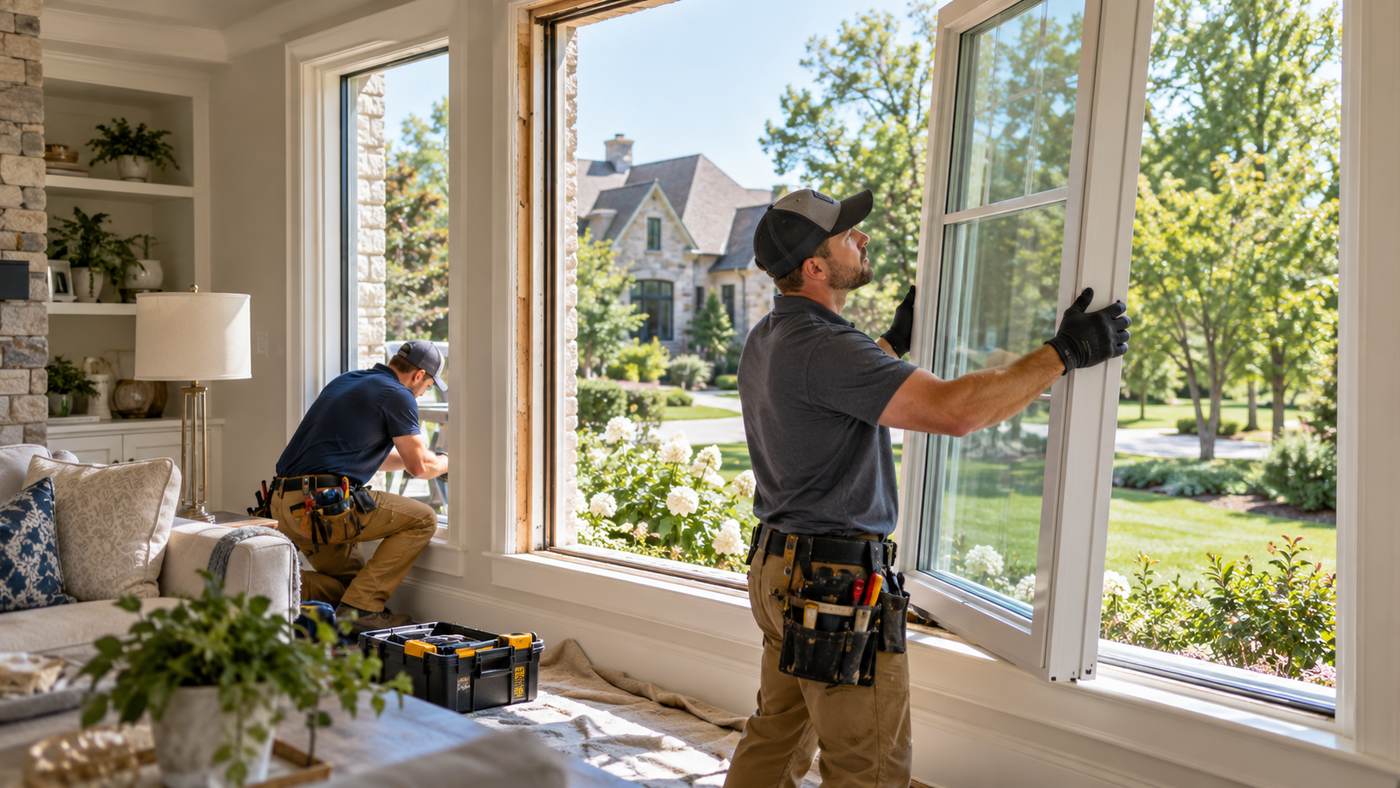
Window replacement involves removing all or part of an existing window assembly and installing a new unit.
The project may involve:
- Glass
- Sashes
- Frames
- Flashing
- Interior trim
- Exterior trim
- Insulation
- Sealants
The amount of the existing window that is removed depends on the installation method.
Some projects use replacement or insert windows that fit inside the existing frame.
Others use full-frame replacement, where the original window frame is removed and a new window assembly is installed into the rough opening.
Insert Window Replacement
Insert replacement can sometimes work when:
- Existing frames remain structurally sound
- There is no significant water damage
- The opening is reasonably square
- Homeowners want to reduce disruption
Because the original frame remains, the new window may slightly reduce the visible glass area.
Full-Frame Window Replacement
Full-frame installation removes more of the existing assembly.
It can be appropriate when:
- Frames are deteriorated
- Water damage exists
- Window size or style is changing
- Insulation around the opening needs attention
- Existing installation problems need correction
A professional contractor should inspect the condition of the existing opening before recommending one method.
Why Lexington Homeowners Replace Windows
Replacement is not always necessary simply because windows are old.
However, several conditions can make an upgrade worth considering.
Common reasons include:
- Difficult operation
- Broken seals
- Condensation between panes
- Noticeable drafts
- Frame deterioration
- Water intrusion
- High maintenance requirements
- Poor energy performance
- Exterior renovation
- Noise concerns
A window that is difficult to open may have hardware problems rather than requiring full replacement.
Similarly, drafts can sometimes come from installation gaps rather than the actual glass.
A good assessment should identify the cause before recommending an expensive project.
7 Smart Tips for Window Replacement Lexington KY Homes
1. Compare Energy Ratings, Not Marketing Claims
Terms such as “energy efficient” are used frequently in advertising.
Homeowners need objective performance numbers.
The National Fenestration Rating Council provides independent ratings used to compare windows, doors and skylights. NFRC labels provide information including U-factor, Solar Heat Gain Coefficient, Visible Transmittance, Condensation Resistance and Air Leakage.
These measurements describe different parts of window performance.
U-Factor
U-factor measures how effectively a window prevents heat from escaping.
A lower value indicates stronger insulating performance.
This matters during Lexington winters because a well-insulated window can reduce heat transfer through the glass and frame.
Solar Heat Gain Coefficient
Solar Heat Gain Coefficient, often abbreviated SHGC, measures the amount of solar heat passing through the window.
A lower SHGC reduces solar heat gain.
A higher number allows more solar heat into the home.
The most suitable value depends partly on climate, window orientation and shading.
Visible Transmittance
Visible Transmittance measures how much natural light passes through the window.
Higher values generally allow more daylight.
This can be important when homeowners want energy performance without making interiors unnecessarily dark.
Air Leakage
Air leakage indicates how much outside air passes through the window assembly.
Reducing uncontrolled air movement can improve comfort.
NFRC currently lists an air leakage rating of no more than 0.3 for many certified window products in its database.
2. Choose Windows Appropriate for Kentucky’s Climate
Climate matters when selecting windows.
A window designed primarily for a very hot southern climate may not provide the same balance of performance desired in Kentucky.
ENERGY STAR divides the country into climate zones and provides specific window requirements for each area. Its official climate-zone finder allows homeowners to search by state and county.
Why Climate-Specific Windows Matter
Window performance affects both heating and cooling.
During winter, homeowners generally want to reduce indoor heat loss.
During summer, they may want to limit excessive solar heat entering the home.
The correct combination of:
- U-factor
- SHGC
- Low-emissivity coatings
- Insulated glass
- Frame design
can improve year-round performance.
Look for ENERGY STAR Certification
ENERGY STAR reports that replacing single-pane windows with ENERGY STAR certified models can reduce household energy bills by an average of up to 13 percent nationwide, though actual savings vary by home, climate and existing window condition.
That figure should not be treated as a guaranteed Lexington-specific saving.
A home’s insulation, HVAC system, air leakage and window area all influence actual energy use.
3. Understand Double-Pane and Triple-Pane Glass
Modern replacement windows often use insulated glass units containing two or more panes.
Double-Pane Windows
Double-pane windows use two layers of glass separated by a sealed space.
This space may contain air or an insulating gas such as argon.
Double-pane units can significantly outperform old single-pane windows.
Triple-Pane Windows
Triple-pane units add another layer of glass and insulating space.
They can provide stronger insulation and may help with sound reduction.
However, they are typically:
- Heavier
- More expensive
- Not necessary for every home
Homeowners should compare actual NFRC ratings rather than assuming that three panes automatically make one product superior.
A well-designed double-pane window may be appropriate for many Lexington homes.
Low-E Glass
Low-emissivity coatings are very thin layers applied to glass to influence radiant heat transfer.
Different Low-E coatings are designed for different climate and solar-control goals.
The glass package should therefore be selected according to the window’s orientation and overall energy strategy.
4. Compare Window Frame Materials Carefully
Frame material affects appearance, maintenance, durability and thermal performance.
Common replacement-window materials include:
- Vinyl
- Fiberglass
- Wood
- Composite
- Aluminum-clad wood
Vinyl Windows
Vinyl is widely used because it is relatively low maintenance and typically less expensive than premium wood or composite options.
Potential advantages include:
- No regular painting
- Good thermal performance
- Broad availability
- Multiple styles
Quality can vary significantly between manufacturers.
Frame thickness, reinforcement, sealing systems and hardware all matter.
Fiberglass Windows
Fiberglass frames are dimensionally stable and can offer good performance.
They may suit homeowners who want a narrower frame profile or a different finish than vinyl.
They are often more expensive than entry-level vinyl products.
Wood Windows
Wood can provide an attractive traditional appearance.
It is commonly selected for:
- Historic homes
- High-end renovations
- Traditional architectural designs
Wood requires more protection from moisture.
Many modern wood windows use exterior cladding to reduce maintenance.
Composite Windows
Composite frames combine engineered materials to provide durability and insulation.
Performance varies depending on the specific product.
Again, NFRC ratings provide a more useful comparison than frame material alone.
5. Choose a Window Style That Fits the Room
Replacement projects provide an opportunity to reconsider window operation.
Common styles include:
- Double-hung
- Single-hung
- Casement
- Awning
- Sliding
- Picture
- Bay
- Bow
Double-Hung Windows
Double-hung windows have two movable sashes.
They are common in traditional American homes and can work well where homeowners want flexible ventilation.
Casement Windows
Casement windows open outward using hinges.
When closed, the sash can press firmly against weather seals, which can support good air performance.
Picture Windows
Picture windows do not open.
Because they contain no operating sash, they can provide large uninterrupted glass areas.
They work well where ventilation is not needed.
Sliding Windows
Sliding windows move horizontally.
They can be useful where projecting windows might interfere with patios, walkways or exterior landscaping.
6. Prioritise Installation Quality
A premium window installed poorly can still leak air or water.
Installation quality is therefore just as important as the product.
A replacement project should properly address:
- Window sizing
- Rough opening preparation
- Level and square installation
- Flashing
- Insulation
- Exterior sealing
- Interior finishing
Water Management Is Critical
Windows interrupt the exterior wall system.
That means rainwater must be directed around and away from the opening correctly.
Improper flashing can allow water behind siding or trim.
The damage may remain hidden until wood framing or interior finishes deteriorate.
Foam Is Not a Substitute for Flashing
Low-expansion insulation foam can help reduce air leakage around the window.
However, air sealing and water management serve different purposes.
A complete installation should address both.
Full-Frame Replacement Can Reveal Hidden Damage
Once old frames are removed, contractors may discover:
- Rotten wood
- Water staining
- Insect damage
- Missing insulation
- Incorrect previous flashing
Ask before the project how unexpected damage will be priced.
The contract should describe the process for approving additional repairs.
7. Verify Lexington Window Contractors
Choosing a contractor deserves the same attention as selecting the window itself.
Lexington Building Inspection reports that contractors working within Lexington-Fayette County are subject to contractor registration requirements and that unregistered contractors cannot obtain building permits.
Lexington’s contractor registration process also requires applicable occupational licensing information and proof of general liability and workers’ compensation insurance, subject to exemptions.
Ask a Window Contractor These Questions
Before signing, ask:
- Are you registered to work in Lexington-Fayette County?
- Do you carry liability insurance?
- Do you use employees or subcontractors?
- What installation method are you proposing?
- Who handles permits if required?
- What product warranty is included?
- What workmanship warranty is included?
- How is hidden damage priced?
- Who removes the old windows?
- Who handles interior and exterior trim?
Compare Detailed Estimates
A useful estimate should identify:
- Manufacturer
- Window series
- Window style
- Glass package
- Quantity
- Installation method
- Trim work
- Disposal
- Warranty
- Total price
Avoid comparing quotes based only on the final number.
One contractor may be quoting full-frame replacement while another is quoting insert windows.
Those are different projects.
Window Replacement Permits in Lexington KY
Lexington-Fayette Urban County Government manages construction permitting through Building Inspection and its One-Stop permitting system.
Permit requirements can depend on the scope of the renovation.
Simple replacement in an existing opening may be treated differently from structural modifications or significant changes to a wall opening.
Homeowners should therefore confirm permit requirements for the specific project rather than relying on a general assumption.
Lexington’s Building Inspection division can provide guidance for residential remodel work and current building-code requirements.
Historic Properties May Require Extra Attention
Lexington contains many older and architecturally significant properties.
If a home is subject to historic preservation requirements, changing window appearance, dimensions or materials may involve additional review.
Owners of historic properties should check relevant local requirements before ordering windows.
How Much Does Window Replacement Cost in Lexington KY?
There is no single reliable price per window.
Cost varies according to:
- Window dimensions
- Frame material
- Glass package
- Operating style
- Installation method
- Existing frame condition
- Trim repairs
- Number of windows
- Access difficulty
- Custom shapes
A small standard vinyl insert window can cost considerably less than a large custom full-frame wood window.
For that reason, homeowners should compare written local quotes using equivalent products and installation scopes.
Beware of Price Per Window Advertising
Advertisements may show very low prices that cover only:
- Basic sizes
- Entry-level products
- Limited installation
- No trim repairs
- No special glass
Ask for the total installed project cost before making a decision.
Signs Your Windows May Need Replacement
Replacement may be worth investigating when you notice:
Condensation Between Glass Panes
Moisture trapped between panes can indicate failure of the insulated-glass seal.
The entire window may not always need replacement, but the glass unit may need attention.
Difficult Operation
Windows that stick, bind or refuse to stay open can have balance or frame problems.
Visible Frame Damage
Rot, cracking or severe deterioration can affect both appearance and performance.
Water Intrusion
Water around a window can result from:
- Failed sealant
- Improper flashing
- Siding problems
- Roof drainage
- Window failure
The source should be diagnosed before replacing the window.
Noticeable Drafts
Drafts may indicate:
- Worn weatherstripping
- Poor installation
- Frame gaps
- Low-performing old windows
A contractor should determine where air is entering.
Window Replacement vs Window Repair
Repair can be appropriate when the problem is limited.
Possible repairs include:
- Weatherstripping
- Hardware replacement
- Screen repair
- Glass replacement
- Caulking
- Balance mechanisms
Replacement may be more practical when frames are badly deteriorated or when the homeowner wants substantial improvements in performance and appearance.
A contractor should explain why replacement is recommended rather than automatically treating every problem as a full-window project.
Noise Reduction and Replacement Windows
Homeowners living near busy streets may also be interested in sound control.
Window noise performance can be influenced by:
- Glass thickness
- Different glass pane thicknesses
- Laminated glass
- Air space
- Window seals
- Installation
Triple-pane glass does not automatically provide the best sound reduction.
Ask for acoustic performance data when noise is an important goal.
Window Replacement and Home Appearance
Windows strongly influence curb appeal.
Consider how the replacement design works with:
- Brick
- Siding
- Roof colour
- Trim
- Architectural style
Changing grille patterns, frame colours or window proportions can significantly alter the home’s exterior.
This is particularly important when replacing only some windows because mismatched designs may look inconsistent.
Maintenance After Window Replacement
Modern windows still need basic care.
Homeowners should:
- Clean tracks
- Inspect weatherstripping
- Keep drainage paths clear
- Check exterior sealant
- Clean glass appropriately
- Operate windows periodically
Avoid painting or caulking areas that manufacturers instruct homeowners to leave open.
These may include drainage or weep openings.
Follow the manufacturer’s maintenance instructions to protect warranty coverage.
Understanding Window Warranties
Window projects may include separate warranties for:
- Frame
- Glass
- Hardware
- Finish
- Installation workmanship
Ask whether warranties are transferable if the home is sold.
Also ask what costs are excluded.
Some warranties cover the replacement part but not labour.
Others may become prorated over time.
Keep purchase documents and installation records.
Frequently Asked Questions
What should I look for when planning window replacement Lexington KY?
Look for ENERGY STAR climate-appropriate products, NFRC performance ratings, durable frame materials, correct installation methods and a properly registered local contractor.
Are energy-efficient replacement windows worth it in Lexington?
They can improve comfort and reduce heat transfer, particularly when replacing inefficient single-pane windows. ENERGY STAR says certified windows can reduce household energy bills by up to 13 percent nationwide when replacing single-pane units, although actual savings vary.
What does U-factor mean on replacement windows?
U-factor measures how well a window prevents heat from escaping. Lower U-factor values generally indicate better insulating performance.
Is double-pane or triple-pane glass better for Lexington homes?
Both can be suitable. Triple-pane units generally provide stronger insulation, but a high-performing double-pane window may offer a better balance of price and performance. Compare NFRC ratings rather than choosing based only on pane count.
Do I need a permit to replace windows in Lexington KY?
Permit requirements depend on the project’s scope. Lexington-Fayette Urban County Government manages residential construction permits, so homeowners should confirm requirements for their specific replacement or structural modification.
How do I choose a Lexington window replacement contractor?
Confirm contractor registration, insurance, installation experience, detailed product specifications, permit responsibilities and written workmanship warranties before signing an agreement. Lexington requires contractors operating under its permitting system to be registered.
Conclusion
Window replacement Lexington KY homeowners plan should balance appearance, energy performance, installation quality and long-term durability. Comparing NFRC ratings, choosing climate-appropriate glass and verifying the contractor can help prevent expensive mistakes. A properly selected and installed window can improve comfort, reduce drafts and update the appearance of a Lexington home for years to come