Sash Weights: 7 Proven Restoration Secrets for Perfectly Balanced Windows, Effortless Glide, and Authentic Heritage Charm
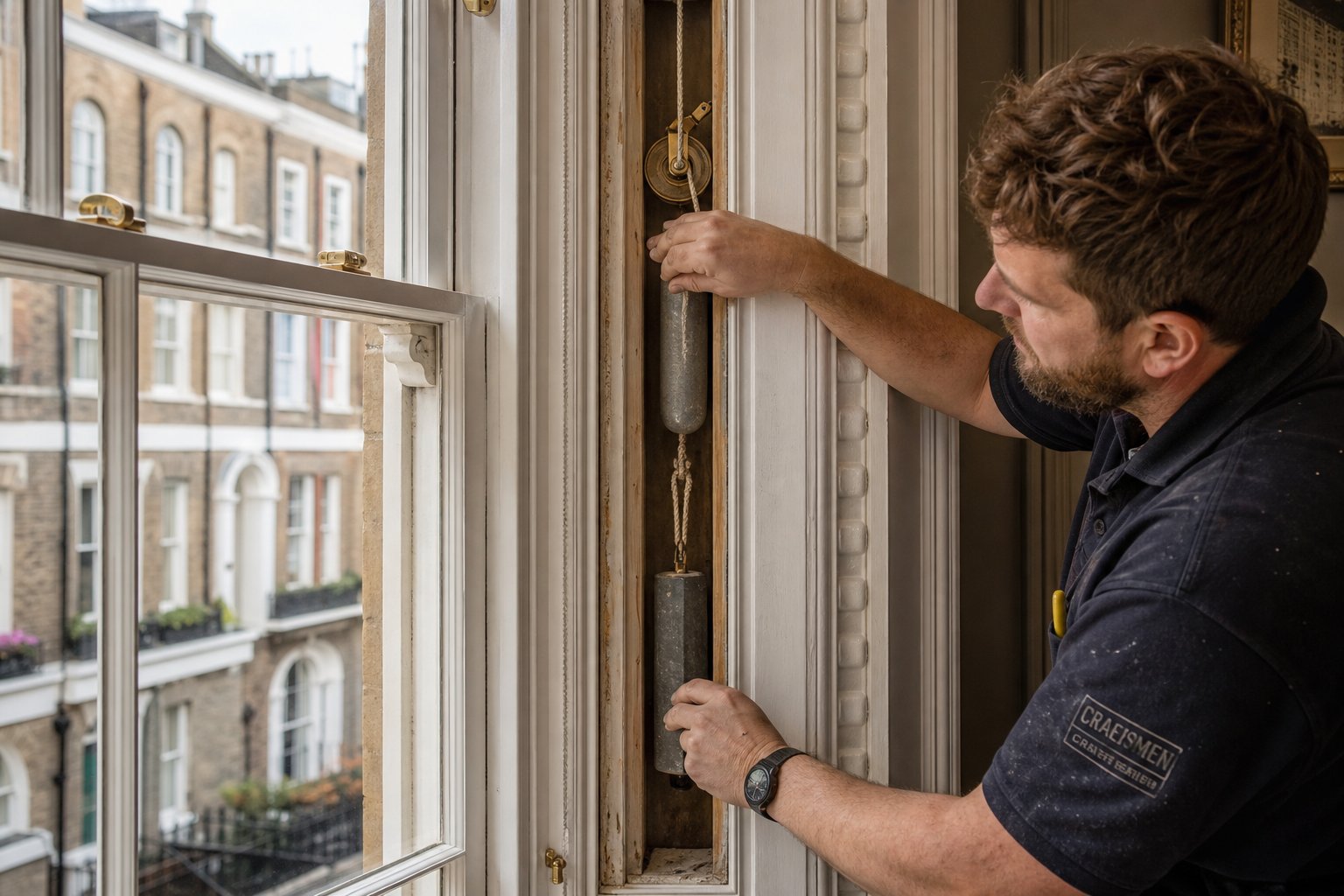
Traditional vertical sliding box sash windows represent one of the most enduring, architecturally elegant fenestration innovations in British and colonial architectural history. The mechanical genius of these classic Georgian, Victorian, and Edwardian timber windows lies entirely within their concealed counterbalance engineering—specifically, calibrated sash weights operating inside internal boxed jamb pockets. When these counterweights are precisely calibrated to match the physical mass of glazed wooden sashes, windows glide effortlessly with finger-touch control, remaining stationary at any desired opening height without falling shut or creeping upward. However, after decades of layered paint, careless glass retrofitting with heavier double-glazed vacuum units, and broken cords, these time-tested mechanical assemblies frequently fall out of balance. Exploring the metallurgy, mechanical physics, and calibration protocols behind traditional counterweights enables heritage property owners, joiners, and conservation professionals to restore authentic sliding windows to flawless, whisper-quiet operation.
The Mechanical Physics of Vertical Sliding Counterbalance Assemblies
A traditional hung box sash window operates on elementary Newtonian mechanics: gravitational mass equilibrium. Each operational window assembly comprises two counterbalancing weight systems—one dedicated to the lower interior sash and one dedicated to the upper exterior sash.
The Physics of Mass Neutrality and Gravitational Equilibrium
For a sliding sash to hold its vertical position securely against gravity without slipping shut or snapping upward, the combined mass of its counterweights must balance the dead weight of the glazed wooden frame:
Total Glazed Sash Mass=Left Counterweight Mass+Right Counterweight Mass
- Upper (Outer) Sash Balance: To guarantee positive closure against the head jamb rebate, the pair of counterweights for the top sash should ideally match the glazed frame weight exactly, or weigh approximately one pound lighter in total. This subtle half-pound deficit per side ensures that gravitational force naturally pulls the top sash firmly up into the top head rebate, preventing draft leakage and accidental rattling open during wind gusts.
- Lower (Inner) Sash Balance: Conversely, the pair of counterweights for the bottom inner sash should be calibrated to weigh approximately one pound heavier than the glazed frame in total (half a pound per side). This slight positive weight bias provides a gentle upward pull that offsets friction against the staff beads and parting beads, ensuring the lower sash lifts effortlessly without requiring shoulder strain.
The Failure Modes of Imbalanced Assemblies
When window sashes are retrofitted with modern laminated acoustic glass or thick double-glazed units without upgrading the internal weights, severe mechanical failures occur:
- Window Drop and Glass Shattering: An underweight assembly cannot hold the heavy glass aloft; the instant an occupant releases the bottom sash, it slams down onto the sill with immense velocity, risking severe finger crushing and shattering the glazing.
- Pulley Axle Wear and Cord Snapping: Chronic weight imbalances place excessive abrasive friction on brass pulley axles, fraying traditional waxed cotton sash cords until they snap, sending the loose weights crashing into the bottom of the concealed weight pockets.
Metallurgy and Physical Geometry: Cast Iron vs. High-Density Lead
The physical dimensions of a window frame’s concealed weight pocket are strictly finite, bounded by the exterior brick reveal and interior architectural architraves. Selecting the correct metallurgical substrate determines whether necessary counterbalance mass can fit inside this narrow void.
Cast Iron Sash Weights (Standard Cylindrical and Square Profiles)
Cast iron has served as the universal standard for traditional window counterbalances since the nineteenth century. Inexpensive, highly durable, and cast from molten pig iron, standard cast iron weights feature a cylindrical profile (typically 1.5 to 2.5 inches in diameter) with a cast top eyelet hole for cord attachment. Cast iron possesses a density of approximately 7.2 grams per cubic centimeter. For standard single-glazed sashes fitted with historical three-millimeter drawn sheet glass, cast iron provides ample mass within the available pocket cavity.
High-Density Lead Sash Weights: The Solution for Double-Glazed Retrofits
When historic conservation projects upgrade single glazing to modern double-glazed units (such as slim-profile vacuum-insulated glass or argon gas double glazing), the mass of each sash increases by one hundred to one hundred fifty percent. Stacking additional cast iron weights inside the pocket is physically impossible because the extended column of iron would strike the top pulley wheel, severely restricting the window’s vertical travel.
Density Advantages of Elemental Lead
Lead exhibits a density of 11.34 grams per cubic centimeter—nearly sixty percent denser than cast iron. Utilizing square or rectangular lead weights allows restoration joiners to double the mass within the exact same pocket height. Specialized stackable lead makeup weights (often cast in one-pound, two-pound, and five-pound interlocking increments) can be threaded onto high-tensile cords or steel chains, providing precision weight adjustments within millimeter clearances.
Counterbalance Metallurgy and Material Matrix
| Material Type | Density (g/cm³) | Relative Volume Required | Cost per Pound | Ideal Architectural Application |
|---|---|---|---|---|
| Cast Iron (Cylindrical) | 7.15 – 7.30 g/cm³ | High (Longer columns) | Economical | Traditional single-glazed restorations, original timber sashes |
| Cast Iron (Square Profile) | 7.15 – 7.30 g/cm³ | Moderate-High | Economical | Wide pocket box frames requiring standard counterbalance |
| Pure Refined Lead (Square) | 11.30 – 11.35 g/cm³ | Low (Compact profile) | Moderate to High | Retrofitted double-glazed sashes, heavy hardwood joinery |
| Lead Make-Up Add-Ons | 11.30 – 11.35 g/cm³ | Ultra-Compact | Moderate | Fine-tuning balance post-installation without replacing base weights |
| Spiral Spring Balances | N/A (Mechanical Spring) | Zero Pocket Void | Moderate | Non-heritage modern builds without traditional timber box pockets |
Cordage, Pulleys, and Suspension Mechanics
The counterweight is only one component of a dynamic suspension system. Smooth, silent travel depends equally on high-grade suspension lines and low-friction pulley hardware.
Waxed Cotton Cord vs. High-Tensile Synthetic Cores
- Traditional Waxed Cotton Sash Cord: Woven with solid braided natural cotton dipped in paraffin wax. The wax coating lubricates the fibers against the wooden pulley housing and protects against moisture and rot. Premium heritage cords incorporate a synthetic polyester or aramid core inside the braided cotton sheath, preventing structural stretching over time while preserving historic visual authenticity.
- Brass and Stainless Steel Sash Chains: For exceptionally heavy architectural sashes exceeding fifty to one hundred pounds, traditional cotton cord risks snapping. Heavy commercial sashes utilize solid brass or stainless steel sash chains that roll over matching cogged pulley wheels, delivering permanent tensile strength that never frays or breaks.
Axle Pulleys: Ball-Bearing Precision vs. Stamped Steel
Inferior stamped steel pulleys with plain steel axles quickly rust and squeak, creating intense drag that makes even perfectly balanced sashes feel heavy and sticky. High-performance restorations specify solid cast brass faceplates fitted with precision steel ball bearings or phosphor-bronze oil-impregnated bushings. These low-friction bearings allow the sash cord to roll effortlessly under heavy loads, ensuring smooth movement.
Step-by-Step Calibration and Restoration Methodology
Calibrating sash counterbalances requires methodical execution during window overhaul and draft-proofing works:
- Step 1: Remove Staff Beads and Sashes: Carefully score paint seams with a utility knife, pry off the perimeter timber staff beads, detach the lower sash cords, remove the parting beads, and extract the upper sash.
- Step 2: Weigh the Glazed Sashes with Precision: Place each fully assembled, glazed, and painted sash onto an accurate digital hanging scale or platform scale. Never estimate sash weight by dimensions alone; hardwood density, glass thickness, and lead came vary significantly.
- Step 3: Access the Internal Pocket Cavity: Unscrew and pry open the wooden pocket access doors recessed into the lower jamb linings to expose the hanging weights within the boxed frame.
- Step 4: Calibrate the Weight Pair: Divide the sash’s total measured scale weight by two to establish the baseline target for each side. Apply the half-pound offset rule: subtract half a pound from each top sash weight; add half a pound to each bottom sash weight.
- Step 5: String New Cords and Hang Weights: Thread braided cord over the top pulley, drop a lead mouse (a small lead weight tied to string) down through the pocket cavity, pull the new sash cord through the access pocket, knot it securely to the weight eyelet, and adjust cord length so weights never bottom out on the sill when the sash is fully raised.
- Step 6: Seal with Modern Perimeter Weatherseals: Integrate discreet brush pile or silicone compression seals into machined grooves along the staff beads, parting beads, and meeting rails to eliminate drafts without compromising counterbalance travel.
Frequently Asked Questions About Sash Weights
Why does my timber sash window slam shut when I let go of it?
Your sash window slams shut because the internal sash weights are too light for the current glass weight, or the cords connecting the counterweights have broken inside the boxed jamb cavity.
How do I determine what weight is needed for my sash window?
Weigh the entire glazed and painted sash using an accurate digital scale, divide the total weight by two, and provide a weight of that exact value for each side of that specific sash.
Can I upgrade my single-glazed sash windows to double glazing without altering the box frame?
Yes, but you must replace the existing cast iron weights with compact, high-density lead weights to accommodate the heavier glass within the narrow, existing pocket cavities.
What is a “sash mouse” and how is it used during cord replacement?
A sash mouse is a small, curved lead weight tied to thin twine that is dropped over the pulley wheel through the boxed cavity to pull the thick sash cord down into the access pocket.
How do I prevent weights from clashing inside the box frame when sashes are moved?
Ensure a timber dividing strip (parting slip) hangs suspended between the front and rear weights inside the box frame, which prevents adjacent weights from swinging into each other.
How long does a traditional waxed cotton sash cord last?
A high-quality, prestretched waxed cotton sash cord with an internal synthetic core typically lasts between twenty and thirty years before requiring replacement.
Conclusion
The enduring architectural brilliance of the traditional box sash window lies in the elegant physics of its concealed counterweights. Restoring these historic timber windows to smooth operation requires understanding the balance between glazed frame mass and calibrated sash weights. By replacing brittle, stretched cords with synthetic-core lines, installing low-friction ball-bearing brass pulleys, and substituting bulky cast iron with high-density lead counterweights during double-glazing retrofits, homeowners preserve historic architectural heritage while achieving modern thermal performance. A properly balanced sash window eliminates dangerous slamming, banishes rattling drafts, and restores the effortless, whisper-quiet glide that has defined fine architectural craftsmanship for over three centuries.