Eco-Friendly Home Decoration: 9 Practical Ways to Create a More Sustainable and Beautiful Home
Thoughtful Eco-Friendly Home Decoration focuses on creating an attractive home while considering material use, durability, energy consumption, indoor environmental quality, waste, and what happens to products when they are no longer needed. It does not require replacing everything with products marketed as sustainable. Keeping useful furniture, buying fewer durable pieces, choosing secondhand items, reducing unnecessary consumption, and evaluating environmental claims carefully can often be more meaningful starting points for a home that reflects both personal style and environmental priorities.
What Is Eco-Friendly Home Decoration?
Eco friendly decorating considers the environmental effects associated with furnishing and styling a home. That can include where materials originate, how much material is used, how products are manufactured and transported, how long they remain useful, and whether they can eventually be repaired, reused, recycled, or otherwise appropriately managed.
No decorative product is completely without environmental impact.
Even renewable or recycled materials require manufacturing and transportation. For this reason, terms such as green, natural, and sustainable should not automatically be interpreted as proof that one product has a lower overall environmental footprint than another.
A more practical approach considers the complete lifecycle of household products.
Instead of repeatedly replacing furniture to follow trends, for example, homeowners can prioritize pieces they expect to keep. Existing furniture can sometimes be repaired, reupholstered, refinished, or repurposed rather than discarded.
Sustainable decorating is therefore as much about purchasing behaviour as it is about particular materials.
9 Powerful Eco-Friendly Home Decoration Ideas
Creating a more environmentally considered interior can happen gradually. These nine approaches focus on practical choices that can work across different decorating styles and budgets.
1. Keep and Reuse What You Already Own
The first sustainable decorating question does not necessarily need to be, “What should I buy?”
Ask what can remain.
A table with cosmetic wear may still be structurally sound. A chest of drawers might need new hardware rather than replacement. Upholstered seating may sometimes be refreshed with new fabric when the underlying frame remains in suitable condition.
Reusing existing belongings can avoid unnecessary replacement purchases while maintaining pieces that already function well in the room.
It can also create a more personal interior because homes develop gradually instead of looking like they were purchased as a complete matching collection.
Eco-Friendly Home Decoration Through Repurposing
Repurposing gives an existing object a different function.
A solid cabinet might become hallway storage. An unused dining chair can become occasional bedroom seating. Quality containers may serve as organizers.
Repurposing works best when the new use remains practical and safe.
Avoid modifying furniture in ways that compromise structural integrity, and take extra care when altering older painted objects because historic coatings can sometimes contain hazardous substances.
2. Choose Secondhand and Vintage Furniture
Secondhand furniture can extend the useful life of products already in circulation.
Charity shops, antique stores, architectural salvage businesses, local resale platforms, auctions, and furniture dealers can all provide alternatives to purchasing newly manufactured items.
Older does not automatically mean sustainable or high quality, however.
Examine condition carefully. Look for unstable joints, water damage, odors, pests, broken components, and signs of inappropriate previous repairs.
Upholstered furniture deserves particular scrutiny because its internal condition can be difficult to determine visually.
3. Prioritize Durable Furniture
A cheap decorative item that needs frequent replacement may be less economical and potentially more resource intensive over time than a well made product kept for years.
Durability therefore deserves attention during purchasing.
Examine frame construction, materials, joints, replaceable components, manufacturer support, and repairability.
Timelessness also matters from a practical standpoint. A piece that works with several decorating schemes can remain useful even when wall colors, textiles, or accessories change.
4. Investigate Material Sources
Material labels can provide useful information, but broad categories do not tell the entire environmental story.
Wood, metal, glass, textiles, ceramic, plastics, and composite materials all have different supply chains and manufacturing impacts.
For wood based products, consumers interested in responsible forest management can look for credible certification. The Forest Stewardship Council, or FSC, operates a certification system for forest products.
Certification should be verified through legitimate labeling and documentation rather than assumed from words such as natural or responsibly made.
5. Decorate With Efficient Lighting
Lighting affects both interior atmosphere and household energy consumption.
LED lamps generally use less electricity than traditional incandescent technologies for a comparable amount of light and typically offer substantially longer operating life, although performance differs by product.
The U.S. Department of Energy recommends energy efficient LED lighting as a practical household energy saving option.
Lighting design can also make rooms more functional.
Instead of relying entirely on one bright overhead fitting, combine appropriate ambient, task, and accent lighting so light is available where it is actually needed.
6. Use Natural Light Effectively
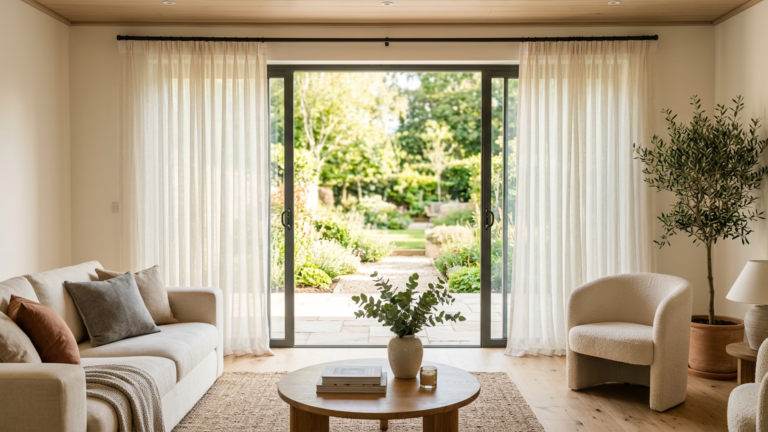
Daylight can reduce the need for artificial lighting during appropriate daytime conditions while making rooms feel brighter.
Window treatments should balance daylight with privacy, glare control, insulation needs, and solar heat gain.
The ideal approach depends on climate and window orientation.
A sunny window that provides welcome warmth in winter can contribute to overheating during summer. Sustainable interior decisions should therefore consider the building and local climate rather than following a universal decorating formula.
7. Choose Textiles With Care
Curtains, upholstery, bedding, cushions, rugs, and throws represent a substantial part of many interior designs.
Textiles can be made from cotton, linen, wool, hemp, recycled fibres, synthetics, or blended materials.
No single fibre is automatically best in every environmental category.
Consider durability, manufacturing, dyeing, maintenance, intended lifespan, and credible certifications where available.
Washable removable covers can be useful because they may allow a cushion or furniture piece to remain in service longer.
8. Reduce Decorative Clutter
Eco conscious decorating does not require filling a home with objects labeled environmentally friendly.
Buying fewer decorative items can reduce consumption while making selected pieces more visually meaningful.
Before purchasing an accessory, consider whether it adds lasting function, visual interest, or personal significance.
This does not mean every room should be minimalist. A layered and expressive interior can still rely heavily on items collected over time, secondhand finds, books, artwork, inherited objects, and durable accessories.
9. Choose Low Emission Products Where Relevant
Indoor air quality can be affected by many sources, including building materials, furnishings, household products, ventilation, combustion, and outdoor pollution.
Some paints, coatings, adhesives, and composite products can emit volatile organic compounds, commonly called VOCs.
Products marketed as low VOC may help address certain emissions, but the label alone does not describe every aspect of indoor air quality.
Follow manufacturer instructions and provide appropriate ventilation when painting, refinishing, or using chemical products.
Best Materials for Eco-Friendly Home Decoration
Materials should be evaluated according to their source, processing, durability, suitability, and end of life rather than their appearance alone.
Responsibly Sourced Wood
Wood provides warmth and natural variation and can be used in furniture, flooring, shelves, decorative panels, and accessories.
When buying new wood products, investigate sourcing.
Certification systems can provide additional information about forest management and supply chain practices. Reclaimed timber can provide another option, particularly for projects where its appearance and physical characteristics are appropriate.
Reclaimed material should still be assessed for condition and suitability.
Reclaimed and Salvaged Materials
Architectural salvage can introduce distinctive materials without requiring newly manufactured decorative components.
Doors, timber, bricks, tiles, hardware, and other materials may sometimes be reused.
Safety is important, especially with older materials.
Using Reclaimed Materials in Eco-Friendly Home Decoration
Unknown coatings, structural damage, contamination, or previous treatments can make certain salvaged products inappropriate for some applications.
Older painted building components, for example, may require assessment before sanding or other work.
Use professional guidance when there is uncertainty about hazardous materials or structural suitability.
Cork
Cork is harvested from the bark of cork oak trees and is used for flooring, wall treatments, accessories, and other interior products.
Its renewable origin can make it appealing to environmentally conscious buyers, but sourcing, binders, finishes, manufacturing, transportation, and product lifespan still matter.
Compare complete products rather than selecting something solely because cork appears on the material list.
Bamboo
Bamboo grows rapidly compared with many timber species and is frequently promoted as an environmentally preferable material.
Growth rate alone does not establish the footprint of a finished product.
Manufacturing processes, adhesives, finishes, durability, supply chains, and transport also deserve consideration.
Recycled Materials
Home products can incorporate recycled glass, metal, plastic, textile fibres, paper, and other materials.
Recycled content may reduce demand for virgin resources in appropriate applications.
Check whether claims identify the percentage and type of recycled content rather than simply using a generic recycled label.
Eco-Friendly Home Decoration and Sustainable Furniture
Furniture is often one of the largest purchases in an interior, making longevity particularly important.
A durable sofa, table, bed, or cabinet can potentially remain useful through multiple decorating changes.
Look for Repairable Construction
Furniture that can be repaired has an advantage when one component fails.
Replaceable covers, removable cushions, accessible hardware, conventional fasteners, and manufacturer supplied replacement parts can make maintenance easier.
Ask how a piece is constructed before purchasing it.
Avoid Disposable Trend Cycles
Interior trends can provide useful inspiration without requiring a complete room replacement every few years.
Incorporate temporary trends through smaller elements that are easy to retain, relocate, or eventually replace responsibly.
A durable neutral sofa, for example, can accommodate different cushions or throws without changing the entire piece.
Buying Furniture for Long Term Eco-Friendly Home Decoration
Before buying significant furniture, consider:
• Whether it fits the room physically
• Whether its construction is durable
• Whether it can be repaired
• Whether replacement parts are available
• Whether covers can be cleaned or replaced
• Whether the style works with different interiors
• Whether you expect to keep it long term
• Whether a suitable secondhand option exists
Longevity combines practical design with purchasing discipline.
Eco-Friendly Paint and Wall Decoration
Changing walls can transform a room without replacing its furniture.
Paint is one of the simplest tools, but formulation and application should be considered carefully.
Understanding Low VOC Paint
VOC content is commonly highlighted in paint marketing.
Lower VOC formulations can reduce emissions of certain volatile compounds compared with higher VOC alternatives, but consumers should interpret claims precisely and follow relevant product information.
Colorants and other components can affect formulations.
Use products suitable for the intended surface and maintain ventilation according to manufacturer guidance.
Use Wallpaper Thoughtfully
Wallpaper can provide long lasting visual impact when selected for an interior where it is likely to remain appropriate.
Investigate substrates, inks, coatings, adhesives, and removal requirements if environmental characteristics are important.
A durable design you keep for many years may be preferable to frequent redecorating driven by short trend cycles.
Decorate Walls Without Excess Materials
Artwork, framed photographs, textiles, shelves, and existing collections can add visual interest.
Secondhand frames are particularly easy to find and can often be reused.
Eco-Friendly Home Decoration for Feature Walls
A feature wall does not need newly purchased decorative panels.
Paint, existing artwork, carefully sourced reclaimed materials, or removable elements may create emphasis with less material complexity.
Ensure any wall mounted objects are installed securely using fixings appropriate for the wall construction and load.
Sustainable Lighting for an Eco Friendly Interior
Lighting is both decorative and functional.
Before replacing an existing fixture purely for visual reasons, consider whether changing the bulb or shade can produce the desired effect.
Keeping a functional fitting can avoid an unnecessary replacement.
Choose Energy Efficient Bulbs
LED bulbs are available in many shapes, brightness levels, and color temperatures.
Check lumens when comparing brightness rather than relying only on wattage.
Warm color temperatures often suit living spaces and bedrooms, while different task areas may benefit from other lighting characteristics.
Add Controls Where Useful
Dimmers, occupancy controls, timers, and smart lighting can reduce unnecessary operation when appropriately configured.
Compatibility matters.
Not every LED bulb works properly with every dimmer, so check manufacturer specifications before installation.
Eco-Friendly Home Decoration With Layered Lighting
Layered lighting combines several sources for specific purposes.
A reading lamp provides focused light without requiring maximum illumination across the room. Under cabinet lighting can illuminate kitchen work surfaces efficiently.
Good lighting design therefore supports both atmosphere and practical energy management.
Eco-Friendly Home Decoration by Room
Environmental priorities can be applied differently depending on how a room is used.
Sustainable Living Room Ideas
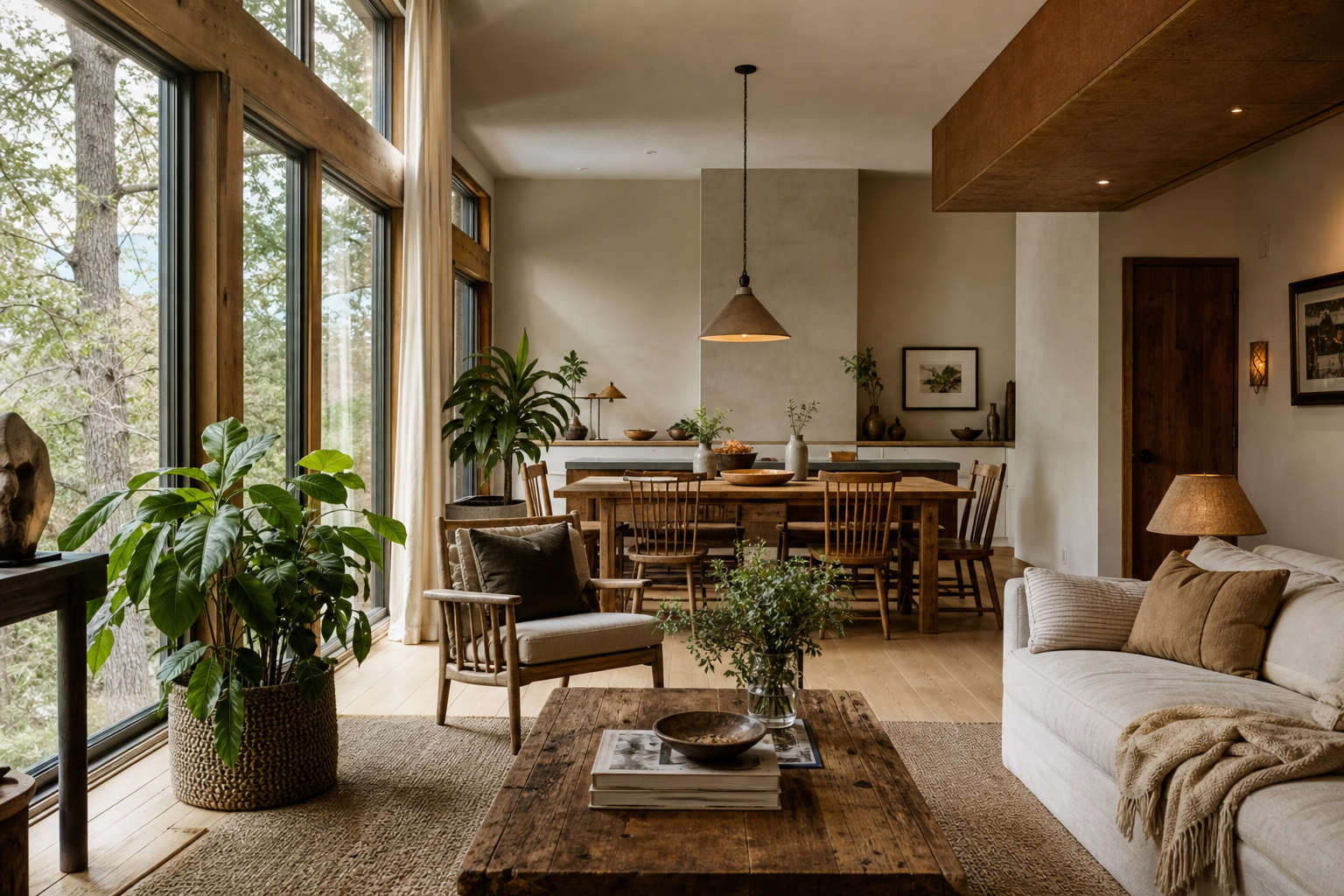
Start with the largest existing items.
If the sofa and storage remain functional, retain them and update the room through rearrangement, repaired furniture, secondhand accessories, artwork, or textiles.
Consider durable rugs and washable covers in homes with children or pets.
Plants can contribute visually, although houseplants should not be marketed as a substitute for proper ventilation or proven indoor air quality measures.
Eco Friendly Bedroom Ideas
Bedrooms benefit from durable furniture and comfortable textiles selected according to climate and personal needs.
A secondhand timber bed frame or dresser can work well when condition is appropriate.
Use window coverings strategically for privacy, daylight, and thermal comfort.
Sustainable Kitchen Decoration
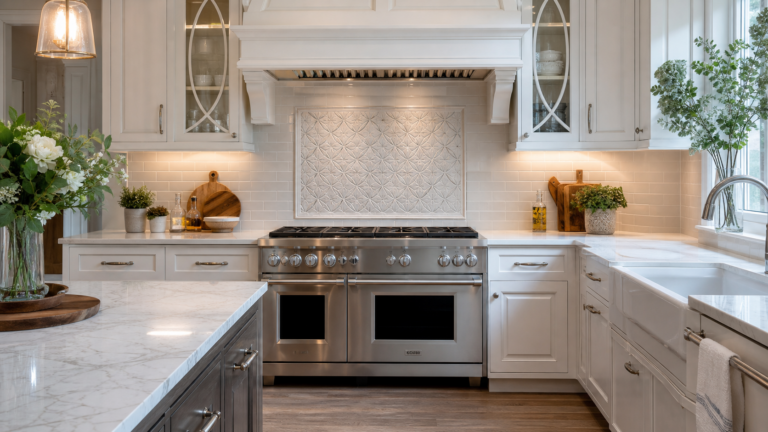
The most environmentally considered kitchen makeover may be one that retains usable cabinets rather than replacing them for cosmetic reasons.
Painting suitable cabinetry, replacing handles, improving lighting, or repairing surfaces can sometimes update a room with fewer new components.
Eco-Friendly Home Decoration in Bathrooms
Bathrooms require materials capable of handling high humidity and regular moisture exposure.
Durability should take priority over using a material simply because it is marketed as natural.
Good ventilation is particularly important for moisture management. Select fixtures, coatings, textiles, and decorative materials designed for bathroom conditions.
Secondhand Decor and the Circular Economy
Circular approaches aim to keep products and materials useful for longer rather than following a simple purchase, use, and disposal pattern.
Home decoration offers many opportunities for reuse.
Furniture, mirrors, lamps, frames, ceramics, rugs, and decorative objects often enter secondhand markets while still functional.
Inspect Secondhand Items Carefully
Look at structural stability, electrical condition where relevant, pests, stains, odors, and signs of water damage.
Older electrical lighting may require professional inspection or rewiring.
Avoid using secondhand items where condition creates a safety concern simply for the sake of reuse.
Restore Instead of Replace
Minor cosmetic damage does not always justify disposal.
Cleaning, tightening hardware, replacing appropriate parts, or professional restoration can extend an item’s useful life.
Restoration methods should suit the material and age of the object.
How to Avoid Greenwashing in Home Decoration
Greenwashing occurs when environmental marketing creates a misleading impression about a product or business.
Broad language should encourage further investigation rather than immediate trust.
Look for Specific Environmental Claims
A statement such as contains 80 percent recycled material is more informative than a vague label such as eco conscious, assuming the claim is accurate and substantiated.
Ask what the claim actually refers to.
Does it concern the raw material, manufacturing, packaging, transportation, durability, or end of life?
Check Credible Certifications
Third party certification can provide useful evidence when the certification is relevant to the specific claim.
Different schemes address different issues, so a certification should not be interpreted more broadly than intended.
Evaluating Eco-Friendly Home Decoration Claims
When comparing environmental claims, ask:
• What exactly is being claimed?
• Is evidence provided?
• Does the claim cover the whole product or one component?
• Is a certification relevant and verifiable?
• How durable is the product?
• Can it be repaired?
• What happens at the end of its useful life?
These questions are more useful than relying on green colored packaging or sustainability themed marketing language.
Budget Friendly Eco-Friendly Home Decoration
Environmentally considered decorating does not necessarily require premium products.
Some of the most practical strategies involve buying less.
Rearranging furniture costs nothing. Repairing existing items may cost considerably less than replacement. Local secondhand purchasing can provide distinctive pieces at varying price points.
Create a Decorating Priority List
Identify the problems that actually need to be solved.
A room may need better task lighting rather than new furniture. A damaged chair may need a repair rather than a replacement dining set.
Addressing genuine needs can prevent unnecessary purchases.
Buy Slowly
A home does not need to be completed immediately.
Buying gradually provides time to find secondhand pieces, research materials, compare manufacturers, and determine whether an item is genuinely necessary.
This approach can create interiors that feel collected rather than formulaic.
Common Eco Friendly Decorating Mistakes
Replacing usable belongings purely to purchase environmentally marketed alternatives can undermine the goal of reducing consumption.
Another common problem is treating one material as universally sustainable without examining where it comes from or how it was manufactured.
Avoid these frequent mistakes:
• Buying unnecessary products because they carry green labels
• Assuming natural always means environmentally superior
• Ignoring durability
• Overlooking repair options
• Replacing functional furniture for short lived trends
• Believing every recycled product has the same impact
• Ignoring transportation and packaging
• Trusting vague environmental claims without evidence
• Choosing unsuitable materials that require early replacement
Sustainable interiors generally benefit from a long term perspective.
Planning Eco-Friendly Home Decoration From Start to Finish
Begin by inventorying what is already in the room.
Separate items into those that work, those that could be repaired or modified, and those that genuinely need replacement.
Next, determine the room’s practical needs.
Lighting, storage, seating, privacy, comfort, and durability should guide the plan before decorative purchases begin.
For necessary purchases, compare secondhand and new options while considering material origin, expected lifespan, maintenance, repairability, and eventual disposal.
This process helps environmental considerations become part of normal interior decision making rather than an additional marketing category.
Frequently Asked Questions
What is Eco-Friendly Home Decoration?
Eco-Friendly Home Decoration considers material use, durability, energy, waste, sourcing, repair, reuse, and end of life alongside the appearance and functionality of an interior.
How can I make my home decor more eco friendly?
Start by keeping functional items, repairing furniture, shopping secondhand, reducing unnecessary purchases, using efficient lighting, and researching new materials carefully.
Which materials are best for Eco-Friendly Home Decoration?
No material is universally best. Responsibly sourced wood, reclaimed materials, recycled content, cork, and other durable options can be considered based on sourcing and application.
Is secondhand furniture environmentally friendly?
Secondhand purchasing can extend the useful life of existing furniture and reduce demand for replacement products. Condition, safety, transportation, and suitability should still be evaluated.
Are LED lights good for Eco-Friendly Home Decoration?
LED lighting is generally much more energy efficient than traditional incandescent lighting and can have a longer operating life, making it a useful option for household lighting.
How can I identify genuinely sustainable home decor?
Look for specific, verifiable environmental claims, credible certifications where relevant, durable construction, repairability, responsible material sourcing, and clear product information.
Conclusion
Eco-Friendly Home Decoration is most effective when it begins with thoughtful consumption rather than simply purchasing products carrying environmental labels. Keeping useful possessions, choosing durable or secondhand furniture, improving lighting efficiency, researching materials, and avoiding unsupported green claims can create a more considered interior. By decorating gradually and prioritizing longevity, homeowners can build spaces that combine personal style, everyday function, and more responsible use of resources.