Siding Explained: How to Choose the Right Exterior for a Beautiful, Durable Home
Choosing siding is an important decision because the exterior cladding influences a home’s appearance while forming part of the wall assembly that manages weather exposure. The right material depends on far more than color. Climate, wall construction, moisture management, installation quality, maintenance requirements, fire considerations, architectural style, budget, and manufacturer specifications can all influence performance. Homeowners who understand these factors are better equipped to compare vinyl, fiber cement, engineered wood, natural wood, metal, masonry related products, and other options without relying on marketing claims alone.
What Is Siding and What Does It Do?
Siding is exterior cladding installed over a building’s wall assembly. Its primary functions are to provide a durable exterior surface, help shed rain, protect underlying components from direct weather exposure, and contribute to the architectural appearance of the structure.
It is important to understand that cladding does not work alone. A high performing exterior wall generally relies on coordinated components such as flashing, a water resistive barrier, drainage details, sheathing, insulation, windows, doors, and sealants.
How Siding Protects a Home
Most cladding systems are designed to shed bulk water rather than make the wall completely waterproof. Some rain can potentially travel behind exterior cladding, which is why properly detailed drainage and flashing are important.
Roof intersections, windows, doors, penetrations, and transitions between different materials deserve particular attention because these areas can be vulnerable to moisture intrusion when poorly detailed.
Correct installation therefore involves much more than attaching panels to a wall.
Siding and Curb Appeal
Exterior cladding covers a large percentage of a home’s visible facade, so it strongly influences appearance.
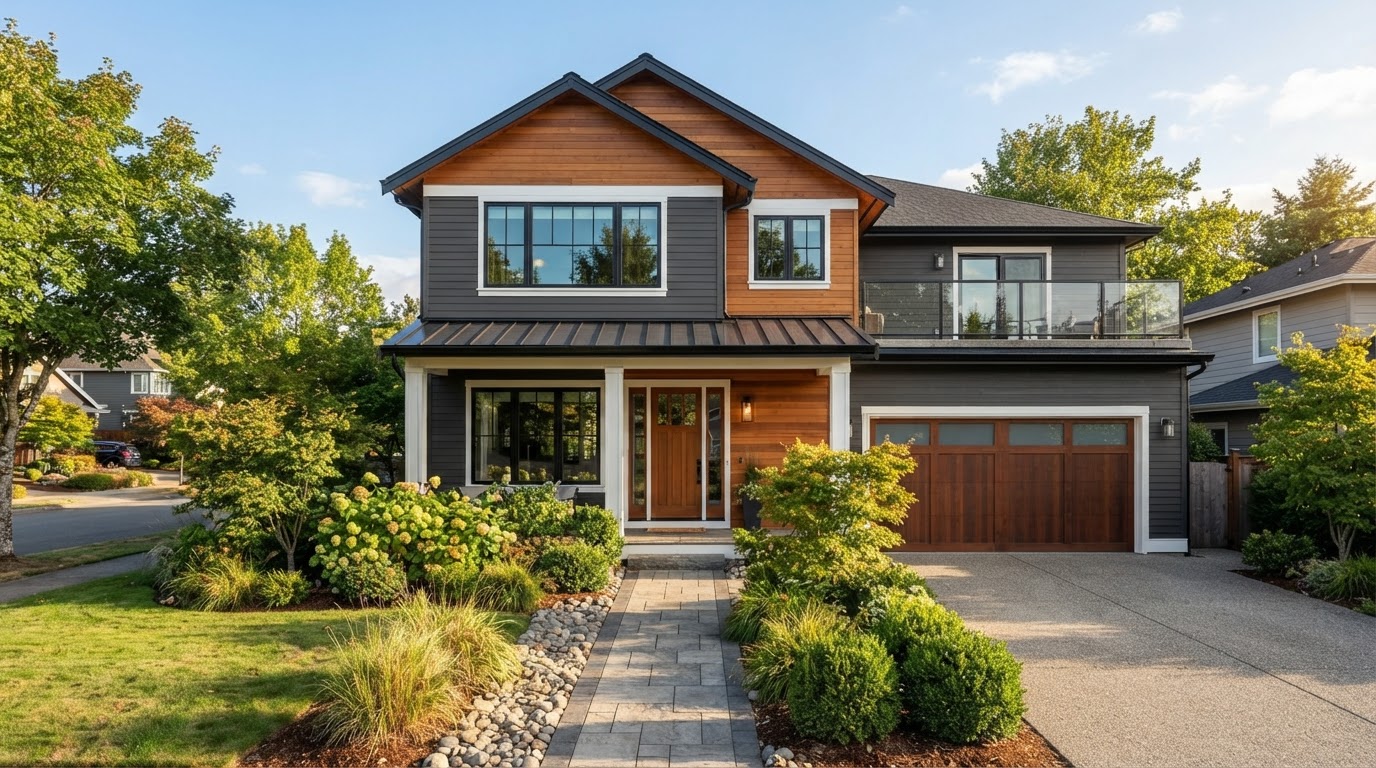
Profile, width, texture, orientation, color, trim, and transitions can change how the same building looks. Horizontal lap styles often create a traditional appearance, while vertical panels can introduce stronger architectural lines.
The best design usually coordinates with existing roofing, masonry, windows, doors, trim, and the overall style of the house.
7 Powerful Siding Choices for Modern Homes
No single cladding material is objectively best for every property. Understanding the strengths and limitations of major categories helps homeowners identify products appropriate for their particular building and environment.
1. Vinyl Siding for Practical Exterior Cladding
Vinyl is widely used for residential construction because it does not require routine painting and is available in numerous profiles and colors.
It is typically manufactured from polyvinyl chloride and installed as interlocking exterior panels. Because vinyl expands and contracts with temperature changes, installation methods need to allow appropriate movement.
Benefits of Vinyl Siding
Potential advantages include:
• Broad color selection
• Relatively low routine maintenance
• No regular repainting requirement
• Numerous profiles and textures
• Wide installer availability in many markets
• Compatibility with different residential styles
These characteristics can make vinyl attractive to homeowners who prioritize straightforward maintenance.
Important Vinyl Installation Details
Vinyl panels should not simply be fastened as tightly as possible. Manufacturers provide specific requirements for fastening, spacing, clearances, and expansion.
Improper fastening can restrict movement and contribute to buckling or distortion.
Drainage, flashing, and the water resistive barrier behind the panels remain important. Vinyl itself does not replace these wall assembly components.
2. Fiber Cement Siding for a Solid Architectural Look
Fiber cement products are generally manufactured from cement based materials combined with reinforcing fibers and other components.
They can be produced in lap profiles, panels, shingles, and architectural styles that resemble painted wood or other traditional materials.
Advantages of Fiber Cement
Homeowners often consider fiber cement because of its appearance, dimensional characteristics, and resistance to several forms of deterioration.
Depending on the specific product, documented properties may include resistance to rot or insect related damage and various fire performance characteristics.
Performance should be evaluated from the manufacturer’s technical documentation rather than assumptions about every product in the category.
Fiber Cement Installation Requirements
Fiber cement can be heavier than vinyl and requires installation methods appropriate to the product.
Cutting can generate respirable crystalline silica dust, which presents a serious occupational health concern. OSHA has requirements concerning workplace silica exposure in the United States.
Installers should follow manufacturer instructions and applicable safety regulations regarding cutting methods, dust control, personal protective equipment, fastening, clearances, and handling.
Some fiber cement systems also require periodic repainting depending on the factory finish and product specification.
3. Engineered Wood Siding for Natural Character
Engineered wood products are manufactured using wood based materials combined with binders, resins, treatments, or other technologies depending on the manufacturer.
They are designed to provide a wood like appearance while offering different physical properties from traditional solid lumber.
Why Homeowners Consider Engineered Wood
Potential advantages include attractive textures, relatively manageable handling, and compatibility with traditional residential designs.
Some products are offered with factory applied finishes, while others may be painted after installation.
Warranty terms, required clearances, finishing instructions, and moisture management details vary by manufacturer and need careful review.
Engineered Wood Is Not Maintenance Free
Engineered products still form part of an exposed exterior assembly.
Edges, joints, penetrations, paint or factory coatings, flashing, and required clearances need to remain in appropriate condition.
Failure to follow the manufacturer’s installation or maintenance requirements can affect performance and may influence warranty coverage.
4. Natural Wood Siding for Traditional Architecture
Natural wood has a distinctive appearance and has been used as exterior cladding for generations.
Common formats can include clapboards, shingles, shakes, board and batten systems, and other profiles. Available wood species vary by location and supplier.
Advantages of Wood Siding
Wood offers authentic grain, texture, and design flexibility. Depending on the product, it can be painted or stained in numerous finishes.
It can work especially well with historic, traditional, rustic, and custom architecture.
Its appearance comes with ongoing maintenance requirements.
Maintaining Natural Wood
Wood can be affected by moisture, sunlight, insects, biological growth, and coating deterioration.
Maintenance requirements depend on species, orientation, climate, finish, design details, and exposure. Painted and stained systems can have different maintenance schedules.
Regular inspection can identify peeling coatings, failed sealants, moisture staining, damaged boards, and open joints before deterioration becomes extensive.
5. Metal Siding for Contemporary Durability
Metal cladding can include aluminum, steel, and other architectural products. It appears on both residential and commercial buildings.
Available designs range from familiar horizontal profiles to standing seam and modern panel systems.
Why Choose Metal Siding?
Potential advantages include low routine maintenance, distinctive aesthetics, and resistance to certain forms of deterioration that affect organic materials.
Actual corrosion resistance depends on the base metal, coating, cut edge treatment, fasteners, environmental exposure, and installation.
Coastal environments and other corrosive conditions may require products specifically approved for those settings.
Consider Dents, Coatings, and Corrosion
Different metals respond differently to impact.
Protective finishes can also weather with time. Scratches, exposed edges, incompatible metals, and inappropriate fasteners can contribute to corrosion in certain systems.
Manufacturer recommendations should determine compatible accessories, cleaning procedures, and maintenance.
6. Insulated Siding for Additional Thermal Performance
Some products incorporate a layer of insulation, commonly rigid foam, as part of the cladding system.
This can add thermal resistance to the wall, but the effect on whole home efficiency depends on the existing assembly and many other factors.
Does Siding Make a Home More Energy Efficient?
Conventional cladding itself should not be confused with a comprehensive insulation upgrade.
Insulated cladding can add thermal resistance, and exterior insulation strategies may reduce thermal bridging when properly designed. However, whole building energy consumption also depends on attic and wall insulation, air leakage, windows, doors, HVAC systems, climate, and occupant behavior.
Homeowners should avoid assuming that replacement alone will produce a guaranteed percentage reduction in utility bills.
Check Documented R Values
When thermal performance is part of the buying decision, request the documented R value or other relevant product data.
Compare products based on standardized technical information and evaluate how the proposed system integrates into the complete wall assembly.
7. Composite and Specialty Siding for Design Flexibility
The exterior products market includes numerous composite and specialty materials. These can use polymers, cementitious components, wood fibers, minerals, proprietary blends, or other technologies.
Performance differs significantly across the category.
Evaluate Specialty Products Individually
Rather than assuming that every composite offers the same durability, examine:
• Manufacturer installation instructions
• Warranty coverage
• Fire performance documentation where relevant
• Water management requirements
• Required clearances
• Finish maintenance
• Local availability
• Replacement product availability
• Compatibility with the existing building
Independent certifications and code evaluation reports can also be useful where applicable.
Avoid Selecting on Appearance Alone
A sample can demonstrate color and texture, but it cannot show how a complete wall system handles water, expansion, fastening, or long term maintenance.
Architectural appearance should be considered alongside technical suitability.
How to Choose the Best Siding for Your Home
The best choice balances aesthetics with climate, maintenance, wall design, installation requirements, and budget.
Start with the building rather than the product catalog.
Evaluate Your Local Climate
Climate exposes exterior materials to different stresses.
Depending on location, an exterior may encounter:
• Strong ultraviolet radiation
• Wind driven rain
• Freeze and thaw cycles
• High humidity
• Coastal salt exposure
• Hail
• Wildfire risk
• Extreme temperatures
A product suitable for one environment may require different installation details or may not be optimal in another.
Consider Fire Risk
Fire performance can be particularly important in wildfire prone areas.
Exterior wall fire resistance is not determined by the visible cladding alone. Sheathing, insulation, vents, soffits, openings, nearby vegetation, decks, and other components can influence vulnerability.
Homeowners in wildfire risk areas should consult applicable local codes and recognized fire safety guidance for the complete exterior assembly.
Siding Installation and Water Management
Water management is one of the most important technical aspects of exterior cladding installation.
A durable wall should be designed to direct water outward rather than trapping it inside the assembly.
The Role of a Water Resistive Barrier
Many wall assemblies use a water resistive barrier behind the exterior cladding. Its design and installation depend on construction type, applicable code requirements, and product specifications.
Openings and penetrations must be integrated with this layer appropriately.
Simply covering an existing moisture problem with new material can conceal damage without correcting it.
Why Flashing Matters
Flashing helps direct water away from vulnerable locations.
Critical areas may include:
• Windows
• Exterior doors
• Roof and wall intersections
• Deck attachments
• Utility penetrations
• Material transitions
• Horizontal projections
Each location needs details appropriate to the wall system and local requirements.
Should Old Siding Be Removed?
The answer depends on the existing exterior, underlying wall condition, new product, local code, and manufacturer requirements.
In some projects, a new system may be permitted over an existing exterior when conditions and specifications allow. In others, removal is necessary or preferable.
Benefits of Removal
Removing the old exterior allows contractors to inspect the underlying sheathing and wall condition directly.
This can expose previously hidden water damage, decay, insect damage, or installation defects before the new material covers the wall.
Removal also provides an opportunity to improve flashing or other components when necessary.
Installing Over Existing Materials
Overlay installations should only proceed when compatible with the selected system and permitted by applicable requirements.
Existing walls need to provide an appropriate substrate. Window and door transitions, thickness changes, flashing, and attachment requirements must all be resolved correctly.
How Much Does Siding Cost?
There is no single reliable nationwide price for a complete project.
Costs vary based on material, house size, wall complexity, building height, removal requirements, substrate condition, labor market, trim details, insulation, permits, and geographic region.
A detailed local estimate is more useful than a generic cost per square foot.
Factors That Affect Siding Prices
Important variables include:
• Total wall area
• Material and product line
• Labor requirements
• Number of stories
• Architectural complexity
• Existing cladding removal
• Disposal fees
• Sheathing repairs
• Water damage repairs
• Window and door detailing
• Trim and accessories
• Insulation upgrades
• Permit requirements
• Local labor rates
Custom colors or specialty profiles can also influence the final price.
Compare Contractor Quotes Correctly
Make sure competing estimates describe comparable work.
A detailed quote should identify the manufacturer and product, removal work, installation method, trim, flashing, repairs, cleanup, warranty terms, and any exclusions.
A low estimate can represent good value, but it can also reflect a narrower scope.
Professional Siding Installation Versus DIY
Some homeowners may be able to complete small exterior repairs, but full replacement involves more than attaching panels.
Water management, window integration, structural attachment, ladders or scaffolding, cutting, clearances, and manufacturer requirements all need to be addressed.
Why Professional Installation Can Matter
Experienced installers should understand the requirements of the specific product being installed.
Some manufacturers provide training or certification programs. Certain warranties may also contain installation conditions.
Homeowners should verify contractor licensing where required, appropriate insurance, relevant experience, and references.
Ask Contractors These Questions
Useful questions include:
• Which exact product will be installed?
• How will water management be handled?
• Will the existing material be removed?
• How are hidden repairs priced?
• How will windows and doors be flashed?
• Who obtains required permits?
• What workmanship warranty is provided?
• What manufacturer warranty applies?
Written answers make comparisons easier.
Siding Maintenance for Long Term Performance
Every exterior requires some degree of inspection, even products marketed as low maintenance.
Maintenance does not necessarily mean repainting. It can include cleaning, checking joints, inspecting flashing, managing vegetation, and repairing damage.
Inspect the Exterior Regularly
Look for changes such as:
• Loose or displaced panels
• Cracks and impact damage
• Peeling finishes
• Corrosion
• Swelling
• Moisture stains
• Open joints
• Damaged trim
• Failed sealants where sealant is specified
Recurring deterioration should be investigated rather than repeatedly covered.
Clean Materials Correctly
Cleaning requirements vary by product. Some materials tolerate gentle washing, while others can be damaged by harsh chemicals or excessive pressure.
Pressure washing can force water behind cladding when used incorrectly.
Consult manufacturer maintenance instructions before selecting cleaners, tools, or washing pressure.
When Should Siding Be Replaced?
Age alone does not determine whether replacement is necessary. Different materials and exposures weather at different rates.
Condition is usually a more useful indicator.
Signs Replacement May Be Necessary
Extensive cracking, widespread deterioration, recurring moisture problems, severe impact damage, corrosion, or significant failure of the exterior system may justify replacement.
Localized damage does not automatically require replacing the entire house.
An inspection can help distinguish isolated repair needs from broader system failure.
Investigate Moisture Before Replacement
Staining, rot, or swelling may be symptoms of a water management problem elsewhere.
Potential sources can include roofing, flashing, gutters, plumbing, windows, decks, or wall penetrations.
Correcting the source before installing new cladding helps protect the replacement system.
Siding Colors and Exterior Design
Color selection affects how the building relates to its roof, landscaping, neighborhood, and architectural details.
Because replacement is a significant project, homeowners often benefit from evaluating physical samples under actual outdoor lighting.
Coordinate Permanent Features
Consider features unlikely to change soon, including:
• Roofing
• Brick
• Stone
• Window frames
• Garage doors
• Hardscape
• Permanent architectural details
Choose a palette that works with these elements rather than evaluating a color in isolation.
Check Community Requirements
Some neighborhoods, planned communities, and historic districts regulate exterior colors or material changes.
Local zoning or design requirements can also apply.
Confirm restrictions before ordering customized products that may be difficult to return.
Siding and Home Value
A refreshed exterior can improve curb appeal and can be attractive to potential buyers, particularly when it replaces deteriorated materials.
However, no specific increase in resale price can be guaranteed.
Return on investment depends on local real estate conditions, project cost, material, workmanship, overall property condition, and buyer preferences.
Focus on Building Performance First
Appearance is important, but a sound exterior wall should remain the priority.
Correcting moisture problems, damaged sheathing, failed flashing, and installation deficiencies can have greater practical significance than choosing the most fashionable profile.
A visually impressive exterior does not compensate for hidden water intrusion.
Frequently Asked Questions
What is the best siding for a house?
There is no universal best material. Climate, architecture, wall construction, maintenance expectations, budget, fire considerations, and local requirements should guide the choice.
How much does siding cost?
Costs depend on material, wall area, labor, removal, repairs, trim, building height, and location. Detailed local contractor estimates provide the most relevant pricing.
How long does siding last?
Service life varies significantly by material, installation quality, climate, exposure, and maintenance. Condition and manufacturer guidance are more useful than a universal lifespan estimate.
Can new siding be installed over old siding?
Sometimes, but only when the existing wall, selected product, manufacturer requirements, and applicable codes allow it. Removal can also reveal hidden damage needing repair.
Does siding improve home insulation?
Some insulated systems can add thermal resistance, while standard cladding may add little. Overall energy performance depends on the complete building envelope and HVAC system.
Does siding require maintenance?
Yes. Maintenance requirements vary by material but can include cleaning, inspections, painting or refinishing, sealant attention, and prompt repair of damaged components.
Conclusion
Choosing siding requires balancing appearance, durability, maintenance, climate, installation requirements, and total project cost. Regardless of material, good water management and correct installation are essential because exterior cladding is only one component of a complete wall system. Comparing documented product specifications and detailed contractor proposals can help homeowners create an attractive exterior that performs reliably over time.